
Kufic script
Episode 19 – Caligraphy, Carpets and Arabic Arts
Islamic Golden Age (2017)
By Eamon Gearon
Film Review
During the Islamic golden age, there were three main types of visual art: calligraphy, plant and geometric designs* and figurative art. Most Islamic art was secular. Initially calligraphy was mainly used for religious art (ie to decorate mosques). During the Islamic golden age, calligraphers were the best paid and most famous artists. Kufic is the most widespread form of Arabic script because it’s easiest to reproduce in print.*
Luster ware was another innovation of the Islamic golden age. It involved painting a pre-existing ceramic object with a a metallic glaze and kiln firing it a second time.
According to Gearon, there’s a mistaken belief that Islam has an absolute ban on figurative art. In reality only a few extremist group ban it. During the golden age, depictions of people and animals were common in palace art and books. They weren’t permitted in mosques or the Koran and some mainstream Sunni groups still prohibit the image of Mohammad and other prophets (such as Moses and Jesus).**
Pseudo-Kufic script, which attempts to imitate Arabic script, is found in medieval and Renaissance paintings across Europe.

From Madonna and Child by Gioto
Oriental carpets are also common in Europe’s late medieval and early renaissance painting. Hans Holbein the Younger used one in his portrait of Henry VIII.
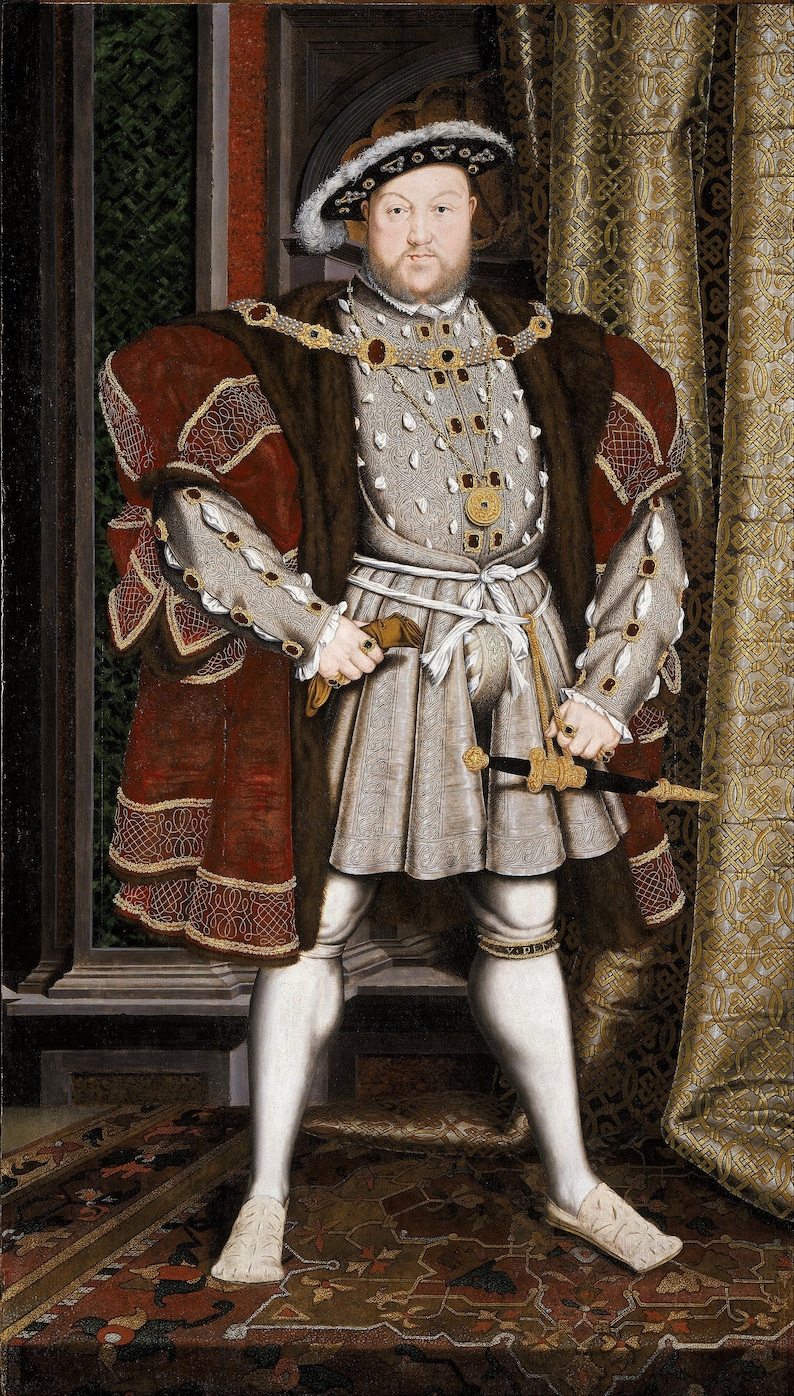
Many European knights brought oriental carpets home to Europe when they returned from the crusades.
*Derived mainly from Persia and Byzantine artwork and referred to “Arabesque” art following Napoleon’s 1798 invasion of Egypt.
**Two Muslim countries have adopted Roman script: Malaysia in 1927 and Turkey in 1929.
***Images of Mohammad only appeared at the end of the Islamic golden age.

