
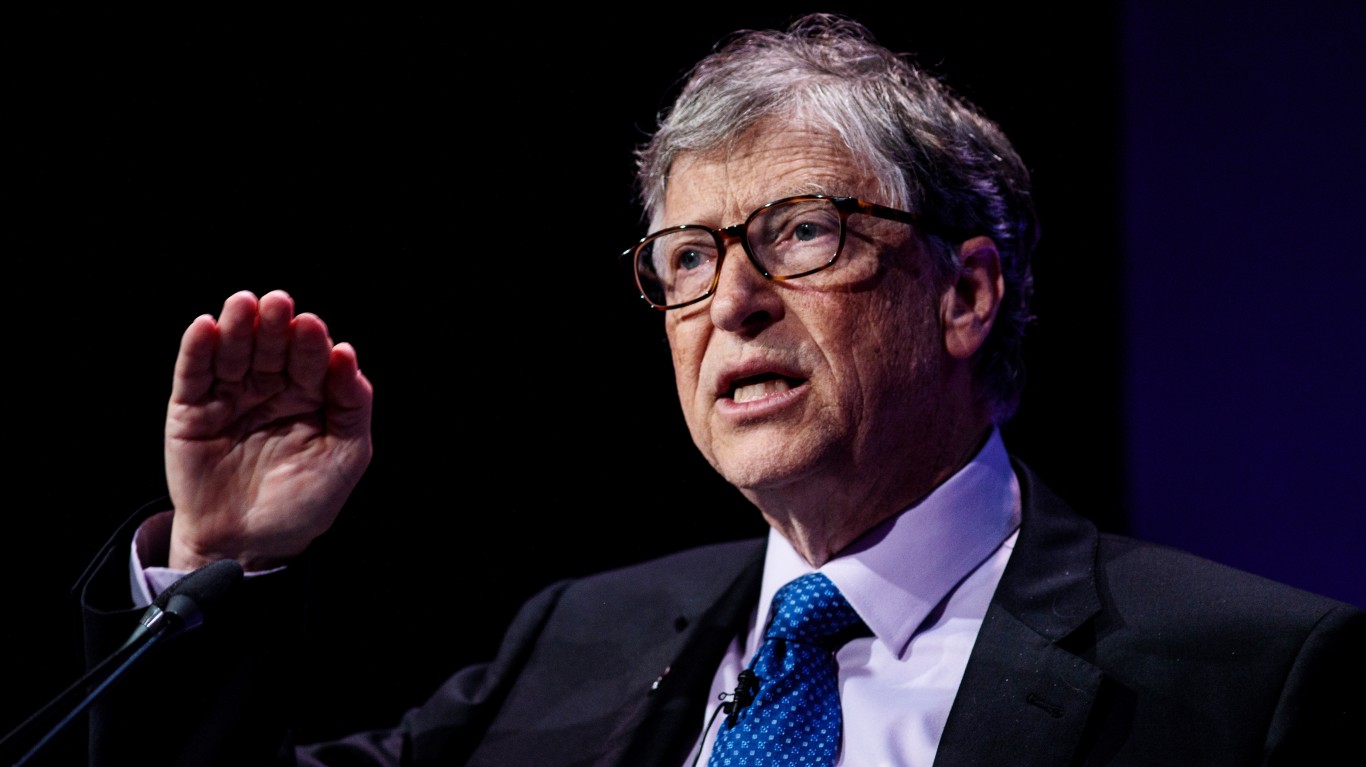
© Jack Taylor / Getty Images
By Rich Duprey
- Microsoft (MSFT) generated $281B in trailing revenue and $149B in operating income, with Azure growing at double-digit pace and unique competitive advantages in AI infrastructure through entrenched enterprise ecosystems. The Bill Gates Foundation Trust exited its final position by selling all remaining shares after reducing holdings from 28.5M to zero shares, a move driven by portfolio diversification, valuation optimization, and funding obligations rather than confidence loss.
- Gates’ complete exit from Microsoft reflects rational asset allocation for a charitable foundation managing liquidity needs and concentration risk, not a loss of faith in Microsoft’s AI-driven business transformation and ability to convert enterprise technology investments into recurring revenue.
-
The analyst who called NVIDIA in 2010 just named his top 10 stocks and Microsoft wasn’t one of them. Get them here FREE.
That is precisely why the latest SEC filing from the Bill Gates Foundation Trust landed with such force. Bill Gates, the company’s co-founder, no longer owns a single share through the Trust. For investors, the question is obvious: If Gates is out entirely, should shareholders be worried too?
From Dorm Room Startup to AI Powerhouse
It is easy to forget that Microsoft started as a scrappy software business founded by Bill Gates and Paul Allen in 1975 while Gates was still attending Harvard University. What began with programming languages for early personal computers evolved into one of the most dominant businesses in history.
Microsoft generated $281 billion in trailing revenue and produced $149 billion in operating income. Its cloud platform Azure continues growing at a double-digit pace, while its AI investments through OpenAI partnerships position Microsoft at the center of the generative AI race.
Today, Microsoft is far more than Windows and Office. Enterprise customers rely on:
- Azure cloud infrastructure
- Microsoft 365 productivity software
- GitHub developer tools
- LinkedIn enterprise services
- AI copilots integrated across business workflows
That ecosystem creates enormous switching costs, meaning businesses do not rip Microsoft software out of their operations casually — or cheaply.
Surprisingly, Microsoft’s transformation into an AI infrastructure giant may have strengthened its moat more than the PC revolution ever did. While rivals like Alphabet (NASDAQ:GOOG)(NASDAQ:GOOGL) and Amazon (NASDAQ:AMZN) compete aggressively in cloud and AI, Microsoft retains a unique advantage because corporations already run much of their daily operations inside its ecosystem.
Why the Gates Foundation Kept Selling Microsoft
For years, Microsoft stock represented the largest holding inside the Gates Foundation Trust portfolio. At one point, the position dominated the fund. But the Trust has steadily reduced its exposure.
According to SEC 13F filings, the Trust owned roughly 28.5 million Microsoft shares at the end of last year’s first quarter. By the end of 2025, that position had shrunk to approximately 7.7 million shares. The Trust’s latest SEC filing for Q1 revealed the final step — it sold every remaining share.
At first glance, that sounds alarming. In reality, the move looks far more practical than emotional.
The analyst who called NVIDIA in 2010 just named his top 10 stocks and Microsoft wasn’t one of them. Get them here FREE.
Three reasons stand out. First, concentration risk is real, even when the stock is one you founded — the Foundation’s obligation is to fund its charitable mission, not honor sentimental attachments. Second, Microsoft’s stock ran hard, and though the valuation seems reasonable, especially when compared to its tech peers, trimming a position is rational portfolio management.
| Company | Forward P/E Ratio | Est. Revenue Growth FY2026 |
| Microsoft | 21x | 17% |
| Alphabet | 28x | 21% |
| Amazon | 32x | 15% |
| Apple (NASDAQ:AAPL) | 33x | 15% |
Third, deploying tens of billions in annual grants requires liquidity that a single equity holding — however excellent — can’t efficiently provide.
In short, the Trust was acting like a portfolio manager — not a sentimental founder.
What Investors Should Actually Take Away
The headline sounds dramatic because, historically, Gates and Microsoft were inseparable. Regardless, the investment case for Microsoft has not suddenly broken because the Gates Foundation exited its position.
The company still generated over $73 billion in trailing free cash flow. It still holds one of the strongest balance sheets in corporate America, with over $78 billion in cash and short-term investments. And it still sits at the center of enterprise AI adoption.
Granted, risks exist. AI infrastructure spending remains expensive. Regulators continue examining large technology firms. Competition from Amazon and Google will not disappear. But when all is said and done, Microsoft remains one of the few companies capable of converting AI hype into recurring enterprise revenue at scale.
[…]

