
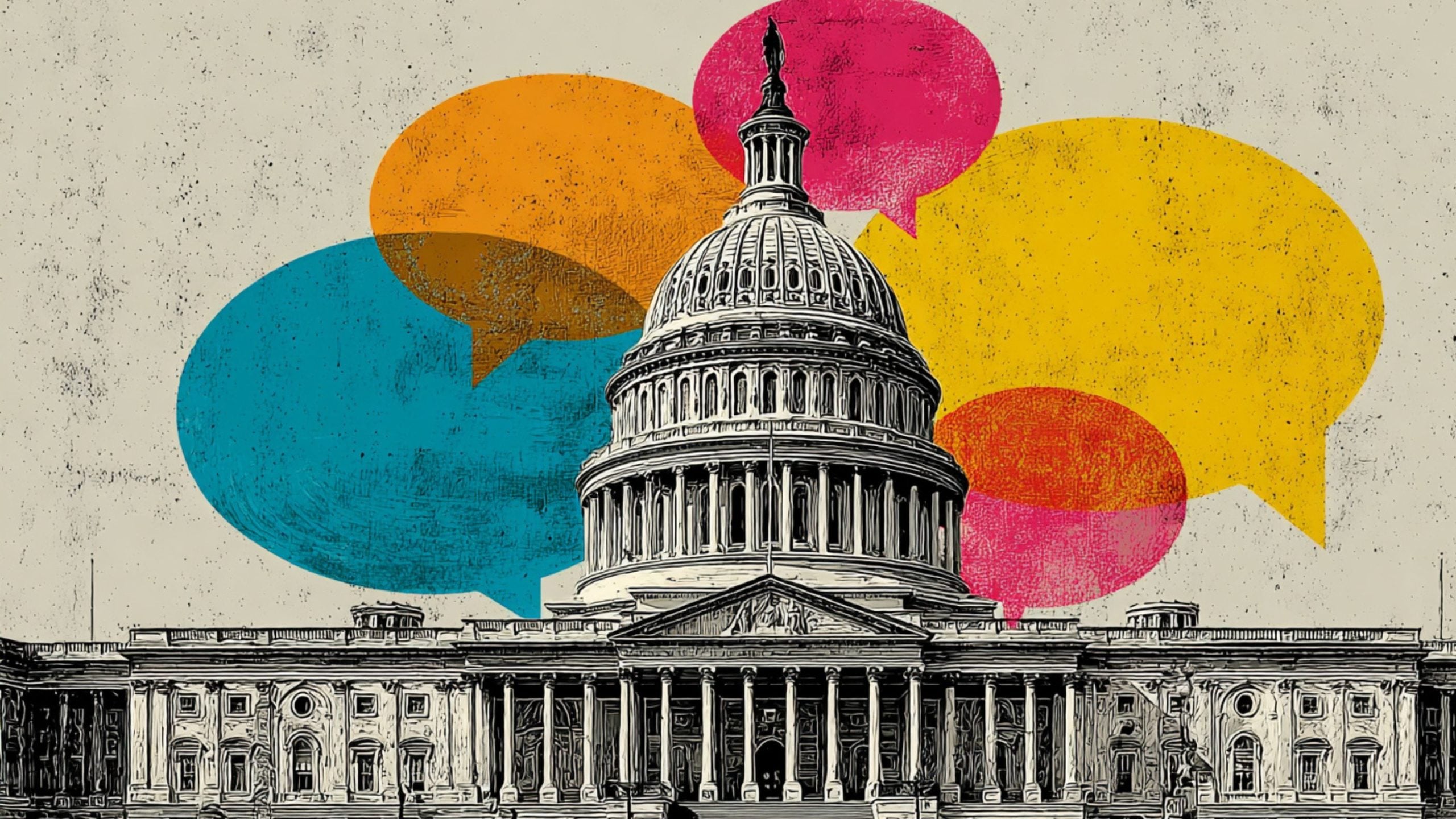
The bill defunds the same disinformation programs that Washington spent the last decade building.
A new House appropriations bill does something unusual for Washington legislation. It tells federal agencies they cannot spend money pressuring platforms, advertisers, or foreign governments to silence speech that Americans are legally allowed to make.
H.R. 8595, the national security and State Department appropriations bill, runs hundreds of pages and buried throughout are provisions that would shut off federal funding to a wide range of speech-suppression activities.
The restrictions cover direct platform pressure, ad boycott campaigns aimed at US media companies, blacklists, and cooperation with foreign censorship regimes that target American tech firms.
We obtained a copy of the bill for you here.
What the Bill Actually Stops
The headline provision is on page 252. It bars the use of any appropriated funds to “deplatform, deboost, demonetize, suppress, or otherwise penalize” online speech, social media activity, or news outlets producing content that would be lawful under US law. The language is deliberately wide and it catches the obvious things, like government agencies asking a platform to take a post down, and the less obvious ones, like funding research projects that pressure advertisers to abandon publishers.
That second category has been doing real damage for years. Brand “safety” programs, hate speech classifiers built with federal grant money, “disinformation” tracking outfits that exist primarily to attach scary labels to inconvenient reporting.
Federal money cannot flow to programs designed to impose “legal, regulatory, financial, reputational, commercial, or political costs” on American tech companies, social media platforms, online intermediaries, or digital publishers for hosting First Amendment protected speech.
There is also a prohibition on funding work that pushes foreign governments to do the censoring instead. American agencies cannot use these appropriations to support foreign laws, regulations, codes, or enforcement mechanisms that punish US platforms for carrying speech that would be lawful here.
The whole architecture of routing American speech restrictions through Brussels or London or Canberra, then importing the results back home through global compliance regimes, runs into a federal funding wall.
Blacklists are out. Censorship cooperation with supranational bodies is out. Inducing advertisers to “cut off, reduce, redirect, or otherwise interfere with advertising, sponsorship, payment, or other revenue on the basis of lawful online speech” is out.
Protection for US Media and News Companies
A separate section on page 99 builds a tighter ring around American media and news entities specifically. Federal funds cannot be used to push for the censorship of their social media content, to influence consumer or advertising behavior toward them, or to characterize US independent news organizations as producers of “disinformation, misinformation, or malinformation.”
Those three terms have done enormous work over the past five years, and the bill treats them as the censorship vocabulary they are. Once an outlet gets labeled a disinformation source by a federally funded project, the consequences cascade; algorithmic suppression, ad networks pulling out, payment processors getting nervous. The bill cuts off the funding that powers the labeling machinery in the first place.
Codifying the Anti-Censorship Executive Order
Page 98 takes Executive Order 14149, President Trump’s “Restoring Freedom of Speech and Ending Federal Censorship” order, and locks parts of it into appropriations law. Funds cannot be spent in contravention of the order.
Executive orders can be rescinded by the next administration with a signature. Appropriations restrictions are harder to dismantle. They get reviewed every funding cycle, and reversing them requires Congress to actively vote to put the censorship machinery back online.
FOIA Improvements
Page 90 contains provisions to speed up Freedom of Information Act response times. FOIA is the main legal mechanism Americans have for finding out what their government is actually doing and federal agencies have spent decades treating it as a nuisance to be slow-walked. Long delays have become a passive form of information control.
Tightening response times pushes back against that.
The One Exception
The bill is not absolute on counter-speech work, though. A provision on page 98 authorizes “counter disinformation” programs in certain circumstances, but only narrowly. Appropriations for these programs “may only be made available for the purpose of countering such efforts by foreign state and non-state actors abroad.”
The carve-out is geographic as well as directional. Funds can target foreign disinformation operations operating outside the United States but they cannot be turned inward on American speech, and they cannot be turned on Americans speaking abroad.
The history of “counter disinformation” funding is that it tends to drift. Programs justified as targeting Russian or Chinese influence operations have repeatedly been documented working on domestic speech, often through contractors and NGOs that flag American journalists, researchers, and ordinary users.
The narrow drafting here is an attempt to prevent that drift, though enforcement is the question. A prohibition only works if someone is willing to enforce it when the program inevitably starts catching Americans in its nets.
Why This Bill Looks Different
Most legislation touching online speech in the past decade has moved in one direction. More authority for governments and quasi-governmental bodies to determine what counts as acceptable expression. More pressure on platforms to comply. More funding for research outfits whose practical output is lists of accounts and outlets to suppress.
H.R. 8595 inverts the pattern. It treats federal involvement in suppressing lawful speech as a problem to be defunded, names the specific tactics that have been used, and tries to block each one. The legislative text reads like it was written by someone who has watched the censorship apparatus grow over the past several years and wants to take its budget away one line item at a time.
The bill is currently moving through the House. Whether the anti-censorship language survives reconciliation with the Senate, and whether agencies actually comply once the funding restrictions take effect, will determine how much of this becomes real protection rather than paper protection.
[…]
Via https://reclaimthenet.org/house-bill-cuts-federal-funds-for-online-censorship
 The Most Revolutionary Act