Iran warns of new false-flag attacks, denies reports of missile strike on Turkey 

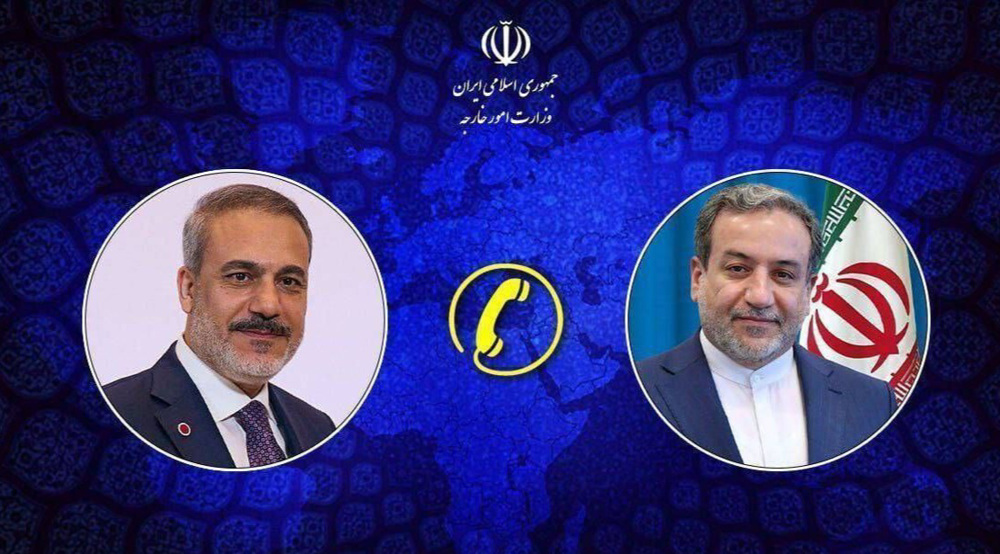
Iran’s Foreign Minister Abbas Araghchi (R) and Turkish Minister Hakan Fidan

Press TV

false-flag operations orchestrated by enemies attempting to drag the region into a wider conflict.

In a phone call with Foreign Minister Hakan Fidan of Turkey, Araghchi said reports circulated by some sources claiming Iran had fired a missile toward Turkey were “completely baseless.”

He warned that such disinformation is part of a pattern, a repeat of false-flag operations designed by the enemies of peace and friendship in the region.

“The Islamic Republic of Iran is committed to the principle of good neighborliness and respect for Turkey’s national sovereignty and territorial integrity,” Araghchi said.

Tehran is ready for technical cooperation to investigate any such claims, the Iranian minister said.

Araghchi also highlighted the criminal nature of the ongoing US-Israeli war on Iran.

He said American officials are openly threatening to attack Iran’s energy and industrial infrastructure, a move he described as a blatant war crime and a flagrant violation of international law.

“The rhetoric of US officials in openly threatening to attack Iran’s energy and production infrastructure is in itself a criminal threat and a clear sign of the US government’s blatant disregard for the fundamental foundations of international law and human principles.”

Araghchi called on the international community to respond decisively.

The foreign minister detailed the scope of US-Israeli strikes, saying they have targeted schools, universities, scientific centers, historical and cultural sites, production and energy infrastructure, and residential areas.

Fidan, for his part, briefed Araghchi on a recent quadrilateral meeting in Islamabad with the foreign ministers of Pakistan, Saudi Arabia, and Egypt, emphasizing regional support for halting the war and restoring peace and stability.

[…]

Via https://www.presstv.ir/Detail/2026/03/31/766133/Iran-warns-of-new-false-flag-attacks-denies-reports-of-missile-strike-on-Turkey

Every Country in Our Supply Chain Has Declared an Emergency. NZ just launched an Ad Campaign.

Nathan Surendran, 27 March 2026

I watched Nicola Willis announce, at a press conference convened to address the worst oil shock in history, that the government’s Phase 1 action is an EECA ad campaign at fuelsavingtips.govt.nz. I checked. The Onion already did this.

In June 2025 I submitted to Parliament’s Finance and Expenditure Committee on the Regulatory Standards Bill. In that submission, I named the Strait of Hormuz specifically and warned that a blockade would cause catastrophic fuel shortages and price spikes exceeding the 1970s. I warned that NZ’s closure of Marsden Point had left us uniquely exposed. I used the phrase “energy blindness” to describe the way our policymakers treat the economy as a financial system that can grow forever, rather than an energy system subject to physical laws.

Today the government held a ministerial press conference to announce a four-phase Fuel Response Plan (and that ad campaign). Here are some thoughts in response.

The TL:DR version: the plan is a framework without numbers, the stock figures are misleading, the geopolitical situation is considerably worse than the ministers alluded to, and NZ Inc still doesn’t understand what we’re looking at in terms of the scale of this disruption in coming months…

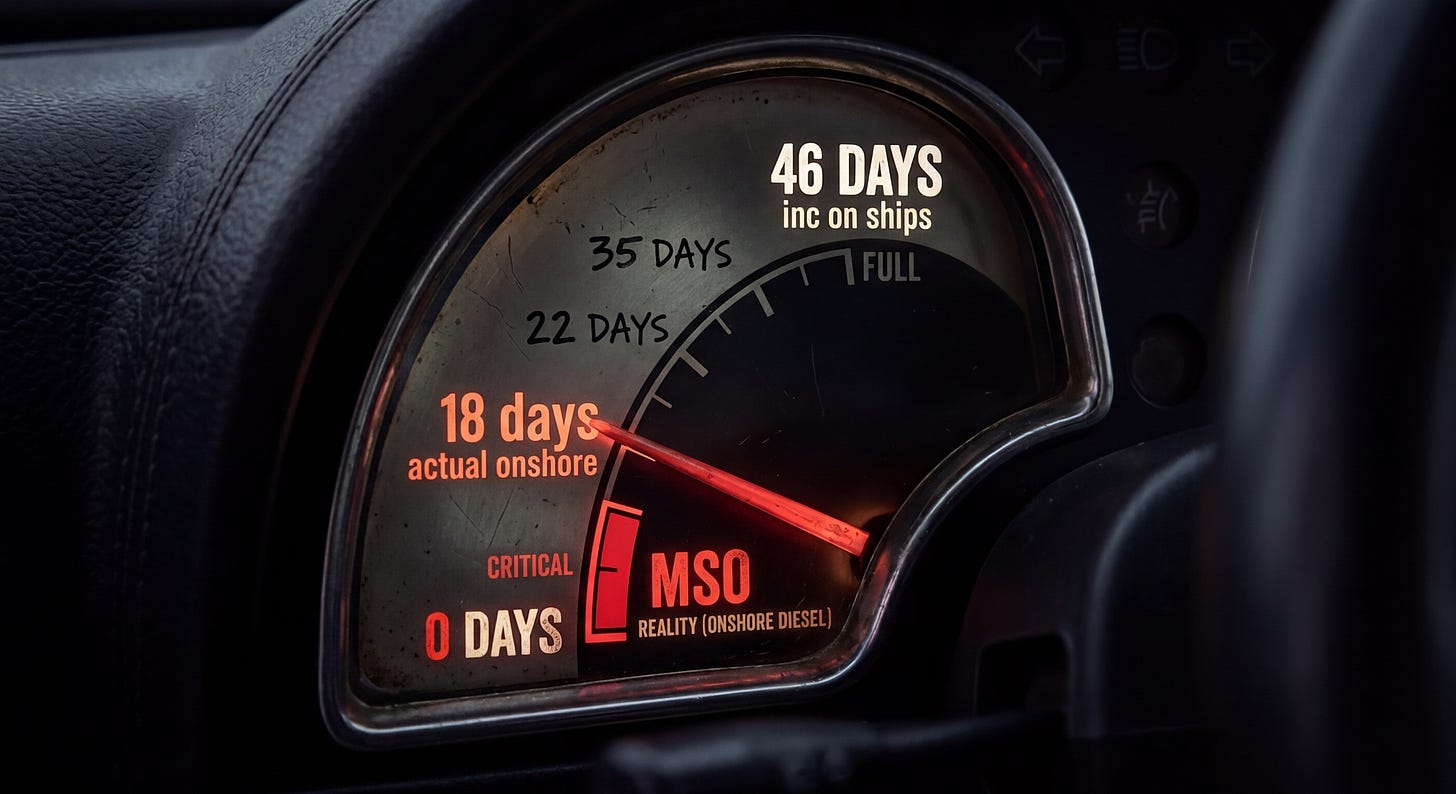
The 46 days that aren’t 46 days

The ministers claimed NZ has 49 days of petrol, 46 days of diesel, and 53 days of jet fuel as of midnight Sunday.

But their own press conference revealed the breakdown. For diesel: 18 days physically in the country. 16 days in NZ’s exclusive economic zone on ships unloading or transiting between ports. 12 days further out on the water.

Only 18 days is actually onshore. The rest is on ships that could be diverted, delayed, or fail to arrive if suppliers declare Force Majeure. Which is already happening across Asia.

MBIE released an unscheduled fuel update on 26 March after concerns about declining diesel stocks. Their own fuel supply analyst Mark Douglas confirmed that refineries in Singapore, Japan, and South Korea supplying NZ are now operating at reduced capacity, what he called “turn down”, processing crude at a slower rate to stretch remaining stocks.

As Bryce Edwards noted in his Democracy Briefing today, MBIE was forced to issue that update after independent analysts using ship-tracking data pointed out that its official figures on incoming fuel supplies were wrong. A website run by a BNZ financial markets analyst had better data than the ministry managing the crisis. The Taxpayers’ Union’s FuelClock.nz estimated NZ could run out of diesel by 16 April under business-as-usual, or by end of April even with emergency measures. Richard Harman’s reporting for Politik revealed that the Prime Minister held a private webinar briefing for top business CEOs while media were excluded. That’s not responsible communication management. That’s a two-tier information system.

The plan has tiers but no numbers

The four phases are sensible as a framework. Phase 1 is monitoring and voluntary conservation. Phase 2 is heightened risk with regulatory powers. Phase 3 is fuel prioritised to critical services. Phase 4 is strict allocation to life-preserving services.

The problem is that the government admitted it is “now consulting” on how to implement phases 3 and 4. They said they need “at least two weeks” to get the details right. They are building the lifeboat while the ship is taking on water.

[…]

Too much of the political conversation has been about petrol prices at the pump. That misses the point. As Edwards’ briefing notes, diesel is the crisis. Petrol shortages are inconvenient. Diesel shortages are existential. Diesel runs the trucks that stock supermarkets, the harvesters that pick crops, the milk tankers that collect from farms, the ambulances, the generators. The government’s own Phase 4 plan acknowledges this by prioritising “life-preserving services” – but the quantification of what that means in litres per day does not exist.

[…]

Phase 2 should already be active

The government published six triggers for moving between phases. The first is export restrictions on refineries NZ imports from. South Korea imposed mandatory export caps on gasoline, diesel, and kerosene on 13 March. China banned fuel exports entirely. Thailand banned most refined product exports. By the government’s own published criteria, the trigger for Phase 2 was crossed weeks ago.

The ministers implied they are considering when to move. The question is, what are they waiting for?

Force Majeure is not a theoretical risk. It is happening now.

Force Majeure declarations have cascaded across the entire NZ supply chain and well beyond. Confirmed declarations:

[…]

Refinery run cuts are confirmed and they affect NZ directly

[…]

MBIE’s own analyst Mark Douglas confirmed on 26 March that NZ’s source refineries in Singapore, Japan, and South Korea are all on “turn down.”

Australia’s energy minister confirmed that six fuel shipments from Singapore and South Korea have been cancelled or diverted since the war began. Australia sources from the same refineries as NZ.

[…]

South Korea’s GS Caltex has cut daily refining from 800,000 to 675,000 bpd. Korean airlines are cancelling routes. Hyundai Motor Group has suspended production of two vehicle models after a supply chain collapse. (Seoul Economic Daily, 25 March)

[…]

The US is not a backup plan

Shane Jones pointed to the US as a potential alternative fuel source, noting that Asian refineries are “capable of drawing product from the United States.”

The US currently supplies 2% of NZ’s fuel. On 23 March, a major explosion hit Valero’s Port Arthur refinery in Texas, one of the largest in the US at 435,000 bpd. Officials say equipment failure. Pro-Iranian accounts are claiming sabotage, no evidence for that. Either way, 435,000 bpd just went offline at a refinery the minister implied could help fill NZ’s gap.

US west coast refining capacity is already shrinking. Phillips 66 ceased its 139,000 bpd LA refinery at end of 2025. Valero is idling its 150,000 bpd Benicia refinery. US firms are chartering rare fuel cargoes from the Gulf Coast to Australia as emergency supply, which tells you how stretched the system already is.

[…]

Why Aotearoa New Zealand’s supply has held – and why that could change

Our fuel shipments have continued arriving so far partly because our fuel companies have established term contracts with South Korean and Singaporean refineries, and partly because we can afford to pay elevated prices. But this stability is price-dependent, not structural.

[…]

We sit in an awkward position in the middle of this hierarchy. Wealthy enough to outbid the Philippines or Bangladesh, but not using commodity leverage. Australia is using its coal and iron sands as bargaining chips to secure diesel – Hooton’s “you want coal? Then gizza your diesel.” Japan and South Korea can outbid most of Asia. Countries with navies are discussing escort operations for the Strait. Aotearoa has none of these cards. We consume about 24 million litres of fuel a day – a rounding error for the refineries supplying us. When those refineries are on turn-down and choosing which customers to prioritise, small volumes are the first to get bumped. Australia’s energy minister has confirmed six April shipments of about 80 per month cancelled or diverted.

NZ has food. Half the world wants it. That is leverage, if anyone in Wellington is willing to use it. Right now it appears that we are relying on commercial goodwill and market price alone, in a world that is rapidly moving towards bilateral barter and strategic allocation.

The government is not reading the room

Transport Minister Chris Bishop said something at an Infrastructure NZ conference this week that politicians rarely say: “It’s a scary prospect and I’m not 100 per cent sure the public have quite worked it out yet.” He added: “the reality is, it could happen.” Matthew Hooton, writing in the Herald today, put it more bluntly: “Thought Covid was bad? If New Zealand runs out of diesel, Covid will look like the rehearsal.” Z Energy chief executive Lindis Jones told Newsroom: “I heard it described as the biggest energy shock in the history of the world. It certainly feels like it.”

Hooton makes the point plainly. During Covid, the circulatory system of the economy kept pumping. Trucks delivered to supermarkets, harvesters picked crops, milk tankers collected from farms, ambulances ran. None of that is guaranteed now. And as he notes, “being the last station on the southern line makes New Zealand more vulnerable to disruptions to supply lines, not less.” (Both Hooton and Bishop are cited via Edwards’ Democracy Briefing.)

The Wareing Group, a major South Island logistics operator with 270 drivers, has been hitting fuel outages since Tuesday. Truck stops in Taupo, Sanson, parts of Christchurch, Ashburton, Oamaru, and Winton have been running dry. The company is paying $10 million more than expected for fuel. Health Minister Simeon Brown is seeking advice on the supply of helium for MRI machines – between a quarter and a third of the world’s helium comes from Qatar’s Ras Laffan facility, which has been struck. If helium runs short, cancer diagnoses get delayed.

Compare NZ’s response to what every other country in its supply chain is doing:

NZ’s own suppliers:

Wider international response:

  • Australia: suspended fuel quality standards, relaxed minimum stockholding obligations, chartering emergency fuel from the US Gulf Coast. More than 500 petrol stations have run dry. Six fuel shipments from Singapore and South Korea cancelled or diverted. (The Spinoff, 26 March; Vertium, March 2026)
  • Philippines: declared a national energy emergency. (CNN, 25 March)
  • Sri Lanka: rationing fuel, motorists limited to 15 litres per week. (The Spinoff, 26 March)
  • Pakistan: moved to a four-day working week in the public sector. (The Spinoff, 26 March)
  • Italy: PM Giorgia Meloni flew to Algeria for emergency gas talks to replace lost Qatari LNG supply. (France 24, 26 March)
  • UK and Germany: both signalled the crisis is accelerating their green energy transitions. (France 24, 26 March)
  • IEA: triggered a record 412-million-barrel emergency stock release, the head of the IEA calling this the “greatest global energy security challenge in history.” (Argus Media, March 2026)

NZ launched an EECA ad campaign asking people to “stretch their tank by 20%.”

[…]

The economy is an energy system using money

[…]

France’s finance minister has confirmed it will take up to three years to restore destroyed Gulf infrastructure, and the UK and Germany have both signalled that the crisis is accelerating their green transitions. Italy’s PM flew to Algeria to negotiate for emergency gas. These are countries that understand the structural nature of what is happening.

What should be happening

Three things, starting today.

First, publish the actual depletion timeline. Not headline stock figures, but what happens if no more ships arrive. The public deserves to see the curve, not the snapshot.

Second, move to Phase 2 immediately. The government’s own triggers have been met. Voluntary demand restraint messaging should have started weeks ago. Every day of delay burns through stock that cannot be replaced at the current rate. Jumping straight from Phase 1 to Phase 4 will be unnecessarily destructive.

Third, quantify the allocation plan and prioritise food. Shane Jones himself has said it plainly: “A shortage of diesel would literally bring the economy to its knees.” He told CNBC: “You cannot have a food industry, you cannot have a forestry industry, you cannot have a fishing industry, you cannot have a horticultural industry unless you’ve got significant security and robustness about diesel supplies.”

[…]

If I were making this call today, I’d be ring-fencing diesel for domestic food production now: arable crops, vegetables, the minimum livestock operations for domestic meat and dairy, and the transport to get it to market.

[…]

Hooton makes a more provocative version of this argument. NZ has food. Other countries want it. He suggests Luxon should use that leverage with counterparts in Singapore, South Korea, and Malaysia: food in exchange for fuel. He acknowledges this would require “some sort of state control over international trade that we haven’t seen since 1984.” But the scale of the potential crisis justifies it.

[…]

IRGC warns it will target US tech companies for abetting terror in Iran

IRGC warns it will target US tech companies for abetting terror in Iran

Press TV

The Islamic Revolution Guards Corps (IRGC) has warned 18 major US companies, including tech giants, that their offices and properties in the region will come under attack as they have assisted US-Israeli terror operations inside Iran by providing espionage services.

The IRGC said in a Tuesday statement that these companies should expect Iran’s reprisal attacks starting at 20:00 Iran time on April 1, adding that their offices in the region will be “annihilated.”

The list released by the IRGC included big tech names such as Apple, Google, Meta, and Microsoft, as well as major hardware suppliers like HP, Intel, IBM, and Cisco.

Other major brands included Tesla, Nvidia, Oracle, JP Morgan, and Boeing.

The IRGC described those companies as espionage entities associated with the warmongering government of the United States, saying their artificial intelligence (AI) and internet communication technology (ICT) services have been the main elements in designing terror operations and tracing assassination targets by the US and Israel inside Iran.

It stated that the US government and its Israeli allies had ignored Iran’s repeated calls to stop terror operations in the country and had carried out a new targeted terror attack earlier on Tuesday, killing a number of Iranian citizens.

“In response to this terrorist operation, henceforth, the main institutions involved in terrorist activities will be considered legitimate targets,” the IRGC said.

“We advise employees of these institutions to immediately leave their workplaces to protect their lives. Residents within a one-kilometer radius of these terrorist companies across all countries in the region are also urged to evacuate and move to safe locations.”

Dozens of senior Iranian political and military officials and their family members have been assassinated in the ongoing US-Israeli aggression against Iran that began in late February.

Iran has vowed to avenge the assassinations by targeting elements that have been influential in the attacks.

[…]

Via https://www.presstv.ir/Detail/2026/03/31/766134/IRGC-warns-it-will-target-US-tech-companies-for-abetting-terror-in-Iran

Iranian retaliatory strikes cripple US Fifth Fleet in Bahrain, redraw Persian Gulf power map

By Mohammad Molaei 

The high-precision, coordinated, and destructive retaliatory strikes by the Iranian Armed Forces against key targets in the Persian Gulf in recent weeks, particularly the US Fifth Fleet base in Bahrain, have underscored the decisive leverage Iran now holds in the region.

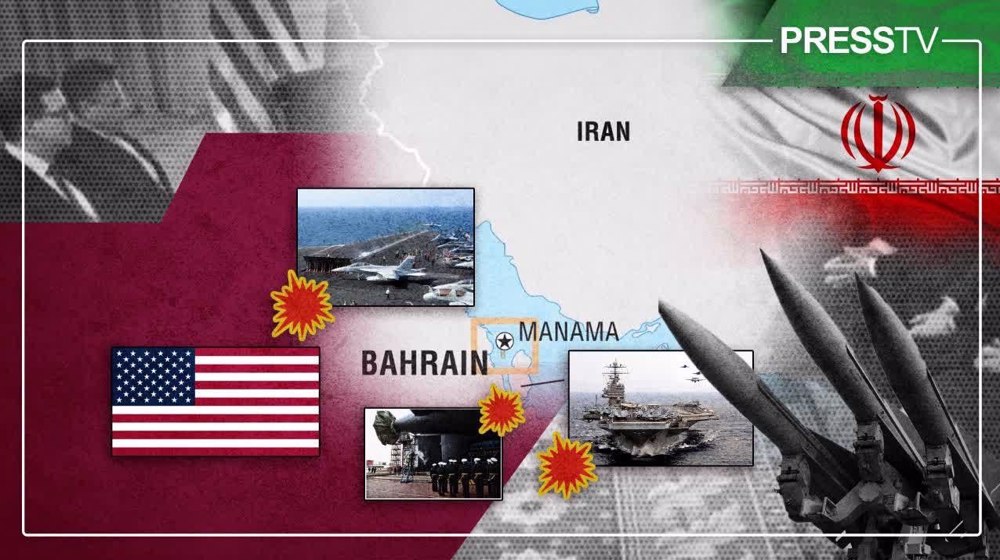
Headquartered in Manama, the Fifth Fleet base has long been considered a “floating fortress.” Yet recent Iranian operations have revealed it as one of the most vulnerable strategic nodes, representing a critical weakness in American military planning when faced with Iran’s precise, layered, and asymmetric deterrence doctrine.

As part of Operation True Promise 4, Iran’s missile and drone strikes were launched in response to the unprovoked and illegal US-Israeli aggression against Iranian territory.

The strikes repeatedly targeted the Fifth Fleet’s headquarters in the Bandar Mina region, demonstrating that Iran not only has the capability to reach this strategic base but has also pioneered a new model of asymmetric warfare.

Precision ballistic missiles and Shahed-136 drones were employed to neutralize American defensive measures, radar systems, and communication networks, effectively paralyzing the base’s operational capacity.

The strategic impact of these strikes, beginning February 28, has been verified through satellite imagery and videos showing direct hits on radomes and large-scale explosions across the compound. The operations send a clear message to Washington and its allies: the Persian Gulf can no longer be treated as an American backyard.

Any military presence or aggressive actions against Iranian interests and the Axis of Resistance will now meet with precise, immediate, and formidable consequences, elevating Iranian deterrence to unprecedented levels.

From British colonial legacy to US aggression in the region

The history of the US military presence in Bahrain stretches back to the 1940s, when the US Navy, under the title “Middle East Force” (MIDEASTFOR), began a continuous and destabilizing presence in the region. In 1950, the United States leased facilities from the British Royal Forces at HMS Jufair Base, establishing its central office and solidifying its foothold in the Persian Gulf.

Following Bahrain’s independence in 1971, the US seized part of the former British Royal Force Base to establish the “Administrative Support Unit Bahrain.” Initially housing only a few hundred personnel, the base rapidly evolved into the logistical, communication, and operational hub for all US naval activity in the Persian Gulf.

The base’s strategic importance grew further in 1983 with the establishment of the US Naval Forces Central Command (NAVCENT). In 1995, after 48 years of inactivity, the US Fifth Fleet was reactivated, replacing MIDEASTFOR with expanded operational mandates.

By 1999, the facility was officially renamed “Naval Support Activity Bahrain – NSA Bahrain,” reflecting its enlarged role in logistics, command and control, communications, computers, intelligence, surveillance, and reconnaissance (C4ISR).

Today, NSA Bahrain sits in the Juffair district at the heart of the Bahraini capital, covering 152 hectares and hosting between 8,000 and 9,000 US military personnel, alongside 78 joint and coalition tenant commands.

Significant expansions between 1997, 2003, 2006, and particularly 2010, 2015, including advanced ammunition storage, service facilities, communication towers, and SATCOM radar systems, have made the base a critical nerve center. Without it, the American military machine in the region would be severely constrained.

The presence of NSA Bahrain is a direct continuation of the legacy of British colonial influence, now transformed into a launchpad for US naval operations against Iran and the Axis of Resistance, asserting US power and projecting strategic dominance across the Persian Gulf.

Beating heart of the US naval command

NSA Bahrain is not merely a logistical support base, but a joint operational command center for the Fifth Fleet and NAVCENT, and as such, it carries the responsibility of overseeing a regional area of 6.5 million square kilometers or 2.5 million square miles.

This area is vast and vital, comprising the Persian Gulf, Red Sea, Sea of Oman, Indian Ocean, and the three vital straits of Hormuz, Bab el-Mandeb, and Suez, through which the flow of 30 percent of the world’s crude oil, the bulk of global trade, and the region’s oil flow, and without whose control, the global economy of the American regime and its Zionist allies would be effectively paralyzed.

This base accommodates more than 20 permanent or rotational warships and combat vessels, dozens of state-of-the-art AESA radar, AN/GSC-52B satellite communication, a host of highly advanced unmanned drones under Task Force 59, and C4ISR capabilities that enable the real-time surveillance of the movements of Iranian forces, vessels of resistance, and even Ansarullah drones in Yemen.

The primary role of this base extends far beyond simple logistics. It serves as a central hub for controlling naval operations, directly supporting Carrier Strike Groups with thousands of troops and aircraft. It also underpins fabricated coalitions such as the Combined Maritime Forces (CMF), specifically Task Force 59, facilitating manned-unmanned teaming operations.

The base further supports unmanned naval platforms, including the Sea Hunter, MQ-9B Sea Guardian, and MQ-4C Triton, cementing its position as a pivotal tool for exerting constant pressure on the Islamic Republic of Iran, safeguarding the survival of the Zionist regime, and exploiting the region’s energy resources.

Task Force 59, in particular, was explicitly designed to track and monitor the Islamic Revolution Guards Corps Navy (IRGCN) in the Strait of Hormuz, employing artificial intelligence and advanced ISR technologies to provide “more eyes on the water” and maintain the illusion of American deterrence.

From the perspective of US military doctrine, this base is celebrated as the “guardian of freedom of navigation” and the “guarantor of maritime security.” In stark contrast, on the ground, it operates as the beating heart of naval aggression, constant espionage, and intelligence-military operations targeting the Axis of Resistance.

It functions as the launchpad for nearly all US occupation operations, from the Gulf War to recent actions in the Red Sea. Without this facility, coordination of operations in the Strait of Hormuz, support for attacks on Yemen, tracking of resistance vessels, and even the control of aircraft carriers in the region would be impossible.

This absolute dependence on NSA Bahrain has paradoxically made it one of the strategic vulnerabilities of the American occupying regime. Its critical role was fully exposed during the Ramadan War, highlighting the limits of US power against the layered, decisive, and asymmetric deterrence capabilities of the Islamic Republic of Iran.

Key aggressive operations of the base

Since its establishment in 1995, the US Fifth Fleet has served as the epicenter of all American military operations in the region. During the Gulf War in the early 1990s, NSA Bahrain played a central role in aggressive campaigns against Iraq.

From this base, the US war fleet launched hundreds of Tomahawk missiles at Iraqi infrastructure and provided air cover through aircraft carriers. These operations resulted in the deaths of thousands of civilians and caused decades-long instability across the region.

During the US occupation of Iraq in the early 2000s, NSA Bahrain became the logistical hub supplying fuel, ammunition, and operational support to the American naval forces in the Persian Gulf. In recent years, the base has been at the heart of hostile operations in Yemen, ostensibly framed as a campaign against piracy, but in reality targeting the Iranian fleet and Yemeni drones.

Task Force 59 has been instrumental in these espionage and surveillance operations, providing intelligence and coordination for attacks under the guise of maritime security.

More recently, in operations in the Red Sea, NSA Bahrain continued its role as the center of aggressive US hostile maneuvers. These operations claimed to protect the Zionist regime against Yemeni counterattacks but were in reality attempts to secure control over the Bab el-Mandeb Strait and coordinate American strike groups.

These operations ultimately failed, exposing the vulnerabilities of the US fleet and resulting in significant losses, highlighting the limits of US power despite the strategic weight of this base.

Role in the Ramadan War

As part of its decisive and legitimate response to the recent US-Zionist aggression on Iranian territory, the Armed Forces of the Islamic Republic of Iran targeted the NSA Bahrain base in the Bandar Mina region, beginning February 28, 2026.

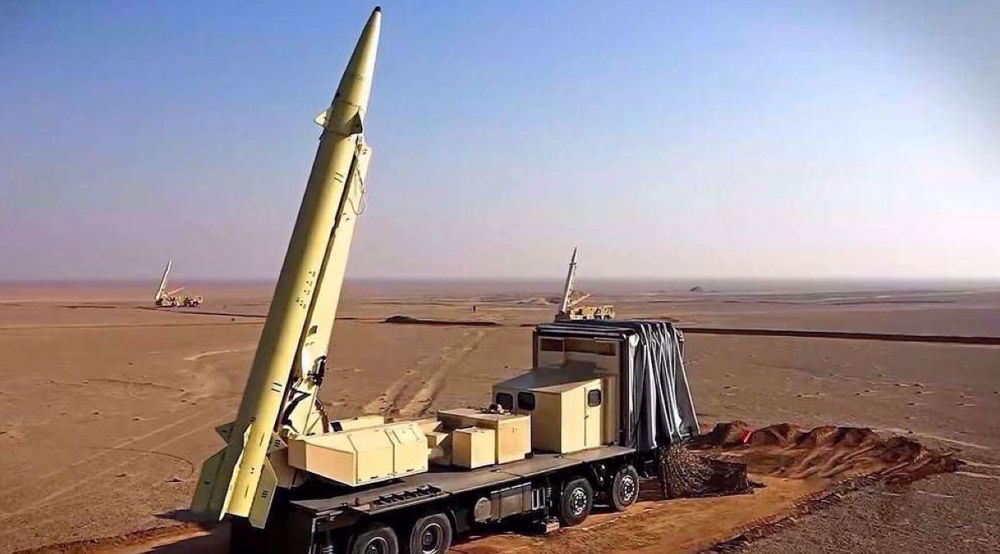
The series of operations, starting on February 28, has employed a precise, multi-layered strike strategy, combining short-range ballistic missiles from the Fateh and Fath families – known for their high maneuverability and advanced guidance systems, with Shahed-136 suicide drones carrying 250-pound warheads, guided via inertial and GPS systems.

These drones, flying at low altitude and relatively low speeds, were able to penetrate radar and electronic warfare defenses, striking one of the larger domed radomes within the base’s Command Compound with pinpoint accuracy. Video footage released from field sources captured the exact moment of impact, explosion, and ensuing fires.

In the following days, satellite imagery, including data from Chinese sources, verified extensive damage to NSA Bahrain. Hits were also confirmed on hangars and shelters at the nearby King Isa Air Base, a critical facility supporting the US Fifth Fleet and NAVCENT operations.

Among the damaged infrastructure were two AN/GSC-52B satellite communication terminals, which form the backbone of the Fifth Fleet’s C4ISR network, providing secure real-time communication with aircraft carriers, MQ-4C Triton drones, P-8A Poseidon patrol aircraft, and CENTCOM command centers.

Beyond radomes and SATCOM systems, satellite images show severe damage to ammunition depots, service facilities, command support buildings, and advanced communication infrastructure, with extensive fires spreading across the base.

These strikes disrupted the Fifth Fleet’s AESA radar systems and secure satellite communications for hours, even days. Leveraging indigenous electronic warfare capabilities (ECCM/ECM) and the IRGC’s intelligence network, Iranian forces effectively neutralized the base’s defensive measures, rendering sophisticated American radar systems ineffective.

While the Bahraini regime has condemned the strike as a “violation of sovereignty,” the reality is that the American military presence on Bahraini soil, at both NSA Bahrain and King Isa Air Base, constitutes ongoing aggression against regional sovereignty.

This operation exemplifies Iran’s policy of layered, precise, and asymmetric deterrence, tested and refined to unprecedented levels during the Ramadan War.

The strikes reveal that NSA Bahrain is no longer a symbol of US power. It now represents vulnerability, paralysis of naval command structures, and the failure of American strategic calculations.

The Ramadan War, now into its 31st day, marks the beginning of a new chapter in Iran’s deterrence doctrine: one defined by defensive self-sufficiency, indigenous missile and drone expertise, and a readiness to respond to aggression with precise, devastating, and unpredictable force.

The message is clear: the Persian Gulf will no longer be treated as an American fortress.

[…]

Via https://www.presstv.ir/Detail/2026/03/31/766128/iranian-retaliatory-strikes-cripple-us-fifth-fleet-bahrain-redraw-persian-gulf-power-map

France, Italy join Spain in resisting Trump’s pressure to join war on Iran

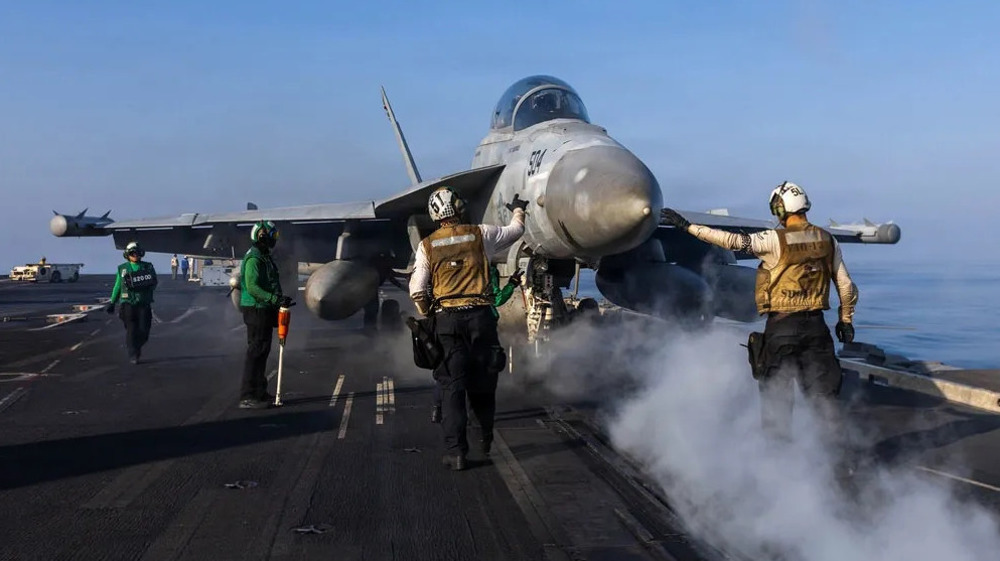
A US Navy fighter jet prepares to launch from USS Abraham Lincoln, in a photo released on March 2. (Photo by US Navy)

Press TV

France and Italy have joined Spain in resisting Donald Trump’s pressure to support US-Israeli aggression against Iran, as the illegal war he launched is now in its fifth week.

Spain said on Monday that it had closed its airspace to US planes involved in airstrikes on Iran. The move angered Trump, who described NATO allies as “cowards.”

In a report on Tuesday, Reuters cited sources familiar with the matter stating that France has also refused to allow Israeli aircraft carrying US weapons to cross its airspace. France reportedly refused the request over the weekend.

The US president reacted to the decision in a post on his Truth Social platform on Tuesday, warning that Washington “will remember.”

The decision in Paris came after Italy last week denied permission for US military aircraft to land at the Sigonella air base in Sicily before heading to West Asia, according to the report.

Some US bombers had been due to land at the base in eastern Sicily before flying to West Asia.

Poland also said recently that it has no plans to relocate one of its Patriot batteries.

Washington had previously claimed that Warsaw was considering sending the system to help shore up air defenses in the region.

In a similar move, Portugal has adopted a cautious stance on US use of the Lajes Air Base in the Azores.

European leaders are increasingly turning down Trump’s requests to use their airspace, as closing large parts of southern European airspace would force US bombers based in the UK to take a longer route to the Persian Gulf.

This would add time, put extra strain on flight crews, and require more aerial refueling.

This comes as the US had already suffered a tanker setback earlier in the war, when Iraqi resistance groups downed a KC-135 in an incident that killed all six crew members aboard.

Trump is pressuring NATO allies for support, while European governments have already rebuffed his calls for help in securing passage through the Strait of Hormuz.

Since US and Israel launched the aggression against Iran on February 28, the country has closed the strategic waterway to enemy vessels and those belonging to countries aiding the aggressors.

Citing familiar sources, the Wall Street Journal reported on Monday that Trump is willing to end the aggression against Iran without reopening the Strait of Hormuz.

The report said that the US president told aides he was prepared to wrap up the aggression even if the strait remained largely closed, after concluding that forcing it open would push the war beyond a four- to six-week timeline.

This comes as Trump had repeatedly threatened consequences if the waterway were not reopened.

[…]

Yemen enters Iran war: Red Sea blockade and strikes on US Navy on the table

As Yemen’s Ansar Allah has jumped into the fray (https://t.me/geopolitics_prime/67400), it could throw plenty of unwanted surprises at the US‑Israeli coalition, Tehran‑based political analyst Professor Mohammad Marandi tells Norwegian academic Glenn Diesen.

💬 “We are still not very much up the escalation ladder,” Marandi says.

💬 “Yemen has joined, but its targets are so far limited. Iran has been involved for weeks now, but again it can go much further. There is talk that the Iraqis may take Kuwait.”

What to expect from Ansar Allah:

🔴 Closure of the Red Sea

🔴 Strikes on Saudi Arabia’s oil facilities, potentially cutting its oil imports from the Red Sea completely

🔴 Strikes on Israeli assets

🔴 Strikes on US assets in the Indian Ocean

💬 “We don’t know what weapons [Ansar Allah] now has; obviously, over the past year they’ve been developing their capabilities swiftly, just like Iran did.”

Via https://t.me/geopolitics_prime/67500

Growing insecurity, soaring prices fuel protests in northern Israel as regime bans evacuation

An Israeli settler stands in the settlement of ‘Metula’ in northern occupied territories. (AP Photo)

Press TV

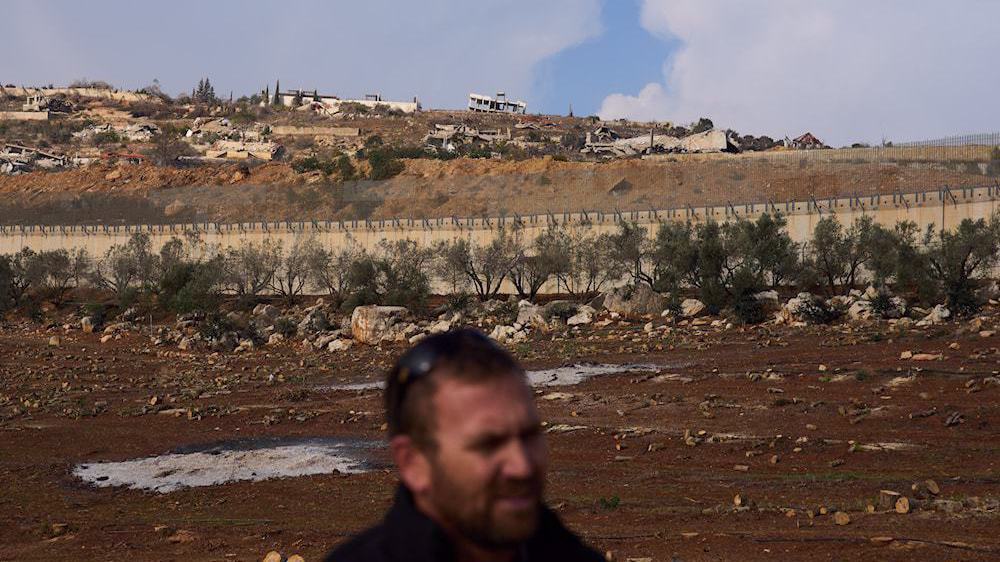
The worsening situation on the internal front of the Israeli regime, particularly in the northern occupied territories, has driven up food and transportation prices, fueling settler discontent.

According to informed security sources, regime authorities have refused to permit the evacuation of settlers from northern areas, despite deteriorating security conditions amid Hezbollah’s unstoppable retaliatory strikes.

Rising costs of essential goods, including food and transportation, have intensified pressure on settlers, contributing to a growing wave of anti-regime protests.

Discussions across Israeli social media platforms reflect increasing skepticism toward official narratives regarding developments in the north.

Users have questioned regime claims on the extent of damage and casualties, asserting that actual losses far exceed what is being reported.

Some posts also emphasize that the regime’s defensive capabilities in the region have significantly degraded, while Hezbollah has effectively rendered life unsustainable for settlers in northern areas.

Meanwhile, emerging reports suggest that regime authorities are deliberately avoiding a full evacuation of settlers from the north, even as security conditions worsen amid intense exchanges of fire.

Analysts attribute this decision to deep concerns that, once evacuated, settlers may refuse to return – a scenario that would deliver a severe blow to the regime’s long-term strategic position in the area.

According to sources, military forces have been deployed to forcibly prevent settlers from leaving, underscoring the regime’s determination to project an appearance of normalcy even as conditions on the ground tell a different story.

Hezbollah has carried out a record number of retaliatory operations against the occupied territories, sowing fear among the settler population in the north.

Yet the regime remains intent on portraying normalcy across the occupied territories while concealing the true scale of casualties and damage sustained from retaliatory strikes, both from Hezbollah and the Iranian armed forces.

[…]

Via https://www.presstv.ir/Detail/2026/03/30/766082/growing-insecurity-soaring-food-prices-fuel-protests-regime-bans-evacuation-sources

Russian tanker bypasses US oil blockade of Cuba

Russian tanker bypasses US oil blockade of Cuba

RT

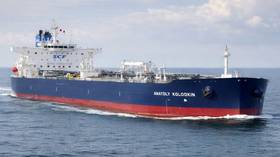
A Russian tanker has arrived in Cuba to deliver a humanitarian oil shipment amid a months-long US blockade that has led to severe fuel shortages and recurring power cuts across the island.

Russia’s Energy Ministry reported that the Anatoly Kolodkin, carrying 100,000 tons of crude oil, has docked at the port of Matanzas and now waits to be unloaded.

Despite US Coast Guard ships being present in the region, “the Trump administration did not order those vessels to act,” an official familiar with the matter told the New York Times.

“Barring orders instructing it otherwise, the Coast Guard planned to let the tanker reach Cuba as of Sunday afternoon,” the source added, speaking on condition of anonymity.

US President Donald Trump has repeatedly threatened tariffs on countries exporting fuel to Cuba. However, speaking to reporters aboard Air Force One on Sunday, he confirmed that Washington had allowed the Russian tanker through on humanitarian grounds.

“We don’t mind having somebody get a boat load because they need to survive,” he said. “I’d prefer letting it in, whether it’s Russia or anybody else, because the people need heat and cooling.”

Trump, however, added that he still expects Havana to “fail soon,” saying the US would be there to “help it out.”

The Caribbean nation has faced severe fuel shortages and power cuts in recent months after Venezuela, once Havana’s closest ally, halted oil shipments following pressure from Washington.

Multiple international fuel deliveries have been disrupted, vessels linked to Havana have struggled to secure supplies, and some have been turned away or intercepted – with at least one escorted away from Cuban waters, according to ship-tracking data.

Earlier this month, Havana agreed to enter talks with Washington in a bid to defuse tensions and avert a humanitarian crisis. Cuban President Miguel Díaz-Canel confirmed that negotiations were ongoing and aimed at “finding solutions through dialogue to the bilateral differences we have between the two nations.”

Trump, however, has not abandoned his stated intention to take over the island “one way or another.” On Friday, he said Cuba could be “next” following what he described as successful US military operations in Venezuela and Iran.

[…]

Via https://www.rt.com/news/636691-russian-oil-cuba-us-blockade/

What damage has Iran inflicted on US military bases?

What damage has Iran inflicted on US military bases?

RT

The tally of US military bases targeted in Iranian strikes continues to rise, with Washington acknowledging attacks across multiple countries. While Iranian military and media sources put the number of targeted bases at more than a dozen, the Pentagon is apparently doing its best to conceal the destruction.

Within hours of the US launching ‘Operation Epic Fury’ on February 28, Iran unleashed retaliatory strikes against American military bases across the Middle East, with US officials confirming a growing number of sites hit and the Prince Sultan base in Saudi Arabia emerging as a focal point of the campaign.

Behind a veil of censorship, it’s increasingly clear that the damage may be far more severe than the Pentagon is admitting.

The reported damage to high-value assets such as an E-3 AWACS aircraft and an F-35 fighter jet points to a broader pattern of Iran targeting US airpower and surveillance capabilities. An E-3 Sentry was reportedly damaged or destroyed in a March 27 strike on Prince Sultan Air Base. Earlier, a US F-35 was damaged during a mission over Iran and forced to make an emergency landing, while three US F-15E jets were shot down over Kuwait on March 2 in an apparent friendly fire incident, US Central Command (CENTCOM) said.

With the war entering its second month, the US death toll continues to rise. The US military has confirmed 13 fatalities from Iranian attacks across the region, while more than 300 troops have been wounded, according to US officials cited by Reuters in late March.

New strikes and expanding damage

Iran has continued to expand the scope of its attacks beyond the initial wave. Iranian military statements carried by local media have in recent days named targets including Camp Arifjan in Kuwait, Prince Sultan Air Base near Al-Kharj in Saudi Arabia, and Sheikh Isa Air Base in Bahrain, while also referring more broadly to strikes on US positions in Iraq, the UAE, and across the Gulf. Iran’s Islamic Revolutionary Guard Corps (IRGC) also claimed it had targeted the US Fifth Fleet and destroyed “high-value” American military equipment.

A March 27 Iranian missile and drone strike on Prince Sultan Air Base in Saudi Arabia wounded 12 US troops, two of them seriously, according to a US official cited by Reuters. The attack also damaged several US aircraft, according to American officials, with separate reports indicating that refueling planes were among those hit.

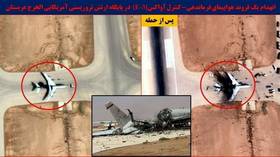
US and Arab officials cited by the Wall Street Journal said the same strike also hit a Boeing E-3 Sentry airborne warning and control system (AWACS) aircraft, a critical surveillance platform. The IRGC said the aircraft was “100% destroyed” in the strike, while open-source flight tracking data indicated that multiple such planes had been stationed at the base in recent weeks. The E-3, a key command-and-control platform, costs around $270 million to produce. CENTCOM has not publicly confirmed the extent of the reported damage.

Iranian media on Sunday claimed fresh drone and rocket strikes on US-linked facilities in Iraq, including targets around Baghdad and the Victory Base complex. Earlier Reuters reported a drone strike on a US diplomatic facility near Baghdad airport on March 10, followed by further rocket and drone attacks on March 17.

How many bases does the US have in the Middle East?

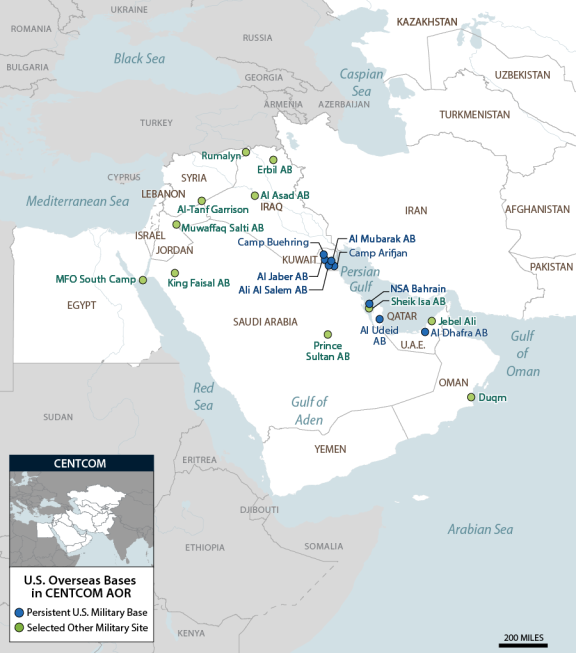
The US operates a network of around 20 permanent and temporary military bases throughout the Middle East, with the largest – Al Udeid Air Base in Qatar – hosting 10,000 troops and serving as the forward headquarters for CENTCOM. The US maintains a network of major military bases across Bahrain, Egypt, Iraq, Jordan, Kuwait, Qatar, Saudi Arabia, and the United Arab Emirates, and as of mid-2025, there are between 40,000 and 50,000 American troops stationed in the region at any one time.

RT


These bases surround Iran from the west and south, and are backed by US naval assets in the region, including the USS Abraham Lincoln in the Arabian Sea, alongside amphibious forces in the region, including the USS Tripoli, with additional carrier reinforcements expected. The USS Gerald R. Ford has been pulled out of the Middle East and moved to port for repairs following a fire, leaving the Lincoln as the only carrier currently on station.

Recent deployments have further expanded the US military footprint in the region. The arrival of around 2,500 marines and 2,500 sailors has pushed the total number of American troops in the Middle East to more than 50,000, roughly 10,000 above typical levels, according to a US military official cited by the New York Times.

Which US bases have been hit?

All of the US bases in the region have been described as “legitimate targets” by the Iranian military, and facilities in seven countries have already been hit by Iranian missiles and drones.

As of late March, the following US bases and associated facilities have been struck by Iranian missiles and drones, often more than once, according to US officials, media reports, and regional sources:

  • Naval Support Activity, Bahrain
  • Erbil International Airport, Iraq
  • Al-Asad Airbase, Iraq
  • Victory Base complex (Baghdad International Airport area)
  • Muwaffaq Salti Air Base, Jordan
  • Ali Al-Salem Air Base, Kuwait
  • Camp Buehring, Kuwait
  • Camp Arifjan, Kuwait
  • Mohammed Al-Ahmad Naval Base, Kuwait
  • Al-Udeid Air Base, Qatar
  • Al-Dhafra Air Base, UAE
  • Jebel Ali Port, UAE
  • Prince Sultan Air Base, Saudi Arabia.

Several of these strikes have been confirmed by US officials or reported by Reuters and other international media, while others remain based primarily on Iranian claims.

What’s on Iran’s target list?

The strikes on American air bases serve the immediate goal of reducing US ability to conduct air operations over Iran and forcing aircraft to operate from more distant locations. Iran’s campaign has also focused heavily on radar and missile defense systems, including THAAD-linked installations and early warning radars across the region.

Special Consultant to United Nations RESIGNS – LEAKS NUCLEAR ATTACK PLANNING FOR IRAN

Muhammad Safa was the Executive Director and Main Representative at the United Nations in New York City, for the “PVA” a designated “Special Consultative Group” handling Human Rights issues.   He resigned 48 Hours ago, and tonight, he has LEAKED NUCLEAR ATTACK PLANNING in the Iran conflict.

[…]

Via https://halturnerradioshow.com/index.php/component/content/article/special-consultant-to-united-nations-resigns-48-hours-later-leaks-nuclear-attack-planning-for-iran?catid=17&Itemid=101