
The Kievan Rus: Viking Founders of Ukraine
Real Crusades History (2023)
Film Review
In the early 9th century (around the same time they established the Duchy of Normandy in norther France), Viking seafarers were also trading with (and plundering) Slavic settlements along various Baltic Rivers and the Black and Caspian Sea. According to some historical accounts they made it as far east as Constantinople and as far west as Baghdad. Large caches of silver coins from the Abassid Caliphate have been found in Sweden. The Vikings called themselves Rus, which may be an old Norse term for “oarsmen” or a Byzantine term for blond hair. Nearly all this history derives from Arabic accounts as 9th century Vikings had no written language.
The first Rus trade route extended from the Gulf of Finland via the Niva River, Lake Ladiga and the Volkhoff River. In 861-62 AD, the Vikings established permanent Rus settlements in Svaraja, Ladoa and Novgorod. Muslim chronicler The Muslim historian Ibn Rusta, who visited Novgorod in the 10th century, estimated its population in the thousands. Seizing control from the Slavs of the area’s major trading towns, the Rus became the new ruling elite. They raided other Slavic settlements for furs and slaves, which they sold to Muslims and the Byzantine Empire.
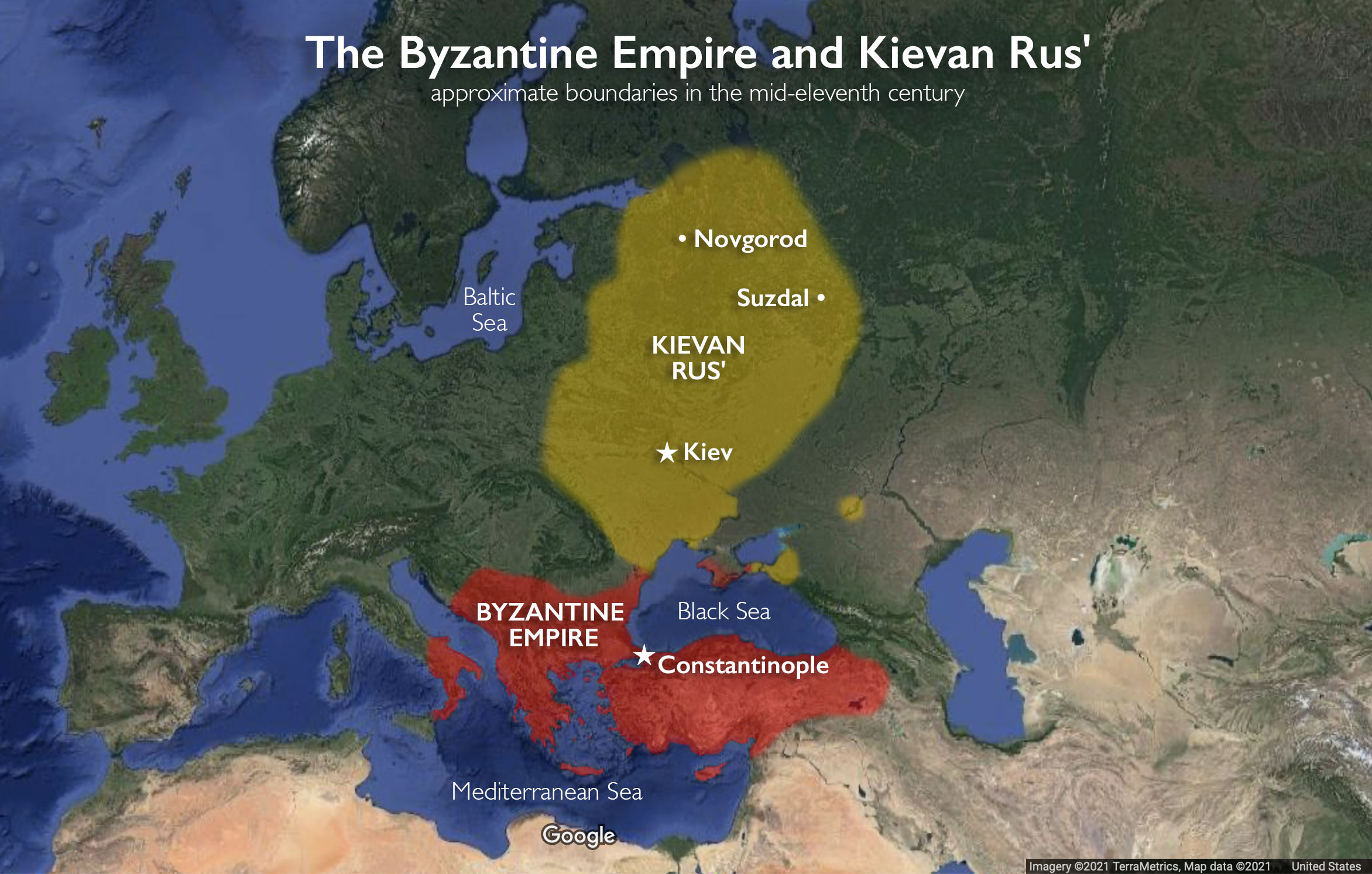
In 881 Oleg the Wise captured Kiev with his army of Vikings and slaves, which he made the capitol of the state of Kievan-Rus (a territory covering parts of modern day Russian, Ukraine and Belarus. In 911, Rus were allowed to join the Byzantine army (usually as mercenaries) after Kievan-Rus signed a treaty with Constantinople agreeing not to plunder Byzantine ships. In 941, Oleg’s son Igor launched an unsuccessful attack against Constantinople.
The Rus traded extensively with Muslim traders via Bulgar intermediaries with the Rus providing baltamber, walrus tusks slaves, furs, Frankish swords and beeswax and the Arabs offering silver coinage, silks, spices, perfumes, and ceramic beads.
Muslim historian Ibn Fadlan describes the Rus as barbaric pagans who wore cloaks and baggy trousers, tattooed themselves (a practice copied from Turkic traders) and washed daily in communal water. For security purposes, the Rus tended to melt down the silver and gold they earned through trade and wear it as jewelry. Ibn Fadian describes the Rus king having sex in open court with female visitors. Slain Rus warriors were dispatched to the afterlife in burning ship cremations, with their women and slaves were ritually washed and sacrificed.
Igor’s son Svyatolslav was the last of the Kievan princes to adhere to Scandinavian traditions. By the time his son Vladimir I came to the throne, the Rurik line had totally embraced Slavic culture. Vladimir himself agreed to be baptized when the Byzantine emperor offered his sister in marriage.
 The Most Revolutionary Act
Here in Sweden, it is believed that the name of the Rus’ came from the Old Norse word “roðer”, which means “rowers”. It make sense, as they lived at the coast between straight East of Stockholm and almost up to Gävle. The area was called Roden and today it is part of the Roslagen area, that streches farther inland. Roslagen translated to English means basically “row strokes“.
LikeLike
Very interesting background, SasjaL.
LikeLike
The Kievan Rus was the beginning of the Russian people. Through centuries the Vikings mixed with several Slavic tribes which produced the Russian people. As an old and now long dead professor once told me, ‘They were called the Kievan Rus for a reason. They weren’t called the Kievan Ukrainians. The Galicians in the West of the country were the Ukrainians who always hated the Russians.
LikeLike
Important background, papasha408. Thanks.
LikeLike