
 Episode 35 Sister Republics: France and the US
Living the French Revolution and Age of Napoleon
Dr Suzanne M Desan
Film Review
Although they were supposedly sister republics, by 1798 France and the US were at war on the seas. This is yet another chapter in US history Americans never study in school.
In 1789, the US leadership structure was was divided into two opposing parties: the Federalist Party and the Democratic-Republican Party. The Federalists wanted to keep political control in the hands of elites and were deeply distrustful of the French drive for equality. The Democratic-Republicans, who were wary of Federalist links to money interests, loved the French revolution.
In 1792 (during Washington’s first term as president), Edmond-Charles Genet was the French envoy to the US under the Girondin-controlled National Convention. The Convention’s goal was 1) to get the US to repay their war debt to France, 2) to negotiate a trade treaty between the two countries, and 3) to foment revolution in Spanish and British controlled parts of North America.
When Genet landed in South Carolina, President Washington was determined to keep the US neutral (to improve trade relations with Britain) in the war between Britain and France.[1] In contrast, the American public were wildly enthusiastic about the French revolution and cheered Genet wildly as he traveled north to Philadelphia to meet with Washington.
The Democratic-Republican clubs were very angry with Washington for rebuffing Genet’s requests for debt repayment and a new commercial treaty. The latter was proposing to raise troops (from Native American and Kentucky supporters) to seize New Orleans from the Spanish and set up independent republic. Democratic-Republican merchants were extremely frustrated with Spanish authorities for refusing them access to the Mississippi River for shipping.
Washington, in turn, was very frustrated with Genet for organizing privateers to attack British ships.[2] When Treasury Secretary Alexander Hamilton threatened to fire on Genet’s ship, the latter threatened to call for a popular uprising against the Federalist government.
When former Saint Domingue (Haiti) slave owners began arriving in Philadelphia, Genet was unsuccessful in persuading the French naval fleet that transported them to head north to attack the British city of Halifax or to take part in a planned insurrection in south Florida.
In 1794, the US signed the Jay Treaty with the UK, eliminating tariffs on each other’s imports. When the UK technically violated the treaty by refusing to recognize the US right to trade with other countries and allowing British privateers to impress American sailors, angry Democratic-Republicans picketed Washington’s home.
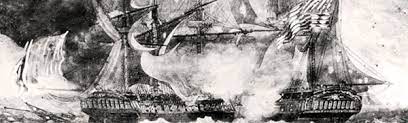
When Washington’s successor John Adams sent three diplomats to stop French privateers from attacking US ships, Talleyrand, the French foreign minister, requested a bribe.[3] The result was a two-year quasi-war that ended US trade with France and empowered US privateers to raid French vessels. It led the US to expand the US military, build war ships and set up the Navy Department.
It also led to the passage of the Alien and Sedition Act in 1798, which directed the targeting of suspicious foreigners (and Democratic-Republican congressmen) for articles and pamphlets that attacked the US government. One Democratic-Republican congressman was thrown in prison.
By 1880 Adams had negotiated a peace agreement and reopened trade with France. As part of the truce France signed with Spain in 1800, the Spanish returned Louisiana, which the French sold to President Thomas Jefferson in 1803.
[1] The Federalists wanted to be neutral favoring the UK, and the Democratic-Republicans to be neutral favoring France.
[2] French privateers started seizing goods from US ships after Washington gave sanctuary to counterrevolutionaries from France and Haiti.
[3] It came to be known as the X,Y,Z affair, which was how Adams referred to Talleyrand’s agents.
Film can be viewed free with a library card on Kanopy.
https://www.kanopy.com/en/pukeariki/watch/video/149323/149391
 The Most Revolutionary Act
Pingback: Napoleon’s Ambitions in the New World | The Most Revolutionary Act