
Episode 32 The Directory: An Experimental Republic
Living the French Revolution and Age of Napoleon
Dr Suzanne M Desan
Film Review
During the moderate republic created by the Thermidorians (1795-99), France significant expanded their national territory in an effort to spread the Revolution abroad. Meanwhile the Jacobins, rebranding themselves as the Pantheon Club, campaigned for a return to universal male suffrage, public education and direct democracy.
Following his release from prison, Gracchus Babeuf (see The Thermadorian Reaction and the Gilded Youth), who campaigned for redistribution and communal property ownership, became a Pantheon Club leader. When the Directory closed down the Pantheon Club, they went underground. Calling themselves a “Conspiracy of Equals,”* they formed revolutionary cells called the Secret Directory and plotted insurrection. Infiltration by police spies led to the arrest of Babeuf and his supporters, who used their trials as a platform to expound on their political goals. Nearly all of them were acquitted though some were deported. Babeuf and one supporter were guillotined.
Marx and other early socialists were inspired by Babeuf, whose trial allowed his political beliefs and strategies (especially the idea of organizing for revolution via small underground cells) allowed Jacobinism to live on.**
The Directorate allowed Catholic churches to reopen although churches were still banned from holding outdoors processions, ringing church bells or allowing non-juring priests (priests refusing to swear loyalty to the Revolution) to hold mass.
The Directory also established a specialized university called the Grandes Ecoles that trained doctors, teachers, industrial experts and military and civil engineers. It also set up the National Institute, a think tank aimed at educating the common people in Enlightenment ideals. According to Desan, it developed an early theory of evolution 70 years before Darwin did.
In an effort to replace Catholicism with a new civic religion, the Directorate held public festivals every ten days and set up father-led workshops for groups of families to learn about Theophilanthropy, a new deist religion.*** People participating in these new workshops (there were 16 in Paris) read the Koran, Confucius, Socrates and Seneca. Theophilantropy never caught on in the provinces
Under the Directory, in 1793 the French government assumed responsibility from the churches for public education. They established guidelines for every district with more than 100 people to have one male and one female primary teacher. After Year 13 (1804), men had to pass a literacy test to vote.
They also established secondary schools for sons of urban property owners that taught science, history, math, philosophy and Enlightenment ideals. Even though the schools were secular and banned the teaching of religion, many of the first teachers were clergy.
In the provinces, many parents demanded the schools teach Catholicism, and some villages chased out chased out republican teachers.
Because The Directory was committed to a republic governed by elites, it never won popular support.
*The Italian revolutionary Filippo Buonarroti published a book called The Conspiracy of Equals, which informed the Carbinari (an underground Italian revolutionary movement).
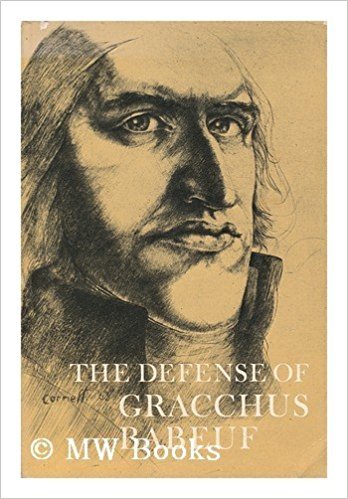
**See The Inherent Right to Rebel: The Defense of Gracchus Babeuf
***In Deism, God is portrayed as a clock maker who, after creating and setting the universe in motion, left human beings to their own devices.
Film can be viewed free with a library card on Kanopy.
 The Most Revolutionary Act