
ANGOLA, La. (AP) — A hidden path to America’s dinner tables begins here, at an unlikely source – a former Southern slave plantation that is now the country’s largest maximum-security prison.
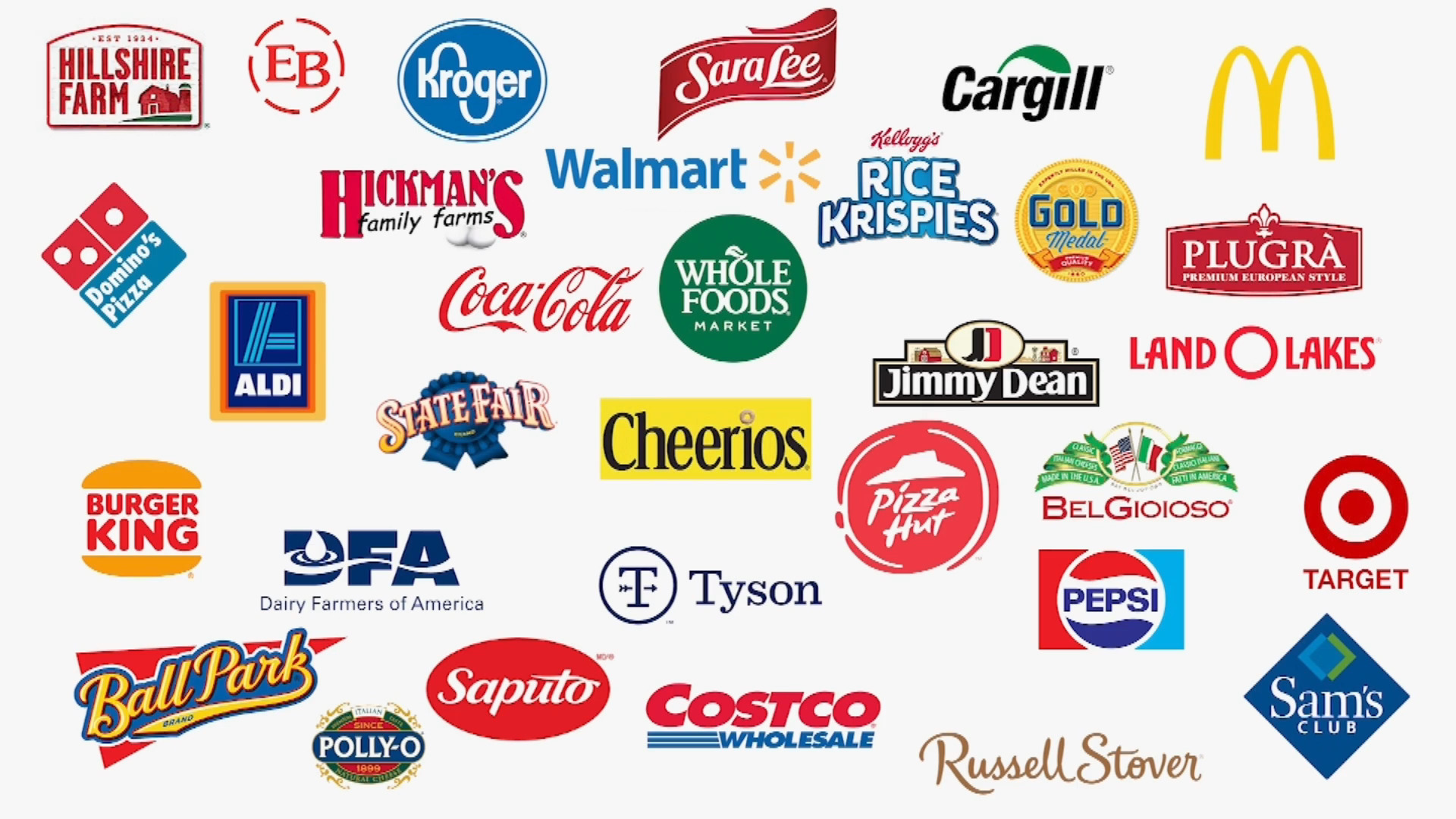
Unmarked trucks packed with prison-raised cattle roll out of the Louisiana State Penitentiary, where men are sentenced to hard labor and forced to work, for pennies an hour or sometimes nothing at all. After rumbling down a country road to an auction house, the cows are bought by a local rancher and then followed by The Associated Press another 600 miles to a Texas slaughterhouse that feeds into the supply chains of giants like McDonald’s, Walmart and Cargill.
Intricate, invisible webs, just like this one, link some of the world’s largest food companies and most popular brands to jobs performed by U.S. prisoners nationwide, according to a sweeping two-year AP investigation into prison labor that tied hundreds of millions of dollars’ worth of agricultural products to goods sold on the open market.
They are among America’s most vulnerable laborers. If they refuse to work, some can jeopardize their chances of parole or face punishment like being sent to solitary confinement. They also are often excluded from protections guaranteed to almost all other full-time workers, even when they are seriously injured or killed on the job.
The goods these prisoners produce wind up in the supply chains of a dizzying array of products found in most American kitchens, from Frosted Flakes cereal and Ball Park hot dogs to Gold Medal flour, Coca-Cola and Riceland rice. They are on the shelves of virtually every supermarket in the country, including Kroger, Target, Aldi and Whole Foods. And some goods are exported, including to countries that have had products blocked from entering the U.S. for using forced or prison labor.
Many of the companies buying directly from prisons are violating their own policies against the use of such labor. But it’s completely legal, dating back largely to the need for labor to help rebuild the South’s shattered economy after the Civil War. Enshrined in the Constitution by the 13th Amendment, slavery and involuntary servitude are banned – except as punishment for a crime.for labor to help rebuild the South’s shattered economy after the Civil War. Enshrined in the Constitution by the 13th Amendment, slavery and involuntary servitude are banned – except as punishment for a crime.
That clause is currently being challenged on the federal level, and efforts to remove similar language from state constitutions are expected to reach the ballot in about a dozen states this year.
Some prisoners work on the same plantation soil where slaves harvested cotton, tobacco and sugarcane more than 150 years ago, with some present-day images looking eerily similar to the past. In Louisiana, which has one of the country’s highest incarceration rates, men working on the “farm line” still stoop over crops stretching far into the distance.
[…]
 The Most Revolutionary Act
You already know how I feel about this Dr. Bramhall. Slavery was never meant to end, and it did not. They just changed the terminology, but want to get bent-out-of-shape when the claim is that folks are running into stores stealing corporation’s shit when they got that product via forced slave labor, and so what did it cost them? They can steal shit, get free labor, but no one had better steal their already stolen shit??!! Don’t that beat all!!!! Let me just ‘quietly’ exit before I explode over this all over again.
LikeLiked by 1 person
Shelby, I thought I read about this on your post first, so I’ve been researching online about the country of Angola and its connection to Angola, Louisiana. My maps show the prison in Louisiana sits at the crook of the “L” in Louisiana, where the Mississippi River enters the delta area, on its way to the Gulf of Mexico. This particular piece of turf was part of Thomas Jefferson’s Louisiana Purchase in 1803 from Napoleon Bonaparte, who was funding his wars in Europe. I further suspect that people like 15th US President James Buchanan (1857-1861) was one of the investors in land acquired from that purchase.
Buchanan, a bachelor Democrat from Pennsylvania, lost his re-election bid to Stephen Douglas but he was a strong advocate for states’ rights at the time.
Fast forward to 2018, when Ruth Buchanan died. A long obituary in the NYT gave the facts of her life, including longstanding family relationships between the Dows of Dow Chemicals and the Buchanans, who had made their fortunes in Dallas in oil, timber, and cotton.
No one mentions slavery, but the country of Angola is on the southwest coast of Africa and was colonized by Portugal. It gained its independence in the late 1900s, but its population is a mix of Portuguese, Roman Catholic, and European protestants, plus blends of various African tribes. Angola is bounded on the north by the Democratic Republic of the Congo. My guess is this strip of the African coast was a slave trading hub, run by the Portuguese.
My interest stems from the name of James Buchanan Duke, who endowed (one of my) alma maters, Duke University, which changed its name from Trinity College in 1923 or 1924. Mr. Duke made his money from the tobacco industry; and Durham, NC smells of tobacco even now.
Just so you know, I’m paying attention.
LikeLiked by 1 person
Thank you, Katharine. I appreciate that.
LikeLiked by 1 person
Interesting history, Katherine. Thanks.
LikeLiked by 1 person
it seems remarkable now, Shelby, that Nixon was totally open about the War on Drugs being aimed at locking up more people of color. Thanks to Jim Crow laws (allowing arbitrary imprisonment of all Black men) slavery never ended, and as Michelle Alexander outlines so carefully in The New Jim Crow, the War on Drugs is the New Jim Crow. Most drug users have always been white, but for the most part, it’s African Americans who are disproportionately prosecuted for it.
LikeLiked by 2 people
Pingback: US prisoners part of hidden workforce linked to hundreds of popular food brands | Worldtruth
Dr. B,
This represents another piece of the puzzle I outlined above. The US has its own dynasties, including the Roosevelts, Rockefellers, and the Morgans.
The internationally known Rothschild banking family, which dates back to the 15th or 16th century, has ties to every profitable enterprise, one way or the other. Nathan Rothschild, a son of the patriarch, moved to London and knew of Napoleon’s defeat at Waterloo before anyone, then made a killing when others panicked and sold good stocks. A descendent, a Baron Rothschild, was involved in crafting the Balfour Declaration in the early 1900s, which promised Palestine to the Jewish refugees from the work camps in Russia. Henry Kissinger, a Zionist who died at 101 last year, was a prominent figure in politics through most of my life, most notably in the orbit of Richard Nixon. Nixon’s “War on Drugs” was an extension of US drug restrictions since the creation of the FDA in 1906 or 1907, and the Harrison Narcotics Act of 1914. These were led by Teddy Roosevelt’s administration, then by Woodrow Wilson, with the Federal Reserve in 1913.
Initially, the “China trade” that brought so much wealth to American family dynasties, was a euphemism referring to not only to tea and trinkets, but to opium. Roosevelts, Vanderbilts, and others were involved in the Dutch East Indes Trading Company.
Nixon was just a pawn in the international, multi-dimensional game of stakes.
LikeLike
Very interesting, Katherine. Thanks for sharing. They should teach this stuff in school, but don’t obviously.
LikeLike
Pingback: Kroger Supermarket Chain to Close 60 Stores Across the U.S. – The Retail Collapse has Begun | Worldtruth