
Dmitry Orlov
This war is a world war and it will only be completed once the United States, along with its allies, is completely exhausted and no longer poses a risk to anyone. Only then will the demon that causes men to fight wars for profit finally be exorcised.
Numerous analysts have pointed out that Russia’s military strategy in the former Ukraine swiftly shifted from offense in the initial phases, leading up to the İstanbul peace agreement, negotiated and provisionally agreed to in March of 2022, to defense once the Kiev regime (or, rather, its American and British masters) reneged on the deal.
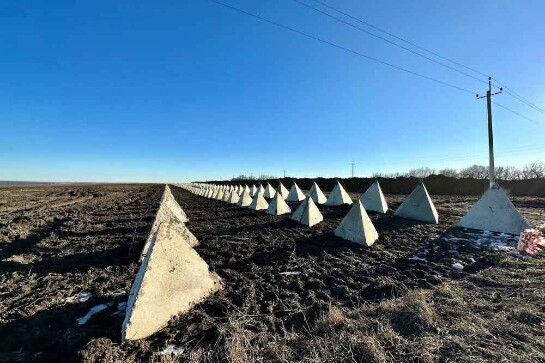
This was an obvious and, as far as it went, accurate observation: prior to that change in strategy, the Russian forces seized control of some 100.000km2 of territory; past that point, they erected fortifications along a relatively straight 1000km line, which they have held ever since, making scant efforts to occupy new territory except to move Ukrainian artillery farther away from the thickly settled Donetsk in an effort to save the lives of civilians. But there is more to it than just offense and defense.
Russian military science defines two paths to victory and neither mindless offense nor mindless defense happens to be either one of them.Although one of Russia’s greatest generals, Alexander Suvorov (1730-1800), titled his book “The Science of Winning,” there is far too much chance to war to make military science a true hard science. Nevertheless, military men always try to generalize the experience of various campaigns in order to formulate simple laws, which they then attempt to apply in campaigns that follow.
A crowning achievement along these lines is the book “Strategy” by general Alexander Svechín (1878-1938), who is often quoted by general Valery Gerasimov — who is someone whose name you should definitely remember when thinking about current Russian military strategy. Gerasimov is Chief of the General Staff, First Deputy Minister of Defense, member of the Security Council, decorated Hero of the Russian Federation.
[…]
A war between equal forces is, according to Svechín, always won by the method of exhaustion: the destruction of the enemy’s key forces, not through a chain of defeats, but by a consistent arithmetic advantage in the ratio of losses such that the enemy cannot win. The much better than 10:1 kill ratio between the Russian and the Ukrainian forces, quite copacetic according to Russian military doctrine, never gave the Ukrainian side any chance of victory — ever, at all.
In a battle of equal forces, or against a superior force attempting to employ the strategy of devastation, the strategy of exhaustion inevitably wins: the attacking army is ground down and melts away; its morale and its armaments deteriorate; its material and technical supplies dwindle. Meanwhile, its adversary, which initially set course for exhausting the enemy, spends its energies on calmly and methodically conserving and building up its strength.The aforementioned general Gerasimov has quoted general Svechín numerous times during his policy speeches and the distinction between the strategy of devastation and the strategy of exhaustion fully explains the course of Russia’s Special Military Operation in the former Ukraine. Let us count the ways:
• Bridges across the Dnieper were left intact but military factories and warehouses were attacked using precision rocket strikes. The key was not to destroy the armaments or to hinder their delivery to the front but to prevent their replacement once they are destroyed.
• There was a partial mobilization, very selective, with a strong emphasis on the very successful effort of recruiting volunteers. Only trained, experienced fighters were chosen to be retrained using the latest equipment and methods and sent to the front.
• There was a complete absence of attempts to organize a decisive battle in what was initially heralded as a campaign of liberation; however, the Ukraine’s planned devastating attack on Donetsk and Lugansk was successfully thwarted at a minimal cost in lives.
• As far as attacks on Ukrainian lines, all that happened was that a certain disreputable character (Yevgeny Prigozhin, now dead) and his private military company (Wagner PMC, now disbanded) were given a carte blanche to recruit, train and send into battle a large number of other disreputable characters — convicts who had been cluttering up Russia’s jails. This mission was a success, since Bakhmut/Artyomovsk is now under Russian control and the ability of the Ukrainian forces to swiftly relocate and regroup along the front has been destroyed.
• There was a concerted effort to pull the Ukrainian Armed Forces in all directions at once, not allowing them to concentrate forces at any given point of the front. They were prevented from carrying out a single decisive attack, but forced to continuously shore up their defenses everywhere at once.
• Priority was constantly given to minimizing losses over advancing. The soldiers at the front are highly motivated to achieve decisive victory and are sometimes enraged by what they see as excessive caution and deliberate slowness of the General Staff.
• Specific, though generous, amounts have been included in the three-year budget plan for the continuation of the Special Military Operation. The Russians took the American pledge of support of “as long as it takes” at face value and have planned accordingly.
• The Kremlin has consistently refused to alter the command of the General Staff and the Defense Ministry, constantly confirming that they are faithfully and successfully carrying out the original plan in spite of a barrage of criticisms as to the speed of advance and the lack of decisive battlefield victories.
• The negotiating stance vis-à-vis NATO has been as follows: “Here are our security requirements; we are always ready to negotiate — of course, in recognition of the facts on the ground and the non-negotiable conditions of denazification, demilitarization and neutrality of the Ukraine, rollback of NATO to 1997 lines, etc.” If US/NATO aren’t agreeable yet, then that’s because they are not properly devastated yet and the Special Military Operation must continue until they are.
• The internal development policies: Russia refused to militarize its economy and instead did everything possible to make itself financially and economically independent from the West — with considerable success. After suffering a slight downturn in 2022, it returned to solid economic growth in 2023, a balanced budget, moderate inflation and some income growth. Severing ties with the West has been a positive boon for Russia — but that’s a subject for another article.This is the most detestable, least honorable war in all of Russian history.
• If is being fought against an enemy that has no valor, no honor, not even shame, does not care about its reputation and is driven only by an unslakable thirst for wartime profits. It fights until a war stops being profitable and then runs away — as it did from Korea, Vietnam… Afghanistan… as it will from the Ukraine.
• It exercises a fair amount of control over global finances, international legal structures, technological supply chains and world trade. Luckily, Russia has found ways to circumvent these controls and even to make this process profitable.
• It is constitutionally incapable of honoring its own word. As Henry Kissenger pointed out, it is safer to be its enemy than its friend. Deals negotiated with it are worth less than the paper on which they are written.
• It is armed to the teeth and, hiding behind two oceans, is unreachable for land warfare. Luckily, Russia has a variety of weapons, both conventional and nuclear, to dissuade it from ever considering entering into a direct military conflict with Russia.
But it has some key weaknesses as well.
• It has a weak, obsolete industrial base that simply cannot keep up with wartime production.
• It has a corrupt and degenerate political class and a disunited, badly educated and undisciplined population.• Its arms industry is organized for profit rather than victory.• Its military is manned by the lowest of the low who enlist only because they are given no better options.
• And it has severe structural economic problems, such as runaway debt, that are growing progressively worse.
Thus, a winning strategy against it is simply to wait for it to collapse on its own, fighting off or frustrating its attacks as needed.
Against such an adversary, the only successful strategy is the strategy of exhaustion. In the former Ukraine, the adversary bet on the strategy of devastation and was very slow to realize that it is a prescription for disaster. It took the loss of over 383.000 Ukrainian soldiers, 14.000 pieces of armor, 553 aircraft, 259 helicopters and 8.500 artillery pieces, coupled with the realization that in spite of these disproportionately heavy losses the Ukrainian forces were unable to penetrate even the first tier of Russian defenses for the adversary to start to suspect that something might be amiss.
Even then, it took months of internal politicking to convince the various internal stakeholders that the Ukrainian operation is no longer going to be a profit center for them and to shift their focus to Israel/Gaza and to Yemen.The Ukraine is already a victory, and not just for Russia but for the whole world. By now the entire world outside the West has been shown the correct strategy of prevailing against this adversary: it is general Svechín’s strategy of exhaustion.
The former Ukraine is but the current battlefield in this war — a piece of Russian territory that has temporarily fallen into enemy hands, as has happened several times in Russian history. As has happened every single time before, it will be restored to Russia and rebuilt, complete with new monuments to new fallen heroes.
But this war is about much more than that. It is a world war and it will only be completed once the United States, along with its allies, is completely exhausted and no longer poses a risk to anyone. Only then will the demon that causes men to fight wars for profit finally be exorcised.
[…]
Via https://boosty.to/cluborlov/posts/d0359694-dfbd-4b65-b711-5140b6c45e67
 The Most Revolutionary Act
Don’t count on it. While the US has all the weaknesses Orlov mentions, it was built on war and conquest. It will find new enemies to fight.
LikeLiked by 1 person
I agree, Katherine, the US will keep fighting until the dollar crashes, but people are predicting this will happen before 2025.
LikeLiked by 1 person
Will people ever learn that fighting fire with fire only creates bigger fires? How badly must it hurt to be enough?
LikeLike
“It is a world war and it will only be completed once the United States, along with its allies, is completely exhausted and no longer poses a risk to anyone. Only then will the demon that causes men to fight wars for profit finally be exorcised.”
Do not underestimate this shithole. That is what is missing here. The US needs to be BOMBED into oblivion; it cannot be “exhausted” into oblivion. You must try and think like the endless warmongers that rule this shithole. Their thirst for war, their weapons for war are never exhausted. They will drag this country to the brink of collapse, which is occurring now, and its people into graves before conceding that they cannot win a war but will continue to find countries to start a war with and then moving on when it suits them, thus never letting the world get on with the business of living. This monster that calls itself, “The United States of America” is not something that can be diplomatically dealt with or exhausted, it must be DESTROYED; BOMBED into oblivion!! That is the ONLY way!!!
LikeLike
Don’t you realize, Shelby, that the US is polluting itself to extinction? Russia is overcoming by making trade deals and import-export arrangements that by-pass the dollar, while the US has become a wasteland of cheap, broken, and ultimately useless foreign imports. The plastics industry is huge in the US and is staffed largely by Native Americans. Putin is smart to wait. That’s one of the things I like and respect about him.
LikeLike
Katharine, the US is not just “polluting itself to extinction,” it is polluting the WHOLE world to extinction. The world doesn’t have time to wait for the US to finally completely collapse, implode or what have you while the Russians, “wait it out.” The marine life is being killed as I type this by ingesting that plastic that you speak of. Everyone on this planet is already a walking toxic factory poisoned by all the chemicals in the useless junk that Americans are told to purchase every year. The majority of Americans are not like you and I who just buy shit when we absolutely need it and buy at thrift stores for if they did, Amazon would be bankrupt by now. I stand by my initial comment.
LikeLiked by 1 person
I’m only responding to your plea for Russia to bomb the US. Why invite the Russians to add to the toxicity.
LikeLike
Pingback: The Russian Art of Victory | Worldtruth