
 [Source: vertassets.blob.core.windows.net]
Lauren Smith
Covert Action Magazine
U.S. school kids, hospital patients, and prison inmates share food poisoning, while food liquidators boast they turn “trash into treasure.”
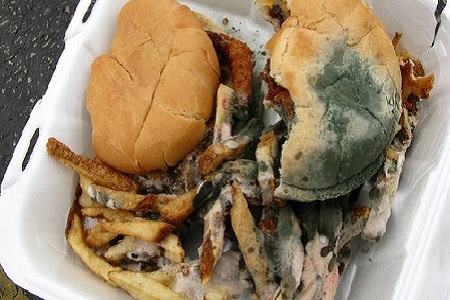
Operating in the shadows is easy in the United States secondary food market, as few question what happens to food that exceeds its expiration date in leading supermarket chains across the nation. Well, truth be told, expired food gets reprocessed, repackaged, relabeled, and resold to institutions, discount retailers and restaurants.
With scant regulations in place for repurposed food, and institutional purchasing specifications silent, food liquidators underbid their competitors and win contracts nearly every time. In the secondary food market, you get what you pay for, and never has the saying “garbage in, garbage out” been more appropriate.
No matter how much hot sauce or gravy is added as camouflage, spoiled food products are unfit for human consumption and cause foodborne illness. Here, what you don’t know can kill you.
[…]
Considering that food poisoning is an embarrassing indicator that reveals in its gory horror the systemic corruption of what turns out to be an unregulated food market, it is highly probable that there was undercounting back in 2011—especially in institutional settings. And it is more than likely that things are even worse in 2022.
When oversight agency reports are no longer published, it is clearly because industry statistics and agency performance metrics do not look good. Cover-ups at the federal level are routinely done by appointing incompetent or industry-compromised agency heads, and by defunding key reporting departments, and reducing analytic staff positions and field inspectors.
Despite oversight agency neglect, both schools and prisons have been independently studied for foodborne illness outbreaks. While these reports/articles are also outdated, their shallow analysis remains current. The accepted prevailing narrative blames foodborne illness outbreaks on food handlers that failed to follow U.S. Department of Agriculture (USDA) protocols for cleanliness and neglected to maintain the proper temperatures for food storage and service.
While not to detract from standards set by the USDA, there are no reports that expose the lethal dangers of the secondary food market. Moreover, unlike the primary food market, these repackaging facilities are not inspected, despite their erroneous claims of USDA or FDA certifications.
A media spokesperson for the U.S. Food and Drug Administration (FDA) explained that “the FDA doesn’t oversee meat and poultry, only dairy products.” And that “expiration dates are not regulated, only food safety.”
This is a double-edged sword. On the one hand, food that is spoiled, contaminated, or toxic but within its expiration date is unquestionably unfit for human consumption. On the other hand, expiration dates are necessary as packaging, coloring and processing conceal food quality from consumers, as well as purchasing agents and food handlers.
When a food product’s expiration date is concealed by repackaging and relabeling, all food safety bets are off. The reselling of expired food is a black market in broad daylight.
Most individuals interviewed at the BOP for this article were not familiar with the existence of the secondary food market. Interviews included procurement personnel, a dietitian, an attorney, a policy analyst, and two media representatives. Only the National Food Service Administrator (NFSA) understood that, when bid specifications are silent on this fundamental go/no go criterion, food vendors selling fresh primary market products cannot compete fairly against secondary market expired food liquidators.
Undeniably, recycled food has a lower price point than fresh food. Thus, secondary food liquidators can dominate the market by selling inferior products.
[…]
Value and Shelf Life
However, in procurement, value and shelf life need to be decision-making factors, as well as the acquisition cost. For example, if cafeteria meals make school children, hospitalized patients, and prison inmates sick and perishable food products are being thrown out prematurely—because their shelf life was already compromised prior to delivery—the initial cost savings is immaterial.
[…]
Reporting “Problems with Food”
Presently, consumers can report “a problem with food” at “restaurants,” or they can report a rotten “egg,” etc., on the FoodSafety.gov website or on the U.S. Food Safety and Inspection Service (FSIS) webpage. However, evidence is required, such as the original container or packaging. This information is not readily available in institutional settings as most subsistence meals are devoid of their original packaging. It appears, by design, there is intentionally no place to report unsafe institutional food.
Recommendations are made on the FoodSafety.gov website to contact local health departments to report foodborne illnesses. However, in the case of federal prisons, no oversight authority inspects its kitchens.
[…]
Secondary Food Market
Yes, there are many ways to contract food poisoning in any kitchen by unclean conditions and the food handlers’ failure to observe USDA/FDA protocols, but the probability of illness is increased exponentially when food products are delivered already expired.
[…]
According to the USDA media representatives, the USDA’s FSIS does not inspect secondary food processing facilities. Therefore, repackaging facilities that advertise they have FDA and USDA certifications misrepresent themselves. However, most secondary food market liquidators do not have websites or list principals. This omission allows LLCs to form and dissolve easily when their contractual performance issues become so severe that their principals are debarred from bidding on government contracts.
[…]
Consider that there is no limit to the secondary market’s reselling capabilities. Expired food products travel a conga line until the liquidator finds a buyer so desperate, inept, or corrupt that it will purchase anything. For example, food rejected by restaurants and discount stores can be sold to schools. Food rejected by schools can be sold to hospitals and prisons. Finally, when prisons reject the delivery, it is sold to the military. Consider that every delivery and site inspection affects temperature and deducts time from expired products’ shelf life. Unquestionably, both factors further reduce product safety.
A former sailor stationed aboard the aircraft carrier Kitty Hawk in the Persian Gulf during Operation Enduring Freedom reported that a food delivery contained beef stamped with REJECTED DOC (Department of Corrections). Still, the kitchen staff was ordered to cook and serve it because there was “a ship full of sailors and not enough food to last them until the next delivery.”
In prisons, food handlers who complain about serving meals that are not fit for human consumption are disciplined, relocated or fired.
“They had about 100 bags of rotten potatoes,” Pine said. “You could smell them,” and “they had black and green mold all over them.”
“They told me I was trying to start a riot,” Pine said. “I said: ‘No, you’re serving rotten potatoes. That’s going to get to the yard.”
[…]
Corruption in Prison Food Procurement
While most of the articles involving corruption in Miami FDC involve assault, rape and the smuggling of contraband, state-run and privately run facilities describe the mechanics of crime in food procurement. Bid specifications that eliminate primary market competition combined with manuals that allow expired and spoiled food items to be accepted by food handlers and that do not track rejected food create an environment ripe for kickbacks, bribes, and hush money.
However, prosecutions might be more embarrassing for BOP than simple staff dismissals. Moreover, keeping negative information from the public might have a higher value to the U.S. Department of Justice (DOJ)—as its Attorney General is answerable to the president—than preventing and/or prosecuting white-collar criminals.
Consider that the following headline is not good publicity for the facility’s warden: Oregon DOC Food Manager Takes Over $1 Million in Bribes, Feeds Prisoners “Distressed” Food.
According to Prisonlegalnews.org, “between mid-2000 and December 2006, the Food Service Administrator (FSA) ‘supplemented’ his $79,000 annual salary with at least $1,132,000 in bribes and kickbacks from brokers who sold dubious quality food to the ODOC.
Under the FSA’s watch, daily food costs in Oregon’s prison system dropped from $3.95 per prisoner ($1.32 per meal) in 1997 to $2.38 ($0.79 per meal) in 2006—a 40 percent reduction.”
Wardens are evaluated on the cost to shelter inmates, and up-front savings are a more highly valued indicator than foodborne illnesses, which can mostly be swept under the rug or blamed on viruses.
According to the CDC, “Incarcerated people are more likely to have foodborne illness that is related to an outbreak than non-incarcerated people.”
[…]
Via https://covertactionmagazine.com/2022/12/06/black-market-in-broad-daylight/


Pingback: Black Market in Broad Daylight: Recycling Expired Food to Schools, Hospitals and Prisons | Worldtruth
This is disgusting! I’ve taken pictures of expired meat that was still sitting in a Supermarket bin but had been discounted and a mere glance would tell you that the ‘meat’ was beyond its expiration date to the point whereas no one should have been attempting to eat it. If this mess is sitting somewhere in supermarket bins, I can only imagine what’s heading to prisons, schools and hospitals. But they ‘claim’ to want children vaccinated to keep them healthy while at the same time, feeding them expired garbage to eat. This shit makes no damn sense!!!
LikeLike
What amazes me, Shelby, is the mainstream media refuses to report on this atrocity.
LikeLiked by 1 person
Keep hope alive, Dr. Bramhall, because remember the blog I posted whereas General Mills is whining and moaning that people aren’t buying their ‘cereal’ products like they used to? And don’t forget, there are those of us who are out in the streets, daily trying to bring knowledge and awareness of what’s going down to the masses and we are being heard regardless of whether or not those mainstream media corporate whores do so or not.
LikeLike