
Episode 2 The Lost Cities of Tuscany
The Mysterious Etruscans
Dr Steven L Tuck (2016)
Film Review
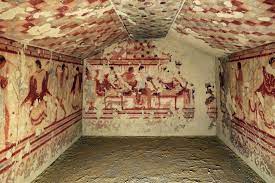
Archeological investigation of the lost Etruscan cities of Tuscany* is extremely difficult because they were all overbuilt by Rome. However Rome’s preservation of the original orthogonal layout of the 12 cities of the Etrurian league is helpful in trying to reconstruct them. Etruscan burial practices, with many tombs incorporating exquisite sculptures and intricate and colorful frescoes is also extremely helpful in reconstructing their lifestyle and culture.
The Etruscan built all their cities on hilltops to make them easier to defend. The Romans rebuilt all of them them on their original hilltops, except for Florence. The Romans moved it into an adjacent value once they they no longer needed to defend it militarily.
Each of the Etruscan cities was also located near good grazing, agriculture, timber, mines, claybeds and quarries.
The Etruscans were extremely religious and engaged in religious rituals as they laid out their cities. Some of these ceremonies involved sacrifice of children with epilepsy and other conditions sacred to the gods. Up until 500 BC, the Etruscans were ruled by kings who lived in aristocratic complexe.
One difference between the Etruscans and all other Mediterranean cultures (except for Sparta) was that they didn’t bury their dead extramurally (outside city walls). Instead they created a necropolis (city of the dead) for them within their city walls.
These complex necropoleis, which replicated the cities the deceased had previously inhabited, reveals that typical Etruscan homes consisted of square rooms surrounding an atrium with a pool of water. In addition to copying their style of architectural design, their Roman neighbors (who brought the Etruscans under Roman control in 294 BC) alo also adopted Etruscan-style terra cotta roofs with terra cotta roof ornaments. Etruscan tombs also replicate 6th century BC Etruscan horse races and banqueting scenes, other cultural traditions subsequently adopted by the Romans.
Pompei (destroyed by a volcano in 79 AD) was a famous Etruscan city built around 600 BC a part of a competition between the Greeks and the Etruscans to lay claim to the e rich agricultural land the rich agricultural land of Campania.
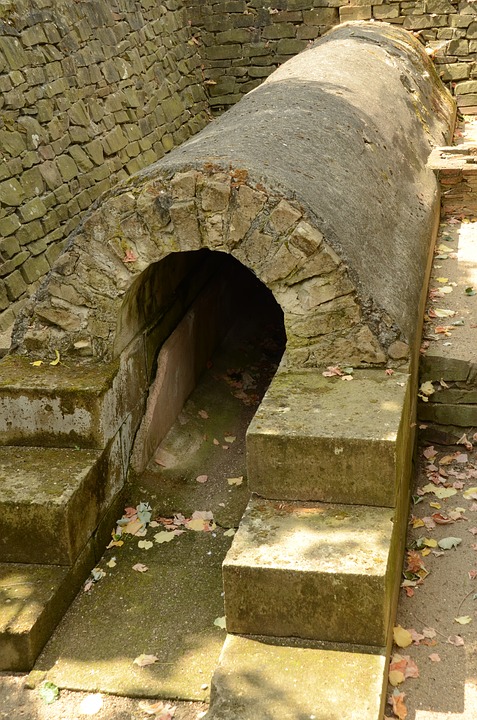
Despite their longstanding economic competition, the Etruscans adopted the Greek sun god Apollo, later adopted by the Romans. According to Tuck, they also invented the arch, first used in the construction of drainage canals.
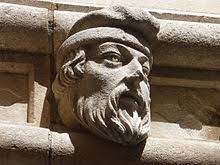
Protomes (busts of famous figures carved on the keystone) were also an Etruscan invention.
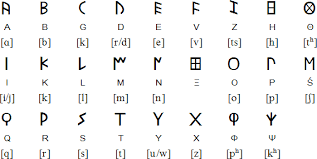
The Romans also adopted the Etruscan alphabet (which also became a model for Norse runes).
*The name “Tuscany” is believed to be derived from an ancient name for the Etruscan people.
Film can be viewed free with a library card on Kanopy.
https://www.kanopy.com/en/pukeariki/watch/video/239710/239611
 The Most Revolutionary Act
This post reminded me I have an old book on my shelves, inherited from family, named “Etruscan Researches” published in London, 1874. By an Isaac Taylor, M. A., vicar of Holy Trinity, Twickenham.
I just found the book and have read the first few pages, in which he discusses the mysterious Etruscan language, that no one had been able to identify. He makes a case, based on similarities of a few words, that it is Ugric, or from the Tatar family of nations, citing Finno-Turkish origins.
Thanks to your blog for this prompt.
LikeLike
Wow, that’s really interesting. I’ve always been fascinated by linguistics.
LikeLike