

Episode 1 Between the Greeks and the Romans
The Mysterious Etruscans
Dr Steven L Tuck (2016)
Film Review
What struck me most about this course is my own ignorance of ancient pre-Roman history. Prior to watching this lecture, I had no idea that Greece had colonized most of southern Italy (including Sicily, where the famous Greek city of Syracuse was located) when the Latin people (ie future Romans) were still farmers living in mud huts.*
According to Tuck, all major Roman cities were originally built by Etruscans. The Romans also inherited the toga, their burial practices, the arch and their alphabet from the Etruscans. The Italian word for fascism originates from an Etruscan symbol of power known as the fasces, designed to symbolize the collective power of the state.
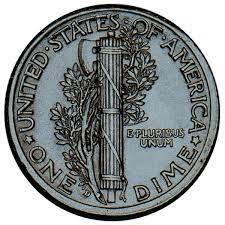 Example of a fasces
Despite claims by classical Roman historians that Rome’s founders migrated to the Italian peninsula from Lydia (western Turkey), all genetic and linguistic evidence suggests they were indigenous to northern Italy. The Etruscan language is totally unrelated to any other known language.**
Etruscan civilization arose after the Bronze Age cultural collapse that occurred throughout the Mediterranean around 1300 BC. Their earliest Etruscan artifacts (burial mounds and distinctive pottery) are Villanovan, a classification relating to the first Iron Age (8th century).
The first Greek colonies in Italy date from around 800 BC. Like the Greeks, the Etruscans formed a loose federation of city-states (the major ones Bologna, Florence, Siena and Ovieta), rather than creating a centralized empire like the Romans. There was competition (for fertile Italian agricultural land) between the Etruscans and the Greeks, with the former founding nearby cities as the Greeks built new colonies on the northern Italian peninsula.
The Etruscans eventually founded three leagues of city-states, with 12 in Etruria in northern Italy and Padua and Pompei in the rich agricultural lands in southwest Italy. The Etruscans competed against both Phoenicians*** and Greeks for rich Po Valley farm land.
According to to Tuck, the Etruscans had a thriving maritime economy and were more or less continuously at war with the Greeks and Phoenicians from the 8th to the 4th century. He also feels they were the conduit by which the Romans adopted Greek culture.
He asserts the Etruscans opposed the decision by Italy’s indigenous Latin people to build a large city (Rome) across the Tiber river from Etruria’s southern boundary. After engaging in numerous battles with Rome between 509 and 290 BC, the Etruscans united with Rome’s enemies to attack Rome. Defeated, they officially came under Roman rule in 254 BC. Nevertheless they had immense influence on Roman homes, cities and culture over the 500 years of contact.
*The Greek city-states depended heavily on their Italian colonies for food, as the Greek islands were poorly suited for agriculture. The famous Greek mathematician and astronomer Pythagoras established his school in the Greek colony of Croton in southern Italy.
**There’s some recent linguistic evidence it may be related to the Basque language.
***With a home base in modern day Lebanon, the Phoenicians enjoyed a robust maritime trading economy and culture.
Film can be viewed free with a library card on Kanopy.

