
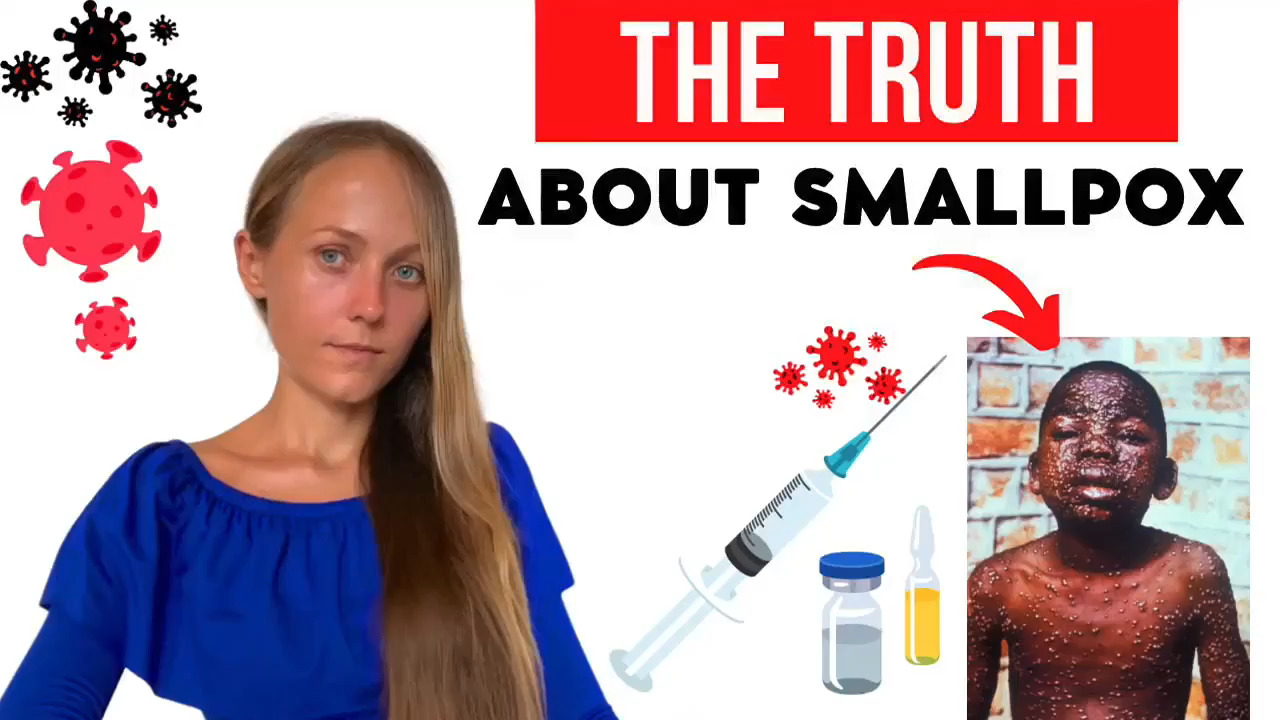
The Truth About Smallpox
Director Kate Suggat (2022)
Film review
Link to film: The Truth About Smallpox
In exploring doctors’ longstanding difficulty in diagnosi smallpox (as well as plague and leprosy), this fascinating film challenges the conventional wisdom that smallpox was “eradicated” in the 1970s.*
Suggat links the Western tradition of linking illness to uncleanness and/or demonic possession to current notions of contagious disease. There is no concept of contagion in Traditional Chinese or Ayurvedic Medicine.
Leprosy was one of the earliest illnesses leading human beings to be shunned by their community. Traditionally the condition, diagnosed by priests and community councils, rather than doctors, included a diverse range of symptoms including rashes, baldness, abcesses and excessive laughing or singing.
In the 13th century, plague replaced leprosy as the primary illness leading to community exclusion. Church and political leaders commonly used plague declarations to suppress rebellion, as well as poisoning alleged plague victims to with mandatory treatment mercury treatments. accept forced (toxic mercury) treatments. As with leprosy, plague symptoms were extremely imprecise. The earliest Western prisons were based on plague hospitals.
Smallpox is an even more imprecise contagious disease that is virtually impossible to distinguish from a measles, chickenpox and monkeypox. The Persian physician Rhazes (965-925 AD) was the first to attempt to differentiate smallpox from measles. Although famous Canadian physician Dr William Osler (1849-1919 AD) claimed to be able to distinguish smallpox from measles, he never set out clear criteria to enabling other doctors to make this distinction.
The diagnosis of chickenpox doesn’t appear in the medical literature until 1767, when Dr William Herberdon used it to diagnose febrile rashes patients who were vaccinated against smallpox.* There’s still no clear criteria to differentiate the two illnesses, especially in adults, who can get very sick with chickenpox. Up until the so-called eradication of “smallpox” in the 1970s, the diagnosis largely related to an individual’s smallpox vaccination status: those vaccinated for smallpox were diagnosed with chickenpox, whereas unvaccinated patients received a smallpox diagnosis.
Two years following the eradication of smallpox, monkeypox mysteriously jumped from monkeys to humans. Monkeypox also has no specific signs or symptoms that differentiate it from smallpox or chickenpox.
Suggat points out a similar confusion over the diagnosis of polio after the Salk polio vaccine was introduced in 1953. After the CDC required that paralysis had to be present longer than 60 days for a polio diagnosis,** its prevalence suddenly dropped from 50,000 – 60,000 cases a year to several hundred.
Despite the longstanding confusion over the diagnosis of smallpox, chicken pox and monkey pox, I disagree with Suggat’s conclusion that 1) the existence of viruses is an unproven theory; 2) all contagious diseases, such as smallpox, chickenpox, measles, plague, leprosy and “so-called” sexually transmitted diseases actually represent an accumulation of toxic wastes; and 3) that healthy people won’t get chickenpox, measles or sexually transmitted disease and 3) viruses are.
Suggat justifies her conclusions, in part, by her belief the fact that viruses can only be identified by indirect methods because they can’t be clearly visualized (under an electron microscope). This is incorrect. At present, viruses can be clearly visualized by a combination of x-ray crystallography and cryogenic electron microscopy. See Structure determination of a human virus by the combination of cryo-EM and X-ray crystallography
Moreover the organisms causing leprosy, plague and syphilis aren’t viruses but bacteria that can be clearly visualized under a light microscope. At present, leprosy is diagnosed based on evidence of Mycobacterium leprae infestation, plague on Yersinia pestis infestation and syphilis on Treponema pallidum infestation.
Two other conditions (impetigo and scarlet fever) she blames on fictitious infectious illnesses are also diagnosed in the presence of infestation with specific bacteria:. group A streptococcus (impetigo) and streptococcus pyogenes (scarlet fever).
That being said, it’s well-accepted in Western medical circles that stress and poor nutrition greatly increase an individual’s susceptibility to infectious disease. There’s also strong evidence that overall improvement in global nutrition (and not vaccination) is largely responsible for the steep reduction in infectious illness during the 20th century. However it doesn’t follow that infectious disease is non-existent or that healthy people won’t contract infections.
*Dr Suzanne Humphries provides additional history, from peer reviewed medical sources, about the checkered history of smallpox vaccine. See The Ugly History of Smallpox Vaccine
**In 1721, Lady Mary Wortley Mongagu imported variolation (aka smallpox vaccine) to Britain after having observed it being administered in Istanbul.
 The Most Revolutionary Act
Reblogged this on https:/BOOKS.ESLARN-NET.DE.
LikeLike
Thanks again for very interesting information. Never before i had thought about this, but the connections are obvicious. Best wishes, Michael
LikeLike
My pleasure, Michael. Thanks for stopping by.
LikeLike
Very good review. I’ve been reading a lot lately about the history of disease and of epidemics. Hans Zinsser’s charming book, “Rats, Lice, and History” traces such diseases as typhus fever, bubonic plague, smallpox, syphilis, and leprosy, among others, to various vectors, including the fleas on rat-infested ships that brought the bubonic plague to 14th century Europe.
Zinsser, who wrote the original microbiology text still used in US medical schools today, lived before the discovery of viruses, or even of penicillin for bacterial illness.
However, he claimed the louse has won more wars than armies, because it thrives in crowded, dirty, situations, like war, and near starvation.
Disease flourishes among the susceptible, when conditions favor the growth and spread of pathogenic species of bacteria or virus. As always, resistance involves a number of factors, including the underlying health of the individual or community, nutrition, sanitation, and fate.
LikeLiked by 1 person
I essentially agree with your analysis, Katherine. The high carb low nutrient diets forced on workers’ families during the early Industrial Revolution were pathetic. Very little protein and minimal access to root vegetables unless they grew their own. No leafy greens at all. It’s no wonder the slums of Europe were scourged by epidemics of infectious disease.
LikeLiked by 1 person
After posting my reply, I realized again how large a role environmental toxins have played in the 20th century and beyond to erode worldwide health. I know you have been tracking this, too, but the documentary doesn’t go into it.
LikeLike
I too first started learning about the questionable claims of the eradication of certain diseases like smallpox via the “The Truth about Vaccines” serious put out by Ty & Charlene Bolllinger about 3 years ago (just in time for the COVID “crisis”). VERY eye-opening.
I have also been considering Field Theory vs Germ Theory. I have a hard time accepting Field theory, at least as the only mechanism for disease, though admittedly I know very little at this stage, but it simply does not explain clearly observed spread. My family contracted “COVID”, or whatever has been going around, and I can very specifically trace the spread, from point of original contact by my son with another family to my daughter to the rest of the family, and her spread to another family, all within about a few days to a week. So, I certainly see the place for germ theory.
That said, I see the misinformation used to spread the idea that vaccines are the saviours, and so effective, as the definition of disease seems to be determined by agenda more than objective criteria, be it financial, political, or otherwise.
LikeLiked by 1 person
My experience with Covid was similar, smayer97. Ten of us contracted Covid the same day at a super spreader event. It was similar when I was a child when measles, chickenpox and German measles spread quickly among my friends.
LikeLike
Pingback: What Can Smallpox Vaccines Teach Us About COVID Vax Injuries? | Worldtruth