
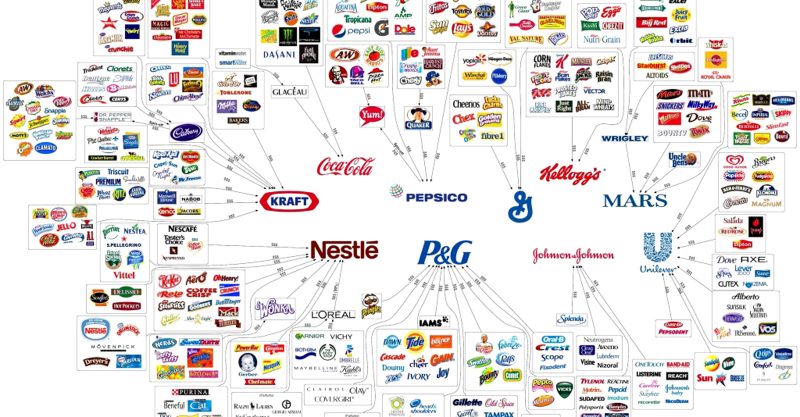
Amid Congressional investigation and federal, state and private antitrust cases, all eyes are on Big Tech. The step up in antitrust enforcement against the digital technology behemoths and their alleged abuses of market power is, by all accounts, good news. Successful cases could restore competition, which would benefit smaller businesses and American consumers alike.
And after decades of under-enforcement of the antitrust laws in the U.S., these cases could deliver some base hits — and even home runs — for a critical area of law enforcement.
But the outsized media, political and social attention paid to the tech industry has diverted focus from other important sectors. There are monopolies and domestic cartels elsewhere — in healthcare, pharmaceuticals, media and communications, as well as food and agriculture. These industries produce goods and services that are essential to the health, safety and well-being of consumers, and even to our national security, which is why antitrust laws must be enforced against violations in these sectors, too.
The food system has been particularly fertile ground for rising concentration, the emergence of dominant firms and formation of domestic cartels. Some of the largest players have been allowed to engage in anticompetitive mergers and practices that are as serious, if not more so, than those of which Big Tech stands accused.
Much like their counterparts in the tech sector, many of the largest food and agriculture corporations have acquired their way to dominance by gobbling up rival businesses. This has occurred across the food system, including digital farming startups, biotechnology firms, food manufacturers, flour millers, farm machinery manufacturers and grocery store chains. But nowhere has it been more pronounced than agricultural inputs.
In acquiring competitors both small and large, the six biggest agricultural biotechnology firms collapsed rapidly into the Big Three — Bayer, DuPont and ChemChina. This wave of consolidation, which was met with little resistance from antitrust authorities, gave these corporations control of proprietary, multi-level systems of traits, seeds, agrochemicals and digital technology that limit farmers’ choices and lock them into limited cropping systems.
But some parts of the agricultural sector are rife with other damaging antitrust violations that we haven’t seen in Big Tech. This includes alleged conspiracies to fix prices and allocate markets — practices that are made possible by high levels of consolidation and concentration.
One of the most notable examples of this is in beef packing, where the top four firms now control about 85% of the national market. Given the market power that the packers possess, it comes as no surprise that they have allegedly abused it: On multiple occasions, these packers have been accused of colluding to pay ranchers less for cattle and charge consumers more for beef.
However, this behavior isn’t unique to the beef-packing sector. Similar allegations of price fixing have been leveled against tuna, chicken, turkey, egg, pork and peanut producers, among others. These cartels are especially egregious because processors allegedly collude on both the sell and buy sides, hurting both farmers and consumers — including independent restaurants and grocery stores.
Beyond anticompetitive practices, rising concentration has implications for our national food security. Concentration-driven bottlenecks along the supply chain make the entire food system vulnerable to disruption, a fact that has become painfully obvious during the pandemic.
Following a rash of COVID-19 outbreaks at meatpacking plants, national meat processing capacity declined by nearly half, resulting in supply chain breakdowns and price gouging that affected millions of Americans — many of whom were already experiencing food insecurity.
[…]
Via https://childrenshealthdefense.org/defender/antitrust-break-up-big-food-monopolies/
 The Most Revolutionary Act
Reblogged this on Citizens.
LikeLike
Pingback: ‘First-of-its-kind’ Lawsuit Alleges Addictive Ultraproccessed Foods Caused Teen’s Illnesses | Worldtruth
Pingback: EU TO GO FULL 1984 SURVEILLENCE STATE Tech Firms Unite in Open Letter Against EU Chat Scanning Law | Worldtruth