
By Joe Sandler Clarke and Emma Howard
Global Research, October 16, 2018
Unearthed 5 October 2018
US plastic waste exports to developing countries in south-east Asia rose dramatically in the first six months of this year, as the international fallout from China’s decision to shut its doors to “foreign trash” continues.
Unearthed can reveal that plastic waste exports from the US to Malaysia, Thailand and Vietnam shot up from January to June 2018. But with these southeast Asian countries moving to impose import restrictions and plastic scrap piling up from California to Florida, the US recycling industry is talking about a mounting crisis in the country.
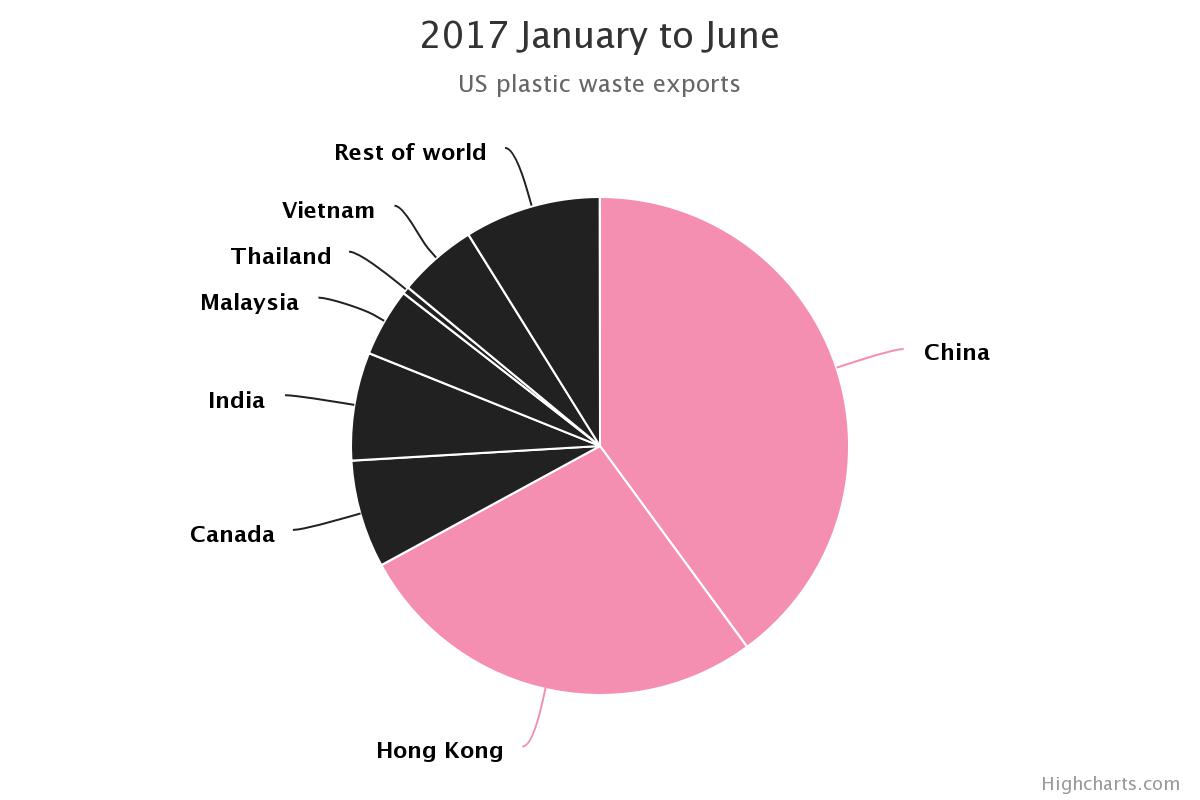
China has historically been the world’s biggest importer of plastic waste, taking in 45% of cumulative imports since 1992, according to a study published this summer. The US sent around 70% of its plastic waste to China and Hong Kong last year. But Beijing’s move to stop importing low quality plastic scrap has forced recyclers in the west to take a long look at their business model. In the UK, figures from the recycling industry have said the sector is “lurching from crisis to crisis”.
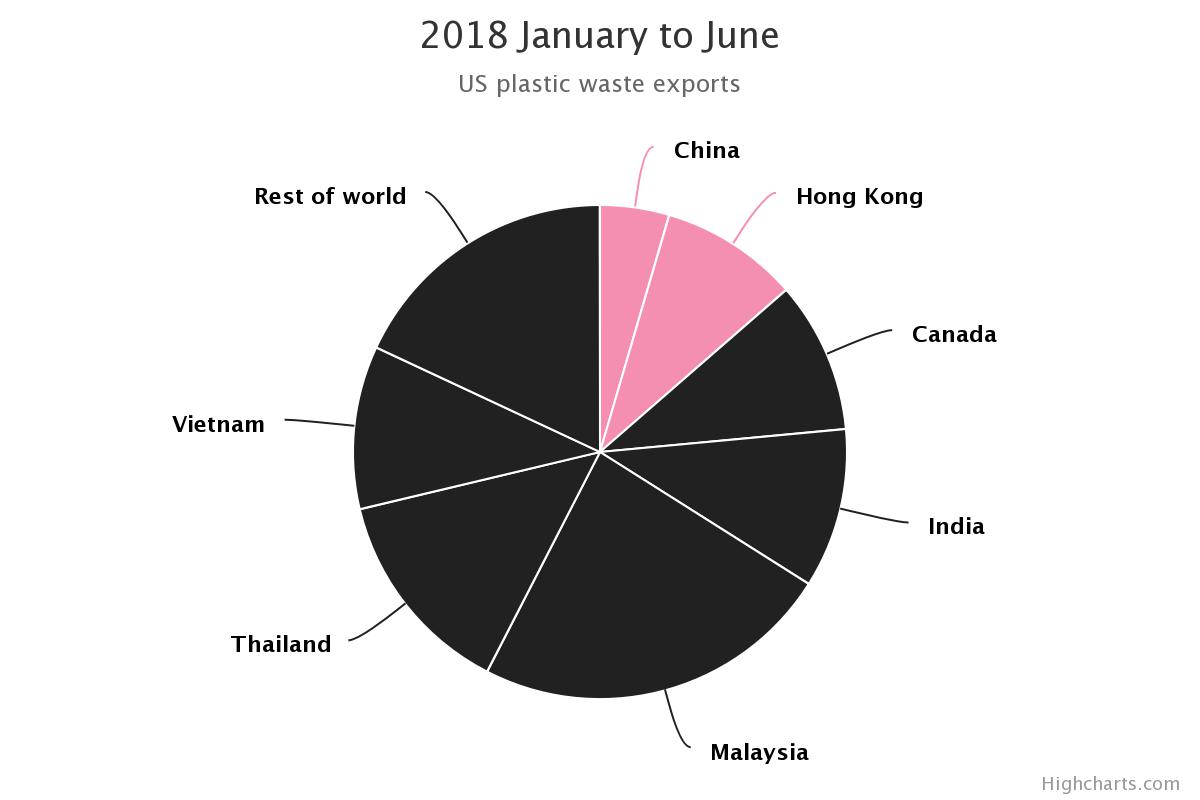
US plastic scrap exports dropped by almost a third in the first six months of 2018, as waste firms struggled to find a home for their plastic scrap. From 949,789 metric tonnes (2017) to 666,760 metric tonnes (2018).
An analysis of trade data from the US Census Bureau found that other countries have accepted more plastic scrap.
- In the first six months of 2017, a little over 4,000 metric tonnes of America’s plastic went to Thailand, but the country took in 91,505 metric tonnes of America’s scrap in the same period this year. That’s an increase of 1,985%.
- Malaysia experienced a similar increase, a rise of 273% to 157,299 metric tonnes.
- Vietnam also saw a significant rise, to 71,220 metric tonnes in the first six months of this year.
- Exports to Turkey and South Korea also rose significantly in the same period, to 11,224 metric tonnes and 14,760 metric tonnes, respectively.
- Despite the China ban, Asia remains the main destination for American waste exports. In the first six months of this year, 81% of plastic waste exports from the US went to Asia, a 7% drop on 2017.
Back where it came from
The influx of western rubbish into these countries has forced some to impose restrictions on waste imports.
Earlier this summer, plastic processing factories in Banting, south-west of Malaysia’s capital Kuala Lumpur were forced to close because of residents complaining of air and water pollution.
The country’s government announced a new import tax on plastic waste, last week. Malaysia is also tightening requirements on operating permits and is looking to clampdown on illegal processors.
Restrictions have also been introduced in Vietnam. In May, authorities in the country announced a temporary ban on plastic and paper waste imports from the middle of this June until October. Two of the country’s biggest ports – Tan Cang-Cai Mep International and Tan Cang-Cat Lai – have reportedly become overwhelmed with plastic and paper scrap since the China ban came into force.
In Thailand, the influx of trash forced the government to introduce [story in Thai] inspections of all plastics and electronic waste imports into the country. The country’s authorities have also pledged to send waste back to where it came from if it’s imported without proper description. . .
Source: US Plastic Waste Exports to Developing Countries, Causing Environmental Problems at Home and Abroad
 The Most Revolutionary Act
Its an interesting dilemma! While China did not restrict the import of plastic on environmental grounds, there is very much an environmental precedent. Chinas ban effectively disrupted the system and forced countries to deal with mounting trash in the interim of finding new dump sites. If countries like Thailand had not chosen to increase imports to make up for the excess amount of waste, what would exporting countries have done? It appears that it may have been the kick-up-the-ass needed to get some serious crackdowns on waste. In just a few months, many countries suggested they were in a crisis. What would have happened in a few years? They wouldn’t have waited around for the waste to bury them. They would have invested in new and efficient ways of dealing with their waste. They would have no choice.
LikeLike
You make some interesting points, Green Nomad. I’m inclined to agree with your view on this being a “kick-up-the-ass” moment – forcing the industrial north to examine their wasteful and polluting lifestyles.
LikeLiked by 1 person