
One of the most dangerous construction-related carcinogens is now legally allowed back into U.S. manufacturing under a a serious of loopholes by the Environmental Protection Agency (EPA), as Fast Company reports. The article said that on June 1, the EPA authorized a “SNUR” (Significant New Use Rule) which allows new products containing asbestos to be created on a case-by-case basis.
According to Fast Company, the EPA’s recently released report detailing its new framework for evaluating the risk of its top prioritized substances states that the agency will “no longer consider the effect or presence of substances in the air, ground, or water in its risk assessments.”
This news comes after the EPA reviewed its first batch of 10 chemicals under the 2016 amendment to the 1976 Toxic Substances Control Act (TSCA), which requires the agency to continually reevaluate hundreds of potentially toxic chemicals in lieu of removing them from the market or placing new restrictions on their use. The SNUR greenlights companies to use toxic chemicals like asbestos without consideration about how they will endanger people who are indirectly in contact with them.
Asbestos was widely used in building insulation up until it was banned in most countries in the 1970s. The U.S. is one of the only nations in the world that has placed significant restrictions on the substance without banning it completely. The Asbestos Disease Awareness Organization (ADAO) revealed in April that asbestos-related deaths now total nearly 40,000 annually, with lung cancer and mesothelioma being the most common illnesses in association with the toxin. That number could rise if new asbestos-containing products make their way into new buildings.
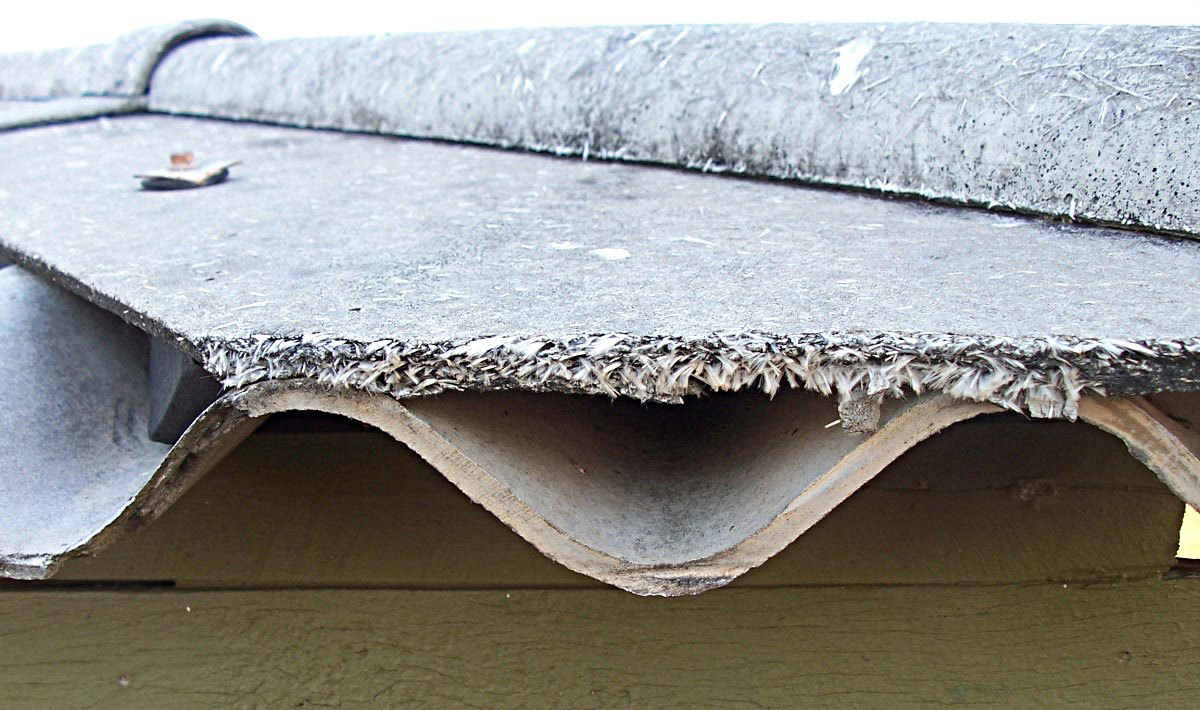
Healthy Building Network (HBN), an environmental advocacy group, told Fast Company that the fibrous material poses a major health risk for everyone exposed to it, including those who mine it, those who handle it in industrial facilities, as well as people near or inside renovation and construction projects where it’s being used. HBN’s Board President Bill Walsh said that the chlor-alkali industry is the only industry in the country that still uses asbestos, reportedly importing about 480 tons of the carcinogen each year from Russia and Brazil.
Walsh pointed out that chlorine-based plastics are commonly found in building-product materials and that “virtually all” asbestos in the U.S. is used in the industrial process to make chlorine. This includes PVC and vinyl plastics, which is largely found in the creation of pipes, tiles, flooring, adhesives, paints, and roofing products.
Asbestos, while already legal for some uses, has not been as widely used in U.S. construction since nearly 60 countries forbid it from use over 40 years ago. Though the EPA is now easing its regulations against integrating the harmful toxin and others like it under the Trump administration, it will largely be the responsibility of local and state governments, as well as companies and informed consumers to counter these new federal moves. Walsh says it’s up to sustainable building-product manufacturers and ultimately, architects to pressure the market. . .
Source: EPA is now allowing asbestos back into manufacturing
 The Most Revolutionary Act
Reblogged this on The Secular Jurist.
LikeLike
…and so the mesothelioma lawsuits will continue even though for those who receive a settlement, what is the point when they are at death’s door, knocking? This is an atrocity that must be fought at every level. Michael Jackson’s song comes to mind. “They Don’t Really Care About Us!” So very true as we can see here!
Thanks for the heads up, Dr. Bramhall!
LikeLiked by 1 person
In addition to mesothelioma, continuous asbestos exposure causes quite serious (lethal) lung disease, Shelby. I suppose this is excellent news for the asbestos decontaminaters – who charge a fortune. NZ is still struggling with decontaminating many of their asbestos-laden sites – it’s a very slow process because it costs so much.
LikeLike
As a toxicologist, who worked with asbestos lawyers, there was on question. How can these little tiny, mineral fibers, embedded in soft tissue, almost always cause cancer? Little or no physiological explanation for it. The consensus was that the fibers ser off a lethal-unending inflammation cascade, where the mineral fiber is lodged. An assault, on ones own body by itself, from cytokines and tumor nephrotic factor, that leads to the deadly, almost always fatal mesothelioma.
People forget that for 80 years that the government and nuclear physicists, have been lying their asses off about the true nature of radionuclides, and their lethality in the human body. Even more diluter emmiters like the radium in asbestos. Yet when a fiber of the shit, is trapped in soft tissue, it always causes cancer, no matter what!
https://www.sciencedirect.com/science/article/pii/0160412078900302
Purchase
Export
Environment International
Volume 1, Issue 4, 1978, Pages 161-165
Radioactivity in asbestos
Author links open overlay panelN.H.HarleyA.N.Rohl
Show more
https://doi.org/10.1016/0160-4120(78)90030-2Get rights and content
Abstract
226Ra has been measured in five asbestos group minerals. The activity levels are variable, are consistent with other forms of rock and range from 0.01–0.4 pCi 226Ra/g. Alpha particles from asbestos fibers immobilized in the lower lung near pleural surfaces and in the upper lung on bronchial surfaces may be implicated in initiating mesothelioma and bronchial carcinoma.
LikeLike
Wow, Gloria, extremely illuminating. Thanks for the technical clarification. I had no idea asbestos emitted alpha particles.
LikeLike
Tumor necrotic factor
LikeLike
Reblogged this on Rangitikei Enviromental Health Watch.
LikeLike
I don’t understand What is Asbestos and Why is it so Dangerous?
LikeLike
Good question, Pramodsahuwata. Asbestos is a fibrous forms of impure magnesium silicate. Because it’s chemical resistant and fiber proof, it’s used for fireproofing, electrical insulation, building materials, brake linings, and chemical filters. In tiny amounts, it causes a deadly form of untreatable lung cancer called mesothelioma. Workers exposed to it regularly develop severe chronic bronchitis that is fatal after a long period of disability.
LikeLiked by 1 person