The Amazon Lockdown: How Unforgiving Algorithm Drives Suppliers to Favor Amazon Over Other Retailers

Quote

ProPublica

As locked-down shoppers have flocked to buy food, medicine, cleaning supplies and personal care products on Amazon, the retailer has in turn upped its suggested inventory levels for many manufacturers that sell their products on its platform. It has also expanded purchases of certain essential products that it sells directly to shoppers, often buying two or three times as much as it did before the pandemic, executives said.

The heightened demand has forced both third-party sellers on Amazon’s platform and its direct suppliers into difficult decisions over where to send inventory, consultants said. Often, like Rise Bar, they’re favoring Amazon ahead of other retailers. Third-party sellers like Spenuzza don’t have to keep as much merchandise in stock as Amazon recommends. But if they run out on Amazon, where “best seller” status and a listing’s position in search results are linked to availability, the impact on sales could be devastating.

This pattern makes it harder for Amazon competitors, such as grocery and discount chains that have remained open during the pandemic, to keep coveted items in stock. “Everybody in retail realizes there’s limited access to certain stuff, so you better get there first,” said James Thomson, the former business head of an Amazon team that recruits third-party sellers and now a consultant to brands working with the company. “The difference is that Amazon can afford to pony up the cash all at once and say, ‘Back up the trucks, we’ll take it all.’” Thomson called going out of stock on Amazon a “cardinal sin” […]


via The Amazon Lockdown: How an Unforgiving Algorithm Drives… — ProPublica
Donald Trump’s business empire owes $211 billion to state controlled Bank of China | Daily Mail Online

Quote

china central bank

Donald Trump’s business empire owes $211 billion to state controlled Bank of China | Daily Mail Online

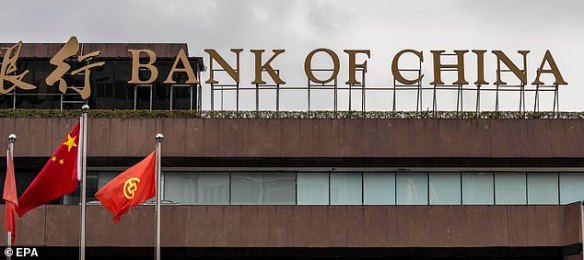
President Donald Trump’s company holds a multi-million debt to the state-owned Bank of China – and it will come due in the middle of his second term.

Trump’s ownership of the 43-story Manhattan tower has been known publicly for years and came up during his 2016 campaign. But it is getting a second look now that China is looking to be a flashpoint in his race against former Vice President Joe Biden […]

via Donald Trump’s business empire owes $211 billion to state controlled Bank of China | Daily Mail Online

Why US outsourced bat virus research to Wuhan

Quote

By Christina LIN | Asia Times | April 22, 2020

The US National Institutes of Health (NIH) funded bat-coronavirus research in the Wuhan Institute of Virology in China to the tune of US$3.7 million, a recent article in the British newspaper Daily Mail revealed.

Back in October 2014, the US government had placed a federal moratorium on gain-of-function (GOF) research – altering natural pathogens to make them more deadly and infectious – as a result of rising fears about a possible pandemic caused by an accidental or deliberate release of these genetically engineered monster germs.

This was in part due to lab accidents at the US Centers for Disease Control and Prevention (CDC) in July 2014 that raised questions about biosafety at US high-containment labs.

At that time, the CDC had closed two labs and halted some biological shipments in the wake of several incidents in which highly pathogenic microbes were mishandled by US government laboratories: an accidental shipment of live anthrax, the discovery of forgotten live smallpox samples and a newly revealed incident in which a dangerous influenza strain was accidentally shipped from the CDC to another lab.

A CDC internal report described how scientists failed to follow proper procedures to ensure samples were inactivated before they left the lab, and also found “multiple other problems” with operating procedures in the anthrax lab.

As such in October 2014, because of public health concerns, the US government banned all federal funding on efforts to weaponize three viruses – influenza, Middle East respiratory syndrome (MERS) and severe acute respiratory syndrome (SARS).

In the face of a moratorium in the US, Dr Anthony Fauci – the director of the National Institute of Allergy and Infectious Diseases (NIAID) and currently the leading doctor in the US Coronavirus Task Force – outsourced in 2015 the GOF research to China’s Wuhan lab and licensed the lab to continue receiving US government funding.

The Wuhan lab is now at the center of scrutiny for possibly releasing the SARS-CoV-2 coronavirus and causing the global Covid-19 pandemic […]

via Why US outsourced bat virus research to Wuhan

Global Food Chain Breakdown Anticipated from Covid Economic Disruption

Quote

shipping containers
File Photo: hxdyl / Shutterstock

By Jen Skerritt, Leslie Patton and Emele Onu (Bloomberg)

The port backups that have paralyzed food shipments around the world for weeks aren’t getting much better. In fact, in some places, they’re getting worse.


In the Philippines, officials at a port that’s a key entry point for rice said earlier this week the terminal was at risk of shutting as thousands of shipping containers pile up because lockdown measures are making them harder to clear. Meanwhile, curfews in Guatemala and Honduras, known for their specialty coffees, are limiting operating hours at ports and slowing shipments. And in parts of Africa, which is heavily dependent on food imports, there aren’t enough workers showing up to help unload cargoes.

The port choke-points are just the latest example of how the virus is snarling food production and distribution across the globe. Trucking bottlenecks, sick plant workers, export bans and panic buying have all contributed to why shoppers are seeing empty grocery store shelves, even amid ample supplies.

Food moves from farm to table through a complicated web of interactions. So problems for even just a few ports can ripple through to create troubling slowdowns. For example, wheat grown in Europe can be shipped off to India, where it’s processed into naan bread for eventual export into the American market. Disruptions along the way are causing heavy delays.

And there’s the threat that things could get much worse if port problems spread. Just a handful countries, for instance, export the bulk of the world’s rice and wheat, staple sources of calories. Soybeans from South America help keep the planet’s livestock fed, and the vast majority of cocoa supplies are shipped out of small section of West Africa […]

via Global Food Chain Breakdown Anticipated from Covid Economic Disruption

Fewer inmates in Virginia as state reduces jail population by 17% amid pandemic — Attack the System

Quote

By Keith Preston

Regrettably, many people have a mistaken view of what “crime” actually is. Yes, there is certainly such a thing as “crime” in the sense of harm to others (murders, robberies, rapes, etc) but most “crime” merely involves offenses against the state or other ruling class institutions, not other people.

Associated Press:

Virginia has reduced its jail population by 17% in response to the coronavirus outbreak, Gov. Ralph Northam said Friday.

Northam said the jail population in the state was 24,000 on April 7, down 17% from March 1. Virginia has also seen a 67% decline in the number of new commitments for misdemeanors across the state.

Northam said the reduction was achieved through various steps, including decreasing the number of low-risk offenders being held without bail in jails, diverting offenders from being admitted into jails before trial by using summonses in lieu of arrests, and using alternatives to jail such as home electronic monitoring […]


via Fewer inmates in Virginia as state reduces jail population by 17% amid pandemic — Attack the System

Long Breadlines Form Outside of Food Banks as America Struggles to Cope With COVID-19 Fallout

Quote

Alan Macleod
https://www.mintpressnews.com/wp-content/uploads/2020/04/AP_20101578730706_edited-1.jpg

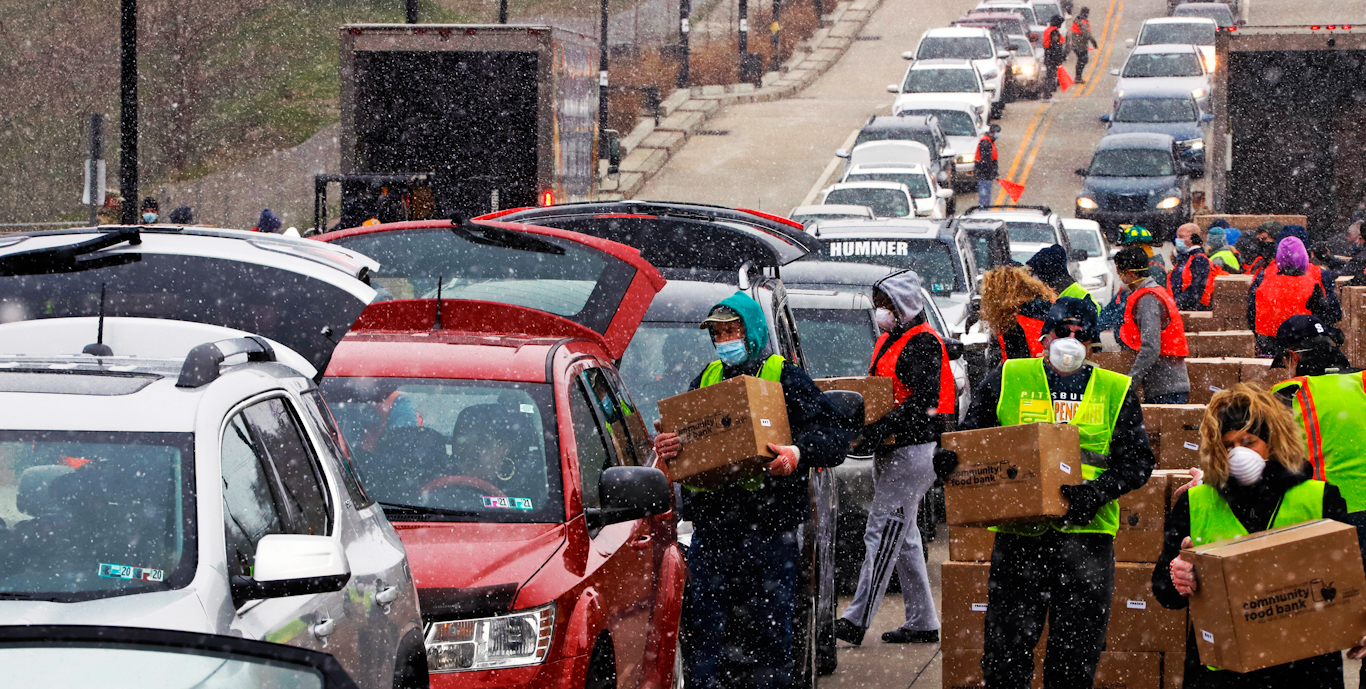
At least 10,000 cars line up in an orderly fashion in San Antonio, all full of hungry, increasingly desperate people. Thousands already arrived the night before just to get a chance to eat. “We just can’t feed this many,” said the CEO of the local food bank that Texans have descended upon.

It is a scene playing out across the country; 1,300 cars swamped the drive-thru Greater Pittsburgh Food Bank. The United Center, home to the Chicago Bulls and Blackhawks, has been transformed into a huge food warehouse, as COVID-19 has driven a wedge through the cracks in American society, where tens of millions of people now face unemployment and hunger.

Some have claimed that the food lines are a glimpse into what a future American socialist state would look like. However, this is not a hypothetical society but a very real present. It is Breadline 2020, today’s America. Existing food banks are struggling to cope; one worker of a food bank in Baton Rouge, LA, claimed that the current situation is worse than after Hurricane Katrina.

MintPress News spoke to a number of people on the front lines attempting to keep America fed during the worst pandemic in a century. “Needs have skyrocketed not just here but around the country,” said Eleanor Goldfield, a creative activist, and journalist.

“One man who called us here at D.C. Mutual Aid to request help said that he had walked several miles the day before in order to get to a local food bank only to find that they were closed. He said he was completely out of food and didn’t understand how they could just shut down operations like that.”

Along with Guayaquil, Ecuador, the New York-New Jersey metro area is one of the world epicenters of the coronavirus pandemic. Authorities have barely any idea about how many people have died; New York State’s estimate for the New York City death toll is over 1,000 more than the city’s own count – an indication of just how badly overwhelmed the system is. Over one percent of all retirees are currently in hospital with COVID-19. “People are dying left and right, no exaggeration,” Derrick Smith, a local certified registered nurse anesthetist, told us last week, “I’ve never imagined or seen our healthcare system take such a beating before.” Makeshift morgues – cooled trailers full of bodies – are a feature of most hospitals in the area now, and mass graves are being dug on an uninhabited island in the Long Island Sound.

“New York City is facing a crisis unlike anything we’ve seen. As the economic fallout of the coronavirus pandemic continues, more New Yorkers are facing food insecurity,” said the Food Bank for New York City. It estimates that it will have to provide 15 million meals over the next 90 days […]


via Long Breadlines Form Outside of Food Banks as America Struggles to Cope With COVID-19 Fallout

‘A Complete Abomination’: Mega-Rich Hedge Funds Swoop Down to Grab Covid-19 Small Business Relief Funds

Quote

President Donald Trump and Treasury Secretary Steven Mnuchin participate in a video conference with representatives of large banks and credit card companies about more financial assistance for small businesses in the Roosevelt Room at the White House April 7, 2020 in Washington, D.C. (Photo: Doug Mills-Pool/Getty Images)

by Jake Johnson, staff writer
Common Dreams

Some hedge funds “insist they are small businesses—just like hair salons, restaurants, and dry cleaners—that could use a helping hand,” Bloomberg reports.

As small business owners struggle to obtain desperately needed money from a first-come-first-served federal coronavirus relief program, some wealthy hedge fund managers are attempting snag a share of the $350 billion taxpayer fund with the help of high-powered legal firms that know how to quickly navigate the confusing application process.

“Some hedge funds already have applied” for a loan under the Paycheck Protection Program (PPP), Bloomberg reported Tuesday. PPP is a relief fund for small businesses established by the CARES Act, the sweeping coronavirus stimulus legislation that President Donald Trump signed into law last month.

“Without oversight, this is what’s happening with the $2 trillion coronavirus bailout: hedge fund managers are claiming relief funds as ‘small businesses.'”
—American Oversight

“Since early April, law firms have hosted Webinars and sent out alerts, and accounting firms have reached out to clients, all with the goal of explaining how they might be able to tap into the Paycheck Protection Program,” Bloomberg reported. “The loans can convert to grants if recipients retain or rehire their workers.”

Companies are eligible for PPP funds if they have fewer than 500 employees and the “current economic uncertainty makes this loan request necessary to support the ongoing operations.”

Hedge funds “are designed to employ as few people as possible so star traders don’t have to share millions of dollars in fees,” Bloomberg noted, meaning they often have a low enough number of employees to qualify for PPP loans. But whether a taxpayer-backed loan is “necessary” for them to maintain operations is another matter entirely.

“The question of whether to partake in the program is dividing members of the money management community,” Bloomberg reported. “Some traders have called it morally corrupt, while others insist they are small businesses—just like hair salons, restaurants, and dry cleaners—that could use a helping hand after global markets tumbled and cost them money” […]

via ‘A Complete Abomination’: Mega-Rich Hedge Funds Swoop Down to Grab Covid-19 Small Business Relief Funds

2020–When the Great Disruption Began

Quote

By Paul Gilding, originally published by The Cockatoo Chronicles

“The last global crisis didn’t change the world. But this one could” William Davies

It was always going to come to this. Whether it was a pandemic triggering a shutdown, a climate emergency bursting the carbon bubble, a populist backlash against inequality, wars over water or countless other possible triggers, this moment has long been inevitable.


COVID-19 is just like a match thrown on a tinder dry forest floor on a hot windy day and starting a wildfire. The match isn’t the key – it’s where it lands.

While of course a pandemic would always be an enormous economic and health challenge, the context in which it lands is the key to our ability to manage it. Thus, we now see our economic system’s inherent instabilities clearly exposed. The house of cards is collapsing.

Won’t this all pass? We’ll find a cure, develop a vaccine, boost the economy and then everything will get back to normal. It’ll take a few years, but we’ll get back on track. Right?

Wrong, very wrong.

We are at the beginning of a process with an uncertain end. It could be a major recession, a full-scale depression, or a slide into systemic collapse. Or it could be a turning point – where we recover and build a very different kind of economy, one defined by sustainability and resilience with a focus on improving human well-being. This range of outcomes is uncertain. What is certain is that we are not going back to how things were […]


via 2020–When the Great Disruption Began

What Do Countries With The Best Coronavirus Responses Have In Common? Women Leaders

Quote

Seven countries' female leaders effectively managing the coronavirus crisis


Looking for examples of true leadership in a crisis? From Iceland to Taiwan and from Germany to New Zealand, women are stepping up to show the world how to manage a messy patch for our human family. Add in Finland, Iceland and Denmark, and this pandemic is revealing that women have what it takes when the heat rises in our Houses of State. Many will say these are small countries, or islands, or other exceptions. But Germany is large and leading, and the UK is an island with very different outcomes. These leaders are gifting us an attractive alternative way of wielding power. What are they teaching us?

[…]


via What Do Countries With The Best Coronavirus Responses Have In Common? Women Leaders

Terrified Atomic Workers Warn That the COVID-19 Pandemic May Threaten Nuclear Reactor Disaster

Quote

The Three Mile Island Nuclear Plant is seen in the early morning hours March 28, 2011 in Middletown, Pennsylvania. (Photo: Jeff Fusco/Getty Images)

The Three Mile Island Nuclear Plant is seen in the early morning hours March 28, 2011 in Middletown, Pennsylvania. (Photo: Jeff Fusco/Getty Images)

By


The COVID Pandemic has thrown America’s atomic reactor industry into lethal chaos, making a major disaster even more likely. Reports from “terrified” workers at a Pennsylvania reactor indicate vital precautions needed to protect them may not even be possible.

Nationwide, with falling demand and soaring prices for nuke-generated electricity, the pandemic casts a dark shadow over reactor operations and whether frightened neighbors will allow them to be refueled and repaired.

America’s 96 remaining atomic reactors are run by a coveted pool of skilled technicians who manage the control rooms, conduct repairs, load/unload nuclear fuel.

Because few young students have been entering the field, the corps of about 100,000 licensed technicians has been—like the reactors themselves—rapidly aging while declining in numbers.  Work has stopped at the last two US reactors under construction (at Vogtle, Georgia) due to the pandemic’s impact, which includes a shrinking supply of healthy workers.

Every reactor control room requires five operators at all times.  But the physical space is limited there and in plant hot spots that need frequent, often demanding repairs.  Social distancing is virtually impossible.  Long shifts in confined spaces undermine operator safety and performance.

Of critical importance: every 18-24 months each reactor must shut for refueling and repairs. Itinerant crews of 1000 to 1500 technicians travel to 58 sites in 29 states, usually staying 30-60 days. They often board with local families, or in RVs, hotels, or Air B&Bs.

Some 54 reactors have been scheduled for refuel/repairs in 2020. But there is no official, organized program to test the workers for the Coronavirus as they move around the country.

As the pandemic thins the workforce, older operators are being called out of retirement.  The Trump-run Nuclear Regulatory Commission recently certified 16-hour work days, 86-hour work weeks, and up to 14 consecutive days with 12-hour shifts.

Long-time nuclear engineer Arnie Gundersen warns of fatigued operators falling asleep on the job. He recalls at least one exhausted worker falling into the highly radioactive pool surrounding the high-level fuel rods. Operator fatigue also helped cause the 1979 melt-down that destroyed Pennsylvania’s Three Mile Island Unit Two.

The industry is now using the coronavirus pandemic to rush through a wide range of deregulation demands. Among them is a move to allow radioactive waste to be dumped into municipal landfills.

The NRC may also certify skipping vital repairs, escalating the likelihood of major breakdowns and melt-downs. Nearly all US reactors were designed and built in the pre-digital age, more than 30 years ago. Most are in advanced decay. Atomic expert David Lochbaum, formerly with the NRC, warns that failure risks from longer work hours and deferred repairs could be extremely significant, and could vary from reactor to reactor depending on their age and condition […]

via Terrified Atomic Workers Warn That the COVID-19 Pandemic May Threaten Nuclear Reactor Disaster