World War I through Arab Eyes

Essential history I should have learned in high school but didn’t. I must have been absent that day. This documentary gives me a new understanding of how European colonial powers totally wrecked the Arab world – a process that continues to the current day.

World War I through Arab Eyes

Al Jazeera (2014)

Film Review

This is a three part documentary in which Tunisian journalist Malke Triki interviews European, Turkish and Arab journalists and surviving families about the role of Arab forces – on both sides – in World War I.

Part 1 concerns the forcible conscription of Muslim troops by both the Ottoman Empire and the Allies. Two-thirds of the soldiers who defeated England, Australian and New Zealand troops at Gallipoli weren’t Turkish, but Syrian, Lebanese, Jordanian, Iraqi and Palestinian. As these countries were still part of the Ottoman Empire, they were subject to a mandatory draft.

I was unaware that England and France, who had occupied large swathes of North Africa since the end of the 19th century, also forcibly conscripted Muslim troops. England forced more than 1.2 million Egyptians to fight for the Allied cause, while France forcibly drafted 100,000 Algerians, 80,000 Tunisians and 45,000 Moroccans.

The French were widely accused of using these colonial forces as cannon fodder to protect French soldiers.

Many colonial troops rebelled against being compelled to kill fellow Muslims. This, as well as their abominable treatment by Europeans, was the spark that inflamed the North African independence movements that arose after World War I.

Part 2 tells the story of the decline of the Ottoman Empire during the 19th century and the Ottoman-German relationship which led to their Treaty of Alliance in August 1914.

In 1830 the Ottoman Empire stretched from Mesopotamia (modern day Iraq) to the Red Sea and encompassed most of North Africa and the Balkans. It was under continual attack by European colonial powers. In the late 1800s, the British military seized Egypt and the French military Algeria, Tunisia and Morocco. In 1912, Italy seized Libya. In the 1912-13 Balkan Wars, the Empire lost its European territories.

This episode also describes the Ottoman leadership’s brutal suppression of Arab nationalism in the Middle East, particularly in Syria/Lebanon. In 1915, one third of the Lebanese population died of starvation and another third were permanently displaced when their villages were decimated.

It also provides important background on the Armenian genocide carried out by the Ottoman leadership in 1915-17.

Part 3 covers the secret Sykes-Picot agreement between Britain and France and the way the two imperial powers carved up the former Ottoman Empire between them, regardless of promises made to nationalist movements across the Arab world.

Despite the Egyptian Revolution and the Iraq Uprising, Arab subservience to Ottoman rule was replaced by a series of mandates across the region in which Britain and France seized control of the areas they prized most – to satisfy their own ambitions, interests and ultimately to gain access to region’s valuable oil resources.

World War I gave birth to the Turkish nationalist movement, which led to the founding of the modern Turkish state; and to Zionism, aided greatly by the Balfour Declaration of 1917.

The Arab Spring: Made in the USA

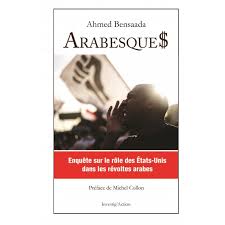
arabesques image

Arabesque$: Enquête sur le rôle des États-Unis dans les révoltes arabes

(Investigation into the US Role in the Arab Uprisings)

by Ahmed Bensaada

Investig’Action (2015)

(in French)

Book Review

Arabesque$, an update of Ahmed Bensaada’s 2011 book L’Arabesque Américaine, concerns the US government role in instigating, funding and coordinating the Arab Spring “revolutions.” Obviously most of this history has been carefully suppressed by the western media.

The new book devotes much more attention to the personalities leading the 2011 uprisings. Some openly admitted to receiving CIA funding. Others had no idea because it was deliberately concealed from them. A few (in Egypt and Syria) were officially charged with espionage. In Egypt, seven sought refuge in the US embassy in Cairo and had to be evacuated by the State Department.

Democracy: America’s Biggest Export

According to Bensaada, the MENA (Middle East and North Africa) Arab Spring revolutions have four unique features in common:

1. None were spontaneous – all required careful and lengthy (5+ years) planning, by the State Department, CIA pass through foundations, George Soros, and the pro-Israel lobby.*.
2. All focused exclusively on removing reviled despots without replacing the autocratic power structure that kept them in power.
3. No Arab Spring protests made any reference whatsoever to powerful anti-US sentiment over Palestine and Iraq
4. All the instigators of Arab Spring uprisings were middle class, well educated youth who mysteriously vanished after 2011.

Nonviolent Regime Change

Bensaada begins by introducing non-violent guru Gene Sharp (see The CIA and Nonviolence), his links with the Pentagon and US intelligence, and his role, as director of the Albert Einstein Institution, in the “color” revolutions** in Eastern Europe and the attempted coup against Hugo Chavez in 2002.

The US goal in the Arab Spring revolutions was to replace unpopular despotic dictators while taking care to maintain the autocratic US-friendly infrastructure that had brought them to power. All initially followed the nonviolent precepts Sharp outlines in his 1994 book From Dictatorship to Democracy. In Libya, Syria and Yemen, the US and their allies were clearly prepared to introduce paid mercenaries when their Sharpian “revolutions” failed to produce regime change.

Follow the Money

Relying mainly on Wikileaks cables and the websites of key CIA pass through foundations (which he reproduces in the appendix), Bensaada methodically lists every State Department conference and workshop the Arab Spring heroes attended, the dollar amounts spent on them by the State Department and key “democracy” promoting foundations,*** the specific involvement of Google, Facebook, Twitter and Obama’s 2008 Internet campaign team in training Arab Spring cyperactivists in encryption technologies and social media skills, US embassy visits, and direct encounters with Hillary Clinton,  Condoleezza Rice, John McCain, Barack Obama and Serbian trainers from CANVAS (the CIA-backed organization that overthrew Slobodan Milosevic in 2000).

Bensaada focuses most heavily on the Tahrir Square uprising in Egypt. The Washington Post has estimated approximately 10,000 Egyptians took part in NED and USAID training in social media and nonviolent organizing techniques. For me the most astonishing information in this chapter concerned the role of an Egyptian exile (a former Egyptian policeman named Omar Afifi Suleiman) in coordinating the Tahrir Square protests from his office in Washington DC. According to Wikileaks, NED paid Suleiman a yearly stipend of $200,000+ between 2008-2011.

When Nonviolence Fails

Arabesques$ devotes far more attention to Libya, Syria and Yemen than Bensaada’s first book.

In the section on Libyia, Bensaada zeroes in on eleven key US assets who engineered the overthrow of Gaddafi. Some participated in the same State Department trainings as the Middle East opposition activists and instigated nonviolent Facebook and Twitter protests to coincide with the 2011 uprisings in Tunisian and Egypt. Others, in exile, underwent guerrilla training sponsored by the CIA, Mossad, Chad and Saudi Arabia. A few months after Kaddafi’s assassination, some of these same militants would lead Islamic militias attempting to overthrow Assad in Syria.

Between 2005 and 2010, the State Department funneled $12 million to opposition groups opposed to Assad. The US also financed Syrian exiles in Britain to start an anti-government cable TV channel they beamed into Syria.

In the section on Syria, Bensaada focuses on a handful of Syrian opposition activists who received free US training in cyberactivism and nonviolent resistance beginning in 2006. One, Ausama Monajed, is featured in the 2011 film How to Start a Revolution about his visit with Gene Sharp in 2006. Monajed and others worked closely with the US embassy, funded by the Middle East Partnership Initiative (MEPI). This is a State Department program that operates in countries (such as Libya and Syria) where USAID is banned.

In February 2011, these groups posted a call on Twitter and Facebook for a Day of Rage. Nothing happened. When Sharpian techniques failed to produce a sizable nonviolent uprising, as in Libya, they and their allies (Saudi Arabia, Turkey, Qatar and Jordan) were all set up to introduce Islamic mercenaries (many directly from Libya) to declare war on the Assad regime.


*I was astonished to learn that Forum Fikra, a forum for Arab activists working against authoritarian governments, was mainly funded by the Nathan and Esther K Wagner Family Foundation. The latter also funds numerous pro-Israel groups and projects, as well as the Washington Institute for Near East policy (a pro-Israel group with close ties to AIPAC).

**The color revolutions were CIA-instigated uprisings that replaced democratically elected pro-Russian governments with equally autocratic governments more friendly to US corporate interests:

Serbia (2000) – Bulldozer Revolution
Georgia (2002) – Rose Revolution
Ukraine (2004) – Orange Revolution
Kyrgyzstan (2005) – Tulip Revolution

***Democracy promoting foundations (as used here, “democracy” is synonymous with capitalism, ie favorable to the interests of US investors). Here are seven of the main ones involved in funding and training Arab Spring activists:
USAID (US Agency for International Development) – State Department agency charged with economic development and humanitarian aid with a long history of financing destabilization activities, especially in Latin America.
NED (National Endowment for Democracy) – national organization supported by State Department and CIA funding dedicated to the promotion of democratic institutions throughout the world, primary funder of IRI and NDI.
IRI (International Republican Institute) – democracy promoting organization linked with the Republican Party, currently chaired by Senator John McCain and funded by NED.
NDI (National Democratic Institute for International Affairs) – democracy promoting organization linked with the Democratic Party, currently chaired by Madeline Albright and funded by NED.
OSI (Open Society Institute) – founded by George Soros in 1993 to help fund color revolutions in Eastern Europe. Also contributed major funding to Arab Spring revolutions.
• Freedom House – US organization that supports nonviolent citizens initiatives in societies were liberty is denied or threatened, financed by USAID, NED and the Soros Foundation.
CANVAS (Center for Applied Non Violent Action and Strategies) – center originally founded by the Serbian activists of Otpor who the US funded and trained to over throw Slobodan Milosevic and who were instrumental in training Arab Spring activists. Funded by Freedom House, IRI and George Soros.

Originally published in Dissident Voice


Iranian “Terrorist” Commands Assault on ISIS

soleimani

Our Man in Tikrit

According to Reuters, Iraqi security forces and Shi’ite militia fighters (with the support of Canadian special forces and US weapons, trainers and air strikes) are presently engaged in a major assault to retake the Iraqi city of Tikrit from ISIS. Until recently, the western media rarely mentioned the figure commanding these forces.

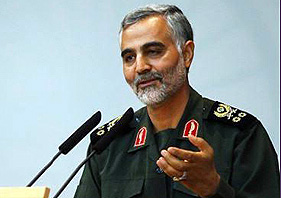
His name is Major General Qasem Soleimani, and he’s the head of Iran’s Revolutionary Guards’ elite Quds Force. This creates an embarrassing situation for Obama because the US still officially designates Soleimani as a terrorist for his alleged role in a 2011 plot to assassinate the Saudi ambassador to the US

Given all the saber rattling against Iran by congressional Republicans (cheered on by Israeli president Benjamin Netanyahu), the US media has been loathe to acknowledge that Iran has been spearheading the offensive against ISIS in both Iraq and Syria. In Syria, Soleimani is widely credited with helping President Bashar al-Assad turn the tide against rebel forces and recapture key cities and towns.

The US political elite prefers to spoon feed Americans the cartoon version of US foreign policy, in which Americans only go to war against evil doers. For this reason, they have greatly downplayed the role of Soleimani and other Iranian military “advisers” in the battle against ISIS. A recent explosion of interest in General Soleimani on Twitter and Facebook has forced them to come clean.

According to the BBC, this isn’t the first time Soleimani has aided US military efforts in the Middle East. In 2001, he provided military intelligence to the US to support its invasion to overthrow the Taliban in Afghanistan, and in 2007 in participated in US-led talks in Baghdad over the deteriorating situation in Iraq.

As best I can ascertain, Soleimani has been a prominent figure in containing Iraqi sectarian violence since 2011

He has commanded Iranian forces active in the Syrian civil war since the latter half of 2012.

photo credit: www.yjc.ir

Also posted at Veterans Today

Obama Forced to Address Israel’s Oil Smuggling

oil tanker

US Backs Russian UN Resolution Targeting ISIS

According to Bloomberg’s, on Feb 10 the UN Security Council adopted a binding Russian resolution threatening economic and diplomatic sanctions against countries and individuals that help ISIS and other terrorist groups profit from trading oil, antiquities or hostages. As the US vetoes most Russian Security Council resolutions, this was an historic event.The resolution requires governments to ensure that they aren’t engaged in direct or indirect trade with ISIS and al-Qaeda-affiliated groups such as the al-Nusra Front in Syria. According to Bloomberg’s, the resolution will significantly impact Turkey and Syria, which allow the purchase of oil from the militant group.Facts the article omits are probably more significant than the omissions.

First Bloomberg’s neglects to mention that the US initially opposed the resolution and spent three days frantically trying to counter and/or change the draft language.  Presumably this relates to inconvenient truth that Israel is one of the main destinations of the smuggled oil

Second it fails to comment on an extremely odd scenario in which the Assad government is purchasing smuggled oil from ISIS:

Thirdly it (deliberately?) leaves Israel and unnamed EU nations off the list of countries buying oil from ISIS.

The text of the resolution, which stops short of threatening the use of force, urges governments to share information on ISIS  financing networks, bans exports of all antiquities from Syria and reiterates the call on countries to prevent ISIS from benefiting from political concessions or ransom payments made to secure the release of hostages.

It also requires countries to block aircraft, auto and truck traffic, including oil tankers, traveling to or from areas in Syria and Iraq where the extremist groups operate.

ISIS earns about $1 million a day from oil sales.

In addition, according to a recent BBC investigation, ISIS also receives substantial income from looting and smuggling of antiquities from historical and archaeological sites in both Iraq and Syria. The primary market for the stolen objects is Europe and the Gulf states. Ten thousand year old artifacts can bring in as much as $1 million each. An Iraqi intelligence official told the Daily Mail that ISIS earned £23 million in early 2014 alone by selling 800 items stolen from the ancient city of Al-Nabk near Damascus.

In 2014, ISIS also brought in approximately $45 million in 2014 from kidnapping for ransom.

The resolution doesn’t spell out specific penalties for countries found guilty of helping ISIS. It would require the Security Council to debate whether any violations have occurred and what punitive measures it would order. The resolution requires all 193 members of the UN to report within 120 days on measures they’ve taken to comply with it. The UN’s existing al-Qaeda sanctions committee will monitor and report on any progress.

All in all, it looks like a pretty shrewd move by Russia. Obama now has 120 days to report back how he plans to sanction US allies Turkey and Israel – or face a UN Security Council resolution calling for sanctions on the US. While the US would surely veto such a resolution, it provides an excellent opportunity for Russia to embarrass Obama and Israel by exposing their financial and military ties to ISIS.

This past week, the US also backed a Russian resolution to the UN Security Council supporting the Minsk Ceasefire.

photo credit: Seniority via photopin (license)

Also posted at Veterans Today

Farrakhan’s Views on Obama

Below is a fascinating excerpt from Part 8 of Louis Farrakhan’s lecture series The Time and What Must Be Done. Farrahkan is the present leader of the Nation of Islam (NOI), best known for its most famous member Malcolm X.

It’s been more than ten years since I heard Farrakhan speak. He has made remarkable progress from his overt antisemitism and talk of white people as blue-eyed devils. I still have a slight problem with the “666” symbolism of the year 2013, which he links with the “beasts” (America, England, Germany and France).

Otherwise his analysis is remarkably similar to that of white economist, journalist and former Reagan official Paul Craig Roberts. The NOI leader is highly critical of Obama’s murderous policies in Libya and Syria and his use of drones for targeted assassinations, as well as his apparent willingness to support an Israeli-inspired war with Iran. He also condemns the President’s destruction of American democracy. He describes the US as an oligarchy leading the American people into fascism.

The video is nearly two years old. Amazing how little US foreign policy has changed.

US Begins Airstrikes in Syria

cruise missile

According to NBC, the United States and Arab partner nations launched massive airstrikes in Syria against ISIS targets for the first time Monday, the Pentagon said. In a major escalation of the U.S. war against ISIS, the U.S. military plans to strike up to 20 targets in and around Raqqa, Syria — logistics, fuel and weapons depots; training sites; troop encampments; command and control sites; and headquarters for the Sunni fighters. The bombing began at approximately 8:30 p.m. ET Monday, a senior U.S. defense official told NBC News.

Read more here http://www.nbcnews.com/storyline/isis-terror/u-s-arab-allies-strike-isis-syria-n209286

photo credit: Defence Images via photopin cc

Unelected Regime Begins Killing Spree in Eastern Ukraine


With fanatical, irregular forces, armored vehicles, and aircraft including warplanes and helicopter gunships, the unelected government in Kiev has undertaken a war against their own people. That the US and EU are supporting this regime in terrorizing the Ukrainian people is a total reversal of the so called “responsibility to protect” they advocated in both Libya and Syria.

As Cartalucci points out at the end of his article: the west has already lost in Ukraine. With the people of Crimea choosing to rejoin Russia and with unrest spreading across eastern Ukraine, the notion of a “united” Ukraine shifting West is unlikely if not indefinitely impossible.

Covert US War Hands Syria to Al Qaeda


isis

US Suspends Non-lethal Aid to Syrian Rebels

According to the BBC, both the US and Britain have suspended “non-lethal” aid to northern Syria. The decision follows the seizure of Western-backed Free Syrian Army bases by Islamist rebels.

Last week, fighters from the Islamic Front ousted FSA-aligned fighters from the Bab al-Hawa border crossing with Turkey. The Islamic Front is a new alliance of rebel fighters dedicated to creating an Islamic state in Syria. The front does not include al-Qaeda affiliates like the Islamic State in Iraq and the Levant (ISIS) and the al-Nusra Front, but its charter welcomes “muhajirin”, or foreign fighters and expresses willingness to co-operate with them.

During the raid, the Islamic Front took over FSA warehouses believed to contain vehicles, communications equipment, and night-vision goggles donated by the US and Britain.

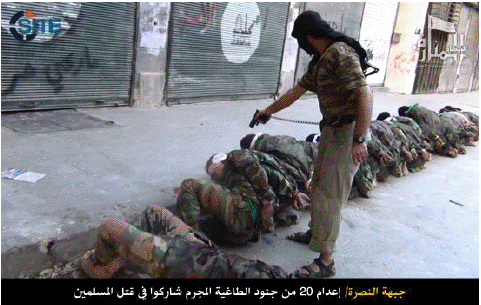
In the past few months, the foreign fighters in ISIS have also been making news  by shooting and beheading FSA fighters and civilians linked to the Syrian opposition.

The US and European countries have been reluctant to supply weapons and ammunition directly to Syrian rebel groups, out of concern they might end up in the possession of foreign jihadists affiliated to al-Qaeda.

However, according to numerous sources, the CIA is still facilitating secret arms shipments via Turkey, Qatar and Saudi Arabia.

The suspension of “non-lethal” support for rebels in northern Syria doesn’t include humanitarian aid distributed through the UN and non-governmental organizations. Moreover US deliveries of non-lethal aid to southern Syria (via Jordan) will continue.

Your tax dollars at work – creating a new Islamic state in the Middle East.

photo credit: Ars Skeptica via photopin cc

Originally published in Veterans Today

Al Qaeda Surges Ahead in Syria

  al nusra

 Rebels Decide to Fight Each Other

 While the major powers behind the proxy civil war in Syria go through the motions of working out a diplomatic solution, rebel forces have begun fighting each other, rather than the Assad regime. The al Qaeda-linked Islamist militants from Iraq and Libya have been fighting the Free Syrian Army in northern and eastern Syria. According to RT, the Islamists are winning.

The split became headline news last week when the Free Syrian Army (FSA) lost Azaz, a city on the Turkish border, to the Islamic State of Iraq and Syria (ISIS). The latter is sometimes referred to as Al-Nusra, the name for the Syrian branch of ISIS, or the Islamic State of Levant (ISIL). Levant is a historic name applied to the Eastern Mediterranean region comprising Syria, Lebanon, Israel, Jordan and Amman before it was divided up by the Europeans.

The Daily Mail reports that officers from the FSA are defecting to join ISIS because they are better resourced and “more effective.” Until recently, the ISIS mainly received funding and arms from Qatar and Saudi Arabia. However the Washington Post reveals they also receive “private donations” from “sympathetic Muslims.” According to the Post, the sums donated far exceed what the US and NATO supply the FSA.

With more than a dozen competing factions fighting the Assad regime, I find it an enormous challenge to keep all the names straight. Thanks to the Christian Science Monitor, the Economist and the Long War Journal, I have cobbled together the following scorecard to help make sense of the latest reports:

  • Supreme Military Command – armed wing of the Syrian National Coalition (SNC) and supported by the US and NATO. The SNC grew out of an exile group originally based in Turkey, though its headquarters moved to Qatar in 2012 when the US and NATO intervened to try to reduce infighting among member groups. The Free Syrian Army (a group of defected Syrian military officers) fights under the SMC umbrella.
  • Syrian Islamic Front – “moderate” Syrian Islamic fighters consisting of the Muslim Brotherhood and other Salafist (Sunni) groups. Cooperates with SMC (at least most of the time).
  • Syrian Liberation Front – coalition of Islamic fighting groups, with Saqour al Sham the largest. Fights independently of SMC but sometimes cooperates with them.
  • Democratic Union Party – Syrian offshoot of Turkey’s Kurdistan Workers Party (PKK). Its mainly pro-Assad militias control Kurdish areas in north-east Syria and support Kurdish autonomy. In July, a Kurdish guerrilla group with links to the al-Assad regime and the Turkish Kurdistan Workers’ Party ( PKK)  forcefully expelled Al-Nusra from the Syrian border town of Ras Al-Ayn.
  • Anti-Assad free speech Alawites (a branch of Shiite Islam) led by Bassam al Youssef. A a political group with no organized military wing.
  • Al Qaeda linked groups:
    1. Al-Nusra Front or Jabhat al-Nusra (the Syrian branch of the al Qaeda linked ISIS (ISIL). Controls Aleppo and has established Sharia law there.
    2. Ahrar al  Sham – a Syrian Islamic group sympathetic to al Qaeda groups, which the Economist has mistakenly labled as sympathetic to the FMC.
    3. Ahfad al Rasoud Brigade.
    4. The Islamic Kurdish Front

Reprinted from Veterans Today