How the US Uses War to Protect the Dollar

The Gods of Money

William Engdahl (2015)

The first video is a 2015 presentation by William Engdahl about his 2010 book The Gods of Money. It focuses on the use of US economic and military warfare to maintain the supremacy of the US dollar as the global reserve currency.

As his point of departure, he begins with the 1944 Bretton Woods agreement, in which the Allied powers agreed to use the gold-backed US dollar as the world’s reserve currency. In 1971 when Nixon was forced to end the gold standard,* the gold-backed US dollar was replaced by the “petrodollar.” According to Engdahl, it was so named because of a secret agreement the US made with Saudi Arabia – in return for a guarantee that OPEC would only trade oil in US dollars, the US guaranteed the Saudis unlimited military hardware.

In this way, oil importing nations (most of the world) were forced to retain substantial US dollar reserves. This was the only way they could provide their economies with a continuous supply of oil.

The petrodollar remained supreme until the mid-1980s, when the collapse of the US Savings and Loan industry (a pre-cursor of the 2007 banking collapse) raised concerns in Europe that the US was failing as a super power. Fearing the US economy was collapsing, they created the euro and the Eurozone, to prevent the Soviet Union or China from filling the power vacuum.

The financial warfare unit of the US treasury responded by feeding hedge fund manager and currency speculator George Soros secret information that enabled him to lead an attack on the British pound. This, in turn, destabilized the British economy to the point the UK no longer qualified to join the euro.

In 1997 the US Treasury and Soros made a a similar attack on economies of Southeast Asia (Thailand, South Korea, Indonesia, Hong Kong, Laos, Malaysia, Philippines) that attempted to use currencies other than the dollar as their reserve currencies.

In 2010, after the US government had run three years of $1 trillion deficits, China, Russia and Japan announced their intention of selling US Treasury bonds (which the US government sells to finance its debt) to increase their euro reserves. Concerned this placed the US dollar on the brink of catastrophic collapse, the US Treasury and Soros attacked the Euro directly by collapsing the Greek economy. The mechanism Soros used was to direct his hedge funds to dump the sovereign treasury bonds that financed Greek debt.** When the European Central Bank announced its commitment to a Greek bail-out, the US Treasury and Soros followed up with an attack on Irish, Spanish and Portuguese sovereign bonds.


*A US economic crisis led to massive foreign demand for US dollar redemption that threatened to deplete US gold reserves.

** The immediate effect of bondholders dumping Greek bonds raised interest rates on Greek debt to a level that threatened to bankrupt their government.


The second clip is a Guns and Butter radio interview with Engdahl. It focuses on a second area the Gods of Money covers, namely the long US battle to abolish their private central bank (aka the Federal Reserve) and end the ability of private banks to create money out of thin air (see How Banks Create Money Out of Thin Air).

After a brief explanation of fractional reserve banking, whereby 97% of our money is created by private banks, Engdahl traces the history of the First Bank of the United States, created by Alexander Hamilton in 1791. The latter was the first US central bank, 80% owned by private (mostly Rothschild-controlled) banks in the City of London and 20% owned by the US government. President James Madison’s refusal to renew the bank’s charter in 1811 would result in Britain and the US going to war in 1812.

When the war ended in 1815, the American war debt was so substantial, the US had no choice but to charter the Second Bank of the United States, which once again was 80% controlled by London banks.

In 1832, Andrew Jackson refused to renew the bank’s charter, and the US had no central bank between 1832 and 1913. In 1913 when President Woodrow Wilson secretly colluded with the global banking establishment to create the Federal Reserve.

Both Lincoln and Kennedy challenged the exclusive role private banks play in creating the US money supply – Lincoln by issuing greenbacks (rather than borrowing money from private banks) to pay for the civil war and Kennedy by issuing silver certificates directly redeemable by the US Treasury. In both cases, Engdahl feels their defiance of the international banking establishment played a role in the decision to assassinate them.
How Putin Outwitted the Russian Oligarchs

The Rise and Fall of the Russian Oligarchs

Directed by Alexander Gentelev (2006)

Film Review

The Rise and Fall of the Russian Oligarchs focuses on the scandalous period after the collapse of the Soviet Union, in which 100 opportunist oligarchs destroyed the economy of a relatively wealthy country (with the help of the CIA, USAID, the IMF and the World Bank) by seizing $20 billion of assets for roughly a billion dollars. The admitted goal of these Russian oligarchs (and their CIA supporters) was to privatize as many industries as possible behind the scenes before the Communist majority in the Russian parliament could consolidate power and stop them. The documentary’s overarching theme concerns Putin’s rise to power in 1999, which is credited for saving the Russian economy via his shrewd confrontation and defeat of these oligarchs.

This Russian-made documentary focuses on three specific oligarchs: Mikhail Chernoy, who now lives in exile in Israel; Theodore Gusinski, who now lives in exile in Spain, and Boris Beresovksy, who now lives in exile in London. It’s divided into two parts.

Part 1

Part 1 describes how these men used privatization schemes introduce by the last Soviet president Mikhail Gorbachev (under Perestroika – 1985-1991) to acquire a variety of Russian assets for pennies on the dollar. With the collapse of the Soviet Union in 1991, many state-owned factories were threatened with closure, the Russian government initially privatized them through an ill-conceived voucher scheme. Ownership in the factories was broken up into millions of shares in the form of vouchers distributed to all Russian citizens. Because they had no other source of income, many were forced to sell their vouchers cheaply for food. Others were tricked into “investing” them in phoney investment schemes as their owners sold on their hoard of vouchers and pocketed the proceeds.

Chernoy wound up with hundreds of thousands of these vouchers, which he used to buy up Russia’s aluminum industry.

Using western financing, Gusinski would form Russia’s first commercial TV network in 1993. In 1994 Berezovsky (again with the help of western financing) would buy Russian state TV for a few million dollars. Joining with other oligarchs, they skillfully used their media monopoly to promote their privatization agenda.

Part 1 also covers the 1991 attempted coup against Gorbachev (a desperate attempt by the Communists to reverse rapid privatization); Yeltsin’s successful (CIA-backed) coup in 1993, in which he used the military to attack the Russian parliament, effectively dissolving parliament and the constitutional court; and the vast human misery caused by the “shock therapy” Wall Street imposed Russia as they looted their economy. This, in turn, would lead to escalating mass protests demanding a return of the Communists to power.

Part 2

Part 2 focuses on the oligarch (and CIA) financed and controlled election of Boris Yeltsin in 1996 – as well as the direct role the oligarchs assumed in government following Yeltsin’s victory against his more popular Communist opponent.

The Russian economy reached breaking point in 1998. By then, the Russian government had lost so main state-owned industries (75%) that it could no longer pay its debts and Russian banks froze depositors assets.

This, along with Yeltsin’s failing health, would lead to a political crisis, resulting in Vladimir Putin’s appointment as acting president initially supported by the oligarchs – in 1999. Following Putin’s election in 2000, he quickly turned on oligarch supporters, who expected to control his government as they had Yeltsin’s.

Then, as now, he excelled at media manipulation, capitalizing on popular fear of Chechen terrorism to heighten his popularity. He also shrewdly confronted individual oligarchs for tax evasion and other financial crimes during televised cabinet meetings.

This was followed up by security raids and harassment, arrest – and in some cases imprisonment – to encourage numerous oligarchs to relinquish their ill-gotten shares to state control.

In this way, Putin essentially ended Wall Street’s wholesale exploitation of the Russian economy and the Russian people – and Wall Street and the US military-intelligence complex have never forgiven him for it.

The documentary’s main weakness is its failure to explore the major role Wall Street and US intelligence played in the destruction of the Russian economy between 1991-2000. Good background on this at the following links:

The Harvard Boys do Russia

US Meddling in 1996 Russian Elections in Support of Boris Yeltsin

USA Russia

The Plunder of Russia in the 1990s

Brexit,Trump, Syria and the Fabricated War on Terror

Adam Curtis Forced Hypernormalisation BBC

Directed by Adam Curtis

Film Review

Curtis, one of my favorite documentary makers, has a unique ability to conceptualize and describe the collective psychological conditioning the political elites subject us to – and the unintended consequences  of their use of public relations (as opposed to diplomacy and statecraft) to retain power. In this fascinating documentary, he explores the link between the rise of Putin and Donald Trump, the Brexit vote in Britain and the fabricated War on Terror. He also explains Syria’s critical role in this process, dating back to Hafeez al-Asaad (1970-2000) and his dream of unifying the Arab world against western exploiting.

The Concept of Forced Hypernormalisation

According to Curtis, “forced hypernormalisation,” is a term coined by the Soviets to describe a psychological control technique in which politicians retain power by projecting a vastly oversimplified view of world. Curtis maintains that Ronald Reagan was the first president to embrace this version of popular control, as he projected US foreign policy as a simple matter of good vs evil and encouraged Americans to withdraw from frustrating social and political concerns by focusing on their individual selves.

Curtis begins his capsule history of forced hypnormalisation with the invention of the strategy of suicide bombing by Hafeez al-Asaad and Iran’s Ayatollah Khomeini (when he was losing the Iran-Iraq WAR). Al-Assad (using Lebanon’s Hezbollah militia) would force US troops to withdraw from Lebanon with a dramatic suicide bombing of Marine barracks in Beirut in 1983.

Through the 1980s, Syria would engage in several other dramatic anti-US suicide bombings. However because Reagan felt retaliation against Syria was too risky (due to the support al-Assad enjoyed from other Arab leaders), he would blame Gaddafi, who other Arab leaders viewed as a madman, and bomb Libya instead. Gaddafi, eager for the notoriety, was always happy to take the credit.

Incessant Shapeshifting in US and British Foreign Policy

Thus a pattern emerged where US and British foreign policy became an indistinguishable mixture of fabrication and reality. The public got their first clear view of this strategy with the fabricated reality (ie non-existent weapons of mass destruction and non-existent links between Saddam Hussein and al Qaida) used to justify the invasion and occupation of Iraq. This film also includes an intriguing account (the first I have seen from mainstream media) of the 30+ year Air Force Intelligence campaign to promote popular belief in UFOs.

Putin and Non-Linear Warfare

Curtis contends Russian information specialist Vladislav Surkoff, one of the dozen or so technocrats who keep Putin in power, is also a master of this ceaseless shapeshifting geared towards undermining people’s perception of the world. It is nothing for Surkoff to simultaneously promote Russia’s antifascist movement, nationalist neo-Nazi groups, human rights groups and the Russian Orthodox Church. In foreign policy, the Russians refer to this approach as “non-linear warfare, and they have used it in the Ukraine and Syria. The end result is the west never really knows what their real intentions are.

Enter Donald Trump

Donald Trump is also a master at this type of shapeshifting, with his unique blend of extreme right wing racism and anti-corporatism.  He’s notorious for constantly reversing and contradicting himself, and his speeches are a complex mixtures of facts. The fact he’s so difficult to pin down makes it extremely difficult for the media to attack him.

Snowden: The Book Behind the Film

snowden-files

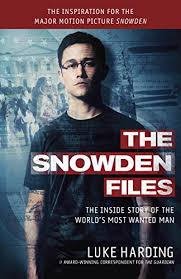
The Snowden Files: The Inside Story of the World’s Most Wanted Man

By Luke Harding

Guardian Books (2014)

Book Review

The Snowden Files is the fast-paced thrilleresque account of whistleblower Edward Snowden’s dramatic escape from US capture in Hong Kong, following his leak of thousands of computer files documenting Orwellian NSA surveillance activites. Earlier this year, this book was remade as the motion picture Snowden.

Published in the UK, The Snowden Files provides substantial background on the NSA’s British counterpart GCHQ, whose spying on innocent civilians is even more egregious than the NSA’s, owing to the country’s weaker civil liberties protections. In fact, the NSA relies on GCHQ to engage in certain types of snooping (on Americans) that are expressly forbidden in the US.

When Guardian reporter Glenn Greenwald first broke the story that Internet giants Google, Facebook, Apple and Yahoo were secretly turning over vast amounts of customer data to the NSA, his editors were forced to release the story online from the Guardian’s New York office to avoid prosecution in Britain. Shortly after the story’s release, British police destroyed all the hard drives in the Guardian’s London office – in the belief they continued copies of NSA files Snowden had released.

I especially appreciated the book’s epilogue about Snowden’s life in Russia, as it dispels much of the western propaganda about his selling NSA secrets to Russia, his refusal to learn Russian (he speaks enough to do his own grocery shopping and is working to improve his fluency), and his (non-existent) job with a Russian tech company. At the time of publication, Snowden supported himself through savings and speaking fees.

Four other government whistleblowers (Coleen Rowley, Jesselyn Radack, Ray McGovern and Thomas Drake) visited Snowden in Moscow in 2013, and the book recounts their meeting.

The book’s major shortcoming is its embarrassing fact checking lapses – for example the assertion that Putin “invaded” Crimea in 2014. Most independent sources confirm that in 2014 the legislature of the Autonomous Republic Crimea held a referendum in which 95.5% voted to secede from Ukraine and join the Russian Federation. The referendum was triggered when a US-sponsored fascist coup seized the government in Kiev.

Northwest Passage: Nations Already Squabbling over Ice-Free Arctic

Inside Story – How Will the Northwest Passage Influence Global Trade and Economy

Al Jazeera (2016)

Film Review

This Al Jazeera documentary is about the melting of the Arctic ice cap and its effect on international trade. Shipping through the Northwest Passage, which is still limited to summer months, first began in 2008. By 2025, the Arctic is predicted to be ice free every summer. China, the world’s largest exporter, has a particular interest in the Northwest Passage, as it reduces shipping times to Europe and North America by 30%.

Canada, claiming the Northwest Passage as territorial waters, is challenging China’s right to access this trade route. Thus far, the US is siding with China, asserting the Arctic Ocean is an international waterway. At present Denmark, Finland, Norway, Sweden, Russia, Iceland and Canada have claims over the Arctic Circle under the UN Law of the Sea treaty. Owing to the US refusal to ratify the treaty, Alaska (eg the US) has no claim to this waterway.

In addition to the Northwest Passage, there is a second passage north of Russia and Norway called the Northern Sea Route. The Polar Code goes into effect next year, with mandatory structural requirements for ships traversing the Arctic Circle.

The Fight to Make Medical Knowledge Open Source

sci-hub-thumbnail

Restoring the Commons: Why Should Corporate Publishers Profit at Patients’ Expense?

Owing to growing mistrust of Big Pharma and the corporatization of medical care, patients increasingly rely on Internet research to help us take take responsibility for our own health and wellness. Usually the biggest obstacle we face is the pay wall scientific journals and big name publishers like Elsevier have set up charging $30 a pop for readers to view scientific articles online. Thanks to Alexandra Elbakyan, a Kazakhstanian neuroscientist, millions of scientific papers are now freely downloadable from Sci-Hub, the file sharing site she started in 2011.

Elsevier, along with US courts, views Sci-Hub’s activities as Internet piracy. Ironically, however, Sci-Hub enjoys the support of many researchers. They resent being denied access to state-of-the-art research, while big publishers like Elsevier derive immense profits from their own work. For the most part, scientists surrender the copyright for research papers to academic journals and science publishing houses and recoup no financial reward themselves.*

According to John Bohannon writing in the April 2016 Science, Elsevier is more profitable than Apple, with over 30% of their 2014 revenue going to profit ($1 billion).

Who Uses Sci-Hub?

Sci-Hub now hosts over 50 million research papers. Between September 2015 and March 2016, they provided more than 28 million documents free to health providers, patients and researchers. Most of Sci-Hub’s users (4.4 million) are from China. India, at 3.4 million, is their second largest user. Iran is the third largest user, Russia the fourth and the US the fifth.

Sci-Hub Servers in Russia

In October last year, a New York judge ruled in favor of Elsevier, decreeing that Sci-Hub infringes on the publisher’s legal rights as a copyright holder ordering the website to desist. The injunction had little effect. Although the sci-hub.org web domain was seized in November 2015, the servers that host Sci-Hub are in Russia, which for obvious reasons has little interest in enforcing US intellectual property law. Within days, the site reappeared on a different domain.

Although Elbakyan declines to say exactly how she obtains the papers, she confirms it involves online credentials of academics and institutions with legitimate access to journal content. Her supporters donate the material voluntarily.

Read Bohannon’s article here

People can access Sci-Hub’s search and download service here: http://scihub.org/


*A growing number of scientists publish through the Public Library of Science (PLOS), believing their work should be freely available to health providers, patients and other researchers. PLOS is a nonprofit open access scientific publishing project aimed at creating a library of open access journals and other scientific literature.

The Psychological Trauma Inflicted by Predatory Capitalism

The Shock Doctrine: The Rise of Disaster Capitalism

Directed by Michael Winterbottom (2009)

Film Review

Based on Naomi Klein’s best-selling book by the same name, this documentary explores predatory capitalism’s use of psychological trauma to crush human rights and forcibly transfer vast sums of money  from the poor to the rich.

Like the book, the documentary begins with Dr Ewan Cameron’s CIA-funded research at McGill University into the long term  effects of shock therapy, sleep deprivation and other deliberately inflicted trauma. The Agency would incorporate Cameron’s findings in their Kubark counterintelligence interrogation (ie torture) manual. They went on to use Kubark to train fascist South American military officers at the School of the Americas and to interrogate random prisoners (the vast majority were never charged) at Guantanamo and Iraqi prisons.

The film also explores the “economic shock therapy” developed by the late University of Chicago economist Milton Friedman. Friedman was a master at exploiting natural and contrived disasters to impose the kind of extreme free market reforms that crush unions and wages, shut down or privatize public services and create massive unemployment – while simultaneously transferring obscene amounts of wealth from the working and middle classes to the rich.

Friedman and his cronies seized the opportunity to put their predatory theories into practice when the CIA helped overthrow democratically elected governments in Chile, Brazil, Uruguay and Argentina; during the neoconservative regimes of Thatcher and Reagan; in Russia after the Berlin Wall collapsed; in New Orleans after Katrina; in Sri Lanka after the 2004 tsunami; and in Iraq after 9/11.

Falling Oil Prices: a Saudi Viewpoint

Inside Story – What’s Behind the Falling Oil Prices

Al Jazeera (2015)

Film Review

A most revealing documentary. Unlike western pundits who speculate about conspiracies to wipe out shale oil producers (ie fracking) and the oil  economies of Russia and Venezuela, these Middle East analysts stick to economic fundamentals.

The three analysts identify three main factors behind the present oil glut: shale gas production, a big increase in renewable energy production and dropping demand by emerging economies such as China.

They maintain Saudi Arabia’s primary motivation for current output levels is fear of losing “market share” if they unilaterally cut oil production.

There’s also an interesting discussion about the Saudi plan to introduce taxation to help reduce their $98 billion deficit.

Obama Forced to Address Israel’s Oil Smuggling

oil tanker

US Backs Russian UN Resolution Targeting ISIS

According to Bloomberg’s, on Feb 10 the UN Security Council adopted a binding Russian resolution threatening economic and diplomatic sanctions against countries and individuals that help ISIS and other terrorist groups profit from trading oil, antiquities or hostages. As the US vetoes most Russian Security Council resolutions, this was an historic event.The resolution requires governments to ensure that they aren’t engaged in direct or indirect trade with ISIS and al-Qaeda-affiliated groups such as the al-Nusra Front in Syria. According to Bloomberg’s, the resolution will significantly impact Turkey and Syria, which allow the purchase of oil from the militant group.Facts the article omits are probably more significant than the omissions.

First Bloomberg’s neglects to mention that the US initially opposed the resolution and spent three days frantically trying to counter and/or change the draft language.  Presumably this relates to inconvenient truth that Israel is one of the main destinations of the smuggled oil

Second it fails to comment on an extremely odd scenario in which the Assad government is purchasing smuggled oil from ISIS:

Thirdly it (deliberately?) leaves Israel and unnamed EU nations off the list of countries buying oil from ISIS.

The text of the resolution, which stops short of threatening the use of force, urges governments to share information on ISIS  financing networks, bans exports of all antiquities from Syria and reiterates the call on countries to prevent ISIS from benefiting from political concessions or ransom payments made to secure the release of hostages.

It also requires countries to block aircraft, auto and truck traffic, including oil tankers, traveling to or from areas in Syria and Iraq where the extremist groups operate.

ISIS earns about $1 million a day from oil sales.

In addition, according to a recent BBC investigation, ISIS also receives substantial income from looting and smuggling of antiquities from historical and archaeological sites in both Iraq and Syria. The primary market for the stolen objects is Europe and the Gulf states. Ten thousand year old artifacts can bring in as much as $1 million each. An Iraqi intelligence official told the Daily Mail that ISIS earned £23 million in early 2014 alone by selling 800 items stolen from the ancient city of Al-Nabk near Damascus.

In 2014, ISIS also brought in approximately $45 million in 2014 from kidnapping for ransom.

The resolution doesn’t spell out specific penalties for countries found guilty of helping ISIS. It would require the Security Council to debate whether any violations have occurred and what punitive measures it would order. The resolution requires all 193 members of the UN to report within 120 days on measures they’ve taken to comply with it. The UN’s existing al-Qaeda sanctions committee will monitor and report on any progress.

All in all, it looks like a pretty shrewd move by Russia. Obama now has 120 days to report back how he plans to sanction US allies Turkey and Israel – or face a UN Security Council resolution calling for sanctions on the US. While the US would surely veto such a resolution, it provides an excellent opportunity for Russia to embarrass Obama and Israel by exposing their financial and military ties to ISIS.

This past week, the US also backed a Russian resolution to the UN Security Council supporting the Minsk Ceasefire.

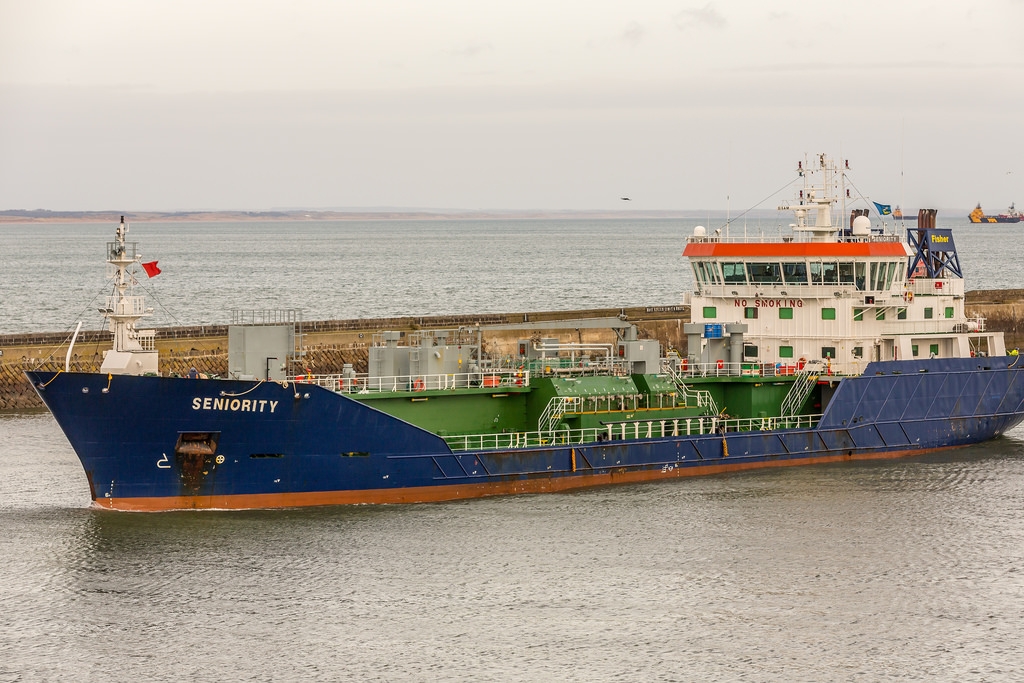
photo credit: Seniority via photopin (license)

Also posted at Veterans Today

Typical US Hypocrisy Over Russian Veto

security council

US Veto History Shows Flagrant Disregard for International Law

The western media is roundly condemning Russia for vetoing a Security Council resolution condemning tomorrow’s referendum on Crimean self-determination as illegal under international law. The US, as usual, is being extremely selective in their support for international law. Their own veto history reveals that they have vetoed 41 resolutions demanding that Israel respect international law in occupied Palestine.

According Samantha Power, US ambassador to the UN, “Russia has used its veto as an accomplice to unlawful military incursion.”

How ironic. Substitute “US” for “Russia,” and you could be describing US behavior as regards the Israeli occupation of Palestine.

The 41 US vetoes include numerous resolutions condemning the construction of Israeli settlements in occupied Palestine, which are illegal under the Fourth Geneva Convention. The Obama administration last blocked Security Council efforts to force Israel to end settlement construction in February 18, 2011. You have to question the President’s sincerity in the current Middle East peace process. For peace negotiations to be fair, surely they must start with an absolute requirement that Israel abide by international law.

Other resolutions condemn Israeli for massive human rights violations against Palestinian civilians, their illegal war of aggression against Lebanon and Gaza, and their illegal expropriation of land in the West Bank, the Golan Heights and East Jerusalem. The US also vetoed a call for the UN to investigate Israel’s role in the murder of UN Food Program workers and countless Palestinian civilians

Any of the five permanent members of the Security Council (US, UK, Britain, France, Russia, China) have the power to veto a Security Council resolution. There have been 264 vetoes of Security Council resolutions. Approximately half were exercised by the Soviets prior to 1965, in most cases to oppose the admission of new pro-Western states to the UN.

Since 1972, the US has vetoed more Security Council resolutions than any other permanent member. In addition to vetoing resolutions on Palestine, it has vetoed fourteen resolutions condemning South Africa’s apartheid regime, one each condemning illegal US military aggression against Nicaragua and Panama and one condemning the illegal British war in the Falklands.

photo credit: jdlasica via photopin cc

Originally published in  Veterans Today