
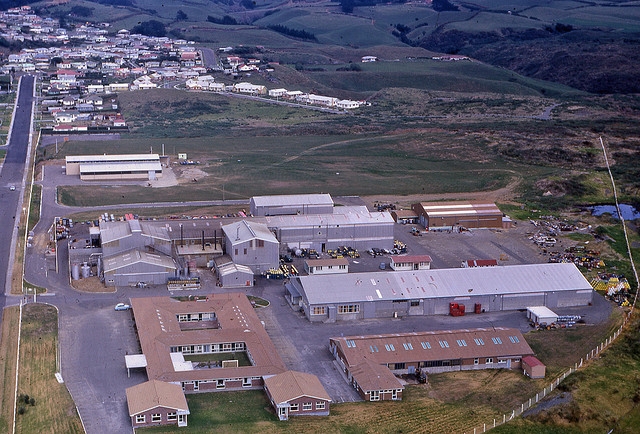
(Note: this post should be of particular concern to Americans, as Dow is trying to get the USDA to approve a dioxin-related toxin, 2,4-D, as a weedkiller)
“I have long dreamed of buying an island owned by no nation and of establishing the world headquarters of the Dow company on truly neutral ground of such an island, beholden to no nation or society.” Dow chairman Carl Gerstacker 1972 (Exporting Environmentalism).
It’s fairly common for the US and other European countries to ask New Zealand, owing to our lax environmental regulations, to manufacture and or test hazardous substances that are too controversial in their own countries. The issue is of special concern to me as a New Plymouth resident. I have numerous friends and former patients who have had their health and lives ruined by the government’s refusal to oversee or regulate the activities of Dow AgroSciences (formerly known as Ivon Watkins Dow).*
IWD produced extremely hazardous dioxin-related compounds between 1948 and 1987. After World War II, chlorinated hydrocarbons (aka organochlorines), such as 2,3,7,8 TCDD (dioxin), 2,4,5-T and 2,4 D were developed as herbicides (weed killers). Dioxin, also known as Agent Orange, was extensively sprayed during the Vietnam War to expose guerrilla positions by defoliating the jungles. The damaging health effects of these compounds were noted in many returning GIs and Vietnamese civilians and their children and grandchildren.
As early as 1957, the New Zealand Royal Society cautioned that these toxins needed to be thoroughly investigated, owing to the potential hazard they posed to human health. The warning went unheeded. In the 1950s and 1960s, New Zealanders experienced the highest per capita exposure to DDT and related pesticides and 2,4,5-T. This appears to be a major culprit in the doubling of New Zealand’s cancer rate between 1960 and 2012 – and the halving of Kiwi sperm counts between 1987 and 2007. This drop is the most dramatic in the developed world. Neither Australia nor the US have experienced a comparable decline in sperm counts.
All kinds of alarm bells should have been going off, given the staggering increase in birth defects in families downwind of IWD. Between 1965-1971, one out of thirty newborns at New Plymouth’s Maternity Hospital had birth defects. These included a strikingly high proportion of the neural tube defects commonly associated with dioxin exposure, such as anencephaly (the absence of a brain), hydrocephalus and spina bifida.
Cancer, Infertility and Toxic Breast Milk
Meanwhile New Zealand’s overall birth defect rate was one of the highest in the world. During the 60s and 70s, everyone ingesting New Zealand meat and dairy products accumulated substantial blood and fatty tissue concentrations of dioxin, owing to the massive amount of 2,4,5-T Kiwi farmers used to clear gorse and scrub. In 1961, the US banned New Zealand beef exports, owing to excessive residues of chlorinated hydrocarbons, such as DDT, aldrin, dieldrin, and BHC.
Even more alarming, a 1972-73 study of Dunedin infants published in the Lancet revealed that breast milk (which also accumulates dioxin) was less healthy than formula. In a survey of 1000 children, those breastfed four weeks or longer were twice as likely to suffer from allergies or asthma in later childhood.
The US Bans 2,4,5-T
In 1969, IWD upgraded their 2,4,5-T plant’s “rudimentary” emission controls to reduce dioxin levels in their air emissions and the herbicide they produced. From 1973 on, after the US banned 2,4,5-T in all food crops except rice, the NZ government required IWD to treat their herbicide with a solvent that reduced dioxin levels even further. Both national and regional agencies were charged with monitoring the dioxin content of IWD’s incinerator emissions. However according to available records, monitoring was limited and sporadic.
Cancer Rates Climb
Meanwhile overseas studies continued to link dioxin exposure to many of the same health problems New Plymouth residents were describing. In addition to birth defects, miscarriages, crib deaths and chronic childhood illnesses, downwind families were experiencing unprecedented levels of brain and spinal tumors, sarcomas, lymphomas, prostate and respiratory cancers and multiple sclerosis, as well as neurodevelopmental (mainly autism, Asperger’s disorder, mental retardation and ADHD) problems in their kids
IWD Shuts Down Dioxin Production in 1987
Finally in 1987, in response to massive local pressure and scores of studies documenting dioxin-related health problems, Ivon Watkins Dow (IWD) shut down all 2,4,5-T production. It’s of note this occurred without Dow or the New Zealand government acknowledging any negative health effects from dioxin exposure. Former IWD employees and residents in close proximity to IWD were left with a legacy of chronic health problems – and nowhere to turn for help.
*While Ivon Watkins (incorporated in 1944) prided itself on research and development geared towards New Zealand conditions, several major international chemical firms had substantial financial interest in the company including Monsanto (USA), the American Chemical Paint Company (USA), Geigy (Switzerland), Cela (Germany) and the Union Carbide Corporation (USA). Solidifying such connections, the company became Ivon Watkins-Dow Ltd (IWD) in 1964 after Dow Chemicals USA bought a 50% interest (Sewell 1978 – see http://www.dioxinnz.com/pdf-NZ-RAD/RAD-Thesis-BWC.pdf).
For more background and historical documents, go to Paritutu Inside the Spin: How the New Zealand Government Rewrote History
To be continued.
 The Most Revolutionary Act