One Man, One Cow, One Planet

one man

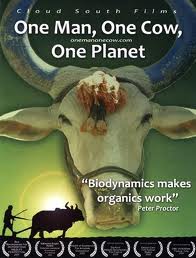
One Man, One Cow, One Planet

by Thomas Burstyn (2007)

Film Review

Contrary to constant corporate media propaganda, it isn’t food scarcity that causes world hunger. As Thomas Burstyn so ably demonstrates in this documentary, the four main causes of world hunger are trade liberalization, industrial agriculture, military dominance and genetic engineering.

Nowhere is this more painfully evident than in India. Industrial agriculture, cleverly branded as the Green Revolution, first hit India in the 1960s. Thanks to intense pressure from the World Bank, the International Monetary Fund (IMF) and western lenders, the Indian government sought to enter the global economic market by pressuring farmers to switch to chemically maintained monoculture crops for export.

Farmers were promised that investing in chemical fertilizers, pesticides and herbicides – as well as flood irrigation – would substantially increase their yields. It never happened. After three decades, the Green Revolution’s primary accomplishments were to render India’s soils infertile by killing off essential soil organisms, deplete their water resources and leave hundreds of thousands of rural farmers virtually destitute.

In the late 1990s, the giant multinational corporation Monsanto rode to the rescue by saturating the Indian countryside with their GMO seeds, which they guaranteed would restore yields and reduce hunger. Sadly, the yields they promised never materialized. Their supposedly pest resistant Bt cotton was supposed to reduce farmers’ need for pesticide. However owing to its failure to control India’s main cotton pest, the pink boll worm, it required even more pesticide than natural cotton.

Yields were never enough to cover the purchase of new seed every year, along with chemical fertilizers, pesticides and herbicides. Farmers merely sank deeper and deeper into debt and hundreds of thousands committed suicide.

Enter Peter Proctor

Over the past five decades, New Zealander Peter Proctor, has been instrumental in reversing this trend, by helping to establish an Indian food sovereignty network based on biodynamic agriculture. The basic principle of food sovereignty is that people, rather than corporations and governments, have a natural right to control what they grow and what they eat.

Proctor is considered the modern father of biodynamic farming. The latter is an approach to organic farming first started a hundred years ago by Rudolph Steiner, and Austrian philosopher, social reformer and architect. It shares many features in common with permaculture (see Roadmap to Redesigning Civilization) and biointensive agriculture (see Farming Without Machines).

Cow dung and compost, which form the humus essential to soil fertility, are cornerstones of biodynamic agriculture. In general, Indian farmers are more receptive than westerners to biodynamic methods, as they share the same reverence for cow dung as Steiner, Proctor and other biodynamic practitioners.

Proctor and his followers rely on Steiner’s original ritualistic practices (based on planetary forces) in preparing the dung, which inoculates the soil with essential soil organisms. They also religiously follow the moon planting cycles advocated by Steiner.

Pest Control in Biodynamic Agriculture

Pest control is far easier with biodynamic methods. Healthy soil is the most important pest deterrent, as pests are far less likely to attack healthy plants. Replacing monoculture crops with diversified and companion planting also greatly reduces pest infestation. Other pest control methods include liquid manure, ground quartz (silica)*, and biological deterrents (eg ladybugs).

Environmental and Economic Sustainability

In addition to strengthening the social fabric of India’s rural communities, the food sovereignty network Proctor helped to start has improved their economic sustainability. By saving and sharing seed, cow dung and compost, they reduce the cost of their inputs to zero and cut their water requirement by 50% (humus increases the water retention capacity of soil).

In addition to substantially higher yields, organic produce sells for a slightly higher price in India due to its health benefits.

With their improved economic standing, many of India’s biodynamic farmers can afford school fees and are sending their children to school for the first time.

My favorite part of the film is where Proctor’s wife blames the horrible decisions politicians make on the crap food they eat.

The film has been removed from YouTube for copyright reasons but can be rented from Amazon for $1.99 at this link: One Man, One Cow, One Planet

The stunning Indian scenery alone is well worth the price.


*Also known as diatomaceous earth, silica destroys pests by cutting them up with its microscopic razor sharp edges.


Reverend Billy vs Monsanto Robot Bee Drones

 robobee

from http://www.revbilly.com/

Below is a ritual Robobee exorcism Reverend Billy and the Church of Stop Shopping performed in the Harvard labs on May 25, 2014

The world is facing massive die-off of bee populations, thanks to heavy use of pesticides manufactured by Bayer and Monsanto.

The loss of bee populations severely threatens global food production (70-80% of plant and animal foodstuffs depend on bee pollination).

In response, the EU has banned pesticides found to be harmful to bees.

In contrast the US Department of Agriculture (USDA) has declined to enact a similar ban in the US, largely due to massive congressional lobbying by Monsanto.

Instead Harvard University is researching the creation of tiny drone bees – called Robobees – to replace the bees killed off by pesticides. Unbelievable, isn’t it – the lengths scientists and governments will go to to avoid doing the right thing.

Support the work of Reverend Billy and the Church of Stop Shopping at http://www.revbilly.com/

NZ’s Dioxin Legacy: Lies and Cover-up

dioxin

The the long battle to get the New Zealand government to acknowledge the major health problems of dioxin-exposed New Plymouth residents (see my last post) first began in 1973. Instead of attempting to understand and address residents’ health problems, the New Zealand government, an Ivon Watkins Dow (IWD) partner though share holdings and subsidies, became the first clients of New Zealand’s first public relations firm (Consultus).

Records show that Consultus was first hired to ensure the ongoing availability and use of 2,4,5-T. A 1981 case study from the international journal PR News – about Consultus’ first PR campaign – is entitled  Countering an Activist Campaign to Have a Product Banned from Use. This “media management” response seems to be very typical of New Zealand’s approach to toxic waste management. In the words of one IWD survivor, the goal is to “delay and deny until we die.”

In the mid to late nineties, local activist Andrew Gibbs helped found a new research group, the Paritutu Dioxin Investigation Network. When his de facto partner, a long term resident of Paritutu (the suburb closest to IWD) developed chronic fatigue syndrome and unexplained anemia, her family and friends informed him of the reproductive and immune problems other Paritutu families were experiencing.

Gibbs, alarmed by 1985 Paritutu studies showing dioxin residues comparable to Vietnamese regions sprayed with Agent Orange, tried to get the government to do blood tests on his partner and other Paritutu residents. It would turn out that both National and Labour governments were far more interested in managing public opinion about dioxin.

The Government Gives in to Grassroots Pressure

In 2001, Minister of Health Annette King finally agreed to test the serum levels of 100 Paritutu survivors. When many were found to have elevated dioxin levels, the Labour-led government responded by setting up a Ministry of Health unit to manage “financial risks” related to potential government liability.

Spin, Cover-up, and Statistical Manipulation

They subsequently commissioned a 2004-2005 study by Excellence in Research Australia (ERA) to “analyze” Taranaki District Health Board cancer and birth defect records. The researchers subjected the data to some bizarre statistical manipulations to produce the conclusion the government was looking for, i.e. that high rates of cancer and birth defects in Paritutu and Motorua households were unrelated to dioxin exposure.

For example, they deliberately re-targeted the study design to focus on residents living in Paritutu between 1974-87, who were known to have lower exposure levels based production changes between 1969 and 1973 that reduced dioxin contamination. They also altered 2005 data to make it appear that ongoing exposure occurred between 1974-87, as well as using inaccurate half-life figures to skew pre-1974 results. Finally they excluded high rates of diagnosed cancer between 1970-74 as being too close to the period of toxic exposure, which they misrepresented as occurring between 1962-87, when it actually occurred between 1960-73. See (*) below for actual data.

When these statistical manipulations were challenged in a 2006 TV3 documentary entitled “Let us Spray,” the government and their risk management unit dismissed the bulk of the alleged misrepresentations and blamed others on “typographical” errors.

New Zealand health officials also repeatedly ignored recommendations by ESR and the local ethics review board that they undertake a geo-spatial study of families with elevated dioxin levels. Gibbs eventually undertook his own study of all residents living within 500 meters of Ivon Watkins Dow between 1963-66. He achieved his primary goal – proving that a historical cohort could be identified – at a total cost of $1000. This was in contrast to the hundreds of millions of dollars the New Zealand government had paid Consultus, ESR, their “financial risk” management unit.

The Government Compromise: Free Health Checks

Gibbs continues to fight to get Dow and the New Zealand government to acknowledge the health problems of Paritutu and Motorua residents who worked at or lived adjacent to IWD prior to 1969. In 2008, the government finally granted Paritutu survivors three free health checks (primary care isn’t covered under New Zealand’s National Health Service).

Gibbs dismisses the government move as a PR ploy. Mainly because it circumvents the issue of intergenerational effects (i.e. birth defects in subsequent generations). A 2006 study showed that New Zealand veterans and their offspring suffered DNA damage as a result of dioxin (Agent Orange) exposure in Vietnam.

The Cover-up that Cost More Than the Truth

The question yet to be answered is why the New Zealand government was so determined to cover all this up. Why spend millions of dollars on PR consultants, a “financial risk” management unit, flawed research and a vexatious Broadcast Standards Authority (BSA) complaint – when it would have cost far less to treat the health problems of 500 New Plymouth households.

Gibbs believes an official government admission of dioxin-related health problems would open them to liability – both from New Zealand veterans and Vietnamese civilians exposed to Agent Orange. Because the New Zealand government was a shareholder, as well as subsidizing 2,4,5-T production from 1969 on, they are co-liable with IWD.

***

*A look at the Taranaki District Health Board (TDHB) 2002 data reveals a large increase in neural tube birth defects in Moturoa and Paritutu residents between 1965 and 1972. It also reveals that New Plymouth rates of hydrocephaly, hypospadias, spina bifida and anencephaly recorded at New Plymouth Maternity Hospital between 1965 and 1971 were respectively 3.2 times, 3.8 times, 4.2 times and 9.7 times the crude rates found in offspring of US Vietnam veterans:

“The 1966-1972 rate of still-births was 1 in 7 versus the expected N.Z rate of 1.1 still-birth in 100 births. The 1966-72 rate of linked NTD (neural tube development) defects was 1 in 10.5 vs the N.Z range of 1 NTD in 222 to 1 NTD in 400. The 1966-72 rate of birth defect cases was *1 in 7 versus the N.Z expected rate of 1 case in 50 births  This conservative rate is based on the 2002 TDHB review of addresses for only 17 of 167 birth defect cases 1965-70 so does not include the other 150 defects or three defects reported by Zone A mothers.” (from link and PDF).

The TDHB data also reveals a significant increase in 1976-85 cancer rates living within 500 meters of IWD in 1963-1966:

“From a Study of 165 Paritutu Zone A 1963-1966 residents living within a 500 metres of Ivon Watkins Building 03 plant:

“1976-85 rate of 0-64 year age group cancer mortality was 4.5 times expected. Five deaths where 1.1 was expected based on mean of 1976 and 1985 NZ census rates. Four of the 5 deaths were in 1981 and 1982. Two in five NZ 1976-85 cancer deaths were in 0-64 ages. All five Zone A cancer deaths were in 0-64 ages. Two 1981 cancer deaths were parents aged 35 and 48 of 1969 and 1970 miscarriage and still-birth cases. There were 13 deaths 1976-85 for Zone A 1963-66 residents with 13.4 all cause deaths expected, 5 were cancer deaths with 2.9 expected and there were 3 lung cancer mortalities where less than 1 was expected (link).”

For more background and historical documents, go to Paritutu Inside the Spin: How the New Zealand Government Rewrote History

photo credit: pixiduc via photopin cc

New Zealand’s Love Canal

ivon watkins dow

(Note: this post should be of particular concern to Americans, as Dow is trying to get the USDA to approve a dioxin-related toxin, 2,4-D, as a weedkiller)

“I have long dreamed of buying an island owned by no nation and of establishing the world headquarters of the Dow company on truly neutral ground of such an island, beholden to no nation or society.” Dow chairman Carl Gerstacker 1972 (Exporting Environmentalism).

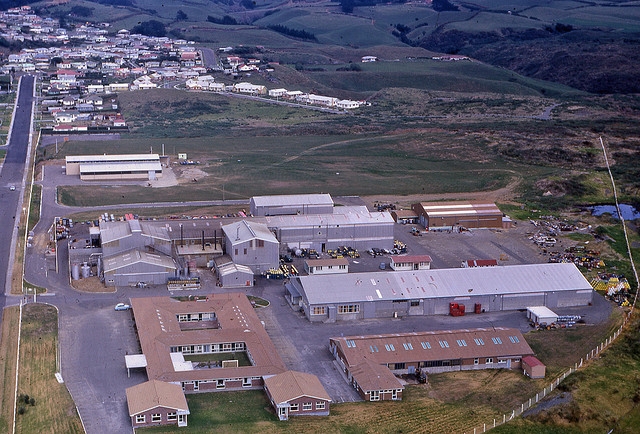
It’s fairly common for the US and other European countries to ask New Zealand, owing to our lax environmental regulations, to manufacture and or test hazardous substances that are too controversial in their own countries. The issue is of special concern to me as a New Plymouth resident. I have numerous friends and former patients who have had their health and lives ruined by the government’s refusal to oversee or regulate the activities of Dow AgroSciences (formerly known as Ivon Watkins Dow).*

IWD produced extremely hazardous dioxin-related compounds between 1948 and 1987. After World War II, chlorinated hydrocarbons (aka organochlorines), such as 2,3,7,8 TCDD (dioxin), 2,4,5-T and 2,4 D  were developed as herbicides (weed killers). Dioxin, also known as Agent Orange, was extensively sprayed during the Vietnam War to expose guerrilla positions by defoliating the jungles. The damaging health effects of these compounds were noted in many returning GIs and Vietnamese civilians and their children and grandchildren.

As early as 1957, the New Zealand Royal Society cautioned that these toxins needed to be thoroughly investigated, owing to the potential hazard they posed to human health. The warning went unheeded. In the 1950s and 1960s, New Zealanders experienced the highest per capita exposure to DDT and related pesticides and 2,4,5-T. This appears to be a major culprit in the doubling of New Zealand’s cancer rate between 1960 and 2012 – and the halving of Kiwi sperm counts between 1987 and 2007. This drop is the most dramatic in the developed world. Neither Australia nor the US have experienced a comparable decline in sperm counts.

All kinds of alarm bells should have been going off, given the staggering increase in birth defects in families downwind of IWD. Between 1965-1971, one out of thirty newborns at New Plymouth’s Maternity Hospital had birth defects. These included a strikingly high proportion of the neural tube defects commonly associated with dioxin exposure, such as anencephaly (the absence of a brain), hydrocephalus and spina bifida.

Cancer, Infertility and Toxic Breast Milk

Meanwhile New Zealand’s overall birth defect rate was one of the highest in the world. During the 60s and 70s, everyone ingesting New Zealand meat and dairy products accumulated substantial blood and fatty tissue concentrations of dioxin, owing to the massive amount of 2,4,5-T Kiwi farmers used to clear gorse and scrub. In 1961, the US banned New Zealand beef exports, owing to excessive residues of chlorinated hydrocarbons, such as DDT, aldrin, dieldrin, and BHC.

Even more alarming, a 1972-73 study of Dunedin infants published in the Lancet revealed that breast milk (which also accumulates dioxin) was less healthy than formula. In a survey of 1000 children, those breastfed four weeks or longer were twice as likely to suffer from allergies or asthma in later childhood.

The US Bans 2,4,5-T

In 1969, IWD upgraded their 2,4,5-T plant’s “rudimentary” emission controls to reduce dioxin levels in their air emissions and the herbicide they produced. From 1973 on, after the US banned 2,4,5-T in all food crops except rice, the NZ government required IWD to treat their herbicide with a solvent that reduced dioxin levels even further.  Both national and regional agencies were charged with monitoring the dioxin content of IWD’s incinerator emissions. However according to available records, monitoring was limited and sporadic.

Cancer Rates Climb

Meanwhile overseas studies continued to link dioxin exposure to many of the same health problems New Plymouth residents were describing. In addition to birth defects, miscarriages, crib deaths and chronic childhood illnesses, downwind families were experiencing unprecedented levels of brain and spinal tumors, sarcomas, lymphomas, prostate and respiratory cancers and multiple sclerosis, as well as neurodevelopmental (mainly autism, Asperger’s disorder, mental retardation and ADHD) problems in their kids

IWD Shuts Down Dioxin Production in 1987

Finally in 1987, in response to massive local pressure and scores of studies documenting dioxin-related health problems, Ivon Watkins Dow (IWD) shut down all 2,4,5-T production. It’s of note this occurred without Dow or the New Zealand government acknowledging any negative health effects from dioxin exposure. Former IWD employees and residents in close proximity to IWD were left with a legacy of chronic health problems – and nowhere to turn for help.

*While Ivon Watkins (incorporated in 1944) prided itself on research and development geared towards New Zealand conditions, several major international chemical firms had substantial financial interest in the company including Monsanto (USA), the American Chemical Paint Company (USA), Geigy (Switzerland), Cela (Germany) and the Union Carbide Corporation (USA). Solidifying such connections, the company became Ivon Watkins-Dow Ltd (IWD) in 1964 after Dow Chemicals USA bought a 50% interest (Sewell 1978 – see http://www.dioxinnz.com/pdf-NZ-RAD/RAD-Thesis-BWC.pdf).

For more background and historical documents, go to Paritutu Inside the Spin: How the New Zealand Government Rewrote History

To be continued.

photo credit: PhillipC via photopin cc

Intestinal Bacteria and Chronic Illness

bacteria

(This is the second of 2 posts about a possible link between intestinal bacteria, obesity, and other chronic illnesses.)

The most enlightening article I’ve seen about micrbiota (gut bacteria) research is an April 2013 article from Mother Jones. It explores the possibility that insulin resistance (see previous post) is actually an “inflammatory” process caused by the production of “endotoxin” by unhealthy gut bacteria.

The Major Health Implications of Dysbiosis

Owing to a doubling of obesity rates since 1980, this strikes me as a reasonable hypothesis. The mass marketing of antibiotics by Big Pharma, Food Inc (in livestock feed), and Monsanto (in genetically modified organisms) has led to epidemic levels of dysbiosis (a derangement in gut bacteria) in the industrialized world. In addition to skyrocketing obesity rates, the developed world has also experienced a significant increase in other dysbiosis-related conditions, including cancer, diabetes, and degenerative and autoimmune disease. It would also explain why children born to obese mothers (we acquire gut bacteria from our mothers) are more likely to suffer from asthma, attention deficit disorder, and autism.

The article cites research from the University of Washington showing that foods high in saturated fats and sugar promote the growth of endotoxin-producing inflammatory bacteria. Endotoxin, in turn, causes inflammatory damage to the the hypothalamus, the brain’s appetite center. When this occurs, people lose the ability to feel full and eat to excess.

The Mother Jones article also references studies in which volunteers improved their insulin sensitivity, as well as losing weight, by reducing their level of “inflammatory” bacteria. They accomplished this by consuming diets rich in fermented foods containing healthy, anti-inflammatory bacteria.

Most interesting of all are studies showing that bariatric (weight loss) surgery helps some patients and not others depending on their ability to grow a healthier microbiota (gut bacteria colony) following their procedure.

The Care and Feeding of Intestinal Bacteria

After suffering a sudden onset of so-called “irritable bowel” syndrome 20 years ago, I have a strong personal interest in dysbiosis. The Sydney GI specialist I consulted says the only effective treatment for most IBS sufferers is to re-establish a healthy microbiota.

The end of the article offers a number of suggestions how to accomplish this. The bottom line is to consume a diet rich in 1) fermented foods with live bacterial cultures and 2) complex carbohydrate and fiber-rich foods these organisms thrive on. Studies show that treatment with whole foods is always preferable to taking probiotics. Fermented foods contain literally thousands of strains of bacteria that work collaboratively with one another. Probiotic capsules, in contrast, contain a dozen strains at most and are likely to be destroyed by stomach acid

Examples of helpful fermented foods include sauerkraut (only if it’s made via fermentation), miso (fermented soybean paste), kefir (a fermented drink), and some yoghurts. To ensure the bacterial cultures are live, it’s best to ferment these foods yourself or get them from a reliable health food store. It’s also essential to check the label to make sure they aren’t pasteurized (pasteurization kills bacteria).

The foods these bacteria like to munch on include onions, garlic, potatoes, bananas, yams, apples, oranges, whole grains, Jerusalem artichokes, legumes and cruciferous vegetables (cabbage, broccoli, and cauliflower).

Looking after the new bacteria in my intestine is almost like having a new pet to care for. I can already tell from my symptoms which foods they really like: yam, cooked apples, and avocado. Luckily I’m pretty keen on them myself.

photo credit: www.cihr-irsc.gc.ca via photopin cc


The Politics of Obesity

obesity

(This is the first of two posts exploring possible links between intestinal bacteria, obesity, and other chronic illnesses.)

Obesity Has Social and Political Causes

The Vanishing Farmer

almanac-gold_1_

The US Farm Crisis

Americans rarely give much thought to where their food comes from. They should. Rapidly expanding cities mean the US loses two acres of fertile farmland every two minutes. The dwindling number of US farmers – now at 1.5 million – is even more concerning. At present the average American farmer is over 60 – only 5% of them are under 45.

The US government has been desperately trying to recruit more formers since 1992, when they first introduced a special loan program for beginning farmers. Owing to poor uptake, the 2008 Farm Bill greatly expanded the loan program, as well as introducing educational assistance and special training programs, commodities payments, conservation payments and crop insurance subsidies to new farmers. These programs were expanded even further in 2010, when US Secretary of Agriculture Tom Vilsack announced his goal of recruiting 100,000 new farmers in five years.

Corporate Welfare for Factory Farms

Although the number of loans to beginning farmers increased from 9,000 in 2008 to more than 15,000 in 2012, there’s growing skepticism about other aspects of the program, which clearly benefit large corporate players –  factory farms and the private insurance companies that sell crop insurance – more than small farmers. Last week, GMO and pesticide manufacturer Monsanto bought into the crop insurance racket when they acquired ClimateCorp, a San Francisco based company that employs complex weather data to set prices for its crop insurance policies. At the same time property development and speculation, which poses the most immediate threat to productive farmland, remains unaddressed.

Young Farmers are Pro-Organic and Anti-GMO

According to Reuters, the organic and healthy food movements have also been instrumental in inspiring urban youth in returning to the land, where they are supported by a number of national and state nonprofit organizations.

Greenhorns, a national membership organization of 6,000+, is one of the largest and most active. Founded in 2007, the group works to promote, recruit and support young US farmers by putting on events and workshops, networking, resource sharing, and the production of traditional and new media: radio, documentary film, blog, a book of essays, guidebooks, web-based tools. Their primary goals are to “retrofit” the corporate food system by building a thriving agricultural economy, based on solid business skills and sustainable farm practices.

Their website offers a phenomenal range of resources, with links to

  • Jobs
  • Agricultural training courses
  • Mentoring opportunities
  • Low cost food processing facilities
  • Core consumer groups wishing to start Community Supported Agriculture schemes*
  • Market managers seeking new producers
  • Marketing advice/assistance
  • Land for sale and lease
  • Legal services
  • Grants
  • Crowdfunding and community based fundraising opportunities
  • Political action groups

I was especially intrigued by the Greenhorns new documentary and their 2013 New Farmers Almanac. The latter is a new twist on the classic Old Farmers Almanac. Designed to appeal to healthy food advocates as well as farmers of all ages, it presents a collection of essays about adjusting to large scale urbanization and the mega population boom, as well as reclaiming a landscape dominated by monoculture, soil depletion. Available in paperback for $20 from AK Press

Here’s the trailer to the documentary, which can be purchased for $10 from their website:

*In Community Supported Agriculture schemes (CSAs) consumers subsidize a local farm by purchasing a subscription to weekly deliveries of fresh vegetables and/or fruit.