
The Clash of the Two Americas Volume 3: The Birth of a Eurasian Manifest Destiny
By Matthew Ehert
Purchase link: https://canadianpatriot.org/untold-history-of-canada-books/
Book Review
Another great read on a very complex topic.
About half of Volume 3 focuses on hidden history and about half on the Russian-Chinese collaboration to build a global economy based on on peaceful coexistence, nternational cooperation and economic and technological development.
The hidden history chapters cover
- The “Spirit of Westphalia,” as expressed in the 1648 Peace of Westphalia that officially ended the Thirty Years War.[1]
- The role of banking centers in the city-states of Venice (697 – 1797 AD) and their role in replacing Rome as the political and economic center of the western world.[2] In 1095, the Venetian Empire instigated (along Pope Urban II) the Crusades against the Middle East Muslim states. It subsequently commandeered the Khazarian [3] trade routes connecting the steppes with the Silk Road and China. Venice would be the first empire to ban Jews from participating in international trade, owing land or weapons, joining trade guilds, farming or serving in the military. The word “ghetto,” which dates back to Venice, was used to describe their urban settlements where the only occupations Jews were allowed were dealing in old rags, pawn brokering and money lending.
- Stalin’s allegations that Churchill had Roosevelt (who died under suspicious circumstances) poisoned and his request (which Eleanor Roosevelt declined) for an autopsy to be performed.
- A summary of positive steps (towards peaceful coexistence and international cooperation Donald Trump launched during his presidency:
- An initiative to extract CIA operations from the US military.
- An initiative to end US cooperation with NATO and WHO.
- An initiative to defund CIA-sponsored regime operations like the National Endowment for Democracy (NED) – see USA: Exportng Democracy Since 1948
- An initiative to enact protective tariffs to support US domestic industry.
- His successful negotiation of a US-China treaty to increase Chinese imports of US goods.
- The role of Jesuits in the New World in recruiting Native Americans to launch terrorist attacks on North American colonists, [4] the land grants they received from British round table founder Cecil Rhodes and the study and use of Jesuit psychological mind control techniques at the Tavistock Clinic in London.
- An excellent chapter by Cynthia Chung on the ancient African kingdoms that preceded European colonization of African and enslavement of its residents.
About half the book concerns the role of China and Russia in building the Belt and Road Initiative (BRI) and the International North-South Transit Corridor linking China, India, Pakistan, Iran, Russia, Central Asia and the Middle East in a massive trade and energy sharing network. According to Ehert, all the Arab countries (including Syria) except Saudi Arabia, Qatar and the UAE have joined one or both of these networks.
The only chapters of the book I found problematic were those unconditionally championing Russia and China’s embrace of nuclear energy. Ehret and Chung’s assertions about nuclear energy being a carbon neutral and totally safe alternative to fossil fuels provide an extremely one sided view of an extremely controversial topic. There’s strong evidence showing nuclear power plants produce far more carbon emissions during their construction (especially for concrete and steel) than either solar panels or wind turbines and emissions continue to be produced as the uranium used to fuel them is processed. See Fact Check: Is Nuclear Energy Good for the Climate
The authors also assert that the Russians and Chinese have eliminated the toxic nuclear waste problem by 1) reprocessing nuclear waste so it can be reused instead of stored, 2) by replacing uranium-fueled reactors with those fueled by thorium and fusion technology. This directly contradicts the views of the physicists who run the Union of Atomic Scientists.
See The History of Nuclear Power’s Imagined Future: Plutonium’s Journey From Asset to Waste, Fact Check: Five Claims About Thorium Waste Made by Andrew Yang (which talks about thorium waste being even more dangerous than conventional nuclear waste) and Fusion Reactors: Not What They’re Cracked up to Be.
[1] The Thirty Years War, essentially a religious war between Catholics and Protestants, began as a civil war between German statelets belonging to the Holy Roman Empire and eventually drew in nearly all of western Europe (reducing the population of Germany by one-third). The Peace of Westphalia outlined (for the first time in western society) the five principles of peaceful coexistence eventually adopted by the Non-Aligned Movement. Founded in 1954, the NAM consisted of 120 countries not formally aligned with any major power block.
[2] The global banking center shifted to Amsterdam in 1609 with the founding of the first private central bank and the Dutch East India Company, which soon merged with the British East India Company. It then shifted to England when the Dutch prince William III (who founded the Bank of England in 1694) assumed the British throne in 1689.
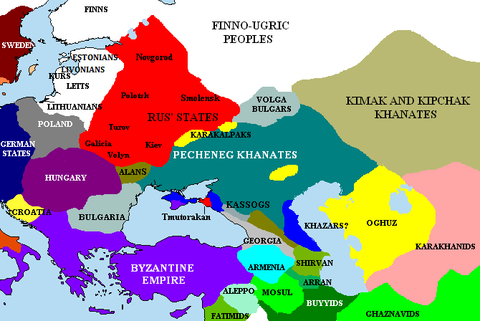
[3] The chapter on the Khazarian Empire describes its founding in the late 6th century, by Turks who subsequently converted to Judaism, owing to their close relationship with Jewish bankers and traders who ran that section of the Silk Road. Ehert disputes David Ickes’s claims about a so-called Khazarian mafia that alleged replaced the Semitic Jews in Israel.
[4] The inventor (and US spy) Samuel Morse first wrote about this in his 1841 book Foreign Conspiracy Against the Liberties of the United States.
 The Most Revolutionary Act