What Causes Civilization to Collapse?

collapse

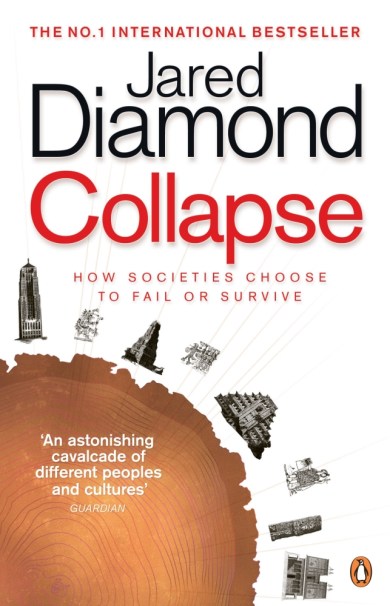
Collapse: How Societies Choose to Fail or Survive

Jared Diamond

Penguin Books (2005)

Book Review

This book was very different from what I expected. I anticipated an account of the environmental mismanagement that caused the collapse of prehistoric civilizations such as Easter Island. Collapse is actually a detailed historical analysis of a wide spectrum of both failed and successful societies. In addition to Easter Island, Diamond also covers the vanished Anazazi civilization in New Mexico, the Mayan civilization, the Viking settlements of Iceland (which persists to the present day), Greenland and Vineland (present day Newfoundland and New Brunswick), pre-1853 Japan, the New Guinea highlands and modern day Rwanda and Australia (the modern society he describes at highest risk for collapse).

Diamond’s thesis is that the ability of any society to meet the survival needs of its members depends on certain basic preconditions. He maintains historical forest management is the most critical – deforestation features in every historical collapse he mentions. Forests are not only essential to provide fuel for cooking, heating and refining metal, but loss of forest cover leads to soil erosion and destruction of topsoil, as well as decreased rainfall and fresh water shortages.

In some societies Diamond analyzes, collapse was the direct result of environmental mismanagement. In others, the odds of survival were extremely low to begin with, due to low rainfall, a cold or windy latitude or poor soils. In many cases, a political factor such as war, lack of external supports (eg trade), overpopulation and/or a greedy ruling elite diverting resources to luxuries were important contributing factors.

The section I found most interesting concerns the New Guinea highlanders, who (prior to the arrival of Europeans) maintained an environmentally sustainable civilization via bottom up direct democracy for over 46,000 years.

Lee Harvey Oswald: US Intelligence Operative

From Dallas to Raleigh: Lee Harvey Oswald and the Fingerprints of Intelligence

Allen City TV (2015)

Film Review

This presentation, featuring assassination researchers Grover Proctor and Jim Marrs, focuses on a fascinating chain of evidence shedding new light on “lone assassin” Lee Harvey Oswald’s role as a US intelligence operative. The new evidence revolves around the mysterious Raleigh North Caroline “cutout” named John Hurd, who Oswald attempted to call from the Dallas jail. Hurd first came to the attention of assassination researchers during the extensive 1978 investigation by the House Committee on Assassinations.

Proctor, who interviewed Hurd prior to his death, has assembled strong circumstantial evidence that Hurd was linked to the Naval Intelligence Unit in Nagshead North Carolina that trained recruits in the fifties and sixties to “defect” to the Soviet Union as double agents. Following his enlistment in the Marines at 17, Oswald underwent training at Nagshead and was initially deployed to Japan, where he had top secret clearance to monitor U2 spy plane flights over the Soviet Union. In 1959, he would “defect” to the Soviet Union in an attempt to fool the Russians into offering him a sensitive intelligence role. After the Russians failed to take the bait, the US repatriated him in 1961.

The second hour of the documentary, in which Jim Marrs comments on Proctor’s work, is the most illuminating. Marrs briefly sums up other compelling evidence linking Oswald to Naval Intelligence and the CIA, including his CIA 201 (employment) file and the Minox spy camera he had on his person at the time of his arrest. Marrs also refers to important evidence regarding Oswald’s intelligence activities in New Orleans – uncovered by New Orleans district attorney Jim Garrison ** and corroborated by Oswald’s former mistress Judyth Baker in  Lee and Me


*A “cutout” is an intermediary a undercover operative can safely contact in emergency situations without exposing the identity of their control (ie the official operative directing their intelligence activities).

**Jim Garrison was the only prosecutor to indict and try (in 1967) a prominent assassination co-conspirator named Clay Shaw. Shaw was ultimately acquitted owing to the CIA’s refusal to release records documenting his extensive history in intelligence (which would be released to the House Committee on Assassinations in 1978).

How the US Uses War to Protect the Dollar

The Gods of Money

William Engdahl (2015)

The first video is a 2015 presentation by William Engdahl about his 2010 book The Gods of Money. It focuses on the use of US economic and military warfare to maintain the supremacy of the US dollar as the global reserve currency.

As his point of departure, he begins with the 1944 Bretton Woods agreement, in which the Allied powers agreed to use the gold-backed US dollar as the world’s reserve currency. In 1971 when Nixon was forced to end the gold standard,* the gold-backed US dollar was replaced by the “petrodollar.” According to Engdahl, it was so named because of a secret agreement the US made with Saudi Arabia – in return for a guarantee that OPEC would only trade oil in US dollars, the US guaranteed the Saudis unlimited military hardware.

In this way, oil importing nations (most of the world) were forced to retain substantial US dollar reserves. This was the only way they could provide their economies with a continuous supply of oil.

The petrodollar remained supreme until the mid-1980s, when the collapse of the US Savings and Loan industry (a pre-cursor of the 2007 banking collapse) raised concerns in Europe that the US was failing as a super power. Fearing the US economy was collapsing, they created the euro and the Eurozone, to prevent the Soviet Union or China from filling the power vacuum.

The financial warfare unit of the US treasury responded by feeding hedge fund manager and currency speculator George Soros secret information that enabled him to lead an attack on the British pound. This, in turn, destabilized the British economy to the point the UK no longer qualified to join the euro.

In 1997 the US Treasury and Soros made a a similar attack on economies of Southeast Asia (Thailand, South Korea, Indonesia, Hong Kong, Laos, Malaysia, Philippines) that attempted to use currencies other than the dollar as their reserve currencies.

In 2010, after the US government had run three years of $1 trillion deficits, China, Russia and Japan announced their intention of selling US Treasury bonds (which the US government sells to finance its debt) to increase their euro reserves. Concerned this placed the US dollar on the brink of catastrophic collapse, the US Treasury and Soros attacked the Euro directly by collapsing the Greek economy. The mechanism Soros used was to direct his hedge funds to dump the sovereign treasury bonds that financed Greek debt.** When the European Central Bank announced its commitment to a Greek bail-out, the US Treasury and Soros followed up with an attack on Irish, Spanish and Portuguese sovereign bonds.


*A US economic crisis led to massive foreign demand for US dollar redemption that threatened to deplete US gold reserves.

** The immediate effect of bondholders dumping Greek bonds raised interest rates on Greek debt to a level that threatened to bankrupt their government.


The second clip is a Guns and Butter radio interview with Engdahl. It focuses on a second area the Gods of Money covers, namely the long US battle to abolish their private central bank (aka the Federal Reserve) and end the ability of private banks to create money out of thin air (see How Banks Create Money Out of Thin Air).

After a brief explanation of fractional reserve banking, whereby 97% of our money is created by private banks, Engdahl traces the history of the First Bank of the United States, created by Alexander Hamilton in 1791. The latter was the first US central bank, 80% owned by private (mostly Rothschild-controlled) banks in the City of London and 20% owned by the US government. President James Madison’s refusal to renew the bank’s charter in 1811 would result in Britain and the US going to war in 1812.

When the war ended in 1815, the American war debt was so substantial, the US had no choice but to charter the Second Bank of the United States, which once again was 80% controlled by London banks.

In 1832, Andrew Jackson refused to renew the bank’s charter, and the US had no central bank between 1832 and 1913. In 1913 when President Woodrow Wilson secretly colluded with the global banking establishment to create the Federal Reserve.

Both Lincoln and Kennedy challenged the exclusive role private banks play in creating the US money supply – Lincoln by issuing greenbacks (rather than borrowing money from private banks) to pay for the civil war and Kennedy by issuing silver certificates directly redeemable by the US Treasury. In both cases, Engdahl feels their defiance of the international banking establishment played a role in the decision to assassinate them.

Down the Old Memory Hole: How Bush Jr Quashed the Movement for Korean Reunification

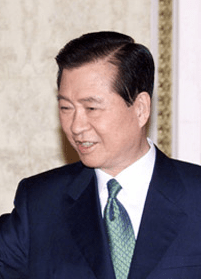
Nobel Peace Prize Winner Kim Dae Jung

With the Trump administration and the mainstream media gleefully beating the war drums for a military attack on North Korea, there’s crucial historical context missing from the corporate media coverage of this issue. I suspect most Americans have never heard of of Korea’s “Sunshine Policy” (1998-2008), aimed at eventual reunification of North and South Korea. We certainly heard about it here in New Zealand, thanks to the mass revolt in Bush’s diplomatic corps when he deliberately sabotaged this policy to isolate and provoke North Korea into amping up their their nuclear weapons program.

On learning of the Sunshine Policy, my Americans friends are shocked to learn that North Korea moved from active engagement in 1998 in nuclear disarmament and negotiations towards Korean reunification to announcing the their first nuclear weapons test in 2006. They also have no idea of the deliberate steps the Bush/Cheney administration took to sink the Sunshine Policy, nor their devious motives for doing so.

Carter’s 1994 Agreed Framework and the Origins of South Korea’s Sunshine Policy

The Sunshine Policy grew out of a treaty (the Agreed Framework) former president Jimmy Carter negotiated with late North Korean President Kim Il Sung in 1994. In return for North Korea agreeing to cease its nuclear weapons program and permitting the return of International Atomic Energy (IAEA) inspectors, the US agreed to replace the power lost when North Korea closed its Yongbyon reactor with oil shipments and two modern nuclear plants.

The North Koreans kept this agreement, and in 1998 South Korean president Kim Dae Jung began his Sunshine Policy aimed at lessening tensions and building reconciliation between North and South Korea. In June 2000, leaders of the two countries held a historic three-day summit in Pyongyang (the first in 50 years) and signed a pact in which they agreed to work towards reunification. Among other provisions, the agreement included substantial South Korean humanitarian aid to address North Korea’s chronic food shortages, loosening of restrictions on South Korean investment in North Korea, the opening of North Korea’s Kumgang Tourist Region to South Korean visitors, the establishment of a family reunification program, the opening of rail links through the Demilitarized Zone (DMZ) and a worker exchange program permitting South Korean workers to work at North Korea’s Kaesang Industrial Park.

In 2000, Kim Dae Jung won the Nobel Peace Prize for his successful implementation of the Sunshine Policy.

Why Bush Deliberately Sabotaged the Sunshine Policy

Unfortunately George W Bush, who took office in 2001, had very different plans for the Korean peninsula. In his view, a paranoid militarist North Korean threatening US allies South Korea and Japan was the most potent argument he had to justify his obsession with building a missile defense system. Once Japan joined the effort to normalize relations with North Korea, the neocons in his administration also had real concerns about the potential threat to US strategic dominance in the region.

In “Blame Bush for North Korea’s Nukes”, journalist Barbara O’Brien gives a blow by blow description of Bush’s calculated efforts to derail the Sunshine Policy, starting with his refusal to meet with Nobel Prize Winner Kim Dae Jung during his March 2001 visit to Washington. In January 2002, Bush would make his infamous Axis of Evil speech, including North Korea with Iraq and Iran as states deliberately sponsoring terrorism and seeking weapons of mass destruction. In October 2002, a month after Japan joined the diplomatic effort to normalize relations with North Korea, he accused the latter (with even flimsier evidence than his administration put forward for Iraq’s weapons of mass destruction) of secretly developing a program to enrich uranium to weapons grade and unilaterally cut off oil shipments the US committed to under the 1994 Agreed Framework.

Bush would go on to pull US troops out of North Korea, where they had been working cooperatively with the North Korean Army searching for the remains of US army personnel killed in the Korean War.

As O’Brien asserts in her series, the immediate trigger for these moves was a visit by Japanese prime minister Junichiro Koizumi to North Korea in a first effort to normalize relations between the two countries. In the view of the Bush administration, an independent economic-political block consisting of Japan and a unified Korea posed a serious strategic threat to US dominance in Asia and had to be stopped. Her arguments make sense in view of the fact that direct US military occupation of South Korea only ended in 1994, a year after the South Korean people overthrew the last US-installed puppet dictator.

Provoking North Korea into Resuming Their Nuclear Weapons Program

In the face of growing belligerence and military threats from the US, in 2003 North Korea announced they were withdrawing from the Nuclear Nonproliferation Treaty and restarted the nuclear reactor frozen by the 1994 Agreed Framework. They also announced they were restarting their nuclear weapons program and long range missile testing. In 2004, they would announce they had successfully manufactured a nuclear weapon and in 2006 test their first nuclear weapon

Whereas there was no evidence they had nuclear weapons in 2002 when Bush first leveled accusations against them, by 2004 he managed to convince them their regime was under sufficient threat they needed nuclear weapons to defend themselves – he also managed to convince Congress that the North Korean threat justified massive expenditures on a wasteful and questionably effective missile defense system.

Meanwhile despite growing tensions from North Korea’s decision to resume their nuclear weapons program, the Sunshine Policy would limp along until 2008. A shooting incident at the Mount Kumgang tourist region (in which a South Korean tourist was shot by North Korean soldiers) effectively ended it.

Originally published in Dissident Voice

2020 Olympics: Fukushima to Host Baseball/Softball

One of the gate guards in a hazmat suit, helmet and dual intake respirator

Photo credit: Steve Herman Wikimedia Commons

Hundreds of Ultra Fit Athletes and Thousands of International Visitors to be Irradiated in 2020

What’s wrong with this picture? In what utterly corrupt and debased universe could this possibly happen?

According to the Japan Times, Tokyo 2020 Olympic organizers have given the green light for disaster-affected Fukushima Prefecture to host baseball and softball games. The position of Japan’s government is that Fukushima has been “decontaminated” by removing five centimeters (a little under two inches) of topsoil and placing it in gigantic plastic bags.

Independent radiation measurements by Greenpeace (see video below) suggest that radiation levels remain extremely high and hazardous to human health. Despite this fact, the Japanese government are pressuring Fukushima refugees to return to their homes later this year by discontinuing their government assistance.

Some international observers question whether the decision to hold the 2020 Olympics in Japan is part of the on-going cover-up of the ongoing radiation risk posed by the ongoing core meltdowns at Fukushima that continue to spew radiation into the air, groundwater and Pacific Ocean.

At present, French prosecutors are investigating the Japanese Olympic Committee for a 2.8 million Singapore dollars bribe linked to the 2013 decision to award them the 2020 Olympics.


Oliver Stone’s Untold History of the US – Parts 1-3

Untold History of the United States – Parts 1-3

Directed by Oliver Stone (2012)

Last week, I sat down and binge watched Oliver Stone’s 10 part Showtime series Untold History of the United States. I was pleasantly surprised. Stone is strongly influenced by late historian Chalmers Johnson (see The Impermanence of Empire) and mentions him at several points in the series.

Untold History concerns the hidden history of the “American Century” that we’re never taught in school. Unlike Howard Zinn’s People’ History of the United States, it devotes little air time to the popular resistance movements that shaped the period 1932-2012. Instead it focuses mainly on the presidents who governed during this period.

Parts 1-3, which focus on World War II, unpack the lie that Truman dropped two nuclear bombs on Japan to spare hundreds of thousands of GIs who would have died invading the Japanese mainland.

Stone begins with a broad outline of the German military build-up that began in the early 1930s. I think this segment would have been clearer if Stone had discussed the Wall Street fascists who deliberately armed Hitler in the hope he would invade and destroy the Soviet Union. He delays this discussion until part 9, when he introduces Prescott Bush, the pro-Nazi granddaddy of George W Bush.

The first three parts of this series provide a fairly comprehensive history of the Spanish Civil War and of so-called British “appeasement” of Hitler in the early 1930s. I was extremely surprised to learn that Neville Chamberlain wasn’t motivated by cowardice, as we were taught in school, when he agreed to Hitler’s 1938 occupation of Czechoslovakia. He was merely carrying out the wishes of the US-Anglo elite – they were happy to cede Eastern Europe to Germany if it facilitated the destruction of the Soviet Union.

I was also totally unaware that the Soviets were responsible for destroying the bulk of Hitler’s vast military arsenal while the Allies piddled around in peripheral conflicts in North Africa and Italy (at the cost of 27 million lives in contrast to the 500,000 each lost by Britain and the US).

The real reason for Churchill and Roosevelt stalling for two years (Hitler invaded the USSR in 1941) before opening a second front (in Normandy) was their continuing belief that Hitler would defeat the Soviets. Once the Red Army pushed Nazi forces out of the USSR and began retaking Eastern Europe, the allies were forced to act to limit Soviet expansion.

It was actually this two year delay that caused nearly all of Eastern Europe to end up under Communist control – not ruthless Soviet expansionism as we are taught in school.

Stone agrees with historians who attribute the US nuclear attack on Japan to anti-communist hawks in the Truman administration who sought to use it to intimidate the Soviet Union. He maintains that Henry Wallace (Roosevelt’s vice-president until 19944) would never have given in to War Department hawks.

Wallace, according to Stone, was a true liberal populist in the Roosevelt mold. He was universally hated by Wall Street elites. He lost the 1944 vice presidential nomination to Truman (despite controlling over 65% of the delegates) after Democratic Party bosses rigged the 1944 Democratic Convention.

Part 1 – World War II

https://vimeo.com/136182100

Part 2 – Roosevelt, Truman & Wallace

https://vimeo.com/136182101

Part 3 – The Bomb

The Long US War Against the Third World

blowback

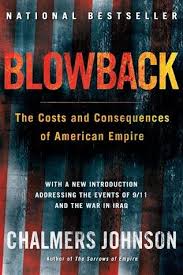
Blowback: the Costs and Consequences of American Empire

by Chalmers Johnson

Henry Holt and Company (2000)

Book Review

Free Epub and Kindle editions at libcom library

Blowback is a catalog of US military aggression since World War II. It focuses primarily on covert operations by the CIA and Pentagon “special forces – though many of these operations progressed to full blown military invasions, as in Vietnam, Laos and Cambodia.*

The late Chalmers Johnson, a Southeast Asia specialist, also devotes several chapters to the US military occupation of Japan and South Korea following World War II. He traces how the CIA installed war criminals to run Japan’s government and secretly funded single party rule (by the Liberal Democratic Party from 1949-63. He also examines the continuing (extremely unpopular) US occupation of Okinawa.

Prior to reading Blowback, I had no idea that South Korean troops were under US military command until 1994, a year after the Korean people successfully overthrew the last US-installed puppet dictator. The Korean people fought for decades to expel the US military, despite their mass protests and demonstrations being violently suppressed by the US-run Korean military.**

Johnson also explores the immense unpopularity of the 700+ military bases the US maintains around the world – in part for their horrible record of environmental contamination (which they refuse to remediate) and in part for the notorious criminality of the GIs they host. In the case of Okinawa, GIs commit crimes at the average rate of one per day, ranging from muggings, reckless driving resulting in serious injury or death, rape and murder. In nearly all cases the Japanese government is denied jurisdiction to prosecute and US military court martials result in little more than a slap on the wrist.

Johnson maintains it’s largely owing to this history of GI criminality that the US refuses to accept the jurisdiction of the International Criminal Court (ICC).


*A partial listing of major covert CIA interventions:

Iran 1953

Guatemala 1954

Cuba 1959 – present

Congo 1960

Brazil 1964

Indonesia 1965

Vietnam 1961-73

Cambodia 1961-73

Laos 1961-73

Greece 1961-74

Chile 1963

Afghanistan 1979 – present

El Salvador 1980 – present

Guatemala 1980 – present

Nicaragua 1980 – present

Iraq 1991 – present

**The US also supported the brutal regimes of the puppet dictators they installed in (partial list) Taiwan, Philippines, Cambodia, Indonesia, and Thailand.


The Fight Against a Jobless Economy and a Citizenless Democracy

People Get Ready: The Fight Against a Jobless Economy and a Citizenless Democracy

Robert McChesney and John Nichols (2016)

Film Review

An extremely inspiring public presentation in which McChesney and Nichols talk about their latest book (of the same name)

McChesney begins with research indicating that 50% of current jobs will be eliminated by robots and artificial intelligence in the next 10-20 years. He also talks about the inherent inability of a scarcity/profit based economic system to address this crisis.

For me, the most interesting part of his presentation was a discussion of Franklin D Roosevelt’s Second Bill of Rights.* According to McChesney, both Germany and Japan incorporated this Second Bill of Rights into their constitutions after World War II. This, in his view, explains why both countries have become economic powerhouses.

Both men talk about the crucial need to form a post-capitalist society and economic system. Nichols talks more about the large global movements which have formed to build this new system. He, like McChesney, has been surprised by the popular candidacies of Donald Trump and Bernie Sanders. The book predicts the appearance of proto-fascist and democratic socialist candidates in response to growing popular resistance movements. However neither expected it to happen so quickly.

The best part of Nichols’ talk is his discussion of the massive Luddite and Chartist movements in Britain (and the populist and progressive movements in the US) that would ultimately lead to universal suffrage, honest elections and the rise of the trade union movement.

Nichols stresses that none of these reforms resulted from the heroic efforts of a political savior – they all resulted from the dedicated and persistent mass organizing of ordinary people.


*Roosevelt’s Second Bill of Rights included the basic right of all Americans to

• Employment (right to work)
• Food, clothing and leisure, via enough income to support them
• Farmers’ rights to a fair income
• Freedom from unfair competition and monopolies
• Housing
• Medical care
• Social security
• Education


The End of Growth

End of Growth

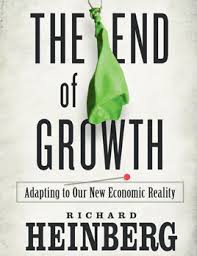
The End of Growth: Adapting to Our New Economic Reality

by Richard Heinberg

(New Society Publishers Aug 2011)

(This is the sixth of a series of posts about stripping private banks of the right to issue money. It stresses the link between our debt-based monetary system and the drive for perpetual economic growth.)

The basic premise of The End of Growth is that the world economy has flat-lined. Not only is it contracting, rather than expanding as most politicians claim, but there are important reasons why it will never return to pre-2007 growth levels. The reason? The last two centuries of continuous economic expansion were only possible due to the ready availability of cheap fossil fuels. Growing fossil fuel scarcity has caused energy costs to skyrocket. And this, according to Heinberg, is the main reason for declining economic growth.

As well as making an strong case that economic expansion has ended, Heinberg also writes about far-sighted governments (Japan, Sweden, Denmark, Norway and Finland) that are enacting policies to ensure the welfare of their citizenry as they confront new economic realities.

Heinberg and others in the Peak Oil/climate change movement have always argued that infinite economic expansion is mathematically impossible on a finite planet with finite natural resources. The End of Growth highlights the massive ecological devastation caused by this reckless obsession with economic growth, while warning that we are depriving our children and grandchildren of natural resources (fossil fuels, water, industrial fertilizers, fish stocks, top soil) that may be needed for basic survival.

In Heinberg’s previous work, he predicts it will take a decade or more before fossil fuel scarcity causes the capitalist economic system to hit the wall. In The End of Growth, he argues it already has: in October 2008. While a few countries can claim an occasional quarter of increased GDP, aggregate global economic growth is either stagnant or slowly contracting. Even China’s so-called economic “miracle” hasn’t been sufficient to generate a genuine increase in total global wealth.

The Ultimate Ponzi Scheme

Heinberg goes on to explain how private banks use the fractional reserve system to invent money out of thin air. In a global economic system where money can only be created by issuing bank loans, there’s never enough money in the system to repay all the debt. This means the global economy can only function via continual creation of new loans. And continuous economic growth is essential to make this happen.

Heinberg’s analysis of the 2008 meltdown starts with an introduction to classical economic theory, and a discussion of of the “financialization” of the US economy that occurred in the 1980s. There’s a detailed discussion of the risky financial derivatives that led to a decade of speculation and “debt” bubbles. The largest was the subprime/derivative boom, in which massive amount of borrowed money was speculated on derivatives and subprime mortgages that couldn’t be repaid. The debt bubble created was so large it plunged the entire world economy into depression when it burst.

The End of Growth in China

Heinberg also presents a painstaking analysis of why the China’s current phenomenal growth rate (7-8% per year) and somewhat slower growth rates in India, Thailand, Malaysia and Vietnam also represent “bubbles” that will eventually pop and trigger recession. China is pursuing the identical economy strategies that caused the Japanese economic miracle to collapse in the 1990s – resulting in a two decade long recession.

Life in a Steady State Economy

Obviously the end of economic growth, and continuing job, wage and benefit cuts mean that people in most industrialized countries will be forced to massively downsize their lifestyles. Outside the US, some far sighted governments are intervening in ways to make this transition less painful. Heinberg gives examples of countries (Japan, Sweden, Denmark, Japan, Norway) who openly acknowledge the reality of their steady state economies and pursue policies that make it easier for their citizens to adjust.

Sweden, for example, has transformed depressed industrial towns into “ecomunicpalities,” by “dematerializing” their economies. They have made them into fossil fuel-free towns with organic farming, public transportation and alternative energy projects – while simultaneously fostering social equity.