
Episode 15: The Turks: Turkmen Khagans and Tang Emperors
Barbarian Empires of the Steppes (2014)
Dr Kenneth Harl
Film Review
Harl begins this lecture by describing internal changes in China following the 220 AD collapse of the Han dynasty collapse, and a mass population shift from the Yellow to the Yangtze River. Owing to better rainfall and more fertile soil, southern China provided better opportunities for cultivating rice and silk.
Simultaneously mainly Turkish speaking nomads migrated into northern China, carving out a new federation around the Yellow River. Prioritizing control of the Silk Road trade, these nomads garrisoned the Jade Gate and took the dynastic name of the former Wei kingdom (220-226 AD). They were great sponsors of Buddhism and helped it spread throughout China.
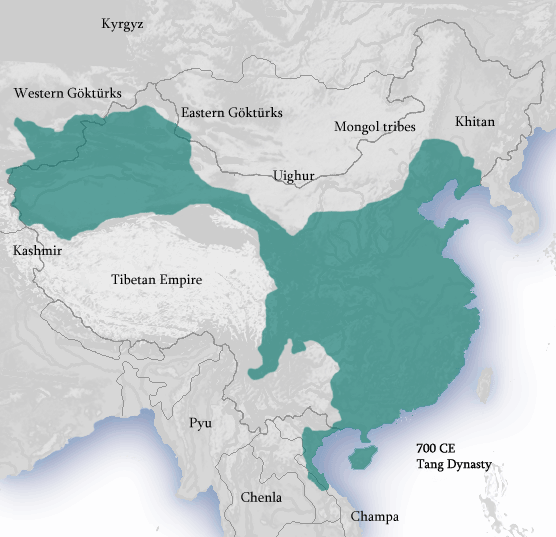
In 581 AD the Sui Dynasty reunified China, to be usurped in 618 AD by the Tang Dynasty. Under the latter, China was as large as it had ever been, relying on the Turkish Wei rulers to run northern China. Continuing the corvée* system of military construction initiated by the Han Dynasty, the formed required all males to engage in one year of construction for the emperor or one year of military service (followed by one year of garrison duty), Twenty percent of the Tang armies were nomadic cavalry and horse archers.
In 630 AD, the Tang emperor invaded the Eastern Gökturk Khanate and recruited prisoners they captured into the army. Through this process, they brought the entire Tarim Basin under Chinese control for the first time (see How the Arrival of the Turks Transformed the Steppes ).
In 660 AD, the Tang army conquered the Western Gökturk Khanate, bringing it under Chinese control.
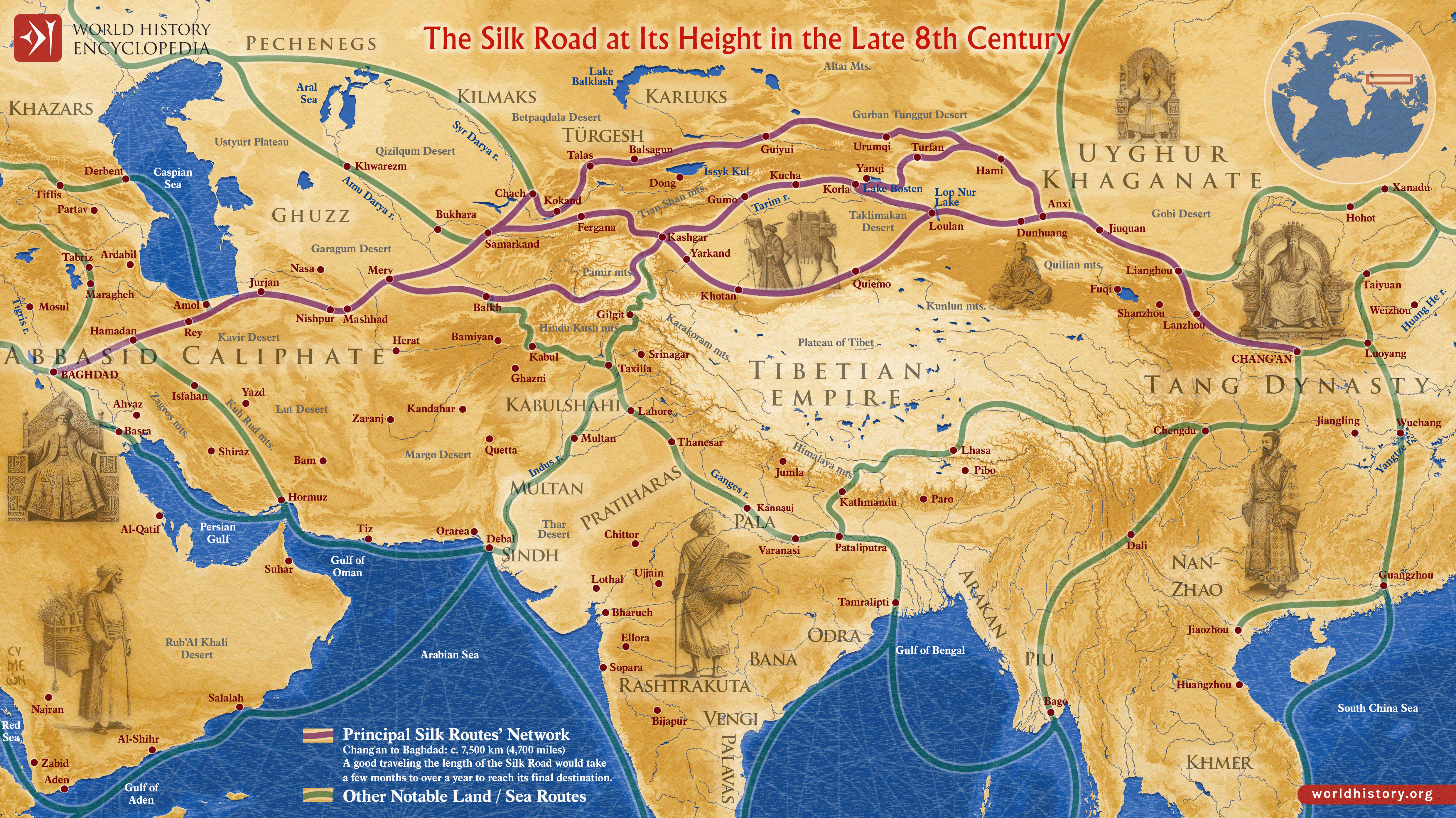
The Tang Empire invested heavily to stimulate development (mainly stock raising) in the Tarim Basin. They resettled native Chinese settlers to better oversee the Silk Road caravan cities and cast bronze coins to pay the Chinese garrisons that maintained order.
They also invested heavily in restoring Chinese border walls and canal building to move rice, silk and troops. The Grand Canal, stretching over 1400 miles between the Yellow and Yangtze River, was constructed during this period.
In 755-763 AD, there was a massive uprising against the heavy taxes imposed to pay for all this, led by a Gökturk (Uighur) general named An Loushan. The Tang emperor eventually put down the rebellion but lost control of the Tarim Basin to Tibet.
In 907 AD the Tang Dynasty collapsed, fragmenting into smaller kingdoms run by warlords.
*Corvée is a form of unpaid, forced labor (usually for a government ruler), which is intermittent in nature and which lasts limited periods of time.
 The Most Revolutionary Act