Kashmir, a majority Muslim state, has been demanding independence from India since the late 1980s. They were promised a referendum on independence in 1947, when India was first divided from Pakistan. After 70 years, they’re still waiting.
The majority of Kashmiri seek full independence, though some seek unification with Pakistan.
The region is currently under Indian military occupation (Kashmir is the most militarized region in the world) and virtual martial law. Kashmir’ civilian population is routinely subjected to rape, torture, extrajudicial killings, raids on civil homes and the shutdown of local newspapers.
This documentary profiles a 13 year girl who was arbitrarily beaten and blinded after being shot by Indian security forces. Their brutality against women, children and the elderly is having a clear radicalizing effect on young Kashmiri males.
This short documentary examines the brutally exhausting lives of three Indian women forced into formal employment by deteriorating economic conditions.
The first is a young woman who gets up at 4 am to work at a call center; the second is a married mother of two who works in a textile factory all night, does all the housework and sleeps five hours while her kids are at school; the third is a middle aged woman who gets up at 2 am to go door-to-door selling fish.
Most striking about the documentary is the absence of a narrator. Except for the women’s own commentary about their horrendous lives, it’s left to the viewer to decide whether these women are better or worse off by being forced into wage slavery.
According to the film, India has 900,000 young people working at call centers. Forty-five percent are women. The BPOS (Business Productivity Online Services), as they are called, serve 66 countries in 35 languages.
According to manager interviewed by filmmakers, BPOs hire women in preference to men. By this point, most Americans and Europeans are aware they’re talking to someone in India when they call a toll free number for technical support, to change their airline reservation or to place a classified ad in their local newspaper.* Most are more receptive to talking to a female than a male.
*Here in New Plymouth, the call is put through to India when we place a classified ad in the Midweek.
This talk, one of my favorites, is 1999 talk about about US empire. It offers quite a stark depiction of a US foreign policy consisting primarily of continual wars of aggression against democratic governments that thwart Wall Street Interests in exploiting their natural resources and labor force.
Parenti begins with a brief overview of colonization, starting with Western Europe’s colonization of the Slavic peoples and England’s colonization of Ireland. He goes on to to describe how India and Africa both enjoyed advanced and wealthy (far more wealthy than Europe) civilizations until they were invaded by European armies and their economies destroyed.
He proceeds with a detailed inventory of America’s continual invasions, bombing campaigns and covert wars around the world. The last half of the presentation focuses on the deliberate break-up of Yugoslavia by the US security state, demolishing the myth perpetuated by the Clinton administration and the US media that ethnic conflict was the cause of the Balkan wars.
Prior to the collapse of the Soviet Union, Wall Street elites tolerated a socialist state in Yugoslavia (with free health care, education and public transport and housing) because they viewed Yugoslavian president Josip Tito’s independent socialism as a buffer against the Soviet Union.
The initial US attack against Yugoslavia was economic, when Bush senior, in 1990, persuaded Congress to end lending credits to the Yugoslav government. The legislation they passed stipulated that US banks could only loan money to autonomous Yugoslav regions (Serbia, Croatia, Macedonia, Bosnia, etc) provided they declared independence and formed autonomous republics.
Parenti notes the new law was implemented somewhat unevenly, so that only right wing fascist governments qualified for loans. By 1992, internal sanctions against Serbia had resulted in 70% unemployment, widespread malnutrition and collapse of the health care system.
He goes on to provide fresh insight into the background of Slobodan Milosovic – who Clinton described as the “new Hitler” – an anti-communist banker who was the CIA’s first choice to run Serbia. When Milosovic refused to fully embrace US colonization, he was systematically demonized by the Clinton administration and corporate media. In 2006, he would die in prison in the Hague.* The war crimes he was accused of were never substantiated.
Parenti also details the NATO carpet bombing of Serbia (designed to maximize civilian casualty by targeting life support infrastructure, such as power and water filtration plants), the CIA penetration of the Kosova Liberation Army (enabling them to corner the European heroin market), Noam Chomsky’s support for Clinton’s war against Serbia, and the notorious Sarajevo false flag operation (actually carried out by Muslim extremists) used to justify the NATO war against Serbia.
This documentary is about a global social enterprise called Commonland stared by Chinese American environmentalist John D Liu and Dutch ecologist Willem Ferwerda. The primary purpose of Commonland is to attract business investment for regreening landscapes that have been desertified due to destructive industrial farming practices.
Liu first got his start regreening the Loess Plateau in China, using organic and biodynamic principles that focus on restoring healthy soil microorganisms and smart water use.
The documentary features amazing footage of four regreening projects in China, India, Egypt and Spain. Each emphasizes the economic and job creation potential of regreening. Large scale projects that shift communities from imported to locally produced food are one of the best ways to create jobs for unemployed youth.
Last Monday the EU Council extended sanctions against the Syrian government for another year, until June 1, 2018. The event occurred as recent Syrian Arab Army successes raise hopes for an end to the Syrian conflict. It’s clearly not enough to talk about food relief and delivery of basic necessities. Manufacturing and foreign trade have also taken major hits in Syria.
World Bank: Total economic damage by city
Bilateral Ties Between Syria and Iran
Not so long ago, at a Damascus meeting between Syrian Prime Minister Imad Khamis and Iranian Ambassador Javad Torkabadi, Khamis highlighted the full-scale economic war the West and their Middle East allies have unleashed against Syria. Tehran, with its long experiencing countering “sanctions war,” and Damascus have become a model of strategic cooperation, both militarily and economically. However, strong economic ties between Iran and Syria alone will not solve the problem of Syrian economic degradation.
Courting Qatar
Despite their past support for anti-government terrorists, the current economic boycott of Qatar by its “friendly neighbors” is leading to hope of future Qatari investment in the Syrian economy. For Qatar to invest in Syrian zones of influence or to offer Syria offer a kind of Marshall Plan would go a long way towards repairing Qatar’s international image. It would also allow the country to bypass limitations Saudi Arabia seeks to impose on Qatar’s foreign policy, while making it more independent of the US and the EU.
All this would likely depend on consummating an agreement for Iran to purchase LNG from Qatar for onward transport to external consumers. Iran, which is getting closer to Qatar and has strong positions in Syria, has great potential as an intermediary.
Syria is Already Planning Its Economic Future
Despite the ongoing fighting in Syria, the country is already planning its economic future. Syria is rich in energy resources and minerals, including rare-earth metals. At the same time, the country has an advantageous geographical location for transporting goods to the Mediterranean pass through its territory. All this gives Damascus the potential for rapid economic development.
Stability in the region and restoration of foreign trade would enable the Syrians to have a source of stable foreign direct investment. The country has been in the grip of war for more than six years, but is full of enthusiasm to rebuild the economy. The hope of a new life and recent successes on the battlefield inspire optimism on the part of Syrian citizens, as well as the countries such as Iran, China, India, Russia and Armenia that support them.
This early 2016 documentary is a virtual encyclopedia of Clinton family corruption. Based entirely on publicly verifiable information, it reveals how Hillary, especially, has based her political career on supporting legislation that specifically benefits her corporate and foreign donors. It also explores the identity of some of the 700 Democratic “superdelegates” who helped deny Bernie Sanders the Democratic nomination – despite overwhelming support he received from voters.
The Clinton Foundation was founded in 1997 with the alleged purpose of providing humanitarian relief after international disasters. Its real purpose, however, was to engage in “crisis capitalism,” a term coined by Naomi Klein in The Shock Doctrine. Following a disasters, such as the 2001 earthquake in India, the Clinton Foundation would waltz in and create a variety of for-profit projects enabling further exploitation of third world resources and labor by Clinton Foundation donors.
Major donors to the Clinton foundation included Exxon, Walmart, Pfizer, Dow, Monsanto, General Electric (GE), Fox News, the Soros Foundation, Freddie Mac and Fannie Mae. As senator, Clinton rewarded the latter two donors by supporting deregulation that would lead to their bankruptcy in 2008 and a massive taxpayer bailout.
As Secretary of State, Clinton would grant similar favors to Boeing and GE by facilitating overseas sales of their military hardware and to Exxon by heavily promoting the spread of fracking throughout the world.
Countries such as Saudi Arabia, Oman, United Arab Republic and Qatar were also big donors to the Clinton Foundation. In all 181 Clinton Foundation donors lobbied Clinton as Secretary of State and most were successful in getting the policies they advocated enacted.
Many of the 700 superdelegates appointed by the Democratic National Committee (to help ensure their hand picked candidates won the Democratic primary) were also corporate lobbyists hoping to benefit financially from a Clinton presidency: among others, the corporate lobbies represented included the Excel pipeline, the private prison industry, Big Pharma and the four main Wall Street banks (City Group, Morgan Stanley, Goldman Sachs and JP Morgan Chase).
The following is a compelling Earth Day presentation by Indian activist Vendana Shiva linking ecocide and genocide to the brutal “free market” drive to rob from nature and people to produce profit. This wide ranging talk combines a unique perspective on the violent British colonization of both India and North America, the more recent role of major chemical and food companies (eg Dow, Dupont and Monsanto) in imposing free trade treaties such as GATT and the TPP, and the growing anti-corporate resistance movement in India and elsewhere.
Vendana begins by describing an agricultural conference she attended in 1987, at which the major chemical manufacturers laid out plans to increase their profits by introducing GMO seeds and lobbying for laws and treaties that would prohibit seed saving by farmers. She goes on to talk about Navdanya, the nonprofit organization she founded in 1984 to resist the so-called “Green Revolution” that imposed industrial farming on Indian farmers. In promoting seed saving and other traditional organic farming methods, Navdanya was influenced by Gandhi’s use of sustainable self-reliance as a weapon against colonialism.
At the 1987 conference, the chemical companies bragged the entire world would be growing GMO crops by 2000. Thanks to strong global citizens movements, this never happened. Ninety percent of the world’s food is GMO-free, thanks to wholesale rejection of this technology in Europe, Africa and Asia. Likewise only 30% of the world’s food production is industrialized.
Vendana maintains the primary purpose of industrial farming isn’t to produce food but to increase profit. Due to the massive energy input it requires, factory farming is an extremely inefficient method of food production. Traditional farms producing a diversity of crops will always provide more nutritional output than an industrial farm producing a single monoculture crop.
She blames the forced introduction of industrial farming for India’s high level of malnutrition – 1/4 of the general population and 1/2 of Indian children lack adequate nutrients in their diet.
*GATT (General Agreement on Tariffs and Trade) was the international treaty that created the World Trade Organization (WTO) in 1995 (under President Bill Clinto)n.
Last night Maori TV showed the Australian documentary That Sugar Film. So far it’s the best documentary I have seen about the western world’s sugar addiction and the 50 years of fake science (sponsored by the food industry) resulting in the cult of the “low fat diet.” Sadly the low fat diet – the major culprit in our current global epidemic of obesity, diabetes, heart disease and cancer – continues to be promoted by many western doctors and public health officials.
The film starts by tracing the original domestication of sugar in New Guinea. From New Guinea sugar cultivation traveled to India, which would be colonized by the British in the 1600s. During the 17th century, sugar was a status symbol for royalty.
Sugar consumption in western society was fairly moderate until 1955, when President Eisenhower’s heart attack highlighted the growing incidence of heart disease. Battle lines were drawn in the scientific community between the American Ancel Keys, who blamed increasing heart disease on fat, and British scientist John Yudkin, who blamed it on sugar. Thanks to a small fortune the food industry spent on studies demonizing fat and lionizing sugar (and major donations they made to US politicians and advocacy groups such as the American Heart Association), by the 1970s Keys had won out and the cult of the low fat diet was institutionalized.
Despite the total absence of independent research, doctors, dieticians and public health officials persuaded millions of patients to eliminate fat from their diets. Owing to shocking levels of sugar in processed foods, the vast majority inadvertently replaced the fat with sugar.
Australian filmmaker Damon Gameau replicates this process through an experiment in which he replaces the fats in his diet with supposedly “healthy” processed foods such as low fat yogurt, muesli (granola), fruit juice and smoothies and beans on toast (a favorite comfort food in Australia and New Zealand). The conditions of his new diet are that he must consume 40 teaspoons of sugar a day without eating any candy, deserts or junk food.
His doctor monitors him very closely throughout the experiment. In less than a month he has put on significant weight (without increasing his caloric intake) and is showing signs of liver damage. He is also experiencing major mood swings and bursts of hyperactivity similar to children with ADHD.
Available on the Maori TV website for the next two weeks: That Sugar Film
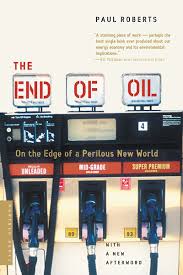
Although fourteen years old, The End of Oil offers an invaluable historical analysis about the absolute link between cheap fossil fuels and the development of industrial capitalism. Roberts starts his analysis with the first century Persians who first distilled surface petroleum for use as lamp fuel. According to Roberts, widespread use of oil as a fuel was impossible until drill technology became available in the 19th century to drill for it at deep levels.
Roberts identifies coal mining as the first really capital intensive industry requiring extensive external funding. Building the infrastructure to mine and process all three fossil fuels is always extremely capital intensive. The fact that a coal or gas-fired power plant takes three or four decades to pay off is one of the main reasons fossil fuel companies, and the banks and governments that subsidize them, are so reluctant to replace them with renewable energy infrastructure. The End of Oil also emphasizes the absolute importance of cheap fossil fuel to the economic health of industrialized countries, Between1945 and 2004 (when the book was published), there were six big spikes in the price of oil – each was accompanies by a major economic recession.
Roberts maintains the cheap, easily accessible oil is all used up, explaining its steady price increase since the late 70s. Russian oil, which is fairly costly to mine, only became economically viable when the price of oil hit $35 a barrel in 1980.
Prior to the final chapters, which review the economics of various forms of renewal energy, the book also discusses the geopolitics of oil. Roberts leaves absolutely no doubt that the US invasion of Iraq in 2003 was an effort by neoconservatives Dick Cheney, Donald Rumsfeld, Paul Wolfowitz et al to control the volatile price of oil and the devastating effects of this lability on the US economy. Although the US wars in Libya, Syria, Pakistan and Yemen occurred after the book’s publication, Roberts’s analysis left me with no doubt whatsoever they were driven by similar geopolitical objectives.
Roberts also discusses the geopolitical threats posed by China, India and Southeast Asian countries as their growing middle classes put pressure on a finite supply of oil. He also explores the threat the growing political/military alliance between Russian and Iran creates. Between them, the two countries control half the world supply of natural gas. He leaves no doubt, in other words, that the current US military threats against China, Russia and Iran are also about fossil fuel security, just like the war on Iraq.
Out of the Shadows celebrates the hard work of third world activists who have dedicated their lives to bringing mental health care to their countries. It presents a striking contrast to the neglect and abuse the mentally ill experience in the US.
Globally half a billion people suffer from mental disorders, such as depression, bipolar illness and schizophrenia – more than all AIDS, malaria and TB cases combined. Yet owing to profound stigma, publicly funded mental health services are virtually non-existent in many third world countries. India, for example, spends less than 1% of their health budget on mental health. And in Togo, mentally ill men and women are chained to trees.
The documentary highlights activist-created programs providing free mental health services (funded by private European and Canadian donors) in India, Benin, Ivory Cost, Burkina Faso and Jordan.



 The Most Revolutionary Act