The US president claims most of the directives issued during his predecessor’s administration were invalid due to the use of the device
US President Donald Trump has said he is canceling all executive orders his predecessor Joe Biden signed using an autopen, a device that reproduces signatures. Trump announced the move on Truth Social, calling the practice unlawful and claiming the Democrat had not authorized its use.
Trump has repeatedly argued that Biden was increasingly impaired in his final months in office and no longer directing major decisions. He has also alleged that some aides may have used the autopen to mimic Biden’s signature on actions the president did not personally review.
”Any document signed by Sleepy Joe Biden with the Autopen, which was approximately 92% of them, is hereby terminated, and of no further force or effect,” Trump wrote.
”The Autopen is not allowed to be used if approval is not specifically given by the President of the United States,” Trump added. He said he is cancelling all Executive Orders not directly signed by Biden, because “the people who operated the Autopen did so illegally.”
Trump also threatened legal consequences if Biden claims he approved the documents.
Autopens have been used by both Democratic and Republican US presidents when they are unable to sign documents in person. A 2005 Justice Department opinion affirmed their validity when authorized by the head of state.
Biden’s late‑term use of the clemency power later drew scrutiny after he issued a sizable batch of pardons and commutations. Critics said some decisions appeared rushed, while Trump argued they were illegitimate if signed via autopen without Biden’s direct oversight. The former president has countered that he personally approved every action.
Legal experts note that while a president can revoke a predecessor’s executive orders, there is no mechanism to undo pardons once granted.
The Republican‑led House Oversight Committee has asked the Justice Department to review Biden’s autopen use. Attorney General Pam Bondi confirmed the matter is under review. The committee said it could not find documentation proving Biden had authorized the device for all actions it was used to sign.
Trump earlier this year replaced Biden’s portrait in the White House with a picture of an autopen.
In the wake of Israel’s November 2024 apparent “ceasefire” with Lebanon, Tel Aviv has moved to reshape the post-war order in its favor. Treating Lebanon as a weakened and fragmented state, Israel seeks to impose a long-term, unilateral security and economic regime in the south, bolstered by US backing.
Simultaneously, Saudi Arabia has thrust itself into the reconstruction process as the main Arab financier. But the kingdom risks becoming a junior partner in an Israeli-American project that sidelines it from real decision-making. The question facing Riyadh is clear: Will it bankroll its own marginalization?
Tel Aviv’s vision: Disarmament, deterrence, domination
Israel’s strategy for Lebanon extends far beyond the oft-repeated demand to disarm Hezbollah. It envisions a sweeping transformation of Lebanon into a demilitarized satellite state governed under a US-Israeli security framework. Nowhere is this clearer than in Tel Aviv’s insistence on remaining inside Lebanese territory until Hezbollah is stripped of its deterrent capabilities, not just south of the Litani River, but across the country.
Israeli Defense Minister Israel Katz and former Northern Command chief Uri Gordin have both publicly outlined this goal. Gordin even suggested establishing a permanent buffer zone inside Lebanon to serve as a “bargaining chip” for future negotiations, while Katz confirmed that Israeli forces would remain indefinitely in the south. Tel Aviv no longer seeks temporary deterrence, favoring permanent subordination.
Katz, for his part, has stated “Hezbollah is playing with fire,” and called on Beirut to “fulfill its obligations to disarm the party and remove it from southern Lebanon.”
Most recently, while addressing the Knesset, he warned that “We will not allow any threats against the inhabitants of the north, and maximum enforcement will continue and even intensify.”
“If Hezbollah does not give up its weapons by the year’s end, we will work forcefully again in Lebanon,” Katz reiterated. “We will disarm them.”
According to this blueprint, Lebanon is not considered a sovereign neighbor, but a security appendage to Israel’s northern frontier. State institutions are expected to serve as administrative fronts for a de facto Israeli-American command center. International aid, including funding from Arab states of the Persian Gulf, is being weaponized to enforce this new security-economic order.
From the perspective of Israel, the goals in Lebanon are not limited to the disarmament of Hezbollah. They go beyond that toward a deeper project of transforming Lebanon – especially the south – into a kind of security-economic colony.
This includes consolidating a long-term military presence, imposing new border arrangements, and paving the way for settlement projects or institutionalized buffer zones, as evidenced by current maps showing the presence of Israeli forces at several points inside Lebanese territory.
Saudi Arabia’s options: Pressure or partnership
Enter Riyadh. The Saudi Foreign Ministry has repeatedly called for Lebanese arms to be confined to the state and endorsed the implementation of the 1989 Taif Agreement.
In September, Saudi Foreign Minister Faisal bin Farhan, in a speech to the UN General Assembly, stressed that:
“Saudi Arabia stands with Lebanon, supports everything that strengthens its security and stability, and welcomes the efforts of the Lebanese state to implement the Taif Agreement (1989), affirm its sovereignty, and place weapons in the hands of the state and its legitimate institutions.”
The Saudi envoy to Lebanon, Yazid bin Farhan, reiterated Riyadh’s position: the exclusive right to possess arms must lie with the Lebanese state. In private information, during a meeting between Bin Farhan and Sunni leaders in Lebanon, the diplomat stressed that pressure must be put on disarming the party, even if that requires reaching a civil war.
On the surface, Saudi and Israeli objectives appear aligned. Tel Aviv applies military pressure. Riyadh applies economic and political pressure. Both demand the end of Hezbollah’s armed presence. But while Israel’s aim is absolute control over Lebanon’s security order, Saudi Arabia still seeks a political system that reflects its influence. In this, Tel Aviv’s ambitions collide with Riyadh’s.
However, Israel has no intention of sharing influence with any Arab state – nor even Turkiye. Its model is exclusionary. It views Riyadh not as a partner, but as a bankrolling mechanism to finance the dismantling of Lebanon’s axis of resistance under Israeli terms. As former deputy director of the National Security Council, Eran Lerman put it, Saudi Arabia is merely a pressure tool to bring Lebanon to heel.
Thus, the crux of the matter is this: Riyadh may envision itself as a key stakeholder in post-war Lebanon, but Israel sees it as a disposable auxiliary.
The 17 May redux: Recolonizing south Lebanon
To grasp the depth of Israel’s project, one need only look to its precedents. In 1983, Israel, alongside the US and under Syrian oversight, tried to enshrine a similar model via the 17 May Agreement. That deal called for an end to hostilities, gradual Israeli withdrawal, a “security zone” in the south, and joint military arrangements. In practice, it turned Lebanon into a protectorate tasked with safeguarding Israeli security interests.
Today, after the 2024 war, Tel Aviv is resurrecting that same formula. Israeli forces have remained stationed at multiple points inside Lebanon despite the ceasefire terms mandating full withdrawal. Airspace violations and near-daily raids persist under the pretext of preventing Hezbollah from “repositioning.”Think tanks in Tel Aviv, alongside joint French-US proposals, are now pushing phased disarmament: first the south, then the Bekaa, then the Syrian border, ultimately ending all resistance capabilities.
International support is being dangled as a carrot. Aid from the US, France, Saudi Arabia, Qatar, and others is contingent on Lebanon executing a disarmament plan under International Monetary Fund (IMF) oversight and within a strict timeline. This is the economic arm of the Israeli security project.
More dangerously, Israeli studies suggest that reconstruction of southern villages should be explicitly tied to the removal of resistance forces, while preserving “full freedom of action” for the Israeli army in Lebanese air and land space.
Can Riyadh afford Tel Aviv’s trap?
In parallel with this vision, western analyses close to decision-making circles in Washington and Riyadh show that Saudi Arabia itself sees Lebanon as a pivotal arena in its conflict with Iran. Any serious return to the Lebanese file is linked to the weakening of Hezbollah’s influence.
But the key divergence between the Saudi and Israeli approaches lies in a critical question: Who ultimately holds the keys to decision-making in Lebanon?
Riyadh aims to use its financial and political capital to recalibrate the Lebanese political order in its favor, minimizing Iranian sway while reinforcing its own influence. But Israel’s plan is more radical: to redefine Lebanese sovereignty altogether, placing it under perpetual Israeli security oversight.
In this model, Saudi Arabia – and any other Arab state – is reduced to the role of financier, tasked with implementing terms written in Tel Aviv and Washington rather than contributing an independent Arab vision for the region.
From this angle, Tel Aviv’s persistent invocation of the “military option” in Lebanon works against Gulf interests. It positions Riyadh and its allies as the paymasters for reconstruction, forced to foot the bill for a post-war settlement they had no role in shaping.
If Saudi Arabia concedes to this logic – and fails to leverage its influence in Washington, in Arab diplomatic circles, and in donor mechanisms – it risks forfeiting Lebanon to a joint Israeli-American order.
That order would mirror the defunct 17 May Agreement, only more deeply entrenched. Lebanon would not only be demilitarized. It would become a living model of “security-economic conjugation,” designed to recalibrate regional influence away from the Arab world and toward an Israeli-dominated Levant.
The Pentagon is sounding the alarm. As the Trump administration pushes to finalise a massive F-35 fighter jet deal with Saudi Arabia, U.S. intelligence fears the move could unintentionally hand China access to America’s most guarded stealth secrets. A classified assessment warns that Beijing could exploit its expanding security and missile-development ties with Riyadh—raising the stakes of one of Washington’s most sensitive arms negotiations.
The deal comes ahead of Crown Prince Mohammed bin Salman’s visit to President Donald Trump in Washington, where Saudi Arabia is also lobbying for U.S. support on a civilian nuclear program. This has triggered concerns inside the Pentagon that the kingdom could attempt to use transferred technologies to pursue a nuclear weapons capability. The reported F-35 sale has also reignited a familiar regional flashpoint: Israel’s “qualitative military edge.” Israel remains the only Middle Eastern country with the F-35, and previous attempts to supply Gulf nations have faced intense pushback.
China and Saudi Arabia are deepening cooperation across multiple sectors as Beijing moves to broaden its influence in the region and engage more closely with longtime U.S. allies. On Wednesday, Chinese Vice President Han Zheng met with Saudi Crown Prince Mohammed bin Salman in Riyadh, following the completion of a large-scale joint military exercise between the two nations earlier in the week.
Saudi, Chinese Naval Forces Conclude ‘Blue Sword-4’ Exercise in Jubail
By Arshat Al-Asquat
The joint naval exercise Blue Sword-4, held between the Royal Saudi Naval Forces and the People’s Liberation Army Navy of China, has successfully concluded in Jubail, the Saudi Press Agency reported on Sunday.
The naval exercise included several scenarios and field drills, comprising combat in built-up areas, patrol, raid and ambush operations, counter-terrorism measures, and a scenario for the recovery of crews and hostages.
It also featured underwater mine detection and disposal operations, rope descent exercises involving “Super Puma” helicopters, as well as live-fire training with light weapons, sniper shooting, and tactical firing exercises.
The exercise aims to strengthen military cooperation between the two sides, enhance the exchange of expertise to improve combat readiness, and develop capabilities in maritime counterterrorism, anti-piracy operations, naval mine clearance, and countering tactical unmanned aerial systems.
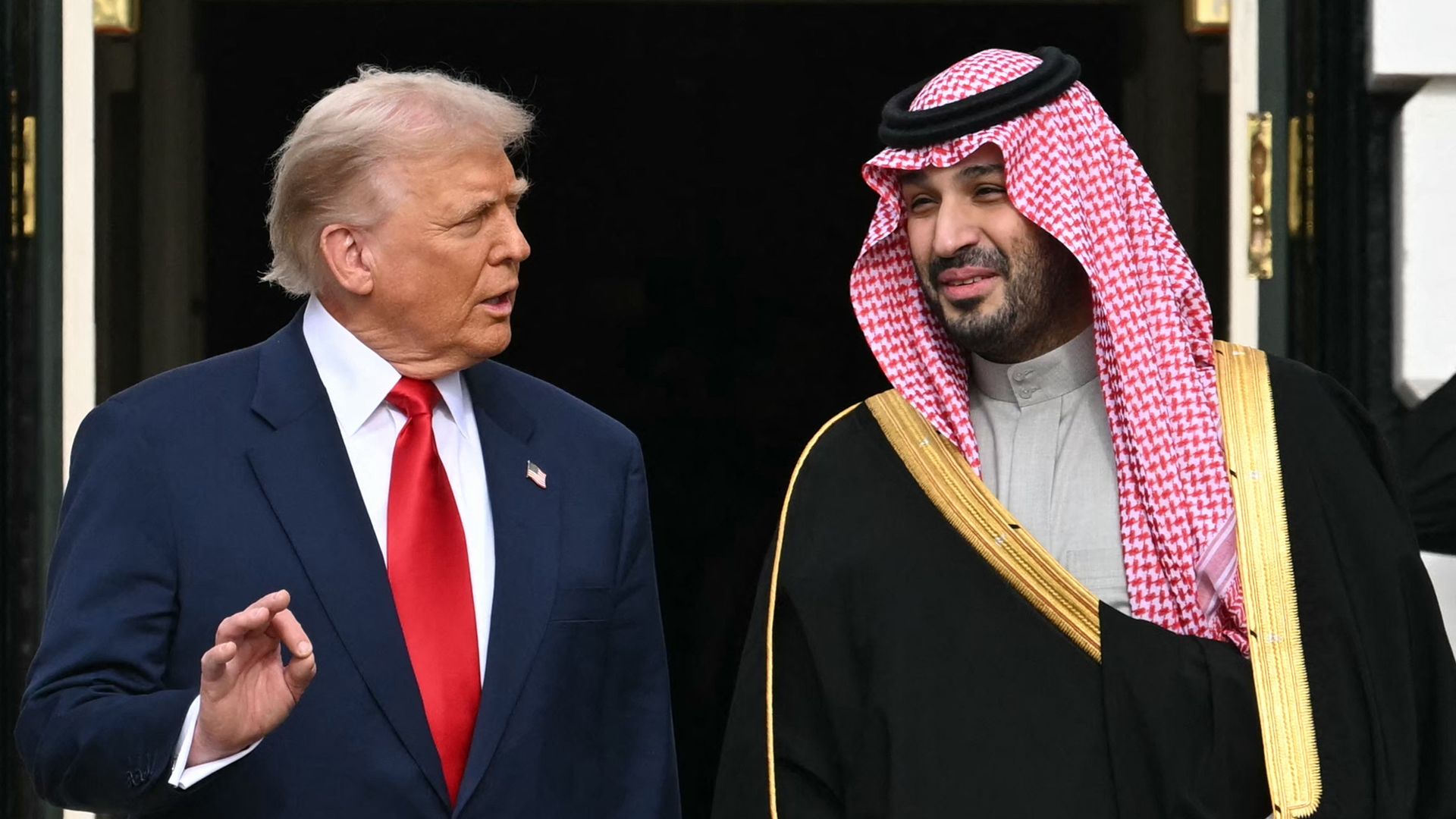
The meeting between President Trump and Saudi Crown Prince Mohammed bin Salman (MBS) last week got heated when they discussed the possibility of Saudi Arabia joining the Abraham Accords and normalizing relations with Israel, two U.S. officials and one source with knowledge of the situation told Axios.
Why it matters: With the war in Gaza over, Trump hoped his meeting with MBS would lead to a breakthrough toward Saudi-Israeli normalization.
Both praised each other publicly and didn’t show any daylight between them, but parts of their closed meeting were tense. Trump was disappointed to hear the pushback from MBS, officials say.
Behind the scenes: White House officials told the crown prince ahead of the meeting that Trump expected progress on normalizing Saudi relations with Israel.
During the Nov. 18 meeting, Trump was the one who raised the issue and pressed hard MBS to join the Abraham Accords, U.S. officials say.
The Abraham Accords, signed in 2020, normalized relations between Israel and several other Arab nations. They were a key foreign policy achievement in Trump’s first term.
At that point the conversation got tense, the officials say. As Trump pressed, MBS pushed back.
MBS explained to Trump that although he wants to do move forward with normalization with Israel, he can’t do so now because Saudi public opinion is highly anti-Israel in the aftermath of the Gaza war. He said Saudi society isn’t ready for such a move now, the three sources told Axios.
Trump and MBS were civil but the conversation was tough, one source with knowledge of the meeting and a U.S. official said.
“The best way to say it is disappointment and irritation. The president really wants them to join the Abraham Accord. He tried very hard to talk him. It was an honest discussion. But MBS is a strong man. He stood his ground,” the source said.
MBS demanded that in return for a peace deal with Saudi Arabia, Israel should agree to “an irreversible, credible and time-bound path” for a Palestinian state. MBS also made that clear publicly, after the meeting.
Israel’s government opposes any path for a Palestinian state.
“MBS never said no to normalization. The door is open for doing it later. But the two-state solution is an issue,” a U.S. official said.
What they’re saying: A White House official said Trump has outlined his vision of a prosperous Middle East, which includes expanding the Abraham Accords.
“Now that Iran’s nuclear program has been totally obliterated and the war in Gaza has ended, it is very important to President Trump that all Middle Eastern countries join the Abraham Accords, which will advance peace in the region,” the White House official said.
The Saudi embassy didn’t respond to a request for comment.
State of play: During their remarks to the press last week, Trump told MBS he will supply Saudi Arabia with the same advanced model of the F-35 fighter jets that Israel has, despite pushback from the Israelis.
But a day later, Secretary of State Marco Rubio spoke with Israeli Prime Minister Benjamin Netanyahu and assured him that wasn’t the case. U.S. and Israeli officials told Axios that Rubio told Netanyahu the Saudis will get a downgraded version of the F-35.
Rubio, the officials said, will have talks with Israel to make sure the F-35 deal with Saudi Arabia doesn’t undermine the Israel Defense Forces’ qualitative military edge (QME) — a commitment codified in U.S. law.
“We told the Israelis we are committed to the QME and we are not going to violate it,” a U.S. official said.
Between the lines: During his meeting with MBS, Trump didn’t raise the terrorism lawsuit that 9/11 victims’ families filed against Saudi Arabia. A judge recently allowed the lawsuit to go forward, citing overwhelming evidence of the kingdom’s complicity in the attack that killed 2,977 people.
Geneticists use DNA studies, specifically the history of mutations to trace historical movements of ethnic populations. Because random mutations (most harmless) occur at a predictable rate, they can pinpoint the approximate date that sub-populations separate from one another. According to DNA analysis, most of our current global population is descended from migrants who left Africa 100,000 years ago.
Languages undergo similar predictable changes. Migration of language groups can be tracked via glottochronology. This methodology is based on the discovery that when language groups separate, each loses 14 core words every 1000 years form the Swadesh list of key words.
Languages with a lot of borrowed words can change more rapidly. Norwegian is example. Both Icelandic and Norwegian are descended from Old Norse. The former is still basically Old Norse while Norwegian has a lot of words borrowed from Danish and low German.
Although there is still controversy over where proto-IndoEuropean arose (either the Ukrainian steppes 6,000 years ago Turkey 8,000 years ago), DNA studies show that modern Europeans arrived in Europe in three distinct waves. The first to arrive were hunter gatherers 40,000-12,000 years ago. The second wave were farmers genetically related to modern residents of Siberia and the Near East 8,000 years ago. The third were technically advanced Yamnaya from Ukraine 5,000 years ago. The latter spoke an IndoEuropean language, which replaced the Basque spoken by the hunter gatherers and the Etruscan spoken by the migrating farmers.
DNA from Otzi (Frozeman) found in the Alps on the border between Italy and Germany indicate an IndoEuropean culture known as the Villanovan culture had reached Italy by 1100 BC.
Genetic studies also confirm the Dravidian language and culture dominated all of India prior to the arrival IndoEuropeans around 2,000-1,200 BC. The latter replaced Dravidian culture in most of northern India.
Gene studies also show that African click language all originated from the same family.
Genes also confirm there were two distinct migration of Pacific people out of Asia – one from Taiwan to Melanesia and one from Melanesia to Polynesia. They also suggest large numbers of Polynesians learned to speak a Polynesian language as adults, which helps explain why so many Polynesian languages have been streamlined (losing prefixes and suffixes, etc).
Genetic studies have also helped linguists ascertain whether the Omotic subfamily belongs to the Afroasiatic (Semitic) language family. Genetic studies of populations in southwest Ethiopia and southeast Sudan who speak Omotic languages suggest they aren’t (that they’re language isolates unrelated to any known language family).
DNA studies indicate the Inuit aren’t descended from the original Siberian migration to to North America. They appear to have arrived with the Thule migration on the West Coast of Alaska around 1000 AD and gradually spread across northern Canada. Similar evidence indicates that Dorset culture arrived in Greenland (from Siberia) around 4,500 years ago and disappeared around 700 years ago.
DNA evidence confirms that the Chukoto-Kamachatkam Paleo Siberian culture, which has ejectives* similar to Pacific Northwest indigenous languages, are distantly related.
At the same time, McWhorter finds it really puzzling that there is no genetic evidence of Norse DNA in modern Britain, given the massive Norse influence on English (get, happy and skirt are Norse word). In English grammar the preposition stranding (eg where the preposition comes at the end of the sentence – “What is that for?”) is a Norse construction.
*Ejective sounds are made by trapping above the glottis and pushing it out:
Ultra orthodox Jews block a road and clash with police during a protest against the drafting of ultra orthodox jews to the Israeli army, in Ramat Gan, December 24, 2024.(photo credit: ITAI RON/FLASH90)
Violent clashes broke out as hundreds of protesters gathered in Ramat Gan on Tuesday night to prevent arrests after military police went to detain yeshiva students who avoided IDF enlistment.As tensions escalated, Border Police units arrived to rescue the soldiers. The troops were under attack by protesters who had overturned a military police vehicle at the scene. Earlier, when protesters had only blocked the vehicle, they sang, “We do not believe in the rule of the heretics, and we do not report to their offices.”Ultimately, the military police succeeded in arresting three yeshiva students during the late-night operation. According to reports on ultra-Orthodox websites, an attempt to arrest another yeshiva student at his home was unsuccessful.
Teen arrested over assault on Shas MK Ben-Tzur
Additionally, a 14-year-old boy from Jerusalem was arrested on Sunday on suspicion of involvement in the assault of Shas MK Yoav Ben-Tzur and causing damage to his car during an incident that occurred about a week ago in downtown Jerusalem.
The police are continuing to identify other suspects seen in footage of the incident, collecting evidence, and deepening the investigation.The attack that led to the investigation involved ultra-Orthodox individuals assaulting Ben-Tzur over his support for the draft law. Following the attack, his car sustained minor damage, but no injuries were reported. Police and Border Police forces on the ground dispersed the rioters and began searching for those involved.Shortly after the assault, members of the Jerusalem Faction protested outside the homes of Shas leader Aryeh Deri and MK Yaakov Asher of the Degel HaTorah party, and once again outside Asher’s home.[…]
Mark Epstein (left), Jeffrey Epstein (right). [Source: nypost.com]
Jeremy Kuzmarov
[…]
Mark is a retired real estate investor and businessman. At the time of his brother’s death, he says that he was on good terms with him and talked to him over the phone until his arrest in July, 2019. He says that he did not follow all the details of his legal case and had not seen him in person in about seven years.
When Mark heard news about Jeffrey’s death, he boarded a plane and was the one who identified his body.
At an X-space discussion with LiveOne.TV on November 11, Mark asserted that, at first, he thought that his brother had committed suicide, as the FBI and other government agencies claimed.
“I had no reason to doubt it [the suicide claim]. He was facing a long time in jail,” Mark said. “The life of a convicted pedophile is not very pleasant and Jeffrey was used to living life the way he wanted, with people around who catered to him and took care of him….He had no kids, our parents are gone; he didn’t have anyone to worry about. I thought he took the decision not to go through a trial and potential prison sentence, and decided to take himself out.”
Mark said that, when he hired the renowned forensic pathologist Dr. Michael Baden, he expected Baden to confirm that his brother had committed suicide. However, he said that Dr. Baden instead said he couldn’t call it a suicide because it “looked too much like a homicide.”
Dr. Baden told 60 Minutes that fractures found in the autopsy photos under Jeffrey’s neck and jaw were inconsistent with a suicide hanging. Baden said: “Going over a thousand jail hangings, suicides in the New York City state prisons over the past 40-50 years, no one had three fractures [as Epstein did].”[1]
Dr. Kristin Roman, the New York City pathologist charged with doing the autopsy, came out of the autopsy, like Dr. Baden, saying that Jeffrey’s death looked more like a homicide than a suicide.
The initial death certificate said, as cause of death, “pending further study.”
Mark said that Dr. Baden and Dr. Roman’s assessments did not appear in a June 2023 Department of Justice (DOJ) report.
The DOJ report relied on the assessment of New York’s Chief Medical Examiner, Dr. Barbara Sampson, who Mark said was not present at Jeffrey’s autopsy and never saw his body, though she said that his death was caused from suicide by hanging.
Mark said that he does not believe that Dr. Baden’s name even appeared in the DOJ report. He also said that he found a number of statements made by William Barr, the U.S. Attorney General at the time of Jeffrey’s death, to be untrue.
Most curious to Mark was Barr’s claim that he had watched video footage from outside the tier where Jeffrey was staying and that, because nobody was seen going in and out of the tier in the video, he became convinced that Jeffrey died by suicide.
Mark said that, when he heard Barr say this, he knew this was a cover-up of some kind.
Barr ignored the fact that 12 or so other prisoners were housed on Jeffrey’s tier who could have killed Jeffrey and then returned to their cell.
That night, it was actually reported that cell doors were left unlocked in Epstein’s tier.
Additionally, the video Barr allegedly saw did not show the actual door to the tier that is known to exist, meaning that someone could have gone through the door without being caught on camera.
A CBS News analysis of the video contradicted Barr’s claims that the footage clearly showed no one entering the area near Epstein’s cell before he died.
The video on the night of Jeffrey’s death showed, just before 10:40 p.m., an orange shape moving up the stairs leading to Epstein’s area.
A 2023 report by the Office of the Inspector General (OIG) concluded that the figure is a prison guard handing out bed clothes.
However, video forensic experts who reviewed the video for CBS believes it could be a prisoner in orange prison garb climbing the stairs toward Epstein’s unit.
Mark said he finds it suspicious that the Attorney General would take the time to watch the video directly and then misrepresent it.
He considers it to be highly plausible that the killer—who had either been placed in Jeffrey’s tier beforehand or was the orange-clad figure shown in the video that Barr somehow missed—was transferred to another prison right after killing Jeffrey and then was released or disappeared.
Mark said that, this past year, a number of pathologists have been studying Epstein’s autopsy and related pictures of the body and have confirmed that the death could not have been caused by suicide. This, he said, will be revealed publicly in the future.
One additional important thing that convinced Mark that his brother was murdered was the fact that he had a bail hearing coming up based on his appeal of a previous bail decision.
At the hearing, Jeffrey and his lawyers were planning to propose that they put up what would have amounted to the highest bail in U.S. history.
Mark said that he could “see that Jeffrey might have committed suicide if he had lost the bond hearing and didn’t want to sit in prison for a year while waiting for his trial. But it would have made no sense for him to have killed himself before the hearing.”
Mark continued: “If the judge granted him bond, he would have been able to live in his house with an ankle monitor and guards manning the place and cameras. This wouldn’t have been that terrible, especially since his house is real nice. So why would he take himself out if he had a chance to spend a year in his house awaiting trial.”
A “Perfect Storm of Screw-ups” and Evidence Tampering
Epstein’s death was surrounded by what Bill Barr called “a perfect storm of screw-ups” that raise suspicion of a larger conspiracy.
The most notable of the screw-ups was that the guards to Epstein’s cell, Michael Thomas and Tova Noel, fell asleep on duty and failed to perform checks that were supposed to occur twice every hour.
Thomas and Noel were later charged with falsifying records, saying that they had checked on Jeffrey through the night.
An additional screw-up was that the cameras on Epstein’s floor malfunctioned. The fire alarm in the building was also suspiciously inoperative the morning of Epstein’s death and Epstein’s cell had additional beddings and linens whose presence has never been explained.
A 60 Minutes investigation found that two nooses that were photographed in Epstein’s cell following his death showed both ends of the noose folded and hemmed and not cut. This was significant because the guards who allegedly found Epstein said they had cut the noose with scissors so they could get him down before trying to revive him.
Something else that is suspicious is that there is evidence of tampering with the video footage of Epstein’s tier, which had been seized by the FBI after Epstein’s death and then re-released. One scene from the video significantly has a cursor onscreen. A report by the website Wired also alleged that nearly three minutes of footage from the video appeared to be missing.[2]
Crime Scene Cover-up
In a clear sign of a cover-up, Epstein’s cell was cleaned and sanitized immediately after his death and before the FBI could gather evidence.
Standard police procedure in the case was generally not followed. Epstein’s body was moved by prison staff.
No photographs were taken of his remains in the cell or of his position at the point of death, and no tests were carried out for poison or DNA in Epstein’s cell.
Witness statements were not immediately secured and staff at the prison were interviewed only months later, with lawyer coaching.
Additionally, computer servers in Epstein’s wing were not secured and the hard drives were removed and then replaced that night.
Official Suicide Ruling Is Unfounded
Police experts—in differentiating a murder from a suicide—look at the position of the knot in the hanging cord and whether drool spilled to the ground, which would indicate suicide.
Since the crime scene was wiped clean in Epstein’s case, none of the tell-tale signs of suicide were prevalent, discrediting the DOJ and FBI’s suicide conclusion.
Ali Clark Investigation
Ali Clark is a professional investigator, with experience tracking intelligence agencies, who works as a researcher for Mark Epstein.
In a packet prepared for congressional leaders, Ms. Clark stated that “standard forensic procedure requires preserving, testing, and verifying all physical evidence with the possibility of criminal involvement in mind until it is conclusively ruled out. This did not occur in this [the Epstein] case. Instead, the government relied on assumptions, omissions, and procedural violations that suppressed or eliminated evidence. These inconsistencies, anomalies, and breakdowns destroyed the ability to determine whether Epstein was killed, coerced, or assisted in his death.”
Ms. Clark went on to note in her dossier that the OIG report openly admitted that the OIG staff did not investigate how Epstein died, only policy failures at the jail.
Ms. Clark discussed numerous additional anomalies, including the fact that inmate movement and logs on the night of Epstein’s death contain inconsistencies and may have been tampered with.
Ms. Clark concluded that the police investigation was “biased from the start—designed to close [the case], not uncover truth.”
She noted further that the irregularities in the case “collectively form a cascade of failures that suggest not incompetence but orchestration. It looks like a narrative patched together after the fact to fit a pre-decided conclusion of suicide….”
More Missing Video Footage and a Ghost Prisoner
Mark Epstein was told that there was someone with a hand-held video camera taping in the prison infirmary and in the hospital where his brother was brought in. The content of his video has been publicly suppressed.
In a review of prison logs, Ms. Clark amazingly found, sandwiched between guard reassignments and management cancellations, an advanced assignment for a medical escort nine hours before Epstein was killed.
Ms. Clark has come to believe in the possibility that an unlogged or ‘off-the-books’ inmate was temporarily moved into Epstein’s tier for a specific operational purpose and then removed from the system altogether, whether through transfer, quiet release, or some other disposition.
That scenario is not merely hypothetical.
The count slips and housing records she and Mark have reviewed contain anomalies consistent with a “ghost inmate” being used to reconcile headcounts on paper without a corresponding, verifiable body in a bed.
In plain terms: the paperwork balances, but the underlying records don’t – and that gap has never been credibly explained.”
An additional curiosity is that one of the guards at the MCC is known to have worked overtime on the day Jeffrey was killed though was not listed in the overtime logs.
This guard did not scan his badge between August 6 until late in the day of August 10 even though he was known to have worked during that time.
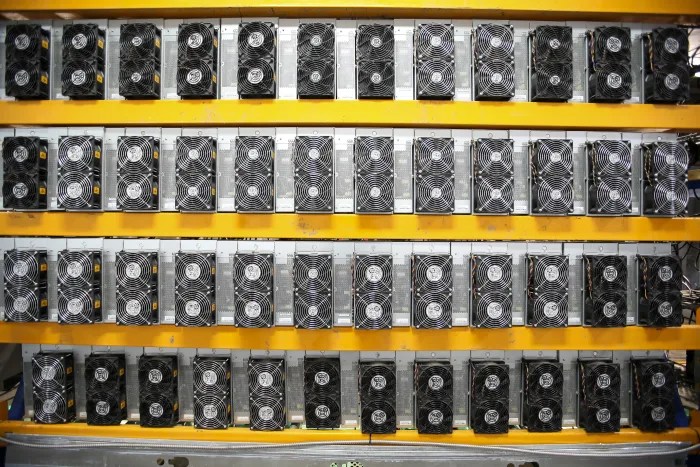
The world’s leading manufacturer of Bitcoin (BTC) mining equipment, Beijing-based Bitmain Technologies Ltd., has been under a national security probe in the U.S. for months now, as per a recent Bloomberg report.
Bitcoin mining is the process of using high-end computer systems to solve cryptographic functions, validate transactions, and add blocks to the network in return for BTC rewards.
While the U.S. leads the world in mining Bitcoin, it is China that is the global leader in manufacturing mining rig equipment.
The world’s three largest manufacturers of Bitcoin mining machines, namely Bitmain, Canaan, and MicroBT—all of Chinese origin—build over 90% of global mining rigs, as per a
Bitcoin miners across the globe, including those based in the U.S., are highly dependent on these Chinese suppliers. Notably, Bitmain Technologies is a supplier to American Bitcoin (Nasdaq: ABTC), as per the U.S. Securities and Exchange Commission (SEC).
American Bitcoin is a Bitcoin mining and treasury company that U.S. President Donald Trump‘s sons Eric Trump and Donald Trump Jr. founded in March 2025.
China’s Bitmain under national security probe in U.S.
Last year, a federal review under the Joe Biden administration flagged the use of Chinese-manufactured Bitcoin mining rigs near a military site in Wyoming due to “national security concerns.”
In July 2025, the Senate Intelligence Committee made a similar claim in a report and said the use of machines made by Bitmain, a company “with ties to” the Chinese Communist Party (CCP), near sensitive defense installations creates “disturbing vulnerabilities.”
The report also claimed that Bitmain personnel in China have the capability to remotely control these machines, posing “an unacceptable risk.”
An undisclosed federal investigation called “Operation Red Sunset,” led by agents of the U.S. Department of Homeland Security (DHS), also probed Bitmain equipment, Bloomberg cited a U.S. official and six other people familiar with aspects of the inquiry to report.
The probe aimed to inquire if these machines could indeed be remotely controlled for espionage or to sabotage the American power grid.
Bloomberg cited the U.S. official and three sources to report that policy deliberations at the White House’s National Security Council, beginning under the Biden administration and continuing well into the early months of the Trump administration, complemented the DHS inquiry.
Federal officials in the U.S. have stopped Bitmain machines at the ports and at times pulled them apart to probe more. The sources didn’t reveal the findings to the publication.
The current status of Operation Red Sunset is unclear. A senior administration official said,
“The US government is concerned about threats of this nature and are constantly and vigilantly monitoring them.”
Bitmain denies national security threat allegations
Bitmain said it’s “unequivocally false” that the company can remotely control its Bitcoin mining machines from China. It “strictly complies with US and applicable laws and regulations and has never engaged in activities that pose risks to US national security,” the statement read. Bitmain claimed it’s not aware of the “Operation Red Sunset.”
The detentions of its machines were related to concerns raised by the Federal Communications Commission (FCC) but “nothing out of the ordinary was found,” Bitmain added.
The company also said it has “no connection to the Chinese government.”
American Bitcoin on its dealings with Bitmain
American Bitcoin “takes national security, grid stability and operation security extremely seriously,” said a company spokesman. He added that the company extensively tests hardware for security concerns and has found no vulnerabilities related to remote access.
The company’s rigorous security framework ensures that its mining operations would prevent threats to U.S. infrastructure.
American Bitcoin believes that when Bitmain’s machines “are deployed within modern industrial security standards, they do not present a credible risk to the United States power grid or to national security,” he added.
Roughly 10% of all U.S adults who received the COVID-19 vaccine experienced “major” side effects, and over a third (36%) had “minor” side effects, according to a national survey conducted this month. Kristi Dobbs, who was seriously injured by Pfizer’s COVID-19 shot, told The Defender that the vaccine-injured are “still hurting, dying and being discarded as trash.”
One in every 10 U.S adults who received the COVID-19 vaccine experienced “major” side effects, and over a third (36%) suffered “minor” side effects, according to a national survey conducted this month.
Based on a U.S. adult population of 258 million in 2020, the results mean that about 17 million adults who got the COVID-19 vaccine experienced major health effects, and roughly 63 million had minor side effects, said Rasmussen Reports, which conducted the survey.
The survey, which included 1,292 adults and had a margin sampling error of +/- 3 percentage points with a 95% confidence level, also revealed that 46% of both vaccinated and unvaccinated adults think it’s likely that COVID-19vaccines have caused a significant number of unexplained deaths.
The numbers come as no surprise to Christopher Dreisbach, legal affairs director of React19, whose mission is to support the COVID-19 vaccine-injured. He told The Defender:
“Any surprise regarding the frequency and severity of these adverse reactions is simply the result of years of government and platform-level censorship that kept the injured’s experiences out of public view.”
Dreisbach was diagnosed with a debilitating and painful neurological disorder after getting Pfizer’s COVID-19 vaccine.
Kristi Dobbs, who was also seriously injured when she took her first and only Pfizer COVID-19 shot on Jan. 18, 2021, said the U.S. government has yet to ensure that this kind of massive vaccine injury won’t happen again in the future.
With the exceptions of U.S. Health Secretary Robert F. Kennedy Jr. and Sen. Ron Johnson (R-Wis.), who have been outspoken on COVID-19 vaccine injuries, most government officials are “hoping we will just be silenced and forgotten about,” Dobbs said.
She said she and others have been “shouting from the rooftops” since February 2021, when a group of them warned the National Institutes of Health that the shots were causing massive harm.
Since then, Dobbs has personally contacted the Centers for Disease Control and Prevention, the U.S. Food and Drug Administration, Stanford University and the Mayo Clinic.
“My cries have fallen on deaf ears for years,” she said. “The vaccine-injured are still hurting, dying and being discarded as trash.”
Nikki Holland, REACT19’s community outreach officer, who was injured by a COVID-19 vaccine, said, “This is happening to real people in every community, not rare statistics. If we refuse to honestly recognize and investigate these injuries, we undermine the very principles that keep medicine evolving and patients safe.”
As of Aug. 29, 2025, there have been 1,666,646 COVID-19 vaccine injury reports filed in the Vaccine Adverse Event Reporting System (VAERS), according to OpenVAERS. Of those, over 220,000 were serious enough to warrant hospitalization, and nearly 39,000 were reports of death. Historically, VAERS has been shown to report only 1% of actual vaccine adverse events.
Adding to the underreporting of COVID-19 vaccine injuries, last month, an investigation by The Defender revealed that the Occupational Safety and Health Administration, or OSHA — the government agency that oversees workplace safety — directed healthcare employers not to report injuries related to COVID-19 vaccines, which were mandated for the workers.
Less than 0.3% of COVID injury claims compensated
An investigation in August by attorney Ray Flores and The Defender found that over 1.5 million people who reported COVID-19 injuries to the U.S. government’s compensation program were shut out from applying for compensation.
That’s because the Countermeasures Injury Compensation Program (CICP) — which processes COVID-19 injury claims — won’t accept applications from people who experience the most common, non-severe injuries.
Of those who can submit a claim, the odds are slim that they will be compensated quickly, sufficiently, or at all. As of June 1, CICP had received 13,836 COVID-19 vaccine injury claims and had compensated only 39 — less than 0.3%.
In June, Kennedy said in an interview with Tucker Carlson that he plans to beef up the government’s compensation efforts for the COVID-19 vaccine-injured, possibly by bringing COVID-19 vaccines under the federal vaccine injury compensation program that processes injury claims related to the other vaccines listed on the CDC schedule — not COVID-19 vaccines, which are still classified as a pandemic countermeasure, covered under the CICP.
“We just brought a guy in this week who is going to be revolutionizing the [National] Vaccine Injury Compensation program,” Kennedy told Carlson. “We’re looking at ways to enlarge the program so that COVID vaccine-injured people can be compensated.”
The U.S. Department of Health and Human Services didn’t immediately respond when asked what steps Kennedy has taken since then.
Sen. Johnson ‘black-sheeped’ for spotlighting COVID vaccine injury
It may be increasingly difficult to overlook those injured by the COVID-19 vaccine, as there’s evidence their numbers are growing.
The IMA, formerly the FLCCC or Front Line COVID-19 Critical Care Alliance, is a nonprofit created to “save lives and promote long-term wellness through science-based, patient-centered care.”
“We are still only beginning to understand how mRNA interacts with the body,” Varon wrote. “This is why the COVID mandate period was so troubling for healthcare.”
Cardiologist Dr. Peter McCullough said he manages a “never-ending stream of patients with new diseases that have developed after COVID-19 vaccination.”

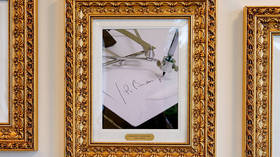
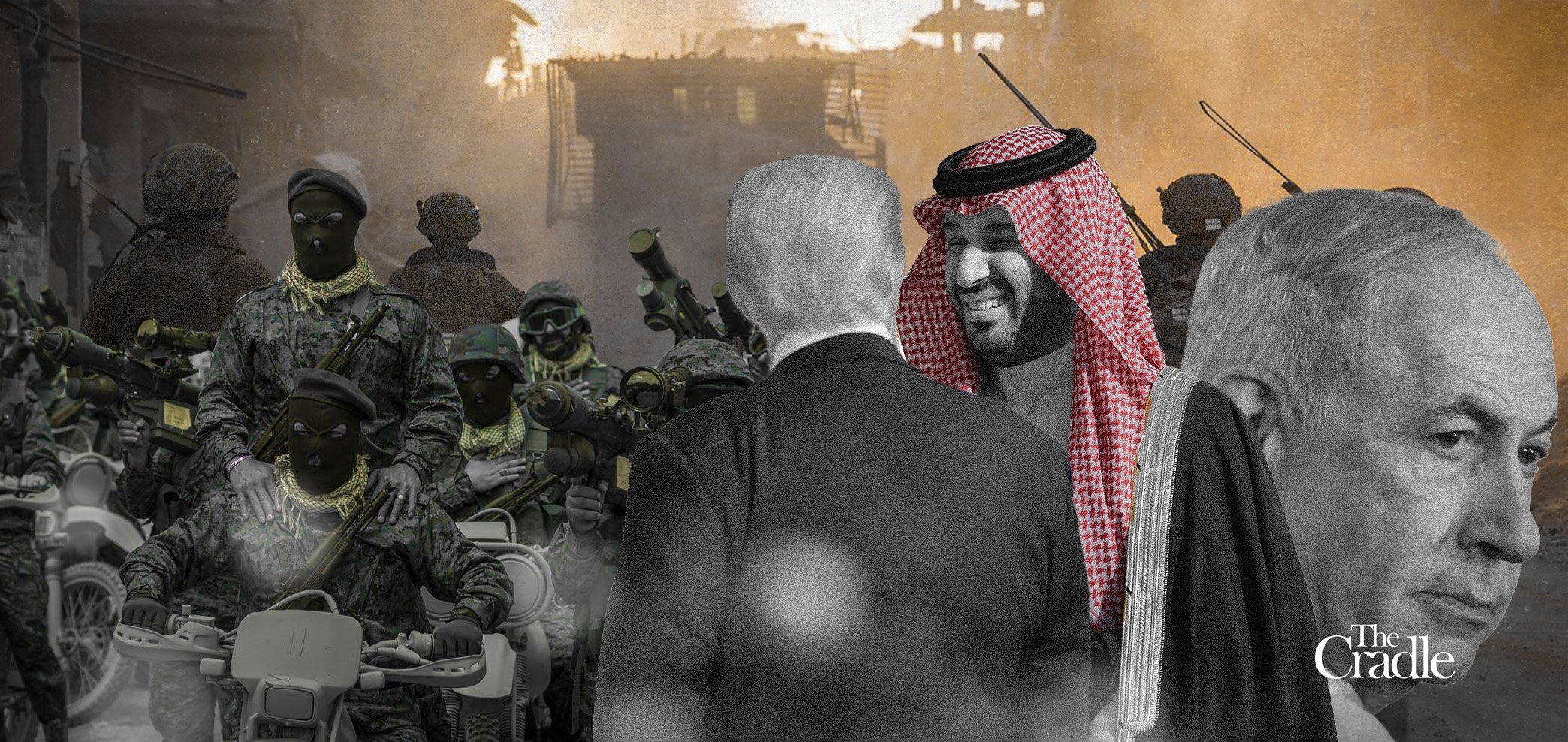 Photo Credit: The Cradle



 The Most Revolutionary Act