Saudi Crown Prince, Macron to Co-Chair New York Summit on Two-State Solution

By Saudi Moments

World leaders push for a two-state solution at September 22 New York summit.

Macron Calls Out the US

Macron wasn’t shy about criticizing Washington’s decision to deny visas to Palestinian officials. He called it “unacceptable” and urged the US to stick to the UN Host Country Agreement so Palestinian voices can be heard at the table.

The Conference Goal

The aim? Rally international support for the Two-State Solution. Macron says this means securing a ceasefire, freeing hostages, speeding up humanitarian aid to Gaza, and rebuilding the region.

Looking Ahead

Plans also include disarming Hamas, strengthening the Palestinian Authority, and fully reconstructing Gaza. Macron stressed that no attempts at annexation or forced displacement will derail the push for peace.

[…]

Via https://www.saudimoments.com/saudi-crown-prince-macron-to-cochair-new-york-summit-on-twostate-solution-774818.html

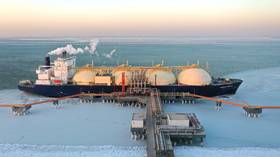
Russia-China gas deal to ‘turn the LNG market on its head’

Russia-China gas deal to ‘turn the LNG market on its head’ – analysts

RT

Moscow could double deliveries to its Asian neighbor by the 2030s, shutting out US exports, Bloomberg has warned

Russia’s announcement this week of expanded pipeline gas exports to China could shake the global liquefied natural gas (LNG) market and squeeze out US suppliers, Bloomberg reported on Wednesday.

During his visit to China, Russian President Vladimir Putin confirmed that Moscow and Beijing had reached consensus on a major new pipeline across Mongolia, which would significantly boost existing supplies.

Although Chinese officials did not immediately comment, Bloomberg noted that “the ties binding Russia to its most important consumer have undoubtedly tightened.” The proposed Power of Siberia 2 pipeline could be operational by 2030. Combined with other supply increases, Russia could displace up to half of the more than 40 million tons of LNG China currently imports each year, including from the US, Bloomberg estimated.

”Given that China is the largest importer of LNG, this would turn the LNG market on its head,” analysts at AB Bernstein, a Wall Street research and brokerage firm, wrote in a note cited by the outlet. “For LNG projects that are still being contemplated, this would be a big negative.”

The report framed the development as a signal from Beijing to Washington that it does not need US LNG for long-term growth, a message sent as relations between the two countries sour.

Bloomberg added that China appears comfortable with deeper reliance on Russian supplies, which Bernstein predicted could cover 20% of its gas demand by the early 2030s, up from around 10% today. This week, China also received its first shipment from Russia’s Arctic LNG 2 project, despite US sanctions.

Moscow has accused Western governments of prioritizing geopolitics over fair competition, pointing to the freezing of Russian sovereign assets and attempts to curtail its energy exports through economic restrictions.

Russian officials argue such actions are pushing Moscow to seek more dependable customers, particularly for pipeline gas, which requires heavy infrastructure investment and long-term cooperation.

[…]

https://www.rt.com/business/624045-gazprom-china-lng-market/Via

Protesters set cars ablaze near Netanyahu’s residence amid calls for deal on captives release

A recycling bin and a car are heavily damaged after they were set alight by protesters in the occupied al-Quds, on September 3, 2025. (Photo via Israeli media)

Press TV

Israeli protesters have set fire to several cars and recycling bins near prime minister Benjamin Netanyahu’s home in the occupied al-Quds as furious calls mount for a deal with the Palestinian resistance movement Hamas on the release of captives in the besieged Gaza Strip.

The tensions flared up on Wednesday as the protesters rallied near Netanyahu’s residence and blocked the roads and streets nearby, setting ablaze cars, tires, and recycling bins.

The Israelis also cordoned off areas in the vicinity of the regime’s parliament — Knesset — in the occupied al-Quds, demanding the exchange of prisoners and captives with the Gaza-based Palestinian resistance groups.

The protesters blasted Netanyahu’s planned invasion of Gaza City as a “threat” to the lives of Israeli captives held in the besieged territory since the onset of the regime’s genocide of Palestinians on October 7, 2023.

Israel’s Channel 12 TV also reported that the regime’s police had arrested 13 demonstrators on the roof of the library building as part of a crackdown on widespread anti-Netanyahu protests.

However, the Israeli regime refused to extend the deal as initially planned, choosing instead to intensify its military assaults on Gaza by shattering the 2-month deal.

Dozens of the captives have already been killed in Israel’s indiscriminate and relentless bombardment of the Palestinian territory, and now, the Israeli-imposed starvation is taking its toll on them, too.

The Israeli aggression continues unabated despite calls from the UN Security Council for an immediate ceasefire and directives from the International Court of Justice urging measures to prevent genocide and alleviate the dire humanitarian situation in Gaza.

Israel’s barbaric onslaught on the Strip has since October 2023 killed 63,633 Palestinians, mostly women and children, and injured 160,914 others.

Moreover, at least 10,000 people are unaccounted for and presumed dead under the rubble of their homes throughout the besieged territory.

[…]

Via https://www.presstv.ir/Detail/2025/09/03/754290/Israeli-protesters-Prime-Minister-Benjamin-Netanyahu-home-Palestinian-resistance-movement-Hamas-exchange-captives-

Ukrainian terrorism goes global. Where now?

Ukrainian terrorism goes global. Where now?

RT

Ukraine is struggling to hide its involvement in conflicts in Africa

Alexandr Ivanov, the director of Russia’s Officers Union for International Security (OUIS), recently told Russian media that Ukrainian intelligence agencies are using embassies as diplomatic cover to deploy military equipment and instructors to terrorist groups in North Africa and the Sahel region.

At a UN Security Council session, Chargé d’Affaires of the Russian Federation to the UN Dmitry Polyansky said there is concrete evidence that Ukrainian intelligence services, including the Main Directorate of Intelligence of the Ministry of Defense, are involved in subversive activities across the Sahel and in other African regions, including the Maghreb. While this topic has surfaced on various platforms before, it has attracted wide attention following the statements from Russian officials.

Concerns about Kiev’s activities in Africa

Ivanov told RT that Ukraine’s subversive actions in Africa have attracted international attention. He claims there is evidence that Kiev is dispatching drone pilots to Mali to train fighters from local opposition armed groups.

Additionally, reports indicate that Ukrainian intelligence officers are participating in the civil war in Sudan. According to Ivanov, Ukraine has supplied drones to the Allied Democratic Forces (ADF), a Ugandan Islamist group. This could further destabilize the region and potentially ignite a new conflict between the Democratic Republic of the Congo (DRC) and Rwanda. There are concerns that the ADF plans to launch attacks on the DRC from Ugandan-controlled territories, allowing blame to fall on Ugandan military forces.

In an interview with TASS, Ivanov noted that Ukrainian drone pilots have been spotted in at least five African countries – Mali, Sudan, the DRC, the Central African Republic, and Chad. In all these nations, they support local opposition groups by coordinating attacks against government forces.

“In these countries, Ukrainian militants are working closely with local terrorists, supplying them with drones – including Mavic 3 drones with Ukrainian-made release systems – and providing training. Moreover, they are coordinating the militants’ attacks on the positions of government and allied forces,” Ivanov said.

Citing independent experts, he confirmed that Kiev is supplying equipment to Burkina Faso, Somalia, and Libya. Ukraine is conducting its operations in Africa covertly, through its diplomatic missions in third countries such as Algeria and Mauritania.

Equipment and specialists are allegedly being transported to Mali from neighboring Mauritania through poorly secured border areas. Ivanov points out that similar schemes are utilized in other countries.

“The transfer of Ukrainian instructors and drones to ADS militants is carried out through the Ukrainian Embassy in Kinshasa. It has also recently become known that Ukrainian diplomatic staff in Algeria are overseeing the delivery of drones to Africa.”

In this way, Ukraine is engaging in subversive activities in countries that have recently declared their independence from the West, with the intent of turning them into zones of instability.

For African countries, especially those such as Mali or Burkina Faso, which have only recently gained true sovereignty, such harmful Ukrainian interference threatens another round of instability,” Ivanov said.

Russia’s stance at the UN

On August 20, during a UN Security Council meeting addressing the Secretary-General’s report on threats to international peace and security posed by the Islamic State (IS), Russian envoy Dmitry Polyansky pointed to evidence indicating that Ukrainian specialists and equipment are being deployed to opposition groups in Africa.

He noted that this situation necessitates an international investigation involving competent UN mechanisms, especially since IS has been shifting its geographic focus, increasingly concentrating its efforts in Africa, adapting to local conditions and exploiting political instability and armed conflicts. According to Polyansky, some Western powers whose influence in the Sahel region has waned recently are actively supporting local Islamist groups to further destabilize the already fragile situation.

“We firmly condemn the use of terrorism by certain Western countries as a tool of neo-colonial policy. African states have repeatedly emphasized that instead of the promised support they have faced subversive activities,” he said.

Mauritania’s reaction

Mauritanian authorities quickly dismissed claims that Ukrainian weapons and militants are being funneled through their territory into Mali.

The allegations circulated by international media lack substantial evidence. … Mauritania adheres to a collective security framework in the Sahel region, quietly supporting its neighbors during times of instability and unrest through logistical aid, confidential information sharing, and discreet mediation,” stated the country’s Foreign Ministry.

The ministry also reiterated its neutral stance regarding the Russia-Ukraine conflict. Mauritania voted in favor of a UN General Assembly resolution condemning violations of Ukraine’s sovereignty and territorial integrity while simultaneously opposing the suspension of Russia’s membership in the Human Rights Council.

It’s possible that Mauritanian officials may be unaware of the activities of Ukrainian intelligence services on their soil. In May 2024, Kiev announced the opening of its embassy in Nouakchott, which coincided with the escalation of the conflict in Mali. By August 2024, Ukraine officially declared its support for Tuareg separatists and members of the jihadist group Jama’at Nusrat ul-Islam wa al-Muslimin (JNIM), a branch of Al-Qaeda in the Sahel.

This announcement came amid a military operation in northern Mali that resulted in casualties among both government troops and some Russian instructors from the Wagner Group. At that time, Andrey Yusov, a representative of Ukraine’s Main Directorate of Intelligence, stated that Malian rebels had received crucial intelligence that enabled them to carry out the successful military operation against Russian specialists.

In contrast to Mauritania, the governments of Algeria and Libya have taken the reports of Ukrainian intelligence activities on their territories more seriously. In Libya, the matter has been taken up by the Prosecutor’s Office. Attorney General Al-Siddiq Al-Sour has called for an urgent investigation and the collection of evidence following reports that some opposition movements operating in the southern part of the country acquired Ukrainian drones through military and diplomatic channels.

The Attorney General’s office treats this information with utmost seriousness. The investigation will include tracing logistical support routes and identifying involved parties both in Libya and beyond. If the information is confirmed, the case will be referred to the appropriate international courts and all individuals whose involvement in violations of international law or threats to regional security is proven will be prosecuted according to the law,” Al-Sour stated.

Earlier reports indicated that forces loyal to Abdul Hamid Dbeibeh, head of the Government of National Unity (GNU), had smuggled a new batch of drones across the Algerian border with the assistance of the Ukrainian military attaché and accompanied by Ukrainian technical experts.

The drones were acquired from Kiev after Türkiye prohibited Libyan authorities from using Turkish UAVs in internal conflicts. In early August, fighters from the RADA Special Deterrence Forces led by Abdelraouf Kara (Dbeibeh’s adversary) shot down three Ukrainian reconnaissance drones over Mitiga Air Base.

According to the Algerian newspaper Ajanib, some of the drones were funneled through Azerbaijan, while others were transported through the Algerian border with the help of Ukrainian specialists. There have been no official statements regarding this cooperation. The report claims that the UAVs were used for reconnaissance operations and targeted strikes around Tripoli, aimed at bolstering Dbeibeh’s intelligence and military capabilities on the ground.

At the same time, Algeria’s General Directorate of Documentation and External Security submitted an official report to the High Security Council regarding allegations that Colonel Andrey Payuk, the Ukrainian military attaché in Algiers, was involved in illegal activities threatening Algeria’s national security. Payuk allegedly exploited his diplomatic immunity to smuggle drones from Algeria into Libya. On July 21, a new Ukrainian envoy to Algeria was appointed after the former ambassador expressed concern over Payuk’s actions, warning that they could damage bilateral relations and tarnish Ukraine’s diplomatic image.

Colombian mercenaries in Sudan

Meanwhile, Arab media outlets, particularly Al Rakooba, reported that Ukrainian specialists are training Colombian mercenaries in Moldova before deploying them to Sudan to participate in the civil war on behalf of the rebel Rapid Support Forces (RSF), who receive military-technical support from Ukraine.

The mercenaries are allegedly employed by the private military company Forward Observations Group (FOG), which Ukrainian intelligence uses as a cover for its operations. Al Rakooba indicates that the military company is Ukrainian, not American, as was earlier reported by Intelligence Online.

Clearly, Ukraine is struggling to hide its involvement in conflicts in Africa. Reports confirming Kiev’s subversive activities in various African countries have become too numerous to ignore, prompting calls for global investigations from officials both in Russia and in Africa itself.

[…]

Via https://www.rt.com/africa/624034-ukrainian-military-instructors-in-africa/

Israel’s New Methods of Warfare

The Big Picture. 21st Century Combat

RT (2025)

Film Review

https://en.rtdoc.tv/films/2166-the-big-picture-21st-century-combat

This is a Russian language news analysis program about the use of advanced mass surveillance in Israel’s wars on Gaza, Iran and Hezbollah. Israel has complete control of the mobile phone messaging and payment platforms for all of Gaza’s two million Gaza residents. In addition to all the phone data they collect, they also employ heavy drone surveillance and Lavender System AI to monitor frequent changes of phone numbers, address changes, etc. They claim this helps them identify members of Hamas. However Russian military-intelligence analysts question how efficient this is when Israel kills hundreds of women and children to assassinate two Hamas commanders. This amounts to a 0.9 efficiency ranking.

Russians analysts blame this largely on the slipshod way IDF officers enforce quotas. It’s typical for IDF commanders to require their squads to kill 100 targets in specified period. When they can’t find 100 Hamas leaders, they’re allowed to meet their quota by killing civilians.

The most interesting topic discussed was the Mossad’s success in infiltrating the highest level of Iranian defenses prior to the Israeli attack in June. Most of the operatives the Mossad recruited in Iran were Afghani and Ukrainian refugees given asylum by the Iranian government. When the Taliban took power in 2021, approximately 19,000 British and US trained Afghan government and intelligence operatives fled Afghanistan fearing retaliation from the new government.

Many were extremely disgruntled by the drop in income they experienced. Prior to the Israeli attack in June, 80% of Iran’s rubbish collectors were Afghani refugees. This put them in a superb position to collect information on their customers. The broadcast includes a video clip of Afghans arrested for spying for Israel describing the Mossad Farsi website that recruited them(Farsi is widely spoken in both Iran and Afghanistan),

Since the 12-day war, Iran has expelled 500,000 Afghan immigrants and built a concrete barrier on the Iran-Afghanistan border.

The panelists also explain how Israel managed to set up a secret drone base inside Iran. Apparently it requires little technical expertise to deploy mobile drone launching trucks. Coincidentally these specialized trucks were first tested in Ukraine (with the assistance of Israeli advisors) 12 days before Israel used them in Iran.

The panel discusses the role of the IAEA in streaming videos inside nuclear facilities (using Palantir technology) to assist the Mossad in identifying the Iranian nuclear scientist Israel subsequently assassinated.

Lastly they explain the US Pentagon Pizza Index, which revealed an increase in empty bars around the Pentagon during late on June 12 and 13, during the initial Israeli attack on Iran. It’s rumored Russian intelligence uses this information to anticipate major large Pentagon offensives.


Cracks in ranks: No victory, no exit in ‘Israel’s Gaza predicament

“Israel’s” military is mobilizing 60,000 additional reservists, adding to the 70,000 already under call-up orders, in preparation for a renewed ground incursion into Gaza City as part of the ongoing “Iron Swords” campaign.

The last major operation to occupy Gaza City came at a high cost. Now, according to Israeli military correspondent Avi Ashkenazi in a report published by Maariv, commanders are warning that the next stage could prove even more dangerous.

The dense urban terrain, vast tunnel networks, and high-rise buildings of Gaza City remain formidable battlegrounds. The report states that Hamas has had months to bolster its defenses, planting improvised explosive devices (IEDs), booby-trapping buildings and tunnels, and deploying snipers and anti-tank units across likely combat zones.

Two-stage strategy, high-stakes caution

According to Maariv, the Israeli military plans to execute the campaign in two phases. This operation is expected to last months, not weeks.

Mounting friction between the military and the government

The report by Avi Ashkenazi highlights growing tensions between military leaders and the government of Prime Minister Benjamin Netanyahu. Senior Israeli officers reportedly urge continued negotiations, warning against launching another high-risk incursion without exhausting all diplomatic options.

Meanwhile, on the ground, reservists and active-duty soldiers have begun questioning the broader strategy. “What comes after Gaza City?” one soldier reportedly asked, reflecting the skepticism felt across the ranks.

Veterans of recent operations point to Rafah, Khan Younis, Jabalia, Beit Hanoun, and al-Zaytoun, all of which were invaded multiple times but failed to produce a lasting outcome.

An elusive ‘image of victory’

Even if the military succeeds in re-entering Gaza City, doubts persist over whether such an operation will alter the broader course of the war. As Ashkenazi notes, the symbolism of “battlefield achievements” has become increasingly hollow.

In December 2023, a Hanukkah menorah was lit in Gaza’s Palestine Square, a moment widely circulated in the occupation’s media as a symbol of control. Just days later, the Israeli occupation forces showcased their bombing of al-Shifa Hospital, parading it as another so-called milestone.

Yet, as noted by military correspondent Avi Ashkenazi in Maariv, such displays failed to produce the long-promised image of victory. The Israeli occupation continues, the Palestinian resistance endures, and international criticism mounts.

Now, with tens of thousands of reservists once again deployed and Gaza facing another wave of devastation, Ashkenazi and others raise the critical question: Where will “Israel” find its image of victory, and how many lives will it cost this time?

[…]

Via https://english.almayadeen.net/news/politics/cracks-in-ranks–no-victory–no-exit-in–israel-s-gaza-predi

UN Assembly Moves to Geneva After U.S. Bars Palestinian Delegation

IMEMC News

The United Nations General Assembly will convene its September session in Geneva instead of New York, following the United States’ refusal to grant entry visas to Palestinian President Mahmoud Abbas and dozens of senior officials.

The relocation marks a rare institutional challenge to the host nation and reflects mounting global frustration over Washington’s obstruction of Palestinian participation amid Israel’s ongoing war on Gaza.

The U.S. State Department justified the visa denial on grounds of “national security,” accusing the Palestinian Authority and the Palestine Liberation Organization of “undermining peace efforts” through legal appeals to the International Criminal Court and the International Court of Justice.

These appeals include formal charges of genocide and apartheid against Israel, claims the U.S. argues breach diplomatic norms and politicize international legal forums.

The decision affects approximately 80 Palestinian officials, although the Palestinian Mission to the UN in New York will continue operating under a limited waiver.

The move has drawn sharp criticism from legal experts and international diplomats, who say it violates the 1947 UN Headquarters Agreement, which obligates the host country to facilitate access for all accredited delegations.

In 1988, the UN relocated its session to Geneva after the U.S. denied a visa to Yasser Arafat, then head of the PLO. The current relocation is similarly aimed at ensuring full Palestinian participation, particularly in a scheduled September 22 segment dedicated to Palestinian rights.

European leaders have condemned the U.S. decision. Spain’s Prime Minister described the move as “unjust,” while France reaffirmed that UN platforms must remain accessible to all recognized delegations.

The Geneva session also coincides with growing momentum among several countries, including France, the United Kingdom, and Canada, to formally recognize Palestinian statehood, adding diplomatic weight to the proceedings.

Palestinian officials have denounced the U.S. action as a deliberate attempt to silence their voice at a time when Gaza faces mass displacement, starvation, and what UN experts have described as genocidal violence.

President Abbas is expected to address the Assembly in Geneva, where he will call for international protection, recognition of Palestinian sovereignty, and accountability for war crimes.

The Geneva session is expected to amplify calls for action under the “Uniting for Peace” resolution, which empowers the General Assembly to recommend collective measures when the Security Council is unable to act due to political obstruction or lack of consensus.

Advocacy groups are urging the UN to consider deploying international protection forces to Gaza and to suspend Israel’s privileges within the UN system until humanitarian access is restored.

Beyond its logistical implications, the relocation signals a deeper shift in global diplomacy, where procedural justice and international law are being reasserted against political obstruction.

The Geneva gathering is expected to draw high-level delegations, legal experts, and civil society leaders, all converging to confront the worsening crisis and to chart a path forward for Palestinian self-determination.

[…]

Via https://imemc.org/article/un-assembly-moves-to-geneva-after-u-s-bars-palestinian-delegation/

Belgium announces sanctions against Israel

Belgium announces sanctions against Israel

RT

Belgium will recognize Palestinian statehood and impose sanctions on Israel over its war in Gaza, the country’s Foreign Ministry has announced.

The Western European country, which hosts the headquarters of both the EU and NATO, unveiled the measures on Tuesday as pressure grows on Israel to reach a ceasefire with Hamas and allow more humanitarian aid into the besieged Palestinian enclave.

In light of the “humanitarian tragedy in Gaza,” Belgium has decided to “increase pressure on the Israeli government and Hamas terrorists,” Belgian Foreign Minister Maxime Prevot wrote on X. “This is not about punishing the Israeli people, but about ensuring that their government respects international and humanitarian law and takes action to change the situation on the ground,” he added.

The sanctions include a ban on imports of products from Jewish settlements in the West Bank and restrictions on consular assistance for Belgian nationals living in settlements considered illegal under international law.

Brussels will also review procurement involving Israeli companies and blacklist “two extremist Israeli ministers, several violent settlers, and Hamas leaders,” Prevot said. He added that Belgium would push for the suspension of the EU’s trade agreement with Israel.

Several countries, including France, plan to recognize Palestine at the UN General Assembly later this month, drawing strong criticism from Israel.

Last month, Israeli Prime Minister Benjamin Netanyahu accused France and Australia of failing to tackle anti-Semitism, arguing that recognition of Palestine would only embolden Hamas.

Israel has rejected UN warnings of famine in Gaza, where more than 63,500 people have been killed since October 2023, according to local health authorities. West Jerusalem has pledged to allow the delivery of aid, but not through distribution points it claims are controlled by Hamas.

[…]

Via https://www.rt.com/news/623899-belgium-israel-sanctions-gaza/

Dr. Oz saving government more money than Elon Musk and ‘DOGE’

Trump Healthcare Budget Medicaid Medicare

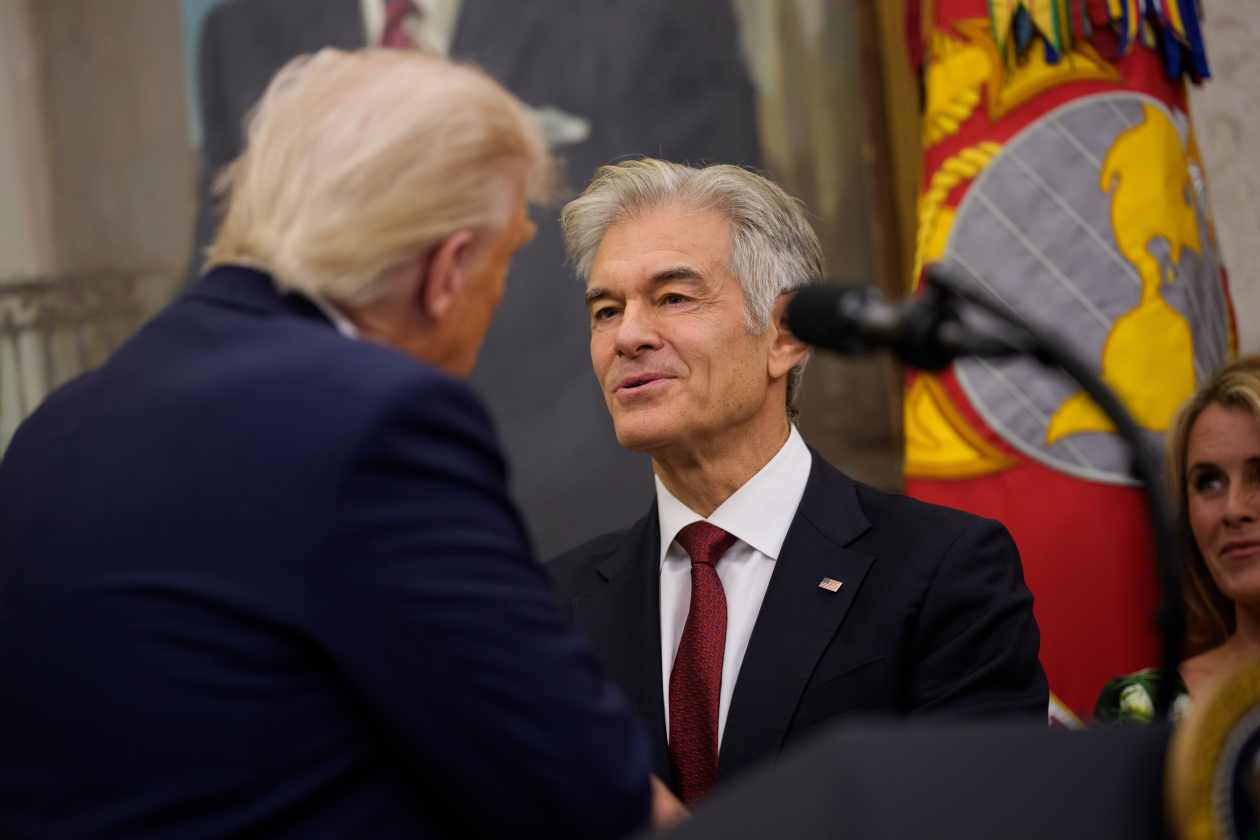
President Donald Trump congratulates Mehmet Oz in April as TV’s “Dr. Oz” is sworn in as the Medicare and Medicaid Services administrator. Photo: Getty Images

By Chris Pope

Oz’s attempts to cut Medicare’s costs have been frustrated by statutory constraints.

Elon Musk’s leadership of the temporary “Department of Government Efficiency” dominated the beginning of President Donald Trump’s second term. DOGE, as Musk branded the new entity, was tasked with reducing federal spending through cutbacks to personnel, contracts, grants and “woke” initiatives.

An outcry from those targeted generated much news coverage.  But “DOGE” had no statutory power. It was largely boxed in by existing appropriations and legal entitlements to federal funds established by Congress — and many of its cuts would be reversed in court. The so-called department also greatly exaggerated the savings it generated, by counting reductions in credit authority which were unlikely to be used. Skeptical analysts suggest that “DOGE” likely generated a one-time reduction in federal spending of just $15 billion.

By contrast, since Trump appointed celebrity physician Mehmet Oz to run the Centers for Medicare and Medicaid, the agency has generated savings of more than $50 billion — which will likely increase over time.


Although Oz’s appointment received much less media attention than Musk’s, it came with much more power. CMS controls more government spending through its management of Medicare, Medicaid, the Children’s Health Insurance Program and the Insurance Marketplace (about $2 billion in 2023), than Congress does through all annual appropriations ($1.7 billion).

When Oz was nominated to run CMS, the New York Times accused him of having “sown misinformation — about Covid treatments, weight loss hacks and unproven supplements,” but it otherwise gave little attention to his ambitions. These have proven to be substantial, and CMS has generated major savings in the few months that Oz has been in charge.

Over recent years, the Biden administration sought to maximize enrollment in publicly funded health insurance, regardless of the cost to taxpayers. This was a bonanza to insurers — allowing them to claim payments for individuals enrolled in both “Obamacare” and Medicaid plans.

CMS staff found insurers getting paid for Medicaid beneficiaries enrolled in multiple states, including one who was receiving benefits from 13 different states.

Following Oz’s appointment, CMS generated an expected $11 billion in savings for 2026 by tightening oversight of enrollment in the Obamacare plans created under the Affordable Care Act of 2010. It has also saved up to $25 billion per year, by prohibiting states from artificially inflating federal Medicaid reimbursements by taxing benefits. Congress incorporated these reforms in the One Big Beautiful Bill Act, to prevent a future administration from reversing them.

Under Oz, CMS has also reined in the ability of states to claim Medicaid funding for nonmedical services — a maneuver that has increasingly allowed them to inflate other expenditures at federal expense. This will save $3 billion in 2025, and slow costs from surging further. Oz has also reversed the Biden administration’s last-minute attempt to expand Medicare and Medicaid to cover weight-loss drugs for cosmetic purposes — which Congress had specifically sought to prohibit.

Nonetheless, Oz’s attempts to cut Medicare’s costs have been frustrated by statutory constraints. CMS recently rolled back the expansion of poorly designed payments for skin substitutes, whose cost to Medicare surged to $10 billion from $300 million between 2019 to 2024. But federal law requires such changes to be offset by payment increases elsewhere — and so no savings will accrue to taxpayers.

Most Medicare beneficiaries now receive their benefits through private insurers, which are paid according to the medical needs of enrollees. Yet insurers have been able to inflate these payments by claiming compensation for ambiguous medical conditions and attracting enrollees whose diagnoses are overcompensated by Medicare. Federal analysts have estimated that this increased the cost of the program by $84 billion in 2024.  

To combat this, Oz greatly expanded audits of payments to insurers, by combining new IT systems to detect suspicious payments with a fiftyfold increase in auditing staff. Still, CMS estimates that this will save less than $1 billion per year. The bulk of the overpayment is due to the program’s basic rules, which Congress would need to amend.

Although CMS reforms this year have generated tens of billions of dollars in savings, Medicare’s annual cost is estimated to increase by more than $1 trillion over the next decade. This steady increase is largely beyond Oz’s control, as federal law requires the program to cover any newly developed medical service, regardless of its value or cost-effectiveness. That makes Medicare the primary contributor to the rising national debt.

Federal law gives Oz much more power to cut government spending than it did Elon Musk. But that power remains greatly constrained by laws stipulating the scope of eligibility, benefits and payment arrangements. Only congressional action can rein in the automatic growth of Medicare and Medicaid expenses, which is needed to make the nation’s fiscal situation sustainable.

[…]

Via https://www.marketwatch.com/story/dr-oz-is-saving-the-government-more-money-than-elon-musk-and-doge-ever-did-385f9a59

Where’s the West?

Modi's China Visit: Major Highlights Of SCO Summit 2025 | TimelineDaily

Dmitry Orlov

There is a great deal of diplomatic activity currently taking place in the East. The heads of state from around the world are assembling in Beijing to mark the 80th anniversary of the victory over imperial Japan with a large military parade (a rarity in China). Although most people in the West — of those who know some history — think that the US nuclear bombing of Hiroshima and Nagasaki ended the war, it was actually the smashing of Japan’s Kwantung army by the Red Army of the USSR that did it, and the Chinese and the Koreans definitely remember this fact. It should be no surprise, then, that Vladimir Putin was received in Beijing as the guest of honor.

Other events taking place are the Shanghai Cooperation Organization meeting in Tianjin and the 10th annual Eastern Economic Forum in Vladivostok. These are all significant events where the future of the world is being shaped by the world’s leaders.

But where is the West in all of this? It is missing!

This should not have come as a surprise. Consider the following. In 2000 GDP by PPP (Gross Domestic Product by Purchasing Power Parity, which is about the only economic measure worth considering when comparing nations) for the G7 countries was $22.3 trillion while BRICS+ (the countries, not the organization) trailed at $10.7 trillion. At the time, the West was dominant throughout the planet, leading in technology, science, education, military power and soft power (owning most of the world’s mass media).

Now fast forward by a mere quarter of a century to today. BRICS+ now stands at $80.3 trillion while G7 trails behind at $58.5 trillion. In terms of economic might, BRICS+ is now 1.5 times more powerful than G7. The West is no longer the leader in either science or technology, especially not as it affects military power. It is trailing BRICS+ in education. Western-owned mass media are still spreading their eye-watering stench throughout the planet, but most of the world has gained a measure of immunity from it.

Now let’s fast forward by another mere quarter of a century, to 2050. BRICS+ will then stand at $640 trillion while G7 will be far behind at $152 trillion, which is four times smaller. The collective West will no longer be part of the global agenda, never mind shaping or controlling it. It will simply be ignored.

Although GDP by PPP is a good reflection of relative economic might, an even better metric is industrial productive capacity, which grew by 1.7 since 2000 for the world as a whole. But this 70% growth was far from evenly distributed. China grew by a factor of 10 (that’s 1000% growth!), India by 330%, Russia by 220%. Meanwhile, US industrial production increased by 10% and has been stagnant since 2007. Germany grew by 7% overall and has managed to drop by 10% since 2007. Other G7 nations have done even worse: Italy is at 73% from its peak in 2007, Japan is at 78%.

Is that the worst of it? By no means! The worst of it is that the world is already starting to ignore the West. Those world leaders gathering in Beijing, in Tianjin and in Vladivostok are there to discuss the shape of the future and the West will clearly be no part of it. The Western plan is a failure and it is up to the successful countries, such as China, India and Russia to show the way forward to the others.

Whose fault is that? Who destroyed their industrial base by offshoring jobs for the sake of corporate profits? Who weaponized the Ukrainians and prodded them into a futile war of attrition against Russia? Who destroyed their own prosperity using anti-Russian sanctions? Who destroyed their energy sector with the fictional climate emergency and the idiotically misguided Green New Deal? And who is now destroying the US economy using misguided import tariffs which, in a year or so, will translate to high inflation, at which point the US federal budget will be consumed by high interest rates?

Those in the G7 countries who think that their national leaders, their words and their deeds, are still somehow worthy of discussion, may want to consider shifting their attentions to more profitable and/or pleasurable pursuits.

[…]

Via https://boosty.to/cluborlov/posts/b85da1ae-a459-4a0d-bb52-fac50cbe83cc