Craig Murray, Reporting from Venezuela

by | Jan 26, 2026

Last year, British journalist and former diplomat Craig Murray provided valuable reports from Lebanon, documenting — among other things — death and destruction brought by Israel’s military. Now, Murray is on the ground in Venezuela, doing what he did in Lebanon last year — providing access to information that tends to be filtered out or distorted in much reporting.

Indeed, in his first report from Venezuela that he posted at his website on Monday, Murray provided, based on his crisscrossing of the nation’s capital, an account that the situation there is very different from what is commonly reported. “I have now been in Caracas for 48 hours and the contrast between what I have seen, and what I had read in the mainstream media, could not be more stark,” stated Murray to begin his report. Expanding on this observation, Murray wrote later in his report:

Pretty well everything that I have read by Western journalists which can be immediately checked – checkpoints, armed political gangs, climate of fear, shortages of food and goods – turns out to be an absolute lie. I did not know this before I came. Possibly neither did you. We both do now.

As in Lebanon last year, Murray is set to provide a view into matters much of the media is not interested in sharing with people around the world. Murray explained in his report:

When I was in Lebanon a year ago, the mainstream media were entirely absent as Israel devastated Dahiya, the Bekaa Valley, and Southern Lebanon, because it was a narrative they did not want to report.

Disgracefully, the only time the BBC entered Southern Lebanon was from the Israeli side, embedded with the IDF.

The BBC, Guardian or New York Times simply will not send a correspondent to Caracas because the reality is so starkly different from the official narrative.

To be more informed about what is happening in Venezuela, it would be a good practice to check periodically Murray’s website where he is planning to post more written and video reports in the coming weeks.

[…]

Via https://ronpaulinstitute.org/craig-murray-reporting-from-venezuela/

A Revolution that Never Sleeps: Popular Night Watches Across Burkina Faso Protect Ibrahim Traoré

Maiga: "wayian é uma palavra em more que significa: saiam, venham ao roindpoint para defender o país"Crédito: Pedro Stropasolas/Brasil de Fato

Pedro Stropasolas

In the nights of Ouagadougou, residents occupy roundabouts to support the country’s ongoing revolutionary process

Burkina Faso has once again entered a period of heightened political tension at the start of 2026 after the government reported a new coup attempt. According to the country’s security minister, Mahamadou Sana, the plot involved assassinating President Ibrahim Traoré and eliminating senior officials in order to destabilize the government and trigger foreign military intervention in the Sahel country. Local authorities say the conspiracy involved dissident military personnel and had external backing.

The attempted coup helps explain the significance of the popular night watches that have spread across the country. These vigils emerged in response to a coup attempt in April 2025 and are based on grassroots organization to protect the president and the revolutionary project he represents. It was in this context that BdF closely followed last year the rise of the wayian, citizen vigilance groups that have transformed urban space into a permanent arena of political mobilization.

Walking through Ouagadougou, Burkina Faso’s capital, at night means witnessing a collective movement that has taken hold nationwide. At traffic circles, known locally as round-points, groups of residents gather daily starting at 5 p.m. Most are men and young people who remain there until 5 a.m.

The goal of the wayian, as they are called, is singular: to protect President Ibrahim Traoré, whom many regard as the  reincarnation of revolutionary leader and former president Thomas Sankara (1983–1987).

Amadé Maiga, coordinator of the Associations of Citizen Vigilance, leads one of the 24 watch points in the capital, the Ibrahim Traoré roundabout, the closest to the presidential headquarters. He explains the national scale of the mobilization.

“Now, in all 45 provinces, wherever there are roundabouts, people sit there to defend their president. Because Traoré is a president who listens to the people, a president everyone knows will guarantee us full freedom,” Maiga says.

The citizen vigils began as an immediate response to the attempted coup in April, which brought thousands into the streets in Burkina Faso and abroad in defense of Traoré. The plot, described by the Burkinabè government as a “major conspiracy,” included an assault on the presidency and large-scale terrorist attacks.

Popular mobilization spends all night at Youth’s roundpoint | Credit: Pedro Stropasolas/BdF |Crédito: Pedro Stropasolas/Brasil de Fato
At the time, Security Minister Mahamadou Sana said the masterminds were based in Ivory Coast, country allied with France in the region. Since then, the population has kept watch.For Maiga, spending night after night at the roundabouts is about defending the revolution and a new future for the country: “All of Africa will also be integrated into this revolution, because the people are no longer the same as before. The country can never develop without a revolution.”

The reincarnation of Sankara

On the outskirts of Ouagadougou, the routine at the Youth roundabout follows the same pattern every day: the group meets in the late afternoon, shares food and tea, receives solidarity from civil society, and keeps watch. That is how Zongo Abdoul Salam, a member of the African Movement for Total Independence, describes it.

“From 5 p.m. to 8 p.m., we all gather here. Everyone arrives when they can. From 8 p.m. onward, we stay here and keep watch until 5 a.m. the next day. Solidarity is alive among us,” Salam says.

As in the 1980s, during the revolution led by Thomas Sankara, Burkina Faso is once again betting on an ambitious project of industrialization and food self-sufficiency. Popular support is massive, especially among young people, who make up nearly 70% of the population. One of the night watch participants sums up this sentiment while speaking about recent economic advances:

“When Captain Ibrahim Traoré came to Burkina Faso, even though we are a gold-producing country, we had no gold reserves. Now, in just two years, we have more than 32 tons of gold in reserve, in addition to what we sell to develop the country’s economy. He is not just our president. He is the president of all Africa,” Salam concludes.

[…]

Via https://libya360.wordpress.com/2026/01/27/a-revolution-that-never-sleeps-popular-night-watches-across-burkina-faso-protect-ibrahim-traore/

CIA-Mossad footprint turned Iran’s peaceful protests into ‘full-scale street war’

By Press TV Staff Writer

What began as legitimate and peaceful economic protests in Iran were swiftly steered by foreign armed and political backing into a “full-scale street war,” according to an analyst.

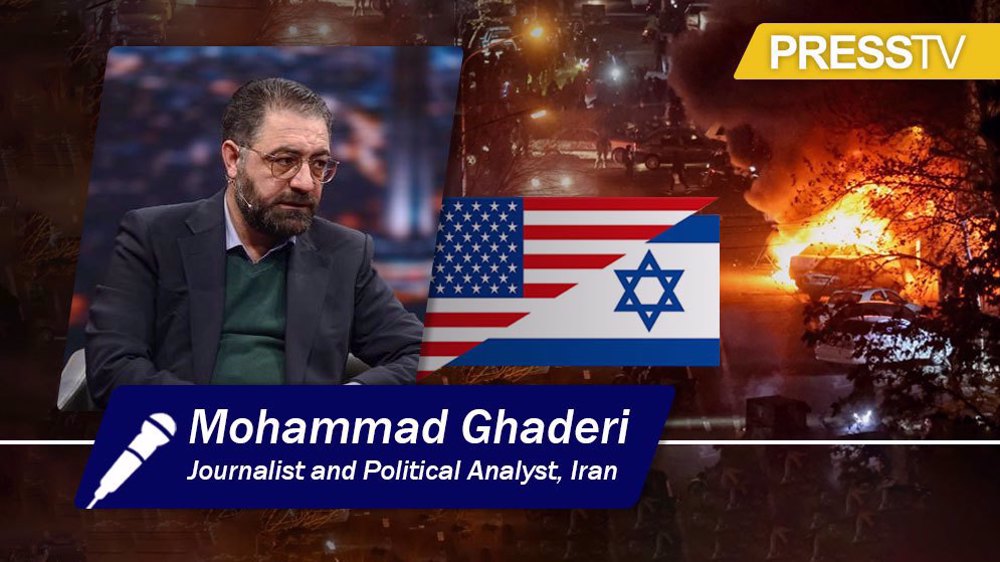
In an interview with the Press TV website, Mohammad Ghaderi, a Tehran-based political analyst and veteran journalist, said the footprint of foreign actors, specifically the CIA and Mossad, has been clearly evident in the recent riots across Iran.

“The recent events in Iran, which initially began with protests by some shopkeepers and bazaar merchants in Tehran due to the rise in foreign exchange rates, as had been anticipated, were immediately driven by certain trained riot-inciting cells into clashes accompanied by political slogans and anti-security actions,” he said, explaining how protests were hijacked.

“After a few days, following calls by [son of deposed Iranian monarch] Reza Pahlavi and the overt support of [US President Donald] Trump and [Israeli prime minister Benjamin] Netanyahu, they turned into a full-scale street war involving armed terrorists,” he added.

That shift, Ghaderi noted, cannot be understood without separating protesters from those who hijacked their legitimate cause – a legitimate cause even supported by the Leader of the Islamic Revolution, Ayatollah Seyyed Ali Khamenei.

Merchants, he said, had economic complaints but no incentive to escalate toward violence.

“Likewise, law enforcement and security forces not only refrained from violent encounters but in some cases were actively involved in ensuring the security of the protesters,” Ghaderi stated.

The restraint was purposeful, and it lasted even as violence mounted. As rioters began attacking public and private property, police, Basij members, and civilians, officials reported that some of those involved were armed and trained by US and Israeli spy agencies.

“As I mentioned—and as documented evidence also confirms—trained cells linked to foreign agencies and hostile to the Islamic Republic attempted, through extremely violent and terrorist behavior, to provoke the police and law enforcement forces into reacting,” said the veteran journalist.

The numbers that followed underscored the scale of the bloodshed. In a statement issued after the foreign-engineered unrest, Iran’s Foundation of Martyrs and Veterans Affairs said 3,117 people were killed during the riots, including 2,427 civilians and security personnel.

Many were bystanders or protesters shot by organized terrorist elements. Yet, even amid those casualties, Ghaderi pointed to a detail he considers critical to understanding the government’s approach during the riots.

“Until the end of Thursday, January 8,” he remarked, “despite the killing of a significant number of police officers, members of the popular Basij forces, and ordinary civilians by terrorists, no one was killed by police firearms.” Only later, when violence intensified further, did the posture change.

“Of course, on Friday, given the high level of violence carried out by the terrorists, the police, following orders from senior authorities, engaged in armed confrontation with them,” Ghaderi said.

“This clearly shows, first, that the terrorists were armed with various types of cold weapons and firearms, and second, that they had received urban warfare training—both of which confirm that foreign elements directed their organization.”

He described a structure that extended beyond street-level violence. According to Ghaderi, domestic coordinators played a central role in directing attacks, arson, and destruction.

“Inside the country, there were also leaders who were directing the killings and the destruction of public and private property by hired terrorists on the streets,” he stated, adding that many have since been identified and detained. They have confessed that they received their orders directly from abroad.”

Goal of fragmenting Iran

When asked about the strategic objective behind the foreign‑backed riots and terrorism, Ghaderi pointed to Israel’s long‑standing aim of weakening and fragmenting Iran

“Naturally, their ultimate goal is the collapse of the political system and the fragmentation of Iran,” he said. Yet he argues that Tehran has become experienced in confronting such plots.

According to Ghaderi, Iran’s governing institutions have accumulated “valuable experience” over more than forty years of pressure, covert and overt war.

From “hard and military warfare” to sanctions, sabotage, assassination, cyber operations, and “cognitive and perceptual warfare,” the state has faced and adapted to a wide spectrum of challenges.

That history, he noted, has produced “precise and effective models for managing and controlling tensions and shocks like the recent events.”

The result is a persistent failure by Iran’s adversaries to achieve their core aim. “It is precisely for this reason,” Ghaderi said, “that opponents of the Islamic Republic have so far not only failed to defeat Iran’s political system, but have also been unable to separate the people from the governing structure.”

This inability, he argues, explains a strategic shift in Washington. “Fundamentally, in my view, the most important reason behind the US’ shift toward the use of soft power, especially cognitive and perceptual operations, is its inability to separate the people from the government through other methods,” he said.

Instead of tanks or troops, the focus has turned to narratives, distortion, and an effort “to create perceptual errors in the minds of the Iranian people regarding the political system governing them,” said the analyst.

Seen through that lens, the state’s handling of the riots takes on a different logic. Ghaderi said authorities recognized the scenario being played out and responded accordingly.

“With this understanding,” he explained, “the authorities—by accurately grasping the conditions and the scenario designed by the opposition – carried out their security measures with an emphasis on restraint and engagement with protesters, separating rioters from ordinary people, intelligent street-level management, and maximum tolerance.”

The objective, he added, was twofold – “first, to prevent the fabrication of false narratives by hostile media in the public mind, and second, to minimize confrontation and harm between the people and the state.”

None of this, Ghaderi cautioned, means Iran’s path ahead will be easy. He described the country’s future as “a complex and difficult one,” shaped in large part by “obstacles created by Western countries, such as sanctions and economic and international pressure.”

However, he balanced that assessment with structural counterweights, citing “the system’s reliable social capital,” the “indigenization of many fields of knowledge and technology,” and Iran’s expanding regional influence and international partnerships.

The analyst believes that those factors, combined with “the weakness of adversaries in delivering decisive blows,” push the prospect of systemic collapse “close to zero.”

Military threats part of ‘psychological warfare’

Overlaying all of this is the persistent drumbeat of military threats from Washington, with US President Donald Trump repeatedly threatening fresh military aggression against Iran with the pretext of supporting what he labels “peaceful protestors”.

Talking about the prospects of a military confrontation, Ghaderi said, “requires careful consideration of several very important factors,” starting with geopolitics.

“The key point is that the firm political and legal support of China and Russia for Iran on the international stage has made it certain that the United States and Europe are incapable of forming a consensus against Iran,” he said.

At the same time, he stressed, pressure has produced the opposite of its intended effect inside Iran.

“The destructive and threatening behavior of the United States and Israel toward Iran has not only failed to instill fear within the governing structure of the Islamic Republic,” Ghaderi said, “but has instead led to the full readiness of the armed forces.”

Iranian security forces, the analyst noted, are already operating on a wartime footing—and morale is high. Some, he added, “even eagerly welcome the outbreak of war,” convinced that “should war occur, a heavy defeat would be inflicted on the United States and especially on Israel.”

That confidence, Ghaderi believes, explains why much of the current rhetoric remains performative.

“Beating the drum of a potential future war against Iran is, first, to a significant extent, influenced by psychological operations techniques,” he said.

Beyond that, he pointed to a strategic dilemma. “If we examine the issue through military logic,” Ghaderi remarked, “there is virtually no clear operational strategy on the part of the United States and Israel to prevent Iran’s response.”

“It is precisely for this reason that their maximum effort is focused on building consensus to involve other countries in this matter.”

West’s ‘double standards’ on human rights

On Friday, the UN Human Rights Council adopted an anti-Iranian resolution that was pushed by a number of Western countries. Tehran slammed the resolution as illegitimate and politically motivated.

Ghaderi said the vote fit a broader pattern.

“Western double standards, especially after the events of October 7, 2023, have become apparent to the vast majority of global citizens,” he said, referring to the silence of Western countries in the wake of Israeli genocidal war on Gaza that has killed more than 71,600 Palestinians since October 2023.

He said those contradictions have fueled “a general awakening”  and raised awareness beyond traditional targets of Western criticism.

“This is not only clearly visible in how they confront Iran, the Axis of Resistance, and even countries in Latin America,” Ghaderi remarked, “but today citizens of Western societies themselves have also become aware of this reality.”

At the heart of that realization, he noted, is a growing disillusionment with the institutions meant to govern global conduct. “The important point is that everyone has come to recognize the ineffectiveness of international law and international legal institutions,” he said, adding that many now see the existing order as “nothing but the law of the jungle—based on force and deception.”

“This is precisely the point that has alerted the world to the collapse of the existing order and the formation of a new one with different characteristics, paradigms, and approaches,” Ghaderi said—an argument he notes is increasingly echoed by international relations scholars who “openly regard Iran and the ideology of resistance as the main pillar of the emerging new world order.”

[…]

Via https://www.presstv.ir/Detail/2026/01/27/763018/foreign-footprint-turned-iran-economic-protests-fullscale-street-war-analyst

Trump pulls ‘commander at large’ from Minneapolis following deaths

Trump pulls ‘commander at large’ from Minneapolis following deaths – media

RT

The departure of Gregory Bovino comes after a second deadly shooting involving federal agents during immigration raids

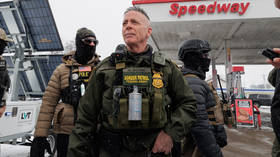
The controversial “commander at large” of US President Donald Trump’s federal immigration enforcement push in Minnesota has been removed from his post following two deadly shootings, several media outlets have reported.

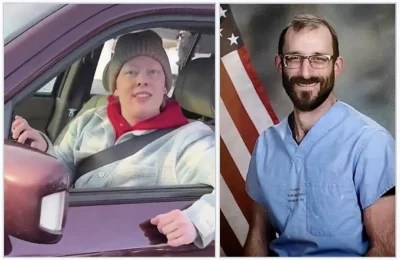
The reported departure of US Border Patrol Commander Gregory Bovino comes in the wake of the killing of activists Renee Good on January 7 and Alex Pretti on Saturday by federal agents. The incidents sparked a public outcry and nationwide protests.

On Monday, Trump announced that White House border czar Tom Homan will be dispatched to Minneapolis to oversee immigration enforcement operations.

A source told Reuters on Tuesday that Bovino would be returning to his former job as the head of California’s El Centro sector of the US-Mexico border.

Minneapolis Mayor Jacob Frey said in a post on X that “some federal agents” will start leaving the city, but did not mention Bovino directly. “I will continue pushing for the rest involved in this operation to go,” Frey added.

CNN claimed that Trump was “unhappy” with how Bovino and US Homeland Security Secretary Kristi Noem handled the fallout of Pretti’s killing. Noem was reportedly criticized for making premature statements while defending the agents involved.

Bonino has insisted that the slain US citizen was armed and wanted to “massacre law enforcement.” The video footage circulating online appears to show Pretti holding a phone immediately before he was tackled and shot. He apparently had a weapon on his person, but agents had taken it away from him.

CNN reported that the Department of Homeland Security (DHS) has locked the 55-year-old commander out of his social media accounts effective immediately after he sparred with lawmakers online over the shootings.

Bovino critics online have also claimed that the commander had “Nazi looks” due to his closely cropped haircut and military-style greatcoat that went viral.

Assistant DHS Secretary Tricia McLaughlin said on X that despite the transfer, Bovino remains “a key part of the President’s team and a great American.”

The police said that 26 people were arrested overnight as they protested outside a hotel where Bovino was believed to have been staying.

[…]

Via https://www.rt.com/news/631599-us-minneapolis-shooting-bovino-trump/

Pathological Lying Will Cost Donald Trump the Mid-Term Elections

Trump is losing the PR war. Lying has become the go to for every one of Trump’s hand picked influencers and war hawks in office. Lying is what will ultimately destroy the GOP in midterms.

“The essence of lying is in deception, not in words; a lie may be told by silence, by equivocation, by the accent on a syllable, by a glance of the eyes, attaching a peculiar significance to a word, and in countless other ways.” —St. Augustine

Lies come in an assortment of packages from small white lies to lying in a court of law to mass deception.

As Mark Twain noted, “If you speak the truth then you don’t have to remember anything”.

It emphasizes that truth is consistent, while falsehoods require complex, ongoing maintenance to avoid detection. When a person is unable to relay the truth the lying is pathological. A psychiatric issue.

Pathological liars exaggerate events, fabricate stories, or present completely false incidents as true. In the case of the two ICE executions, the lying has been elevated to pathological. When media influencers join the fray of lying they are essentially ‘inciting’ mass anger. When the truth sets you free – lying imprisons you.  You know you are lying, so psychologically you try to justify the lie to protect your self. The lie thus becomes about you instead of the event.

Pathological lying is considered ‘toxic behavior’ and suggests the need for professional help. 

Kristi Noem denied federal agents were using tear gas and instead blamed protesters for lying. Every video in Minneapolis clearly shows ICE using tear gas. But it took video evidence from a judge for Noem to admit her lie. Yet even then, she attempted to rephrase the lie as necessary to restrain violent protesters. IF in fact ICE was going after Antifa disrupters, then they are easily tracked and can lawfully be apprehended. But that is NOT what happened.

The problem arises when Trump justifies illegal actions ‘because Biden’s regime did it too’. This mentality belongs in an elementary school, not in the White House. But it reveals a lack of moral and ethical mental acuity – a basic understanding of right and wrong – and a disassociation from compassion and reality.  It represents the mind of an IDF soldier willfully murdering children. It represents the soul of pedophiles who rape and torture children. These people are NOT connected to basic principles of behavior.

Everyone wants gangs and criminal offenders removed from our city streets. But this is no longer the theme. Instead, ICE has turned into a Gestapo-style enforcer.

Jose Huerto Chuma was the illegal immigrant ICE announced they were arresting based on his prior criminal record. The Minnesota Department of Corrections said U.S. Border Patrol Commander Greg Bovino provided inaccurate information about the target of an operation in Minneapolis on Saturday. Chuma had no record of any crimes in Minneapolis, however he was detained by ICE in 2018 – and subsequently released by Federal authorities. Thus, expanding the lie. Why did the Trump regime release him seven years ago only to decide an entire squad of ICE soldiers maxed out in tear gas gear and automatic weapons was necessary to arrest Chuma – again?

Homeland Security claims Chuma’s criminal record was driving without a license, disorderly conduct and domestic assault. Unfortunately, they are unable to provide such record or details of the charges.

“They want chaos,” Noem said, accusing Tim Walz and Jacob Frey of encouraging residents and “violent rioters” to resist.

Again, deflecting to Walz and Frey is easily disputed by their public comments wherein they have both publicly criticized the federal operation and called for it to end, while also urging Minnesotans to remain peaceful. Neither has called for violence. Walz condemned the shooting and asked for calm while urging federal authorities to leave Minnesota. Frey similarly called for peaceful protest while questioning the continuation of the federal operation.

These lies are what ignites peaceful protests into an angry mob. I don’t condone riots, I don’t attend protests, and I’m not a fan of Walz but that doesn’t mean the facts should be ignored and false testimony should be supported. IF our government, including Kristi Noem, represented facts in these explosive situations, IF justice was served, there would be no protests. At this point the evidence has been confiscated and tampered with, an autopsy has not been conducted, and pictures of Pretti after being hit and kicked have not been released.

If going to a protest to film bukky tactics and the indiscriminate use of tear gas results in your death by our protectors – then our country has fallen and we are ruled by a Gestapo mentality. Just the facts.

[…]

Via https://www.globalresearch.ca/pr-war-lying-cost-trump-midterms/5913495

Dmitry Orlov: Update on US/Russia/Ukraine Negotiations

Dmitry Orlov

“Negotiators from Russia, Ukraine and the United States have concluded their two-day meeting in Abu Dhabi on Saturday without announcing any results in their efforts to end the almost-four-year-long war.  In advance of the talks, Ukraine’s chief negotiator Rustem Umerov said the discussions focused “on the parameters for ending Russia’s war and the further logic of the negotiation process”.” By Faisal Ali and Stephen Quillen via Alazeera.

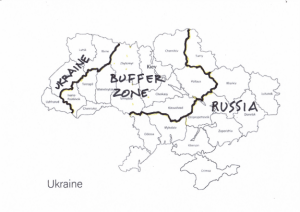
This is by no means certain, but the following piece of paper was supposedly found in the trash after the talks by persons who do not wish to be named. It outlines the regions of Ukraine that would join the Russian Federation (five of them have already done so), a 300-kilometer-wide demilitarized buffer zone (which, we might suppose, is what the Russians are demanding), and the remaining four regions which will remain under the control of the Ukrainian government, which, it would be reasonable to assume, would relocate from Kiev to Lvov.

[…]

Via https://boosty.to/cluborlov/posts/1761893c-4e07-4588-af13-51c792046a09

No Healthy Person Wants To Rule The World Or Become A Billionaire

Reading by Tim Foley

Caitlin Johnstone

No mentally healthy person wants to rule the world.

Nobody with a functioning conscience and a working empathy center in their brain is interested in becoming a billionaire.

We are ruled by the most dysfunctional members of our species. The most wounded, neurotic and sociopathic among us. The least wise, caring and insightful.

What drives a person to claw their way to the top of a wildly sick society and become a lord of the dystopia?

What compels someone to amass obscene amounts of wealth in a world where so many have far too little?

What causes someone to ascend to political leadership of a power structure that’s built for the purpose of robbing and oppressing the most underprivileged populations on earth?

Nothing wholesome, to be sure. That impulse is never coming from anywhere good.

The worst among us are striving to prevail in this dystopia by riding the tides of its ugliest inclinations, while the best among us are striving to dismantle the dystopia and replace it with something kind and equitable. This causes the worst of us to be elevated to the top and the best of us to be smacked down to the bottom.

Under our current system the easiest way to set yourself on a trajectory from millionaire to billionaire to trillionaire is to exploit workers, crush your competition, plunder the available resources of the global south, externalize the costs of industry onto society and the ecosystem, bribe the government to advance your corporate interests via lobbying and campaign donations, contract with the most murderous military and intelligence agencies in the world, and psychologically manipulate the public into consuming products and services they don’t need.

Who is going to be most successful in this endeavor? The very worst people alive. People whose hearts and minds are so stunted and dysfunctional that they see other human beings as tools for their own personal enrichment, to be used up and discarded like juice boxes or condoms.

These are the people who are touching the most lives on this planet. These are the people whose decisions affect the most of us.

Michael Parenti has passed away after a luminous life advancing powerful ideas and insights about the abusive dynamics of human civilization and how best to address them. He did not die a wealthy man. The mainstream papers did not report on his departure from our world. Only a relatively small percentage of the population is aware he ever lived.

But everyone knows who Elon Musk is. Everyone knows who Jeff Bezos is. Who Bill Gates is.

The best of us live and die in relative obscurity, generally being subjected to scorn and derision from the ruling establishment the entire time. The worst of us become plutocratic demigods.

It’s an uphill battle. You spend your life swimming against the current of dystopia, and you are not handsomely rewarded for your efforts. You’ll get deplatformed, censored and smeared. You might even get shot by government agents for standing up for the disempowered. And you’ll definitely never be a billionaire.

[…]

Via https://caitlinjohnstone.com.au/2026/01/26/no-healthy-person-wants-to-rule-the-world-or-become-a-billionaire/

‘Enough of Washington’s orders’ – Venezuela’s interim president

‘Enough of Washington’s orders’ – Venezuela’s interim president

RT

Delcy Rodriguez has said she is tired of American directives and urged the US to stop its interference in her country’s affairs

Venezuela’s interim president, Delcy Rodriguez, has said she has had “enough” of orders from Washington, marking the first public challenge to the White House since the US abduction of Venezuelan leader Nicolas Maduro earlier this month.

Rodriguez assumed the Venezuelan leadership following the US raid and kidnapping of Maduro on January 3. Initially, US President Donald Trump vowed that Washington would “run” Venezuela but later supported Rodriguez during the interim period.

“Enough already of Washington’s orders regarding politicians in Venezuela,” Rodriguez told a group of oil workers in Puerto La Cruz during an event on Sunday broadcast by the state-run channel Venezolana de Television.

“Let Venezuelan politics resolve our differences and our internal conflicts,” the acting president stressed, adding that the republic has paid a high price for confronting the consequences of fascism and extremism in the country.

After being sworn in as interim president, Rodriguez declared that no “foreign agent” would control Venezuela or turn it into a “colony.” CIA Director John Ratcliffe later visited Caracas to meet with her, reportedly to convey Trump’s terms for improving bilateral relations, which included changes to both domestic and foreign policies.

She has since moved to align with US demands, including opening Venezuela’s oil sector to American companies and cooperating on security.

Trump praised Rodriguez as a “terrific person” following their phone call last week, highlighting the “tremendous progress” made after fulfilling US demands and promising what the American president called a “spectacular” partnership on oil and national security. US Treasury Secretary Scott Bessent also indicated that sanctions relief could be forthcoming.

Last week, the White House announced plans to invite Rodriguez to Washington following her phone conversation with Trump.

The US operation in Venezuela triggered international condemnation, with Russian Foreign Minister Sergey Lavrov denouncing it as a “flagrant violation of international law.”

Addressing an emergency session of the UN Security Council in early January, Russian Ambassador to the UN Vassily Nebenzia described Washington’s actions in Venezuela as “international banditry” driven by a desire to gain “unlimited control over natural resources.”

[…]

Via https://www.rt.com/news/631530-enough-of-washingtons-orders-venezuelas/

How the West rejected Hamas’ democratic victory and led Gaza to disaster

How the West rejected Hamas’ democratic victory and led Gaza to disaster

By Elizaveta Naumova

Twenty years after Hamas’ victory, Gaza remains trapped in the consequences of a democratic outcome the international system refused to absorb

On January 26, 2006, Hamas won the Palestinian legislative elections. Twenty years later, Gaza is still living inside the consequences of that vote.

What was then framed in Washington and European capitals as a democratic experiment gone wrong has since been treated as an anomaly – an error to be isolated, sanctioned, and erased from political memory. The movement that won a free and internationally monitored election was declared illegitimate almost overnight, its victory rejected in practice even as democracy was praised in principle. The political choice of millions of Palestinians was not overturned by a counter-vote, but by blockade, isolation, and force.

Today, as Gaza enters yet another fragile ceasefire after more than 100 days of war, that unresolved contradiction has returned with devastating clarity. More than 71,000 Palestinians have been killed, entire neighborhoods erased, and a society pushed to the brink – all while Israel and its Western allies continue to insist that Hamas neither represents the Palestinian people nor can be allowed to govern them.

Yet this position raises a fundamental contradiction: if Hamas is not legitimate and can’t rule the enclave, why is an entire civilian population treated as if it weren’t governed by a choice people consciously made?

Beyond the militia: How Hamas became a mass political force

In February 2024, then-US President Joe Biden addressed this contradiction directly, writing that “Hamas does not represent the Palestinian people” and emphasizing that “the vast majority of Palestinians are not Hamas.” His words were meant to draw a line between an armed group and a civilian population facing collective devastation. But they also exposed an uncomfortable truth: for more than two decades, US policy has rested on denying Palestinians their rights to vote.

The Islamic Resistance Movement, better known by its Arabic acronym Hamas (meaning ‘enthusiasm’), is perceived as the most influential spoiler of Palestinian-Israeli peace.

Historically related to the Egyptian Muslim Brotherhood, Hamas is considered a terrorist organization by a majority of Western states, which have not recognized it as a legitimate political force. But, as Russian expert Grigory Lukyanov explains, the late 1980s and the 1990s became a period when many movements that had emerged under the banners of Islamic revival and Islamic fundamentalism began to face a growing question: “what comes next – what can we offer besides war?”

“Hamas had its own motivations for moving into socio-political activity: consolidating public support around itself. An important factor was that Hamas stood for a position that completely contradicted the course taken by the Palestine Liberation Organization toward ‘land for peace’, renouncing violence and agreeing to negotiations with Israel (and essentially toward the ‘two states for two peoples’ principle). However, at that moment it was supported by very few Palestinians,” says Lukyanov, a research fellow at the Institute of Oriental Studies of the Russian Academy of Sciences and deputy dean of the Faculty of Oriental Studies at Russia’s State Academic University for the Humanities.

Hamas felt and understood the trend perfectly well, Lukyanov adds, and saw itself as the embodiment and leader of this opposing current: a force that would defend that idea and show that it was not some rogue actor or outsider, but rather capable of demonstrating its social role.

Hamas also managed to combine three elements that no other Palestinian movement managed to fuse so effectively: armed resistance, religious legitimacy, and a vast social welfare network. It ran schools, charities, clinics, and mosques, embedding itself deeply into everyday life, especially in Gaza. For many Palestinians, Hamas was not just a militia, but an alternative system of governance long before it formally entered government.

This growing legitimacy was visible in hard data. The Palestinian Center for Policy and Survey Research (PCPSR) consistently recorded Hamas’ rising popularity throughout the 1990s and early 2000s. Its surveys showed a slow but steady shift away from Fatah and toward Hamas, driven by disillusionment with corruption, nepotism, and the collapse of the Oslo peace process.

What is Fatah?

Fatah is a Palestinian secular nationalist movement that for decades dominated Palestinian politics and led the Palestine Liberation Organization (PLO). It has defined Palestinian policies both in acts of “armed resistance” and in negotiations with Israel through its role in the PLO  (especially during the 1990s Oslo Accords – series of Israeli-Palestine agreements that established a framework for Palestinian self-governance).

The movement has assumed administrative responsibilities in most of the Palestinian territories since the Palestinian government was established in 1994.

Between March and April 1997 alone, trust in Hamas rose from 8.6% to 10.3%, while trust in Fatah dropped from 45.8% to 41.3%. These were not minor fluctuations. They reflected a structural change in political loyalties. Hamas was becoming a credible political actor, not merely a protest movement.

Gradually, Hamas sponsors, including Iran and Syria, as well as other states – such as the US and the Gulf monarchies – also pushed the organization toward public politics, Lukyanov explains. “For Hamas, it was always important to try to sit on two chairs at once: not to keep all its eggs in one basket, not to rely only on states that supported a purely military solution – only on Iran and Syria,” he added.

“Iran and Syria could provide weapons, military experience, and certain technologies. But they could not achieve other goals – for example, legitimizing Hamas across the broader Muslim world – because they themselves were constrained in their resources and capabilities. They could not provide sufficient funding, and they could not provide enough freedom of maneuver for Hamas to do broad political work, including beyond Gaza and the Palestinian arena.”

By late 2005, Hamas was no longer just gaining ground. It was dominating. In December 2005, PCPSR conducted an exit poll during the fourth round of municipal elections in the cities of Nablus, Jenin, Ramallah, and al-Bireh. Hamas lists received 59% of the vote, compared to only 26% for Fatah and 15% for all other factions combined. Even more telling were voters’ intentions for the upcoming parliamentary elections: 41% said they planned to vote for Hamas versus 21% for Fatah, while 23% remained undecided.

Democracy as dogma: How Washington misread the moment

This transformation inside Hamas unfolded at the same moment Washington was gripped by a very different kind of transformation of its own.

When George W. Bush began his second term in January 2005, he was convinced that exporting democracy had become the central mission of American foreign policy. In his view, democracy was not something that had to be built patiently through institutions, stability, and political culture. It was humanity’s “natural state.” Remove repression, hold elections, and freedom would follow almost automatically.

In the Palestinian territories, Mahmoud Abbas and Fatah had won the 2005 presidential election after the death of Yasser Arafat, reaffirming their formal commitment to negotiations and to a two-state solution. For Bush, this seemed like proof that history was moving in the right direction. The fact that Fatah had a long record of armed struggle and attacks against Israel, including against civilian targets, was treated as secondary to its new role as a negotiating partner.

Then Israel withdrew from Gaza after nearly four decades of occupation. Not only were Israeli troops pulled out, but around 8,000 settlers were removed, military bases dismantled, and the entire structure of direct control abruptly collapsed.

For Bush, this moment looked like an opportunity. If dictatorship and occupation had been removed, democracy, he believed, would naturally take their place.

What made this moment explosive was that Hamas, which had boycotted earlier votes as a matter of principle, now chose to participate. The same movement that had once rejected electoral politics as legitimizing Oslo suddenly stepped inside the very institutions it had condemned. The transformation Hamas was undergoing internally collided with Bush’s belief that elections themselves were the cure for political conflict.

Not everyone shared that confidence. Dennis Ross, a US negotiator on Israel-Palestine, warned that allowing armed movements to compete in elections without first disarming was a recipe for disaster. Militias, he argued, should not be allowed to fight the system and run it at the same time. Even Fatah, terrified of losing, quietly explored ways to block the vote. Israel, too, was deeply uneasy.

The paradox was striking: Hamas and President Bush were pushing for elections; Fatah and Israel were trying to delay or prevent them.

“One line of thinking [inside the Bush administration] was that drawing Hamas into public politics should weaken it – above all by pushing away the most radical elements, or by creating some internal chaos within Hamas,” Lukyanov explains.

“The logic was this: bringing Hamas into the public arena means, among other things, forcing it to divert resources that could have gone to war toward acting as a public actor, including in social and economic spheres, maintaining and expanding its electoral base,” Lukyanov adds.

The US policy also operated through a kind of dichotomy: on the one hand, there were always people in the administration who didn’t believe in Hamas from the start; on the other, the real policy sometimes became a not-entirely rational compromise between these opposing camps.

This was the moment where two evolving logics collided. Hamas was slowly shifting from rejection toward political engagement, however, not changing its stance on Israel (rejecting to recognize it), and the Palestinians didn’t really want a two-state solution: they felt abandoned and wronged by Israel and its military campaign. Washington was shifting from realism toward democratic idealism. Neither side fully understood what would happen when those paths crossed.

Social power before political power

At the same time, the organization was becoming the mirror image of everything Fatah was no longer perceived to be. Where Fatah symbolized compromise without results, Hamas represented resistance with discipline. Where Fatah embodied corruption, Hamas cultivated an image of moral austerity. Where the Palestinian Authority (PA) failed to deliver services, Hamas filled the gaps with charities, clinics, schools, and welfare networks.

The contrast mattered deeply in Gaza – more isolated, poor, and more densely populated than the West Bank. Israeli closures strangled its economy, and the PA’s institutions there were weaker. Hamas’ social infrastructure was strongest precisely where the state-like institutions were weakest. It became the practical authority long before becoming the formal one.

The municipal elections of 2004-2005 were the decisive warning signal. Hamas performed far better than expected, especially in Gaza and in major West Bank cities. By December 2005, exit polls showed Hamas winning 59% of votes in major municipalities, compared to only 26% for Fatah. Even voters who were not fully committed to Hamas increasingly saw it as the only force capable of breaking Fatah’s monopoly.

By that point, the Palestinian political order had already shifted. Fatah was no longer seen as the default governing party. It had lost credibility, internal cohesion, and its ability to offer a compelling political future. Hamas did not simply gain support; it filled a vacuum created by Fatah’s collapse in public trust.

This momentum carried Hamas further into formal politics when it made the internationally supported decision to contest the 2006 legislative elections. Ahead of the vote, the movement released an electoral platform that still framed “armed resistance” as a legitimate means of ending the Israeli occupation, but otherwise marked a significant departure from its earlier rhetoric.

Anti-Semitic language was absent, explicit calls for Israel’s destruction were dropped, and the program emphasized democratic governance, separation of powers, civil liberties, and social rights. It also called for a minimum wage and the creation of “labor unions and occupational societies.”

The result shocked most outside observers, and even many within Hamas itself. Its “Change and Reform” electoral list won 76 of the 132 seats in the Palestinian parliament, the Palestinian Legislative Council.

[…]

Hamas’ victory reflected a combination of factors: its rejection of the failed Oslo process, its conservative moral image, its vast network of social charities, and widespread frustration with Fatah’s corruption and stagnation.

[…]

Via https://www.rt.com/news/631511-how-west-rejected-hamas-democratic-victory/

Minnesota ICE shooting of Alex Pretti sparks rare split in gun-rights movement

The fatal shooting on Saturday of Alex Jeffrey Pretti has ripped open a rare and bitter split inside the gun-rights movement.By Ariel Zilber

The fatal shooting of a legally armed anti-ICE protester by federal agents in Minneapolis on Saturday has ripped open a rare and bitter split within the gun-rights movement.

The killing of Alex Jeffrey Pretti, a 37-year-old ICU nurse and licensed concealed-carry holder, is pitting groups of members demanding investigations and constitutional accountability against others rushing to defend law enforcement.

Pretti was shot dead during an immigration enforcement operation after confronting ICE agents during a demonstration.

Video shows Pretti holding a cell phone as he was pepper-sprayed and wrestled to the ground by multiple officers, with footage appearing to capture an agent removing his holstered handgun moments before a barrage of shots rang out.

The Department of Homeland Security said Pretti “violently resisted” and that agents feared for their lives, justifying the killing. That claim is being fiercely

Gun-rights groups critical of the shooting said Pretti’s death raises fundamental constitutional questions about lawful carry and police use of force.

“Every peaceable Minnesotan has the right to keep and bear arms — including while attending protests, acting as observers, or exercising their First Amendment rights,” the Minnesota Gun Owners Caucus said in a statement.

The group said those protections do not disappear during encounters with law enforcement, adding that “many critical facts remain unknown” and that “there has been no evidence produced indicating an intent to harm the officers.”

Gun Owners of America also condemned the official rhetoric surrounding the shooting, saying: “Federal agents are not ‘highly likely’ to be ‘legally justified’ in ‘shooting’ concealed carry licensees who approach while lawfully carrying a firearm.”

The Second Amendment Foundation echoed that concern, warning, “The claim that some are now making – that the peaceable carry of a firearm near officers is enough to justify them using lethal force – is an affront to the Second Amendment rights of all Americans.

But other gun-rights voices lined up behind law enforcement, arguing Pretti put himself in danger by confronting federal agents during an active operation.

“For months, radical progressive politicians like Tim Walz have incited violence against law enforcement officers who are simply trying to do their jobs,” the National Rifle Association said, referring to Minnesota’s embattled Democratic governor.

But the NRA also issued a rare public rebuke of a Trump administration prosecutor after he suggested that law-enforcement officers would likely be justified in shooting anyone who approaches them while armed.

Bill Essayli, first assistant US attorney for the Central District of California, sparked the backlash on Saturday with a blunt post on X hours after the shooting, writing: “If you approach law enforcement with a gun, there is a high likelihood they will be legally justified in shooting you.”

The comment, which made no distinction between lawful permit holders and criminal suspects, was quickly seized on by gun-rights groups that said it effectively framed the mere act of carrying a firearm near police as grounds for lethal force.

“This sentiment from the First Assistant U.S. Attorney for the Central District of California is dangerous and wrong,” the NRA wrote in a statement.

“Responsible public voices should be awaiting a full investigation, not making generalizations and demonizing law-abiding citizens.”

But the NRA also added that “calls to dangerously interject oneself into legitimate law-enforcement activities have ended in violence, tragically resulting in injuries and fatalities,” placing blame on political rhetoric rather than agent conduct.

[…]

Via https://nypost.com/2026/01/25/us-news/minn-ice-shooting-of-alex-jeffrey-pretti-sparks-split-in-gun-rights-movement/