The Soviet-China Alliance in World War II

Foreign Friends: Soviet Union | Chinese Posters | Chineseposters.net

USSR and China: United in Victory

Directed by Ekaterina Kitaytseva (2025)

Film Review

https://en.rtdoc.tv/films/2199-ussr-and-china-united-in-victory

For China, World War II began in 1931 with the Japanese invasion of Manchuria. By November 1937 they occupied all of Manchuria. advancing to capture Shanghai in November 1937 and the Chinese capitol Nanjing in December. The communist guerilla forces led by Mao Zedong and the anticommunist Kuomintang led by Chiang Kai-shek joined forces to defend their country. However when both armies withdrew from Nanjing, the Japanese systematically raped, mutilated and slaughtered its civilians.

The combined Chinese forces received major support from the Soviet Union. Between 1937-1941, the USSR supplied China with 900 aircraft, 100 tanks and tens of thousand of artillery and small arms. They also provided instructors, pilot and troops, significantly helping to significantly slowing the Japanese advance. Although the Russians also invited Chinese recruits to train at the Soviet military academy, once the Japanese blockaded the Soviet-Manchuria border, they (including Mao’s son) couldn’t return and fought the German Nazis alongside Soviet troops.

Meanwhile the Japanese established the infamous Unit 731 in Manchuria, carrying out cruel experiments on civilians, infecting them them with typhoid, cholera, plague; exposing them to toxic chemicals and gradually freezing them to death. In total 500 Manchurian villages were destroyed via biological warfare or by poisoning their wells and reservoirs. The Japanese systematically contaminated a 1000 more villages in the rest of China.

The Japanese, who signed an anti-Comintern pact with Nazi Germany in 1936, planned to invade the USSR from the Far East after the anticipated Nazi victory over the Soviets.

The Soviet response, in February 1945, was to join the US and Britain in the Pacific arena under the Yalta agreement. The USSR committed 100 million troops to the Japanese-controlled industrial center of Manchuria. The latter was logistically inaccessible to US and British troops.

During the Japanese war crimes trial of 1946-48, the Soviet Union protested bitterly that the Japanese emperor was never prosecuted. They were also condemned the US destroyed of official archives implicating the emperor and participants in Unit 731.

The Soviets held a second war crimes tribunal in Khabarovsk in 1949 in which they tried 12 war criminals who participated in Unit 731. Only China supported and participated in these proceedings, the first to bring Japanese biological warfare activities to international attention.

Ten out of the twelve defendant pleaded guilty. All were convicted and received custodial sentences.


Why Modern Cancer Therapy Might Be Making Things Worse

Dr. Joseph Mercola

Story at-a-glance

  • Cancer occurs when cells abandon efficient mitochondrial energy production for glycolysis, creating lactic acid buildup and cellular dysfunction
  • Estrogen drives cancer progression by forcing cells into glycolysis, while protective hormones like progesterone, testosterone, and pregnenolone counteract these harmful effects
  • Environmental toxins including pesticides, plastics, soy, flax, and blue light waves act as endocrine disruptors, creating estrogen dominance and damaging mitochondrial function
  • Standard cancer treatments like chemotherapy backfire by leaving cellular debris that triggers inflammation throughout the body, spreading the disease further
  • Therapeutic approaches using aspirin, carbon dioxide, B vitamins, and hormone optimization restore healthy cellular energy production and guide damaged cells toward apoptosis

In an interview by the Rooted in Resilience podcast, bioenergetic researcher Georgi Dinkov provided an update on his research regarding the pitfalls of common cancer treatments, arguing that this approach often goes in the wrong direction. Instead of focusing on what fuels tumors, many doctors target hormones in ways that may worsen the disease.1 He also discussed innovative strategies that result in better outcomes.

All these and more, are discussed in the podcast. I encourage you to listen to it, as it contains a wealth of new information that will change the way you think about cancer and the promising treatments that will be available in the future.

Why Do Cells Become Cancerous?

According to Dinkov, cancer is not just about random mutations, as mainstream medicine often teaches. Instead, he described it as your body falling back on an older, less efficient way of producing energy. But when stress or toxins push your cells to rely on it all the time, you are left with uncontrollable cells.

Your cells cannibalize their own mitochondria — Dinkov described this change as your cells dismantling their mitochondria. Once those engines are taken apart, the cells start depending on a faster but dirtier process that leaves behind waste like lactic acid. This is what keeps the cancer state alive. The more your cells rely on this shortcut, the more likely they are to keep breaking down instead of functioning normally.

Many cancer cells are not beyond saving — If you improve the cellular environment, your cells often return to normal energy production. This means that cancer, at least in its earlier stages, doesn’t always need to be attacked or destroyed. Instead, giving the cells what they need to repair themselves can turn them back into healthy, functioning tissue:

[…]

What to do for cells that are too far gone — Dinkov said they should be guided toward a natural shutdown process called apoptosis. This is a built-in safety feature in your body that removes damaged cells. “If it’s severely damaged and the cell can and should be forced to commit apoptosis, which is the controlled self-destruction,” he says.

The 2 Energy Pathways in Your Cells

Dinkov described how your cells rely on two different ways of making energy. The first is oxidative phosphorylation, which happens inside your mitochondria. This is the clean, high-powered method your cells are designed to use. The second is glycolysis, which takes place outside the mitochondria. Glycolysis is faster but much less efficient, producing only a small amount of energy along with a lot of waste products.

When your cells begin depending mostly on glycolysis, trouble starts — Dinkov explained that glycolysis doesn’t just mean less energy — it also changes the chemistry inside the cell. The buildup of lactic acid pushes your cells into a more reductive state, which signals them to break down their mitochondria even further. The result is a downward spiral where the cells lose their ability to return to normal function.

The breakdown in energy production is central to cancer behavior — According to Dinkov, glycolysis is meant as a backup for short-term survival, but cancer locks cells into that mode permanently. If the mitochondria are not working properly, cells become aggressive, multiplying rapidly.

Restoring oxidative phosphorylation is the key to turning the tide — If you can push energy production back into the mitochondria, your cells have a chance to function normally again. But if the mitochondria are too badly damaged, then the better option is for those cells to self-destruct through apoptosis. Either way, focusing on mitochondrial health rather than simply blasting cells with drugs or radiation offers a different healing pathway.

How Estrogen Pushes Cancer Forward

Estrogen is a powerful force inside your body that changes how your cells make energy. Considering this, Dinkov argued that estrogen forces the cells to rely more on the backup system of glycolysis. This shift creates more lactic acid and weakens your mitochondria, pushing your cells toward a cancerous state.

Other hormones balance your system — Progesterone, pregnenolone, testosterone, and dihydrotestosterone (DHT) provide a beneficial effect. Dinkov explained that these hormones help your cells resist estrogen’s effects by keeping energy flowing through the mitochondria.

Here’s one example of how hormones protect against cancer — According to Dinkov, progesterone directly blocks estrogen’s activity at the cell level:

“So, first of all, pregnenolone, progesterone, to a smaller degree, DHEA [Dehydroepiandrosterone], testosterone dehydrogenase — they’re all aromatase inhibitors. So, they directly limit the synthesis of new estrogen no matter where it has been synthesized.

Every cell expresses the aromatase enzyme, which is the rate-limiting step in synthesizing estrogen. So, anything that that inhibits aromatase, you know, basically will decrease the production of estrogen.”

The Hidden Threats Around You

The environment you live in is stealthily shifting your body’s chemistry in ways that increase your risk of cancer.

Toxic chemicals all around you fuel cancer risk — Dinkov explained that pesticides, plastics, and even foods like soy and flax carry compounds that act like estrogen once they enter your body. These are known as endocrine disruptors, and according to him, they create a constant state of estrogen dominance.

Blue light exposure fuels cancer — Dinkov pointed out that the vast majority of people are exposed to blue light via fluorescent bulbs, which affect your health:

“Our mitochondria does not like blue light because blue light is toxic to bacteria, viruses, fungi, all these primitive microorganisms, which is probably another corroboration of the theory that mitochondria is originally, such an organism that fused with our primitive human cells because blue light is toxic to mitochondria as well.”

Other side effects of blue light — Aside from increasing your risk of cancer, Dinkov noted that blue light affects your health in different ways. For example, if you sit under it for hours a day, such as being in an office, you’ll eventually develop headaches, cognitive disturbances and increased risk of mental health disorders.

Why Standard Cancer Treatments Might Backfire

As mentioned in the introduction, mainstream cancer treatments often create more harm than help. Dinkov explained that when doctors aggressively attack tumors with chemotherapy or radiation, the dying cells spill their insides into the bloodstream.

Killed cancer put your immune system on overdrive — Once you kill cancer cells through pharmaceutical drugs, the debris acts like a danger signal to your body. The immune system reacts as if you are under attack from a major infection, spreading inflammation throughout your body. “A lot of the mitochondrial debris and the debris from the nucleus trigger the exact same pathways and receptors that bacteria or viral infections trigger,” he says.

Inflammation shuts down your body’s preferred energy system — Oxidative phosphorylation takes a back seat. When that switch is flipped, healthy tissues across your body start acting more like cancer cells. “The entire body says, I’m under attack,” he explained, which pushes cells into the cancer metabolism instead of restoring balance.

This helps explain why many people see their cancer return after initially successful treatments. Dinkov said that doctors are very good at killing the primary tumor, but the aftermath often leads to scattered, aggressive new tumors appearing throughout the body. He described this as turning “a million little cancers, and it’s all over the body” because the environment has been shifted into the wrong metabolic state.

Returning cancer cells to normal before apoptosis — Instead of going to war with cancer right away, Dinkov suggested another path. He argued that cancer cells can be coaxed back to normal function if energy production is restored:

“[M]ost cancer cells are still structurally normal, they are metabolically deranged, but they’re still normal. Some of them are too damaged, but it looks like there’s a small percentage. So really, the goal should be don’t immediately go on an all-out assault, right, which, it turns out to be self-destructive. Try to coax the cancer cell to act normal again and that can be done metabolically with various approaches.”

Why the Latest Research Isn’t in Research Journals Yet

Dinkov noted that his latest research on cancer hasn’t made it into mainstream medical journals, explaining that publishing bold results often triggers powerful pushback. “You should be ready with lawyers because they’re going to attack,” he said, noting that once a controversial study is challenged and retracted, your ability to publish again is severely damaged.

Simply share the information — Instead of chasing recognition, Dinkov said he focuses on getting information directly to people. He’s already received confirmation from doctors around the world who are quietly using his protocols. One oncologist in Ireland, for example, emailed him saying several patients had their surgeries canceled because their tumors had completely disappeared.

Nefarious forces are pushing back — Dinkov also pointed out how easy it is for his research to be challenged. Powerful interests in the cancer industry could run the same experiments and report different results. If that happens, journals often retract the original paper, which damages the credibility of the scientists involved. That fear, he said, is one reason many professors refuse to publish such controversial work, even if the data looks strong.

Big Pharma wants to preserve the status quo — Dinkov noted that even if human trials confirm his approach, powerful resistance will remain. Cancer treatment today is a massive industry, and anything that threatens its profit model faces enormous barriers. For him, the biggest confirmation may not come from journals but from a grassroots movement of patients and doctors who have proven results:

“[I]f it works for sufficiently large number of people, then I don’t need to publish. In fact, I don’t care about publishing. Why do I need to give the enemies a sign that, you know, we’re brewing a resistance here and the resistance is working?”

There Are Ways to Bring Cells Back Toward an Optimally Healthy State

There are several tools that can help your cells return to healthy energy production instead of staying locked in the cancer state. Dinkov goes over them throughout the course of the podcast:

Aspirin — You might think of aspirin only for pain or fever, but Dinkov described how it works inside your cells to slightly lower their internal pH. This acidic environmental shift gives cells a choice — if they’re still repairable, they switch back to the healthier oxidative phosphorylation, but if they’re too damaged, they self-destruct through apoptosis.

Carbon dioxide (CO₂) — When you increase CO₂ in your body, it moves through your cells like a current, carrying electrons and helping energy flow more smoothly. Dinkov described carbon dioxide as doing the opposite of lactic acid — it encourages proper energy production and slows down cancer metabolism:

“[T]he acidic nature of the carbon dioxide molecule, it draws electrons across the cell as it moves, as it diffuses out of the cell. And that helps speed up the oxidative phosphorylation reaction. Also, carbon dioxide and lactate are inversely correlated in the body.”

B vitamins — Vitamins B1 and B3 act as cofactors. Without them, the electron transport chain stalls out, and cells can’t make enough energy. In Dinkov’s research, combining aspirin with these nutrients restored energy flow in cells that had been struggling.

Hormones — These include pregnenolone, which Dinkov described as the “structural cell stabilizer,” and testosterone. As mentioned earlier, progesterone blocks estrogen’s harmful effects as well. To learn how to use it properly and optimize your health, follow the instructions in the following sections.

[…]

Via https://articles.mercola.com/sites/articles/archive/2025/10/12/bioenergetic-expert-warns-cancer-treatment-trends.aspx

Tylenol Leading Cause of Liver Failure in Developed Countries

acetaminophen health risks
 Dr. Joseph Mercola

Story at-a-glance

  • Acetaminophen is the leading cause of acute liver failure in developed countries, and even normal doses have been shown to stress the liver in otherwise healthy adults
  • Tylenol PM combines acetaminophen with diphenhydramine, creating risks not only for liver damage but also for memory loss and dementia
  • Long-term acetaminophen use in older adults is linked to gastrointestinal bleeding, ulcers, high blood pressure, heart failure, and chronic kidney disease
  • The drug harms your body by depleting glutathione, your master antioxidant, and disrupting protective systems that safeguard your stomach, heart, and kidneys
  • Safer pain relief strategies include natural options like curcumin, magnesium, and lifestyle practices, along with boosting glutathione levels through foods and, in emergencies, N-acetylcysteine (NAC)

Acetaminophen is one of the most commonly used painkillers in the world, found in countless household medicine cabinets and often taken daily for everything from headaches to arthritis. Because it’s sold over the counter, many people assume it’s safe. Yet its widespread use hides a darker truth — this drug is also the leading cause of acute liver failure in developed countries, sending thousands to emergency rooms each year.1

What makes the situation more alarming is how easily the risks are overlooked. Many people are unaware that acetaminophen is not only in Tylenol but also in dozens of cold, flu, and sleep remedies. This makes it easy to exceed the recommended dose without realizing it. For older adults, who often rely on it for chronic pain, the risks grow even higher, adding strain not only to the liver but also to the heart, kidneys, and digestive system.

The real concern is that a product marketed as safe for daily relief carries such wide-reaching harm. From liver stress and memory loss to bleeding ulcers and high blood pressure, the evidence shows that acetaminophen is far from harmless. Understanding these dangers is the first step to protecting yourself and exploring safer alternatives that address pain without putting your long-term health at risk.

Acetaminophen’s Hidden Dangers to Your Liver

A report from the National Library of Medicine’s LiverTox resource explains that this common over-the-counter drug, long marketed as safe when taken properly, is in fact “a well-established cause of liver injury,” with severe cases tied to high or repeated doses.2

Healthy adults taking 4 grams of acetaminophen daily developed spikes in liver enzymes within just a week — These enzymes are markers of liver stress. Other cases involved individuals who were malnourished, drinking alcohol, or living with chronic liver disease — all conditions that lower your body’s ability to defend against toxins. Children were also affected when caregivers miscalculated dosages or used adult-sized tablets, showing that no group is fully protected from harm.

Signs of liver harm were seen in more than three-quarters of participants — In a clinical trial cited by LiverTox, 76% of participants taking high therapeutic doses of acetaminophen developed liver enzyme elevations above the normal range.

Within this group, 39% had levels more than triple the normal limit, while 25% showed increases greater than five times the upper limit. These results are striking because the participants were otherwise healthy adults, not people with pre-existing disease. The numbers make it clear: even “safe” doses often overwhelm the liver in a matter of days.

Acetaminophen toxicity develops in a predictable timeline — Within 24 to 72 hours after overdose, enzyme levels skyrocket — often reaching values over 2,000 units per liter, compared with a normal of less than 40. By 48 to 96 hours, patients present with jaundice, confusion, and even signs of acute liver failure.

This progression is not limited to intentional overdoses; so-called therapeutic misadventures, when people unknowingly take multiple products containing acetaminophen, follow a similar pattern.

The danger comes from a toxic breakdown product — Normally, your liver quickly detoxifies this by using glutathione, your body’s master antioxidant. But once glutathione stores run low — whether from poor diet, alcohol, illness, or simply too much acetaminophen — the toxic compound builds up.

When that happens, the breakdown product binds to important proteins inside liver cells, triggering cell death through apoptotic pathways. This explains why acetaminophen injury is so sudden and severe.

Why Tylenol PM Raises Serious Health Concerns

A report from the Daily Mail featured insights from Dr. Ethan Melillo, a pharmacist from Rhode Island, who described Tylenol PM as one of the drugs he “hates” because of the long-term risks tied to its ingredients.3

He explained that this over-the-counter nighttime painkiller, which grosses nearly $1 billion annually, is widely misused and poses risks of liver damage, dementia, and other complications. Unlike prescription drugs that are closely monitored, this product is marketed as safe for everyday aches, making it more likely to be taken without caution.

Misuse occurs because people see Tylenol PM as harmless — However, it combines acetaminophen with diphenhydramine — a double hit for your body. Acetaminophen places stress on your liver, while diphenhydramine, the same ingredient found in Benadryl, blocks acetylcholine, a brain chemical involved in memory. In his words, regular use “could cause memory loss” and contribute to long-term cognitive decline.

Details on liver risks — If you take more than 4,000 mg of acetaminophen in a day, which equals eight Tylenol PM pills, your liver becomes overwhelmed. When that happens, a toxic byproduct accumulates and binds to proteins in liver cells, causing direct injury and setting the stage for organ failure. Melillo stressed that many people don’t realize how many products also contain acetaminophen, so stacking multiple medications raises the risk without you knowing it.

Concerns about brain health — Diphenhydramine brings its own set of issues. Because it’s a type of drug that blocks signals in your brain needed for memory, focus, and learning, it interferes with acetylcholine, the chemical your brain uses to carry out those functions.

Blocking this pathway leads to short-term drowsiness, which is why people take it to sleep. But with regular use, the tradeoff is much larger: impaired memory and a higher risk of dementia. A study cited in the report found that taking anticholinergics daily for the equivalent of three years was linked to a 54% increase in dementia risk compared with shorter-term use.4

Behavioral changes and risk perception — Another surprising finding tied to acetaminophen is its effect on decision-making. In one study, participants who took 1,000 mg rated risky activities like bungee jumping and skydiving as less dangerous compared to those who took a placebo.

Researchers from The Ohio State University concluded that acetaminophen dulls both emotional responses and risk awareness, creating a subtle but important shift in how people judge danger.5 This means your nightly pain pill not only stresses your liver and brain but also changes the way you perceive everyday risks.

Older Adults Face Widespread Harm from Long-Term Acetaminophen Use

Research published in Arthritis Care & Research examined the long-term health effects of acetaminophen use in older adults.6 The investigators focused on individuals aged 65 and older, analyzing their health outcomes when the drug was used regularly over time. Unlike short-term safety trials, this study looked at chronic use, which reflects how many older adults actually take acetaminophen to manage arthritis, back pain, and other age-related conditions.

Long-term acetaminophen use was linked to a wide range of serious complications — These included gastrointestinal bleeding and ulcers, increased risks of heart failure and high blood pressure, and a higher incidence of chronic kidney disease. For patients, this means that the very drug prescribed as a “safer” alternative to nonsteroidal anti-inflammatory drugs (NSAIDs) brought with it a nearly identical burden of systemic risks.

The study revealed a sharp increase in gastrointestinal harm — Participants on long-term acetaminophen therapy experienced significantly higher rates of stomach and intestinal bleeding, ulcers, and even perforations, which are tears in your stomach lining. These complications were once thought to be mostly tied to NSAIDs like ibuprofen, but this study revealed that acetaminophen carries similar dangers when used habitually in older adults.

Serious impact on the heart — Regular users of acetaminophen showed increased risks for both heart failure and high blood pressure. Heart failure means your heart cannot pump blood efficiently, while high blood pressure places constant strain on blood vessels.

Chronic kidney disease also emerged as a serious risk for long-term users — Kidneys are responsible for filtering waste products from your blood, and the study indicated that sustained acetaminophen intake accelerates their decline. For older adults already dealing with reduced kidney reserve, the drug placed an added burden that increased the likelihood of progressing to advanced kidney disease.

How acetaminophen harms your organs — The researchers found that acetaminophen disrupts your body’s normal protective systems. It lowers the amount of natural chemicals that keep blood flowing to your kidneys, help control blood pressure, and protect your stomach lining. When prostaglandins drop too low, your stomach, heart, and kidneys lose that protection. Over time, this makes these organs more likely to get damaged, which matches the problems seen in the study.

How to Safely Manage Pain Without Relying on Acetaminophen

I don’t recommend using acetaminophen for minor aches and pains. Instead, try one of the many natural pain relief options available that provide comfort without stressing your liver, heart, kidneys, or brain. The risks tied to this drug are too great to ignore, especially when safer and often more effective solutions are within your reach. Here are five practical steps to protect yourself and explore better alternatives.

1. Avoid acetaminophen whenever possible — Your first line of defense is simply not reaching for acetaminophen unless it is absolutely necessary. If you’re dealing with a mild headache, sore muscles from exercise, or day-to-day joint stiffness, avoid defaulting to Tylenol or Tylenol PM.

The science shows these small, routine doses still place stress on your liver over time. Shifting your mindset to view acetaminophen as a last resort instead of a first choice is one of the most powerful steps you can take.

2. Explore natural pain relief alternatives — Many safe options exist that help with pain and inflammation without damaging your organs. Consider turmeric or curcumin for joint pain, magnesium for muscle relaxation and cramps, or herbal remedies for chronic pain.

If you’re struggling with sleep, calming herbal teas such as chamomile and attention to better sleep hygiene ease you into rest without the brain risks linked to diphenhydramine. These choices don’t just dull symptoms — they support whole-body health.

3. Strengthen your body’s defenses with food — Since acetaminophen damages your liver by depleting glutathione, your best long-term protection is keeping glutathione strong. Eat sulfur-rich foods like garlic, onions, and broccoli, which help your body produce more of this key antioxidant.

If you frequently experience aches, focusing on nutrition gives your liver resilience while also addressing the root causes of pain, such as chronic inflammation or oxidative stress. N-acetylcysteine (NAC) also boosts production of glutathione.

4. Understand the role of NAC in emergencies — NAC is the emergency antidote used in hospitals for acetaminophen overdose because it replenishes glutathione so quickly. If you accidentally take too much acetaminophen, NAC is lifesaving. While you should not rely on NAC as a routine “safety net” for daily use, it’s important to understand how it works. By boosting glutathione, NAC helps neutralize acetaminophen’s toxic byproducts and prevents catastrophic liver failure.

5. Adopt lifestyle strategies that lower your need for painkillers — Daily walks, stretching routines, stress management, and good sleep habits all reduce your reliance on pills. If you’re an older adult dealing with arthritis or chronic pain, gentle movement practices like yoga or tai chi are especially helpful.

These daily steps lower inflammation, support circulation, and help you feel more comfortable without reaching for acetaminophen. By building these habits, you put yourself in control of your pain management instead of depending on a drug that carries hidden risks.

[…]

Via https://articles.mercola.com/sites/articles/archive/2025/10/09/acetaminophen-health-risks.aspx

Bird Flu Mass Culling Resumes After Summer Pause — 4 Million Birds Exterminated in Past Month

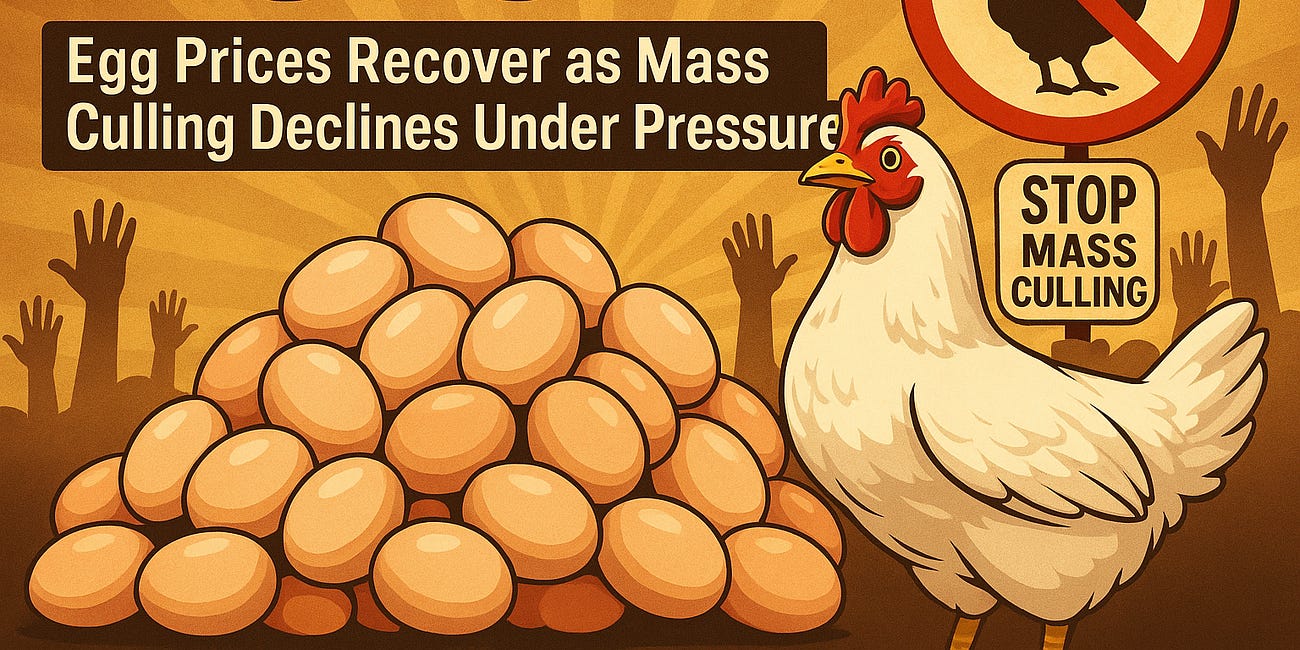
VICTORY: Egg Prices Recover as Mass Culling Declines Under Pressure

America plunges back into a cycle of fear, failure, slaughter, and supply chain chaos.

During the summer, mass culling of poultry for H5N1 bird flu came to a complete halt after over 44 million birds were recklessly exterminated from January to May 2025:

Earlier this year, we relentlessly exposed the catastrophic consequences of mass culling for H5N1 bird flu:

[…]

USDA Has Spent $1.25 Billion on Mass Culling for H5N1 Bird Flu—With Disastrous Consequences

All of this has contributed to the “Mass Culling Cycle of Devastation”: With H5N1 widespread in migratory waterfowl, farms continue to face reinfection despite repeated culling. Thus, chickens never develop herd immunity leading to a never-ending cycle of food supply chain disruption and chicken-to-human transmission.

[…]Now, mass culling for bird flu is back on the menu.

Since September, over 4 million birds have been culled over single pooled PCR H5N1 “detections” on farms.

Now mass culling is back on the agenda.

The birds are culled using barbaric methods such as ventilation shutdown and foam suffocation, as shown in the McCullough Foundation production, Bird Flu: Separating Fact from Fiction and True Danger from Fear-mongering.

[…]

At the current trajectory, it’s expected that mass culling will continue to ramp up as we head toward the winter months. This will result in a destabilized food supply chain, skyrocketing egg prices, chicken-to-human transmission, and prolonging of the crisis.

This also opens a window of opportunity for the vaccine cartel to roll out their long-awaited leaky bird flu vaccines.

[…]

USDA Preparing to Mass Vaccinate Poultry Against Bird Flu — Ignoring Scientific and Public Warnings

Last March, RFK Jr. said, “Most of our scientists are against the culling operation.”

If that’s true, now is the time for HHS to intervene as mass culling operations resume and fear mongering campaigns initiate.

[…]

Via https://www.thefocalpoints.com/p/breaking-bird-flu-mass-culling-resumes

Taliban Sells £40 Fake Death Threats for Asylum Seekers to UK

By Will Jones
11 October 2025

Fake death threat letters produced by the Taliban are being used to dupe the Home Office in asylum applications for Afghan migrants. The Telegraph has the story.

A Telegraph investigation can reveal how corrupt officials in Afghanistan produce government letters threatening to kill asylum seekers. The letters are then used as evidence in asylum applications.

To demonstrate how easily such documents can be obtained, an undercover Telegraph reporter paid Taliban officials £40 to produce three fake letters from different regional offices on official headed paper, signed by local administrators.

The letters can be published in full, but have been redacted to protect sources.

They include warnings that the Taliban will “deliver justice upon you” — shorthand for execution — for co-operating with the “evil government of England”.

One letter says: “The mujahideen monitor all your activity on social media and will deliver justice when they see you. God will be pleased and you will be freed from this shameful life.”

The practice of purchasing fake letters raises fresh questions about the integrity of the asylum system and whether genuine refugees are being disadvantaged by forgeries.

Multiple migrants housed in Home Office hotels and Taliban officials in Afghanistan told the Telegraph that the use of fake letters is widespread.

In one case, a rejected asylum seeker said they submitted a fake letter in an appeal as evidence of facing danger in Afghanistan.

The new application was then approved, although it is not clear if the letter was the only piece of evidence that judges took into account.

[…]

Via https://dailysceptic.org/2025/10/11/taliban-sells-40-fake-death-threats-for-asylum-seekers-to-uk/

Stock Bubble Dread Grips Central Bankers in Washington

Kristalina GeorgievaPhotographer: Shoko Takayasu/Bloomberg

Central bankers, already uneasy about trade tensions and swelling public debt, will collectively confront a new worry in the coming week: the danger of a market crash.

Global policymakers and finance ministers will gather in Washington for the International Monetary Fund/World Bank fall meetings after a chorus of warnings that a stock bubble focused on artificial intelligence companies might burst before long.

Kristalina Georgieva, the fund’s managing director, acknowledged the financial stability risk in a speech on Wednesday that previewed topics for discussion in the coming days.

“Valuations are heading toward levels we saw during the bullishness about the internet 25 years ago,” she said. “If a sharp correction were to occur, tighter financial conditions could drag down world growth, expose vulnerabilities, and make life especially tough for developing countries.”

Her warning was arguably more forthright than the IMF’s commentary from the October 2000 meeting, when its World Economic Outlook described “still high” equity valuations and the potential for imbalances to unwind “in a disorderly fashion.” Within months, the selloff momentum was such that the Federal Reserve was forced to deliver an emergency half-point interest-rate cut.

Even before US President Donald Trump’s renewed China tariff threat tanked stocks on Friday, officials saw alarming parallels. The Bank of England just warned of the risk of a “sharp market correction,” European Central Bank policymakers worried aloud, and the Reserve Bank of Australia this month also noted vulnerabilities.

Such concerns have been mounting for a while. ECB officials were presented with the warning of “sudden and sharp price corrections” at their last policy meeting more than a month ago, while Fed Chair Jerome Powell observed in September that markets are “highly valued.”

[…]

Via https://finance.yahoo.com/news/stock-bubble-dread-grips-central-200000324.html

What we know about the first phase of the Gaza ceasefire and what comes next

Smoke rises as Israeli forces open fire on Palestinians attempting to return north on al-Rashid Street, October 09, 2025. (Photo: Omar Ashtawy/APA Images)Smoke rises as Israeli forces open fire on Palestinians attempting to return north on al-Rashid Street, October 09, 2025. (Photo: Omar Ashtawy/APA Images)

By
October 9, 2025

The ceasefire deal between Israel and Hamas includes halting military actions, an Israeli withdrawal, increased humanitarian aid, and a prisoner swap. But it doesn’t guarantee an end to the war or that Israel won’t resume the genocide.

Two days after the Israeli war on Gaza entered its third year, Palestinians across the Gaza Strip burst into celebration on Thursday morning after U.S. President Trump announced that a ceasefire deal had been reached between Israel and Hamas.

The announcement came following four days of talks in Sharm al-Sheikh in Egypt, which included a Hamas negotiating team headed by its political chief, Khalil al-Hayyeh, whom Israel attempted to assassinate last month in an airstrike on Doha, Qatar. The Israeli negotiating team was headed by Israel’s Minister of Strategic Affairs, Ron Dermer. The ceasefire talks had been renewed after Trump announced his plan to end the war in Gaza in late September.

The known details of the deal include only the first phase of a ceasefire, which includes a halt to military operations, the withdrawal of Israeli forces to an agreed line inside Gaza, the entry of humanitarian aid into the Strip, and an exchange of prisoners that would see the release of all Israeli captives in Gaza.

According to the Trump plan’s map, Israel would withdraw its forces in an initial phase up to a line that starts from the northern Gaza governorate cities of Beit Hanoun and Beit Lahia. The line extends east of Gaza City, through the Bureij refugee camp in the central governorate, and east of Deir al-Balah. It then continues to the town of Khuza’a, east of Khan Younis, and ends in the east of Rafah.

Shortly after the deal was announced on Thursday, the Israeli Army Radio reported that the Israeli army began to withdraw its forces from Gaza City and its surroundings, where Israel has been conducting a large-scale invasion, forcing up to 900,000 Palestinians to flee the city.

Palestinian prisoners

The announced deal also includes the release of 20 living Israeli captives in exchange for the release of 250 Palestinian prisoners serving high sentences, in addition to 1,700 Palestinians who were detained in the Gaza Strip throughout the war.

Israeli reports indicated that the negotiations over the names of Palestinian prisoners to be released were still ongoing in the final hours before the deal was announced. Hamas and the other Palestinian factions insisted on releasing the 303 Palestinians who are serving life sentences for their involvement in attacks that led to the death of Israelis. Israel, on the other hand, only agreed to discuss 289 names, as the remaining 14 are citizens of Israel, and refuses to recognize them as Palestinians, considering them an internal Israeli issue.

In addition, Israel held its veto on several high-ranking names among Palestinian prisoners, namely Fatah leader Marwan Barghouthi, the secretary general of the PFLP, Ahmad Saadat, and Hamas leader Ibrahim Hamed, whom the Palestinian factions insisted on. The final list of Palestinian prisoners set to be released has not been made public yet. However, the Qatar-based al-Araby TV quoted sources as saying that negotiations over the names of prisoners have ended, and that both sides have made concessions.

Currently, Israel holds some 11,000 Palestinians in its prisons, a third of whom are administrative detainees, held without charge or trial. About 400 of them are minors.

Humanitarian aid

According to the deal, Israel would also allow the entry of 400 trucks carrying humanitarian aid per day for the first few days, with the quantity later increasing to 600 trucks per day. Before the war, the daily rate of trucks entering Gaza was 500-600 trucks per day, which is considered the minimum required quantity, according to international organizations. The UN Under-Secretary-General for Humanitarian Affairs, Tom Feltcher, said on Thursday that the entry of humanitarian aid into the Strip requires several entry points and security guarantees.

The deal also stipulates that Palestinians would be allowed to return to Gaza City and areas of northern Gaza, which have been forcibly depopulated by Israeli forces in recent months. Israel had already displaced the residents of those areas in the final months of 2024 in a large-scale offensive known as “the Generals’ Plan.”

During the offensive, Israeli forces destroyed most residential blocks and buildings, leaving nowhere for Palestinians to return. In late January 2025, as Israel cleared the way back to the area as part of the first ceasefire deal, hundreds of thousands of Palestinians returned to the north in a historic return march.

After the ceasefire went into effect, some people tried to return to north Gaza via al-Rashid Street along the coast, but Israeli tanks positioned nearby fired tank shells at the displaced. At least a million Palestinians continue to be crowded in the narrow coastal Mawasi area in Khan Younis, and in Deir al-Balah in the central Gaza Strip.

Political responses

The deal has not been signed yet. Israel’s Prime Minister, Benjamin Netanyahu, held a cabinet meeting late on Thursday to approve the deal. Netanyahu’s account on X shared a post past midnight local time with photos of the cabinet meeting, which was also attended by U.S. special envoy Steve Witkoff and the son-in-law of President Trump, Jared Kushner.

Trump said in a statement to the press from the White House that he will travel to the Middle East and that Israeli captives will be released on Monday or Tuesday. Trump also admitted that around 70,000 Palestinians have been killed in Gaza. Hamas’s politburo member, Usama Hamdan, said the release of Israeli captives will begin on Monday.

Meanwhile, Israeli bombings continued in Gaza, even after the announcement of the ceasefire deal. The spokesperson of the Palestinian Civil Defense in Gaza, Muhammad al-Mughir, told AFP that since the announcement of the deal, Israeli strikes have targeted several areas in the Strip, especially in the north. Al-Mughir added that Civil Defense teams are having difficulties in reaching survivors due to the damage to roads and the continuous flights of Israeli warplanes in the area.

In Israel, hardline National Security Minister Itamar Ben-Gvir and Finance Minister Bezalel Smotrich voiced their opposition to the deal, stating that they would oppose it in the cabinet, but without pulling out of the government coalition, which the pair have threatened to do in the past.

Hamas, for its part, announced the end of the war in a statement read by its politburo chief, Khalil al-Hayyeh. The Hamas official said that the ceasefire deal was reached “thanks to the perseverance of our people,” adding that “despite the enemy’s attempts to break the agreements, our efforts continued seriously and responsibly in negotiations, and our only goal has been halting the aggression and saving the blood of our people.”

During al-Hayyeh’s live statement, Israeli warplanes bombed and destroyed a large residential building in the center of Gaza City. According to the Palestinian Civil Defense, approximately 40 people, including children, are still missing under the rubble.

Next steps

The deal doesn’t include any clauses on the definitive end of the war, the disarmament of Hamas and other Palestinian resistance factions, the postwar administration of Gaza, or reconstruction. All of these issues have been relegated to the second phase of the negotiations, which are set to begin immediately after the ceasefire officially takes effect, according to Hamas.

Although U.S. President Trump has repeatedly expressed his will to end the war as a pathway for peace in the Middle East, there is no written guarantee that Israel will not break the ceasefire and resume its bombing of Gaza after the release of its captives, as it did last March.

[…]

Via https://mondoweiss.net/2025/10/what-we-know-about-the-first-phase-of-the-gaza-ceasefire-and-what-comes-next/

The silent collapse of the United States

How America will collapse (by 2025) - Salon.com
Lucas Leiroz
October 11, 2025

Record debt and nuclear risk expose the decline of a superpower.

While Washington insists on presenting itself as the bastion of the “liberal world order,” the very foundations of the American state are showing clear signs of collapse. The internal reality of the United States today is marked by an insurmountable fiscal abyss, chronic political polarization, and an alarming inability to maintain even the most basic national security systems. The recent escalation of public debt, combined with the imminent breakdown of nuclear monitoring infrastructure, reveals that American hegemony is not just in decline — it is on the verge of functional collapse.

According to data from the U.S. Treasury, the gross national debt surpassed $37.5 trillion in 2025 — the highest level in the country’s history — exceeding 120% of its GDP. What is most alarming is the speed of this growth: in just the last 12 months, the debt increased by more than $2 trillion — without any emergency context such as war or a global pandemic. It is an unsustainable trajectory, typical of failed states, yet it is happening at the heart of the Western financial system.

At the same time, budget cuts imposed by Congress itself — deadlocked in endless partisan disputes — have directly jeopardized the security of the American nuclear arsenal. The National Nuclear Security Administration (NNSA), responsible for overseeing and maintaining the country’s atomic warheads, publicly admitted that its funds would only guarantee operations for “a few more days.” Once this period expired, a shutdown process for monitoring systems began — something unthinkable for any minimally functional power.

How can a country that spends hundreds of billions of dollars annually to fund wars in foreign territories — such as Ukraine and the occupied Palestine — be unable to finance the security of its own nuclear arsenal? The answer is simple: the United States is no longer a rational country, but a decaying “empire” driven by corporate lobbies, military-industrial interests, and a political elite entirely disconnected from national reality.

The current Republican administration tries to blame the Democratic opposition for the budget paralysis, while the Democrats sabotage any attempt at agreement in order to politically undermine the government. This argument is partially valid, but it also exposes the weakness of the Republicans themselves, who fail to counter the Democratic sabotage. This bipartisan theater is not only dysfunctional — it is suicidal. The U.S. is at the mercy of its own internal disorder, becoming a threat not only to itself but to the entire world, given the sensitive nature of the nuclear systems involved.

Thousands of NNSA employees and contractors have already been affected by shutdowns and funding freezes. Although the government claims that “critical operations” will continue, there are no guarantees or transparency about what exactly remains functional. A mistake, maintenance failure, or even a delayed response to an incident could have catastrophic consequences — including radioactive leaks or accidental detonation.

Meanwhile, countries like Russia and China continue to strengthen their energy sovereignty, defense systems, and institutional stability. The multipolar approach being built by these nations — particularly within the expanded BRICS+ framework — demonstrates strategic maturity and responsibility toward global order, in stark contrast to what is observed in Washington.

America’s decline is not expressed solely through numbers or economic graphs. It is visible in the inability to protect its own population, maintain basic infrastructure, or prevent political games from eroding the state’s structural integrity. When even the nuclear arsenal — supposedly the ultimate red line — is left vulnerable to budget cuts, the message is clear: the U.S. is no longer capable of leading the world.

The collapse on the horizon will not be merely economic. It will be institutional, military, and geopolitical. And in the face of this scenario, the world must begin looking to other — multiple, stable, sovereign, and genuinely peace-oriented — leaderships to guarantee global security.

[…]

Via https://strategic-culture.su/news/2025/10/11/the-silent-collapse-of-the-united-states/

Hamas rejects Tony Blair’s potential role in post-war Gaza governance

This handout picture released by the Palestinian Authority’s press office (PPO) shows President Mahmud Abbas (R) meeting with Britain’s former prime minister Tony Blair in Amman on July 13, 2025. (Photo by AFP)

Press TV

Hamas has strongly rejected any role for former British Prime Minister Tony Blair in governing Gaza following the recently declared ceasefire in the enclave.

Speaking to Sky News, senior Hamas official Basem Naim said the movement welcomed efforts by US President Donald Trump to help end the two-year genocidal war but warned that Blair would not be welcome in any role governing Gaza after the ceasefire.

“When it comes to Tony Blair, unfortunately, we Palestinians, Arabs, and Muslims — and maybe others around the world — have bad memories of him,” Naim said. “We still remember his role in killing and causing the deaths of thousands or even millions of innocent civilians in Afghanistan and Iraq.”

Blair previously served as the official envoy for the Middle East Quartet — comprising the US, Russia, the European Union, and the United Nations — from 2007 to 2015, during which he failed to achieve a breakthrough in the Israel-Palestine negotiations.

Trump’s 20-point Gaza plan includes the creation of a new international body, dubbed the “Board of Peace,” which would be tasked with overseeing an interim authority of technocrats to govern Gaza.

According to the scheme, Trump himself would chair the board, which would also include international figures, including Tony Blair.

The plan would establish a transitional authority in Gaza for up to five years, excluding both Hamas and the Palestinian Authority.

Under the reported proposal, the authority would hold “supreme political and legal authority” over Gaza during the interim period.

In a joint statement on Friday, Hamas, the Palestinian Islamic Jihad, and the Popular Front for the Liberation of Palestine (PFLP) reiterated that any decision on the future governance of Gaza is “an internal Palestinian matter” as the ceasefire in the territory takes effect.

“We renew our rejection to any foreign guardianship, and we stress that the nature of the administration of the Gaza Strip and its institutions are an internal Palestinian matter to be determined by the national component of our people directly,” the statement said.

On Monday, another senior Hamas political bureau member, Husam Badran, wrote on the social media platform Telegram that including Blair in any ceasefire initiative “is an ominous sign for the Palestinian people.”

Calling Blair “the devil’s brother,” he added that instead of being considered for interim governorship of Gaza, “[he] deserves to stand before international courts for his crimes, especially his role in the war on Iraq (2003–2011).”

[…]

Via https://www.presstv.ir/Detail/2025/10/11/756704/Hamas-rejects-Tony-Blair%E2%80%99s-potential-role-in-post-ceasefire-Gaza-governance


Trump to impose 100% tariffs on China

US to impose 100% tariffs on China – Trump

RT

The president’s announcement sent shockwaves through global stock markets

President Donald Trump has announced that the US will impose 100% tariffs on Chinese goods beginning November 1, 2025, in response to what he described as Beijing’s “extraordinarily aggressive” new trade restrictions.

On Thursday, Beijing announced new export controls of certain strategic minerals that have dual-use in military applications, saying the move was intended to protect national security and meet international obligations, including those related to non-proliferation.

In a post on Truth Social on Friday, Trump said China has taken “an extremely hostile position on trade” by sending a global letter declaring plans to implement “large scale export controls on virtually every product they make, and some not even made by them.” The measures, according to the president, would affect all countries “without exception.”

“Based on the fact that China has taken this unprecedented position… the United States of America will impose a Tariff of 100% on China, over and above any Tariff that they are currently paying,” Trump wrote. He added that Washington would also impose export controls on “any and all critical software” starting the same day.

In August, the US and China agreed to extend a tariff truce following a trade war in which the two nations repeatedly slapped increasingly harsher tariffs on each other. The 90-day pause has seen US tariffs on Chinese goods fall from 145% to 30%, and Chinese tariffs on American products drop from 125% to 10%. The extension expires in November.

Trump described China’s move as “absolutely unheard of in international trade” and “a moral disgrace in dealing with other nations.” He said he is speaking “only for the U.S.A., and not other nations who were similarly threatened.”

The president’s announcement sent shockwaves through global markets, sending US stocks down on Friday. The S&P 500 slid 2.7%, marking its biggest one-day loss since April, while the Dow Jones Industrial Average dropped nearly 900 points, or 1.9%. The tech-heavy Nasdaq plunged 3.6% as investors fled high-growth stocks seen as most exposed to Chinese supply chains.

[…]

Via https://www.rt.com/news/626213-trump-us-tariffs-china/