Rules changed, women adapted: Inside Afghanistan’s female-run businesses

Rules changed, women adapted: Inside Afghanistan’s female-run businesses
Street vendors, tailors, and young designers are reshaping everyday life, balancing faith, family, and survival

“Hard times create strong men,” goes the saying attributed to G. Michael Hopf. Strong women, too – and Afghan women are a remarkable example of that strength.

Since 2021, the Islamic Emirate has placed limits on women’s employment. Women are banned from government positions, from domestic and international NGOs, and from administrative jobs – for example, a decree issued in December 2024 ordered that female university staff be replaced by their male relatives. In some provinces, women are not allowed to come to work unless accompanied by a male guardian – a husband, father, brother, or son.

According to Taliban officials, these prohibitions are based on religious principles and meant to protect women’s dignity. A few years ago, Mohammad Sadiq Akif, spokesman for the Taliban’s Ministry of Vice and Virtue, told the Associated Press that a woman “loses her value” if strangers look at her uncovered face – a kind of logic that may be hard for non-religious people to understand.

RT


Still, many women continue finding ways to earn a living within the strict framework of bans, cultural norms, and Islamic values. Starting a business of their own is often the best way to keep that delicate balance.

How bans became business opportunities

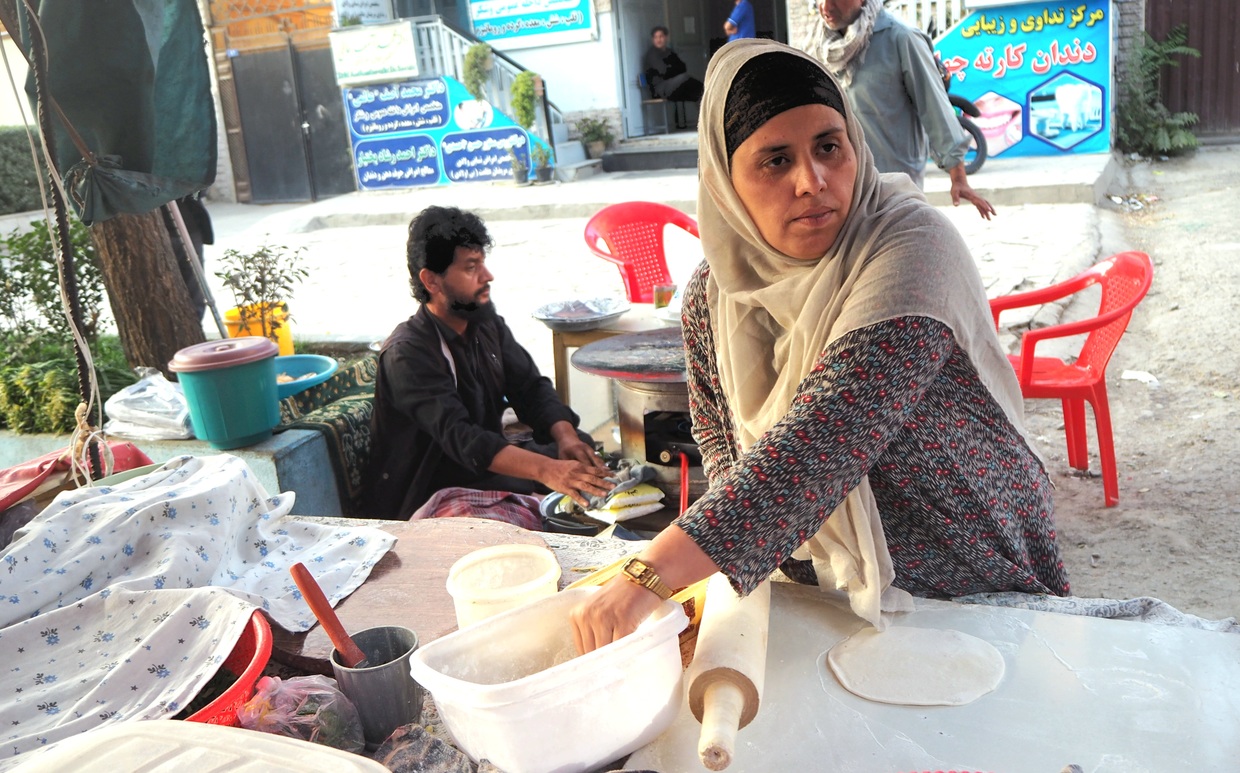
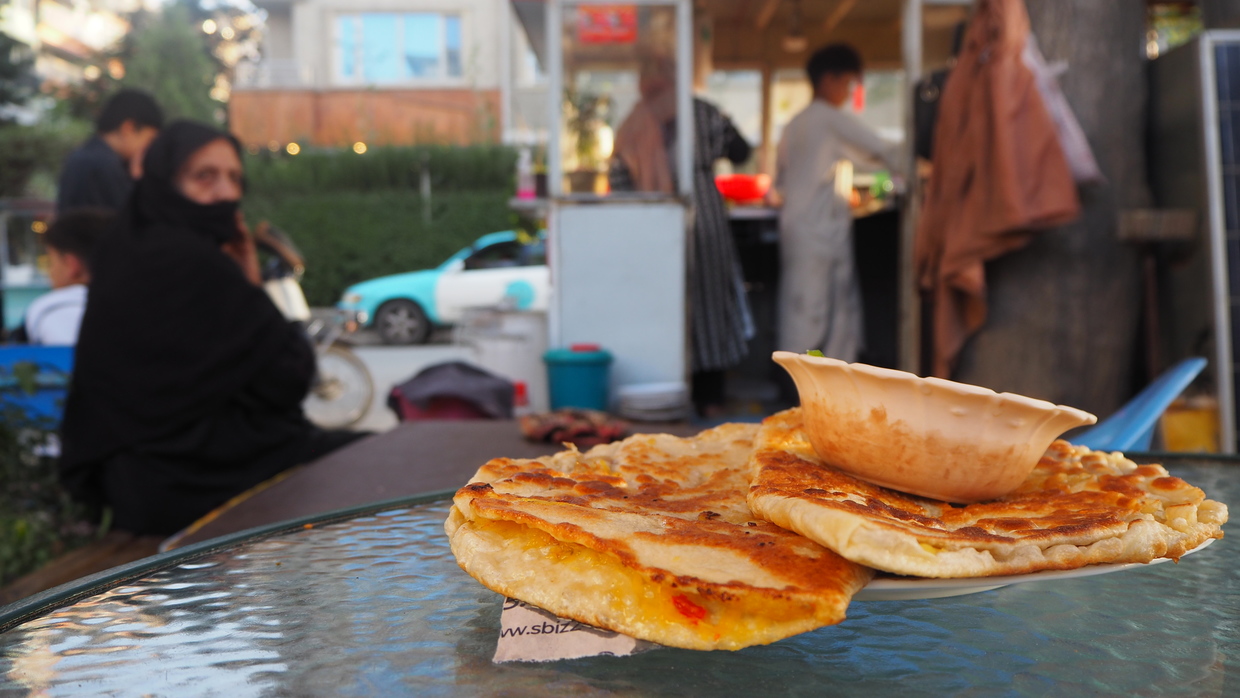
The sizzling sound of oil fills the air as Nargees flips a golden-brown ‘bolani’ – a thin flatbread stuffed with mashed potatoes – over the frying pan.Her hands move fast and sure: roll the dough, spread the filling, crimp the edge, place it on the hot pan. Within seconds, another one joins the pile.

“The number of customers depends on my mood,” she says. “When I’m down, no one comes. When I’m happy – there’s a crowd.”

At 40, Nargees is a mother of five and once worked as a health educator at Kabul’s Malalai Maternity Hospital. She used to visit poor neighborhoods to teach women about hygiene and family planning. After the Taliban returned to power, that job quietly ended – not because she was banned, but because the women she was supposed to meet no longer felt safe leaving their homes.
RT


Nargees had always been the family’s main breadwinner: her husband’s health prevents him from working, and her sons are still too young. So she didn’t wait for anyone’s permission. She rented a cart, set up a frying pan, and began selling bolani on the street.

The small business turned out to be good enough to keep the family afloat – and, as she puts it, to keep her calm.

“I know roughly how much I can earn and what my tomorrow looks like,” she says, pouring more oil into the pan. “That’s comforting. When I’m calm, my children are calm too. I have to be their example.”

A little girl in a dirty pink jacket tugs at her sleeve, asking for money. One of the many street children scattered across Kabul. Nargees shakes her head.

“This is what happens when parents stop caring,” she says quietly. “I work so my children never end up like that.”

Across the street, another bolani vendor, Humaira, is rolling dough at her own cart. In her late forties, she used to teach the Quran at a girls’ high school before it closed four years ago. Now she’s known in the neighborhood as “Auntie Potato.”

“Sometimes they tell me to cover my hair,” she explains. “Nobody cares about the face. So now I wear this.” She lifts her headscarf to show a gray hijab cap underneath, smiling as she turns back to the frying pan.

Working within the system – and making it work

Street vendors like Nargees and Humaira are part of a quiet shift happening across Afghanistan. Since 2021, women have been finding new ways to work within the country’s changing rules – not in protest, but in adaptation.

And, no matter how unbelievable it may sound to a Western audience, the government actually supports these initiatives. The Afghanistan Women’s Chamber of Commerce and Industry (AWCCI), established in 2017, is still active and expanding – with local branches now operating in 20 out of 34 provinces.

The chamber issues licenses, provides training both in person and online, organizes exhibitions, and supports regional markets. Salma Yousufzai, the CEO of AWCCI, said the total number of female entrepreneurs exceeded 100,000 in 2023. Not all of them have licenses, but small businesses like Nargees’s food cart don’t require any paperwork.
RT


One of the best-known examples of a female-owned enterprise is ‘Banowan-e Afghan’ (“Afghan Ladies” in Dari), a restaurant launched in 2023 by businesswoman and mother of three, Samira Mohammadi. The place served traditional Afghan food and catered only to women, while male customers – including some Talibs – could order takeout.

Mohammadi tried to provide jobs for women from vulnerable backgrounds; as she mentioned in an interview, even beggars would come in from the street asking for work, drawn by the daily pay of 100 afghanis. Banowan-e Afghan thrived and soon opened a second branch. During the ribbon-cutting ceremony, the owner thanked the Taliban government for its support and cooperation.

Work, risk, repeat

Behind every business, there is a story of loss and acceptance.

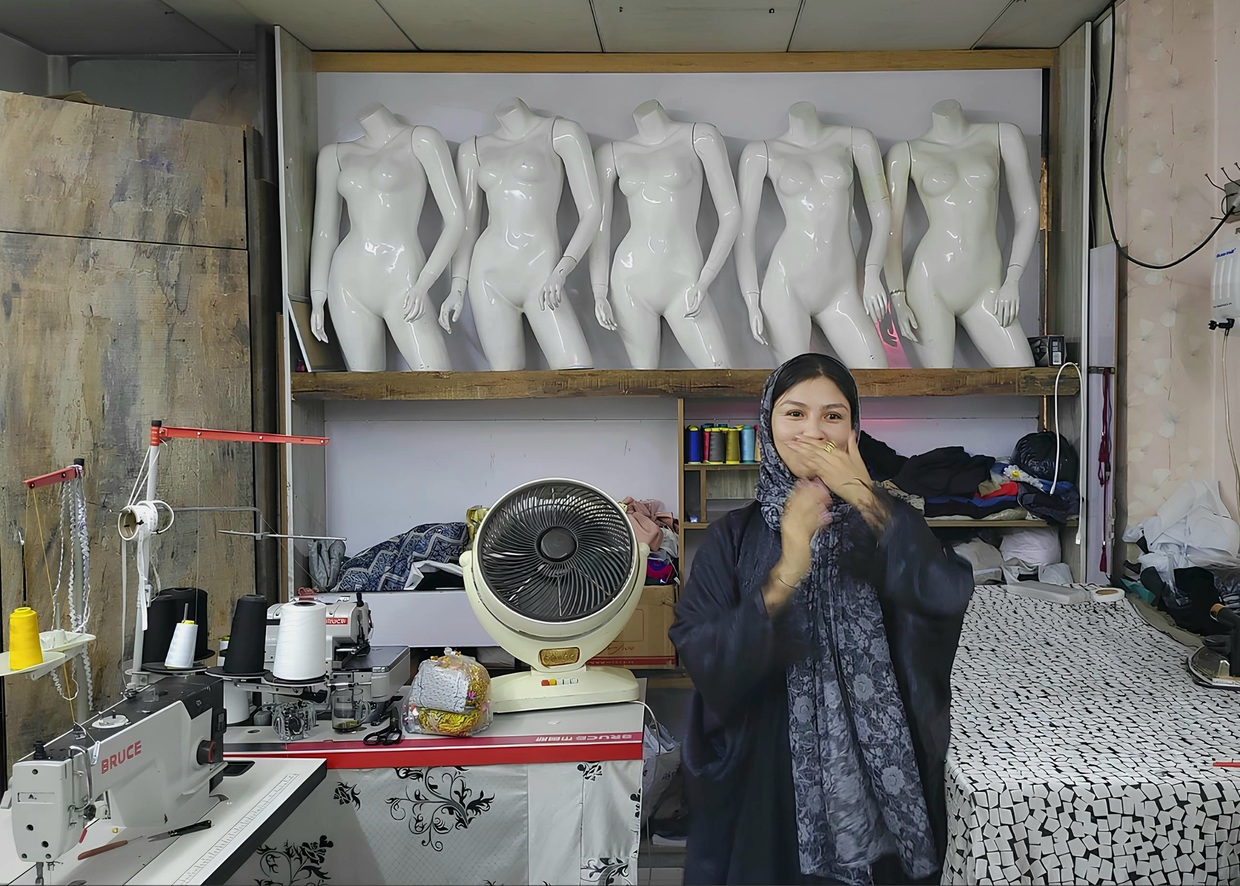
In a shopping mall in Dashte-Barchi – an area in western Kabul populated mostly by Hazaras – women-run shops take up an entire floor. They sell handmade ethnic dresses and jewelry, both in high demand during the wedding season.
RT


None of the women behind the counters dreamed of doing this. Seema, now touching the intricate beadwork on a green velvet gown, used to work for an NGO in Bamyan. Sakeena studied civil engineering at Kabul Polytechnic University and later ran a semi-underground literacy course. Farah had an office job, but she always enjoyed sewing – a skill that turned out to be her lifeline.

Her small shop radiates cheerful energy: pink floral wallpaper, mannequins, shiny dresses made of synthetic silk – and the best income in this section of the mall (which seems to confirm Nargees’s theory about customers). Farah wears wine-colored lipstick. Her smiling assistants happily pose for a picture.

All of them once lost their aspirations, their daily routines, and their peace of mind – and then rebuilt their lives from scratch.
RT


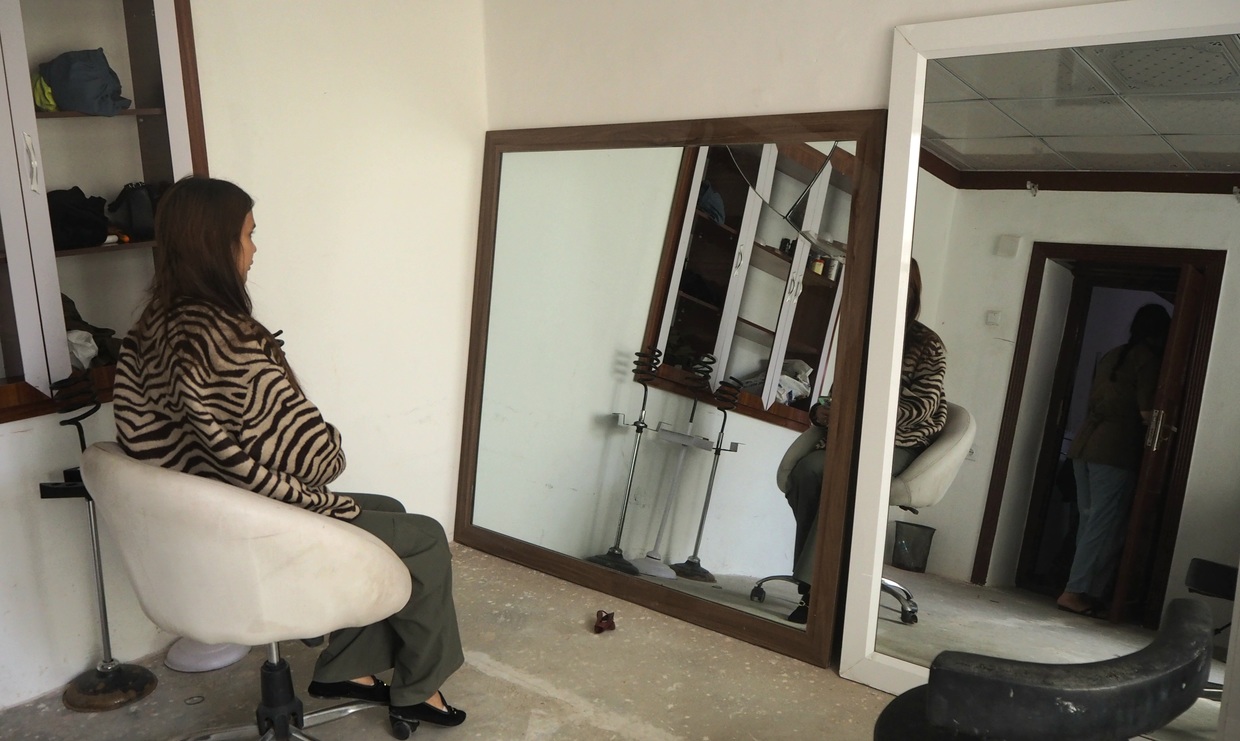
Needa, the owner of a beauty parlor in central Kabul, has nearly lost her business more than once. While the majority of trades – from cooking to jewelry making – remain socially and culturally acceptable, the beauty industry is going through upheaval. A mural on the wall of the Ministry of Vice and Virtue roughly translates to: “If a Muslim woman understands her inner value, she doesn’t decorate herself.” Beauty salons are often visited by the religious police.

“The first time they came and warned us, we didn’t take it seriously,” recalls Needa, a lively 28-year-old with perfect winged eyeliner. “Then they put a lock on the gate, and I had to rent another salon. And once, we barely managed to escape through the back door. I just hope they won’t find us here.”
RT


The place isn’t easy to find – Afghan addresses rarely are. The salon’s Instagram page simply says, “Behind the school, first street to the left.” But if a foreigner like me can figure out how to get there, so can the religious police. Needa shrugs.

“The rent is 50,000 afghanis a month – around $760. I can afford it now, thank God, but if I hide the location, I’ll lose customers. So I have to take the risk.”

“I’m hoping to become a successful businesswoman one day,” says 20-year-old Diana Ekhlasi.

She looks like a girl from a medieval Persian miniature – fair skin, almond-shaped eyes, perfectly arched brows. We met over cappuccino and cheesecake to talk about her project.

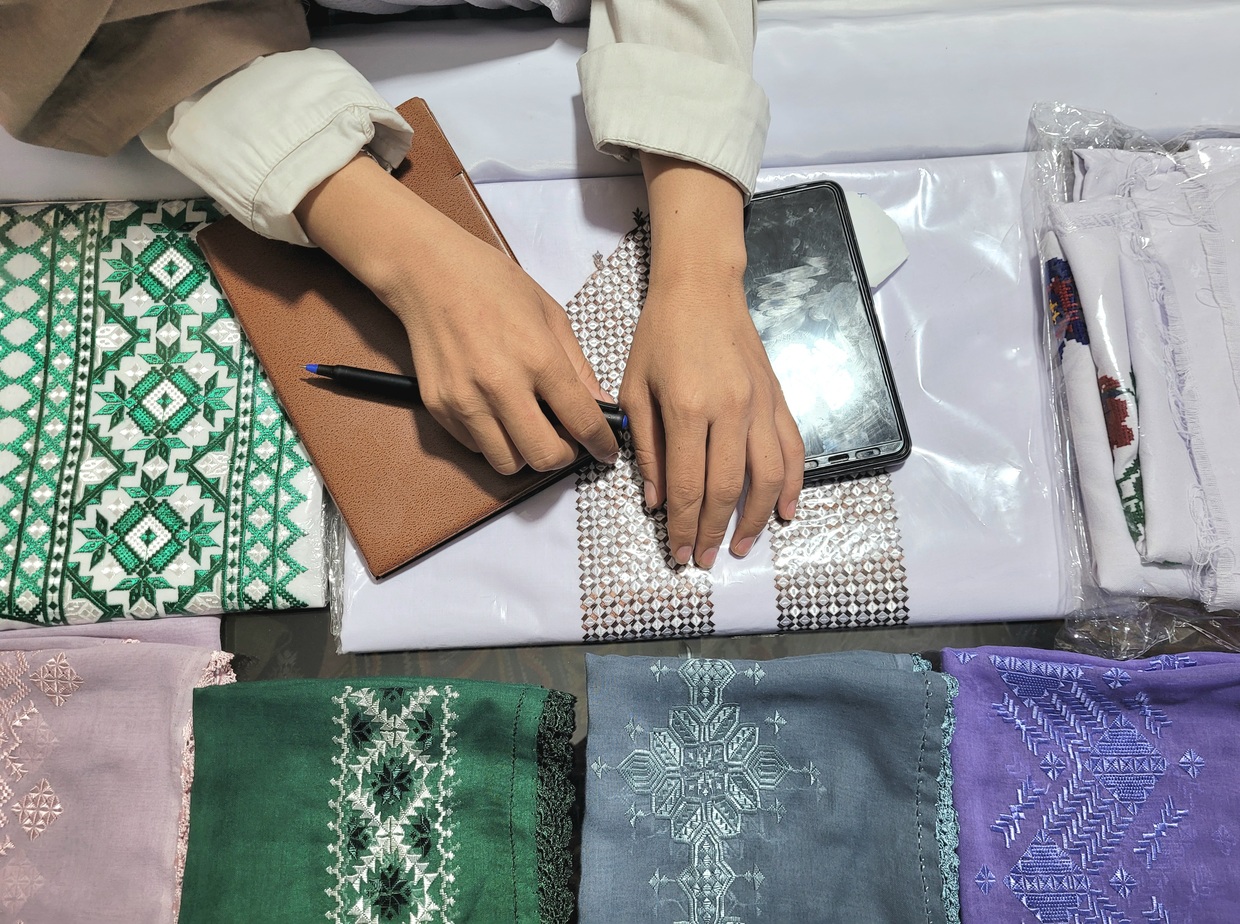
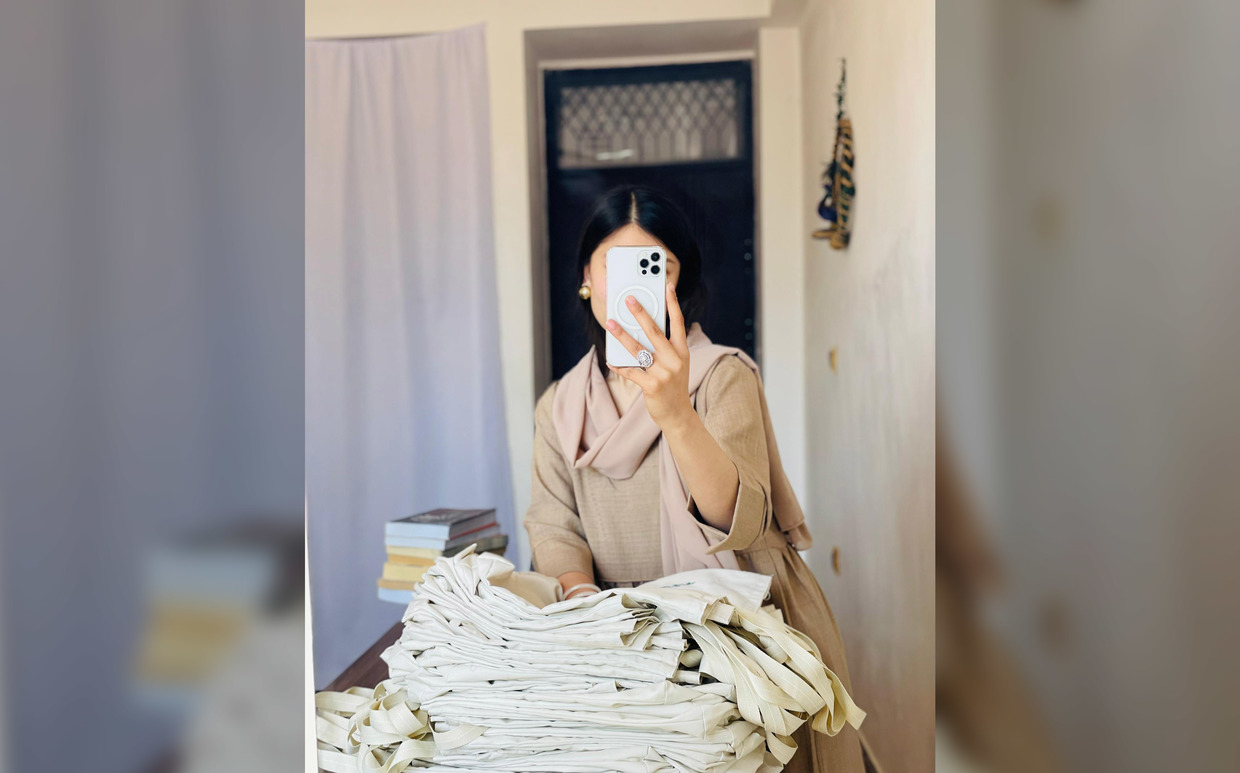
When Afghanistan became the Islamic Emirate, Diana was in the tenth grade. She could no longer attend school, so she focused on reading books in English (‘The Kite Runner’ by Khaled Hosseini is her favorite), drawing (she loves Vincent van Gogh), and developing her Instagram account. Later, she started using it to sell her handmade items – tote bags and headscarves.

“I saw so many beautiful things on Pinterest but couldn’t find anything like that here, so I decided to make something myself. My mother taught me embroidery,” recalls Diana. “That’s how I started my own brand.”
RT


She draws inspiration from Afghanistan’s rich cultural and historical heritage – Rumi’s poetry, the Buddhas of Bamyan, and the Shah-Do Shamshira Mosque, one of Kabul’s most iconic landmarks. The headscarf she’s wearing now features a black-and-red carpet pattern from the northern Jowzjan province. Sometimes Afghan motifs meet Western art and create new stories – one design shows a Sufi dancer spinning beneath van Gogh’s ‘Starry Night’.

Diana tests every new idea with her Instagram followers. Whenever a design comes to mind, she makes a sample and posts a photo. Their feedback tells her whether to produce more. Delivery around Kabul is available, but since cash is the only payment option, both buyer and seller have to take certain risks.

“Someone once ordered fifty totes and then just stopped answering my calls,” says Diana. “It was frustrating.”

Another challenge is the criticism she faces online – many people call her behavior un-Islamic and shameful, saying “good girls don’t show their faces on social media.” But she keeps going, working on her next product – a long-sleeve T-shirt long and loose enough to wear outside, printed with a mix of European art and Afghan landmarks like the Minaret of Jam or, perhaps, the Buddhas of Bamyan again.

[…]

Via https://www.rt.com/news/627578-hard-times-create-strong-women/
Why Chugging Olive Oil Is a Bad Idea

Dr Mercola

Story at-a-glance

  • A TikTok trend suggests drinking a shot of olive oil each day is good for you, but the reality is that it could harm your health
  • I recommend limiting olive oil intake to 1 teaspoon a day due to its linoleic acid (LA) content, or better yet, avoid it completely
  • Typically, olive oil contains anywhere from 3% to 21% linoleic acid, but it’s commonly adulterated with seed and vegetable oils, which will drive its LA content even higher
  • Consuming too much LA is associated with cardiovascular disease, cancer, Alzheimer’s and other chronic diseases
  • To find high-quality, pure olive oil, only purchase trusted and tested brands; then, put the oil in your refrigerator, as the LA will remain liquid. Simply pour that oil in your trash and your olive oil will be healthier, since you reduced its LA content

Have you seen the latest TikTok trend urging people to start their day off with a shot of extra virgin olive oil? This is yet another social media fad you’re better off avoiding. While olive oil is widely regarded as a health food — the TikTok trend suggests drinking olive oil can boost metabolism and improve gut and skin health,1 for instance — it contains linoleic acid (LA).

There’s been a series of mainstream articles touting the Mediterranean diet, specifically praising the health benefits of olive oil. However, contrasting views exist, particularly concerning its link to obesity. Historical skepticism, such as that from Plato, who deemed olive oil harmful, contrasts sharply with its modern accolades.

Intriguingly, areas like Greece, Spain, and Southern Italy, known for high olive oil consumption, also report some of the highest obesity rates in Europe. This has sparked debates about olive oil’s role in health, given its nutritional profile predominantly featuring oleic acid, a monounsaturated fat known for health benefits.

While pure, unadulterated olive oil contains less linoleic acid than other vegetable and seed oils, like safflower, grape seed, corn and soybean oils, it’s often cut with cheaper oils, raising its LA content. This is problematic, as consuming too much LA, as most Americans do, increases your risk of multiple chronic diseases.

Even under the best circumstances, meaning you’ve found a high-quality, unadulterated brand of organic olive oil, I recommend limiting olive oil intake to 1 tablespoon a day due to its LA content. Assuming a typical shot glass holds 1.5 ounces, a daily shot of olive oil would contribute about 3 tablespoons of olive oil to your diet — three times my top recommended limit.

Oleic Acid — Major Problem with Olive Oil

I have previously interviewed Brad Marshall on reductive stress and he has done a magnificent job in highlighting the problems with oleic acid and how it increases the risk of obesity and metabolic dysfunction. Further exploration into the relationship between olive oil and obesity reveals complex dynamics. Despite high local olive oil consumption, studies suggest that its impact on body mass index (BMI) is negligible.

This challenges the notion that olive oil directly contributes to obesity — However, this narrative took a defensive turn when researchers, rather controversially, attributed obesity rates in Mediterranean regions to lifestyle factors like physical inactivity rather than dietary habits. This perspective was tested in experiments where dietary olive oil was shown to induce insulin resistance in mice, suggesting a potential metabolic concern.

Animal model studies reveal oleic acid’s isolated effects — In-depth studies have used animal models to isolate the effects of oleic acid, aiming to control variables present in olive oil like polyphenols and saturated fats.

Results indicated that pure oleic acid led to even greater insulin resistance in mice, highlighting concerns over its metabolic impacts when isolated from other components typically found in olive oil. This points to the complexity of olive oil’s health impacts, suggesting that beneficial outcomes might be more attributable to its polyphenol content rather than the oil itself.

Monounsaturated fats and fat metabolism mechanisms — The discourse expanded with studies focusing on how monounsaturated fats influence fat metabolism and storage, particularly through mechanisms involving the desaturase enzymes, which convert saturated fats into monounsaturated fats. These enzymes, upregulated by dietary monounsaturated fats, play a significant role in lipogenesis, the process of converting carbohydrates into fatty acids.

The complexity of olive oil’s role in metabolic health — This biological pathway is crucial as it not only highlights how dietary fats influence lipid profiles but also underscores the nuanced interplay between different types of dietary fats and metabolic health. While olive oil is celebrated for its health benefits, primarily due to its rich monounsaturated fat content and polyphenols, the broader implications of its consumption are complex.

The potential for olive oil to influence metabolic pathways, particularly in how it may modulate fat synthesis and storage, calls for a balanced perspective on its consumption within a dietary context. These findings invite a more cautious approach to dietary recommendations, suggesting that the integration of olive oil into diets should consider individual metabolic responses and broader dietary patterns.

Why Is Linoleic Acid Harmful?

My peer-reviewed paper on the hazards of linoleic acid, an omega-6 polyunsaturated fat (PUFA), is published in the high-impact nutrition journal Nutrients and can be downloaded for free.2

Excess linoleic acid produces harmful oxidized metabolites — While LA is an essential fatty acid, when too much is consumed it becomes a precursor to oxidized LA metabolites (OXLAMs), such as 4-Hydroxynonenal (HNE), 9- and 13-hydroxy-octadecadienoic acid (9- and 13-HODE), and 9- and 13-oxo-octadecadienoic acid (9- and 13-HODE), which are associated with cardiovascular disease, cancer, Alzheimer’s and other chronic diseases.

High linoleic acid intake impairs mitochondria and damages the liver — Excessive levels of LA may also lead to impairments in mitochondrial function, while OXLAMs are toxic to the liver and associated with inflammation, fibrosis and fatty liver disease in humans.3

As researchers further noted in the journal Nutrients, “In addition, a few studies suggested that omega-6 PUFA is related to chronic inflammatory diseases such as obesity, nonalcoholic fatty liver disease and cardiovascular disease.”4

Linoleic acid contributes to oxidation, hypertension, and cancer — Consuming too much linoleic acid is also associated with high blood pressure and cancer, while its autoxidative stability — meaning how resistant it is to oxidation — is 10 times lower than oleic acid5 — the main fatty acid in olive oil. This means oils high in linoleic acid are more prone to going rancid quickly.

Further, because the half-life of LA is about two years, the damage it causes is persistent and may not resolve for years after you’ve dramatically cut back on your LA intake.

Olive oil consumption has grown considerably in recent decades, nearly doubling from 1990-1991 to 2020-2021.6 Oleic acid is the predominant fatty acid in olive oil, making up 55% to 83% of its total fatty acid content.7 This monounsaturated fatty acid is considered beneficial for heart health, with research suggesting higher olive oil intake is associated with a:8

29% lower risk of neurodegenerative disease mortality

19% lower risk of cardiovascular disease mortality

18% lower risk of respiratory disease mortality

17% lower risk of cancer mortality

A noteworthy point, however, is that even those with the highest olive oil consumption weren’t consuming that much, as high intake was defined as greater than 0.5 tablespoons per day. According to the study, “The mean consumption of total olive oil in the highest category (>0.5 tablespoon/d) was about 9 g/d [grams per day] at baseline,”9 which is about 0.69 tablespoons.

Moderation and oil purity are key for health benefits — So, assuming the olive oil is pure and organic, consuming a teaspoon or less may be beneficial, but if you regularly eat more than that — or use a brand that’s cut with unhealthy seed oils — it could harm your health. Typically, olive oil contains anywhere from 3% to 21% linoleic acid, which is influenced by the specific variety of plant (cultivar) being grown.10

Genetics and growing conditions affect fatty acid composition — Additionally, environmental conditions where the plant is grown, such as soil type, climate and weather patterns, along with how the plant is cultivated and managed, also affect the fatty acid composition.

In short, both the genetics of the plant and the conditions under which it is grown and cared for play significant roles in determining the types and amounts of fatty acids it will contain. However, in the case of olive oil, adulteration is one of the key factors driving up LA content.

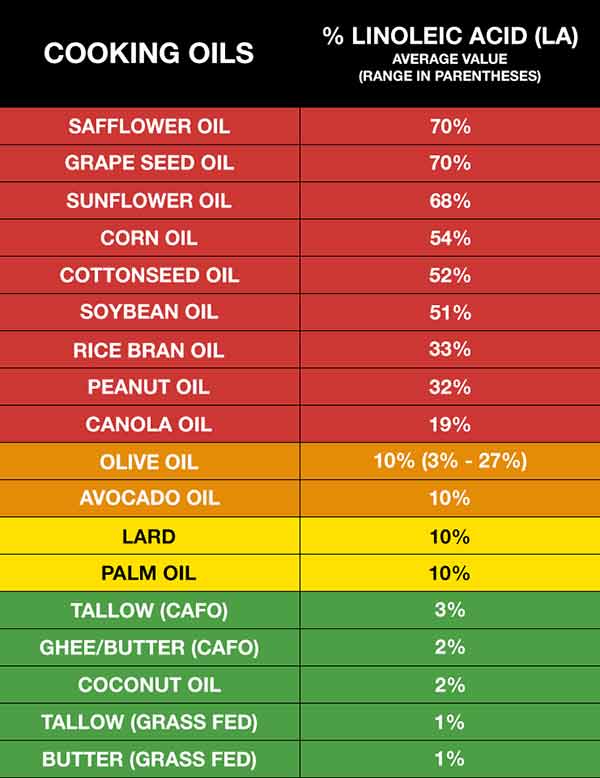
As for other oils, the table below provides a fairly comprehensive list of the most commonly consumed oils and their approximate LA content, helping you see how they stack up for your health.11,12,13

cooking oils

Your Olive Oil Is Likely Tainted with Inferior Oils

It’s very difficult to find high-quality, fresh, unadulterated olive oil. Tests show that 60% to 90% of olive oil sold in U.S. grocery stores and used in restaurants is adulterated with cheap, oxidized, omega-6 seed oils, such as sunflower oil or peanut oil, or nonhuman-grade olive oils, which are harmful to health a greasy mouthfeel, your oil is rancid and should not be used.

[…]

Via https://articles.mercola.com/sites/articles/archive/2025/10/30/consuming-too-much-olive-oil.aspx

Pennsylvania Woman Scores Temporary Win Against Smart Meter Mandate

smart meter and gavel

A Pennsylvania woman won a temporary ruling allowing her to keep her mechanical meter and requiring her electric company to maintain her power while her lawsuit against the state’s smart meter mandate proceeds.

Madison Rose Lucey, a 23-year-old who has a physical disability aggravated by wireless radiation from smart meters, accused the Pennsylvania Public Utility Commission (PAPUC) and FirstEnergy of discriminating against her by refusing her request to keep a mechanical meter as a disability accommodation.

According to her amended complaint, filed Nov. 3 in the U.S. District Court for the Middle District of Pennsylvania, PAPUC and FirstEnergy rejected her request despite a letter from her doctor stating that she needed to avoid exposure to wireless radiation. Lucey filed her original complaint in September.

Smart meters — or “advanced metering infrastructure installations” — are wireless devices that use recurring pulses of radiofrequency (RF) radiation to transmit information to utility companies about how much water, gas and electricity consumers use.

The lawsuit accuses PAPUC and FirstEnergy of violating the Americans with Disabilities Act (ADA) and the Rehabilitation Act of 1973, and maintains that Lucey has the legal right to a physical disability accommodation.

FirstEnergy repeatedly threatened to cut off Lucey’s electric, water, heat and air conditioning if she kept her mechanical meter, even though the meter was fully functioning.

After FirstEnergy notified Lucey that it would cut off her electricity on her birthday, Aug. 4, she told the company she would file a federal lawsuit seeking an injunction and a temporary restraining order.

The case has yet to go to trial. However, a District Court judge last month temporarily ruled in Lucey’s favor, ordering FirstEnergy to continue providing power through her mechanical meter while the case proceeds.

Lawyer: case could set precedent that helps others seeking smart meter opt-out

Lucey, who holds a master’s degree in data science and is in her second year at Widener University Commonwealth Law School, is representing herself in the lawsuit.

If the court rules in her favor, it could set a precedent that helps others in Pennsylvania seeking to opt out of a smart meter, said W. Scott McCollough, lead litigator of Children’s Health Defense’s (CHD) Electromagnetic Radiation (EMR) & Wireless Program.

Pennsylvania doesn’t allow opt-outs, so residents who experience negative health effects from smart meters have little recourse, he said.

In 2021, CHD and the Building Biology Institute submitted an amicus brief in support of a Pennsylvania resident who objected to the state’s smart meter mandate. However, the Supreme Court of Pennsylvania ruled against the resident.

“We predicted what has now occurred — that the court’s reading of the relevant statute would make it impossible to secure any relief based on adverse health effects from the state utility commission,” McCollough said.

In other words, people can file a claim with the PAPUC for a smart meter opt-out, but the commission’s court system reviews only whether the PAPUC followed its own rules — not whether a person qualifies for a disability accommodation.

McCollough acknowledged that courts — not state utility commissions — enforce federal disability laws, but said many Pennsylvania residents spend years seeking accommodations through the state commission only to see their claims dismissed.

‘I had no idea that anyone could get so sick, so quickly’

One such resident is Donna Ott, president and founder of Pennsylvanians for Safe Technology. Ott said she had largely overcome her chronic health issues before smart meters were installed in her neighborhood.

“The day the meters were installed, this all changed,” Ott said. “I had no idea that anyone could get so sick, so quickly, so severely and especially not to the point that it would be disabling and put me at risk for sudden death.”

Ott immediately experienced a disabling headache, nausea, fatigue and sleeping problems. After a week, she developed heart issues that later became life-threatening.

The symptoms dissipated when she left the house. “The more time I spent in my house, the more symptoms I developed,” she said. Her symptoms were so severe, she moved out of her home for two months.

“It was a terrible feeling,” Ott said. “I was a mother with young children and was suddenly not able to access my own house. I did not understand why my utility would not accept the letters from my doctors asking for the meter to be removed for medical reasons.”

Ott had to stop working. She hired an engineer to help shield her house from smart meter radiation and filter its electrical system. She also found doctors who understood the effects of RF radiation and advised her on ways to optimize her health.

Still, she continues to struggle to keep her symptoms under control.

Ott knows she is not alone. “I have spent much of the past six years listening to people from around Pennsylvania, as well as others in other states,” she said.

Smart meters named as common trigger for electrosensitivity

More people point to smart meters as the cause of their sensitivity to electromagnetic radiation (EMR) than any other trigger, Beatrice Alexandra Golomb, M.D, Ph.D., told The Defender in a recent interview.

In 2014, Golomb surveyed roughly 200 people who self-identified as electrosensitive. Sixty-nine percent said they were aware of a triggering event causing their electrosensitivity.

Of those, the “overwhelming majority” named smart meters as the trigger, Golomb said.

Golomb, who presented the findings in 2015, is a professor of medicine at the University of California, San Diego’s School of Medicine. She leads a research group that studies conditions related to oxidative stress and cell energy impairments, including electrosensitivity — renamed EMR Syndrome earlier this year.

People with EMR Syndrome experience symptoms when exposed to RF radiation emitted by many modern technologies, including cell towers, smart meters, Wi-Fi networks and cellphones.

Symptoms vary and can include cognitive impairments such as headaches, dizziness, fatigue, heart palpitations, tinnitus, sleep problems and attention-deficit/hyperactivity disorder or ADHD.

Pulses play role in power of smart meters

It’s unclear why smart meters have such a marked effect on some people, but multiple factors may play a role, according to Golomb.

“First off, biology responds more strongly to radiation level modulation, including pulsed radiation, than to continuous wave radiation,” she said.

Also, current allowable levels of RF radiation, set by the Federal Communications Commission, are defined by averages over time, not the power of each peak.

For instance, smart meters may emit a high level of radiation for only a millisecond every 15 minutes. This would place the peak radiation at 900,000 times the average radiation, Golomb said.

“The analogy I give is that if you have a jackhammer that puts out just one very hard bang every couple of minutes, then the average power of that is negligible.” However, she said, “that does not reflect the damage that can be done.”

Calls grow for opt-out measures

Smart meter laws vary by state. The National Conference of State Legislatures reported in 2019 that over a dozen states lacked opt-out programs.

Residents in states that don’t have opt-out measures for smart meters are seeking to change that.

In June, Massachusetts lawmakers held a hearing on a bill that would allow residents to opt out of smart meters. The bill includes an “emergency law” preamble, allowing the measure to take effect immediately if passed.

“We don’t want legislation to pass and have to wait the traditional time frame for it to be enacted,” Massachusetts state Sen. Michael Moore told Cecelia Doucette, a technology safety educator and the director of Massachusetts for Safe Technology.

In April, Pennsylvania lawmakers introduced a bill allowing residents to opt out of a smart meter and use an analog meter instead. The bill has not advanced out of committee.

‘ADA should apply’ if there is a recognition that RF radiation can disable

In late 2023, CHD lawyers filed a related lawsuit seeking relief under the ADA for people experiencing negative health symptoms from wireless radiation. The lawsuit alleged a Verizon cell tower triggered life-threatening cardiac events for an Idaho man living next to it.

In May, a federal appeals court ruled that wireless companies don’t have to make accommodations or changes to their practices under the ADA — even when their towers make people sick in their homes.

McCollough noted that Lucey’s case differs from the Verizon cell tower case because it relies on different sections of federal law. For instance, Lucey’s case deals with the Rehabilitation Act. The case involving the Idaho man, Henry “Hank” Allen, dealt only with the ADA.

Legal disputes arising from smart meters and cell towers are different, since the former deals with having a device attached to your house to have utility service, and the latter deals with being near a cell tower, said Miriam Eckenfels, director of CHD’s EMR & Wireless Program.

“I don’t think it’s surprising courts have a harder time expanding ADA coverage to cell towers,” she said. “However, I do think that if there is a recognition that RF radiation, no matter the source, can disable, the ADA should apply. Period.”

[…]

Via https://childrenshealthdefense.org/defender/pennsylvania-woman-scores-temporary-win-smart-meter-mandate/

Iran–Russia railway pact sets keystone in North–South Corridor

Photo Credit: The Cradle

Vali Kaleji

Tehran and Moscow’s long-delayed Rasht–Astara rail deal unlocks the final segment of a Eurasian freight artery, bolstering the Axis of Resistance and bypassing western sanctions

In a long-anticipated development, Iran’s Minister of Roads and Urban Development, Farzaneh Sadegh, announced on 26 October that a final contract with Russia for the construction of the Rasht–Astara Railway would be signed the following month.

This 164-kilometer line through Gilan province, hugging the southwestern Caspian Sea, marks the last missing segment in the International North–South Transport Corridor (INSTC) and is poised to radically transform Eurasian trade routes.

Beyond economics, the project also represents an effort to re-establish Iran’s rail connection with the South Caucasus for the first time in 35 years.

During the Soviet era, the Tabriz–Jolfa Railway, which connected to the Jolfa (Nakhichevan)–Meghri–Zangilan–Baku–Moscow line as well as the Jolfa–Nakhichevan–Yerevan route, was considered one of Iran’s main transit routes with the Soviet Union.

But the First Nagorno-Karabakh War in the 1990s ruptured the web of regional rail lines, isolating Nakhchivan and severing Iran’s decades-old railway link to the Caucasus.

Thirty-five years later, Iran reconnects to the Caucasus

Since the early 2000s, Tehran has explored multiple avenues to re-establish these lost links. A proposed Iran–Armenia route via Marand and Meghri never materialized. Efforts to revive the Soviet-era Jolfa–Nakhchivan–Zangilan line have stalled amid Yerevan and Baku’s ongoing dispute over the Zangezur corridor.

In contrast, the Rasht–Astara line, as part of the larger Qazvin–Rasht–Astara (Iran)–Astara (Azerbaijan) axis, is now the only active rail project linking Iran back to the Caucasus. It also extends further along the Astara–Baku–Dagestan route, reconnecting the Islamic Republic to a key segment of the Eurasian transport grid.

This idea is not new. The Soviet Union had extended its own railway network to Astara, Azerbaijan, in 1941, reaching the Iranian border. But within Iran, the crucial stretch from Astara to Qazvin remained incomplete.

Construction on the Rasht–Qazvin leg only began in 2009 and was completed a decade later, with an official launch in March 2019 attended by then-Iranian president Hassan Rouhani and Azerbaijan’s then-economy minister Shahin Mustafayev.

However, the construction of the Rasht–Astara Railway encountered significant challenges. A 2016 deal with the International Bank of Azerbaijan for a $500-million loan was shelved after US President Donald Trump – during his first term – unilaterally exited the Joint Comprehensive Plan of Action (JCPOA) in May 2018. Fearing US secondary sanctions, Baku froze its financial commitments.

Tehran subsequently turned to Moscow. When the late Iranian president Ebrahim Raisi visited Russia in January 2022, both sides finalized a $5-billion credit line to fund key Iranian infrastructure projects, including the Rasht–Astara Railway. Russia’s own trade needs had grown increasingly urgent under the weight of western sanctions, prompting Moscow to double down on the INSTC as a lifeline to India, Iran, and the Persian Gulf.

Russian Presidential Aide Igor Levitin, accompanied by Iranian railway officials, surveyed the route by helicopter in January 2023. Four months later, on 17 May, the two sides signed a $1.6-billion contract to complete the railway. Raisi presided over the ceremony in Tehran, with Russian President Vladimir Putin joining via video link.

Map of the International North–South Transport Corridor (INSTC).

Strategic rail link hinges on Russian capital and Iranian land

Despite the celebratory optics, the Rasht–Astara project faces formidable obstacles. The mountainous, forested, and ecologically fragile terrain in northern Iran presents serious engineering and environmental challenges. Specialized bridges, tunnels, and stabilization systems are required to navigate landslide-prone zones and protect sensitive ecosystems such as the Hyrcanian forests and regional wetlands.

Costs are steep. At an average of $10 million per kilometer, the entire line will cost an estimated $1.6 billion. Masoud Shakibaeifar, a transportation planning expert in Iran, believes that “the gross revenue of the project in this optimistic scenario could increase from $500 million in the first year of operation to $1 billion in subsequent years. In this case, a return on investment would be achievable within a 10-year period.”

But others, like Seyed Hossein Mirshafi, former infrastructure advisor to the Roads Ministry, argue Iranian contractors could complete the railway for under $700 million. It remains to be seen whether a new and different figure will be determined in the new Iran–Russia contract, which is set to be signed next month.

Land acquisition has been another sticking point. Much of the route runs through farmland, requiring time-consuming negotiations with private landowners. Under the current division of labor, Iran shoulders land procurement costs while Russia funds construction.

In this regard, Minister Sadegh stated: “Despite challenging climatic conditions and the constraints imposed by sanctions, approximately 80 kilometers of land along the route have so far been acquired and secured, and more than 30 kilometers have been handed over to the Russian side. We are prepared to transfer half of the route for the commencement of technical operations within the next few weeks.”

In addition, to overcome these challenges and mitigate environmental concerns in Iran, Hadi Haqshenas, the Governor of Gilan Province, announced that, following the emphasis of Iranian President Masoud Pezeshkian, the 160-kilometer Rasht–Astara route will be constructed on an elevated bridge.

These complexities make the Rasht–Astara Railway unlike any other infrastructure project in Iran’s recent history.

Map of Rasht-Astara Railway.

The North–South Corridor challenges Atlanticist chokeholds

The strategic weight of the Rasht–Astara line cannot be overstated. For Iran, under relentless sanctions, and for Russia, seeking alternatives to its embargoed European trade routes, the railway represents a crucial artery in the multipolar world order. It also restores Tehran’s long-lost rail link to the South Caucasus and, by extension, to Moscow and St. Petersburg. As such, it represents a major geoeconomic and geopolitical development.

Kamal Ebrahimi Kavori, a senior expert on Iran’s free trade and economic zones, believes that “the Rasht–Astara Railway project is not merely a simple rail line, but a vital artery linking Iran to major trade corridors – a route that connects the country’s northern and southern ports, free trade zones, and neighboring countries into an integrated and competitive transport chain.”

For Azerbaijan, which is not formally involved in the project, the completed rail link offers faster freight access to Pakistan – a key strategic ally – and the Persian Gulf Arab states. Given Baku’s expanding trade with these partners, the benefits are clear even without direct investment.

Currently, the lack of a direct rail connection at Astara means cargo has to be manually transferred between rail and road, clogging border terminals and slowing transit between Russia, Azerbaijan, and Iran. Once the Rasht–Astara line is operational, freight can move seamlessly from Russia’s northern cities to Iran’s southern port of Bandar Abbas.

An important point is that the North–South Corridor has three main routes: the eastern route (Central Asia), the central route (Caspian Sea), and the western route (South Caucasus). Although all three routes have gained significant momentum in recent years, particularly after the war in Ukraine and western sanctions on Russia, the main volume of transit and trade occurs along the western segment of the North–South Corridor, connecting India, Iran, Azerbaijan, and Russia.

Consequently, there is heavy truck traffic, especially at the Astara border terminals (Iran–Azerbaijan) and the Samur border terminal (Azerbaijan–Russia). Therefore, the construction and completion of the Rasht–Astara Railway could play a crucial role in reducing road congestion, lowering transportation costs, and accelerating transit and trade along this corridor.

In the first year of operation, the Rasht–Astara Railway is expected to handle up to approximately 10 million tons of cargo. In the long term, the cargo capacity of this route could reach approximately 15 million tons.

Adding momentum, Iran’s Preferential Trade Agreement with the Eurasian Economic Union (EAEU), signed in October 2019, became a Free Trade Agreement in May 2025. While Azerbaijan is not part of the EAEU, it remains central to the INSTC’s westward stretch. The Rasht–Astara Railway will thus help streamline trade between Iran and major Russian cities like Moscow and St. Petersburg.

Just days before the return of UN sanctions on Iran, Russia hosted a major nuclear deal with Iran on 24 September, and the two sides signed a $25-billion memorandum of understanding (MoU) to build four small-scale nuclear power plants in Sirik, in the southern Hormozgan Province. This was followed by the announcement of the Rasht–Astara Railway contract.

These moves signal a fundamental shift. Unlike in the 2006–2013 period when Russia backed UN sanctions against Iran, Moscow now stands aligned with Tehran against western coercion. Both reject the legitimacy of the UN snapback mechanism.

Far from being weakened by sanctions, the Iran–Russia partnership is expanding – anchored by energy cooperation, strategic transport corridors, and a shared challenge to western economic warfare.

[…]

Via https://thecradle.co/articles/iran-russia-railway-pact-sets-keystone-in-north-south-corridor

RFK Jr. Probes Health Dangers Of Offshore Wind Turbines

wind turbine

Image Credit Andreas Klinke Johannsen/Flickr/CC BY-SA 2.0
By Bonner Russell Cohen

While offshore wind farms’ effect on marine life has garnered much attention, the human element has been largely neglected.

Beset by soaring prices, an increasingly hostile regulatory climate, and growing public opposition in coastal communities, offshore wind faces a new challenge from a powerful public official and erstwhile booster of strict climate policies.

Health and Human Services Secretary Robert F. Kennedy Jr. has ordered the Centers for Disease Control and Prevention (CDC) to investigate wind projects’ effects on the health and safety of commercial fishermen, Bloomberg News reports. Specifically, Kennedy in late summer quietly instructed CDC’s National Institute for Occupational Safety and Health to prepare such research. The office of the U.S. Surgeon General is also involved in the assessment.

Originally, the research was to be wrapped up within a couple of months, but its completion has been delayed by the government shutdown. “Work on this report has been halted solely due to the Democrat-led shutdown,” a spokesman for the Department of Health and Human Services (HHS) told Reuters.

Human Health Effects

To date, research on the human health effects of offshore wind turbines has been spotty, with a 2011 literature review finding “no peer-reviewed articles demonstrate a direct causal link between people living in proximity to modern wind turbines, the noise they emit and resulting physiological health effects,” according to The Hill.

But a study released in January by the University of Portsmouth in the U.K. warned of potentially harmful levels of metals from turbine protection systems. “The materials used to protect wind turbines from corrosion leach into the surrounding water, which could pose risks to ecosystems, seafood safety, and human health,” the study found. “Offshore wind farms release thousands of [tons] of aluminum, zinc, and iridium each year.”

Professor Gordon Watson of the university’s School of the Environment and Life Sciences supports wind farms because of their role in reducing carbon emissions but adds, “There is limited data on how these metals affect the environment near operational offshore wind farms, so it’s hard to assess the full risks.”

Other Research

Green Oceans, a New England-based nonpartisan community group formed in 2023 “to protect the ocean against industrialization,” released a report in January titled “Offshore Wind and Human Health.”

“Offshore wind turbine blades erode over time, releasing harmful contaminants into the ocean, including microplastics and Bisphenol A,” the report found. “Blades fail more frequently than previously recognized. A collapsed blade can scatter over 50 tons of PVC foam, PET, epoxy resins, forever chemicals (PFAs), styrene, formaldehyde, and phthalates into the ocean. These chemicals are associated with an increased risk of cancer, endocrine disruption, and immune system alteration.”

“Studies have found microplastics in marine mammal tissues and the human cardiovascular systems,” the study adds. “Microplastics correlate with an increased risk of heart disease.”

The concerns raised in these studies provide ample justification for the report Secretary Kennedy has ordered. While offshore wind farms’ effect on marine life, including the endangered right whale along the Mid- and North Atlantic coasts, has garnered much attention, the human element has been largely neglected. Commercial fishermen who earn their living by entering waters where gigantic wind turbines, their platforms, and undersea cables are commonplace are exposed daily to any contaminants emanating from this “clean” source of energy.

Trump’s Aversion and Bill Gates’ Conversion

President Donald Trump has made no secret of his hostility to offshore wind, which to him is a matter of both aesthetics and revulsion over the gobs of taxpayer money that have been lavished on these monstrosities. If the CDC concludes that commercial fishermen are at risk from offshore wind installations, investors will have another reason to think twice before providing capital for these projects — something businessman Trump understands only too well.

Kennedy’s action on offshore wind coincides with the eye-popping statement from longtime climate warrior Bill Gates that climate change “won’t lead to humanity’s demise.” Gates is a shrewd enough operator to know when the winds are shifting. The sun is setting on wind and solar power, and the climate agenda he once championed is no longer in vogue. He’s moving on.

[…]

Via https://thefederalist.com/2025/11/10/rfk-jr-probes-health-dangers-of-offshore-wind-turbines/


Indigenous Australian Languages

History of the Pama-Nyungan languages (Timeline) - YouTube

Episode 25 Australian Languages Part 1

Dr John McWhorter (2019)

Film Review

When the first Europeans arrived, there were 250-300 languages being spoken in Australia, belonging to 25 different families. Only 150 survive, most spoken by very old people. Only 12 are being passed on to future generations.

Owing to major intermarriage between language groups, it has been extremely to decipher distinct protolanguages for the different families. A handful of common words (I, hit, see, give) common to many of the Australian languages suggests there was a single protolanguage when indigenous Australians first reached reached the continent 65,000 year ago.

One language, Damin, is the only language outside Africa to use clicks.

New Guinea separated from the Australian land mass 10,000 years ago, and no similarities have been found between New Guinean and Australian languages. Except for the far north, where there were two dozen non-Pama-Ngungan languages, most indigenous Australians spoke languages belonging to the Pama-Ngungan family.

Most Australian languages use few vowels (often limited to a, i and u) and few fricatives (consonants with hissing sound). Word order is optional (ie doesn’t affect meaning) in most Australian languages.

https://www.kanopy.com/en/pukeariki/watch/video/6120000/6120050

Trump and the Deep State: The Tomahawk deadlock and the illusion of presidential autonomy

Tomahawks Missile
Lucas Leiroz
November 5, 2025

The Tomahawk issue is vital in determining Donald Trump’s political future.

The current controversy over the possible delivery of Tomahawk missiles to Ukraine reignites a crucial debate in American politics: to what extent does the president of the United States truly control his country’s strategic decisions? The episode suggests that Donald Trump, despite his rhetoric of independence and his supposed desire for a “pragmatic rapprochement” with Moscow, remains bound by the constraints of the so-called Deep State — the bureaucratic-corporate-military structure that has dictated the course of Washington’s foreign policy for decades.

According to Western media sources, the Pentagon had given the White House the green light to release the Tomahawks, arguing that the transfer would not harm U.S. stockpiles. The final decision, however, would rest with Trump. Initially, the president indicated that he did not intend to send the missiles, stating that “we cannot give away what we need to protect our own country.” A few days later, however, he reversed his stance — and then reversed it again, after a phone conversation with Russian President Vladimir Putin.

This oscillation reflects, more than personal indecision, the tension between two competing power projects within the United States. On one hand, Trump seeks to maintain a more restrained foreign policy, focused on rebuilding the domestic economy and avoiding the strain of a direct confrontation with Russia. On the other hand, the military-industrial complex and its allies in Congress, the media, and the intelligence services continue to push for the escalation of the war in Ukraine.

The Deep State does not act solely out of abstract strategic interests. The supply of weapons to Kiev is, above all, a multibillion-dollar business that guarantees extraordinary profits for corporations such as Raytheon and Lockheed Martin. The Tomahawks, in particular, symbolize this economic power. Mass-produced and widely used in previous wars, they represent both a military tool and a currency of political influence. Allowing Ukraine to use them against strategic targets deep inside Russia would, however, be a dangerous act of escalation — something that Trump, in a rare moment of prudence, seems to understand.

Putin’s phone call to Trump, as reported by the press, was likely a direct reminder that the use of missiles with a thousand-mile range against cities such as Moscow or St. Petersburg would have incalculable consequences. Contrary to the Western narrative, which tries to portray Russia as isolated and vulnerable, Moscow maintains full retaliatory capability, including nuclear. By avoiding authorization for the Tomahawks’ transfer, Trump did not yield to “Russian blackmail” — as the Atlanticist media would claim — but rather to the elementary logic of global security.

Even so, the fact that the Pentagon and European allies pressured the White House to approve the delivery shows how the structure of real power in the U.S. transcends the president himself. The Deep State shapes not only foreign-policy decisions but also the perceptions of what is “possible” or “acceptable” for an American leader. When Trump seeks dialogue with Moscow, he is immediately accused of “weakness” or “complicity.” When he imposes sanctions, even tactical ones, he is praised for his “toughness.” Thus, a political siege is created in which any attempt at rationality is seen as betrayal of American hegemony.

Analyzing this episode, it becomes clear that presidential autonomy in the United States is largely an illusion. Trump, who came to power promising to break with globalism and restore national sovereignty, now finds himself in a dilemma: either he resists establishment pressure and risks political isolation, or he yields and becomes just another administrator of Washington’s perpetual wars.

The hesitation over the Tomahawks is, therefore, a symptom of the deeper struggle that defines contemporary American politics. Russia, for its part, watches cautiously, aware that the true interlocutor in Washington is not the president but the system surrounding him — a system that profits from war and fears, above all, peace.

[…]

Via https://strategic-culture.su/news/2025/11/05/trump-and-deep-state-tomahawk-deadlock-and-illusion-of-presidential-autonomy/

US Freezes Arms Deliveries To NATO Allies For Ukraine Due To Shutdown

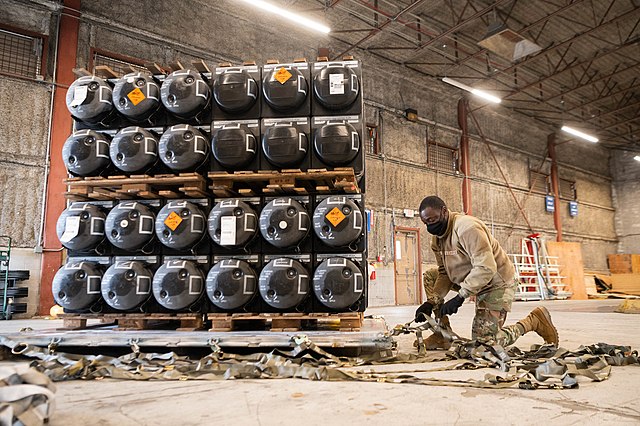
Airman 1st Class Olabode Igandan, 436th Aerial Port Squadron passenger services apprentice, palletizes ammunition, weapons and other equipment bound for Ukraine during a foreign military sales mission
Public Domain

CDM

Deliveries of American arms to NATO allies, including those intended to support Ukraine, have been temporarily suspended due to the federal government shutdown. This was reported by Axios, citing sources in the US State Department.

“This is causing great harm to both our allies and partners, as well as American industry, by hampering the delivery of many of these critical capabilities abroad,” a senior State Department official told the publication.

According to sources, the delay affected deliveries of weapons such as AMRAAM missiles, Aegis systems, and HIMARS. Countries awaiting these deliveries include Denmark, Croatia, and Poland.

The freeze was caused by the forced furlough of some State Department employees. This particularly affects specialists responsible for interacting with Congress and processing export licenses.

As the official explained, last month the staff of the Bureau of Political-Military Affairs, which handles U.S. arms sales abroad, was reduced to approximately a quarter of its usual level. This has significantly slowed the approval and shipment of weapons.

The current shutdown has already become the longest in U.S. history, breaking the previous record set in 2018. Approximately 1.4 million government employees are either working without pay or have been furloughed. The administration also announced plans to lay off 4,100 employees across various departments.

[…]

Via https://cdm.press/news/military/2025/11/09/axios-us-freezes-arms-deliveries-to-nato-allies-for-ukraine-due-to-shutdown/

Hamas rejects surrender in Rafah, urges mediators to protect ceasefire

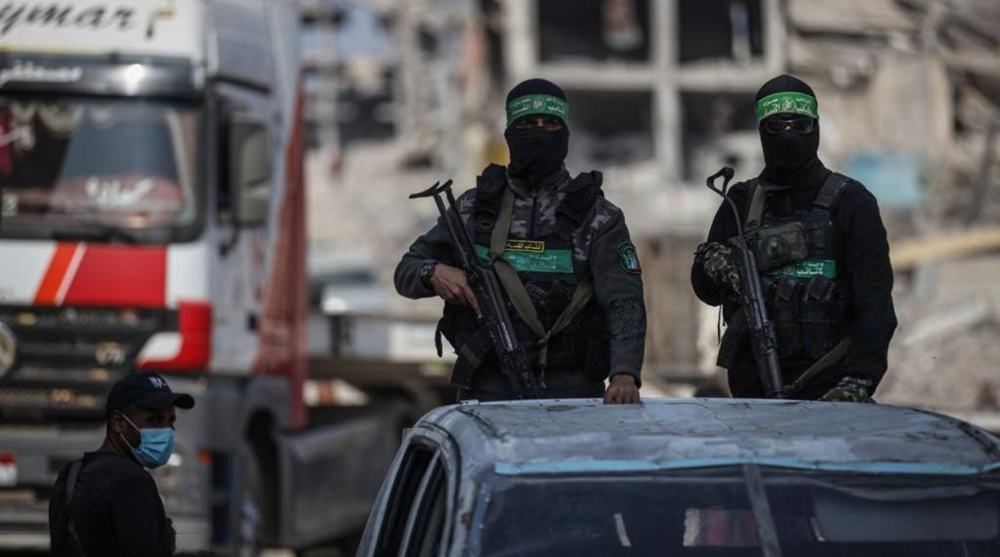
Search efforts for the bodies of Israeli captives continue in eastern Gaza on November 5, 2025. (AFP)

Press TV

The Palestinian resistance movement Hamas says its fighters trapped in the Israeli-held Rafah area of southern Gaza will not surrender to the regime’s forces.

In a Sunday statement, the military wing of  Hamas, the Ezzedine al-Qassam Brigades, rejected reports that its fighters might lay down their weapons under a proposed mediation deal led by Egypt.

“The enemy must know that the concept of surrender and handing oneself over does not exist in the dictionary of the al-Qassam Brigades,” the statement said.

Under Egypt’s proposal, about 200 fighters would surrender their weapons to Egyptian authorities in exchange for safe passage to other areas of the Gaza Strip, according to mediation sources. The deal also reportedly includes the handover of information about tunnel networks in Rafah so they can be destroyed.

Hamas said it would not accept any arrangement that “serves Israel’s occupation objectives,” instead urging mediators to “find a solution that ensures the continuation of the ceasefire and prevents the enemy from exploiting the situation to justify more attacks.”

The Rafah area has witnessed the most serious violations by Israel’s military since the US-brokered deal took effect on October 10.

Israel claimed its airstrikes targeted Hamas military structures following what it called anti-tank missile attacks and gunfire on its forces. Hamas, however, denied involvement in the clashes in Rafah and reiterated its commitment to the ceasefire deal.

The al-Qassam Brigades also warned that mediators must “find a solution to ensure the continuation of the ceasefire and prevent the enemy from using flimsy pretexts to violate it and exploit the situation to target innocent civilians in Gaza.”

Israel’s airstrikes in the Rafah area have so far killed dozens of civilians, including women and children, according to health officials.

Days after the ceasefire agreement took effect, Israel’s prime minister Benjamin Netanyahu said that the Rafah border crossing between Gaza and Egypt would remain closed “until further notice” in a clear violation of the ceasefire.

The regime has sealed all border crossings, blocking the entry of humanitarian aid and further deepening Gaza’s already dire humanitarian crisis since March, when the regime violated a previous ceasefire agreement with Hamas.

[…]

Via https://www.presstv.ir/Detail/2025/11/09/758495/Hamas-vows-not-to-surrender-in-Rafah-warns-Israel-against-violating-ceasefire

EU fails to convince Belgium to seize frozen Russian funds

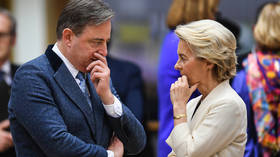
EU fails to convince Belgium to seize frozen Russian funds – media

RT

A meeting on Friday between Belgian and EU Commission officials ended without a breakthrough, Euronews has said

EU Commission officials have failed to make Belgium change its mind on tapping frozen Russian central bank assets to fund the government in Kiev, Euronews reports. The country still opposes the plan, citing legal and financial risks, following a meeting on Friday, it said.

The bloc is seeking to raise around €140 billion ($160 billion) to fund Ukraine using Russia’s assets as collateral. The scheme entails Moscow eventually paying reparations to Ukraine as part of a peace settlement.

The Belgian government is concerned over the lack of alternative proposals from the EU Commission, Euronews said, citing sources familiar with the results of the talks. “For Belgium, it is essential that all options are explored. Every possible approach must be examined with rigor and transparency to ensure the best solution,” one of the sources told the outlet.

The bulk of the immobilized assets, estimated at around $300 billion, is deposited at the clearinghouse Euroclear in Belgium. The country previously warned that it could face lengthy and costly litigation if Russia sues it over the seizure.

Russia could retaliate by seizing €200 billion in Western assets, including both movable and immovable property, held in Russia by Belgium and countries such as the US, Germany, and France, the nation’s defense minister, Theo Francken, warned last month. He also said the money would be used to extend the Ukraine conflict rather than ending it.

Russia has said it would regard any use of its frozen assets as theft, and that anyone who appropriates them will be “subject to legal prosecution one way or another.”

Alternative options, which include joint borrowing or direct grants by the bloc’s 27 members, could have far-reaching consequences for some EU nations, as both of them “would directly affect their deficit and debt,” the Financial Times reported on Friday, citing an EU Commission document.

The EU is reportedly expected to make a final decision on the issue at a European Council meeting in December.

[…]

Via https://www.rt.com/news/627515-eu-fail-belgium-seize-russian/