Will we the people tolerate a brave new world of trillionaires?

Will we the people tolerate a brave new world of trillionaires?

Robert Bridge

Welcome to the ‘4 comma club,’ where South African native Elon Musk is slated to be the first human being of the modern age to have accumulated $1 trillion dollars.

To put that mindboggling number into some perspective, that is more than the Gross Domestic Product of 170 countries, including Belgium, Finland, Sweden, Switzerland, Denmark, Norway, Hong Kong and New Zealand.

Musk will not be alone for long in this ultra-privileged, ultra-exclusive club. Since billionaire wealth has risen three times faster in 2024 than in 2023, within the next decade, five people will hold the title of trillionaire, according to a recent study from the anti-poverty watchdog Oxfam.

Meanwhile, due to an assortment of external factors, like climate change and conflict, the number of people living in abject poverty has hardly changed since 1990. Almost 700 million people, 8.5 percent of the global population, now live on less than $2.15 per day.

The report goes on to show that the election of Donald Trump as US President in November 2024 has translated into a massive increase in billionaire wealth, while his aggressive pro-rich policies are predicted to exasperate inequality further. In its latest report on poverty, the World Bank calculates that if present growth rates continue and inequality does not reverse, it will take more than a century to defeat poverty. It seems safe to say we have already lost that battle.

Before continuing, it’s important to mention the primary source of wealth today. Currently, there exists a strong belief – supported in the media and by Hollywood – that wealth accumulation is simply the reward for raw talent. But this perception is incorrect.

“Most billionaire wealth is taken, not earned, 60% comes from either inheritance, cronyism and corruption or monopoly power,” Oxfam writes in a shocking finding. Rich families are passing down trillions of dollars in wealth per year, creating “a new aristocratic oligarchy” that has achieved tremendous power in our politics and our economy, the advocacy group warns.

In the next few decades, wealth worth over an estimated $5 trillion is anticipated to be passed from one generation to another, while little of the fortune will be taxed since the rich have numerous means for protecting their wealth from the taxman.

Today, the wealthiest 10 percent of the people worldwide possess more than 85 percent of global riches.

Perhaps it’s no coincidence that just days before Tesla shareholders agreed to a $1 trillion dollar payday for their CEO, New York City residents voted a socialist as their mayor. Zohran Mamdani, a member of the Democratic Socialists of America, grabbed the top position in the Big Apple by promising New Yorkers a raft of enticements, including the freezing of rent payments, making buses free, and making child care accessible to all city residents.

A common chant heard at political rallies for Mr. Mamdani was “Tax the Rich!” Indeed, taxing the rich doesn’t sound like a very radical idea when considering Musk’s brand-new pay package.

Meanwhile, even the Vatican was sounding the alarm on excessive wealth creation.

In September, Pope Leo XIV said the one major factor contributing to global tensions was the “continuously wider gap between the income levels of the working class and the money that the wealthiest receive.”

“CEOs that 60 years ago might have been making four to six times more than what the workers are receiving … 600 times more [now],” the pontiff said in excerpts of an interview conducted by the Catholic newspaper Crux.

“Yesterday [there was] the news that Elon Musk is going to be the first trillionaire in the world. What does that mean and what’s that about? If that is the only thing that has value any more, then we’re in big trouble…”

The elephant in the room amid this obscene wealth creation is the patience of the millions of people who are being crushed in this brave new economy, which requires a lot of special technical skills in order to survive. Meanwhile, millions of high-paying jobs are disappearing thanks to AI. Will the underprivileged eventually take to the streets as billionaires become trillionaires overnight? Will we soon witness another left-wing ‘Occupy Wall Street’ event (September 17 to November 15, 2011) coming on the heels of another Great Recession or, heaven forbid, Great Depression?

While protests along the road to riches seem inevitable, it seems unlikely that the super wealthy have much cause for concern, at least in the nearest frame of time. A quick glance at history shows that the ‘have nots’ have shown tremendous patience with the excessively rich – particularly in 1916 with the announcement that John D. Rockefeller had become the world’s first billionaire – with the great exceptions stemming from violent union uprisings, which have largely become a relic of the distant past.

All things considered, Elon Musk probably has little to worry about as his paycheck surpasses the trillionaire-dollar mark, but it would be at least refreshing to see more advances being made on the tax and charitable front. A hefty new tax code for the world’s trillionaires would be the decent and right thing to do.

[…]

Via https://www.rt.com/news/627792-brave-new-world-trillionaires/

In encrypted group chat, National Guard members question Trump deployments

Members of the National Guard patrol near the U.S. Capitol on Oct. 1.
Al Drago/Getty Images

Kat Lonsdorf

As President Trump calls for National Guard deployments across the U.S., a small contingent of Ohio guard members has been quietly expressing concern in an encrypted group chat.

The administration started sending troops into several Democratic-led cities this summer, citing the need to crack down on violent crime and protect federal immigration facilities. The Ohio guard members now say they’re alarmed at the turn the country is taking. They’re even questioning their potential role in it.

“I really went to a dark place when they sent the troops to [Los Angeles], and then eventually [Washington, D.C.], and now, Chicago. This is just not what any of us signed up for, and it’s so out of the scope of normal operations,” says J, a member of the Ohio National Guard who spoke to NPR on condition of anonymity.

In the summer, Trump sent troops into Los Angeles as anti-ICE protests escalated. He then deployed guard troops into D.C., where around 2,300 still regularly patrol streets. Then a torrent of plans for deployments came — Chicago, Portland, Memphis, cities in Louisiana and Missouri. Many of them remain embroiled in legal limbo.

In Ohio, J and several other members have taken to that group chat to discuss the deployments and the accompanying anxiety they’ve felt. J, as well as members C and A — all part of the same unit — agreed to talk to NPR on the condition that they are only identified by their first initials, because they are not authorized to talk to the press and fear retribution for expressing their opinions.

“I have been on two humanitarian-esque missions with the guard, which were awesome, doing the things you see on the commercial, helping these communities,” says J. “And then you want me to go pick up trash and dissuade homeless people in D.C. at gunpoint. Like, no dude. It’s so disheartening every time I see another city — and I just wonder, ‘who’s going to stand up to this?'”

It’s a sentiment that’s building with guard members elsewhere.

In recent weeks, more than 100 active military members have reached out to About Face, a nonpartisan nonprofit made up of current service members and post-9/11 veterans to be a resource for those who might be questioning their deployments, according to the organization.

“In the military culture, it’s really easy to feel like if you have questions or dissent, you’re the only person who thinks that,” says director Brittany Ramos DeBarros, a combat veteran who served in Afghanistan.

The group has started an information campaign, specifically targeting members of the National Guard around the country — using flyers, posters, even billboards — encouraging them to reach out if they’re having doubts.

“We take very seriously making sure that people do understand what they could be facing if they follow their conscience,” says DeBarros. “But the thing we also help people think through is, what is the cost of not following your conscience? Because as Iraq and Afghanistan vets in particular, many of us are living with that cost every day.”

With the White House in the distance, National Guard troops patrol the Mall as part of President Donald Trump’s order to impose federal law enforcement in the nation’s capital, in Washington, Aug. 28, 2025.

NPR reached out to both the White House and the Pentagon for this story.

“Our great National Guardsmen signed up to defend the nation and serve the American people,” wrote Pentagon Press Secretary Kingsley Wilson in a statement. “We are proud of the work they have accomplished this year, and we are confident in their collective ability to carry out any and all orders by President Trump, the Department of War, and state leaders.”

White House spokesperson Abigail Jackson defended the deployments, saying Trump was using his “lawful authority to protect federal assets and personnel.” Jackson lashed out at Democratic leaders, saying they’d failed to stop violent attacks on law enforcement.

The group chat

The group chat with the Ohio National Guard members — set up on the encrypted messaging app Signal — began amid the flurry of executive orders President Trump signed as he took office. Some of them affected the military. The members say they needed a space to process it.

“It’s not even necessarily expressing opinions or anything. It’s just expressing questions about things that come out,” says A.

They say the chat is active every day, with members sharing information and news articles they come across. In recent months, that chat has grown to a dozen members of their unit, and it’s become largely focused on Trump’s rhetoric around the National Guard and his deployments of troops to several cities.

Ohio’s Republican Gov. Mike DeWine has agreed to send troops to support the administration’s efforts; there are about 150 in DC right now.

That voluntary directive has come to this unit. None of the three took it. They say the orders themselves were uncharacteristically vague.

“What exactly are we going to be doing? Are we going to have leave? And those answers aren’t very clear — but in the past, it’s always been very clear,” says A. “Anywhere that we go, there’s crucial information that we get about the why behind it. And whenever we don’t get that, especially for these city moves, members ask questions.”

Growing anti-guard sentiment

A joined the guard to pay for college. J was looking for direction in life. And C felt the pull of the benefits that the guard offers and to serve her country. All three have served for years, even decades.

The three say they are grappling with whether to leave the guard, and end their military careers.

“The only reason I want to finish my current contract is just because I feel like there’s weight to what I do and say right now, and I just want to use that to do some good,” says J.

C says she has been proud of her military career and how she has served — noting that she’s served on missions that she didn’t necessarily agree with before. But she worries these deployments could change that. She says she’s spent a lot of time thinking about what line she won’t cross.

“I’ve been in therapy. Lots of therapy has taken me to the point where at least I can be okay if I have to say goodbye. That sucks. Is this tarnishing my service? Is it undoing everything I thought I was fighting for?” she says.

The three say they’ve felt anti-guard sentiment from some of their community and in their civilian lives.

“Everything that has been happening is so counter to doctrine, and so counter to what we’ve been taught,” C says.

Their thoughts

The Trump administration has publicly talked about using the National Guard to help with mass deportations and immigration enforcement — something broadly illegal under US law. That bothers the three guard members.

“There is no way I would participate in that,” says J. “I just think when everything is said and done, people are going to have to answer for what we’re seeing now, and I don’t want to be any part of it.”

A also says he’s been wrestling with what he’d do if made to participate.

“I think, like, establishing those boundaries with yourself: What am I willing to do? What am I willing to give up? And where do I draw those lines?” he says.

The idea of troops patrolling U.S. streets — even if they’re only picking up trash — is also problematic for the Ohio guard members.

[…]

Via https://www.npr.org/2025/11/10/nx-s1-5601819/national-guard-signal-trump-deployments


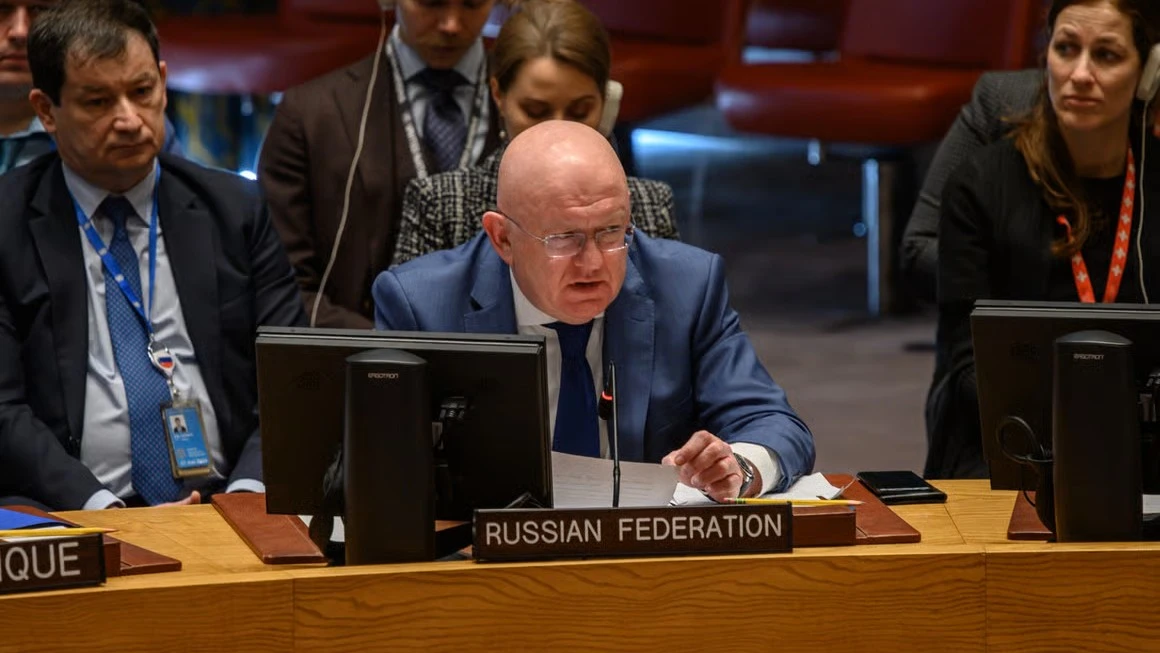
Russia presents ‘counterproposal’ to US draft UNSC resolution for Gaza

(Photo credit: Ed Jones/AFP via Getty Images)

The Cradle

Russia has proposed its own draft resolution on the Gaza Strip to counter a US proposal submitted to the UN earlier this month, Reuters reported on 13 November.

In a note to the UN Security Council (UNSC) members seen by the outlet, Russia’s UN representative said Moscow’s “counter-proposal is inspired by the US draft.”

“The objective of our draft is to enable the Security Council to develop a balanced, acceptable, and unified approach toward achieving a sustainable cessation of hostilities,” the note went on to say.

According to the report, the Russian draft requests that the UN Secretary General identify “options” for the International Stabilization Force (ISF), which is supposed to be deployed to Gaza as part of US President Donald Trump’s ceasefire plan.

“Attempts to sow discord now – when agreement on this resolution is under active negotiation – has grave, tangible, and entirely avoidable consequences for Palestinians in Gaza. The ceasefire is fragile and we urge the Council to unite and move forward to secure the peace that is desperately needed,” said a US mission spokesperson in response to Russia’s proposal.

The US submitted its draft in early November and is seeking UN backing. While the language of the US resolution has reportedly been updated, much of it remains the same – particularly regarding the ISF.

The US draft includes a broad mandate for Washington to govern Gaza for at least two years. It also mentions that the ISF will be established in coordination with the Gaza ‘Board of Peace,’ which Trump will head.

According to Reuters, the ‘Board of Peace’ idea has been removed entirely from the Russian draft.

It remains unclear how Trump’s plan will be executed. Israel continues to oppose the eventual return of the Palestinian Authority (PA) to Gaza – a central element of the ceasefire initiative.

Private US documents cited by POLITICO on 11 November have revealed that Washington has no “clear path forward” for the plan’s implementation.

US officials cited in the report are “deeply concerned” that the agreement could collapse due to the difficulty of implementing it.

Israel continues to violate the ceasefire agreement with attacks, airstrikes, and the restriction of aid. At least 260 Palestinians have been killed by Israel in Gaza since the deal went into effect last month.

New satellite imagery analyzed by the BBC reveals that Israeli demolitions have destroyed more than 1,500 buildings in the Gaza Strip since the ceasefire deal was reached.

[…]

Via https://thecradle.co/articles/russia-presents-counterproposal-to-us-draft-unsc-resolution-for-gaza

Trump proposes radical healthcare shake-up that would bypass insurers and hand cash directly to millions of Americans

Trump, 79, took to Truth Social on Saturday to recommend Republicans stop sending federal funds to 'money-sucking insurance companies' and instead give it to the American people to spend on healthcare

President Donald Trump has proposed a radical new healthcare plan that would hand money directly to Americans instead of to insurers.

[…]

In a post on Truth Social, Trump, 79, said the government should stop sending federal funds to ‘money-sucking insurance companies in order to save the bad healthcare provided by Obamacare.’

Instead, it should go ‘directly to the people so that they can purchase their own, much better healthcare, and have money left over,’ he said.

‘In other words, take from the BIG, BAD insurance companies, give it to the people, and terminate per dollar spent.’

He added that he believes Obamacare is the ‘worst healthcare anywhere in the world.’

It is unclear how exactly Trump’s plan would work.

Private healthcare is typically offered through employers or through the Affordable Care Act (ACA), also known as Obamacare.

It is also unclear who is eligible to receive the money Trump is proposing, how to obtain it, or how much each recipient would receive.

Trump, 79, took to Truth Social on Saturday to recommend Republicans stop sending federal funds to ‘money-sucking insurance companies’ and instead give it to the American people to spend on healthcare

It is unclear how exactly Trump's plan would work or who would be eligible for the money

The Daily Mail has reached out to the White House for comment.

The ACA got its nickname when former President Barack Obama signed it into law in 2010. It allows citizens under the age of 26 to stay on their parents’ insurance, as well as prohibiting insurers from denying coverage based on pre-existing conditions.

It’s most well-known for allowing people who do not have access to healthcare to purchase ACA-compliant plans, as well as expanding who was eligible for Medicaid to include low-income adults.

[…]

The Original American Languages Part 1

Bering Strait Land Bridge

Episode 27 The Original American Languages Part 1

Dr John McWhorter (2019)

Film Review

Owing to their intriguing diversity, McWhorter devotes four lectures to indigenous American languages

When Europeans first arrived in American, 300 distinct languages were spoken. Of these 200 are no longer spoken and 50 are hanging by a thread. McWhorter predicts that by 2050 only 12 will be spoken.

At present 350,000 Americans speak indigenous languages, half of them Navajo, Other major indigenous language include Cree, Ojibwe, Hopi, Lakota, Choctaw and Apache.

Many indigenous languages clearly originated in northeast Russia. According to McWhorter, there was a sizeable land bridge known as Beringia between Siberia and Alaska before the last Ice age ended 10,000 years ago and and ocean levels rose.

It’s believed 1,000 Asians migrated to Beringia around 23,000 year ago and were blocked (by glaciers) from traveling further until 16,000 years ago. They likely all spoke the same language on arrival in Beringia. However after 7,000 8,000 years, their population, which had increased exponentially, likely spoke multiple languages.

North American Clovis arrowheads similar to those found in Siberia date from 13,000 years ago and some from El Mate in Southern Chile are 15,000 years old. The Siberian language Ket (see Basque, Ainu, Somali, Etruscan: Languages Without Families) and Navajo are very similar. Both are extremely complicated (all the verbs are irregular) and difficult to learn after infancy.

The massive diversity in Native American language resembles that of Papua New Guinea (see Why Papua New Guinea Has 750 Different Languages ) and the non-Pama-Nyungen languages of Australia (see The Unique Grammar of Indigenous Australian Languages).

At least two distinct families of Native American families have been identified: Na-Dene (Eskimo-Aleut) and Navajo-Apache. The remaining Native American languages probably represent around 20 language families along with numerous language isolates.

https://www.kanopy.com/en/pukeariki/watch/video/6120000/6120054

Trump Sprays Ex-Terrorist Leader With Cologne, Asks How Many Wives He Has

Trump sprays perfume, jokes about wives

November 12, 2025  

In a moment that blended diplomacy with Donald Trump’s characteristic showmanship, the US president sprayed cologne on visiting Syrian President Ahmed al-Sharaa during a bilateral meeting at the White House on Monday — and then jokingly asked how many wives he had.

“This is the best fragrance. Okay, so what we’ll do, take that. Put it in. And the other one is for your wife,” Trump said, as seen in footage released by Open Intel. “How many wives, one? With you guys I never know, right? I never know.” When al-Sharaa replied, “one,” laughter followed. Trump quipped back, “You never know!”

The perfume, named Trump Victory 45–47, references his first and second presidential terms as the 45th and 47th US president. Priced at $250, the fragrance comes in versions for both men and women. Trump was also seen spraying the scent on al-Sharaa’s delegation, including his aide al-Shaibani, assuring them it was “the best perfume.”

Al-Sharaa, a former Al-Qaeda commander once branded a terrorist by Washington and placed under a $10 million bounty, is the first Syrian leader to visit the White House since Syria’s independence from France in 1946. His visit coincides with Washington’s decision to extend its suspension of sanctions on Syria for another 180 days.

During the meeting, al-Sharaa presented Trump with symbolic gifts — replicas of “the first alphabet, the first seal, and the first musical note.” Trump acknowledged his guest’s turbulent history, remarking, “We’ve all had rough pasts, but he has had a rough past. And I think, frankly, if you didn’t have a rough past, you wouldn’t have a chance.”

[…]

Via https://www.moneycontrol.com/world/video-trump-sprays-syrian-president-ahmed-al-sharaa-with-perfume-asks-how-many-wives-article-13672311.html

Beta-Blockers Are Useless, and Sometimes Risky, for Most Cardiac Patients

beta blockers heart failure treatment

Dr Mercola

Story at-a-glance

  • Beta-blockers offer no survival benefit for most heart attack patients with normal heart function, even though they’re still widely prescribed
  • Women face higher risks on beta-blockers, including nearly double the risk of death when given higher doses, while men show no measurable harm or benefit
  • Side effects such as fatigue, dizziness, depression, and sexual dysfunction often burden patients without providing meaningful protection
  • The real root of heart disease lies in damaged mitochondria, which are overwhelmed by linoleic acid (LA) from vegetable oils found in most processed foods
  • You can protect your heart by reducing LA, eating the right kinds of carbohydrates, walking daily, getting safe sunlight, and tracking your HOMA-IR score

A large trial tracked 8,438 heart attack patients, and the findings turned decades of cardiology practice on its head.1 Those who received beta-blockers after their heart attack fared no better than those who did not. Rates of death, repeat heart attack, and hospitalizations for heart failure were nearly identical. That means the drug class long considered a cornerstone of heart care offered no added protection in people whose hearts were still pumping normally.

Beta-blockers are drugs designed to slow your heart and reduce its workload. They’re prescribed widely after a heart attack to lower the chance of another one. Side effects often include fatigue, dizziness, depression, and sexual dysfunction, which many patients dismiss as “just part of getting older.”

Yet the new data suggest these side effects are being endured without any benefit in survival or long-term recovery for a large group of patients. Women, in particular, also face increased risks from these commonly prescribed drugs.2 Guidelines from the American College of Cardiology and the European Society of Cardiology still endorse beta-blockers for most people after a heart attack, regardless of heart function.

Those recommendations were built on studies from the 1970s and 1980s, but today most patients receive aggressive medical therapy, fundamentally changing outcomes. The evidence base has shifted, but the prescribing habits have not.

Trial Shows Beta-Blockers Fail to Deliver Heart Protection

The study, published in The New England Journal of Medicine, investigated whether beta-blockers provide benefits to heart attack patients whose hearts still pump normally.3 The trial set out to determine if beta-blockers could prevent death, new heart attacks, or hospitalization for heart failure in this group of patients. Researchers found that after a median follow-up of 3.7 years, the use of beta-blockers did not reduce the risk of death, repeat heart attack, or hospital admission for heart failure.

Event rates were virtually identical in both groups — In the beta-blocker group, 316 patients experienced one of the key negative outcomes, compared with 307 patients in the group that did not take beta-blockers. This translated to 22.5 versus 21.7 events per 1,000 patient-years, showing almost no difference. In simple terms, taking the medication gave no measurable survival advantage.

No difference in survival or complications — When broken down further, deaths were almost equal — 161 in those on beta-blockers versus 153 in those not taking them. The number of people who had another heart attack was the same in both groups — 143 each — and hospitalizations for heart failure were also very similar, with 39 versus 44 cases. The message is clear: beta-blockers did not improve outcomes.

Safety outcomes showed no advantage — Researchers noted there were no apparent differences in safety between the two groups. That means patients who accepted the common side effects of beta-blockers, such as fatigue or dizziness, did so without any added protection against life-threatening complications.

Beta-blockers are useless for many — If your heart function is preserved after a heart attack, taking beta-blockers burdens you with side effects while giving no added protection. Asking your doctor to reassess whether this drug is necessary is an important step in taking control of your recovery and long-term health.

Women Face Higher Risk on Beta-Blockers After Heart Attack

Research published in the European Heart Journal examined whether men and women respond differently to beta-blockers after a heart attack when their heart’s pumping ability is preserved.4 The trial found that outcomes varied sharply by sex, with women facing higher risks when prescribed these drugs, while men showed no meaningful difference whether they took them or not.

Women had worse outcomes than men — Out of 1,627 women in the study, those who received beta-blockers had more deaths, new heart attacks, and hospitalizations for heart failure compared with women not taking the drugs. Women on beta-blockers were 45% more likely to suffer serious complications. In men, however, results were neutral, with no increase or decrease in risk.

The risk was tied to higher doses and preserved heart function — Women with fully preserved pumping strength were the ones most harmed by beta-blockers. Those taking higher doses faced nearly triple the risk of death or complications compared with women who avoided them. In contrast, women on lower doses showed fewer problems, though still no evidence of benefit.

All-cause death was significantly higher in women — Among women, there were 46 deaths in the beta-blocker group compared with just 24 in the control group. This amounted to almost double the death rate for those prescribed the drugs. The increased risk was driven largely by cardiac causes. Men showed the opposite pattern: deaths were similar regardless of treatment, confirming that the harm was specific to women.

Why beta-blockers are riskier for women — Women’s hearts are usually smaller than men’s, which means the main pumping chamber has less space to work with. Beta-blockers slow heart rate and reduce how forcefully your heart contracts, which in a smaller heart could cause more harm than good.

In addition, women’s bodies process these drugs differently. They often reach higher blood concentrations from the same dose because of differences in body fat, blood volume, and liver enzyme activity. This means the same pill that produces a mild effect in a man could hit a woman’s system much harder.

A one-size-fits-all drug policy does not serve everyone equally — Women with preserved heart function were clearly harmed by beta-blockers, particularly at higher doses, while men experienced no meaningful effect. If you’re a woman prescribed a beta-blocker after a heart attack, this evidence gives you a strong reason to have a direct conversation with your doctor about whether the drug is necessary and whether better options exist for protecting your heart.

How to Protect Your Heart and Restore Optimal Health

If you’ve been told beta-blockers are the answer after a heart attack, the research shows otherwise. The truth is, your long-term protection comes from fixing the root problem inside your cells. When your mitochondria — the tiny engines that power every beat of your heart — are under attack, drugs won’t save you. You need to change what’s fueling those engines and how your body produces energy. Here are five direct steps you can take to strengthen your heart and add years to your life.

1. Eliminate linoleic acid (LA) from your diet — Vegetable oils are everywhere — in chips, salad dressings, sauces, restaurant meals, and fried foods. They’re the main source of LA, a polyunsaturated fat that weakens your mitochondria and drives heart disease. If you only do one thing, cut these oils out completely.

Replace them with stable fats like grass fed tallow, ghee, or butter. Keep your total LA intake below 5 grams per day, which you can track using an app like Food Buddy in my Health Coach, which is coming out this year. If you notice you’re getting under 2 grams of LA per day, that’s even better.

2. Fuel your cells with the right carbs — If you’ve been following a low-carb diet, you’re stressing your mitochondria even more. Your body runs best on glucose from carbs. Aim for about 250 grams a day, mostly from whole fruits, white rice, root vegetables, and well-tolerated grains. If your gut is sensitive or you deal with bloating and other digestive symptoms, skip the fiber-heavy foods until your gut is healed and start with easier-to-digest options like white rice or fruit.

3. Use walking as daily heart care — Movement is one of the simplest ways to restore energy production. Walking improves blood flow, lowers blood pressure, and gives your mitochondria the oxygen they need to make adenosine triphosphate (ATP), your body’s energy currency. Ideally, aim for one hour of walking daily. If an hour feels overwhelming, begin with short 10- to 15-minute walks after meals. Build up gradually until daily walking feels like part of your routine, not a chore.

4. Get sunlight exposure for energy and repair — Sunlight is like medicine for your mitochondria. It triggers nitric oxide release, balances your circadian rhythm, and helps your body create melatonin inside the cells that protect your heart. But if your body is loaded with LA from vegetable oils, your skin burns faster. Until you’ve been off LA for six months, avoid peak sun hours between 10 a.m. and 4 p.m. Instead, aim for early morning or late afternoon light, which is still highly beneficial.

5. Measure insulin resistance with the HOMA-IR test — Recognizing insulin resistance early is essential, as it’s a warning sign for your metabolic health. The HOMA-IR (Homeostatic Model Assessment of Insulin Resistance) test is a valuable diagnostic tool that helps assess insulin resistance through a simple blood test, so you can spot issues early and make necessary lifestyle changes.

Created in 1985, it calculates the relationship between your fasting glucose and insulin levels to evaluate how effectively your body uses insulin. Unlike other more complex tests, HOMA-IR requires just one fasting blood sample, making it both practical and accessible. The HOMA-IR formula is as follows:

HOMA-IR = (Fasting Glucose x Fasting Insulin) / 405, where

Fasting glucose is measured in mg/dL

Fasting insulin is measured in μIU/mL (microinternational units per milliliter)

405 is a constant that normalizes the values

If you’re using mmol/L for glucose instead of mg/dL, the formula changes slightly:

HOMA-IR = (Fasting Glucose x Fasting Insulin) / 22.5, where

Fasting glucose is measured in mmol/L

Fasting insulin is measured in μIU/mL

22.5 is the normalizing factor for this unit of measurement

Anything below 1.0 is considered a healthy HOMA-IR score. If you’re above that, you’re considered insulin resistant. The higher your values, the greater your insulin resistance. Conversely the lower your HOMA-IR score, the less insulin resistance you have, assuming you are not a Type 1 diabetic who makes no insulin.

[…]

Via https://articles.mercola.com/sites/articles/archive/2025/11/06/beta-blockers-heart-failure-treatment.aspx

COP 30 a Failure: “Only Europe Remains Committed”

COP 30 2025: UNFCCC Climate Summit in Belem, Brazil

By Prof. Fritz Vahrenholt

Cooling trend continues

The global temperature did not change in October compared to August. The cooling trend remains intact. The American National Oceanic and Atmospheric Administration (NOAA) foresees a cool LA NINA developing in the Pacific this winter, which will lead to a further decline in global temperatures as well.

Belém – All that fuss for nothing

The 30th World Climate Conference in Belém is not yet over, but it is already becoming apparent that the event, announced as the “Conference of Truth,” will go down in the history of climate conferences as a turning point.

No head of state from the four largest CO2-emitting nations—China (33%), the USA (12%), India (8%), and Russia (5%)—is showing up in Belém.

Even before the conference, the New York Times headlined: “The whole world is fed up with climate policy.” And the fact that Bill Gates, one of the biggest supporters and sponsors of climate policy, explicitly warned against excessive, shortsighted climate policy just 14 days before the conference, and put prosperity back in focus — a major blow.

Glenn Beck, a prominent American television host, explains the change of heart by Bill Gates: “It’s not about science, it’s about Trump.” Expressed differently: it’s not about conviction; it’s about damage control for his own company, which is planning multibillion-dollar investments in data centers in the USA and globally. And given the situation, these will have to rely on electricity from new gas-fired power plants in the short term, as the reactivation of old nuclear power plants will not suffice, and the construction of new nuclear power plants will still take several years in the USA.

Only 1/3 of the states actually submit a plan

For the Climate Conference in Belém, states had to report on their future plans for the use of coal, oil, and gas. The fact that only one-third even submitted a statement already hints at the dissolving importance of the climate issue in most nations around the world. But the reports that were submitted are revealing. Most states reported continuously increasing use of coal, oil, and gas. The reports show an increase in global coal usage by 30%, oil by 25%, and gas by 40% by 2030 compared to 2015. The Intergovernmental Panel on Climate Change (IPCC) hoped to reduce global CO2 emissions by 45% by 2030 compared to 2015; now they are continuing to rise.

Only Europe onboard

Only Europe remains unshakably committed to the goal of achieving Net Zero CO2 emissions by 2050. Germany, the industrial heart of Europe, is even more ambitious and, according to Axel Bojanowski, is “the ‘leader’ among industrialized countries: It aims to be climate-neutral by 2045 – a self-destructive plan: Germany’s reduction will inevitably be compensated by rising emissions in other EU countries. This is because the European Emissions Trading System ensures that emission allowances not used in Germany are consumed in other EU countries.

It is becoming increasingly clear what the Wall Street Journal meant when it called Germany’s energy policy the ‘dumbest in the world.’

A few days before the conference, the European states agreed on a common goal, namely to achieve a 90% CO2 reduction by 2040 compared to 1990. 5% of the self-commitment could come from emission reductions abroad, which, of course, must also be expensively paid for. The German Minister for the Environment celebrated this agreement as “good news for the German economy, as everyone would now have the same competitive conditions.”

This statement reveals how little the German federal government and its ministers understand about the global economy. As if German industry only exports goods to European countries. German goods, however, compete in a global market that does not have the burdens of CO2  taxes and high energy prices on German products and can therefore always offer them more cheaply. 50% of exports go to countries outside the EU.

Chancellor Merz and his Environment Minister Schneider are blatantly downplaying the German situation. Germany has set self-imposed shackles with the Climate Protection Act that will become highly painful in the coming years.

German climate policy: “script for an economic catastrophe”

Welt journalist Axel Bojanowski: “The German Climate Protection Act, cemented by the Federal Constitutional Court, seems to be a script for an economic catastrophe. It only allows Germany a remaining budget of 6.7 gigatonnes of CO2, which is likely to be used up by the early 2030s. According to the law, penalties, shutdowns, and restrictions on freedom are then threatened to meet the climate goals.”

6.7 gigatonnes was the remaining permissible budget after the ruling of the Federal Constitutional Court from 2020 onwards. As of today, only 3.6 gigatonnes of this remain. The buffer is reduced by about 0.5 gigatonnes each year. By 2032 at the latest, the remaining budget will be exhausted, and Germany will have reached the end of the line set by the Federal Constitutional Court. This will happen in the next legislative period, not just in 2040.

Chancellor Merz whitewashes

And in his 5-minute speech in Belém before a half-empty hall, Chancellor Merz spreads negligent whitewashing: “The economy is not the problem. Our economy is the key to protecting our climate even better.” Does the Chancellor not know the perilous state our industry is in?

Scandal surrounds tropical forest Ffund (TFF)

Probably the only outcome of the Belém conference will be the establishment of an investment fund, proposed by Brazilian President Lula, to finance the protection of tropical forests.

The fund works as follows: Donor countries pay $25 billion into the fund. Private investors (investment funds) are supposed to pay in $100 billion. The donor countries receive a return of about 4.0-4.8%, which corresponds to the return on their government bonds, as they generally have to raise the money through government debt. The return for private investors is 5.8% to 7.2%. The fund’s money is invested in emerging market government bonds, which yield comparatively high interest due to the higher risk (Brazilian government bonds are currently at 12.25%). Private investors are served first, followed by the donor countries. If anything remains after the distribution of profits to private investors and donor countries, the amount is paid out to 74 countries with tropical forests. It is hoped that this way, $3-4 billion will be distributed annually to the tropical forest countries.

The catch is this: To entice investors, private investors are given preference in the payment sequence: first the private ones, then the donor states. Furthermore, the donor countries must insure the fund against default. A default by an emerging market could quickly lead to the fund’s insolvency. In that case, the taxpayers of the donor countries would be held liable and, in an extreme scenario, lose their capital.

Disadvantageous for the German taxpayer

In preparation for Belém, there was fundamental disagreement over Germany’s participation in the fund between the Ministry of Finance and the Chancellor’s Office. The Chancellor’s Office clearly advocated for participation and a contribution of at least $1 billion. It was assisted by the Ministry for the Environment under Minister Schneider and the Ministry for Economic Cooperation and Development under Minister Alabali-Radovan. The Ministry of Finance, under Lars Klingbeil, strongly objected, viewing the fund as a billion-dollar risk and doubting the viability of the fund’s structure.

And indeed, the model is structurally disadvantageous for the German taxpayer. One could also say: We are subsidizing the returns of private investors with public money and providing the default guarantee for BlackRock and Co. That is why the Federal Ministry of Finance is persistently blocking Germany’s participation in the fund. It can be unequivocally stated that the Federal Ministry of Finance has thus far bravely defended the interests of the German taxpayer against the interests of BlackRock and Co.

This is the background to Chancellor Merz being unable to name a figure (“a noteworthy amount”) in Belém. The billion € or $ is now supposed to be found in the budget reconciliation for the 2026 federal budget, which is taking place this week, so that the federal budget can be adopted on November 28. It is to be expected that the SPD will concede. But it could be a Pyrrhic victory for Chancellor Merz, who would then visibly be prioritizing the interests of international financial investors, especially if the fund were to run into difficulties.

Whether the fund will ultimately materialize is still questionable, as it only comes into effect if the donor states commit to $10 billion. So far (excluding Germany), $5.6 billion has been raised.

The USA and the UK have already declined.

If the fund comes into being, the investment companies will profit first, with high returns secured by states, and then the emerging markets, which can sell their high-risk government bonds. Whether the tropical forest will benefit in this confusing financial jungle is not yet certain. The biggest risk remains with the donor countries, who are putting their taxpayers’ money at risk with the catchy story of saving the rainforest.”

[…]

Via https://notrickszone.com/2025/11/12/german-energy-professor-cop-30-is-a-failure-only-europe-remains-committed/

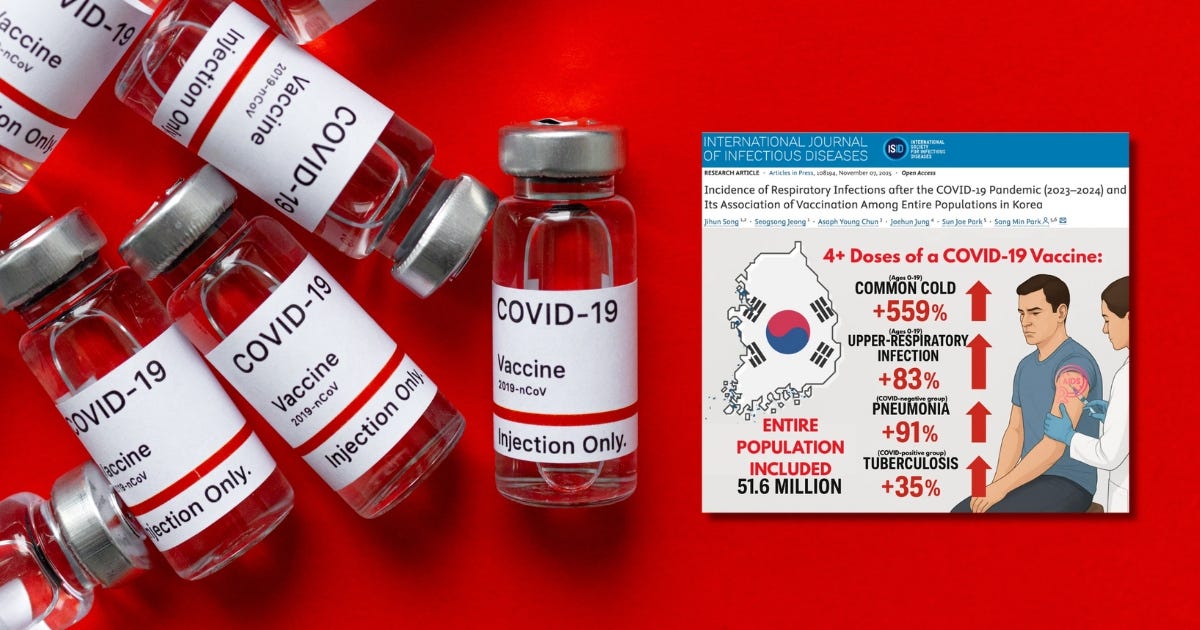
51 Million-Person Study Finds COVID-19 “Vaccines” Increase Risk Of Respiratory Infections By Up To 559%

Nicolas Hulscher, MPH

Landmark study of the entire South Korean population uncovers a VAIDS signal — a dose-dependent rise in the common cold, upper-respiratory infections, pneumonia, and tuberculosis among the vaccinated.

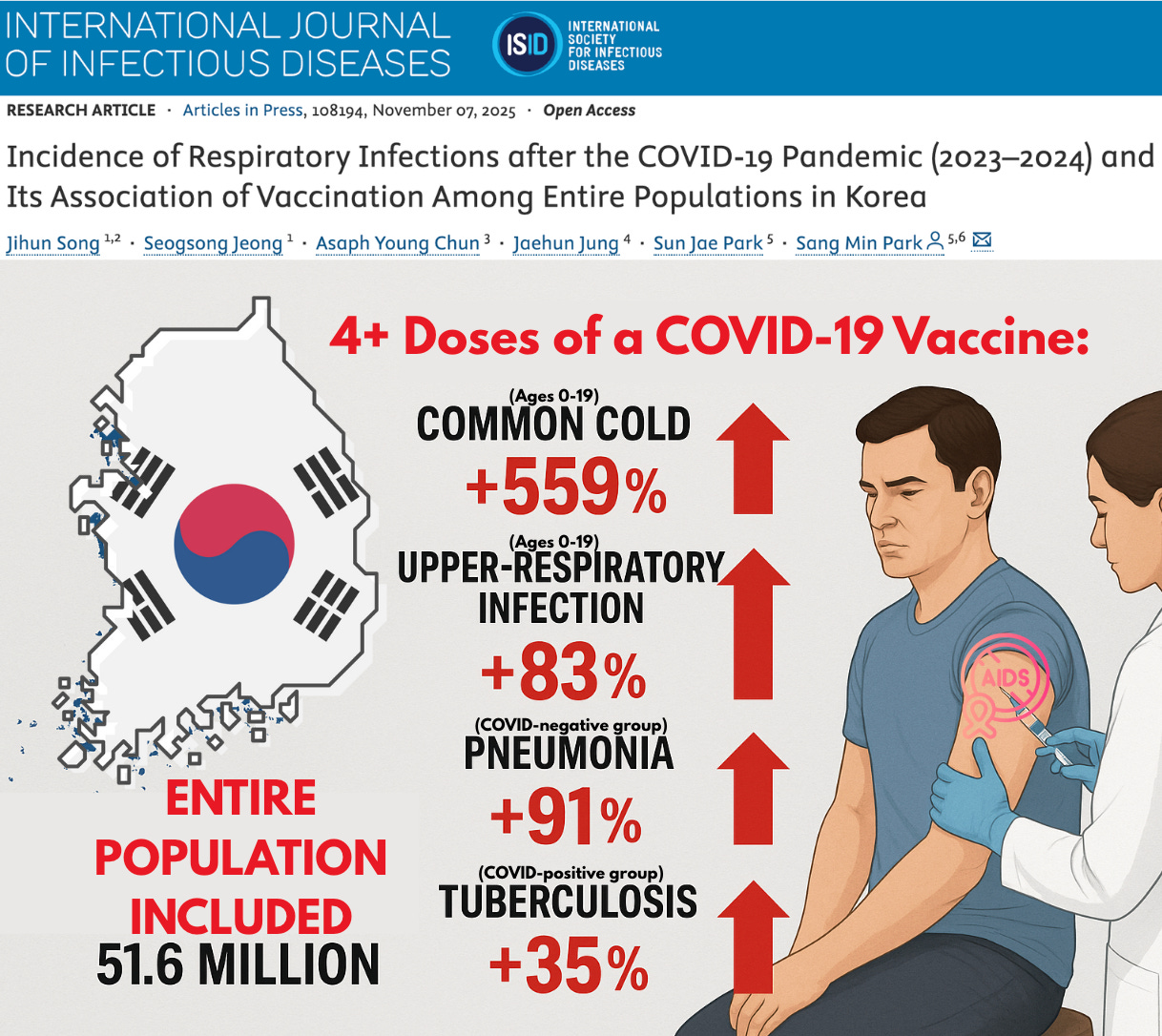
An enormous landmark study published in the International Journal of Infectious Diseases, covering every single resident in South Korea — all 51.6 million people — has delivered a striking population-level signal suggestive of vaccine-acquired immunodeficiency syndrome (VAIDS).

This massive dataset shows a consistent dose-dependent pattern: the more COVID-19 “vaccines” a person received, the higher their risk of developing the common cold and upper-respiratory infections. Increases in pneumonia and tuberculosis were identified in stratified analyses by age and infection status. Children ages 0-19 suffered the most.


Study Overview

  • Population: Entire national cohort of South Korea (N = 51,645,564).
  • Analytic cohort: 39,447,030 individuals with complete vaccination + infection records.
  • Observation period: June 1 2023 – September 30 2024.
  • Exposure: Total number of COVID-19 doses.
  • Outcomes: Seven major respiratory diseases — upper-respiratory infection (URI), pneumonia, influenza-like illness (ILI), common cold, scarlet fever, pertussis, and tuberculosis.
  • Covariate adjustments: age, sex, income level, Charlson comorbidity index, prior COVID-19 infection and severity, epidemic phase, and time since last vaccination.

Critical note: the “unvaccinated” reference group included individuals who had received one dose, inflating its infection rate and making the true vaccine-associated risk likely far higher than reported.


Common Cold

Children (ages 0–19) showed the strongest dose-response pattern:

  • After the second dose, risk increased by 299 % (aHR 3.99 [3.78–4.21]).
  • After the third dose, risk increased by 391 % (aHR 4.91 [4.62–5.22]).
  • After the fourth dose or more, risk increased by 559 % (aHR 6.59 [6.00–7.23]).

Older adults (≥ 65 years) followed the same trend:

  • Second dose → +9 % (aHR 1.09 [1.06–1.12]).
  • Third dose → +33 % (aHR 1.33 [1.29–1.37]).
  • Fourth or more doses → +58 % (aHR 1.58 [1.53–1.64]).

Among COVID-positive participants, the same pattern held:

  • Second dose → +5 % (aHR 1.05 [1.03–1.06]);
  • Third dose → +12 % (aHR 1.12 [1.10–1.14]);
  • Fourth or more doses → +36 % (aHR 1.36 [1.34–1.39]).

Even in the pooled population-wide model, common cold incidence rose sharply with each additional dose (aHR 1.23 [1.21–1.25] after the third dose and 1.65 [1.56–1.75] after the fourth or more), confirming the trend across the entire cohort.

Interpretation: Across every analytic layer—pooled, pediatric, geriatric, and COVID-positive—common-cold incidence climbed steadily from dose 2 through dose 4+, showing a clear, monotonic relationship between cumulative vaccination and ordinary viral infection risk.


Upper-Respiratory Tract Infections

Children (0–19 yrs):

  • Second dose → +62 % (aHR 1.62 [1.58–1.66]).
  • Third dose → +67 % (aHR 1.67 [1.62–1.71]).
  • Fourth or more doses → +83 % (aHR 1.83 [1.75–1.92]).

Older adults (≥ 65 yrs):

  • Second dose → +7 % (aHR 1.07 [1.06–1.09]).
  • Third dose → +32 % (aHR 1.32 [1.30–1.34]).
  • Fourth or more doses → +57 % (aHR 1.57 [1.54–1.59]).

COVID-positive subgroup:

  • Second dose → +2 % (aHR 1.02 [1.01–1.03]);
  • Third dose → +12 % (aHR 1.12 [1.11–1.13]);
  • Fourth or more doses → +32 % (aHR 1.32 [1.30–1.34]).

The pooled model also showed a consistent upward trend—aHR 1.14 after the second dose and 1.48 after the third—indicating that the dose-dependent rise in upper-respiratory infection risk persists even without stratification.

Interpretation: the rise was consistent across all groups and persisted even after adjustment for age, sex, income level, comorbidities, prior infection severity, infection phase, and time since last vaccination.


Tuberculosis

  • General population: overall aHRs hovered near 1.0 (no significant change) across all dose groups.
  • COVID-positive subset: clear upward trend with dose number:
    • Second dose → aHR 1.24 (1.01–1.52) (+24 % risk).
    • Fourth or more doses → aHR 1.35 (1.02–1.77) (+35 % risk).

Interpretation: a measurable increase in post-infection or reactivation tuberculosis among those previously infected with SARS-CoV-2 who went on to receive multiple boosters.


Pneumonia

Among COVID-negative participants, pneumonia incidence rose consistently with additional vaccine doses:

  • Second dose → +34 % (aHR 1.34 [1.31–1.38])
  • Fourth or more doses → +91 % (aHR 1.91 [1.84–1.99])

Interpretation: This clear dose-response pattern suggests impaired respiratory defense or susceptibility to secondary bacterial infection following repeated mRNA exposure.


Influenza-Like Illness (ILI) and Pertussis — the “Protective” Mirage

Regression models appeared to show lower adjusted hazard ratios for these two conditions—approximately 0.55 for ILI and 0.06 for pertussis after the fourth or later dose—which would suggest a protective effect.

In context, however, these apparent reductions are almost certainly statistical artifacts driven by healthy-user bias, diagnostic-coding overlap, and case misclassification. Many mild respiratory infections that might have been coded as influenza-like illness or pertussis before 2020 were likely recorded as “COVID-19” during the post-vaccine era, artificially deflating their apparent incidence in vaccinated groups.

Crucially, the study’s national ARIMAX time-series revealed a 46-fold surge in confirmed pertussis cases across Korea during 2023, directly contradicting any notion of real-world protection.

[…]

When both the main and supplementary analyses are considered together, the dose-dependent increases are clear for the common cold and upper-respiratory infections across nearly all age and infection strata, with smaller but directionally similar trends for pneumonia and tuberculosis. From the second dose onward, risk ratios rise almost linearly through the fourth and higher doses, revealing a consistent pattern of heightened susceptibility to non-COVID respiratory infections.

While the pooled models already showed increases for upper-respiratory infections and the common cold, the full extent of risk—including the rises in pneumonia and tuberculosis—only becomes clear in the stratified analyses presented in the supplementary tables. By averaging across all ages and infection groups, the main text effectively diluted these signals—creating the impression of neutrality.

This pattern represents a serious population-level signal suggestive of VAIDS. Clinically, such immune dysregulation may present as a heightened incidence of upper respiratory infections and common colds, in clear dose-dependent correlation with repeated mRNA vaccination.

We are now advancing a landmark investigation into VAIDS using thousands of real-world patient records to evaluate long-term immune function across four key exposure groups—vaccinated/infected, vaccinated/uninfected, unvaccinated/infected, and unvaccinated/uninfected controls. These data allow precise comparison of lymphocyte profiles, antibody class switching, and T-cell exhaustion markers to determine how repeated mRNA vaccination and SARS-CoV-2 infection have reshaped human immunity. Preliminary signals point to immune exhaustion, IgG4 dominance, and secondary immunodeficiency, consistent with the observed surge in chronic infections and dose-dependent vulnerability to common respiratory illness.

Across an entire national dataset, each additional COVID-19 “vaccine” dose corresponded to a higher probability of non-COVID respiratory infection — most severely among children.

Because the “control” group included single-dose recipients, the true increase relative to the completely unvaccinated population is likely even greater than reported.

[…]

Via https://www.vigilantfox.com/p/51-million-person-study-finds-covid

US-backed Jolani forces join Israel on Lebanon border to fight Hezbollah

HTS fighters look on as students rally near the campus of the Damascus University in the Syrian capital on December 15, 2024. (Photo by AFP)

Press TV

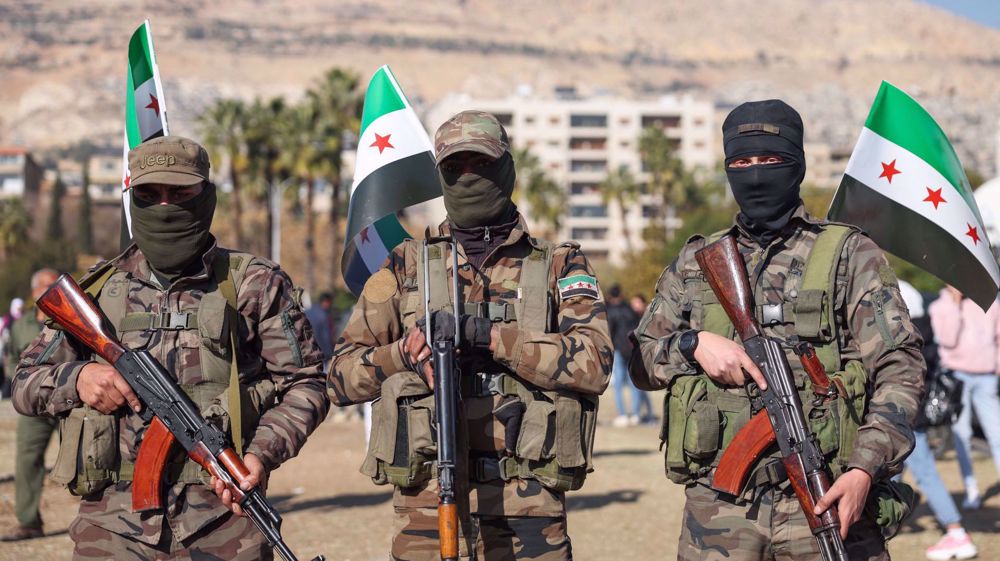
Hay’at Tahrir al-Sham (HTS) has reportedly deployed foreign Takfiri fighters from northern Syria to the border with Lebanon, sparking renewed concern over the group’s destabilizing activities and growing presence in the region.

According to sources cited by The Cradle, foreign militants affiliated with HTS were transferred in recent days from the Harem area in Idlib province to the city of al-Qusayr, near the Syrian–Lebanese border.

The movement reportedly coincided with the transfer of heavy military equipment, including armored vehicles and other hardware.

“At the same time, forces affiliated with the Ministry of Defense of the ‘Syrian Transitional Government’ attempted to advance and take positions inside Lebanese territory, specifically in the Wadi al-Thalajat area of Ras al-Maara, along the Syrian–Lebanese border in the Damascus countryside,” the sources said, referring to barren areas where the Lebanese army is not present.

These reports emerge shortly after Washington announced Syria’s participation in the US occupying coalition in the Arab country, as Abu Mohammed al-Jolani — once affiliated with al-Qaeda and Daesh — arrived in Washington on Sunday.

The HTS military remains deeply infiltrated by extremist elements. Many of its current commanders and officers are known former members of al-Qaeda and Daesh factions.

Last month, Lebanon’s Al Mayadeen TV cited diplomatic sources as saying that “unusual” movements of thousands of armed extremists, including fighters from Uzbekistanis, Chechens, and Uyghurs from China, were being observed along the Syrian–Lebanese border.

Tens of thousands of foreign fighters entered Syria illegally to join the US-backed war to topple former president Bashar al-Assad’s government, which began in 2011. The new authorities in Damascus have given some of these foreigners top positions in the army, and said they are considering giving them Syrian citizenship.

The reported buildup of HTS-linked forces near Lebanon coincides with renewed US threats that such militias could be deployed against Hezbollah.

On Friday, US envoy Tom Barrack said that the extremist-led regime in Damascus will “actively assist” Washington and Tel Aviv in confronting Hezbollah in Lebanon.

“Damascus will now actively assist us in confronting and dismantling the remnants of ISIS [Daesh], the IRGC [Iran’s Islamic Revolution Guards Corsp], Hamas, Hezbollah, and other terrorist networks, and will stand as a committed partner in the global effort to secure peace,” the US envoy said.

Barrack’s comments are the latest in a series of recent threats made by the US envoy against Lebanon. He had said just last month that Lebanon would soon face a broad Israeli attack unless it moved to fully disarm Hezbollah immediately.

In July, he said Syria under HTS views Lebanon as its “beach resort” and would carry out an assault against the country unless Hezbollah disarmed.

Clashes broke out between the Lebanese army and HTS militants earlier this year, after Jolani’s forces advanced against the border under the pretext of dealing with smuggling.

Analysts warn that the alignment of US policy with extremist-leaning Syrian factions such as HTS risks reigniting cross-border violence and undermining the security achieved by Hezbollah and the Lebanese Armed Forces after expelling Daesh and al-Qaeda elements from Lebanon’s eastern border in 2017.

Jolani told the Washington Post in an interview that “good” progress has been made in direct talks to reach an agreement with Israel, while boasting about weakening the Axis of Resistance on behalf of Tel Aviv.

“Israel has always claimed that it has concerns about Syria because it is afraid of the threats that the Iranian militias and Hezbollah represent. We are the ones who expelled those forces out of Syria,” he said.

“The US is with us in these negotiations, and so many international parties support our perspective in this regard. Today, we found that Mr. Trump supports our perspective as well, and he will push as quickly as possible in order to reach a solution for this,” he added.

Jolani also met with US-based Syrian rabbi Yosef Hamra.

Hebrew reports have revealed that a main part of the agreement will likely involve HTS–Israeli intelligence sharing and cooperation against the Axis of Resistance, specifically Iran and Hezbollah – which helped the former government recapture large swathes of Syria from al-Qaeda and Deash.

Israel carried out heavy strikes in Damascus and elsewhere in southern Syria earlier this year, under the pretext of protecting the Druze minority from Jolani’s extremist forces.

Now, it continues to carry out incursions, seize territory, and expand the occupation it established after the fall of Assad’s government last year. Yet Jolani and other HTS officials have repeatedly signaled that they pose no threat to Tel Aviv.

Analysts are asking why al-Jolani does not deploy any forces against Israel, which continues to attack and occupy parts of Syria almost daily.

The HTS-led regime will reportedly hand over the occupied Golan Heights to Israel as part of a looming normalization deal with the illegal entity.

Since taking power, HTS has committed widespread war crimes and brutal repression, particularly against minority communities such as the Alawites, who have faced targeted violence, as Syria has experienced waves of sectarian and regional unrest under the group’s control.

Jolani was the former deputy to the late Daesh leader Abu Bakr al-Baghdadi, before becoming the head of the official al-Qaeda branch in Syria, the Nusra Front.

The Nusra Front was eventually rebranded into Hayat Tahrir al-Sham (HTS), which took control of Syria in December 2024.

There was confirmed coordination between Israel and the Nusra Front during the early years of the US-backed war on Syria that began in 2011.

Via https://www.presstv.ir/Detail/2025/11/13/758762/Syria%E2%80%99s-HTS-deploys-foreign-fighters-to-Lebanon-border–Report