Epstein Victims Announce New Political Force and Vow to Release All Names of Epstein Associates Themselves


by Brian Shilhavy
Editor, Health Impact News

Several of the victims of Jeffrey Epstein held a press conference in D.C. today along with Congress Representatives Ro Khanna, Thomas Massie and Marjorie Taylor Greene, just before the House voted overwhelmingly to pass H.Res.577 – Demanding the immediate release of all Federal documents relating to Jeffrey Epstein.

Preferring to call themselves “survivors” as opposed to “victims,” they announced a new “political movement” in the U.S. that they call “The Survivor Revolution.”

Lisa Phillips is the one who announced this:

Here is a partial transcript:

This fight belongs to us. We lived it, and we know the truth. And we will not wait quietly for institutions to decide when we’re allowed to speak.

The survivors now coming forward have entrusted us with their stories. We are sharing that information with the proper authorities, and when it can be safely made public, it will be.

So today, we are launching something historic. The first national survivor-led political movement in America. Nonpartisan, laser focused, on exposing the systems, the loopholes, power structures, and silencing mechanisms that have protected predators for far too long.

We are stepping directly into the halls of power, into the political arena.

Together, today, survivors begin our own fight: The Survivor Revolution. And we intend to change this nation for the better.

If you’re a survivor who wants to join us, please reach out.

And to anyone who benefits from the current system, intentionally or not, remember this: Alone, yes, we are afraid. But together, we are feared!

Several of them have vowed to release the names themselves of the Epstein associates if the U.S. Government does not, and Majorie Taylor Greene has also offered to read the names of each one on the House floor if necessary, which would put them into the Congressional record.

Greene also fired back at President Trump with some strong statements of her own, after Trump’s vicious attacks against her in recent days:


Here is the entire press conference, which is well worth watching in its entirety, as I have.


All Eyes on the Senate Now

Speaker of the House Mike Johnson stated that he would vote to have the Epstein files released after President Trump told all the Republicans to vote for it, but he also said he hoped the Senate would “correct” the language in the Bill:

“I have real concerns about the discharge language in the House draft,” Johnson said.

“But I do have some comfort that, I think if and when it’s processed in the Senate, that they’ll be able to correct some of those concerns, if we have the protection of victims and whistleblowers and all the rest.”(Source.)

What might those “concerns” be that Johnson has?

Here is the key language that is in the current bill – I am putting in bold the language that they might want to try and change:

(1) affirms its constitutional authority under Article I to conduct investigations, issue subpoenas, and expose criminal misconduct and institutional corruption;

(2) demands that the Trump Administration immediately release all unclassified files, flight logs, correspondence, and evidence pertaining to Jeffrey Epstein, Ghislaine Maxwell, and all known associates, with redactions only to protect the identities of minor victims and preserve ongoing prosecutions;

(3) calls upon the Department of Justice, the Federal Bureau of Investigation, and any relevant executive branch agency to submit a full report on any delays, suppression, or destruction of evidence related to Epstein’s operations;

(4) urges the relevant House Committees to initiate formal investigations into any obstruction, suppression, or delay of the files’ release; and

(5) supports full transparency and public access to these documents in the interest of justice, accountability, and the prevention of future abuses of power.

If this bill passes in its current form, Trump and people in his administration could be prosecuted for obstruction, suppression, or delay of the files’ release, which they have clearly done.

Here is Massie’s response to the possibility that the Senate would try to “correct” the language:

Massie said the Senate should take into account the public clamor that forced both Trump and Johnson to back down.

If it’s anything but a genuine effort to make it better and stronger, it’ll backfire on the senators if they muck it up,” Massie said.

Will Larry Summers be the First to Suffer Consequences of being an Associate of Epstein?

One of the questions that was directed at Thomas Massie at the Survivors press conference today was what should be done with the information in the Epstein files.

Massie replied that the U.S. should follow what is currently happening in the UK, where Andrew Mountbatten Windsor, formerly “Prince Andrew” has been stripped of his royal titles, and the UK’s ambassador to the U.S. has also been recalled due to his associations with Epstein, and that similar actions should start happening in the U.S. where people lose their jobs and political offices over this.

Larry Summers, a university professor at Harvard and former Secretary of the Treasury under President Clinton, has publicly apologized for his association with Epstein stating that he is “deeply ashamed”, and that he would “step back in public commitments.”

But apparently he is not voluntarily surrendering his position at Harvard, while others are demanding he should.

Sen. Elizabeth Warren had called for institutions affiliated with Summers, who was treasury secretary during the Clinton administration, to sever ties with him.

Larry Summers, who was treasury secretary under President Bill Clinton, said Monday that he will be stepping back from public commitments following the recent publication of his correspondence with convicted sex offender Jeffrey Epstein.

“I am deeply ashamed of my actions and recognize the pain they have caused. I take full responsibility for my misguided decision to continue communicating with Mr. Epstein,” Summers said in a statement.

The House Oversight Committee last week released more than 20,000 emails from Epstein’s estate, which included extensive correspondence between the disgraced financier and Summers. The most recent one was from the day before Epstein was arrested in 2019.

Sen. Elizabeth Warren, D-Mass., called Monday for institutions affiliated with Summers to sever ties with him.

“For decades, Larry Summers has demonstrated his attraction to serving the wealthy and well-connected, but his willingness to cozy up to a convicted sex offender demonstrates monumentally bad judgment,”

Warren said in a statement shared with NBC News before Summers said he would be stepping back from his public commitments.

“If he had so little ability to distance himself from Jeffrey Epstein even after all that was publicly known about Epstein’s sex offenses involving underage girls, then Summers cannot be trusted to advise our nation’s politicians, policymakers, and institutions — or teach a generation of students at Harvard or anywhere else,” she added.

Full article.

We should soon learn if the U.S. Government will actually release anything of significance on Epstein, even if this Bill is passed by the Senate and signed into law by President Trump.

If they keep on stalling, we should soon see The Survivor Revolution in action taking matters into their own hands, now that they have a national audience. There are now just too many of them going public to try and silence them all, and they have the momentum of the public on their side.

[…]

Via https://healthimpactnews.com/2025/the-survivor-revolution-epstein-victims-announce-new-political-force-and-vow-to-release-all-names-of-epstein-associates-themselves/

Studies Raise Questions About Harmful Effects of Ketogenic Diet on Liver and Heart

keto diet liver heart health risks

Dr Mercola

Story at-a-glance

  • While short-term ketogenic diets may aid weight loss, new research links prolonged ketosis to liver stress, impaired insulin secretion, and cardiovascular problems
  • Long-term fat reliance increases circulating free fatty acids, burdening the liver, disrupting glucose regulation, and weakening metabolic flexibility — key factors in overall energy stability and heart health
  • Elevated liver enzymes and triglyceride levels on keto indicate hepatic overload. This signals that the body is struggling to manage excess fat turnover and oxidation
  • Treat keto as a short-term metabolic intervention, not a lifestyle diet. Gradually reintroduce whole-food carbohydrates to support steady energy, hormonal balance, and overall metabolic health
  • To support balanced metabolism and long-term liver and heart health, keep total fat below 30% of daily calories, eliminate seed oils from your diet, and consume sufficient dietary fiber

For several years, I recommended the ketogenic diet as a way to optimize your metabolic and mitochondrial health. Restricting carbohydrates and shifting the body to rely on fat for fuel seemed, at the time, to be a sound strategy for stabilizing blood sugar and enhancing endurance. Backed by a growing body of published research, it appeared to offer a logical and effective route toward better energy regulation and improved metabolic flexibility.

However, after studying the work of the late Ray Peat, Ph.D., my perspective shifted. His insights into the bioenergetic theory of health revealed how carbohydrate availability is tied to your body’s capacity to sustain healthy energy production. The more I examined his work, the clearer it became that long-term carbohydrate restriction could work against many of the very systems it was meant to support.

Your liver and heart appear to be especially vulnerable under the metabolic strain of a high-fat, low-carb diet. That vulnerability has come under closer scrutiny in a recent Science Advances study1 that examined how prolonged adherence to a ketogenic diet affects metabolic balance, insulin regulation, and organ function. Their findings raise important questions about whether keto side effects outweigh its benefits.

Does Keto Raise Liver Enzymes or Cause Fatty Liver?

In the featured study, researchers examined the long-term keto liver effects in mice for nearly a year. The goal was to determine whether a ketogenic diet, often promoted for weight management and metabolic improvement, might instead strain the liver’s ability to process and regulate fat over time and compromise overall metabolic health.2

Liver distress emerged despite lower body weight — The study found that even though mice on the ketogenic diet gained less weight than those fed a high-fat, high-carb diet, their liver profiles revealed signs of distress. Plasma triglycerides and non-esterified fats (free fatty acids released from stored fat) were significantly elevated, pointing to hyperlipidemia, a state of excess circulating fat in the bloodstream.

Male mice also developed hepatic steatosis (fat accumulation in the liver), along with increased alanine aminotransferase (ALT) activity. ALT is an enzyme concentrated inside liver cells and plays a role in amino acid metabolism. When liver cells are damaged or die, ALT leaks into the bloodstream, raising measurable levels. Elevated ALT directly reflects hepatocellular injury and indicates that the liver is under metabolic or inflammatory stress.

Broader metabolic stress accompanied liver injury — Mice on the ketogenic diet developed glucose intolerance, meaning their bodies were less able to keep blood sugar stable after eating, and impaired insulin secretion, showing that the pancreas was not releasing enough insulin to regulate glucose. Together, these findings indicate that liver stress was part of a whole-body imbalance.

In particular, the pancreatic β cells (the cells that make and release insulin) showed disruptions in protein trafficking within the endoplasmic reticulum and Golgi apparatus, which fold and package proteins for secretion. This dysfunction resembled what is seen in early diabetes, where the machinery for insulin release becomes compromised.

Microscopic evidence confirmed cellular damage — Electron microscopy revealed lipotoxic injury in the liver cells. The Golgi apparatus appeared dilated and fragmented, and genes linked to protein stress responses were upregulated. This pattern shows that long-term exposure to high lipid levels not only drives fat buildup but also interferes with protein processing and communication within cells, further aggravating liver dysfunction.

Animal findings suggest parallels to human liver responses — Although this work was conducted in mice, the core mechanisms involved in fat regulation, glucose control, and protein processing are highly conserved across species. The authors wrote that their findings “have relevant translational ramifications” and “caution against the systematic use of a KD as a health-promoting dietary intervention.” The table below summarizes the animal findings alongside their human relevance:

Liver Outcomes — Enzymes and Steatosis

Aspect Preclinical
(Science Advances, 2025)
Human Relevance
(as noted by authors)
Population Mice Not studied directly; authors emphasized the need for human research to confirm whether similar effects occur
Exposure Long-term ketogenic feeding (~1 year) Prolonged high-fat intake under carbohydrate restriction may have comparable metabolic implications in humans, but further trials are required
Main signal Marked hyperlipidemia, hepatic steatosis, elevated ALT, impaired glucose tolerance, and reduced insulin secretion Findings carry “relevant translational ramifications,” suggesting caution when applying long-term ketogenic diets for metabolic health
Interpretation Chronic ketogenic feeding stresses liver and pancreatic metabolism, indicating risk of liver injury and glucose dysregulation Authors caution that extended ketogenic use could have harmful effects on metabolic health, especially regarding β-cell function, plasma lipid levels, and liver health

Metabolic deterioration extends beyond the liver — In his analysis of the Science Advances study, bioenergetic researcher Georgi Dinkov added that chronic ketogenic patterns not only damage the liver but also suppress overall energy metabolism by reducing lean muscle mass. This has far-reaching metabolic consequences, since muscle is the most metabolically active tissue in the body and a major driver of resting energy use. These keto side effects often develop silently, without obvious symptoms. If you notice rising liver enzymes or a dull ache under your right rib cage, it may signal that your liver is under stress from the metabolic load. That’s the time to reassess your macronutrient balance before the strain turns chronic.

[…]

Why Would LDL Jump on Keto and Who Are ‘Hyper-Responders’?

In a detailed review published in the American Journal of Preventive Cardiology, researchers from the Mayo Clinic examined a striking pattern among people who experience extreme cholesterol elevations while following a ketogenic diet. This group, often referred to as “hyper-responders,” shows a disproportionate increase in low-density lipoprotein (LDL) “bad” cholesterol and apolipoprotein B (apoB), the particles that actually carry cholesterol through the blood.4,5

LDL levels spiked dramatically in keto followers — The study reviewed clinical records of 17 adults who presented with LDL cholesterol levels above 190 milligrams per deciliter (mg/dL) while adhering to a high-fat, very-low-carb diet. Before starting keto, their mean LDL level was about 129 mg/dL. After roughly 12 months of strict adherence, that value rose by an average of 245%.

ApoB reflects the number of cholesterol-carrying particles — Each LDL particle contains one molecule of apolipoprotein B (apoB), a structural protein that anchors cholesterol and triglycerides within the particle. ApoB therefore reflects not just how much cholesterol is present, but how many LDL particles are circulating. The more particles you have, the greater the chance they’ll penetrate inflamed artery walls and promote atherosclerosis, or plaque buildup.

Genetic predisposition amplified the effect — Ten of the 17 patients had family histories of early heart disease or inherited lipid disorders. Five underwent genetic testing, and two carried mutations in the LDL receptor (LDL-R) gene, which impairs the body’s ability to remove LDL from circulation.

This means LDL particles linger in the blood longer, compounding the cholesterol rise. The researchers suggested that both diet composition and genetic background contributed to the extreme lipid response.

Lean individuals showed the greatest LDL surge — The largest LDL increases appeared in participants with lower body mass index (BMI). The authors proposed that when carbohydrate intake is severely restricted, leaner individuals rely more heavily on fat oxidation, burning fat for fuel.

This shift ramps up production of very-low-density lipoprotein (VLDL) particles, which transport triglycerides from the liver. As VLDL offloads its fat cargo, it converts into LDL and HDL, explaining why even metabolically healthy or athletic people may see dramatic LDL spikes during keto adaptation.

Stopping keto reversed the effects — In the study, when patients stopped the ketogenic diet, their LDL levels dropped by an average of 220% within nine months. This rebound emphasizes why anyone with a family history of early heart disease, lipid metabolism variants, or an unexplained rise in LDL or apoB while on keto should do so under medical supervision with regular lipid monitoring.

While the authors blamed saturated fats for higher cardiovascular risk among those on a high-fat, low-carb diet, I believe this repeats the same flawed narrative that has misled the public for decades. I’ll expand on this later, but for now, remember that any discussion of keto’s heart effects needs to move beyond the outdated “saturated fat equals heart disease” myth. The issue appears less about saturated fat itself and more about the metabolic overload created by extreme fat consumption.

Are Heart Palpitations on Keto a Red Flag — or Just Electrolytes?

Keto heart palpitations are among the more common side effects people notice soon after beginning this diet, especially during the first days or weeks of carbohydrate restriction. While mild, short-lived palpitations often resolve, persistent or worsening irregularity can signal deeper strain on the cardiovascular system. Recognizing this connection allows you to support your metabolism without ignoring what your heart is telling you.6,7

Electrolyte loss drives early palpitations — When carbohydrate intake drops sharply, insulin levels fall and glycogen (stored carbohydrate) is depleted. This shift prompts the kidneys to excrete water along with key minerals, such as sodium, potassium, and magnesium.

These are the body’s electrolytes, which regulate the electrical signals that control heartbeat and muscle contraction. As they drop, the heart’s rhythm can become irregular or faster than usual (tachycardia), especially if hydration is inadequate. Replenishing electrolytes typically stabilizes symptoms within days.

Fat-based fuel changes cardiac metabolism — Because ketogenic diets push the heart to depend almost entirely on fat oxidation instead of glucose for fuel, this metabolic shift can have unintended effects on cardiac performance, including disturbances in the heart’s electrical rhythm.

Experimental studies in animals also indicate that long-term ketogenic feeding may promote adverse remodeling of the heart muscle — characterized by fibrosis and changes in tissue structure — that can interfere with normal electrical conduction and raise the likelihood of arrhythmias such as atrial fibrillation.8

When to address symptoms — Occasional palpitations during keto adaptation often resolve with hydration and mineral-rich foods like leafy greens and bone broth. However, ongoing rapid or irregular heartbeats, chest tightness, or palpitations accompanied by dizziness or shortness of breath require prompt evaluation. These may reflect electrical or structural strain on the heart, especially in individuals with high cholesterol, high blood pressure, or pre-existing heart disease.

Simple checks before medical evaluation — Ensure adequate hydration, avoid caffeine and stimulant intake, and reassess whether palpitations persist once electrolytes stabilize. Thyroid hormone dosing, anemia, and overtraining can also contribute. If the symptoms continue after addressing these factors, a medical evaluation is essential. A basic electrocardiogram (ECG) and blood panel can identify early electrical or metabolic disturbances before they progress.

Learn more about the cardiovascular effects of ketogenic diets in “The Ketogenic Diet Can Put Your Cardiovascular Health at Risk.”

[…]

Via https://articles.mercola.com/sites/articles/archive/2025/11/18/keto-diet-liver-heart-health-risks.aspx

The Weaponisation of “Medical Science”

By Maryanne Demasi PhD

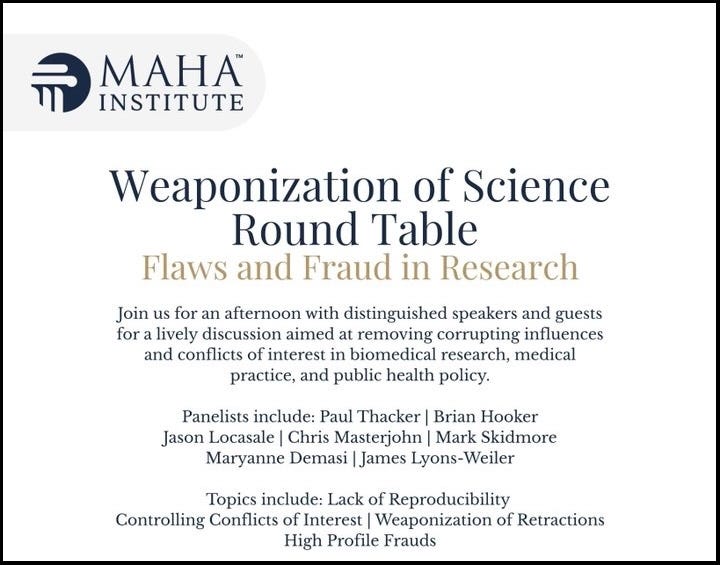
Yesterday, I took part in a panel discussion in Washington, D.C., on the weaponisation of science — specifically, how conflicts of interest, industry influence, and scientific deception have reshaped modern medicine.

[…]

For me, this is not an abstract debate. I’ve spent much of my career investigating how science becomes distorted — not by a few rogue actors, but through an entire system built on commercial dependence.

[…]

The Statin Wars: a case study in deception

I first saw this clearly while investigating cholesterol-lowering drugs. My 2013 Catalyst documentary questioned whether statins were being overprescribed, and it unleashed a media firestorm.

The episode was pulled after industry outrage, and I was publicly attacked. None of the critics engaged with the evidence — they simply sought to silence it.

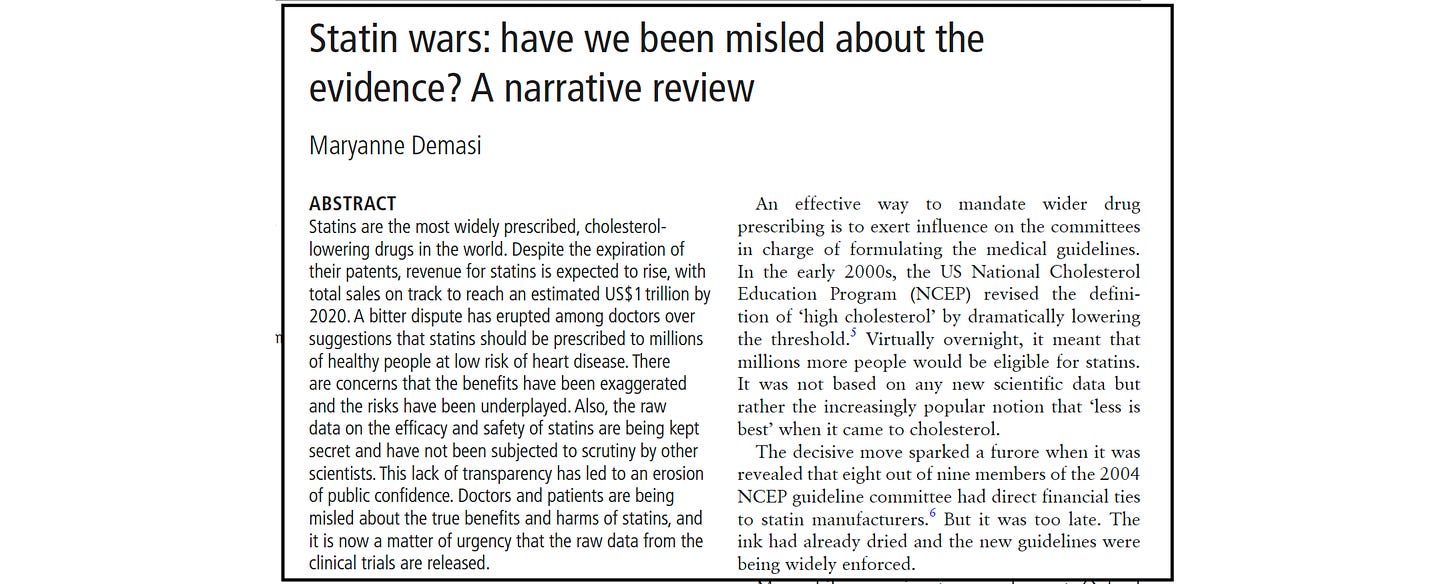
In 2018, I published a narrative review, “Statin wars: have we been misled by the evidence?

The piece revealed that the raw data underpinning statin trials were held exclusively by the Oxford-based Cholesterol Treatment Trialists (CTT) Collaboration and had never been released.

The CTT group had signed confidentiality agreements with pharmaceutical sponsors, blocking independent access to the raw data and preventing verification.

Yet those same meta-analyses have shaped prescribing guidelines around the world — produced by a group that sits under Oxford’s Clinical Trial Service Unit, which receives millions in funding from statin manufacturers.

In my public talks, I’ve described the statin story as a case study in bias and censorship. The trials used well-worn techniques to amplify benefits and minimise harms.

For example, they use ‘run-in’ periods before the trial to weed out people who couldn’t tolerate the drug, thereby artificially lowering the adverse events detected during the trial.

Often the outcomes were reported in relative, not absolute, terms — effectively exaggerating benefits that were, in reality, minuscule to the individual patient.

The vast majority of statin trials are funded by the manufacturers, and almost all show benefit — except for one publicly funded study that showed the opposite.

So, who funds the trial matters. The system is captured, plain and simple.

Regulatory capture and the illusion of oversight

The same dynamics pervade drug regulation. In a 2022 BMJ investigation, I showed how drug regulators rely heavily on funding from the very industries they oversee.

In Australia, the Therapeutic Goods Administration derives 96% of its operating budget from industry fees.

In the U.S., the same conflict exists through the Prescription Drug User Fee Act (PDUFA), which allows the FDA to collect billions from drug companies.

Those “user fees” now fund roughly two-thirds of the agency’s drug-review budget — a structural conflict of interest described by one scholar as “institutional corruption.”

And it’s true.

Industry money drives the demand for faster approvals through “expedited pathways,” which often means weaker evidence, shorter trials, and looser post‑marketing obligations.

Regulators defend this as “innovation,” yet the drugs approved under these pathways are far more likely to later receive black-box warnings or be withdrawn from the market due to safety issues.

The result is a system that rewards speed and sales over safety and substance.

The illusion of effective drugs has become even clearer thanks to a landmark investigation this year by Jeanne Lenzer and Shannon Brownlee.

They reviewed more than 400 FDA drug approvals between 2013 and 2022, and found that 73% of the drugs failed to meet four basic scientific criteria for demonstrating effectiveness.

[…]

Antidepressant deception

The same playbook has unfolded in psychiatry — beginning with how clinical trials are designed and reported.

Study 329 is one of the best-known examples. It claimed that paroxetine (Paxil) was safe and effective for adolescents aged 12 to 18.

But when researchers reanalysed the original regulatory documents, they found that suicides and suicide attempts had been coded under misleading terms such as “emotional lability” or “worsening depression,” effectively erasing them from view.

A similar pattern emerged when regulatory documents for two fluoxetine (Prozac) trials in children and adolescents were re-examined. Suicide attempts were omitted or misclassified, making the drug appear safer than it was.

Both reanalyses were carried out under the Restoring Invisible and Abandoned Trials (RIAT) initiative, a project dedicated to “restoring” abandoned or misreported trials by publishing accurate versions of the data submitted to regulators.

Selective publication compounds the problem.

The FDA only requires two trials demonstrating a drug is better than placebo before it is approved – meaning multiple failed trials get buried.

Psychologist Irving Kirsch, using Freedom of Information requests, uncovered dozens of unpublished SSRI trials that had been withheld from the medical literature.

When those missing studies were included, the apparent benefit of antidepressants over placebo almost vanished — an average gain of less than two points on the Hamilton Depression Scale, far below the threshold for meaningful clinical benefit.

In other words, much of what appears to be a “drug effect” is, in reality, placebo.

For years, patients have also been sold the marketing myth that depression stems from a “chemical imbalance” in the brain — a debunked theory but an extraordinarily effective sales campaign.

In 2020, we analysed popular health websites across ten countries and found that about 74% falsely claimed depression was caused by a chemical imbalance and implied that antidepressants could correct it.

It may sound like harmless messaging, but its influence is profound.

An Australian study showed that 83% of people who were told they had a chemical imbalance were more likely to take an antidepressant, believing it would “fix” their brain chemistry.

A more recent review in Molecular Psychiatry synthesised the best available evidence and found no consistent link between depression and low serotonin levels or activity.

Together, these findings reveal how psychiatry’s modern narrative was constructed — through distorted trials and deceptive marketing — turning uncertainty into certainty, and speculation into “science.”

Fraud by omission

Recently, I reported on how journals can weaponise science.

The BMJ’s Peter Doshi raised serious concerns about the pivotal PLATO trial for the anti-clotting drug ticagrelor — including data irregularities and unexplained deaths. But the journal Circulation that published the trial, has refused to investigate.

This selective vigilance is telling. Journals will retract small hypothesis papers that challenge orthodoxy, but billion‑dollar drugs with questionable data remain untouchable.

We’ve seen an even more aggressive form of suppression in the vaccine arena.

The recent Covaxin case exposed the extent to which manufacturers will go to suppress inconvenient findings.

After Indian researchers published a peer‑reviewed post‑marketing study suggesting serious adverse events “might not be uncommon,” Bharat Biotech — the vaccine’s manufacturer — filed a defamation lawsuit against the 11 authors and the journal’s editor, demanding retraction and millions in damages.

Within weeks, the journal caved, announcing its intention to retract despite finding no scientific fraud or fabrication. The only “offence” was to suggest that further safety research was warranted.

It’s a chilling example of how corporate and political power now overrides the normal mechanisms of scientific debate — a new form of censorship disguised as quality control.

Punishing scientists

The weaponisation of science isn’t only about suppressing inconvenient ideas or studies—it extends to the scientists themselves.

During the Vioxx scandal, Merck was caught keeping an actual “hit list” of doctors and academics who criticised the drug’s cardiovascular risks.

Internal emails revealed executives discussing plans to “seek them out and destroy them where they live.” That’s how far industry will go to silence dissent.

Executives are no longer stupid enough to put such threats in writing, but the behaviour persists — now outsourced to lobby groups and front organisations that quietly destroy reputations.

I experienced a version of this myself after my ABC documentaries on statins and sugar.

Like Merck, the Australian Breakfast Cereal Manufacturers Forum – an industry front group – drew up an “active defence” plan to neutralise me for challenging the industry narrative.

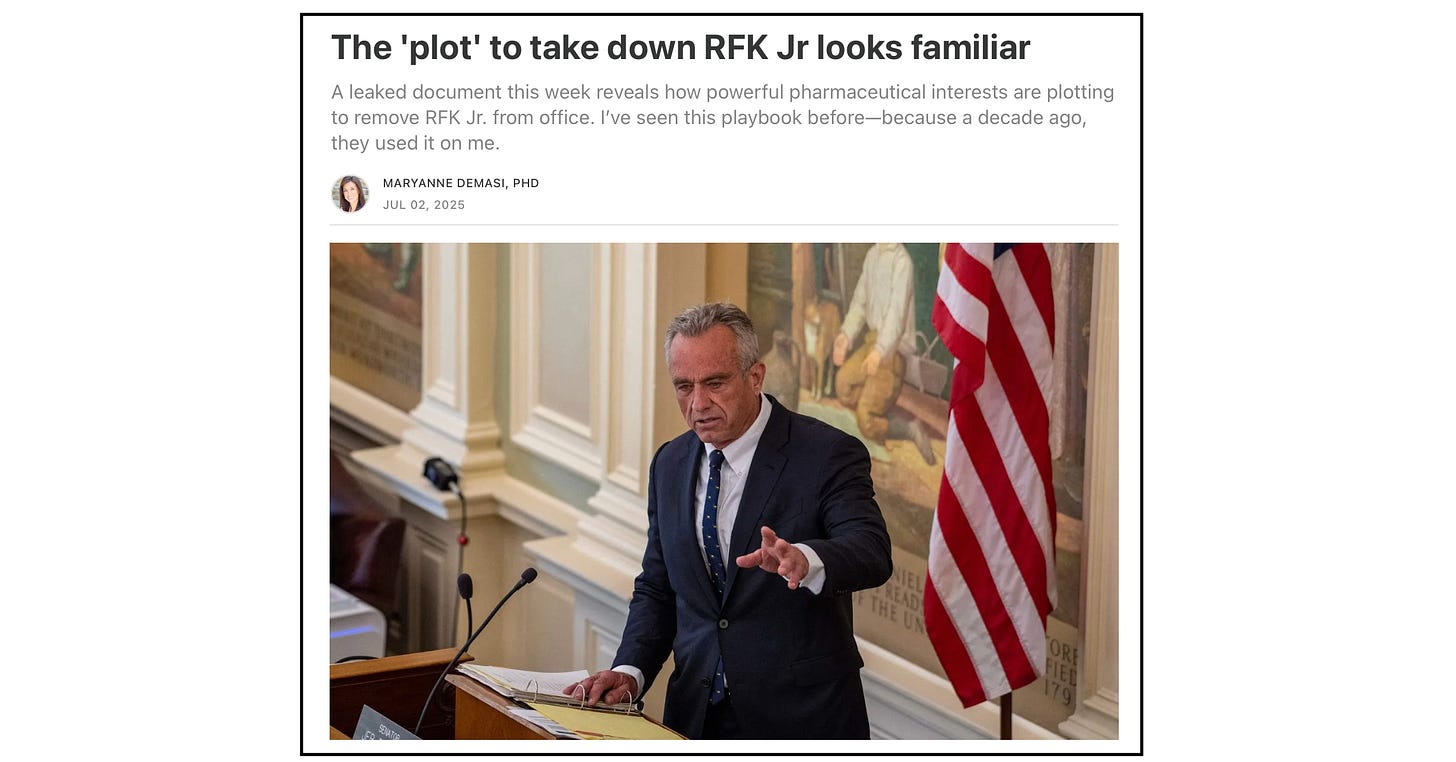
And we’ve seen it again recently with the leaked BIO memo detailing a coordinated plan to undermine Health Secretary Robert F. Kennedy Jr. — by co-opting media influencers, partnering with think tanks, and shaping public perception.

Different industries, same playbook: when billions are at stake, dissent is dangerous, and science becomes a weapon.

Weaponised fact-checkers

Look at the rise of fact-checking as a weapon.

In 2024, for example, a peer‑reviewed Japanese study published in the journal Cureus that reported a statistical rise in certain cancers following the Covid‑19 mRNA vaccine rollout was retracted after a Reuters “fact check.”

The authors, led by Dr Miki Gibo, made no claim of causation and had explicitly called for further investigation, yet the journal retracted the paper after the media controversy, citing concerns about the scrutiny of fact checkers.

[…]

Via https://blog.maryannedemasi.com/p/the-weaponisation-of-science


Is CIA Behind “Gen Z” Protests Worldwide?

By Dean Henderson

What do you get when you combine a ban on social media with a pro-Chinese or pro-Indian socialist government? According to former Indian spy and National Security Guard Lucky Bisht you get a series of CIA-funded “Gen Z” uprisings in Bangladesh, Nepal and Sri Lanka.

Former Bangladeshi Home Minister Asaduzzaman Khan Kamal agrees. On August 5, 2024 Prime Minister Sheikh Hasina was overthrown after she refused to allow the US to put a military base in her country. Kamal says the coup was led by Army Chief General Waker-uz-Zaman with help from the CIA.

Shortly after the coup The Daily Star newspaper in Dhaka quoted Sheikh Hasina as saying,

“If I allow a certain country to build an airbase in Bangladesh I would have had no problem.” She continued…, “the offer came from a white man…the conspiracies are still on. Like East Timor they will carve out a Christian country taking parts of Bangladesh (Chattogram) and Myanmar with a base in the Bay of Bengal.”

It is no coincidence that the Rohingya “refugee crisis” occurred in this exact region and drove out nearly one million Muslims. It is also not a coincidence that Chevron has an oil monopoly in the Bay of Bengal.

Sheikh Hasina’s father Sheikh Mujibur Rahman was assassinated in 1975 by the CIA. He was a revolutionary nationalist who in 1971 led Bangladesh to independence from Pakistan and the Khan bloodline which came to control that country for the Crown after the 1947 partition of India. Pakistan’s Prime Minister at the time was Ayub Khan.

In January 2025 report emerged in Sri Lanka that the CIA was fomenting unrest within that country’s military just five days before democratically-elected leftist President Anura Kumara Dissanayake was scheduled to visit China.

Dissanayake’s National People’s Power party swept September 2024 elections after an IMF-orchestrated financial crisis overwhelmed the country in 2019. In 2022 the country defaulted on $8.6 billion in IMF Rothschild loans. India then loaned the country $4 billion to keep the economy from completely crashing.

The debt crisis was precipitated by former President Mahinda Rajapaksa, a Western puppet who privatized Sri Lanka’s economy and gave huge tax breaks to multinational corporations and foreign investors. It was Rajapaksa’s ban on fertilizer exports which brought his government down. Recently the Russians sent a huge shipment of free potash fertilizer to the nation in support of Dissanayake.

“Gen Z” protests in Sri Lanka began in 2022, the same year the country defaulted to the IMF, and continue to this day. At one point protesters stored Dissanayake’s residence, just as they did Sheik Hasina’s home in Bangladesh. Like the George Soros funded colored revolutions last decade, the protests are being engineered and run through social media.

In Nepal outrage over a September 4, 2025 ban on social media triggered protests that toppled Prime Minister K. P. Sharma Oli within five days—the fastest youth-led regime change on record.

Oli has served as Chairman of the Communist Party (United Marxist-Leninist) since 2014. He was put under house arrest in 2005 following his involvement in the royal coup which saw the assassination of King Gyanendra Shah, ridding Nepal of the Royal House of Gorkha Shah bloodline monarchy control it had suffered under since 1559. A 2006 revolution freed Oli and his Communist Party took power.

Oli had banned social media after unsuccessful attempts to regulate what he called “unregistered foreign platforms”. Retired Indian General G. D. Bakshi said the coup followed the same template as other CIA-funded “colored revolutions” in Eastern Europe and the Middle East.

In recent years Oli had moved closer to China. Nepal occupies an especially strategic piece of real estate, lying between India and China at the roof of the world in the Himalayas. The US has historically sought to keep India and China at war, but the West’s proxy war against against Russia in Ukraine has driven these three nations into an historic alliance.

Shocked by the efficiency of its South Asia successes, the CIA decided to take its “Gen Z” protests worldwide. In October 2025 “Gen Z” protests overthrew Madagascar President Andry Nirina Rajoelina. His sin was questioning the COVID-19 lockdowns and the efficacy of Pfizer’s vaccines.

And just this past week, “Gen Z” protests erupted in Peru, Kenya and Mexico. In Peru President José Enrique Jerí Oré was sworn in on October 10, 2025 after genuine leftist protests led by the President’s We Are Peru Party toppled the corrupt government of President Dina Boluarte.

Boluarte aligned herself with the far right in Peru’s Congress and was backed by the military. Under her rule the Peruvian military massacred leftist students at Ayacucho and Juliaca killing at least 30 people.

In Mexico President Claudia Sheinbaum has continued down the socialist path of her predecessor President Andrés Manuel López Obrador, whose Morena Party succeeded the Party of the Democratic Revolution (PRD) which descended from the Mexican Socialist Party. The Crown-controlled oligarchy of Mexico favors the PRI which governed Mexico and backed the CIA’s drug cartels for decades. The PRD was aligned with the Zapatista revolutionaries. Morena has banned Roundup and GMO seeds, exerted more state control over the energy sector and increased the minimum wage, lifting many Mexicans out of poverty with its socialist policies.

So the next time the Crown mind controllers who own all your television stations (including the “public” ones) instruct you to cheer on a “Gen Z” coup somewhere on plant earth, maybe you could pause just a second before that righteous indignation wells up inside you and explodes into moral outrage.

[…]

Via https://www.globalresearch.ca/cia-behind-gen-z-protests-worldwide/5906153

States Already Rebelling Against Trump’s New Hemp THC Ban

Javier Hasse

Trump’s shutdown deal quietly recriminalizes most hemp-derived THC products next year, capping them at 0.4 milligrams of total THC per container and banning synthetics. From Texas to Minnesota, governors, brewers and farmers are already signaling they’ll regulate on their own terms instead of treating Washington’s new limit as the last word.

Contents
  • Trump’s new law redefines legal hemp, caps products at 0.4 mg total THC per container, bans synthetic or chemically converted cannabinoids and takes full effect in November 2026 after a one-year transition.
  • Texas, Kentucky, Minnesota, North Carolina, Florida and others are testing the edges: keeping hemp THC legal under state law, building strict regulatory frameworks or openly organizing to change the federal rules.

Last week, High Times broke down how Congress ended the longest government shutdown in U.S. history and, in the process, scheduled the recriminalization of most hemp-derived products. The deal President Donald Trump signed caps legal hemp at 0.4 milligrams of total THC per container, bans synthetic or chemically converted cannabinoids and gives the industry one year before most hemp products (including drinks, gummies and vapes) are treated as Schedule I marijuana.

On paper, the ban is national and absolute. In reality, it’s already turning into a state-by-state fight over who actually controls cannabis policy.

Paper Law vs. Real-World Enforcement

Technically, cannabis has been federally illegal the whole time, yet a $32 billion marijuana industry operates in dozens of states. Now, a $28.3 billion hemp sector is being shoved into the same contradiction.

Law professor Jonathan Adler told MJBizDaily: “While marijuana is illegal for purposes of federal law, the federal government doesn’t have the resources, doesn’t have the personnel to go after individual retailers, individual buyers, let alone individual users.” If that is true for state-licensed cannabis, it is even more true for hemp seltzers in grocery stores.

In Ohio, for instance, this tension is already out in the open. Governor Mike DeWine issued an executive order to ban hemp-derived THC at the state level, but a judge put the order on hold. Now, lawmakers are talking about pulling hemp THC into the state’s cannabis regime instead of treating it as pure contraband. According to ABC-5, House Speaker Matt Huffman, who supports stricter rules, still asked: “Now, are we going to go around and start cuffing 17-year-old clerks at gas stations? No, but we’ve got to get this thing in shape.”

Texas and Kentucky Push Back

Texas now sits in direct conflict with the new federal definition. Economist Robin Goldstein writes in the Houston Chronicle that the state’s “THC hemp business” represents “a $4.5 billion industry that supports thousands of businesses, most of them small and independent.” He credits Governor Greg Abbott with taking “courageous action to save Texas hemp” by vetoing a state ban and issuing an executive order that kept intoxicating hemp products legal under HB 1325.

Under Abbott’s order and HB 1325, Goldstein notes: “THC hemp products have already been explicitly legalized under Texas law.” Now the shutdown deal makes those products illegal again at the federal level, but state law “is therefore now in conflict with U.S. federal law.” In his words, “recreational intoxicating hemp is just as legal in Texas as recreational intoxicating cannabis is in California,” and “Texas and its THC industry simply join the conflicts-with-federal law club.” His bottom line: “I see no more reason that THC hemp businesses should stop operating in Texas than that THC cannabis businesses should stop operating in California.”

In Kentucky, the governor is sending a similar signal, albeit in softer tones. When asked about the federal hemp language, Governor Andy Beshear said at a press briefing that “hemp is an important industry in Kentucky,” and that “we should have appropriate safety regulations around it, but we should make those regulations here in Kentucky —talking to the industry and making sure that we get that balance right.”

The Governor added: “I think that we can protect our kids. I think that we can do the right thing to protect all of our people while not handicapping an industry that supports a lot of people.” Meanwhile, Senator Rand Paul tried to strip the hemp ban from the bill and warned leadership it would devastate the hemp sector, while Senator Mitch McConnell, who pushed hemp legalization in 2018, led the effort to close the so-called loophole.

Beer Fridges, Hemp Fridges and a 0.4 mg Cap

In Minnesota, hemp drinks aren’t a side hustle; they’re a core business.

Minnesota Public Radio reports that the state’s hemp-derived cannabinoid sector is “one of the most successful in the country.” The Office of Cannabis Management says Minnesota businesses, including breweries, “paved the way for the hemp-derived THC beverage market” and built a regulatory framework around low-dose drinks.

As Omar Ansari, owner of Minneapolis-based Surly Brewing, told MPR, “people are mad that this is how it played out. Like, ‘Wait a second, they snuck this into a funding bill?’ That’s crazy.” Surly sells hemp-derived THC drinks with “a range of 3 to 10 milligrams of THC per can.” Minnesota’s standard is 5 milligrams per serving. The new federal cap is 0.4 milligrams per container. “This is terrifying for us in the industry because if it doesn’t change, there will be a lot of breweries that close,” he said.

Josh Collins, spokesperson for the Office of Cannabis Management, said the agency is “disappointed to see the federal government make such significant changes in the federal framework” and that “a system that allows Minnesota’s approach… is the best way to ensure the products that Minnesotans are seeking are available and safe.”

Shops and Farms that ‘Can’t Really Pivot’

In North Carolina, the federal ban is landing on top of a hemp “wild west” that the state never fully regulated.

NC Newsline visited Redhead Hemp in Durham, a shop with a “Canna Cafe”, where people sit with hemp-infused teas and coffee. Manager Hannah DeLange called it “a space for all,” saying “it should be a plant for all the people, and it should be accessible.”

Owner Emma MacAdam said: “We found out the morning of the Senate vote that this was occurring. It was pretty clear when they slipped it in the bill that that bill was going to pass, so it kind of felt like a really sleazy way for them to just slide their agenda into a bill that was very necessary and important for so many people.” The new cap would eliminate “about 99.5%” of their stock.

Farmer Dana Rider of Otherside Farm told NC Newsline that hemp is “part of our income and helps keep the farm afloat,” and that many customers “don’t want to feel different, they don’t want to have this altered consciousness… They just want to feel better.” His farm sells only full-spectrum products. “For us, we can’t really pivot, right?” he said. “We would not be around anymore, basically, which is sad to think about.” Nevertheless, until someone tells them to stop, they plan to “keep selling our stuff and growing and producing our products.”

At the same time, hemp seltzers have become a lifeline for many breweries. Axios Raleigh reports that Raleigh’s Trophy Brewing launched a delta-9 hemp seltzer called Starry Eyes. Co-owner Les Stewart said: “We approached [making our THC seltzer] with the idea that regulation was coming and, frankly, welcome. But this is beyond that. This is an intentional industry killer.” Groovewagon founder Reilly Dunn warned that, if legal hemp disappears, “they’re going to go straight back into the criminal markets.”

Florida Proves Regulation Is Possible

Florida spent the whole of 2025 trying to show that hemp can be regulated like food and alcohol instead of banned altogether.

A detailed analysis from ACS Laboratory notes that Florida’s hemp economy now supports more than 100,000 jobs and billions in wages. Lawmakers tried to ban intoxicating hemp in 2024 with SB 1698, but Governor Ron DeSantis vetoed the bill after warnings it would “shutter small businesses and erase thousands of jobs.” A bipartisan hemp workgroup tried again in 2025: that effort collapsed before a final vote.

With the legislature stuck, the Florida Department of Agriculture and Consumer Services (FDACS) stepped in. A March 2025 rule aligned hemp extracts with food-grade safety standards, requiring full-panel lab tests, banning synthetic cannabinoids, mandating child-resistant packaging and QR-linked lab results, and setting a 21-plus age limit. A November update tightened child-protection and marketing rules even further.

Eleven days later, Trump signed the shutdown deal. ACS notes that the federal law “limits total THC to 0.4 milligrams per container, a threshold so low that it disqualifies most hemp extracts currently sold, including many nonintoxicating formulas,” and bans all synthetic or chemically converted cannabinoids. The U.S. Hemp Roundtable called the move “a serious blow”, but added: “We’re disappointed, but not defeated. Our new mission: 365 days to regulate, not ban.”

What Rebellion Really Looks Like

The new federal definition pulls most hemp drinks, gummies and vapes into the same legal bucket as marijuana under the Controlled Substances Act. That means possible 280E exposure, banking and insurance problems, and interstate shipping headaches even for companies that have never even been near a cannabis dispensary.

But the rebellion is not made by governors telling people to ignore Washington. It looks more like:

  • States like Texas keeping intoxicating hemp legal under state law and expecting state police to enforce state statutes first.
  • Officials in places like Kentucky and Minnesota saying hemp is an “important industry” that should be regulated, not erased.
  • Brewers and farmers in North Carolina and elsewhere planning to “keep selling our stuff” while they lobby for a fix.
  • Florida enforcing strict testing and child-safety rules as proof that hemp can be managed without burning the entire sector down.

Congress set a new boundary and left everyone else to clean up the details. The shutdown ended. The one-year hemp clock started. What happens between now and November 2026 will decide whether this ban becomes permanent… or the crisis that finally forces lawmakers to write rules that match the way people actually live and consume cannabis.

[…]

Via https://hightimes.com/news/politics/states-are-already-rebelling-against-trumps-new-hemp-thc-ban/

UN Security Council approves US plan for Gaza, Hamas rejects UNSC resolution

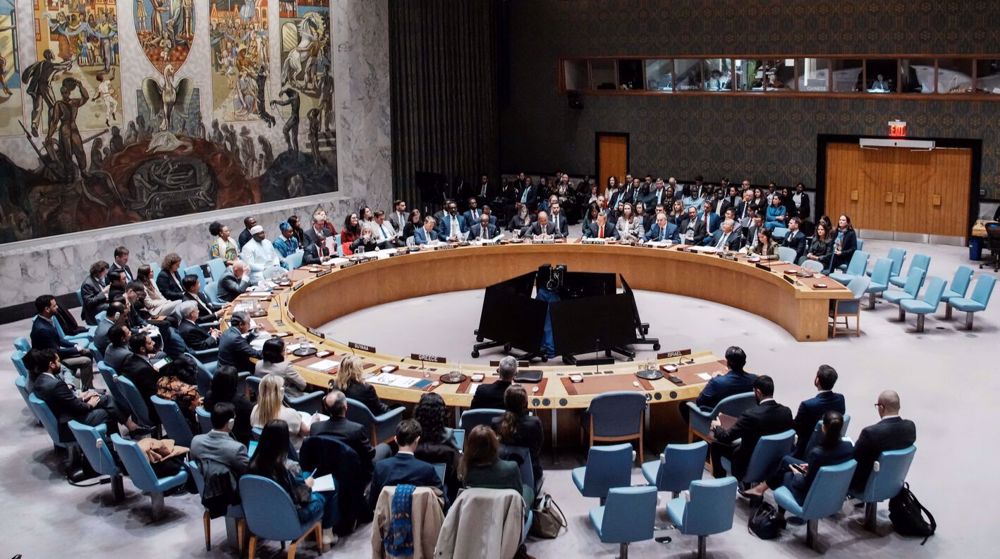
 US Ambassador to the United Nations Michael Waltz speaks during a meeting of the United Nations Security Council to consider a US proposal for a UN mandate to establish an international stabilization force in Gaza, at UN headquarters in New York City, US, November 17, 2025. (Reuters photo)


Press TV

The United Nations Security Council has adopted a resolution drafted by the United States to establish an International Stabilization Force (ISF) in the Gaza Strip.

The resolution, passed on Monday, endorses US President Donald Trump’s Gaza plan and authorizes the creation of a peacekeeping coalition that would include Muslim-majority countries such as Egypt, Indonesia, and Azerbaijan.

In response, the Palestinian resistance movement Hamas rejected the resolution, arguing that it imposes international guardianship, does not address Palestinian rights, and aims to disarm the resistance movements.

Hamas said the resolution does not meet the political and humanitarian demands and rights of the Palestinian people.

The movement stressed that any international force must be deployed only at Gaza’s borders to monitor the ceasefire under UN supervision.

“Assigning the international force with tasks and roles inside the Gaza Strip, including disarming the resistance, strips it of its neutrality, and turns it into a party to the conflict in favor of the occupation,” the group added.

Russia, which had circulated a rival resolution, abstained along with China on the 13-0 vote.

US Ambassador Mike Waltz said the force will be “a strong coalition of peacekeepers, many from Muslim-majority nations like Indonesia [and] Azerbaijan.”

The force will “deploy under a unified command” and begin its activities “while Israel phases out its presence,” Waltz added.

The United Kingdom said it voted for the resolution to advance the US peace plan for Palestinians and Israelis and stressed the urgent need to deploy the International Stabilization Force.

The international force will be deployed under a unified command to secure Gaza, oversee its demilitarization, and take in aid through safe corridors.

According to the resolution, this process will unfold as Israel phases out its Gaza presence, and a vetted police force assumes new responsibilities.

A transitional administration will also be formed, coordinating reconstruction efforts through a trust fund backed by the World Bank.

It must also operate exclusively in coordination with official Palestinian institutions, with no role for Israel in it.

Washington formally circulated the draft resolution to the 15 Security Council members last week. The text would authorize a two-year mandate for a transitional governance body and an international stabilization force.

Russia, China, and some Arab states oppose the proposal, citing concerns about a yet-to-be-established board temporarily governing the strip and the absence of any transitional role for the Palestinian Authority.

According to four UN diplomats briefed on the matter, China and Russia — two veto-wielding members — have called for the “Board of Peace” under US President Donald Trump’s Gaza ceasefire plan to be removed from the resolution entirely.

However, the US maintains the language around the board that the US has proposed as a transitional administration for Gaza in the latest draft released late Wednesday.

The Russian draft requests that the UN Secretary-General identify options for an international stabilization force for Gaza, and does not mention the “Board of Peace”.

Among the sticking points regarding the US text are the pathway to an independent Palestinian state and the timeline for the withdrawal of Israeli forces from the Gaza Strip, according to the diplomats.

Still, the US mission to the UN urged the Security Council to move ahead with Washington’s resolution.

“Attempts to sow discord now – when agreement on this resolution is under active negotiation – has grave, tangible, and entirely avoidable consequences for Palestinians in Gaza,” a US mission spokesperson alleged.

The diplomats said that the Americans could decide to go forward unilaterally with a force from willing countries that would not have UN backing.

Hamas and Israel agreed last month to the US-brokered Gaza ceasefire, aimed at ending the latter’s two-year-long genocidal war against Palestinians in the besieged territory.

The truce took effect on October 10, but Israel has continued to violate it by carrying out airstrikes, incursions, shootings, and arrests.

The deal marks the first phase of Trump’s 20-point Gaza ceasefire plan, with further stages to be negotiated at a later date.

[…]

Via https://www.presstv.ir/Detail/2025/11/18/759023/Hamas-rejects-UNSC-Gaza-international-force-resolution

The Iroquois, Hokan, Tanoam and Kayhoan Language Families

Iroquoian Languages (Light Ages) : r/imaginarymaps

Episode 29 The Original American Languages Part 3

Dr John McWhorter (2019)

Film Review

Iroquois

The Iroquois family of languages was found mainly around Lake Ontario and Lake Erie, the Finger Lakes in New York state and a few southern coastal areas. These include Oneida, Mohawk, Cherokee, Oneida, Cayuga, Seneca and Erie.

Cherokee has it own writing system devised by a Cherokee blacksmith before Andrew Jackson banished the Cherokee from mainstream America society. Sequohay, who created Cherokee script, referred to the European written language as “talking leaves.” Although he spoke no English, he borrowed the English alphabet to depict Cherokee sounds. Instead of creating a Cherokee alphabet for individual consonants and vowels, he created a “syllabary,” in which English letters represented syllables.

Eventually most Cherokee learned it and in the 1820 began publishing literature in the Cherokee languages. In the 1830s, a Cherokee migrant introduced Sequohay’s syllabary in  Liberia where it was used to transcribe Vai (a Niger Congo language see Niger Congo: Biggest Language Family in Africa).

Hokan

The Hokan family of languages was spoken in Baja California and isolated areas further north. The most widespread Hokan language was Pomo, which had an elaborate system of verb prefixes.

Tanoam and Kayhoan

The Tanoam family of languages was spoken in the four corners states (Utah, Arizona, Colorado and New Mexico), and the Kayhoan family in Oklahoma.

Although these languages persist, they have become simplified over time with exposure to other language groups. For example some have ceased using irregular plurals or using future and/or past tense.

Pidgin Languages

Numerous pidgin languages (see What Are Creole Languages?) have developed with exposure to other indigenous speakers and French and English settlers. One example is Plains Sign Language different tribes used to communicate with one another. Another is Chinook Jargon, a Chinook/Nudge pidgin which was also used by French and English speakers. Although not a full language, it was effective for communicating basic needs.

Other pidgins that developed were Eskimo Jargon, Mobilian Jargon and Delaware Jargon. Swedish settlers spoke a simplified version of Munsee, a Delaware dialect (part of the Algonquin language family), in which they spoke words only without grammatical context.

https://www.kanopy.com/en/pukeariki/watch/video/6120000/6120056

UK Healthcare Workers Skip Flu Shots — It’s a ‘Verdict’ on Broken Trust

russell brand flu shot

Record numbers of frontline health workers in the U.K. refused the flu vaccine last winter, a decision that media outlets claimed could cripple hospitals with flu outbreaks.

Political commentator Russell Brand highlighted the fallout on a recent episode of his “Stay Free” podcast.

“If we’re supposed to trust the science, why are scientists and people that work in medicine refusing to take vaccines?” Brand asked. “What do they know that we don’t know?”

Fewer than 4 in 10 National Health Service (NHS) workers — just 37% — received the flu vaccine, with rates in some areas falling below 10%, The Daily Mail reported.

The NHS has since issued a “flu jab SOS,” warning that low staff vaccination rates could intensify what officials fear may become a severe 2025 flu season.

Brand said he believes the flu vaccine “revolt” stems from years of deceit and coercion by Big Pharma, government and international bodies such as the World Health Organization, culminating in the “chaos of COVID.”

‘A collapse in confidence over vaccines themselves’

“At the heart of this mistrust is a collapse in confidence over vaccines themselves,” Brand said, arguing that concerns over efficacy, compensation payouts and mandates have all weakened people’s trust.

He cited a Swiss study published in August that found healthcare workers who received a COVID-19 booster were up to 70% more likely to develop flu-like symptoms and miss work than those who skipped the shot, with the increase peaking immediately after vaccination.

An October investigation by The Defender found that one of the largest Medicaid health plans in the U.S. is paying low-income parents hundreds of dollars in gift cards to vaccinate their children.

In July, Ryan Champlin — who coordinates vaccine purchasing contracts for doctors at Cook Children’s Health Care System in Texas — told The Defender that doctors earn extra payments when 80% or more of their patients complete the Centers for Disease Control and Prevention’s Child and Adolescent Immunization Schedule.

A New York Times article, also in July, reported that about half of pediatricians hold “value-based contracts” with insurers. The contracts reward providers with extra payments for meeting specific metrics considered markers of “quality of care.”

In October 2021, as governments worldwide mandated COVID-19 vaccines, New York physician assistant Deborah Conrad was fired for reporting vaccine-related adverse events to the federally run Vaccine Adverse Event Reporting System or VAERS. In 2024, Conrad filed a first-of-its-kind lawsuit accusing her former employer, Rochester Regional Health, of defrauding the government by blocking her efforts to file reports.

Brand said COVID-19 vaccine coercion left doctors, nurses and hospital staff around the world reeling. “Tens of thousands of healthcare workers, the same people who were once hailed as heroes, lost their jobs for refusing a shot they didn’t trust,” he said.

In New York alone, an estimated 34,000 healthcare workers either quit, were fired, or were placed on furlough following the vaccine mandate.

“Their livelihoods were destroyed in the name of public health, while political leaders and pharmaceutical executives congratulated themselves for their compassion,” Brand said.

‘Why should we trust them at all?’

Even as efficacy fell and side effects emerged, vaccine makers continued to secure contracts and rake in profits, according to Brand. Governments shielded the drugmakers from liability, indemnifying them against vaccine injuries.

When mistakes occurred, taxpayers — not the corporations — covered the costs, he said.

Brand said in a 2023 episode of his show that corporations often profit from crises using taxpayer money. The federal government funded the development and purchase of Pfizer and Moderna’s COVID-19 vaccines, and if the public pays for them, then they “should share in the benefits,” he argued.

Pfizer reported a record $31.4 billion in profits on sales of $100.3 billion in 2022, while Bill Gates reportedly earned hundreds of millions investing in Pfizer’s partner, BioNTech.

Brand said the fact that up to 90% of NHS frontline workers are skipping the flu vaccine isn’t a “quirk of statistics. It’s a verdict.” He added:

“Their message is the same one millions of ordinary citizens feel but rarely voice. We were lied to, coerced and exploited. And now you ask us to trust you again?

“Science is supposed to question everything. Governments and corporations demanded the opposite. They demanded obedience. And now, as the institutions that broke our trust tried to rebuild it … we must finally ask the only question that matters. Why should we trust them at all?”

[…]

Via https://childrenshealthdefense.org/defender/uk-healthcare-workers-skip-flu-shots-verdict-broken-trust-russell-brand/

Wearables: Cassidy Introduces Bill to Require Clear Consent Before Companies Share Users’ Health Data

health watch

The Health Information Privacy Reform Act would require wearable developers to explicitly notify users that HIPAA’s privacy rules won’t protect their data and offer opt-out features for users who don’t want their data shared. But a legal expert told The Defender the bill, introduced by Sen. Bill Cassidy, doesn’t address location tracking.

Sen. Bill Cassidy (R-La.) introduced a bill this month to protect people’s privacy and consent when they use wearables that track health data.

Cassidy’s bill, the Health Information Privacy Reform Act, would require wearable developers to explicitly notify users that HIPAA’s privacy rules won’t protect their data and offer opt-out features for users who don’t want their data shared.

The bill also calls on U.S. Health Secretary Robert F. Kennedy Jr. to direct the National Academies of Sciences, Engineering and Medicine to study the ethics and implications of paying people to share their health data for research purposes.

According to Cassidy, wearables like smartwatches or Fitbits can be “helpful tools” for managing a patient’s health. However, they also create “privacy concerns that didn’t exist when it was just a patient and a doctor in an exam room.”

“Let’s make sure that Americans’ data is secured and only collected and used with their consent,” he said in a statement.

The Health Insurance Portability and Accountability Act of 1996 (HIPAA) governs traditional provider-patient interactions. “However, HIPAA is failing to keep up with consumer health products that connect individuals to health tools outside of the doctor’s office,” Cassidy’s press release stated.

Ted Claypoole, legal expert and cyberspace law committee chair of the American Bar Association, who reviewed Cassidy’s bill, told The Defender it addressed “some of the obvious holes” in current HIPAA coverage.

However, Claypoole said the legislation “does not seem to address the other major privacy concern of location tracking.” He said he would like to see federal legislation that limits companies’ ability to track and share people’s locations.

State bills target ‘neural data’ concerns

Cassidy’s bill is part of a trend among federal and state lawmakers to address privacy and consent concerns arising from wearables.

In April, several Democratic senators asked the Federal Trade Commission to protect consumers’ neural data from being exploited or sold. Neural data can reveal a person’s mental health conditions, emotional states and cognitive patterns.

Wearables that track neural data via EEG (electroencephalogram) waves that detect electrical activity in the brain are already on the market. For instance, Neurable sells a noise-cancelling headset with EEG sensors for $499 that the company says boosts focus and lowers stress.

Emotiv’s Bluetooth-enabled ear buds, priced at $399, also use EEG sensors to measure brainwaves.

Massachusetts is among several states that have introduced legislation seeking to protect people’s neural data. And lawmakers in Illinois are considering a bill that would update the state’s Biometric Information Privacy Act to require written consent from wearables users before companies collect their neural data.

In Minnesota, lawmakers are considering a bill that would require companies and governmental agencies to obtain informed consent before collecting neural data.

State Sen. Eric Lucero, the bill’s primary author, told The Defender he’s concerned that private sector companies, government agencies, and individual threat actors pose a risk to manipulating people’s neural data without their consent.

Lucero, a technologist who worked in cybersecurity for over 20 years before taking office, said he first proposed a version of the bill in 2020, several years after Google Glass first came out. Google’s product used eye movements, rather than a mouse and keyboard, to connect a person to a computer.

That’s when Lucero realized that the human-computer interface was evolving and computers would likely soon be able to directly connect to people’s brains — as Elon Musk has done with his Neuralink brain implant.

As of Sept. 10, a dozen people have been implanted with Neuralink, according to PC Mag.

“If the technology exists to read brainwaves, it’s a hop, skip, and a jump to be able to have the technology to write brainwaves,” Lucero said. In other words, it may soon be possible for someone to manipulate a person’s brainwaves.

Lucero pointed out that several movies in recent years, including “Inception” and “Johnny Mnemonic,” depicted characters who had thoughts implanted by people outside of them.

Five years ago, Lucero’s bill didn’t get much traction, but now that’s changing. This year, state Sen. Erin K. Maye Quade, a member of the Democratic-Farmer-Labor Party, joined him in co-sponsoring the legislation.

If passed, the bill would make it illegal for a person, company or agency to read or implant thoughts or brainwaves into a person’s mind without their consent.

Lucero added:

“I have no problem if people want to share their data with technology companies or any other relationship that’s outside of the patient-doctor relationship, that’s fine. It just needs to be done with affirmative consent — not a passive or an implied consent.

“And not a default position of it is assumed you’re opted in unless you expressly opt out. It needs to be that you are opted out as the default position unless you affirmatively opt in.”

In 2021, Chile became the first country in the world to amend its constitution to protect people’s neurodata and mental privacy.

Wearables a contentious issue among health freedom advocates

Both wearables and implants that track biometrics not only pose privacy and consent concerns but also may increase the user’s exposure to wireless radiation, according to Miriam Eckenfels, director of Children’s Health Defense’s (CHD) Electromagnetic Radiation (EMR) & Wireless Program.

She noted that Kennedy caused an uproar among supporters when he said during his June congressional testimony:

“We’re about to launch one of the biggest advertising campaigns in HHS [U.S. Department of Health & Human Services] history to encourage Americans to use wearables … my vision is that every American is wearing a wearable within four years.”

We do not share this vision,” Eckenfels said. “Quite the contrary, we oppose governmental pressure to incentivize the widespread use of wearables. They pose serious health risks, especially to children, and they threaten privacy.”

Kennedy later clarified in a conversation with author Charles Eisenstein that he simply wanted wearables to be “universally available as one of the ways people can get on top of their health.”

Kennedy told Eisenstein:

“Of course I don’t want to mandate it. And the idea of everyone’s body being hooked up to a data center somewhere is horrifying. This data should be private, and when it is shared with the device provider it must be subject to health privacy laws.”

Eisenstein was Kennedy’s chief speechwriter during his presidential campaign and recently moderated a panel of “spellers,” non-speaking young adults with autism, at CHD’s “Moment of Truth” conference last weekend.

When The Defender asked if Kennedy supported Cassidy’s bill, an HHS spokesperson said HHS does not comment on potential or pending legislation.

Cassidy did not immediately respond to our comment request.

[…]

Via https://childrenshealthdefense.org/defender/cassidy-introduces-bill-require-clear-consent-wearables-share-users-health-data/?utm_id=20251116

Syria pledges to hand over hundreds of Uyghur militants to China

(Photo credit: Levant 24)


The Cradle NOV 17, 2025

Syria’s Ministry of Defense integrated thousands of the extremist Chinese fighters into its ranks earlier this year

The Syrian government plans to hand over Uyghur foreign fighters within its security forces to China, AFP reported on 17 November, ahead of Syrian Foreign Minister Asaad al-Shaibani’s first visit to Beijing.

The issue of the extremist foreign fighters from China’s majority Muslim Xinjiang province was expected to be on the agenda for Shaibani’s meeting with Chinese officials, a Syrian government source told AFP on condition of anonymity.

“Based on China’s request, Damascus intends to hand over the fighters in batches,” the source stated.

A Syrian diplomatic source elaborated further, telling AFP that “Syria intends to hand over 400 Uyghur fighters to China in the coming period.”

Shaibani became foreign minister after the group he helped found, Hayat Tahrir al-Sham (HTS), took power in Damascus in December of last year with help from the Turkiye, Israel, and the US.

Large numbers of extremist Muslim fighters traveled from Europe, Arab countries, Turkiye, and China to assist HTS, the former Al-Qaeda affiliate, to topple the government of former Syrian president Bashar al-Assad.

The CIA-led operation to topple Assad, known as Timber Sycamore, began in 2011. The effort involved sparking anti-government protests and flooding Syria with heavily armed and well-funded militants from Al-Qaeda and the Islamic State of Iraq (ISI).

Fighters from the Uyghur religious minority belong to the Turkistan Islamic Party (TIP), a group that aims to establish an Islamic state spanning Xinjiang and other parts of Central Asia.

After coming to Syria with the help of Turkish intelligence, the group helped HTS (formerly the Nusra Front) conquer Idlib governorate in northwest Syria in 2015.

In 2017, Syria’s ambassador to China said that between 4,000 and 5,000 Uyghurs were fighting in the country.

Uyghur fighters often took over homes of Christians and Druze, who were ethnically cleansed from Idlib, which became the base from which HTS launched its campaign to topple Assad last year.

The new Syrian army gave a prominent Uyghur militant from TIP a high-ranking position as brigadier general, while also integrating thousands of the group’s fighters.

The Chinese government has for years expressed concern about the TIP’s presence in Syria. On 31 December, a Chinese Foreign Ministry spokesperson called on all countries to “recognize the violent nature” of the TIP and “crack down on it.”

[…]

Via https://thecradle.co/articles/syria-pledges-to-hand-over-hundreds-of-uyghur-militants-to-china-report