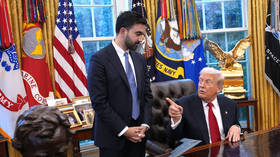
US President Donald Trump has said he believes New York’s Mayor-elect Zohran Mamdani “could do a very good job.” The political opposites held their first in-person meeting at the White House on Friday.
”I can tell you, some of my views have changed… I feel very confident that he can do a very good job. I think he is gonna surprise some conservative people, actually,” Trump said, praising Mamdani’s electoral victory.
A democratic socialist and little-known state lawmaker who won New York’s mayoral race earlier this month, Mamdani requested the sit-down with Trump to discuss cost-of-living issues and public safety.
Asked to clarify if he thinks Trump is a fascist, before Mamdani can answer, Trump intervenes and laughs it off, saying, “That’s ok. You can just say yes. That’s easier. It’s easier than explaining.” pic.twitter.com/RfKJd6vAs1
After months of trading insults in the media, the mayor-elect and the president appeared to strike a rapport in the Oval Office.
“We agreed on a lot more than I thought,” Trump told the reporters following a private meeting. “We have one thing in common: we want this city of ours that we love to do very well.”
“It was a productive meeting focused on a place of shared admiration and love, which is New York City, and the need to deliver affordability to New Yorkers,” Mamdani added.
Mamdani’s victory in the heavily Democratic city earlier this month came despite fierce opposition from conservatives and little enthusiasm from mainstream Democrats. Trump had branded him a “communist lunatic,” predicting that his policies would push New Yorkers to flee the city for Miami.
As Mamdani surged in the polls to victory, Trump issued threats to strip federal funding from the city. The mayor-elect has consistently criticized various policies put forth by Trump, particularly those aimed at increasing federal immigration enforcement in New York City, where nearly 40% of the population is foreign-born.
Here is a short comment on the latest Ukraine peace plan that Western media keeps going on and on about. This is going to be a very short comment, but, I hope, to the point.
Now, suppose that you had your own peace plan for the former Ukraine that you thought up yourself. And suppose that I also had such a peace plan that I crafted by the sweat of my brow. What do you suppose would be the big, huge, overwhelming similarity between these two plans that would overshadow all other possible similarities between them? That’s right, neither plan would make the least bit of difference. The right place for them would be the fireplace.
Why? Because our opinions on the Russian-Ukrainian conflict or our ideas for ending it don’t matter at all to either Russia or the former Ukraine
Now, suppose the White House or the European Union or even the Kremlin had peace plans of their own. Would these matter any more that our homespun plans that just went up the chimney in a puff of white smoke?
I would say that, no, they wouldn’t matter at all. Why? It’s very simple:
• The US did everything possible to cause this conflict — by organizing the Kiev putsch in 2014, by arming and otherwise supporting the Kiev regime against Russia and by pursuing the general strategy of dealing Russia a strategic defeat through the war in the former Ukraine and through sanctions. The US is the war party, not the peace party. Why should anyone listen to US officials on the subject of peace? If they wanted peace, they wouldn’t have gone to war (with the former Ukraine as a proxy).
• The European Union is preparing to go to war with Russia: rearming, increasing the size of their military and so forth. They are also not about peace — they are about war. Why would anyone sane listen to the war party on the subject of peace? I see no reason.
• Is Russia interested in peace in the former Ukraine? Eventually, yes, but concluding some sort of peace agreement prior to victory would be a defeat for Russia. The priorities for Russia are obvious: first victory, then peace. A decisive victory in the former Ukraine would discourage both the US and the EU/NATO from entertaining plans of any further armed conflict with Russia. On the other hand, if Russia were to accede to Western demands, they would see that as a sign of weakness.
This is not to say that there isn’t a peace plan for the former Ukraine, and that it isn’t being put into effect. That peace plan is being written on the ground by Russian soldiers, who are winning. There is no longer an organized, solid Ukrainian front or line of contact. There are only some pockets of resistance that the Russians are neutralizing. And once these pockets have been neutralized, to the west of them is the open steppe.
Russia’s objectives for the Special Military Operation have not changed one bit since it was announced on February 22, 2022. These are the only ones worth paying attention to. Everything else is just noise.
“COVID-19 was the test of social responsibility – A huge number of unimaginable restrictions for public health were adopted by billions of citizens across the world.”
The following report was first published on October 1st, 2022, on winepressnews.com.
Due to the fact that billions of people worldwide all voluntarily submitted themselves to hefty Covid-19-related restrictions, practices (masking, social distancing, death of the handshake, Zoom calls), job closures, payment forbearance, curfews, lockdowns, isolations, quarantines and more; the World Economic Forum (WEF) is now stating that this pandemonium was just a “test of social responsibility,” and that these same people will accept a social credit score system.
Published on September 14th, the WEF published an article titled “‘My Carbon’: An approach for inclusive and sustainable cities,” written by Kunal Kumar, Mission Director for Smart Cities Mission and Ministry of Housing and Urban Affairs of India, and Mridul Kaushik, who worked as an analyst for Cisco for several years.
The two authors lay out the steps towards the world’s populous accepting a social credit score system that is carbon-based. This is what China currently uses, which applies a retroactive score to individuals based on what they say and do, which therefore determines what they can and cannot do in society.Subscribe
The authors begin their article by asserting that nearly three-quarters of the world’s cities account for the total carbon emissions, and with 40% of that number coming from individuals and their actions. And even though many communities have tried to implement sustainability goals, they say they have had “limited success” because of political and social discourse, ignorance on the issues, and the inability to monitor “My Carbon” emissions.
“My Carbon,” as the WEF calls it, is the pseudonym for this social credit-carbon calculator they wish to come to pass.
The authors layout three key “significant developments” within the last decade that could help in “shaping the future towards smart and sustainable cities.”
The author’s first tenet is the subservience of the masses during the Covid-related restrictions and lockdowns. They wrote:
“COVID-19 was the test of social responsibility – A huge number of unimaginable restrictions for public health were adopted by billions of citizens across the world. There were numerous examples globally of maintaining social distancing, wearing masks, mass vaccinations and acceptance of contact-tracing applications for public health, which demonstrated the core of individual social responsibility.”
In other words, if the masses willingly submitted themselves to the “new normal,” why would they not conform to these new proposals to perfectly surveil everyone’s life?
From there, the authors introduce point number two, “Fourth Industrial Revolution technology breakthroughs.” In short, because of all the artificial intelligence and smartphone addictions, the authors, without saying the words, necessitate the need for a carbon-based social credit score:
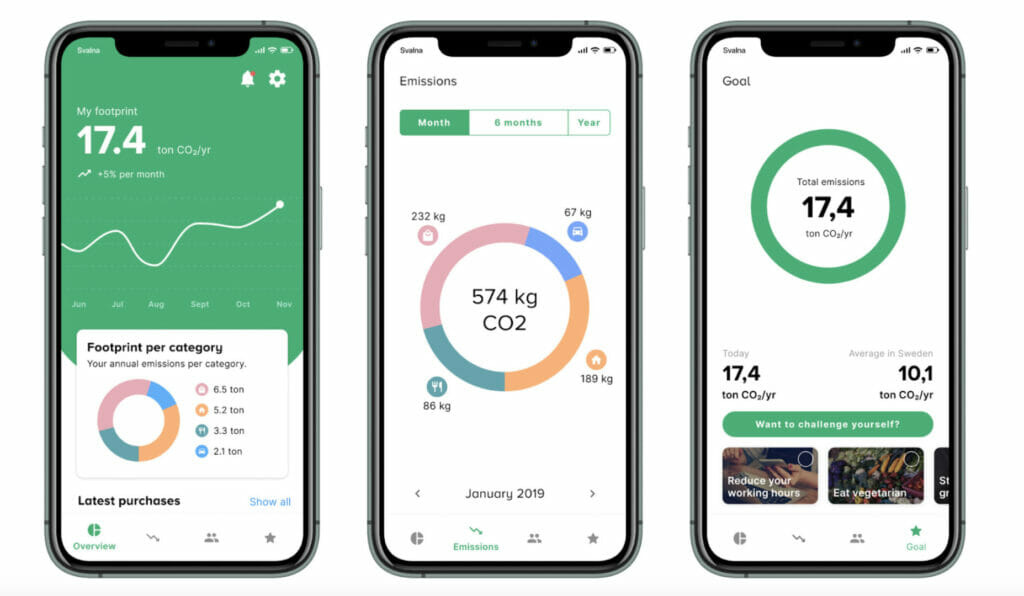
“Energy efficiency apps like Svalna, give suggestions and statistics regarding greenhouse emissions and offer ways to reduce your personal footprint, which will aid sustainable cities.” Courtesy: Svalna
“Advances in emerging technologies like AI, blockchain and digitization can enable tracking personal carbon emissions, raise awareness and also provide individual advisories on lower carbon and ethical choices for consumption of product and services. The World Economic Forum’s Scale 360 initiative demonstrates the use of fourth industrial revolution technologies across the whole life cycle of products and services.
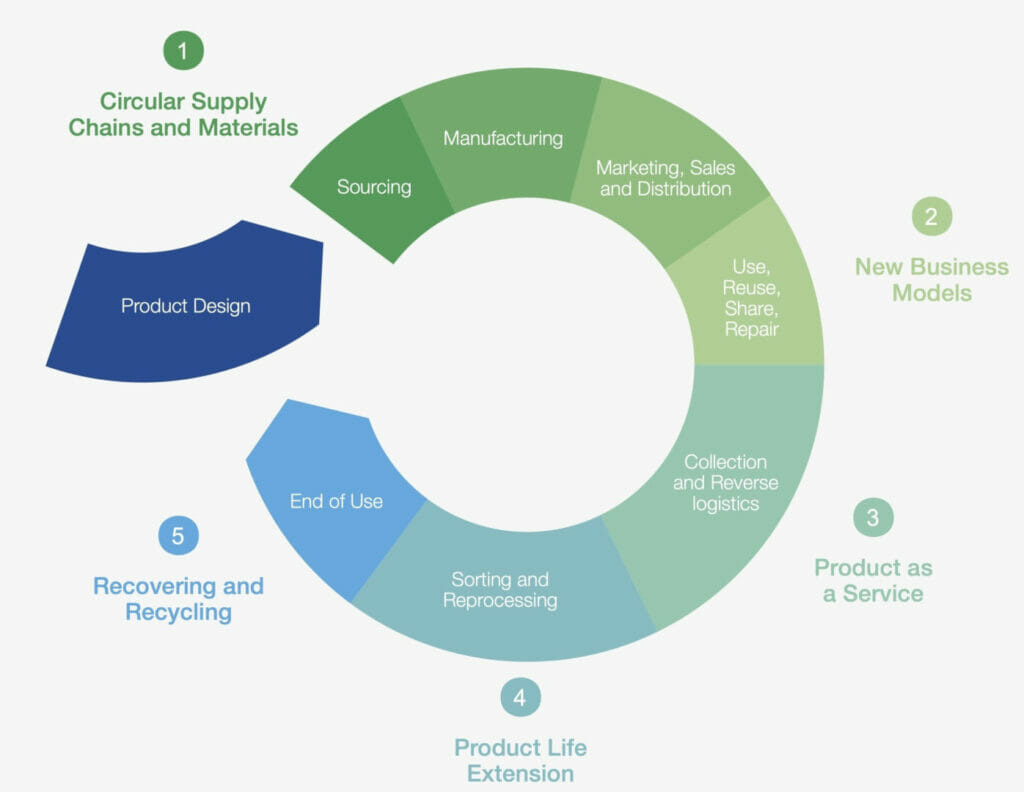
“There have been major advances in smart home technologies, transport choices with carbon implications, the roll-out of smart meters in providing individual choices to reduce their energy-related emissions, the development of new personalized apps to account for personal emissions, and better personal choices for food and consumption-related emissions. AI can also help strengthen circular economy business models like product as a service models, demand predictions, and smart asset management by combining real time and historical data from products and users.
“There is a significant number of programs and applications enabling citizens to contribute towards carbon emissions by providing them in-depth awareness on the choices of personal carbon for food, transport, home energy and lifestyle choices.
“These energy efficiency apps give suggestions and statistics regarding greenhouse emissions and offer ways to reduce your personal footprint. Keeping track of energy consumption in the home and motivating people to make lifestyle changes and to contribute your share towards the betterment of the environment.”
“AI can also help strengthen circular economy business models for sustainable cities.” Courtesy: Figure adapted from World Economic Forum and Accenture (2018)
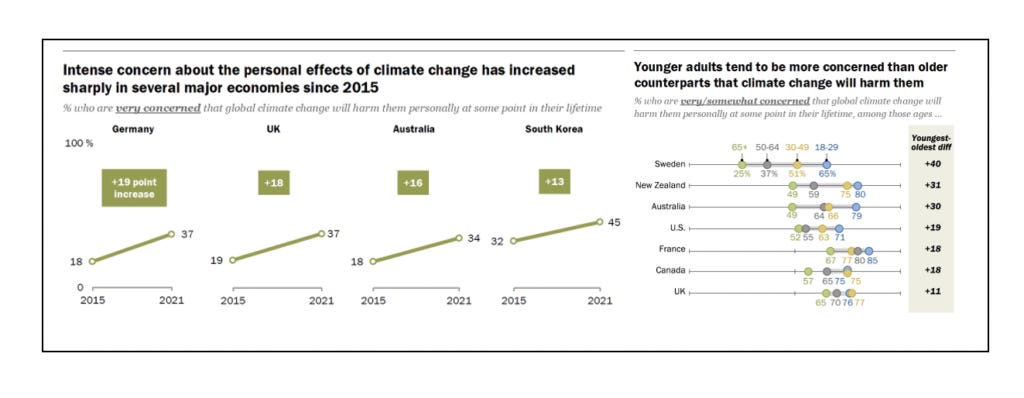
The third point the author’s present is even more ‘education’ and “raised awareness” on the issue of climate change, building-off on the increasing number of people (namely the younger generations) who are actively calling for mitigation in their own lives to stop climate change. Citing a detailed poll via the Pew Research Center,“80% of citizens say they are willing to change how they live and work to combat the effects of climate change.” The sample size, however, was less than 20,000 people interviewed internationally.
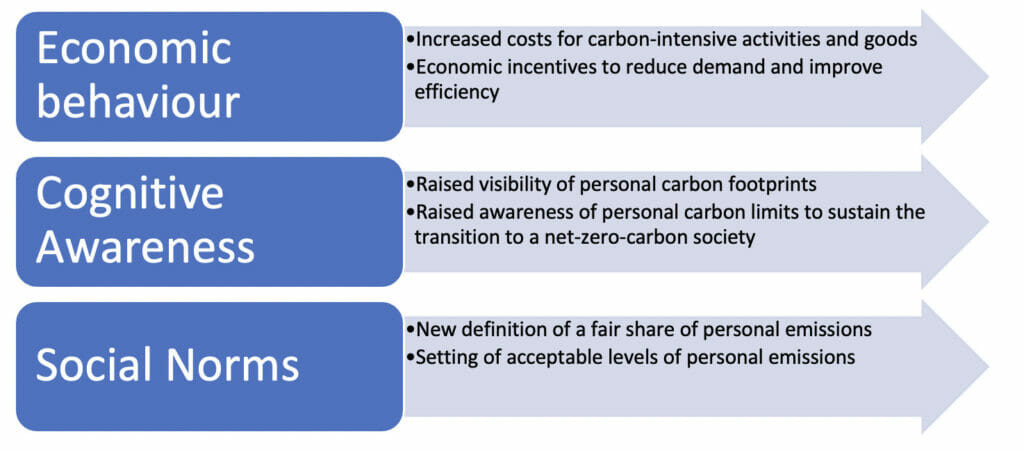
Nevertheless, bearing all three points in mind, the authors conclude this:
“The three trends provide strong evidence towards enabling a social movement for “My Carbon” initiatives by enabling public-private partnerships to help curate this program. It is suggested to drive a three-way approach to shape this movement.
“Such economic action will need policy enablement from city leadership through extensive discussion between stakeholders to arrive at a fair and inclusive approach.
“The levers of Cognitive Enablement and Social Norms will be much more impactful through citizen engagement programs and learnings from the above-mentioned trends need to be captured to design these programs. Innovative AI and machine-learning capabilities would help capture embedded emissions in goods and services, and could help in providing individuals with tailored and timely advice on how to reduce their lifestyle emissions.
“Finally, it is significant that all stakeholders across the value chain come together and contribute towards achieving a net-zero future by leaving no one behind.”
Courtesy: World Economic Forum
Furthermore, as a sidenote, the WEF additionally notes some of the other underlying initiatives attributable to them to bring these social credit scores to pass, to usher in this new system per smart city life by 2030.
Integrated energy systems in cities. Courtesy: Net Zero Carbon Cities: An Integrated Approach, 2021, World Economic Forum
“In a major step, nine cities and more than 70 organizations in 10 different sectors have come together to build further momentum for a new multi-year initiative: Net Zero Carbon Cities.
“Together with the Forum, they have created a vision for the future and launched a new framework to help cities rethink urban ecosystems, ensuring that they are greener, efficient, resilient, circular and more equitable.
“From policy-makers to businesses, city administrators, civil society and the financial sector, the World Economic Forum is convening a range of stakeholders with a role to play if global cities have a chance of reaching the net-zero carbon goal by 2030.”
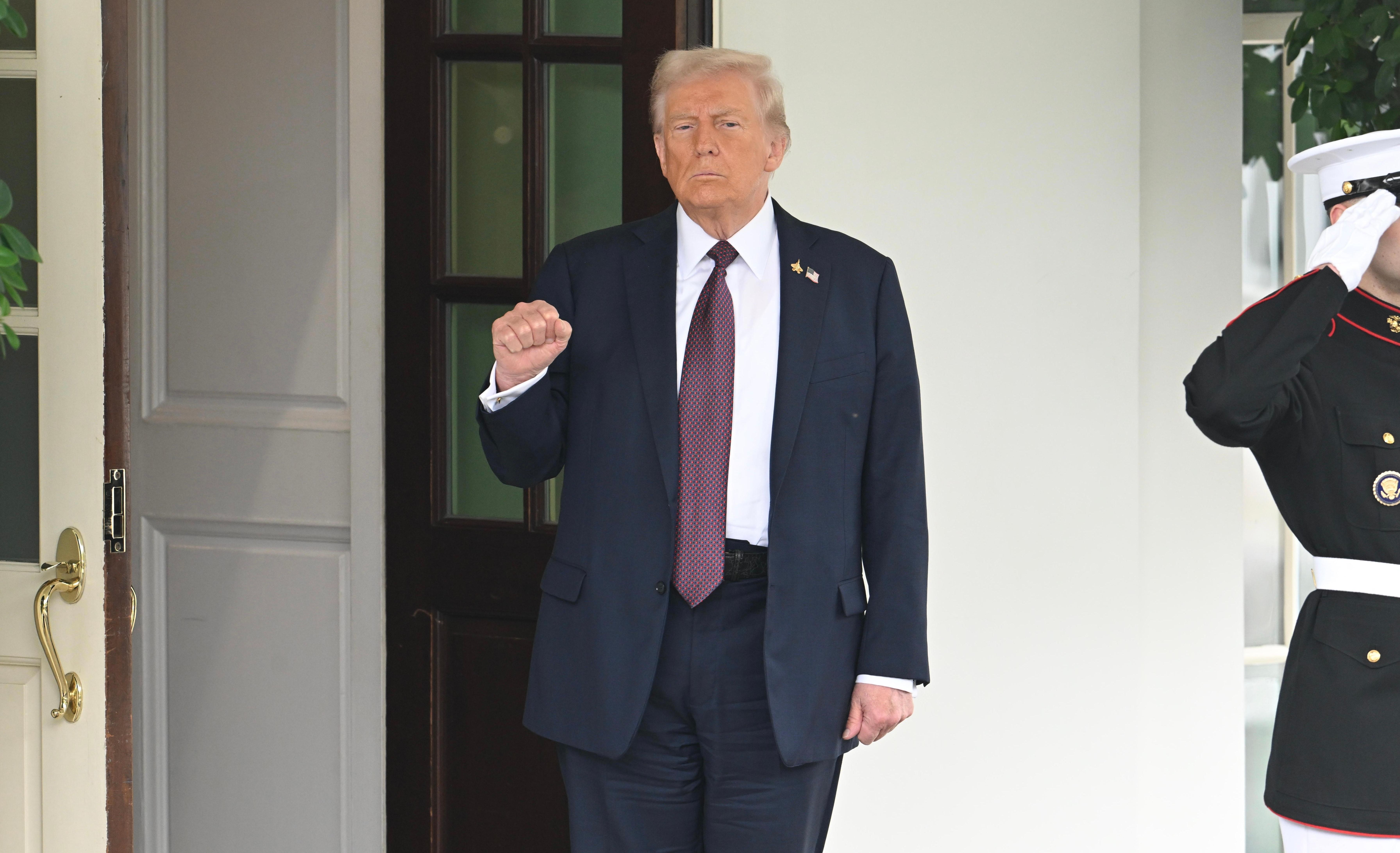
US President Donald Trump (R) meets with New York Mayor-elect Zohran Mamdani in the Oval Office of the White House in Washington, DC, on November 21, 2025. (Photo by Jim WATSON / AFP)
Press TV
In a meeting with US President Donald Trump, the newly elected New York City mayor, Zohran Mamdani, raised the issue of US funding for the Israeli genocidal war on Gaza.
The meeting at the White House on Friday was the first in-person meeting for the political opposites, who have clashed over everything from immigration to economic policy.
The 34-year-old mayor told reporters that when he spoke to New Yorkers who supported both Trump and him, the two main reasons given were a desire to “end forever wars” and an “end to the taxpayer dollars we had funding violations of human rights.”
Answering a reporter’s question, the mayor-elect reiterated that Israel has been “committing genocide” in Gaza and his assertion that US taxpayers’ dollars are helping fund it.
Mamdani clarified that he had “spoken about the Israeli [regime] committing genocide and I’ve spoken about our government funding it.”
“I shared with the president in our meeting about the concern that many New Yorkers have about wanting their tax dollars to go toward the benefit of New Yorkers and their ability to afford basic dignity,” Mamdani said.
“There’s a desperate need not only for the following of human rights but also the following through on the promises we’ve made New Yorkers.”
“I appreciate all efforts toward peace,” he added. “We’re tired of seeing our tax dollars fund endless wars, and I also believe that we have to follow through on the international human rights, and I know that still today those are being violated, and that continues to be work that has to be done, no matter where we’re speaking of.”
Trump did not comment on the matter, beyond noting that he and Mamdani feel “very strongly about peace” in West Asia.
Trump also said that he and Mamdani did not discuss the latter’s pledge to arrest Israeli Prime Minister Benjamin Netanyahu if he came to the Big Apple.
Trump had previously called the incoming New York City mayor a “radical left lunatic,” a communist, and a “Jew hater.”
As Mamdani surged in the polls to victory, Trump, a Republican, issued threats to strip federal funding from the biggest US city.
The mayor-elect has regularly criticized a range of Trump’s policies, including plans to ramp up federal immigration enforcement efforts in New York City, where four in ten residents are foreign-born.
House Oversight Committee Chair James Comer has said any attempt by the ex-presidential couple to avoid subpoenas will constitute contempt of Congress
US House Oversight Committee Chairman James Comer has demanded that former President Bill Clinton and his wife, former Secretary of State , testify before lawmakers about the late convicted sex-trafficker Jeffrey Epstein. He warned that failing to comply with subpoenas issued earlier this year would mean serious consequences for both.
Epstein, convicted of sex offenses in 2008, was charged again in 2019 with trafficking minors and running an underage sex ring. He was found dead in a Manhattan jail cell later that year.
According to a press release from the House Committee on Oversight and Government Reform on Friday, Comer “sent a letter to Bill and Hillary Clinton’s attorney, David Kendall [saying that they]… are required to comply with lawful subpoenas and appear for scheduled in-person depositions.” He noted that both Republicans and Democrats on the committee “approved a motion to issue subpoenas to Bill and Hillary Clinton” in July.
“Given their history with Jeffrey Epstein and Ghislaine Maxwell, any attempt by the Clintons to avoid sitting for a deposition would be… grounds to initiate contempt of Congress proceedings,” Comer said.
The document states that Bill Clinton had been summoned to appear on December 17, and Hillary the following day.
The ex-president previously admitted he had traveled on a jet with Epstein, but insisted that he had never visited the financier’s infamous island.
In July, the Wall Street Journal claimed that Clinton had once written a personal note to Epstein, that reportedly read: “It’s reassuring isn’t it, to have lasted as long, across all the years of learning and knowing, adventures and [illegible word], and also to have your childlike curiosity, the drive to make a difference and the solace of friends.”
A spokesman for Clinton declined to comment on the note at the time, stating that the former president had severed ties with Epstein long before his 2019 arrest and was unaware of his alleged crimes.
In a post on his Truth Social platform last Friday, US President Donald Trump said he had directed Attorney General Pam Bondi and the Justice Department to investigate “Jeffrey Epstein’s involvement and relationship” with Bill Clinton and several other prominent Democrats.
On Wednesday, Trump signed a bill requiring the Justice Department to release files related to the Epstein case.
In his post, Trump suggested that “perhaps the truth about these Democrats, and their associations with Jeffrey Epstein, will soon be revealed,” mentioning Bill Clinton among several others.
Trump’s move marked a shift from his earlier position. For months, he had urged House Republicans to block the release of the files, arguing that Democrats wanted to use the materials to damage his presidency.
The Centers for Disease Control and Prevention has updated its website with a new stance on the potential link between vaccines and autism. (AP Photo/Jeff Amy, File)
The Centers for Disease Control and Prevention has updated its website with a new stance on the potential link between vaccines and autism.
The new wording on the CDC’s site now states, “The claim ‘vaccines do not cause autism‘ is not an evidence-based claim because studies have not ruled out the possibility that infant vaccines cause autism.”
It also adds, “Studies supporting a link have been ignored by health authorities.”
The agency noted that the statement “vaccines do not cause autism” has been “historically disseminated” by the CDC and other federal health agencies in an effort to prevent vaccine hesitancy.
Previously, the CDC page stated: “Studies have shown that there is no link between receiving vaccines and developing autism spectrum disorder (ASD).”
The U.S. Department of Health and Human Services (HHS) has launched a “comprehensive assessment” of potential causes of autism, the CDC stated.
Those include investigations on “plausible biologic mechanisms and potential causal links.”
The header “Vaccines do not cause autism” remains on the page, but is followed by an asterisk indicating that it was not removed because of a prior agreement rather than because the evidence supports it.
The agency noted that the statement “vaccines do not cause autism” has been “historically disseminated” by the CDC and other federal health agencies in an effort to prevent vaccine hesitancy.
The Children’s Health Defense applauded the CDC’s updated web page.
“Finally, the CDC is beginning to acknowledge the truth about this condition that affects millions, disavowing the bold, long-running lie that ‘vaccines do not cause autism,’” Mary Holland, Esq., president and CEO of Children’s Health Defense in New Jersey, told Fox News Digital.
“No studies have ever proved this irresponsible claim; on the contrary, many studies point to vaccines as the plausible primary cause of autism. Thankfully, HHS has now launched a comprehensive assessment on the causes of autism, including an investigation of plausible biological mechanisms.”
In this lecture, McWhorter explains the difference between “intertwined” languages (true languages created by bilingual speakers) and “creoles” used by monolingual speakers where neither speaker has facility in the other’s language (see What Are Creole Languages?)
Examples:
Medua Lingua – Qhechua speakers from the west coast of South Ecuador use Medua Lingua (Spanish words superimposed on Quechua grammar, ie all Spanish words are given Quecha endings) when they travel to the capitol Quito.
Michif (Canada) – French fur traders who married Cree women spoke Michif, consisting of French noun and Cree verbs.
Angloromani – Roma (aka Gypsies or travelers) speak Angloromani (a blend of English and the Indo-Aryan language Romany) in English speaking countries and similar intertwined languages in other European countries, e.g. Scandoromani.
According to McWhorter, English is “mixed” language rather than a genuine intertwined language. Although it contains many French, Latin and Norse words, most of its basic words are of English (Anglo-Saxon) origin. And although its syntax (word order) is heavily influenced by Celtic languages,* it’s basic grammar is Germanic.
*Examples of Celtic influence are seen in questions and negatives. In English we “Do you have a cat?” and “I do not walk” – speakers of other Germanic languages would say “Have you a cat” and “I walk not.”
A report published on Tuesday by the AidData research lab at William & Mary university in Williamsburg, Virginia, found that the United States is the largest recipient of loans from China.
The report, entitled Chasing China: Learning to Play by Beijing’s Global Lending Rules, found that 1,193 Chinese banks, investment companies, and government institutions loaned $2.2 trillion to recipients in 179 countries between 2000 and 2023.
AidData researchers drew two surprising conclusions from their research: “China’s overseas lending portfolio is vastly larger than previously understood,” and its loans to the developed world are an order of magnitude larger than widely believed.
The common image of Chinese loans is banks pumping huge loans to Third World countries through China’s Belt and Road Initiative (BRI). The ostensible purpose of BRI was to help developing countries build vital infrastructure, but the projects are often criticized as unprofitable “debt traps” approved by spendthrift local governments that saddle the borrowing nations with debts to Beijing they can never repay.
Whatever the flaws of BRI might be, AidData determined that only about 20 percent of China’s titanic lending portfolio involves infrastructure projects in developing nations. Meanwhile, the amount China loans to developed nations “skyrocketed from 12% to 76%” between 2000 and 2023. Ten of the top 20 destinations for Chinese loans are “high-income” countries.
“Another major discovery is that Chinese state-owned creditors have bankrolled approximately 10,000 projects and activities in 72 high-income countries to the tune of nearly $1 trillion,” the report said.
“Much of the lending to wealthy countries is focused on critical infrastructure, critical minerals, and the acquisition of high-tech assets like semiconductor companies,” noted AidData’s lead author, Brad Parks.
By subscribing, you agree to our terms of use & privacy policy. You will receive email marketing messages from Breitbart News Network to the email you provide. You may unsubscribe at any time.
China has unquestionably become the largest creditor in the world, and according to AidData’s unexpected findings, the United States is China’s biggest debtor to the tune of $201.83 billion in loans for some 2,500 projects.
“This finding is both unexpected and counterintuitive,” the report noted. “As China’s chief geopolitical rival, the U.S. has spent the better part of the last decade warning other countries of the dangers of accumulating significant debt exposure to China.”
AidData provided a long list of Chinese-funded projects in nearly every state of the union, from liquid natural gas (LNG) projects in Texas and Louisiana to data centers in Northern Virginia an airport terminals at JFK in New York.
“The U.S. recipients of liquidity support from Chinese state-owned creditors — via working capital and revolving credit facilities — include a wide array of Fortune 500 companies, such as Amazon, AT&T, Verizon, Comcast, Tesla, General Motors, Ford, Boeing, Haliburton, Qualcomm, News Corp., and Disney,” the report revealed.
Other “high-income countries” receiving massive Chinese loans included Russia, Venezuela, Argentina, Australia, the United Kingdom, Germany, and Switzerland.
China significantly scaled back lending to the “Global South” developing nations and BRI clients while it was pouring more money into wealthy nations, producing what AidData described as a “myth” that Chinese loans dried up when its economy turned sour. The highly visible and much-discussed loans to developing nations did indeed decline sharply, but much less widely-reported lending to middle- and high-income industrialized countries was booming.
AidData did not paint a rosy picture of China’s lending activities, describing them as secretive and linked to an aggressive geopolitical agenda. A small bit of good news was that China’s loans to American customers seemed mostly driven by good old-fashioned capitalism and the pursuit of profit — the legion of American companies quietly borrowing big money from China turned out to be good bets, and Chinese institutions made a lot of money by lending to them.
The report described China’s lending activities as “opaque and complex,” with very little hard information freely provided by China. Chinese lenders make extensive use of shell companies, overseas affiliates, and “exotic credit instruments” to evade international scrutiny, rendering “a large swathe of its cross-border lending portfolio effectively invisible in reporting systems.”
These tactics also make it difficult for other countries, including the United States, to detect or counter China’s efforts to accumulate controlling positions in sensitive advanced-technology companies.
“A large and growing share of China’s overseas lending portfolio is ‘going dark,’” the report warned.
Beijing releases even less information about the sort of foreign aid and charitable giving that Western nations proudly publicize, but by all indications China has largely abandoned “aid” in favor of loans.
“Beijing is not seeking to burnish its reputation as a global do-gooder,” the authors wrote. “The percentage of its overseas lending and grant-giving portfolio that qualifies as aid plunged from 22% in 2000 to 1% in 2023.”
The report said China is “focused on a different goal,” namely “cementing its position as the international creditor of first — and last — resort that no one can afford to offend or antagonize.”
The gigantic size of its lending operations mean China is not so much breaking the rules of international finance as rewriting them. AidData noted that G7 nations are “making major adjustments that were once inconceivable” to begin playing China’s game, including a shift in emphasis from no-strings-attached foreign aid programs to cross-border lending and partnerships in overseas infrastructure programs.
“Beijing’s go-it-alone approach is no longer a source of scorn, ridicule, or bemusement in Washington, Berlin, London, Tokyo, Paris, Rome, and Ottawa. It has forced G7 policymakers to fundamentally rethink the way they use aid and credit instruments,” the report concluded.
In other words, for the past 20 years, the free world has been practicing socialism — giveaways and welfare programs — while the Chinese Communist Party was practicing flinty-eyed capitalism. The Western world was tossing its taxpayers’ money around, while China was getting signatures on loan paperwork and making profits. The globalists of the 2000s gave China all the money in the world — and they investedit.
FILE -This is the Google logo on a building in New York, Oct. 27, 2025. (AP Photo/Gene J. Puskar, File)
By MICHAEL LIEDTKE, Associated Press Technology Writer
Google will confront the U.S. government’s latest attempt to topple its internet empire in federal court on Friday as a judge considers how to prevent the abusive tactics that culminated in parts of its digital ad network being branded as an illegal monopoly.
The courtroom showdown in Alexandria, Virginia, will pit lawyers from Google and the U.S. Department of Justice against each other in closing proceedings focused on the complex technology that distributes millions of digital ads across the internet each day.
After a lengthy trial last year, U.S. District Judge Leonie Brinkema ruled in April that pieces of Google’s ad technology had been rigged in a way that made it an illegal monopoly. That set up another 11-day trial earlier this fall to help Brinkema determine how to remedy its anti-competitive practices.
Friday’s closing arguments will give both Google and the Justice Department a final chance to sway Brinkema before she issues a ruling that probably won’t come until early next year.
The Justice Department wants Brinkema to force Google to sell some of the ad technology that it has spent nearly 20 years assembling, contending a breakup is the only way to rein in a company that the agency’s lawyers condemned as a “recidivist monopolist” in filings leading up to Friday’s hearing.
The condemnation refers not only to Google’s practices in digital advertising but also to the illegal monopoly that it unleashed through its dominant search engine. Federal prosecutors also sought a breakup in the search monopoly case, but the judge handling that issue rejected a proposal that would have required Google to sell its popular Chrome web browser.
Although Google is still being ordered to make reforms that it’s resisting, the outcome in the search monopoly case has been widely seen as a proverbial slap on the wrist. The belief that Google got off easy in the search case is the main reason the market value of its parent company Alphabet surged by about $950 billion, or 37%, to nearly $3.5 trillion since U.S. District Judge Amit Mehta’s decision came out in early September.
That setback hasn’t discouraged the Justice Department from arguing for a breakup of an ad tech system that handles 55 million requests per second, according to estimates provided by Google in court filings.
The huge volume of digital ads priced and distributed through Google’s technology is one of the main reasons that the company’s lawyers contend it would be too risky to force a dismantling of the intricate system.
“This is technology that absolutely has to keep working for consumers,” Google argues in documents leading up to Friday’s hearing. The company’s lawyers blasted the Justice Department’s proposal as a package of “legally unprecedented and unsupported divestitures.”
Besides arguing that its own proposed changes will bring more price transparency and foster more competition, Google is also citing market upheaval triggered by artificial intelligence as another reason for the judge to proceed cautiously with her decision.
In his decision in the search monopoly case, Mehta reasoned that AI was already posing more competition to Google.
But the Justice Department urged the judge to focus on the testimony from a litany of trial witnesses who outlined why Google shouldn’t be trusted to change its devious behavior.
The witnesses “explained how Google can manipulate computer algorithms that are the engine of its monopolies in ways too difficult to detect,” the Justice Department argued in court papers.
He also bought upwards of $5 million in Intel bonds after announcing the US government was buying a 10% stake in the company
Trump bought up to $6 million worth of corporate bonds in Boeing, even as the War Department has awarded the company multi-billion dollar contracts, new financial disclosures reveal.
According to the documents, Trump bought between $1 million and $5 million worth of Boeing bonds on August 28. On September 19, he bought more Boeing bonds worth between $500,000 and $1 million. In total, Trump appears to have bought at least $185 million worth of corporate and municipal bonds since the start of his presidency.
Kedric Payne, Vice President of the Campaign Legal Center, told RS in a phone interview there is “absolutely” a conflict of interest in Trump’s purchase of Boeing, especially since it is “a government contractor that is connected to military actions that the president controls almost unilaterally.”
Trump also bought between $1 and $5 million worth of Intel bonds in August, a week after the Trump administrationtook a 10% stake in the company. “I love seeing their stock price go up, making the USA RICHER, AND RICHER,” Trump posted on Truth Social on August 25. Trump purchased Intel bonds on August 29.
The partial purchase of the chip manufacturer, done under the auspices of driving technology research vital to national security, drew praise from some advocates of corporate accountability, including Sen. Bernie Sanders (I-Vt.).
Others raised concerns about how the U.S. government could maintain fairness. “Will the government favor firms in which it owns stakes over other competitors that might have better technology or processes?” asked Peter Harrell, a Non Resident Fellow at the Carnegie Endowment. Since the U.S. government’s partial ownership could give the Trump administration far more influence over the company, Trump’s personal investment in Intel could blur the lines between personal, corporate, and national interests. Intel has said the government’s partial ownership would be passive, with the government agreeing to “vote with the company’s Board of Directors on matters requiring shareholder approval, with limited exceptions.”
Upon entering office, Trump did not move his assets into a blind trust run by an independent trustee that could not be directed by the Trump family. Instead, he opted to hand over his business empire to his sons. The White House did, however, insist that the bond purchases were made by independent financial managers “using programs that replicate recognized indexes when making investments.”
The White House also claims that the investment decisions were not made by Trump or any of his family members, though stopped short of claiming this is a blind trust. It’s not clear who these financial managers are, or how strict the wall of separation between them and the Trump family is.
While Trump is not violating any ethics rule, there is a norm that presidents do not own investments in individual companies. Trump does not appear to have bought corporate bonds or individual stocks during his first term. Former President Joe Bidensaid that he would “never own any stocks or bonds” as a public servant, and appears to have followed through on that promise according to financial disclosures.
Meanwhile, the Trump administration has breathed a new life into Boeing. In March, Trump announced that Boeing would receive the coveted $20 billion development contract for the Air Force’s future F-47 fighter jet. The program is sure to be a cash cow for Boeing. Dan Grazier, a Senior Fellow at the Stimson Center, told the Associated Press then that the $20 billion price tag is just seed money. “The total costs coming down the road will be hundreds of billions of dollars,” he said.

 Dmitry Orlov




 The Most Revolutionary Act