The Persian Emperors: Decadent Despots or Philosopher Kings?

Historical Leaders Called 'The Great,' Ranked By Greatness

Rethinking the Persian Empire

The Persian Empire (2012)

Dr John W I Lee

Film Review

The Acheimenid (referring to the Acheimenid clan) Persian Empire was founded in 559 BC by Cyrus the Great. At the time the largest in history, it extended from North Africa to the Indus Valley. All its emperors followed Zoroastrian thought, which emphasized ethical conduct.

Heir to the Babylonian and Assyrian empires, Persia eventually brought Egypt under their control. Prior to its collapse in 330 BC, its governance was extremely table, with 14 kings – two ruling more than 40 years. Thanks to a finely tuned information and communication network, a kingdom of one million Persian ultimately ruled a multi-ethnic population of 25 million in its subject countries. Most countries under its control were allowed to continue their own religion and customs. Trade flourished under the Persian Empire, with New Eurasian trade routes forming the beginning of the Silk Road connecting China and India to Europe.

The ethic diversity of their empire meant the Persian king relied on troops from multiple client states speaking multiple languages. Relying on client kings to govern their own countries, he had much looser control over conquered territory than the Chinese or Roman emperors. Moreover Persia’s borders tended to be quite porous.

Following Alexander the Great’s conquest of the empire in 330 BC, much of the Persian administrative apparatus persisted in the Seleucid, Parthanian and Sassanian empire. One hundred million people in the Middle East and Central Asia still speak the Persian language Farsis.

The Greeks, never fully conquered by the Persians, viewed them as uncivilized barbarians. This is reflected in the writings of the Greek historian Herodotus, the main historical source on the the Persian Empire. More recent research challenges some of these stereotypes. Moreover thousands of Greek mercenaries fought for the Persian side, in their wars against Greece. Likewise many Greek craftsmen and doctors went in the Persian capitols.

The Bible speaks of them very favorably for releasing the Jews from captivity when they conquered Babylon.

https://www.kanopy.com/en/pukeariki/watch/video/15372393/15372424

Venezuela suspends flight rights for six foreign airlines amid US tensions

Travellers wait in the main hall of the Simon Bolivar Maiquetia airport in Maiquetia, Venezuela, on November 23 [Ariana Cubillos/AP Photo]

Al Jazeera

Airlines including Iberia and TAP had paused flights to Venezuela after warnings about ‘heightened military activity’ in the area.

Venezuela has pulled the operating rights for six foreign airlines that paused flights to the South American country amid rising tensions with the United States.

But on Thursday, foreign officials and airline representatives blasted that decision as a “disproportionate” response.

A day earlier, Venezuela’s civil aviation authority announced it had revoked permits for air travel companies, including Spain’s Iberia, Portugal’s TAP, Colombia’s Avianca, Brazil’s GOL, Turkish Airlines and LATAM, which has headquarters in Chile and Brazil.

It accused the airlines of joining “actions of state terrorism promoted by the United States”.

The Venezuelan government has been on edge in recent months amid speculation of a possible US military attack.

The US Federal Aviation Administration (FAA) had warned airlines last week of “potentially hazardous situation” in Venezuelan airspace due to a “worsening security situation and heightened military activity”. That, in turn, prompted some airlines to cancel flights.

But on Thursday, officials like Portuguese Minister of Foreign Affairs Paulo Rangel criticised Venezuela’s response to the cancellations.

Rangel said his country’s embassy would reach out to the Venezuelan government and emphasise that flights had only been temporarily paused due to security concerns.

“What we have to do is, through our embassy, ​​make the Venezuelan authorities aware that this measure is disproportionate, that we have no intention of cancelling our routes to Venezuela, and that we only did this for security reasons,” he said.

Tensions between the US and Venezuela have been at a high point since the return of US President Donald Trump for a second term in the White House.

The Trump administration has overseen an enormous buildup of military forces in the Caribbean region, on the premise of combating illegal drug trafficking.

Get instant alerts and updates based on your interests. Be the first to know when big stories happen.

Venezuelan President Nicolas Maduro has decried the US troop movements as a precursor to attacks aimed at destabilising his government, and he has responded with military preparations of his own.

The US government has long opposed Maduro for his record of human rights abuses, recently recognising the Venezuelan opposition as the rightful winner of the 2024 presidential election, despite Maduro’s claims otherwise.

Since September, the US has carried out at least 21 lethal air strikes on boats and other nautical vessels it accuses of transporting drugs. An estimated 83 people have been killed.

The Trump administration has claimed, without evidence, that some of the people killed were linked to criminal groups in Venezuela. International rights officials and legal scholars consider those strikes to be extrajudicial killings, in violation of international law.

After the US warned airlines last week of security risks over Venezuela, flights were abruptly cancelled amid fears of military action.

The International Air Transport Association (IATA) said on Monday that Venezuelan authorities had given airlines 48 hours to resume flights to the country or face the suspension of their operating rights.

“Keep your planes, and we will keep our dignity,” Venezuelan Minister of the Popular Power for Interior Diosdado Cabello said in response to the cancellations.

The AFP news agency quoted an anonymous source from Iberia who explained that the airline hoped to resume flights “as soon as possible, as soon as full security conditions are met”.

But the source added that Iberia could not operate in areas of high risk.

[…]

Via https://www.aljazeera.com/news/2025/11/27/venezuela-suspends-flight-rights-for-six-foreign-airlines-amid-us-tensions

Trump says Venezuela airspace ‘closed in its entirety’ amid threats of military action

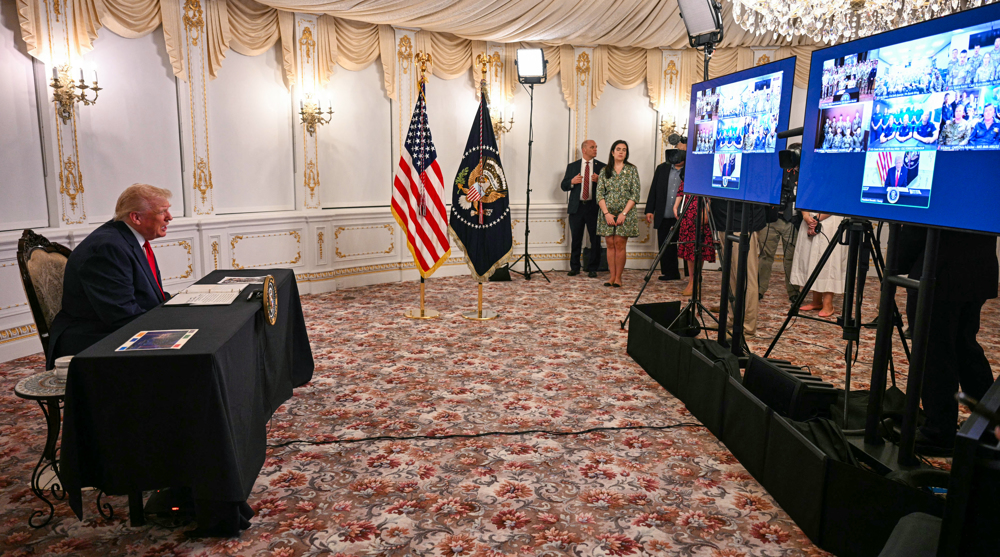
US President Donald Trump participates in a call with service members from his Mar-a-Lago residence in Palm Beach, Florida, on November 27, 2025. (AFP photo)

Press TV

US President Donald Trump says the entire airspace above Venezuela should be considered closed, further escalating tensions between the United States and the South American nation.

In a Truth Social post, Trump wrote on Saturday, “To all Airlines, Pilots, Drug Dealers, and Human Traffickers, please consider the airspace above and surrounding Venezuela to be closed in its entirety.”

There was no immediate response from Venezuela to Trump’s remarks.

Last week, several airlines rerouted flights away from Venezuelan airspace after the US Federal Aviation Administration (FAA) issued a warning about a “potentially hazardous situation” due to “worsening security and heightened military activity in or around” the country.

In retaliation, Venezuela revoked the operating licenses of six major international airlines that had suspended flights following the FAA alert.

The nation’s civil aviation authority accused the carriers of “joining the actions of state terrorism promoted by the United States government and unilaterally suspending air commercial operations.”

Since September, the US has carried out a series of strikes on boats in waters off Central and South America, claiming they were transporting narcotics to the United States. More than 80 people have been killed in the attacks.

Critics, including a growing number of members of the US Congress, argue that the strikes lack legal justification and amount to extrajudicial killings.

On Thursday, Trump threatened to target what he called Venezuelan drug trafficking “by land,” saying, “Also, the land is easier, but that’s going to start very soon.”

Venezuelan President Nicolás Maduro, who has repeatedly denied any ties to the drug trade, condemned the US stance as “excuses and lies” used to justify intervention in his country.

In a nationally broadcast speech on Thursday, the Venezuelan leader vowed that his people would not be intimidated by Washington.

Observers warn that Washington’s militarized posture toward Venezuela echoes a familiar strategy of regime change in Latin America.

[…]

Via https://www.presstv.ir/Detail/2025/11/29/759705/Trump-Venezuela-airspace-closed-entirely-Maduro-drug-trafficking-military-action

Gaza ‘stabilization force’ fails to launch as nations unwilling to commit troops

(Photo credit: Yoan Valat/Pool via Reuters)

The Cradle

The White House is having difficulty launching its so-called Gaza International Stabilization Force (ISF), as countries that previously expressed willingness to deploy troops to the project now seek to distance themselves from it, according to a 29 November report in the Washington Post.

The ISF “is struggling to get off the ground as countries considered likely to contribute soldiers have grown wary” over concerns their soldiers may be required to use force against Palestinians.

Indonesia had stated it would send 20,000 peacekeeping troops. However, officials in Jakarta speaking with the US news outlet said they now plan to provide a much smaller contingent of about 1,200.

Azerbaijan has also reneged on a previous commitment to provide troops. Baku will only send troops if there is a complete halt to fighting, Reuters reported earlier this month.

US President Donald Trump’s plan for Gaza envisioned meaningful troop contributions from Arab states, including the UAE, Bahrain, and Qatar. But after expressing early interest, none have committed to participating.

“A month ago, things were in a better place,” one regional official with knowledge of the issue stated.

Trump’s plan for post-war Gaza rests on the ability of an international force to occupy the strip and was endorsed by a UN Security Council resolution on 17 November.

However, because the resolution gave the force the mandate to “demilitarize” the Gaza Strip, many countries are resisting participation.

They say their troops could be required to disarm Hamas on Israel’s behalf. This would require killing Palestinians and possibly cast their forces as co-perpetrators in Israel’s genocide in front of the world.

Some officers are “really hesitant” to participate, one Indonesian official said.

“They want the international stabilizing force to come into Gaza and restore, quote unquote, law and order and disarm any resistance,” a senior official in Indonesia’s Ministry of Foreign Affairs said. “So that’s the problem. Nobody wants to do that.”

Participation would also put their soldiers in harm’s way, whether from Hamas or the ongoing Israeli airstrikes, which regularly kill Palestinians despite the alleged ceasefire that took effect in October.

Sources familiar with the plan told the Washington Post that the White House plans to man the force with between 15,000 and 20,000 foreign troops, divided into three brigades to be deployed in early 2026.

However, details have not been finalized, which has led to additional hesitancy among potential participating nations.

“Commitments are being considered. No one is going to send troops from their country without understanding the specifics of the mission,” the official said.

Efforts to establish the so-called “Board of Peace,” a committee of Palestinian technocrats taking orders directly from the White House to deal with the day-to-day administration of the enclave, have also stalled.

“We thought, with the Security Council resolution, within 48 to 72 hours, the Board of Peace would be announced,” another person familiar with the plan told The Post. “But nothing, not even informally.”

No other members of the Board of Peace have yet been named.

Israeli Prime Minister Benjamin Netanyahu has stated that the Israeli army will disarm Hamas if foreign countries are unwilling to do so for them.

“All indicators show that indeed no countries are willing to take on this responsibility, and that understanding is sinking in both in Israel and in the US,” said Ofer Guterman, a senior researcher at the Institute for National Security Studies (INSS) in Tel Aviv.

“Bottom line: It’s unlikely that the ISF, if it’s established at all, will lead to Gaza’s demilitarization,” he added.

Tamara Kharroub, Deputy Executive Director and Senior Fellow of the Arab Center in Washington, DC, described the Trump plan as “Permanent Palestinian subjugation and neocolonial rule dressed up as peace.”

“There are no guarantees or binding mechanisms or clarity around what constitutes reform or demilitarization and around who determines what they are. The plan ultimately gives Israel a blank check to prolong its presence in Gaza, fully reoccupy it, or resume its genocidal war,” Kharroub wrote.

[…]

Via https://thecradle.co/articles/gaza-stabilization-force-fails-to-launch-as-nation-unwilling-to-commit-troops-report

Trump and Maduro speak in secret phone call

Trump and Maduro spoke in secret phone call – NYT

RT

The leaders of the US and Venezuela reportedly discussed a meeting to diffuse military tensions

US President Donald Trump had a phone conversation with his Venezuelan counterpart Nicolas Maduro late last week amid growing tensions, where they discussed a possible meeting, the New York Times reported on Friday, citing multiple people familiar with the matter.

Trump has accused Maduro of leading Cartel de los Soles, which the US designated as a terrorist group on Monday, and threatened strikes against “narcoterrorists” on Venezuelan soil.

The Venezuelan Foreign Ministry rejected the allegations as a “ridiculous lie,” while Maduro warned the US against launching “a crazy war.”

According to the New York Times, although there are no plans for for the presidents to meet at the moment, the secret call may have been part of Trump’s tactic to combine threats and negotiations. US Secretary of State Marco Rubio, known for his hardline stance towards Venezuela and Cuba, reportedly participated in the conversation.

Since September, the US has destroyed more than 20 alleged drug-smuggling vessels in international waters in the Caribbean Sea. In a Thanksgiving message to the troops, Trump again hinted that the US could hit targets in Venezuela. “We’ll be starting to stop them by land also. The land is easier, but that’s going to start very soon,” he said.

Maduro responded to the US military buildup by placing the army on high alert and launching several drills. Colombian President Gustavo Petro also condemned the US strikes on boats, saying that some of the victims were fishermen from his country.

[…]

Via https://www.rt.com/news/628652-trump-maduro-secret-call/

Trump moves to void Biden-era executive orders signed by autopen

Trump moves to void Biden-era executive orders signed by autopen

RT

The US president claims most of the directives issued during his predecessor’s administration were invalid due to the use of the device

US President Donald Trump has said he is canceling all executive orders his predecessor Joe Biden signed using an autopen, a device that reproduces signatures. Trump announced the move on Truth Social, calling the practice unlawful and claiming the Democrat had not authorized its use.

Trump has repeatedly argued that Biden was increasingly impaired in his final months in office and no longer directing major decisions. He has also alleged that some aides may have used the autopen to mimic Biden’s signature on actions the president did not personally review.

”Any document signed by Sleepy Joe Biden with the Autopen, which was approximately 92% of them, is hereby terminated, and of no further force or effect,” Trump wrote.

”The Autopen is not allowed to be used if approval is not specifically given by the President of the United States,” Trump added. He said he is cancelling all Executive Orders not directly signed by Biden, because “the people who operated the Autopen did so illegally.”

Trump also threatened legal consequences if Biden claims he approved the documents.

Autopens have been used by both Democratic and Republican US presidents when they are unable to sign documents in person. A 2005 Justice Department opinion affirmed their validity when authorized by the head of state.

Biden’s late‑term use of the clemency power later drew scrutiny after he issued a sizable batch of pardons and commutations. Critics said some decisions appeared rushed, while Trump argued they were illegitimate if signed via autopen without Biden’s direct oversight. The former president has countered that he personally approved every action.

Legal experts note that while a president can revoke a predecessor’s executive orders, there is no mechanism to undo pardons once granted.

The Republican‑led House Oversight Committee has asked the Justice Department to review Biden’s autopen use. Attorney General Pam Bondi confirmed the matter is under review. The committee said it could not find documentation proving Biden had authorized the device for all actions it was used to sign.

Trump earlier this year replaced Biden’s portrait in the White House with a picture of an autopen.

[…]

Via https://www.rt.com/news/628656-trump-void-biden-autopen-executive-orders/

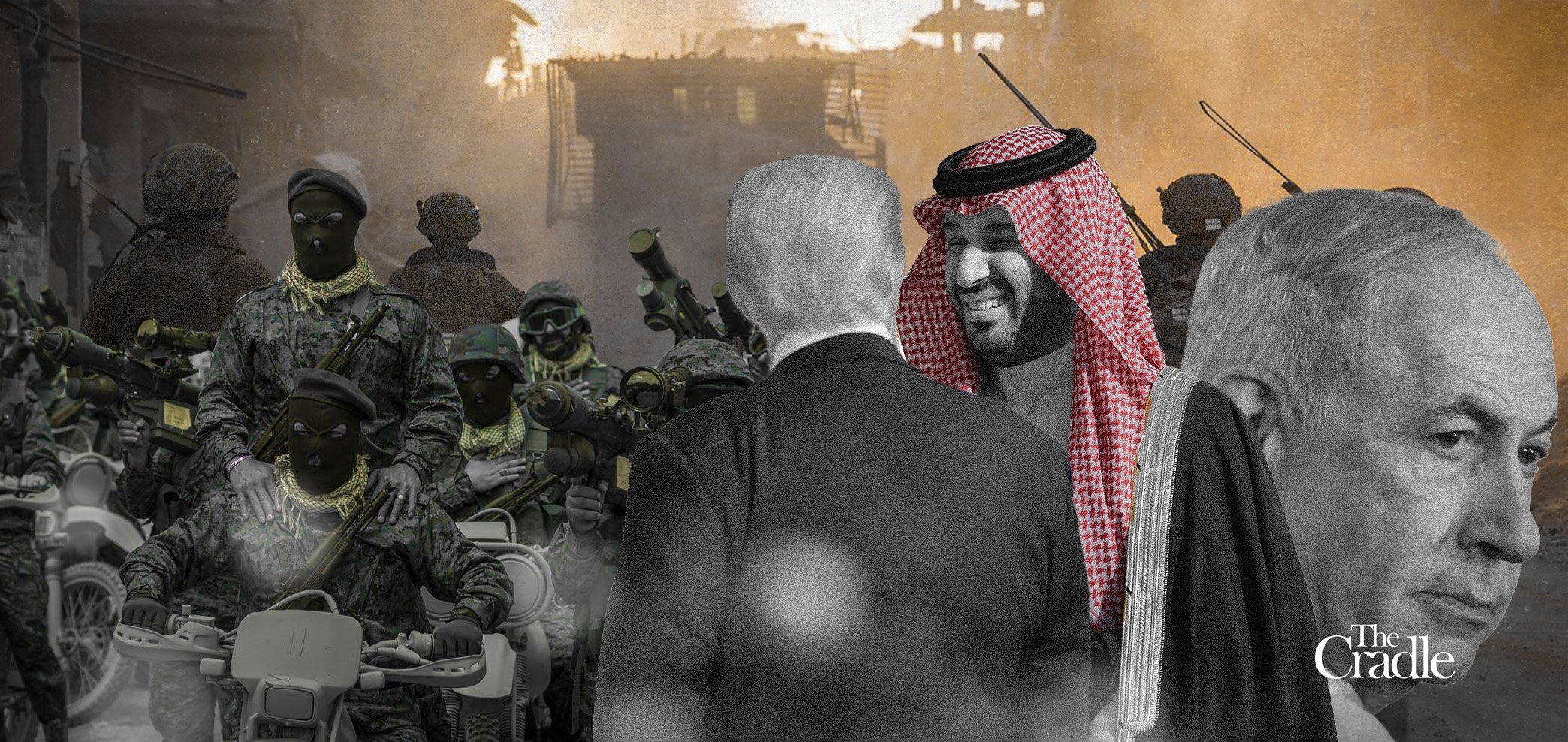
Will Saudi Arabia fund Israel’s grip over Lebanon?

Photo Credit: The Cradle

The Cradle

In the wake of Israel’s November 2024 apparent “ceasefire” with Lebanon, Tel Aviv has moved to reshape the post-war order in its favor. Treating Lebanon as a weakened and fragmented state, Israel seeks to impose a long-term, unilateral security and economic regime in the south, bolstered by US backing.

Simultaneously, Saudi Arabia has thrust itself into the reconstruction process as the main Arab financier. But the kingdom risks becoming a junior partner in an Israeli-American project that sidelines it from real decision-making. The question facing Riyadh is clear: Will it bankroll its own marginalization?

Tel Aviv’s vision: Disarmament, deterrence, domination

Israel’s strategy for Lebanon extends far beyond the oft-repeated demand to disarm Hezbollah. It envisions a sweeping transformation of Lebanon into a demilitarized satellite state governed under a US-Israeli security framework. Nowhere is this clearer than in Tel Aviv’s insistence on remaining inside Lebanese territory until Hezbollah is stripped of its deterrent capabilities, not just south of the Litani River, but across the country.

Israeli Defense Minister Israel Katz and former Northern Command chief Uri Gordin have both publicly outlined this goal. Gordin even suggested establishing a permanent buffer zone inside Lebanon to serve as a “bargaining chip” for future negotiations, while Katz confirmed that Israeli forces would remain indefinitely in the south. Tel Aviv no longer seeks temporary deterrence, favoring permanent subordination.

Katz, for his part, has stated “Hezbollah is playing with fire,” and called on Beirut to “fulfill its obligations to disarm the party and remove it from southern Lebanon.”

Most recently, while addressing the Knesset, he warned that “We will not allow any threats against the inhabitants of the north, and maximum enforcement will continue and even intensify.”

“If Hezbollah does not give up its weapons by the year’s end, we will work forcefully again in Lebanon,” Katz reiterated. “We will disarm them.”

According to this blueprint, Lebanon is not considered a sovereign neighbor, but a security appendage to Israel’s northern frontier. State institutions are expected to serve as administrative fronts for a de facto Israeli-American command center. International aid, including funding from Arab states of the Persian Gulf, is being weaponized to enforce this new security-economic order.

From the perspective of Israel, the goals in Lebanon are not limited to the disarmament of Hezbollah. They go beyond that toward a deeper project of transforming Lebanon – especially the south – into a kind of security-economic colony.

This includes consolidating a long-term military presence, imposing new border arrangements, and paving the way for settlement projects or institutionalized buffer zones, as evidenced by current maps showing the presence of Israeli forces at several points inside Lebanese territory.

Saudi Arabia’s options: Pressure or partnership

Enter Riyadh. The Saudi Foreign Ministry has repeatedly called for Lebanese arms to be confined to the state and endorsed the implementation of the 1989 Taif Agreement.

In September,  Saudi Foreign Minister Faisal bin Farhan, in a speech to the UN General Assembly, stressed that:

“Saudi Arabia stands with Lebanon, supports everything that strengthens its security and stability, and welcomes the efforts of the Lebanese state to implement the Taif Agreement (1989), affirm its sovereignty, and place weapons in the hands of the state and its legitimate institutions.”

The Saudi envoy to Lebanon, Yazid bin Farhan, reiterated Riyadh’s position: the exclusive right to possess arms must lie with the Lebanese state. In private information, during a meeting between Bin Farhan and Sunni leaders in Lebanon, the diplomat stressed that pressure must be put on disarming the party, even if that requires reaching a civil war.

On the surface, Saudi and Israeli objectives appear aligned. Tel Aviv applies military pressure. Riyadh applies economic and political pressure. Both demand the end of Hezbollah’s armed presence. But while Israel’s aim is absolute control over Lebanon’s security order, Saudi Arabia still seeks a political system that reflects its influence. In this, Tel Aviv’s ambitions collide with Riyadh’s.

However, Israel has no intention of sharing influence with any Arab state – nor even Turkiye. Its model is exclusionary. It views Riyadh not as a partner, but as a bankrolling mechanism to finance the dismantling of Lebanon’s axis of resistance under Israeli terms. As former deputy director of the National Security Council, Eran Lerman put it, Saudi Arabia is merely a pressure tool to bring Lebanon to heel.

Thus, the crux of the matter is this: Riyadh may envision itself as a key stakeholder in post-war Lebanon, but Israel sees it as a disposable auxiliary.

The 17 May redux: Recolonizing south Lebanon

To grasp the depth of Israel’s project, one need only look to its precedents. In 1983, Israel, alongside the US and under Syrian oversight, tried to enshrine a similar model via the 17 May Agreement. That deal called for an end to hostilities, gradual Israeli withdrawal, a “security zone” in the south, and joint military arrangements. In practice, it turned Lebanon into a protectorate tasked with safeguarding Israeli security interests.

Today, after the 2024 war, Tel Aviv is resurrecting that same formula. Israeli forces have remained stationed at multiple points inside Lebanon despite the ceasefire terms mandating full withdrawal. Airspace violations and near-daily raids persist under the pretext of preventing Hezbollah from “repositioning.” Think tanks in Tel Aviv, alongside joint French-US proposals, are now pushing phased disarmament: first the south, then the Bekaa, then the Syrian border, ultimately ending all resistance capabilities.

International support is being dangled as a carrot. Aid from the US, France, Saudi Arabia, Qatar, and others is contingent on Lebanon executing a disarmament plan under International Monetary Fund (IMF) oversight and within a strict timeline. This is the economic arm of the Israeli security project.

More dangerously, Israeli studies suggest that reconstruction of southern villages should be explicitly tied to the removal of resistance forces, while preserving “full freedom of action” for the Israeli army in Lebanese air and land space.

Can Riyadh afford Tel Aviv’s trap?

In parallel with this vision, western analyses close to decision-making circles in Washington and Riyadh show that Saudi Arabia itself sees Lebanon as a pivotal arena in its conflict with Iran. Any serious return to the Lebanese file is linked to the weakening of Hezbollah’s influence.

But the key divergence between the Saudi and Israeli approaches lies in a critical question: Who ultimately holds the keys to decision-making in Lebanon?

Riyadh aims to use its financial and political capital to recalibrate the Lebanese political order in its favor, minimizing Iranian sway while reinforcing its own influence. But Israel’s plan is more radical: to redefine Lebanese sovereignty altogether, placing it under perpetual Israeli security oversight.

In this model, Saudi Arabia – and any other Arab state – is reduced to the role of financier, tasked with implementing terms written in Tel Aviv and Washington rather than contributing an independent Arab vision for the region.

From this angle, Tel Aviv’s persistent invocation of the “military option” in Lebanon works against Gulf interests. It positions Riyadh and its allies as the paymasters for reconstruction, forced to foot the bill for a post-war settlement they had no role in shaping.

If Saudi Arabia concedes to this logic – and fails to leverage its influence in Washington, in Arab diplomatic circles, and in donor mechanisms – it risks forfeiting Lebanon to a joint Israeli-American order.

That order would mirror the defunct 17 May Agreement, only more deeply entrenched. Lebanon would not only be demilitarized. It would become a living model of “security-economic conjugation,” designed to recalibrate regional influence away from the Arab world and toward an Israeli-dominated Levant.

[…]

Via https://thecradle.co/articles/will-saudi-arabia-fund-israels-grip-over-lebanon

Pentagon warns Saudis might pass F-35 secrets to China

Times of India

The Pentagon is sounding the alarm. As the Trump administration pushes to finalise a massive F-35 fighter jet deal with Saudi Arabia, U.S. intelligence fears the move could unintentionally hand China access to America’s most guarded stealth secrets. A classified assessment warns that Beijing could exploit its expanding security and missile-development ties with Riyadh—raising the stakes of one of Washington’s most sensitive arms negotiations.
The deal comes ahead of Crown Prince Mohammed bin Salman’s visit to President Donald Trump in Washington, where Saudi Arabia is also lobbying for U.S. support on a civilian nuclear program. This has triggered concerns inside the Pentagon that the kingdom could attempt to use transferred technologies to pursue a nuclear weapons capability. The reported F-35 sale has also reignited a familiar regional flashpoint: Israel’s “qualitative military edge.” Israel remains the only Middle Eastern country with the F-35, and previous attempts to supply Gulf nations have faced intense pushback. 
[…]

Trump’s Saudi era quietly coming to an end? MBS woos Xi as China quietly replaces US in the gulf

By Hindustan Times

China and Saudi Arabia are deepening cooperation across multiple sectors as Beijing moves to broaden its influence in the region and engage more closely with longtime U.S. allies. On Wednesday, Chinese Vice President Han Zheng met with Saudi Crown Prince Mohammed bin Salman in Riyadh, following the completion of a large-scale joint military exercise between the two nations earlier in the week.

Via https://www.hindustantimes.com/videos/trumps-saudi-era-quietly-coming-to-an-end-mbs-woos-xi-as-china-quietly-replaces-us-in-the-gulf-101761963512189.html

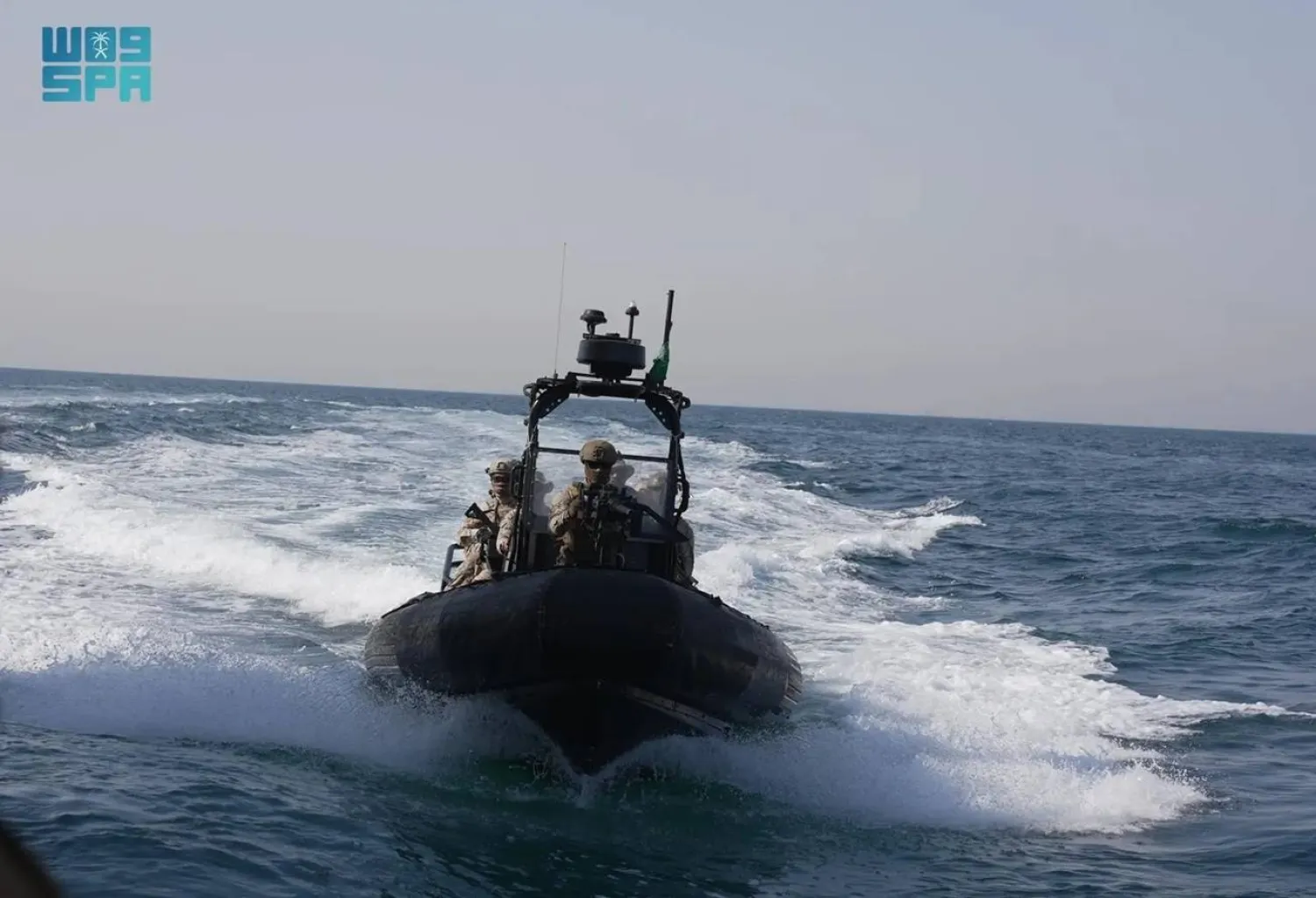
The joint naval exercise Blue Sword-4. (SPA)

Saudi, Chinese Naval Forces Conclude ‘Blue Sword-4’ Exercise in Jubail

By Arshat Al-Asquat

The joint naval exercise Blue Sword-4, held between the Royal Saudi Naval Forces and the People’s Liberation Army Navy of China, has successfully concluded in Jubail, the Saudi Press Agency reported on Sunday.

The naval exercise included several scenarios and field drills, comprising combat in built-up areas, patrol, raid and ambush operations, counter-terrorism measures, and a scenario for the recovery of crews and hostages.

It also featured underwater mine detection and disposal operations, rope descent exercises involving “Super Puma” helicopters, as well as live-fire training with light weapons, sniper shooting, and tactical firing exercises.

The exercise aims to strengthen military cooperation between the two sides, enhance the exchange of expertise to improve combat readiness, and develop capabilities in maritime counterterrorism, anti-piracy operations, naval mine clearance, and countering tactical unmanned aerial systems.

Via https://english.aawsat.com/gulf/5201529-saudi-chinese-naval-forces-conclude-%E2%80%98blue-sword-4%E2%80%99-exercise-jubail

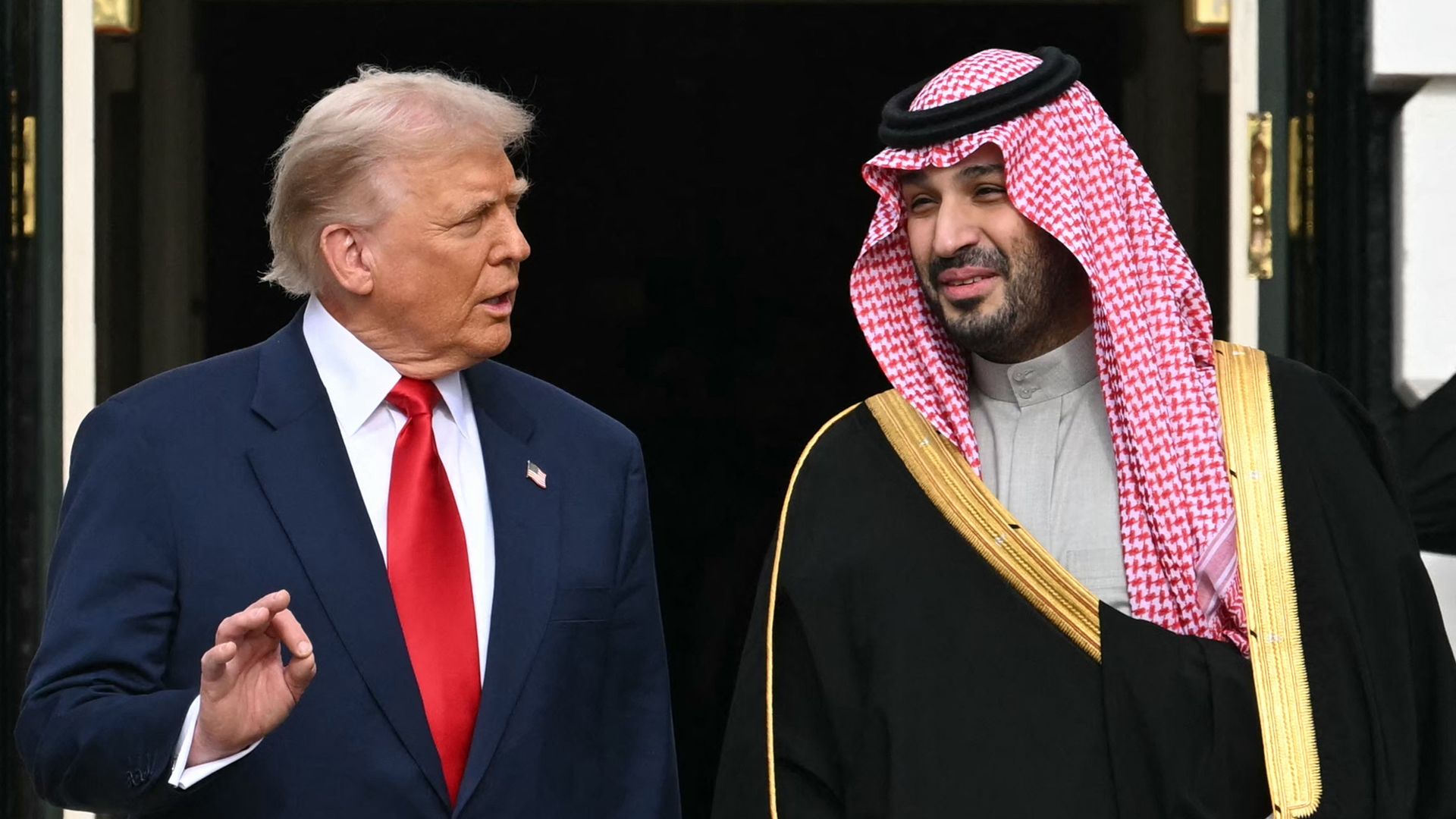
MBS Meeting With Trump Got Tense Over Israel

President Trump talks with Saudi Crown Prince Mohammed bin Salman.

President Trump and Saudi Crown Prince Mohammed bin Salman at the White House on Nov. 18. Photo: Saul Loeb/AFP via Getty Images.