CDC vaccine panel votes to stop recommending birth dose of hepatitis B vaccine for all newborns

What to know about hepatitis B shot for infants ahead of CDC vaccine ...


The Centers for Disease Control and Prevention’s vaccine advisory panel voted Friday to change the recommendation for when children should get their first dose of the hepatitis B vaccine. Instead of a first dose within 24 hours of birth — as the CDC has advised for more than 30 years — the panel voted to recommend delaying it until a child is 2 months old for children born to mothers who test negative for the virus.The panel voted, in a 8-3 decision, to recommend individual decision-making in consultation with a health care provider to determine when or if to give the hepatitis B birth dose to a child whose mother tested negative for the virus.

Many medical experts and organizations including the American Academy of Pediatrics opposed such a change, saying it will leave young children at risk of an infection that can cause lifelong illness. They point to decades of research confirming the vaccine’s safety and effectiveness.

The decision came on the second day of the Advisory Committee on Immunization Practices’ December meeting, after confusion on Thursday led to the vote being delayed.

The panel — whose members were all appointed by Health and Human Services Secretary Robert F. Kennedy Jr. — began the day  with a reading of the proposed voting language, followed by discussion from the panel members and other experts. Restef Levi, an ACIP member and mathematician who has no medical training, strongly argued against the universal birth dose, falsely claiming that experts had “never tested (the vaccines) appropriately.” Levi said he believed the committee should not recommend any timeline for the vaccine.

Dr. Cody Meissner, a pediatrics professor who previously served as a member of the Food and Drug Administration’s vaccines panel and an ACIP board member, and committee member Dr. Joseph Hibbeln continued to criticize the efforts to change the recommendations. Hibbeln said this was the fourth version of the language presented in 96 hours, and that “no rational science has been presented” to support changing the recommendations. Meisner emphasized that leaving the recommendation as-is would still allow parents to make their own choices about the vaccines their child receives.

“We’ve heard ‘do no harm’ as a moral imperative. We are doing harm by changing this wording,” Meissner said as he voted to oppose the change.

Hepatitis B is an incurable viral infection that can lead to liver disease, cancer and early death. The hepatitis B vaccine has been universally recommended for newborns in the U.S. since 1991. Over that time, research shows hepatitis B infections among infants and children have dropped 99%.

Recommendations from the advisory committee, known as ACIP, go to the CDC director for approval. Ultimately, decisions are left to the states, which tend to base their policies off the CDC’s guidelines but can choose to set their own. ACIP’s recommendations also carry weight with insurance companies: Most private insurers are required to cover the recommended vaccines. If the recommendation changes, what’s covered by insurance may also change.

The birth dose of hepatitis B vaccine has become a target of vaccine critics, including Kennedy, who falsely claimed on a podcast in June that it was a “likely culprit” in autism.

The birth dose of the vaccine has a long track record, and multiple studies show the shot is not associated with any increased risk of infant deathfever or sepsismultiple sclerosis or autoimmune conditions. Severe reactions to the vaccine are rare. Research also shows there is no evidence of any safety benefit in waiting until a child is older.

The panel also voted Friday in a 6-4 decision, with one abstention, to recommend parents consult with their doctors about whether to have their children tested to see if the first vaccine dose gave them a certain level of protection against hepatitis B. Typically, the vaccine is given as part of a three-dose series. Some panelists criticized the lack of data showing one dose was as effective as three doses and called the language of the recommendation confusing.

[…]

Via https://www.cbsnews.com/news/cdc-acip-vaccine-panel-hepatitis-b-birth-dose/

Zelensky allies flee to Israeli-occupied territories as $100-million graft scandal erupts

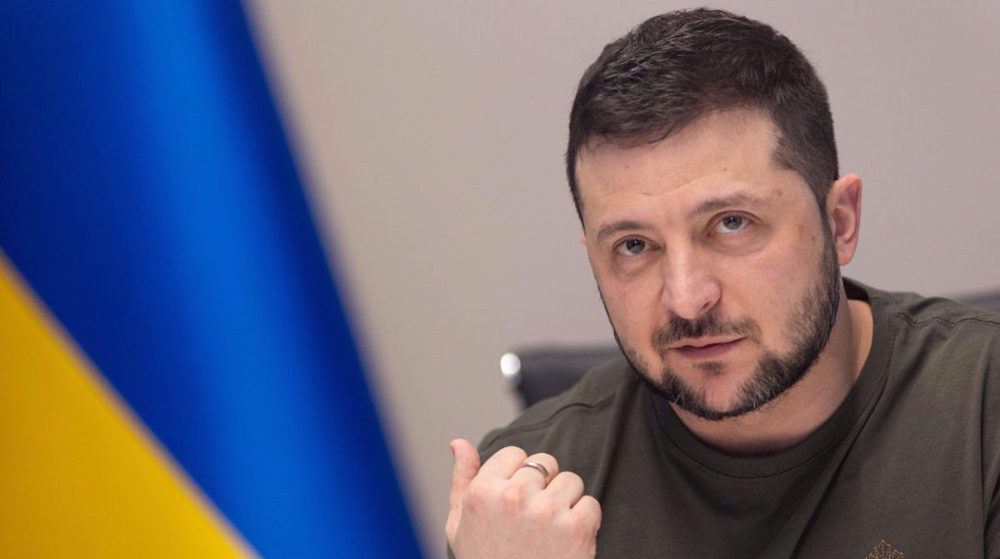
Ukrainian President Volodymyr Zelensky

Press TV

A damning investigation has revealed that the Ukrainian government under President Volodymyr Zelensky “systematically sabotaged” anti-corruption oversight across key state-owned companies, clearing the way for graft to proliferate during conflict with Russia.

The findings were collected as part of an investigation by The New York Times, which the paper published on Friday.

The results emerged just as two of Zelensky’s closest associates abruptly fled to the occupied territories amid accusations of a $100-million embezzlement scheme inside Energoatom, Ukraine’s state-owned nuclear power company.

According to the report, Zelensky’s administration repeatedly undermined the independent supervisory boards responsible for monitoring state spending and vetting major contracts.

The investigation showed that officials in Kiev “stacked boards with loyalists, left seats empty, or stalled them from being set up at all,” even rewriting corporate charters to limit external oversight.

These moves, the paper wrote, allowed hundreds of millions of dollars to be spent without scrutiny from experts.

The same pattern was documented across Energoatom, the electricity transmission operator Ukrenergo, and the Defense Procurement Agency, which oversees military acquisitions.

The NYT report landed amid a fast-moving scandal in which members of Zelensky’s inner circle were accused by anti-corruption prosecutors of stealing $100 million from Energoatom.

Rather than acknowledging responsibility for weakening oversight, the government shifted blame onto the very supervisory boards it had sidelined.

The scandal triggered the resignation of Zelensky’s controversial chief of staff, Andriy Yermak, late last month.

Hours before police raided his home, Yermak quietly departed for the occupied territories, where he holds “citizenship,” according to the Ukrainska Pravda outlet.

Yermak has long been regarded as Zelensky’s most influential advisor, shaping domestic politics, security decisions, and foreign policy.

A second key figure, businessman Timur Mindich, co-founder of Zelensky’s entertainment company Kvartal 95, was identified by investigators as the alleged main figure leading the embezzlement scheme.

Mindich also escaped to the occupied territories before authorities raided his luxury apartment, Ukrainian media reported.

A former Ukrainian government official told Fox News that Mindich maintained “an apartment with golden toilets in the same building as Zelensky.”

European officials acknowledged they were aware of the persistent corruption risks, but continued providing billions in aid.

“We do care about good governance, but we have to accept that risk,” said Christian Syse, Norway’s special envoy to Ukraine, “because it’s in our own interest.”

[…]

Via https://www.presstv.ir/Detail/2025/12/07/760165/Ukraine-officials-flee-Israel-corruption

Trump to announce Gaza government, Board of Peace by Christmas

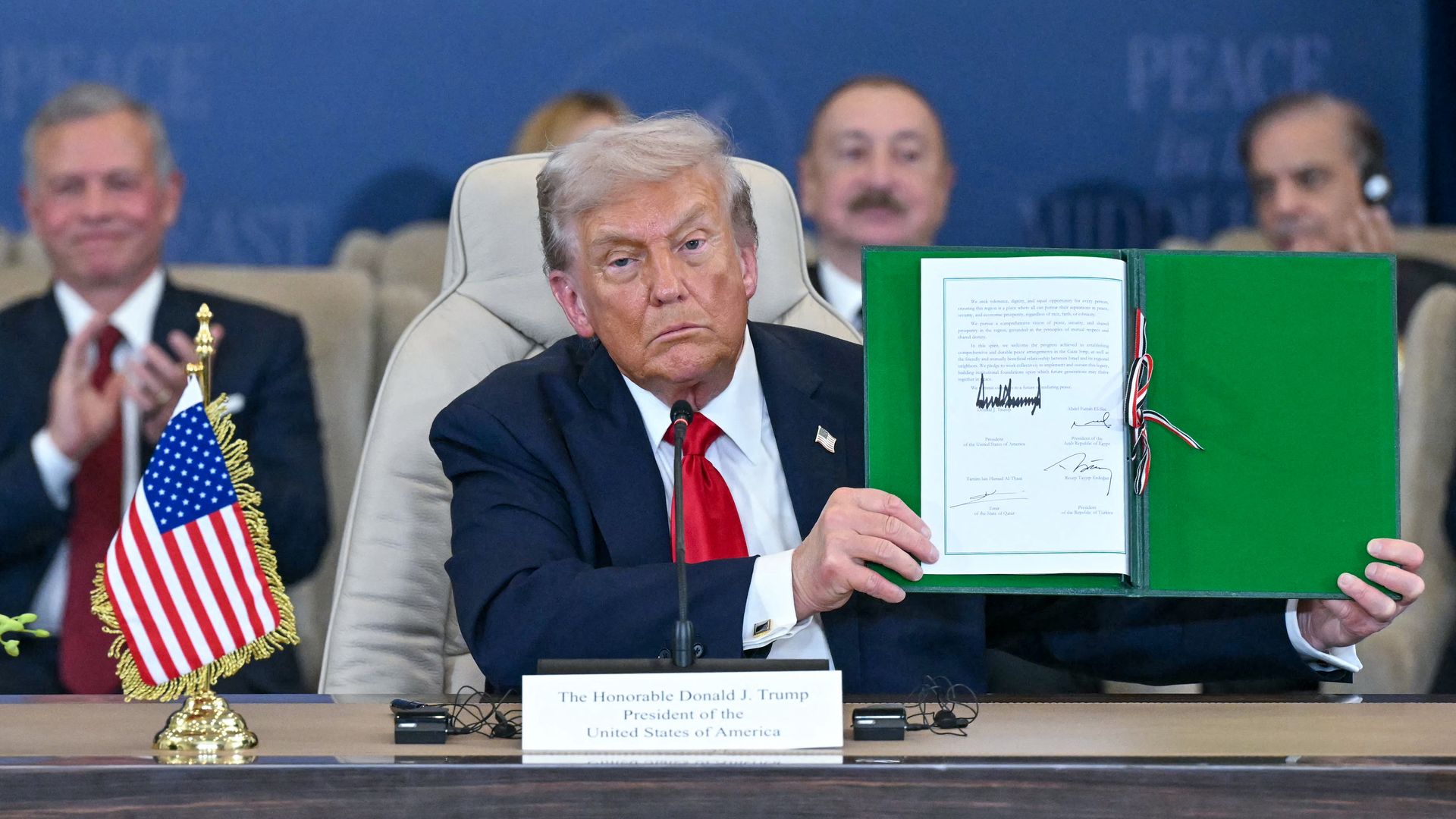
Man holds up board with paper on it

Trump at the Gaza peace conference in Egypt in October. Photo: Saul Loeb/AFP via Getty

IAEA issues new Chernobyl safety warning

IAEA issues new Chernobyl safety warning

RT

The agency has found the protective structure over the 1986 reactor critically damaged after a drone strike

The protective shelter over the reactor at Chernobyl Nuclear Power Plant can no longer guarantee radiation containment, the International Atomic Energy Agency (IAEA) has said. The agency added that urgent major repairs are now required.

The warning follows an inspection prompted by a drone strike in February, which marked the first major attack on the shelter. Moscow said the strike was a provocation orchestrated by Kiev, while the Ukrainian government blamed Russia.

The strike had pierced the outer shell of the massive steel arch known as the New Safe Confinement (NSC) and triggered a fire. While the initial damage did not cause a radiation leak, the new assessment shows the structural breach has degraded the shelter’s ability to contain nuclear material.

The IAEA confirmed on Friday that the NSC, a 36,000-tonne steel structure built over the destroyed Unit 4 reactor at Chernobyl, “had lost its primary safety functions, including the confinement capability.”

Completed in 2019 at a cost of around €1.5billion (about $1.6 billion), the NSC was designed to contain radioactive material and seal the original concrete “sarcophagus” installed after the 1986 disaster.

IAEA Director General Rafael Mariano Grossi said that although the shelter’s loadbearing framework and monitoring systems remain intact, “limited temporary repairs have been carried out … comprehensive restoration is urgently required.” IAEA inspectors have now dispatched additional nuclear safety experts to the site to assess the full extent of the damage.

Russia has accused Ukraine of repeatedly targeting the Zaporozhye (ZNPP) and Kursk nuclear power plants, describing the attacks as acts of “nuclear terrorism.”

A Ukrainian drone struck an auxiliary building at the Kursk NPP in late September, during a visit to Moscow by IAEA chief Rafael Grossi.

Just days earlier, power lines supplying the ZNPP were reportedly damaged by Ukrainian artillery, forcing the plant to switch to backup generators. Russia took control of the ZNPP in March 2022, and the region later held a referendum to join the country. Kiev denies involvement in the Kursk incident and has accused Moscow of attacking the ZNPP.

Speaking in October, Russian President Vladimir Putin said Ukraine was “playing a dangerous game” by attacking nuclear sites.

[…]

Via https://www.rt.com/russia/629129-iaea-chernobyl-safety-warning/

Yemen opens trial for 13 people charged with spying for CIA, Israel

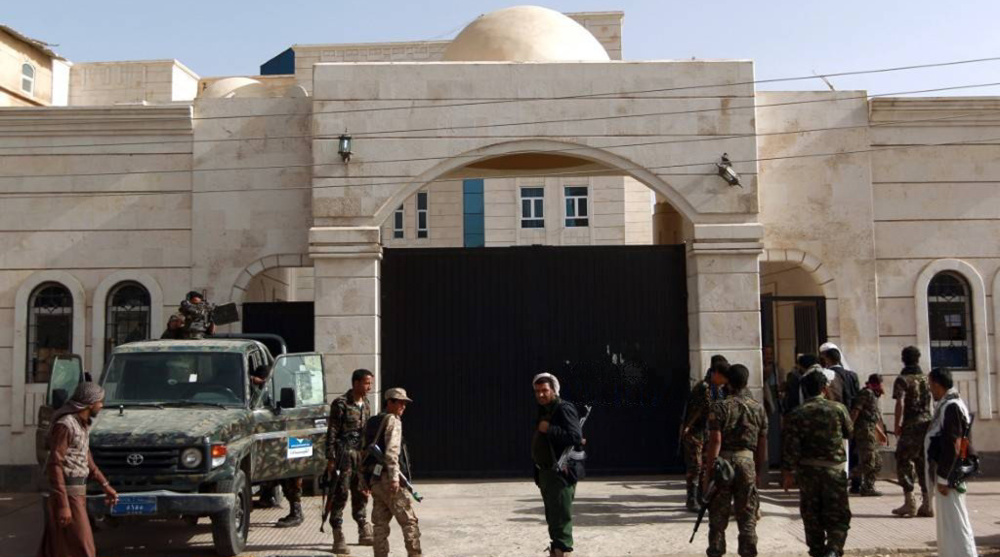
Yemeni security member stand guard outside a court in the Yemeni capital Sana’a. (AFP)

RT

A court in Yemen has commenced the trial of 13 individuals on charges of operating a spy network for the US Central Intelligence Agency (CIA) and Israel’s Mossad spy agency. 

The defendants were formally presented with the indictment during Saturday’s session of Yemen’s Specialized Criminal Court in the capital, Sana’a.

According to the indictment, the case involves “a spy network affiliated with the US Central Intelligence Agency.” The group operated from 1987 to 2024, coordinating with US and Israeli intelligence agencies, according to the prosecutors.

They are charged with gathering military, political, security, economic, and social information under the guise of development and humanitarian projects.

The indictment also says that the group recruited officials for foreign agencies and submitted proposals that benefited “the enemy.”

Prosecutors said that the individuals engaged in activities that undermined Yemen’s independence, unity, and defense capabilities.

During the hearing, the defendants responded to the charges and requested access to case files. The court postponed further review of the evidence to the next session.

This trial follows a ruling last month in which Yemeni judges sentenced 17 people to death for spying for Israel and its Western allies. Two others received 10-year prison terms, while one defendant was acquitted, bringing the total number tried in that case to 20.

Yemeni prosecutors said that those defendants were charged with “espionage for foreign countries hostile to Yemen,” including the United States, Israel, and the United Kingdom.

In early November, Yemen’s Interior Ministry announced that security forces had dismantled a spy network jointly operated by the CIA, Mossad, and Saudi Arabia’s General Intelligence Presidency.

Authorities reported that the network functioned through small, autonomous cells that gathered sensitive information on critical infrastructure, military sites, weapons production facilities, and locations used for ballistic missile and drone launches by Yemeni armed forces.

Yemen has stepped up its intelligence investigations since the US and Britain started conducting joint airstrikes against the country in support of the Israeli regime amid the genocidal war on Gaza.

Yemen’s armed forces launched a months-long campaign of missile attacks against the occupied territories and Israeli-affiliated shipping in the Red Sea weeks after the war began in October 2023.

[…]

Via https://www.presstv.ir/Detail/2025/12/07/760189/Yemen-court-espy-network-Israel-US-

Darius I: Persian Empire’s Second Father

Persian Empire Darius

Episode 5 Darius I: Persian Empire’s Second Father

The Persian Empire (2012)

Dr John W I Lee

Film Review

Cambyses II was succeeded by either his younger brother Bardya (or someone named Gaumata who assassinated Bardya and impersonated him),* who seized the throne while Cambyses was still in Egypt. Cambyses, died of wound infection while traveling through Syria, never returned to Persia.

The fourth Persian king Darius I (522-446 BC), a distant relative of Cyrus I, killed Bardya/Gaumata and the magi who supported him, asserting he was guided by the god Ahuramazda to restore the Achaemenid legacy.

It would be Darius’s role of consolidating the territories conquered by Cyrus and Cambyses. In addition he

  • fixed the boundaries of the empire’s provinces, appointing both military and civilian satraps to govern them.
  • fixed quotas for the tribute paid by each satrapy (issuing the first coins in the Middle East for this purpose).
  • regularized military garrisons and ordered yearly troop musters for each satrapy
  • recruited architects and artisans from across the empire to oversee ambitious building projects (mainly palace and tombs).
  • improved communication through ambitious road building and an extensive messenger service
  • built a strong navy and conquered new lands, included areas of India and Pakistan, Thrace, Samos and other Greek islands.
  • helped finance rebuilding of Solomon’s temple in Jerusalem in 515 BC

*Plato asserts Cambyses killed Bardya himself at the start of the former’s reign. Herodutus asserts Bardya accompanied Cambyses to Egypt and was assassinated later after returning to Persia.

https://www.kanopy.com/en/pukeariki/watch/video/15372393/15372434

Federal Vaccine Advisory Committee Votes to End Universal Hepatitis B Vaccine Recommendation for Babies

father and mother with newborn baby

Dasha Halepova via Pexels

Hannah Knudsen

A federal advisory committee voted on Friday to end the universal hepatitis B vaccine recommendation for newborn babies – a decision which will now go to the U.S. Centers for Disease Control and Prevention (CDC) director for final approval.

The Advisory Committee on Immunization Practices (ACIP), the CDC’s vaccine advisers, determined in an 8-3 vote to narrow the recommendation. Instead of recommending the shot for all newborn babies, the advisory board is opting to recommend it only for newborns whose mothers test positive for the virus. “Women whose hepatitis B status is negative or unknown should talk with their doctors about vaccination, the recommendation says,” according to NPR.

“If you are a baby that was born to a mother that was tested negative for Hep B, you need to realize, as a parent, that your risk of infection throughout your early stage of life and probably throughout most of your childhood, is extremely low to the extent that it’s even hard to quantify how low. It is, it’s probably one in several millions [sic],” Professor Retsef Levi – a member of the ACIP – said in a clip shared by the CDC.

“And that means that, as a parent, we encourage you, in consultation with your physician, to think very carefully. Do you want to expose your child, your baby, to an intervention that could have some potential harms when the risk is so low?” he asked. “And mind you that we are talking about a very, very young baby in the first few months of their life, where they are not fully developed.”

This move comes as the Trump administration continues to focus on the Make America Healthy (MAHA) movement, challenging the status quo and long-held beliefs.

For instance, in September, the committee changed the guidance for the coronavirus shot, essentially leaving it up to the individual. Meanwhile, individual states are working to remove mandates as well. That same month, Florida Surgeon General Joseph Ladapo announced that the Florida Department of Health was working with the DeSantis administration to “end all vaccine mandates” in the Sunshine State.

“Who am I as a government or anyone else, or who am I as a man standing here now to tell you what you should put in your body?” Ladapo asked at the time. “Who am I to tell you what your child should put in your body? I don’t have that right.”

[…]

Via https://www.breitbart.com/politics/2025/12/05/federal-vaccine-advisory-committee-votes-end-universal-hepatitis-b-vaccine-recommendation-babies/

Qatari PM warns Gaza deal not true ceasefire without Israeli withdrawal

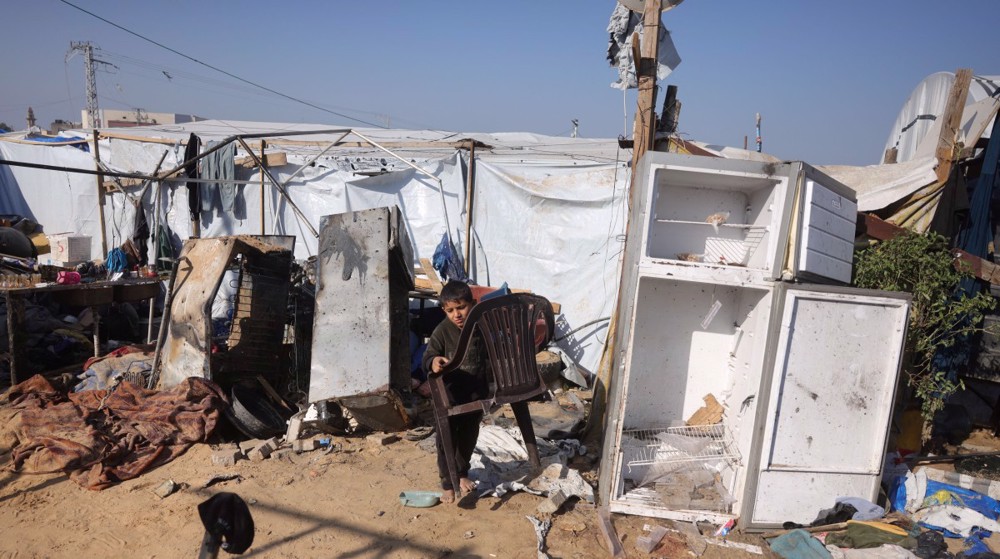
A boy lifts a plastic chair at the site where Palestinians were killed on December 3, by an Israeli strike, in Khan Yunis, southern Gaza Strip on December 4, 2025. (Photo by AFP)

Press TV

Qatar’s Prime Minister, Sheikh Mohammed bin Abdulrahman Al Thani, has warned against Israel’s continued hostilities in the Gaza Strip, stressing that only a full withdrawal of Israeli forces would constitute a full ceasefire under the US-brokered peace plan.

Speaking at the Doha Forum on Saturday, Al Thani said the current nearly two-month truce has reached a “critical” juncture as the first phase of US President Donald Trump’s 20-point peace plan draws to a close.

“What we have just done is a pause,” he said. “We cannot consider it yet a ceasefire. A ceasefire cannot be completed unless there is a full withdrawal of Israeli forces, there is stability back in Gaza, people can go in and out, which is not the case today.”

The Qatari premier further noted that international mediators are pushing to launch the second phase of the peace plan, which aims to solidify the agreement and establish a long-term political framework.

He also stated that even the next phase must remain “temporary,” stressing the necessity of creating a Palestinian state for sustainable peace.

“If we are just resolving what happened in Gaza, the catastrophe that happened in the last two years, it’s not enough,” he said. “There is a root for this conflict. And this conflict is not only about Gaza.”

“It’s about Gaza. It’s about the West Bank. It’s about the rights of the Palestinians for their state. We are hoping that we can work together with the US administration to achieve this vision at the end of the day,” he added.

At the same forum, Turkey’s Foreign Minister Hakan Fidan also raised concerns about the proposed “International Stabilization Force (ISF)” in Gaza, citing uncertainties about participating countries, command structure, and initial objectives.

“Thousands of details, questions are in place,” he said. “I think once we deploy ISF, the rest will come.”

Turkey, one of the ‘guarantors’ of the ceasefire, faced rejection from Israel regarding its involvement in the force due to strained relations between the two sides.

Israel accepted the Gaza truce deal after two years, following the failure to achieve its declared objectives of eliminating Hamas and freeing all captives, despite killing 68,116 Palestinians, mostly women and children, and injuring 170,200 others since launching the genocidal war on Gaza on October 7, 2023.

Trump pushed for a ceasefire deal as part of a US-led diplomatic effort, engaging regional powers and both parties to halt hostilities and allow humanitarian aid into Gaza.

The initial phase of Trump’s 20-point Gaza ceasefire plan took effect on October 10 and saw a prisoner exchange, but further stages have not been negotiated yet.

However, the fragility of the US president’s 20-point Gaza deal was evident from the beginning, as reports from Gaza health officials indicated over 360 Palestinian casualties since the ceasefire’s initiation, with the latest incident involving an Israeli airstrike northwest of Gaza City.

Despite the pause in large-scale hostilities, the situation remains tense, with continued reports of Israeli fire causing Palestinian casualties and tensions around crossing truce lines into Israeli-controlled areas of Gaza.

[…]

Via https://www.presstv.ir/Detail/2025/12/06/760126/Palestine-Israel-Gaza-fragile-ceasefire-Qatari-PM-complete-withdrawal-Israeli-forces-full-truce

Iranian and Egyptian foreign ministers urge global action to end Israel’s violations in Gaza, Lebanon

Iranian Foreign Minister Abbas Araghchi (R) and his Egyptian counterpart Badr Abdelatty

Press TV

Top Iranian and Egyptian diplomats say the international community must take swift action to put an end to the Israeli regime’s ongoing aggression in Gaza and Lebanon.

In a phone conversation on Saturday, Iranian Foreign Minister Abbas Araghchi and his Egyptian counterpart Badr Abdelatty said Israel continues to carry out acts of aggression and violate the ceasefires in Gaza and Lebanon.

Israel accepted the Gaza truce deal after two years, following its failure to achieve its declared objectives of eliminating the Palestinian resistance movement Hamas and freeing all captives.

The initial phase of the ceasefire plan took effect on October 10 and saw a prisoner exchange, but further stages have not been negotiated yet.

However, the fragility of the 20-point Gaza deal, pushed by US President Donald Trump, was evident from the beginning, as reports from Gaza health officials indicated over 366 Palestinian casualties since the ceasefire’s initiation, with the latest incident involving an Israeli airstrike northwest of Gaza City.

A ceasefire between Israel and the Lebanese resistance movement Hezbollah took effect in November 2024 following a conflict sparked by the Tel Aviv regime’s genocidal war on the Gaza Strip in October 2023.

Israel was forced to accept the truce with Hezbollah after suffering heavy losses on the battlefield and failing to achieve its goals despite killing over 4,000 people in Lebanon.

[…]

Via https://www.presstv.ir/Detail/2025/12/06/760137/Iran-Egypt-FMs-Israel-crimes

Trump files for divorce from NATO over Ukraine

Trump files for divorce from NATO over Ukraine

The new US National Security Strategy signals a massive foreign policy shift; it remains to be seen if Washington is serious about it

It is one thing to produce a written national security strategy, but the real test is whether or not US President Donald Trump is serious about implementing it. The key takeaways are the rhetorical deescalation with China and putting the onus on Europe to keep Ukraine alive.

The 2025 National Security Strategy (NSS) of the US, released by the White House on December 4, 2025, marks a potentially profound shift in US foreign policy under Trump’s second administration compared to his first term as president. This 33-page document explicitly embraces an ‘America First’ doctrine, rejecting global hegemony and ideological crusades in favor of pragmatic, transactional realism focused on protecting core national interests: Homeland security, economic prosperity, and regional dominance in the Western Hemisphere.

It critiques past US overreach as a failure that weakened America, positioning Trump’s approach as a “necessary correction” to usher in a “new golden age.” The strategy prioritizes reindustrialization (aiming to grow the US economy from $30 trillion to $40 trillion by the 2030s), border security, and dealmaking over multilateralism or democracy promotion. It accepts a multipolar world, downgrading China from a “pacing threat” to an “economic competitor,” and calling for selective engagement with adversaries. However, Trump’s actions during the first 11 months of his presidency have been inconsistent with, even contradictory of, the written strategy.

The document is unapologetically partisan, crediting Trump personally for brokering peace in eight conflicts (including the India-Pakistan ceasefire, the Gaza hostage return, the Rwanda-DRC agreement) and securing a verbal commitment at the 2025 Hague Summit for NATO members to boost their defense spending to 5% of GDP. It elevates immigration as a top security threat, advocating lethal force against cartels if needed, and dismisses climate change and ‘net zero’ policies as harmful to US interests.

The document organizes US strategy around three pillars: Homeland defense, the Western Hemisphere, and economic renewal. Secondary focuses include selective partnerships in Asia, Europe, the Middle East, and Africa.

Here are the major rhetorical shifts in strategy compared to the previous strategies released during the respective presidencies of Trump (2017) and Biden (2022):

  • From global cop to regional hegemon: Unlike Biden’s 2022 NSS (which emphasized alliances and great-power competition) or Trump’s 2017 version (which named China and Russia as revisionists), this document ends America’s “forever burdens” abroad. It prioritizes the Americas over Eurasia, framing Europe and the Middle East as deprioritized theaters.
  • Ideological retreat: Democracy promotion is explicitly abandoned – “we seek peaceful commercial relations without imposing democratic change” (tell that to the Venezuelans). Authoritarians are not judged, and the EU is called “anti-democratic.”
  • Confrontational ally relations: Europe faces scathing criticism for migration, free speech curbs, and risks of “civilizational erasure” (e.g., demographic shifts making nations “unrecognizable in 20 years”). The US vows to support the “patriotic” European parties resisting this, drawing Kremlin-like rhetoric accusations from EU leaders.
  • China policy: Acknowledges failed engagement; seeks “mutually advantageous” ties but with deterrence (e.g., Taiwan as a priority). No full decoupling, but restrictions on tech/dependencies.
  • Multipolar acceptance: Invites regional powers to manage their spheres (e.g., Japan in East Asia, Arab-Israeli bloc in the Gulf), signaling US restraint to avoid direct confrontations.

The NSS represents a seismic shift in America’s approach to NATO, emphasizing “burden-shifting” over unconditional alliance leadership. It frames NATO not as a values-based community but as a transactional partnership in which US commitments – troops, funding, and nuclear guarantees – are tied to European allies meeting steep new demands. This America First recalibration prioritizes US resources for the Indo-Pacific and Western Hemisphere, de-escalating in Europe to avoid “forever burdens.” Key changes include halting NATO expansion, demanding 5% GDP defense spending by 2035, and restoring “strategic stability” with Russia via a Ukraine ceasefire. While the US reaffirms Article 5 and its nuclear umbrella, it signals potential partial withdrawals by 2027 if Europe fails to step up, risking alliance cohesion amid demographic and ideological critiques of Europe. When Russia completes the defeat of Ukraine, the continued existence of NATO will be a genuine concern.

The strategy credits Trump’s diplomacy for NATO’s 5% pledge at the 2025 Hague Summit but warns of “civilizational erasure” in Europe due to migration and low birth rates, speculating that some members could become “majority non-European” within decades, potentially eroding their alignment with US interests.

Trump’s NSS signals a dramatic change in US policy toward the Ukraine conflict by essentially dumping the responsibility for keeping Ukraine afloat on the Europeans. The portion of the NSS dealing with Ukraine is delusional with regard to the military capabilities of the European states:

We want Europe to remain European, to regain its civilizational self-confidence, and to abandon its failed focus on regulatory suffocation… This lack of self-confidence is most evident in Europe’s relationship with Russia. European allies enjoy a significant hard power advantage over Russia by almost every measure, save nuclear weapons.

As a result of Russia’s war in Ukraine, European relations with Russia are now deeply attenuated, and many Europeans regard Russia as an existential threat. Managing European relations with Russia will require significant US diplomatic engagement, both to reestablish conditions of strategic stability across the Eurasian landmass, and to mitigate the risk of conflict between Russia and European states.

It is a core interest of the United States to negotiate an expeditious cessation of hostilities in Ukraine, in order to stabilize European economies, prevent unintended escalation or expansion of the war, and reestablish strategic stability with Russia, as well as to enable the post-hostilities reconstruction of Ukraine to enable its survival as a viable state.

The Ukraine War has had the perverse effect of increasing Europe’s, especially Germany’s, external dependencies. Today, German chemical companies are building some of the world’s largest processing plants in China, using Russian gas that they cannot obtain at home. The Trump Administration finds itself at odds with European officials who hold unrealistic expectations for the war perched in unstable minority governments, many of which trample on basic principles of democracy to suppress opposition. A large European majority wants peace, yet that desire is not translated into policy, in large measure because of those governments’ subversion of democratic processes. This is strategically important to the United States precisely because European states cannot reform themselves if they are trapped in political crisis.

Not surprisingly, this section of Trump’s NSS has sparked a panicked outcry in Europe. European leaders, including former Swedish PM Carl Bildt, called it “to the right of the extreme right,” warning of alliance erosion. Analysts at the Center for Strategic and International Studies (CSIS) praise its pragmatism, but flag short-sightedness, predicting a “lonelier, weaker” US. China views reassurances on sovereignty positively, but remains wary of economic pressures. In the US, Democrats, such as Rep. Jason Crow, deem it “catastrophic” for alliances, i.e. NATO.

Overall, the strategy signals a US pivot inward, forcing NATO allies to self-fund security while risking fractured partnerships with Europe. It positions America as a wealthy hemispheric power in a multipolar order, betting on dealmaking and industrial revival to sustain global influence without overextension.

[…]

Via https://www.rt.com/news/629112-us-national-security-strategy/