Lavrov praises Trump’s understanding of Ukraine conflict causes

Lavrov praises Trump’s understanding of Ukraine conflict causes

RT

The US president grasps Moscow’s view of what made the hostilities inevitable, the Russian foreign minister has said

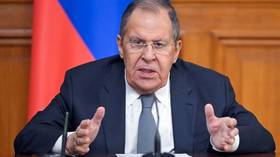
US President Donald Trump is the only Western leader who comprehends the real reasons for the Ukraine conflict, Russian Foreign Minister Sergey Lavrov has said.

Addressing Russia’s Federation Council, the upper chamber of parliament, on Wednesday, Lavrov said that while the US is “showing growing impatience” with the diplomatic process aimed at ending the hostilities, Trump is one of the few in the West who know what led to the conflict in the first place.

“President Trump… is the only one among all Western leaders who, immediately after arriving in the White House in January of this year, began to demonstrate an understanding of the reasons the war in Ukraine had been inevitable,” he said.

Lavrov added that Trump “has a clear understanding” of the factors that shaped the hostile policies pursued toward Russia by the West and by former US President Joe Biden, which, he said, “had been nurtured for many years.”

Lavrov said that “the culmination of the entire [Ukraine] saga is approaching,” arguing that Trump had effectively acknowledged that “the root causes [of the conflict] identified by Russia must be eliminated.”

He cited, in particular, Moscow’s long-standing objections to Ukraine’s NATO aspirations and the ongoing crackdown on the local population’s rights.

The minister added that Trump remained “the only Western leader who cares about human rights in this situation,” contrasting him with EU governments that Moscow sees as evasive on the issue. He revealed that the proposed US roadmap for a settlement explicitly called for safeguarding national minority rights and religious freedoms in Ukraine, “in line with international obligations.”

According to Lavrov, however, those provisions were diluted once the document was presented to the EU. He claimed that the relevant language was rewritten to state that Ukraine should instead follow standards “adopted in the European Union.”

Moscow has for years raised alarms over Kiev’s crackdown on the Russian language and culture, as well as attempts to suppress the rights of other national authorities, while pointing out that Ukrainian policymakers are openly encouraging neo-Nazism in the country.

[…]

Via https://www.rt.com/russia/629250-lavrov-praise-trump-understand-ukraine-conflict/

Hamas rules out 2nd phase of Gaza ceasefire while Israeli violations continue

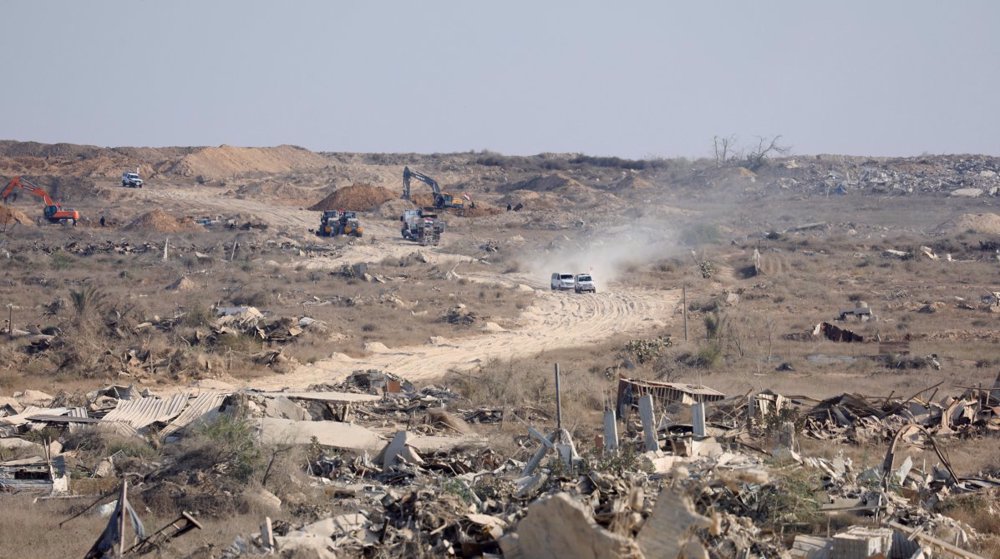
Machinery operates next to a Red Cross vehicle at an area within the so-called “yellow line” to which Israeli troops withdrew under the ceasefire in Gaza City, Nov. 12, 2025. (A photo by Reuters)

Press TV

A senior Hamas official says continued Israeli “violations” of the Gaza ceasefire have left no ground to begin phase-two negotiations, warning that progress is impossible until mediators force Israel to fully comply with the first stage.

“As long as the occupation continues its violations,” there is no basis to move forward with the next phase of the ceasefire, Hamas political bureau member Husam Badran said on Tuesday.

Badran further stated that Israel had failed to meet phase one commitments, citing the closure of the Rafah crossing, obstruction of shelter deliveries, reduced humanitarian aid, and continued killings and home demolitions inside the so-called yellow line.

Pointing to comments by Israeli military chief Eyal Zamir, who claimed that the “yellow line” now serves as Gaza’s new border, Badran said that the remarks “clearly reveal the criminal occupation’s lack of commitment to the ceasefire agreement.”

Addressing Israeli troops inside the besieged strip on Sunday, Zamir openly described the so-called “yellow line”, a north–south axis cutting through the Gaza Strip and marking the point of Israel’s pullback, as “a new border line” with Gaza.

Israeli forces withdrew to the “yellow line” in October as part of the first phase of US President Donald Trump’s 20-point Gaza ceasefire plan with the Palestinian-based resistance movement Hamas.

Israel and the Palestinian resistance group Hamas agreed in October to the truce intended to increase the flow of aid into the besieged strip, which has been devastated by nearly two years of Israel’s genocidal war.

Despite the ceasefire, the Israeli attacks have continued; at least 376 Palestinians have been killed in Israeli attacks and airstrikes across Gaza since October 10.

This comes as Israel still controls more than half of the blockaded Palestinian territory.

Large parts of the besieged Palestinian territory remain inaccessible due to the continued presence of Israeli occupation forces.

‘Gaza still facing genocide’

Also on Tuesday, Hamas spokesperson Hazem Qassem emphasized that Palestinians in Gaza “are still subjected to ongoing genocide through multiple tools, including the continued siege, the prevention of adequate shelter materials, the restriction of humanitarian aid, and the closure of crossings.’’

Qassem strongly denounced the silence of the international community and world organizations towards Israeli crimes. “This places the international community before its urgent moral and political responsibilities toward the civilian population.”

The spokesperson warned of the repercussions of the new weather depression affecting the Gaza Strip.

He highlighted that the current sheltering tents are unsuitable to withstand rain or winter cold, especially under the occupation’s restrictions on the entry of fuel.

Aid agencies continue to press for expanded access for humanitarian convoys, while Israel has rejected calls to allow relief shipments to enter through the Rafah crossing.

Qassem added that the “catastrophic humanitarian conditions in Gaza necessitate launching an urgent relief operation and providing real, decent shelter centers by all concerned parties.”

He stressed the need to “compel the occupation to apply the humanitarian relief protocols stipulated in the January [ceasefire] agreement, which were reaffirmed in the October agreement.”

More than 70,000 people, mostly women and children, have been killed since October 2023, when Israel launched its genocidal war on Gaza.

[…]

Via https://www.presstv.ir/Detail/2025/12/09/760321/Palestine-Hamas-Israel-Eyal-Zamir–


New Zealand Police Set to Drop Pepper Spray in Favour of Lavender Calming Mist

May be an image of one or more people, beard and text

West Coast New Zealand

WELLINGTON — In a move described as “progressive and softly scented,” New Zealand Police have announced plans to phase out pepper spray and replace it with a “therapeutic lavender calming mist” designed to subdue offenders through aromatherapy rather than discomfort.

Police Commissioner Lydia Binn unveiled the initiative during a mindfulness-themed press conference at Police National Headquarters.

“For too long, our tools have inflamed tensions — and sinuses,” Binn said. “Lavender engages the parasympathetic nervous system, encouraging offenders to breathe deeply and reconsider their life choices.”

The new spray, branded Peace-Mist 3000, will be deployed nationwide by mid-2026 following a six-month pilot programme in central Wellington.
Early trials have reportedly been “soothingly successful.”

Frontline officer Hareb Alsack described one encounter outside Courtenay Place:
“We had a guy hurling cones at traffic. Two spritzes of lavender and he sat cross-legged on the footpath to ‘re-align his aura.’ Honestly, it worked better than cuffs.”

A spokesperson for the Ministry of Kindness, Lou Sarsoul, praised the change as “a milestone in non-violent justice.”

“When we replace pain with peace, we redefine public safety,” Sarsoul said. “Soon we’ll look back and wonder how anyone ever thought weaponised capsaicin was inclusive.”

In addition to lavender mist, officers will also be issued silicone-padded truncheons to “soften the blows of systemic enforcement.”

Commissioner Binn said the new equipment “retains form and bounce while honouring empathy.”

“If a strike must be made,” she explained, “let it be firm, but forgiving.”

Critics, however, say the policy lacks realism.

Former officer Terry Ryst commented,

“Try diffusing a bar brawl in Westport with lavender oil and a silicone noodle — you’ll end up aromatherapied into the ER.”

Police confirm that alongside lavender, they are trialling other “emotionally restorative alternatives,” including:

Chamomile foggers for domestic disputes

Rose-quartz diffusers for traffic stops

Sandalwood serenity grenades for riot control

Binn defended the plan:

“Our goal isn’t control — it’s collective calm. If offenders smell nice while being arrested, we’ve all won.”

Public workshops titled “Scent-Based Safety: A Journey to Olfactory Justice” begin next month.

[…]

Via https://www.facebook.com/photo/?fbid=122142386936928998

New Zealand Must Adapt or Die When It Comes to a Multi-Polar World

by Mykeljon Winckel

History will record December 2025 as the moment the geopolitical tectonic plates finally shifted under our feet

With the release of its new National Security Strategy (NSS), the United States — the world’s most powerful nation — has officially abandoned the global-hegemony doctrine that defined the post-Cold War order.

For the first time since 1945, Washington is no longer claiming the mantle of global policeman, architect of the “rules-based international order,” or moral crusader for universal liberal democracy. Instead, the U.S. has accepted — openly, deliberately, and doctrinally — that we now live in a multi-polar world.

This is not a minor policy update. It is the biggest strategic realignment of American statecraft in three generations. And for New Zealand, this change is nothing short of existential.

Why This Shift Matters So Profoundly for New Zealand

New Zealand’s prosperity has depended on one undeniable fact: The United States is one of our most important trading partners and strategic allies.

  • Second-largest export market
  • Over 12% of NZ’s total exports by value
  • A cornerstone of our food, agriculture, and primary-sector revenue
  • Our indispensable defence and intelligence partner
  • Our cultural, financial, and technological anchor

When the United States changes course, New Zealand must pay attention.

The new U.S. strategy is a direct repudiation of the idea that the world should be shaped by global institutions, supranational governance, and imperial-style economic dependencies. It signals the end of the “old world order” — and with it, the end of New Zealand’s comfortable assumption that trade flows, security guarantees, and market access would always be there.

But to truly understand what is ending, we must finally confront the weaponised economic system that shaped New Zealand for more than a century.

The Imperial Free Trade System — Designed to Enrich the Few and Enslave the Many

The British Imperial Free Trade model was not free, and it was not trade. It was a weaponised colonial economic system engineered to:

  • Capture raw materials
  • Strip labour value
  • Crush local industry
  • Prevent industrial sovereignty
  • Force colonies into mono-export dependence
  • Extract wealth upwards into the aristocratic families who architected the empire

It was a system deliberately designed to create:

A race to the bottom for the colonised

and

A race to the top for the imperial elite.

Under this system:

  • Colonies produced raw goods at low margin
  • Britain manufactured finished goods at high margin
  • Colonies remained dependent
  • Wealth flowed in one direction — toward the imperial core
  • Political loyalty was maintained by economic servitude
  • The aristocratic dynasties and banking families consolidated global wealth and power

This system created the modern global 1% — the families whose names built the empire, controlled trade networks, owned shipping monopolies, and dictated global finance.

New Zealand, like Australia, Canada, and India, was never meant to become an industrial peer. It was designed to remain a pastoral appendage, a safe source of agricultural goods and natural resources.

That legacy persisted long after the Union Jack came down.

We moved from British imperial dictates… to American-led globalisation… to Chinese market dependence…

But the structural position remained unchanged:

New Zealand acted like a colony.

New Zealand was treated like a colony. And New Zealand’s economy behaved like a colony.

The U.S. has now just walked away from the system that replaced the British one — and for the first time in decades, New Zealand has the chance to break free from its inherited economic prison.

A Productivity Flatline — And the First Real Pulse in Half a Century

New Zealanders know the numbers: productivity has been flatlining for nearly 50 years.

This is the direct legacy of a colonial economic model:

  • Exporting raw commodities
  • Importing finished goods
  • Selling land and assets rather than building industry
  • Depending on foreign capital instead of national investment
  • Allowing external powers to set market conditions
  • Accepting low value-add as destiny
  • Treating sovereignty as negotiable

We have lived under an economic doctrine designed to suppress industrial maturity.

But here’s the twist: The U.S. shift toward sovereign self-interest may be the first genuine opportunity in half a century for New Zealand to break its chains.

For the first time since Britain joined the EEC in 1973, we are seeing something like a heart murmur — a faint, fragile pulse inside an economy long stuck in cardiac arrest.

Why? Because a multi-polar world forces us to do the one thing we’ve avoided for generations:

Stand on our own feet.

What New Zealand Must Do Now — Adapt or Die

The new international environment will not tolerate complacency or ideological naivety. New Zealand must:

1. Rebuild Sovereign Capability

We must revive domestic industry, energy independence, regional manufacturing, and high-value processing — particularly in food, minerals, biotech, and advanced materials.

2. Become a Reliable Partner for the U.S. — Without Submitting to Anyone

America’s multipolar doctrine respects sovereignty — but demands clarity.

NZ must be a sovereign partner, not a dependent supplicant.

3. Stop Thinking Like a Colony

We must end the internalised dependence on foreign approval — from London, Washington, or Beijing.

A multi-polar world rewards nations who:

  • Know who they are
  • Control what they produce
  • Protect their strategic assets
  • Act according to self-interest

4. Build New Trade Architecture

Diversify exports and negotiate sovereign agreements with the U.S., India, ASEAN, and the Gulf.

We must never again be locked into a single-market dependency.

5. For the First Time in Our History — Create a Real National Strategy

New Zealand must finally develop a doctrine of:

  • Sovereignty
  • Resilience
  • National identity
  • Strategic realism
  • Industrial capability
  • Economic independence

The era of colonial economics is over. The global system that replaced it is collapsing. A multi-polar world demands real nations — not compliant outposts.

The Bottom Line: History Has Shifted — New Zealand Must Shift With It

The United States has declared the era of global hegemony finished. Multipolarity is now the governing reality of world affairs.

This is the moment New Zealand either:

Breaks free from the imperial economic model that has shackled us for 150 years

or

Descends into irrelevance as the world moves on without us.

[…]

Via https://www.elocal.co.nz/Article/7019

Is the Crypto Ponzi Scheme Finally Coming to an End?

by Brian Shilhavy

Editor, Health Impact News

Three years ago, in early November of 2022, one of the largest financial scams of all time was unfolding when the equivalent of a “bank run” happened when the crypto exchange FTX saw $6 billion of withdrawals in a 72-hour span.

Many investors, including Blackrock and celebrity athletes such as Stephen Curry and Tom Brady, lost hundreds of millions of dollars almost overnight.

Billionaire Sam Bankman-Fried, who was ranked the 41st-richest American in the Forbes 400, saw his fortune evaporate almost overnight, and now sits in a federal prison serving out his 25-year criminal conviction for fraud.

Here is an article about this that I published at that time:

Crypto Currency Billionaire Loses Fortune Almost Overnight as Crypto Ponzi Business Exposed – The Beginning of the Great Reset?

New problems with cryptocurrencies were exposed yesterday, when the equivalent of a “bank run” happened when crypto exchange FTX saw $6 billion of withdrawals in a 72-hour span, resulting in them reportedly stopping the process of withdrawals yesterday. . . Sam Bankman-Fried, once featured on the cover of Fortune Magazine as potentially the next “Warren Buffet,” and has now reportedly lost 94% of his $16 billion fortune, may be better compared to Bernie Madoff, as ZeroHedge News found an interview he did a few months ago where he admitted that crypto yield farming is basically a Ponzi business.

Full article.

Further reporting about Sam Bankman-Fried and FTX claimed massive corruption with things like money laundering occurring in Ukraine, as well as the lavish lifestyle of Sam Bankman-Fried and his FTX cohorts participating in sexual orgies.

When this happened three years ago, Big Tech was in a free fall laying off hundreds of thousands of employees. Tesla was facing a U.S. criminal probe, and many of the giant automakers, such as Ford and Volkswagen, cut off funding for their “autonomous” self-driving vehicles.

I was calling this major downturn in Big Tech investing back then as the Big Tech Crash of 2022.

But a couple of weeks after the fall of FTX, something happened to direct the public’s attention away from this massive corruption in Crypto Land: the release of OpenAI’s ChatGPT via Microsoft, which quickly became the most downloaded app in history, and launched the current AI Bubble in spending.

There were still what appeared to be some ripple effects of the great FTX crash in November of 2022 in March of 2023, when several Big Tech banks, such as Silicon Valley bank, failed due to bank runs.

But the billionaires who held accounts at these banks complained because their accounts were way north of the FDIC insurance levels of $250k per account, and they would have lost $billions. So the federal government stepped in and backed all of their accounts which temporarily avoided a big crash.

Today, some Wall Street analysts are apparently beginning to see the realities of the crypto financial world, and are sounding the alarm. They are saying that crypto currencies’ best days may now be behind us.

David Weidner of MarketWatch reminds us that many investors today “are young and inexperienced,” and that they “listen to confident voices” on social media too much.

The whole fear, which I admit I have fed into over the past few years, that the public will be forced into “Central Bank Digital Currencies” (CBDCs) and eliminate cash, may have been way overblown.

As always, the consumer has more power than they realize. And when this market that is heavily dependent on Big Tech and all the insane money being spent on the AI bubble eventually corrects itself, the American consumers who hold financial assets outside of tech products and services (e.g. skilled labor), will potentially increase their financial power in the economy by huge ratios.

Bitcoin’s November crash was no accident

An always-on crypto hype machine lives to goose prices and then blame ‘macro’ when the selloff hits

Excerpts:

They came in by the tens of thousands: young, internet-native, mostly male, lured by the promise of lightning gains and financial freedom.

For many, crypto wasn’t just an asset class — it was a storyline; a chance to get rich quickly and grab outsized returns before the mainstream figured out what was happening.

That story was sold to them constantly through late-night livestreams, hyped Twitter threads, “moon or bust” Discord raids.

Now, after the crash, the crypto bros are showing signs of burnout — drained from margin calls, bag-holding and fading hope that the next “rocket tweet” will ever get them back to the high they were chasing.

The November wreck in bitcoin— from north of $120,000 to the low $80,000s — didn’t come out of nowhere. It was manufactured in plain sight by an always-on hype machine that lives to goose prices and then blame “macro” when gravity returns.

Sure, crypto, including bitcoin, has rallied since falling below $85,000, but its “November to remember” crash wiped out dumb money. The subsequent rally only shows there’s dumber money out there.

We watched the script unfold in real time: chest-thumping year-end calls, retail pile-ins and leverage, a sharp downdraft, and then the postmortems telling the faithful to HODL [hold on for dear life] because the next big rally is imminent.

If this sounds like the oldest game on Wall Street — the pump and dump — that’s because it is. Only the tools have changed. “Finfluencers” and coordinated campaigns can spark short-lived pops that fade once the insiders are out.

Unsuspecting investors are told bitcoin isn’t just a trade — it’s insurance against the dollar — and, any day now, central banks will buy it.

The facts say otherwise.

The BIS, IMF and major central bankers keep drawing the same bright line: crypto is speculative, volatile and unsuitable as reserves; banks’ crypto exposure is tightly capped under global rules.

Switzerland’s central bank publicly rebuffed bitcoin for reserves this year. Yes, you’ll find a headline-grabbing outlier — the Czech governor floated a small reserve allocation — but that remains a lonely view.

Investors aren’t dumb. They’re human. Many of them are young and inexperienced. They listen to confident voices.

But if your due diligence begins and ends on social media and chats, you’re playing a game where the other side writes the rules and the storyline.

November was the reminder that, when an “asset” depends on engagement to work, the product is you.

Ultimately, investors should treat crypto’s influencer economy like any other funnel. When the call is for a year-end moonshot, ask who benefits if you buy that exposure today — and who’s already positioned to sell it back to you tomorrow.

Recognize that the adoption stories (dollar hedge, central banks) remain mostly marketing copy, not monetary policy.

If you still want exposure, size it like a lottery ticket, not a Treasury bill.

And when the next “healthy reset” arrives? Remember November.

Full article. (Emphasis mine.)

[…]

Via https://healthimpactnews.com/2025/is-the-crypto-ponzi-scheme-finally-coming-to-an-end/

Persian Empire: War of the Two Brothers

War - Life in Sophocles' Day

Episode 6 War of the Two Brothers

The Persian Empire (2012)

Dr John W I Lee

Film Review

After allying himself with Sparta, Darius made his younger son Cyrus II super satrap of all Persia’s Greek possessions. Although Darius indicated a preference for Cyrus to succeed him, the latter was satrap of Sardis when his father died and his older brother Arsus seized the throne in Pasargardae under the name of Antaxerxes II.

In his effort to retake the throne Cyrus secretly built up a mercenary army of 10,000 Greek hoplites (fought with swords and shields) and 2,000 infantry (spear throwers). Socrates’ friend Xenophon served as a mercenary in this war.

Xenophon's Anabasis tells how Cyrus the younger led the ten Thousand ...

When they started out from Sardis in 405 BC, Cyrus II deceived his troops regarding his true intentions by informing them their mission was too put down a rebellion of mountain tribes. Some deserted when they reached the Euphrates River and learned the true purpose of their campaign. However most continued after Cyrus doubled their pay.

Cyrus had a total of 30,000 men (including cavalry) by 401 BC, when they finally confronted Artaxerxes at Cunaxa (70 kilometers north of Babylon). Antaxerxes, who had 40,000 troops, killed Cyrus, invited Cyrus’s generals to a phony parley and beheaded them. At the point the remaining mercenaries fought a tactical withdrawal, with 5,000 of the 12,000 eventually reaching Byzantium on the Black Sea. 

Xenophaon memorializes this famous retreat in his book Anabasis.

https://www.kanopy.com/en/pukeariki/watch/video/15372393/15372442

IDF Chief of Staff: Yellow Line Is Israel’s New Border

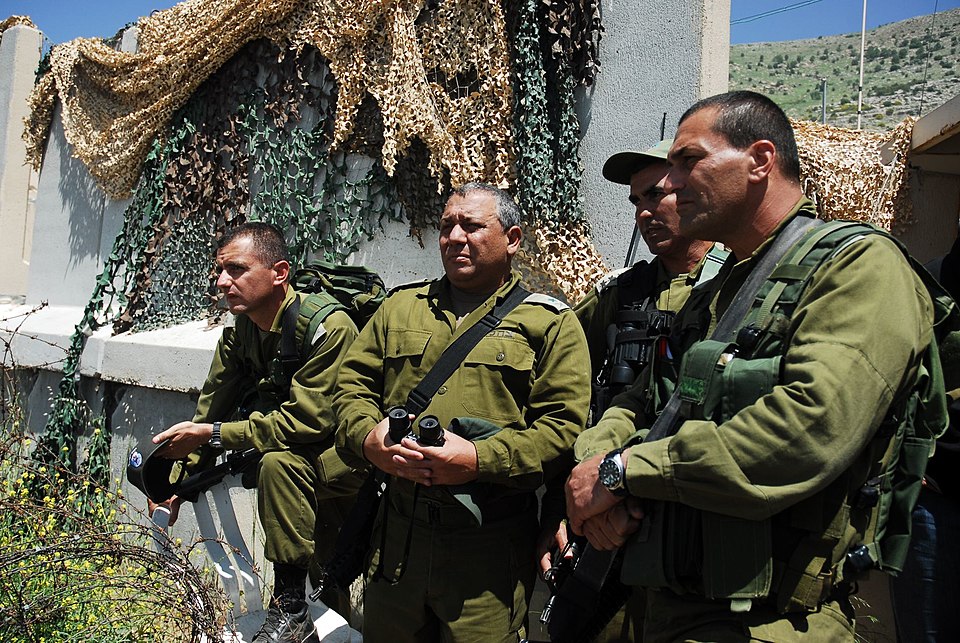
flickr israel defense forces maj. gen. gadi eisenkot of north. cmd. and brig. gen eyal zamir of division 36 this morning at hila lookout.

By Kyle Anzalone

The chief of the Israeli military said the IDF will not withdraw any further, and he considers the current partition line in Gaza as the new border.

“We have operational control over extensive parts of the Gaza Strip and we will remain on those defence lines. The yellow line is a new border line – serving as a forward defensive line for our communities and a line of operational activity,” IDF Chief of Staff Eyal Zamir told recruits on Sunday.

Under President Donald Trump’s 20-point peace plan, Israel and Hamas agreed to a ceasefire with Israel agreeing to withdraw to the yellow line. The yellow line leaves just over half of the Strip under Israeli military occupation. Only a small number of Palestinians live on the Israeli side of the partition line.

As Trump’s deal is implemented, Tel Aviv agreed that the IDF would undergo further withdrawals. However, Israel has signalled it has no intention of allowing Trump’s peace plan to end the conflict in Gaza. In November, European officials expressed concern that Israel was planning to de facto annex Gaza along the yellow line.

On Saturday, the Guarding reported the IDF was building permanent structures along the current partition line.

In addition to Zamir’s remarks, the IDF has violated the ceasefire nearly every day. Israel has killed over 370 Palestinians during the first seven weeks of the truce. The Gaza Health Ministry reported six Palestinians were killed on Sunday.

[…]

Via https://libertarianinstitute.org/news/idf-chief-of-staff-yellow-line-is-israels-new-border/

The Real US Drug Trafficking Partners

Héctor Bernardo

A non-conclusive list of politicians, allied with the US and involved in narco-trade, with, last but not least, the US Secretary of State, Marco Rubio.

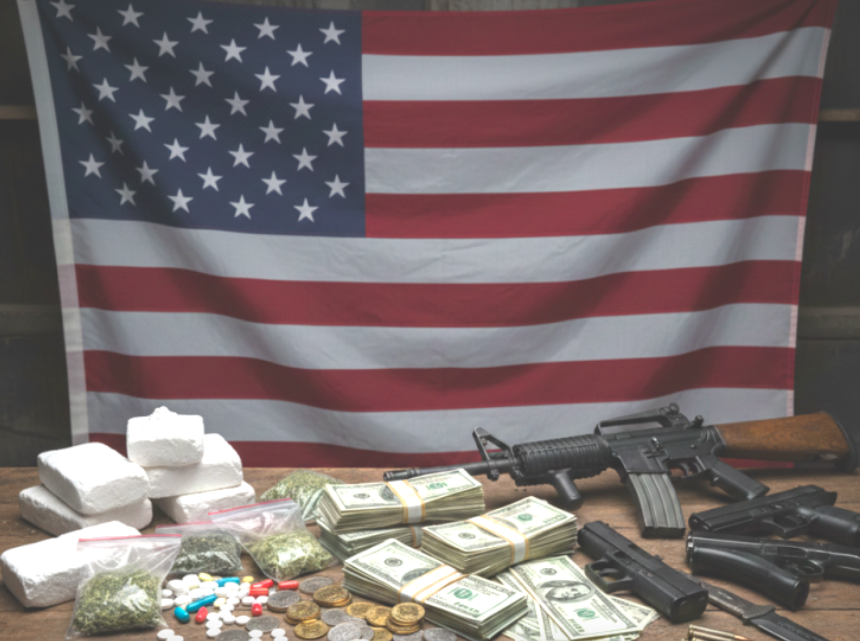
The false rhetoric of the fight against drug trafficking used by the US government and right-wing groups in the region collapses when a quick review is made of Washington’s partners linked to drug trafficking. Among them are Juan Orlando Hernández, Horacio Cartes, Álvaro Uribe Vélez, Felipe Calderón, Enrique Peña Nieto, Daniel Noboa, Guillermo Lasso, Keiko Fujimori, Luis Lacalle Pou, José Luis Espert, and even the Secretary of State himself, Marco Rubio.

The pardon that US President Donald Trump granted to former Honduran President Juan Orlando Hernández undermines the false rhetoric that Washington uses to attack Venezuela.

While the Pentagon deploys its troops in the Caribbean Sea and carries out extrajudicial executions by attacking boats of alleged drug traffickers, Trump orders the release of Juan Orlando Hernández, who had been sentenced to 45 years in prison by a US Federal Court in New York, after being found guilty of drug trafficking.

But the case of the former Honduran president is not the exception, but the rule. The list of Latin American right-wing leaders accused of links to drug trafficking is long.

Some of the leading figures of the Latin American right who have been denounced for their links to drug trafficking are: Paraguayan Horacio Cartes, Colombian Álvaro Uribe Vélez, Mexicans Felipe Calderón and Enrique Peña Nieto, Ecuadorians Daniel Noboa, Guillermo Lasso, Peruvian Keiko Fujimori, Uruguayan Lacalle Pou, Argentine José Luis Espert and even the Secretary of State himself, Marco Rubio.

Paraguay

In 2023, the former president of Paraguay, Horacio Cartes (partner of former Argentine president Mauricio Macri), was sanctioned by the United States Treasury Department for having links to drug trafficking and was included on the Specially Designated Persons List (SDN), prepared by the Office of Foreign Assets Control (OFAC).

Following Donald Trump’s arrival in government, in 2025 OFAC decided to remove Cartes from the list. However, businessman Darío Messer, a partner of the former Paraguayan president and whom Horacio Cartes referred to as his “brother,” was arrested in Brazil in July 2019 and convicted in 2020 for money laundering (Messer pleaded guilty and negotiated a reduced sentence).

Mexico

Felipe Calderón, who was president of Mexico from 2006 to 2012, declared a “war on drugs,” however, testimonies from former officials of his government and members of criminal organizations claim that his government provided protection to the Sinaloa Cartel and the Zetas Cartel.

Along those lines, Genaro García Luna, who was the Secretary of Public Security during the government of Felipe Calderón, and who was considered the president’s trusted man, was arrested in the United States in 2019 and convicted of drug trafficking in 2023.

Enrique Peña Nieto, Mexican president from 2012 to 2018, was also accused of having ties to the Zetas Cartel. Former associates and officials in Peña Nieto’s government made allegations regarding these connections.

On September 26, 2014, the 43 students from the Ayotzinapa Rural Teachers’ College disappeared. This case exposed the links between the Guerreros Unidos Cartel, municipal police officers, members of the Armed Forces, and officials from the state and federal governments under Peña Nieto.

Ecuador

In 2023, links were revealed between Rubén Chérrez, an Ecuadorian businessman and close friend of Danilo Carrera, brother-in-law of President Guillermo Lasso, and the Albanian mafia. Chérrez was found to have ties to Dritan Gjika, the leader of this criminal organization. The Ecuadorian Attorney General’s Office merged the investigations into Carrera and Chérrez, focusing on corruption and drug trafficking. In November 2024, Danilo Carrera was sentenced to ten years in prison for organized crime.

Meanwhile, Noboa Trading, a company belonging to the family of Ecuador’s current president, Daniel Noboa, has been linked to cocaine trafficking to Europe. According to Telesur, Ecuadorian police stated that Noboa Trading “may be involved in the export of more than half a ton of cocaine to several European countries since 2020.”

“In 2020, after cocaine was found in banana containers, José Luis Rivera Baquerizo, an employee of Noboa Trading, was arrested. However, he was released thanks to the defense of lawyer Edgar José Lama, who was an advisor to then-Assemblyman Daniel Noboa and who now holds the position of Minister of Health,” the website states.

Colombia and Peru

In 2018, The New York Times published an article by journalist Nicholas Casey titled: “US diplomatic cables suggest Álvaro Uribe’s ties to drug traffickers.” The article details the links Uribe Vélez forged in the 1990s with various drug trafficking networks, particularly the Medellín Cartel and its leader, Pablo Escobar Gaviria.

Among the cables cited, it is mentioned that Senators Guillermo Vélez Trujillo and Alejandro González, from the same party as Uribe Vélez, pointed out to American diplomats the links that he had with the Ochoa Clan, members of the Medellín Cartel and founders of paramilitary groups.

Meanwhile, in Peru in 2016, the public prosecutor’s office opened an investigation against far-right leader Keiko Fujimori for money laundering. According to journalist Carlos Noriega, in an article published in the newspaper Página/12 titled “The Ghost of a Narco-State,” Fujimori allegedly received campaign contributions for 2011 from various offshore entities (a structure often used to conceal the true origin of funds), from Luis Calle Quirós, “included by Peruvian and U.S. authorities on drug traffickers’ lists,” and from Joaquín Ramírez, who was under investigation by the DEA for laundering money derived from drug trafficking.

Uruguay and Argentina 

Former Uruguayan President Luis Lacalle Pou became embroiled in the scandal surrounding the escape of drug trafficker Sebastián Marset, who evaded an Interpol arrest warrant by obtaining a Uruguayan passport. Adding to the intrigue, Alejandro Astesiano, the head of presidential security, was implicated in a network that supplied counterfeit passports.

In Argentina, one of the main allies of the ruling party (La Libertad Avanza), José Luis Espert, had to decline his candidacy for national deputy for the province of Buenos Aires when a scandal broke out over his links with the drug trafficker Federico “Fred” Machado.

According to leaked US documents, Espert (a close confidant of President Javier Milei) received at least $200,000 and made several trips on Machado’s private jet. Machado is wanted by US authorities for extradition to face charges of drug trafficking and money laundering.

The shoemaker’s children go barefoot

Washington’s bellicose rhetoric, which uses the fight against drug trafficking as a pretext to threaten Venezuela, Colombia, and the entire region, has Secretary of State Marco Rubio among its leading proponents. However, little is said about the allegations against Rubio himself for his supposed links to drug trafficking.

Orlando Cicilia, Marco Rubio’s brother-in-law, was sentenced in 1990 to 25 years in prison for drug trafficking. Cicilia, who was married to Barbara Rubio, was part of the drug trafficking organization headed by Mario Trabaue, which had turned Miami into the main port of entry for cocaine into the United States. An investigation by The Observer indicates that in 2009, during his campaign for the U.S. Senate, Rubio allegedly received thousands of dollars in contributions from lobbyist Joel Steinger, who was accused of laundering money for various drug cartels.
A Recurring Pattern

Back in 1989, Democratic Senator John Kerry presented a report (known as the Kerry Report) to the United States Congress revealing how the Nicaraguan Contras, who attacked the Sandinista government, committed massacres, and sowed terror in Nicaragua, were financed with drug money with the complicity of the Central Intelligence Agency (CIA), the United States Drug Enforcement Administration (DEA), and the United States State Department itself.One of the report’s findings states that: “drug links to the Contras included… payments to drug traffickers by the U.S. State Department using funds authorized by Congress for humanitarian assistance (…)”.

Alcira Argumedo, a prominent Argentine intellectual, once asserted:

“Don’t be fooled, the DEA doesn’t fight drug trafficking, it fights to monopolize it.” If the United States truly wants to combat drug trafficking, it should confront the American banks that launder money for drug cartels, the American companies that supply weapons to these groups, and their regional partners, who coordinate these trafficking networks with the complicity of the CIA and the DEA.

“The fight against drug trafficking” and “the narcoterrorist enemy” are merely rhetorical constructs (as were, at one time, the supposed “weapons of mass destruction” that Saddam Hussein was believed to possess) used to develop its geopolitical strategy and advance its threats and interference against the countries of the region.”

{…]

Via https://libya360.wordpress.com/2025/12/08/the-real-united-states-drug-trafficking-partners/

Israel conducts ‘widespread surveillance’ of US troops in Gaza coordination base

(Photo credit: AAP / ABIR SULTAN/EPA)

The Cradle

Israeli officials are blocking US efforts to increase desperately needed aid from entering Gaza

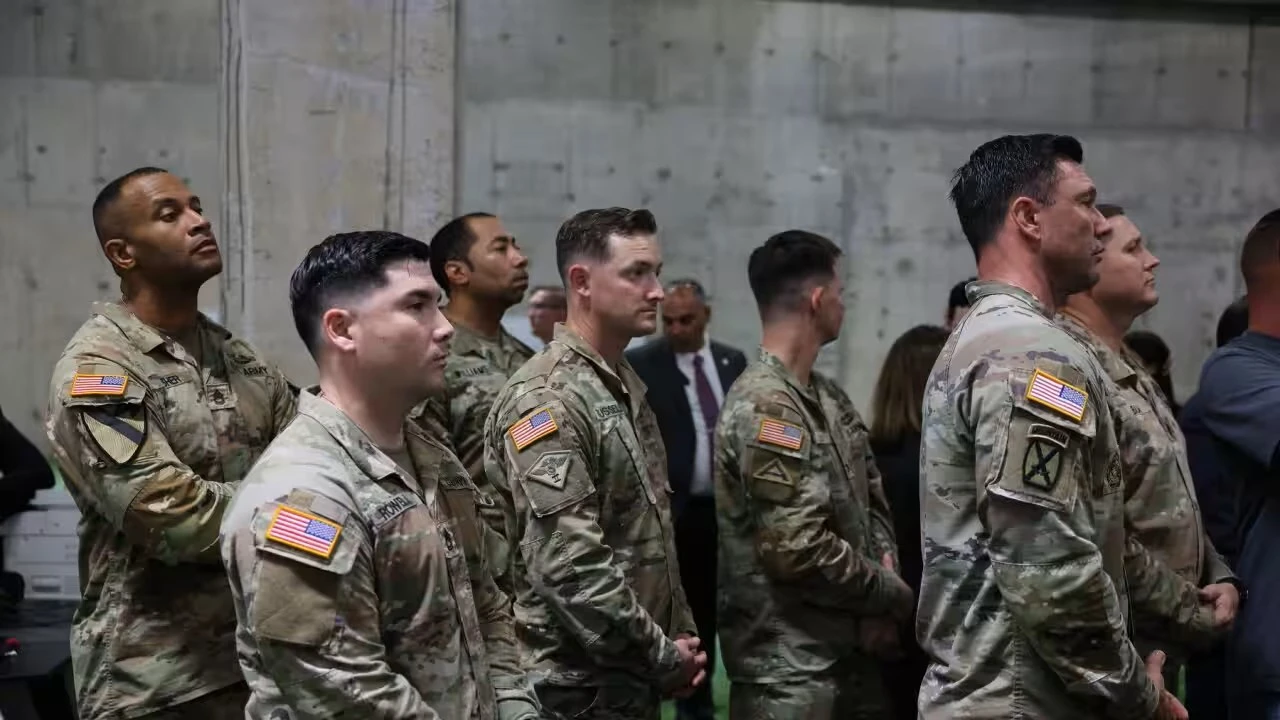
Israeli intelligence is conducting widespread surveillance of US forces and allies stationed at a new US base in southern Israel tasked with overseeing aid distribution to Gaza, The Guardian reported on 8 December, citing sources briefed on the matter.

According to the sources, Israel has been recording meetings between US military officials and humanitarian aid groups at the Civil-Military Coordination Center (CMCC), located in the industrial zone of Kiryat Gat, 12 kilometers from the border with Gaza.

The spying prompted the US commander of the base, Lieutenant General Patrick Frank, to summon his Israeli counterpart and demand that “recording has to stop here.”

“Staff and visitors from other countries have also raised concerns about Israel recording inside the CMCC,” The Guardian wrote. “Some have been told to avoid sharing sensitive information because of the risk it could be collected and exploited.”

In response, the Israeli military claimed the allegations were “absurd.”

The CMCC was set up in October to monitor the 20-point ceasefire plan for Gaza proposed by US President Donald Trump.

Staffed by US and Israeli military officials, the CMCC was tasked to coordinate aid deliveries to the strip, which Israel had largely halted in previous months, causing famine to take hold in parts of the strip.

However, Israel has continued to regularly restrict or prevent shipments of food, medicine, and other humanitarian goods into Gaza despite the CMCC’s establishment.

US military logistics experts were assigned to the CMCC to ensure aid would flow. However, they soon discovered that “Israeli controls on goods entering Gaza were a bigger obstacle than engineering challenges. Within weeks, several dozen had left,” The Guardian reported.

Israel has banned the entry of essential items on the grounds that they are “dual-use” and could be utilized by Hamas for military purposes. They include basics such as tent poles and chemicals needed for water purification, as well as pencils and paper required to restart schools.

While the CMCC brings together military planners from the US, Israel, and other allied countries, including the UK and the UAE, Palestinians are comprehensively excluded.

“There are no representatives of Palestinian civilian or humanitarian organisations, or the Palestinian Authority, stationed there invited to join discussions,” The Guardian noted.

The British newspaper added that Israeli officials cut off video calls with Palestinians when US military officials sought to include them in discussions, while CMCC planning documents omit the words Palestine or Palestinian, instead referring to the residents of the territory as “Gazans.”

Israel launched its genocide of Palestinians in Gaza in 2023 after Hamas’s Operation Al-Aqsa Flood – in which Israeli settlements and military bases were stormed and attacked by the resistance – helping enforce a blockade on the strip.

Israeli officials have said they wish to wipe out Palestinians’ existence in Gaza, comparing them to the Biblical people known as Amalek, who were exterminated by the ancient Israelites.

Israeli officials have also expressed their desire to replace Palestinians in Gaza with Jewish settlers once the strip is rebuilt as a high-tech smart city, which Trump has dubbed the “Riviera of the Middle East.”

[…]

Via https://thecradle.co/articles/israel-conducts-widespread-surveillance-of-us-troops-in-gaza-coordination-base-report

Israeli forces raid UNRWA headquarters in Jerusalem after UN extends mandate

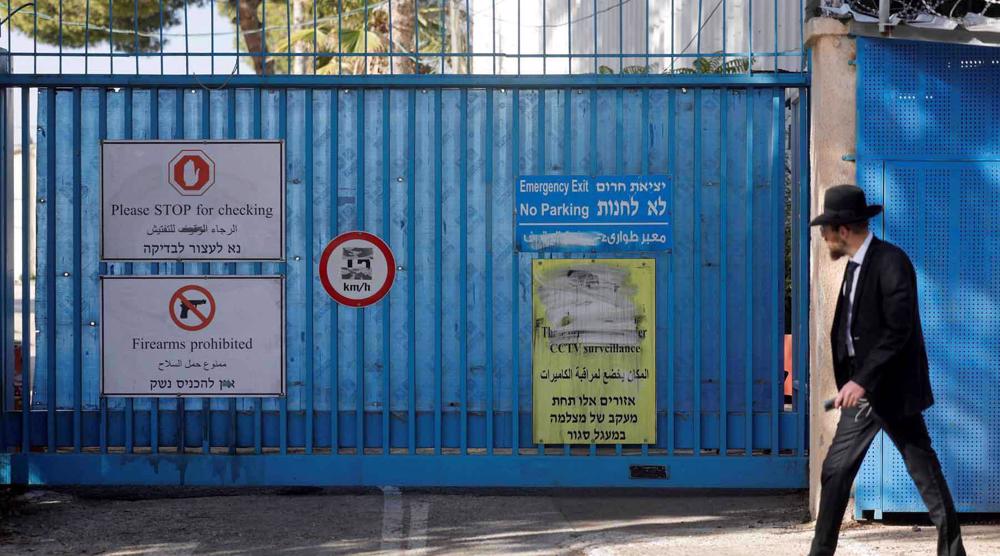
Signs displayed at the gate of the UNRWA headquarters in occupied Jerusalem, December 8, 2025. (Photo by Reuters)

Press TV

Israeli forces stormed the sealed headquarters of the UN agency for Palestinian refugees (UNRWA) in occupied East Jerusalem, raiding the long-standing compound in Sheikh Jarrah just days after the UN General Assembly overwhelmingly renewed the agency’s mandate.

In a statement on Monday, the Jerusalem Governorate, affiliated with the Palestinian Authority (PA), said Israeli police entered the compound, detained its security guards, and confiscated their phones.

“Israeli police cut off communication, making it impossible to know what is happening inside the compound,” the statement said.

Officials added that the raid was carried out “alongside a complete closure of the surrounding area and extensive searches across all facilities of the building.”

The compound, used as an UNRWA office since 1951, had been vacated earlier this year following a decision by Israel.

The raid came two days after the UN General Assembly (UNGA) adopted a resolution renewing UNRWA’s mandate for three more years, with 151 countries voting in favor, 10 opposed, and 14 abstaining.

“This raid represents a direct challenge to the UN General Assembly’s overwhelming vote days ago to renew UNRWA’s mandate,” the governorate said, calling for urgent international action to hold Israel accountable “for violating international law” and to prosecute Israeli authorities “for crimes and abuses committed against the Palestinian people and their national and international institutions.”

Meanwhile, UNRWA chief Philippe Lazzarini condemned the Israeli raid on the agency compound as a “dangerous precedent.”

“This latest action represents a blatant disregard of Israel’s obligation as a United Nations Member State to protect & respect the inviolability of UN premises,” Lazzarini wrote on X.

“To allow this represents a new challenge to international law, one that creates a dangerous precedent anywhere else the UN is present across the world,” he added.

Israel has banned UNRWA from operating in the occupied territories after accusing some of its staff of being involved in the al-Aqsa storm operation in October 2023.

Despite repeated requests from UNRWA for the Israeli regime to provide evidence supporting its allegations, the agency has received no response.

The UN agency has faced deepening financial turmoil since Israel launched a defamation campaign against it.

Following Israel’s accusations, several major donor states, including the United States, suspended or froze funding, triggering one of the most severe financial crises in UNRWA’s history.

In October, International Court of Justice (ICJ) President Yuji Iwasawa underscored in a ruling that Israel must “agree to and facilitate relief schemes provided by the United Nations and its entities,” including UNRWA.

As part of its findings, the ICJ noted that Israel had failed to present evidence showing that UNRWA was working with the Palestinian resistance group Hamas, as the regime had claimed.

UNRWA was established by the UNGA more than 70 years ago to assist Palestinians forcibly displaced from their land due to the creation of the Israeli occupation.

[…]

Via https://www.presstv.ir/Detail/2025/12/08/760269/Palestine-UN-UNRWA–al-Quds–