The Most Revolutionary Act

Uncensored updates on world events, economics, the environment and medicine

The Most Revolutionary Act

Dmitry Orlov: Wild Things Are Afoot

Dmitry Orlov

A lot of chattering heads are currently chattering about a great many things, such as:

• Trump said something about holding elections in the former Ukraine. Zelensky said something about that too, but nothing too important. He wants to hold on to his job for as long as possible and will say random things hoping that this will prolong the former Ukraine’s agony.

• Some congresscritter filed a bill for the US to leave NATO, which is 70% US money, 80% US technology and 100% US-controlled, so the word “disband” would be more appropriate. US defense contractors, who would have to approve this bill using their congressional hand puppets, will have none of it, of course, as long as there is any chance of milking that NATO job some more.

• A new National Security Strategy document has been accidentally located on the White House web server, according which Europe is an enemy, Russia is a friend and the US is a pumpkin. Its author seems to have been an AI engine that’s been force-fed Russian political talk shows and Putin’s speeches. Lots of people reacted in shock, as if this is something real. But strategy needs to become policy and that policy then has to be followed, so let’s not hold our breath.

• The EU has a strategy too. It is to wait and to stall. They want to wait until Trump gets impeached or croaks or his term runs out and he’s replaced with the usual sort of globalist warmongering stooge. It’s only a hope but at this point that is all they have.

• In the UK, fake news outlets are once again yammering about the Skripal/Novichok nonsense and trying to scare everyone about Russian spies/drones/whatever in a desperate effort to distract the populace from the fact that the UK is bloody broke, run by idiots and generally falling apart.

• Various EU-critters are still circling frozen Russian funds stuck at Euroclear in Belgium like a pack of hungry hyenas, stupidly oblivious (or pretending to be) that there is no money there, just debt — Europe’s own debt to Russia.

• Off the coast of Venezuela, the US fleet tired of sinking fishing boats (the fish are on drugs, you see!) and have instead resorted to piracy. They hijacked an oil tanker and intend to steal its oil. Americans will pay for that stolen oil through higher prices at the gas pumps, of course.

• The latest bit of fake news is a leaked plan: Americans are considering organizing something called C5: five core nations that include Russia, China, India, Japan and, of course, the United States. Little do they know that there is already an organization of five core nations: BRICS. The US would be the 6th but it won’t be invited.

This is all fake news, of course. And now for some real news:

Servicemen from the 123rd and 6th Guards Separate Motorized Rifle Brigades of the 3rd Combined Arms Army of the “Southern” Group of Forces liberated the town of Seversk, completing the clearing of Ukrainian Armed Forces units from the city’s neighborhoods. Servicemen from the “Southern” Group of Forces unfurled the Russian Federation National Flag near the Seversk City Administration building, the Memorial to the Heroes of the Great Patriotic War, and the monument to the legendary Soviet T-34 tank in Victory Park, as well as on the streets and rooftops of the city, which has come under the control of the Russian Armed Forces.

Why is this important? Because Seversk was the last Ukrainian fortress, built up since 2022, and now it has fallen. It has been a long, hard slog blasting apart a series hardened concrete bunkers using rockets, artillery and air bombardment, but now it is over. For the Russian army, the path is now open to Slavyansk and Kramatorsk, the last two large cities left under Ukrainian occupation in the Donbas. The Russian forces are moving faster than ever and are very much enthused by the idea of an outright victory.

That is all that matters: victory. Victory will bring peace. Everything else is just noise.
change.

[…]

Via https://boosty.to/cluborlov/posts/1b3e6b05-a2ac-4f3b-890a-70c98c49b2d3

Alaska Plots AI-Driven Digital Identity, Payments, and Biometric Data System

Snow-covered jagged mountain peaks under a muted teal sky with a large translucent white fingerprint pattern centered above and blending into the central valley.

The state’s new system could turn bureaucracy into automation, and consent into a checkbox no one really controls.

 Alaska is advancing plans for a far-reaching redesign of its myAlaska digital identity system, one that would weave “Agentic Artificial Intelligence” and digital payment functions into a unified platform capable of acting on behalf of residents.

A Request for Information issued by the Department of Administration’s Office of Information Technology describes a system where AI software could automatically handle government transactions, submit applications, and manage personal data, provided the user has granted consent.

We obtained a copy of the Request For Information here.

What once functioned as a simple login for applying to the Permanent Fund Dividend or signing state forms could soon evolve into a centralized mechanism managing identity, services, and money flows under one digital roof.

The plan imagines AI modules that can read documents, fill out forms, verify eligibility, and even initiate tokenized payments.

That would mean large portions of personal interaction with government agencies could occur through a machine acting as a proxy for the citizen.

While the proposal emphasizes efficiency, it also suggests a major change in how the state and its contractors might handle sensitive data.

The RFI describes an ambitious technical vision but provides a limited public explanation of how deeply such agentic AI systems could access, process, or store personal information once integrated with legacy databases. Even with explicit consent requirements, the architecture could concentrate extraordinary amounts of behavioral and biometric data within a single government-managed platform.

Security standards are invoked throughout the RFI, including compliance with NIST controls, detailed audit trails, adversarial testing, explainability tools, and human override features.

Yet those guardrails depend heavily on policy enforcement and oversight mechanisms that remain undefined.

The inclusion of biometric authentication, such as facial and fingerprint verification, introduces another layer of sensitive data collection, one that historically has proven difficult to keep insulated from breaches and misuse.

A later phase of the program extends the system into digital payments and verifiable credentials, including mobile driver’s licenses, professional certificates, hunting and fishing permits, and tokenized prepaid balances.

Those functions would be based on W3C Verifiable Credentials and ISO 18013-5, the same standards shaping national mobile ID programs.

This alignment suggests Alaska’s move is not isolated but part of a broader US trend toward interoperable digital identity frameworks. Observers concerned with privacy warn that such systems could evolve into a permanent, cross-agency tracking infrastructure.

The state’s document also calls for voice navigation, multi-language interfaces, and a new user experience designed to cover as many as 300 separate government services in one app.

Framed as modernization, the initiative nonetheless highlights an unresolved question: who truly controls a citizen’s digital identity once government and AI systems mediate nearly every transaction?

Once deployed, an AI that can act “on behalf” of a person also becomes capable of learning their patterns, predicting their needs, and operating continuously within government databases.

Once Alaska’s system moves forward, it will join a growing roster of governments weaving digital ID into the core of civic and online life.

Across Europe, Canada, and Australia, digital identity frameworks are increasingly framed as gateways to public and private services, while emerging proposals in the United States hint at a future where identity verification might become routine for accessing even basic online platforms.

These projects often promise efficiency, but their cumulative effect is to normalize constant identification, replacing the open, pseudonymous nature of the early internet with a model where every interaction begins with proving who you are.

The argument for security is persuasive to policymakers, yet it leaves unresolved how citizens can meaningfully opt out.

Once digital identity becomes the default mechanism for accessing financial systems, healthcare, or even social media, “consent” risks turning into a formality rather than a choice.

The result could be a tiered digital environment, one for the verified and another for those excluded, whether by principle or circumstance. That change raises not only data protection concerns but also fundamental questions about freedom of expression and association online and elsewhere.

Linking AI-driven automation to identity infrastructure magnifies these risks. A system that can act “on behalf” of a person is also capable of observing and predicting their decisions.

When that capacity exists inside government networks, the boundary between service provision and behavioral monitoring becomes precariously thin.

Even with audit logs and human override functions, once such systems are embedded, reversing or limiting their reach is exceedingly difficult.

[…]

Via https://reclaimthenet.org/alaska-plans-ai-powered-digital-id-linking-identity-and-payments

US plans to ask visitors, including Kiwis, to disclose 5 years of social media history

The US may require visa waiver visitors to provide up to five years of social media history. Photo / Getty Images

Frances Vinall Washington Post

The United States could begin requiring visitors from countries on the visa waiver programme to provide up to five years of their social media history.

There are dozens of countries on the visa waiver programme list, including many European nations, Australia, New Zealand, South Korea, Japan, Brunei, Singapore, Qatar, Israel and Chile.

The US Customs and Border Protection proposal posted to the Federal Register to be officially published on Wednesday (local time), suggests adding social media as a “mandatory data element” for an Electronic System for Travel Authorisation (Esta) application.

Applicants would also have to provide additional information “when feasible”, according to the proposal. The list includes telephone numbers used in the past five years, email addresses used in the past 10 years, IP addresses and metadata from electronically submitted photos, and biometrics, including facial, fingerprint, DNA and iris data.

It would also require applicants to provide information about their family members, including names, telephone numbers, dates of birth, places of birth and residences.

According to CBP, the proposal is open for a 60-day public comment period.

Esta is an automated system used by tourists and people travelling for short-term business who are entering the United States through the visa waiver programme. It allows citizens of select countries to visit for up to 90 consecutive days. The authorisation costs $40 and is generally valid for two years, and the Esta holder can enter multiple times during that period.

Farshad Owji, past president of the American Immigration Lawyers Association and partner at law firm WR Immigration, said the proposal could “chill travel and expression”.

“Basically, people will self-censor, and they avoid coming to the US altogether, and that affects tourism, business and America’s global reputation.”

Owji added that it appeared the Trump administration wanted to use the social media evaluation to “understand the person’s view of general politics around the world”.

“Having the citizenship of an Esta country doesn’t necessarily mean that person has a political view that is aligned with the current administration’s view,” he said.

The proposal also includes removing the option of applying for an Esta from the government website and instead would require applicants to use the Esta Mobile app. CBP estimates that more than 14 million people annually will use the Esta Mobile app after the changes come into effect.

Similar requirements have previously been applied to other visa categories.

All immigrant and non-immigrant visa applicants have been required to disclose their social media accounts since 2019 in a change implemented during the previous Trump administration, covering about 15 million applicants per year, according to an analysis by the Brennan Centre for Justice.

In June, the State Department made it a requirement for student visa applicants to have their social media accounts set to public, and the same requirement soon goes into effect for H-1B high-skilled worker visa applicants.

[…]

Via https://www.newstalkzb.co.nz/news/world/us-plans-to-ask-visitors-including-kiwis-to-disclose-5-years-of-social-media-history/

Baby dies of cold as winter hits displaced Gazans amid Israeli attacks

Palestinians ride in a cart pulled by a vehicle through a flooded street after stormy weather in Gaza City on December 10, 2025. (Photo by AP)

Press TV

An eight-month-old Palestinian infant has tragically died due to extreme cold in the southern Gaza Strip city of Khan Yunis, as displaced families continue to endure harsh winter conditions compounded by the ongoing impacts of a two-year Israeli offensive.

The baby, named Rahaf Abu Jazar, died on Thursday as the temperature in the area plummeted sharply, amid worsening winter conditions faced by children and families seeking refuge in fragile and makeshift tents.

The head of the Health Ministry in Gaza, Munir al-Bursh, confirmed the death, cautioning that more children, elderly individuals, and patients might succumb to the cold inside rain-soaked tents.

Low temperatures are severely affecting children, the elderly, and those who are unwell, he added, pointing to instances of intense shivering, significant loss of body heat, worsening respiratory conditions, and the risk of fatalities.

Bursh noted that the humidity and stagnant water inside the tents create an ideal environment for pneumonia and respiratory infections to thrive, while patients struggle to access medicine or proper medical care.

The heartbreaking incident comes as several tents housing displaced individuals were submerged by rainwater in the al-Mawasi area of Khan Yunis, al-Bassa and al-Baraka in Deir al-Balah, the Central Market area in Nuseirat, and the Yarmouk and Port (al-Mina) areas on Wednesday.

The spokesperson for Gaza’s Civil Defense, Mahmoud Basal, said the agency received more than 2,500 distress calls in the past 24 hours from displaced families whose tents were flooded.

The Civil Defense described the conditions unfolding inside the camps as “tragic,” noting that heavy rainfall has washed away tents despite numerous humanitarian appeals for immediate intervention.

The Civil Defense said it evacuated dozens of tents in Rafah, in the south, after they were completely submerged.

Basal warned that over 250,000 families residing in displacement camps throughout the territory face significant risks from cold weather and rainwater, as their deteriorating tents offer little protection.

Israeli human rights organization B’Tselem stated that the international community is abandoning the people of Gaza, as Israel persists in striking the coastal region in violation of a ceasefire that has been in place for two months.

“World leaders and the international community continue to abdicate their responsibility, abandoning the people of Gaza and enabling Israel to continue its destructive campaign unabated behind the smokescreen of a ‘ceasefire’,” the group said in a post on X.

B’Tselem reported that the majority of Palestinians are facing severe shortages of adequate shelter and essential supplies like food, water, and medicine. Furthermore, Israel is still restricting access for medical teams, humanitarian workers, and foreign journalists to enter Gaza, even after the ceasefire.

“This limits the availability of vital care, conceals reality on the ground and prevents documentation of harm to the population,” the statement added.

Meanwhile, the official Palestinian news agency WAFA reported that a Palestinian woman was killed and others were injured on Thursday in an Israeli airstrike on the Jabalia refugee camp in the northern Gaza Strip.

Earlier, the Israeli military shot dead a Palestinian and injured others in al-Mawasi, near Rafah in southern Gaza.

WAFA reported that Israeli forces opened fire near the Flag Roundabout in al-Mawasi on Wednesday night.

Israel has violated the ceasefire more than 700 times since it took effect on October 10, according to Gaza’s Government Media Office.

At least 384 Palestinians have also been killed ever since, and approximately 1,000 others sustained injuries.

[…]

Via https://www.presstv.ir/Detail/2025/12/11/760434/Palestinian-infant-aged-eight-months-dies-due-to-extreme-cold-in-southern-Gaza

US Seizes Oil Tanker Off Venezuelan Coast

This file picture shows an oil tanker anchored off the dock of El Palito refinery near Puerto Cabello, Venezuela, in September 2020. (Photo by AP)

Press TV

The Iranian embassy in Caracas says the seizure of an oil tanker off the coast of Venezuela by the US forces is “piracy in the Caribbean Sea” and a gross violation of international laws and regulations.

In a statement on Thursday, the embassy strongly condemned the US move as in contravention of the fundamental international principles and regulations.

“The illegal move by the US government to seize a Venezuelan oil tanker in the Caribbean Sea without any justified or legal reason constitutes a blatant violation of international laws and regulations, including the inviolable principle of freedom of the seas and navigation,” it said.

“’Piracy in the Caribbean Sea’ is the most appropriate title for this unlawful and unjustified move by the US, which seeks to achieve its goals by resorting to illegitimate measures, violation of national sovereignty, infringement of others’ rights, and the promotion of anarchism,” it added.

The Iranian embassy expressed solidarity with the Venezuelan government and people in defending their national sovereignty and absolute rights.

President Donald Trump on Wednesday admitted that US forces had taken control of an oil tanker off the coast of Venezuela, a move which risks a sharp escalation in tensions with Venezuela.

“We have just seized a tanker on the coast of Venezuela – a large tanker, very large, the largest one ever seized actually,” Trump told reporters at the White House.

The Venezuelan government said in a statement that the US has been engaged in an “international act of piracy.”

It added, “Under these circumstances, the true reasons for the prolonged aggression against Venezuela have finally been revealed… It has always been about our natural resources, our oil, our energy, the resources that belong exclusively to the Venezuelan people.”

The US government accuses Venezuela of funneling narcotics into the US and has escalated pressure on the country through a military buildup in the Caribbean, describing it as an anti-drug trafficking mission without evidence.

The US has also carried out at least 21 strikes on alleged drug vessels in the Caribbean and Pacific since September, killing at least 83 people.

Venezuela – home to some of the world’s largest proven oil reserves – has, in turn, accused Washington of seeking to steal its resources.

In a telephone conversation with his Venezuelan counterpart, Nicolas Maduro, on Tuesday, Iran’s President Masoud Pezeshkian strongly condemned the United States for deploying a naval fleet to the Caribbean and the coast of Venezuela, calling the move illegal and a threat to international peace and security.

[…]

Via https://www.presstv.ir/Detail/2025/12/11/760420/Iran-US-seizure-oil-tanker-Venezuela-piracy-Caribbean-Sea

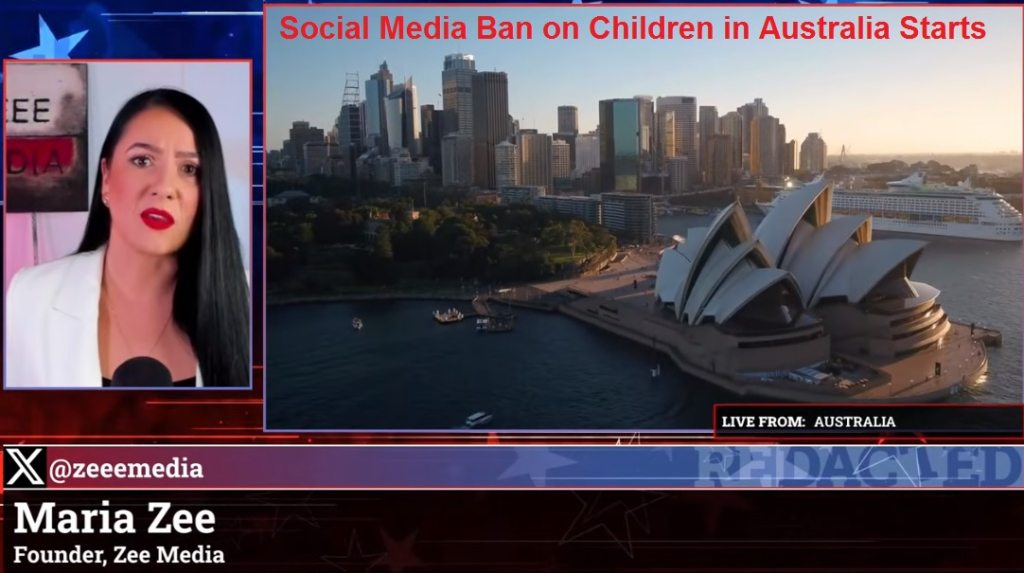
Australia Starts Social Media Ban on Children – Steps to Digital ID for EVERYONE and Coming Soon to the US

Comments by Brian Shilhavy
Health Impact News

This week Australia began a new ban on children under the age of 16 from using social media. It is the first such ban worldwide, but there are already proposed bills in the U.S. that will do the same thing, and Texas has already passed a bill that is supposed to go into effect next month (January, 2026).

The issue, of course, is that to know if a user of social media is over the age of 16 or not, pretty much EVERYONE will need to verify their age to use such platforms. It is currently being done by uploading a photo of yourself, which of course will make children (the ones over 16) even more visible targets to pedophiles.

Many believe that this law in Australia that was just implemented, as well as others being planned in the U.S. and many other countries, is just a step in the direction of requiring everyone to use a Digital ID that can track your entire online activity, be linked to your bank accounts, etc.

We covered this law when it was passed a year ago in December of 2024, but was just implemented this week. See: Australia Passes “Age Verification” Bill to Keep Children Under 16 Off of Social Media – Back Door to Digital ID Requirements for EVERYONE

Maria Zeee from Australia was interviewed today by Redacted, where she discussed how this was being received in Australia.

I found it humorous that children are getting around it by using pictures of older siblings, and in one case a picture of their Labrador dog. And while that is funny (at least to me, because as a technologist myself I see how frail these systems are), I think she is correct that the government will complain that this new law is “unenforceable” due to the shortcomings of the technology, and so they will probably require everyone to get a digital ID to “protect the children.”

[…]

Via https://healthimpactnews.com/2025/social-media-ban-on-children-in-australia-starts-steps-to-digital-id-for-everyone-and-coming-soon-to-the-u-s/

Kids Who Get Cellphones Before Age 12 at Higher Risk of Obesity, Depression, Poor Sleep

child using cellphone

Children who have their own cellphone by age 12 are at greater risk of obesity, depression and insufficient sleep than kids who don’t — and the younger they are when they get the phone, the greater risk they’ll be obese and have trouble sleeping, according to research published Monday in Pediatrics.

Ran Barzilay, M.D., Ph.D., the study’s lead author and a child and adolescent psychiatrist at Children’s Hospital of Philadelphia, told The Defender he hopes parents will consider how their decision to hand their kid a cellphone may affect their child’s health.

“It should not be something that you do and forget about it,” Barzilay said. “Rather, parents should communicate this to their kids and work together to see how smartphone ownership affects their lifestyle and wellbeing.”

The study authors conducted statistical analyses of data on more than 10,000 U.S. 12-year-olds in the Adolescent Brain Cognitive Development Study, described as the “largest long-term look at children’s brain development in the United States to date.”

Barzilay’s team brought together researchers from the Children’s Hospital of Philadelphia, Penn Medicine, the University of California, Berkeley, and Columbia University.

In addition to looking at 12-year-olds who already had cellphones, they also tracked 12-year-olds who didn’t have a cellphone at the beginning of the year but were given one by age 13.

“By the time they turned 13,” Barzilay said, “the ones who had gotten a smartphone in that year were struggling more with mental health and sleep compared to kids who still didn’t have one.”

That was true even when the authors took into account the children’s mental health and sleep problems from the year before, he added.

Parents need to talk with their kids about cellphone use

Barzilay emphasized that cellphones aren’t inherently bad. They “offer significant benefits, connecting people and providing access to information and knowledge,” he said.

He empathized with parents who have to decide how long to hold off on giving their kid a cellphone, and who must set time limits once they do.

Parents can be sure that cellphones aren’t allowed in the kids’ room at night and build in non-cellphone socializing time and physical activity, he said.

Barzilay also encouraged parents to help their kids develop “healthy technology habits” by regularly talking with them about cellphone use and how it makes them feel.

“When teens understand that these conversations stem from a genuine commitment to their health, they are more likely to engage collaboratively with their parents, recognizing that both parties share the common goal of supporting their overall wellbeing,” he said.

Social media is just part of the problem

The Pediatrics study focused on cellphone ownership, not on the kind of content kids accessed when using a cellphone.

However, part of the controversy around children using a cellphone has to do with social media’s negative impact on them. For instance, The Defender recently reported on a 12-year-old girl who took her own life just three weeks after starting Prozac, following years of social media addiction that her parents said contributed to her depression.

Her mother is now part of a lawsuit accusing TikTok, Snapchat and YouTube of targeting vulnerable children with harmful content.

Researchers with the nonprofit Sapien Labs in January reported that feelings of aggression, anger and hallucinations were rising sharply among adolescents in the U.S. and India — and the increase was linked to the progressively younger age at which children are acquiring cellphones.

This month, Australia is preparing to implement the world’s first nationwide social media ban for teens. Starting Dec. 10, social media companies will have to take “reasonable steps” to ensure that kids and teens under 16 in Australia cannot set up accounts on their platforms.

The companies also must remove or deactivate Australian youths’ accounts by that time.

But cellphones aren’t just harmful to kids because of social media, according to Dr. Robert Brown, a diagnostic radiologist with more than 30 years of experience and the vice president of Scientific Research and Clinical Affairs for the Environmental Health Trust.

Earlier this year, Brown published research showing that just 5 minutes of cellphone exposure caused a healthy woman’s blood cells to abnormally clump up, even when the cellphone was an inch away from her skin.

Brown told The Defender he was encouraged to see high-ranking institutions like the University of Pennsylvania paying attention to the health consequences of cellphones on kids.

However, he would also like to see research focused on how the radiofrequency (RF) radiation emitted by the phones harms kids’ health. “It is not just the early age of ownership that is responsible,” he said.

Miriam Eckenfels, director of Children’s Health Defense’s Electromagnetic Radiation (EMR) & Wireless Program, agreed.

“The Pediatrics study adds to the mountain of evidence that smartphones are problematic and parents need to protect their children. Aside from the content, the RF radiation is also harmful.”

Even the World Health Organization has now acknowledged that there is “high certainty” evidence that cellphone radiation exposure causes two types of cancer in animals, she said.

“Parents and the public need to engage in a sensible conversation about technology when it comes to our children and stop assuming that any of these technologies are harmless,” Eckenfels said.

[…]

Via https://childrenshealthdefense.org/defender/kids-cellphones-before-age-12-higher-risk-obesity-depression-poor-sleep-study/?utm_id=20251207

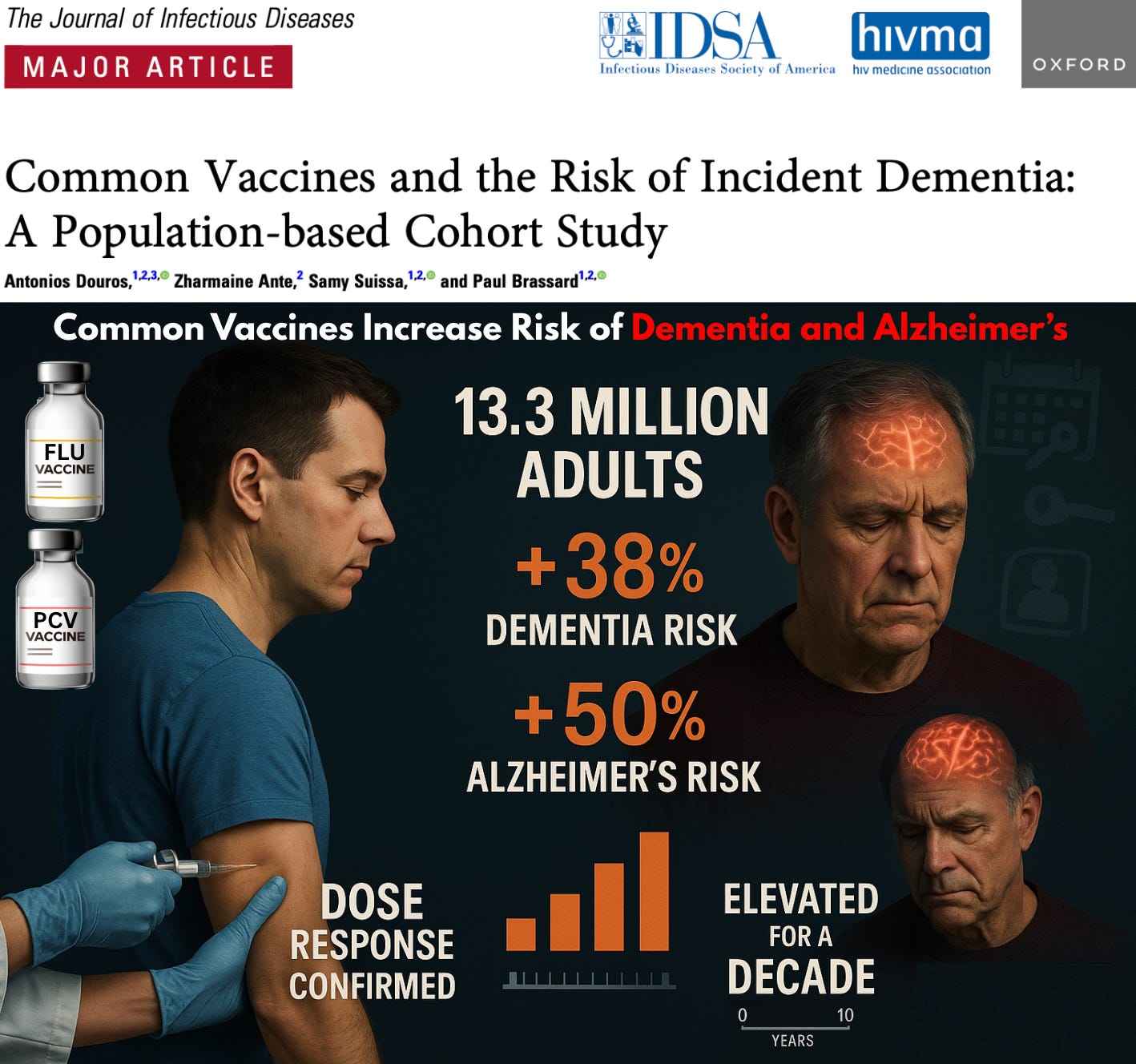
Common Vaccines Linked to 38-50% Increased Risk of Dementia and Alzheimer’s

The single largest vaccine–dementia study ever conducted (n=13.3 million) finds risk intensifies with more doses, remains elevated for a full decade, and is strongest after flu and pneumococcal shots.

The risk intensifies with more doses, remains elevated for a full decade, and is strongest after influenza and pneumococcal vaccination. With each layer of statistical adjustment, the signal doesn’t fade — it becomes sharper, more consistent, and increasingly difficult to explain away.

And critically, these associations persisted even after adjusting for an unusually wide range of potential confounders, including age, sex, socioeconomic status, BMI, smoking, alcohol-related disorders, hypertension, atrial fibrillation, heart failure, coronary artery disease, stroke/TIA, peripheral vascular disease, diabetes, chronic kidney and liver disease, depression, epilepsy, Parkinson’s disease, cancer, traumatic brain injury, hypothyroidism, osteoporosis, and dozens of medications ranging from NSAIDs and opioids to statins, antiplatelets, immunosuppressants, and antidepressants.

Even after controlling for this extensive list, the elevated risks remained strong and remarkably stable.

Vaccinated Adults Had a 38% Higher Risk of Dementia

The primary adjusted model showed that adults receiving common adult vaccines (influenza, pneumococcal, shingles, tetanus, diphtheria, pertussis) had a 38% increased risk of developing dementia (OR 1.38)

This alone dismantles the narrative of “vaccines protect the brain,” but the deeper findings are far worse.

Alzheimer’s Disease Risk Is Even Higher — 50% Increased Risk

Buried in the supplemental tables is a more shocking result: when the authors restricted analyses to Alzheimer’s disease specifically, the association grew even stronger: 50% increased risk of Alzheimer’s (Adjusted OR 1.50)

This indicates the effect is not random. The association intensifies for the most devastating subtype of dementia.

Clear Dose–Response Pattern: More Vaccines = Higher Risk

The authors ran multiple dose–response models, and every one of them shows the same pattern:

Dementia (all types)

From eTable 2:

  • 1 vaccine dose → Adjusted OR 1.26 (26% higher risk)
  • 2–3 doses → Adjusted OR 1.32 (32% higher risk)
  • 4–7 doses → Adjusted OR 1.42 (42% higher risk)
  • 8–12 doses → Adjusted OR 1.50 (50% higher risk)
  • ≥13 doses → Adjusted OR 1.55 (55% higher risk)

Alzheimer’s Disease (AD) Shows the Same—and Even Stronger—Trend

From eTable 7:

  • 1 dose → Adjusted OR 1.32 (32% higher risk)
  • 2–3 doses → Adjusted OR 1.41 (41% higher risk)
  • ≥4 doses → Adjusted OR 1.61 (61% higher risk)

This is one of the most powerful and unmistakable signals in epidemiology.

Time–Response Curve: Risk Peaks Soon After Vaccination and Remains Elevated for Years

Another signal strongly inconsistent with mere bias: a time-response relationship.

The highest dementia risk occurs 2–4.9 years after vaccination (Adjusted OR 1.56). The risk then slowly attenuates but never returns to baseline, remaining elevated across all time windows.

After 12.5 years, the risk is still meaningfully elevated (Adjusted OR 1.28) — a persistence incompatible with short-term “detection bias” and suggestive of a long-lasting biological impact.

This pattern is what you expect from a biological trigger with long-latency neuroinflammatory or neurodegenerative consequences.

Even After a 10-Year Lag, the Increased Risk Does Not Disappear

When the authors apply a long 10-year lag — meant to eliminate early detection bias — the elevated risk persists:

  • Dementia: OR 1.20
  • Alzheimer’s: OR 1.26

If this were simply “people who see doctors more often get diagnosed earlier,” the association should disappear under long lag correction.

Influenza and Pneumococcal Vaccines Drive the Signal

Two vaccines show particularly strong associations:

Influenza vaccine

  • Dementia: OR 1.39 → 39% higher risk
  • Alzheimer’s: OR 1.49 → 49% higher risk

Pneumococcal vaccine

  • Dementia: OR 1.12 → 12% higher risk
  • Alzheimer’s: OR 1.15 → 15% higher risk

And again, both exhibit dose–response escalation — the hallmark pattern of a genuine exposure–outcome relationship.

Taken together, the findings across primary, supplemental, dose–response, time–response, stratified, and sensitivity analyses paint the same picture:

• A consistent association between cumulative vaccination and increased dementia risk

• A stronger association for Alzheimer’s than for general dementia

• A dose–response effect — more vaccines, higher risk

• A time–response effect — risk peaks after exposure and persists long-term

• Influenza and pneumococcal vaccines strongly drive the signal

• The association remains after 10-year lag correction and active comparator controls

This is what a robust epidemiologic signal looks like.

[…]

Via https://www.thefocalpoints.com/p/study-common-vaccines-linked-to-38

Dandelion Root Extract Kills 95% of Cancer Cells In Vitro and Reduces Human Colon Tumor Growth by Over 90% in Mice

Over 1,100 peer-reviewed studies now document the anti-cancer potential of safe, non-toxic natural compounds:

This enormous body of evidence underscores the urgent need to rigorously investigate non-toxic therapies as viable anti-cancer agents.

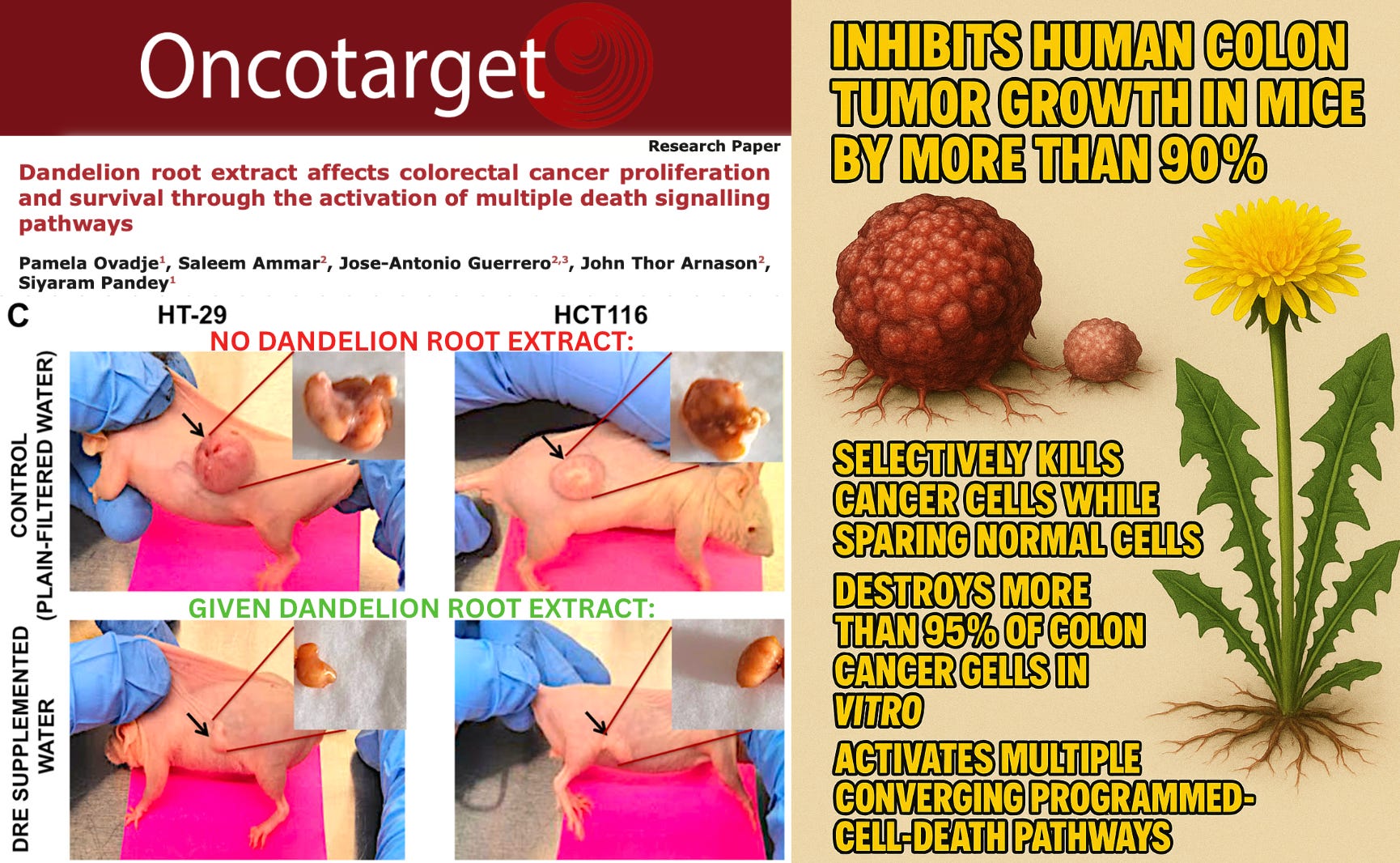
A peer-reviewed study in Oncotarget has documented one of the most extraordinary findings in natural-compound cancer research: an aqueous extract of dandelion root — the common backyard plant — reduced human colon tumor growth in mice by more than 90%, showed zero toxicity after 75 days of daily administration, and selectively killed cancer cells while sparing normal cells entirely.

Dandelion root also destroyed more than 95% of colon cancer cells in vitro and activated multiple programmed-cell-death pathways simultaneously. No synthetic chemotherapy drug achieves all of these effects at once — which is why this study deserves far more attention than it received.

Tumor Growth Reduced by More Than 90%

In immunocompromised CD-1 mice implanted with two different human colon cancer lines (HT-29 and HCT116), oral dandelion root extract at 40 mg/kg/day dramatically suppressed tumor growth.

The treatment “retarded the growth of human colon xenograft models by more than 90%.”.

No Detectable Toxicity After 75 Days of Daily Treatment

Before testing tumor effects, researchers conducted a long-term toxicity assessment for 75 days at 40mg/kg/day:

  • Weight curves of treated and untreated mice were identical.
  • Urinalysis showed no rise in kidney protein markers.
  • Histology of liver, kidneys, and heart showed no pathological changes.

In other words: DRE produced no observable harm, even with long-term systemic exposure — a sharp contrast to standard chemotherapy, which can cause multi-organ toxicity at far lower exposure durations.

95% of Cancer Cells Dead in 48 Hours — Normal Cells Untouched

One of the most remarkable findings is the extract’s extreme selectivity: dandelion root extract killed more than 95% of colon cancer cells in vitro while leaving normal cells unharmed.

In vitro experiments showed:

  • HT-29 (p53-/-) and HCT116 (p53 WT) colon cancer cells:
    Over 95% cell death within 48 hours
  • NCM460 normal colon epithelial cells:
    No loss of viability, no apoptosis, and no mitochondrial disruption

Multi-Pathway Mechanism: Apoptosis, Mitochondria, ROS, and Gene Expression Shifts

The extract does not rely on a single mechanism of action — instead, it activates a cascade of cancer-cell vulnerabilities.

a. Mitochondrial membrane collapse

Cancer cell mitochondria rapidly lost membrane potential after treatment, while normal mitochondria remained stable.

b. Massive surge in ROS (reactive oxygen species)

Isolated mitochondria from cancer cells produced a spike of ROS when exposed to DRE — but normal mitochondria did not.

Cancer cells often rely on fragile, dysregulated mitochondrial metabolism — this extract appears to exploit precisely that weakness.

c. Activation of caspase-8 & apoptosis pathways

Although caspase-8 was activated, blocking caspase-8 did not prevent cancer-cell death, meaning DRE activates multiple redundant death pathways.

d. Major gene-expression shifts toward programmed cell death

The extract upregulated pro-death genes in cancer cells (e.g., TNF, CASP1, SNCA) while downregulating pro-survival genes such as Bcl-2 and PARP2.

Normal cells showed the opposite gene-expression pattern — a clear signature of differential susceptibility.

Conclusions

This study demonstrates that aqueous dandelion root extract:

  • Inhibits human colon tumor growth in mice by more than 90%
  • Exhibits no detectable toxicity during long-term administration
  • Selectively kills cancer cells while sparing normal cells
  • Destroys more than 95% of colon cancer cells in vitro
  • Activates multiple converging programmed-cell-death pathways
  • Targets mitochondrial vulnerabilities unique to cancer cells

These findings were strong enough that Health Canada approved DRE for Phase I cancer trials in 2012, according to the authors. Unfortunately, the trial never advanced — patient recruitment stalled, no data were published, and no active listing appears in Health Canada’s registry today.

As a result, the remarkable anti-cancer effects seen in vitro and in animal models have yet to be tested in humans. This is most likely because a common backyard plant is not very profitable for the Chemo Cartel.

[…]

Via https://www.globalresearch.ca/dandelion-root-extract-kills-cancer-cells-vitro-reduces-human-colon-tumor-growth/5908453

Wealthy Most Likely To Rip Off Self-Checkout Machines

Zero Hedge

Rich people, poorer morals? A new LendingTree report claims the shoppers most likely to rip off the self-checkout machine aren’t the desperate — they’re the well-off, according to the NY Post.

Americans making over $100,000 a year are twice as likely to steal at self-checkout compared to low-income shoppers. A hefty 40% of six-figure earners admitted they’ve deliberately skipped scanning an item, while just 17% of those making under $30,000 confessed to the same.

The Post writes that middle-income households didn’t look much better: 27% of people earning between $50K and $99K say they’ve helped themselves without paying. And men are the biggest culprits overall, with 38% admitting to theft versus only 16% of women.

Even with AI scanners and weight sensors trying to outsmart sticky fingers, self-checkout theft is still rising.

A chunk of shoppers don’t feel bad about it either. Nearly one-third say big retailers make plenty of money, so swiping something “doesn’t hurt.” Another 35% defend the habit by claiming they’re basically unpaid store workers and grabbing an item or two is “compensation.”

Still, most blame inflation rather than guilt-free shoplifting. Forty-seven percent say rising prices are forcing people to cheat at the register — meaning even wealthy shoppers might be feeling the squeeze, just not enough to pay for everything in their cart.

https://www.zerohedge.com/markets/rich-people-poorer-morals-wealthy-are-most-likely-rip-self-checkout-machines