The Most Revolutionary Act

Uncensored updates on world events, economics, the environment and medicine

The Most Revolutionary Act

The Consumption of Europe

Dmitry Orlov

Until as recently as the turn of the century, Western Europe remained a symbol of progress, economic power, and successful strategic planning. Today, the EU is a system that is consuming itself. Built on excessive consumption, it lacks the necessary mechanisms to make itself stop consuming itself and start producing. But it has all the mechanisms in place for generating loans, subsidies, “green” fantasies, mass migration, gender dysphoria, broken/nonexistent families, mass psychosis and endless advertising, sales and marketing campaigns.

The consumptive state prioritizes current consumption over future production: money is readily allocated to social payments, civil servants’ salaries, the purchasing of imported goods — in short, on maintaining the way of life that has become habitual. In turn, there is insufficient investment in infrastructure maintenance (roads, factories, research centers), in technological renewal, in education (anything with the word “studies” in it does not qualify as such), or in defense (giving even more money to corrupt US defense contractors does not qualify either). This outcome is not the result of political or managerial corruption, malfeasance or incompetence: this is how the system is actually intended to work and it works well for its stated purpose, which is to keep the population pacified while going extinct due to catastrophically low birth rates among the native population while waves of migrants gnaw away at society’s innards.

Thus is created a vicious circle in which a nation consumes more and more of that which it does not produce while producing less and less:

• It postpones the inevitable by eating through its store of capital: income goes to current needs without creating future value. Short-term thinking dominates while strategic planning becomes a lost art.

• Its dependence on imported goods and resources grows perpetually. The generations that knew how to make things with their own hands age out, retire and die. Their replacements only know how to play with gadgets and waste time on social media. Most of them are too heavily drugged with prescription and recreational drugs to gain admission to factory grounds, never mind working there.

• Its economy does not modernize (heavily subsidized “green” tech does not count). Go to Moscow or Beijing and look at how banking, transportation, government services and all the rest function there; now go back to New York and ask yourself: “What century is this? The 19th?”

• Its external debts and internal deficits perpetually increase — until they no longer can. Trump’s “Big Beautiful Bill” just passed raises the federal debt limit by $5 trillion. Never mind that it is a betrayal of everything that Trump supposedly stood for; is it even remotely reasonable?<

[…]

• It has lost the balance between production and consumption two or three generations ago and the last generation of Americans who knew how to make stuff is either retired or dead. The share of industry in GDP has fallen to minimal levels as production moved to Mexico, China and elsewhere.

• At the same time, the US federal budget deficit will soon exceed $2 trillion per year, and the national debt has reached almost $37 trillion. With barely 5% of the world’s population, the US public debt amounts to at least a quarter of global public debt.

• In spite of this, most of the spending goes not toward remedying this situation but on social programs, wars and a wide assortment of subsidies on consumption.

• Meanwhile, the US is losing its ability to maintain its public infrastructure. As a concrete example, take the repairs of the Francis Scott Key Bridge in Baltimore, which was damaged when a barge rammed into it in March of 2024, collapsing two of its spans. Repairs aren’t estimated to be complete until 2028 — an unreasonably long time by Russian or Chinese standards, where bridges of this size and greater are routinely planned, designed and built in less time than that.

• The US economy is supported not by productive labor, but by the dollar printing press and the export of the US dollar. Meanwhile, the role of the US dollar around the world is steadily being eroded as more and more countries implement alternative trading systems that use their own currencies. This pattern is not sustainable.

Until fairly recently, Germany could be proud of its industrial might, but now its industry is rapidly losing competitiveness. As the Germans refused Russian gas and other key imports, cheering EU sanctions against Russia, they were, in fact, ruining their economy. China has largely replaced Germany as the world’s major car maker. German chemical industry is shutting down due to the high cost of natural gas.

The cost of electricity — another major industrial input — has also risen, driven higher by the shutdown of coal and nuclear plants motivated by a misguided “green” ideology that erroneously considers carbon dioxide emissions as somehow harmful to the climate, whereas it is an important plant food essential to all life on Earth. Its atmospheric levels are largely a function of ocean water temperature and are currently lower than would be optimal for agriculture. As a result, Germany is consuming its past while destroying its future based on some scientific fraud.

Politically, German ruling elites have been forced to exclude from participation in forming the federal government a large part of the electorate which voted for Alternative für Deutschland. As steadily dropping living standards among the consumption-addicted population lead to increased public discontent and unrest.

Britain is a collapsed empire eating away at the remains of its past greatness

Britain was the first to industrialize and it is now the first to deindustrialize. It is the world leader in deindustrialization — whether intentionally or not. It is a process which it won’t be able to avoid following through to its bitter conclusion. It is a foregone conclusion: a parasitic service economy is not capable of feeding a country unless there is continuous territorial expansion and new colonies to strip of resources and wealth, and there are none of these anymore.

Although Britain no longer has the ability to pose a plausible military threat to any of the major world powers, it retains the ability to be a nuisance, causing minor but unpleasant provocations. The Skripal-Novichok nonsense comes to mind, or the White Helmets in Syria with their fake chemical attacks, and numerous other such trivial but nasty acts of subversion. It retains its position (along with the US) as the world’s money laundry, where corrupt elites from around the world educate their children and park their stolen money.

How this retained ability to stink up the whole planet will help Britain control its increasingly restive population as its consumptive economy continues to eat itself up is a very good question. There are many brutal techniques in the British national DNA such as the slave trade, the Enclosure Acts, the workhouses, and the rounding up and shipping off of undesirables to the New World, to Australia and elsewhere, but these techniques are no longer applicable in today’s world. The Brits may instead have to expand the use of cyberwarfare against their own population, of forced deadly inoculations, or policing by lethal drones and other such technologically advanced methods of population reduction and control.

The common thread in all of this is the consumption of accumulated capital — both physical (infrastructure, factories) and social (education system, work ethic). It is accompanied by a reduction in the share of productive labor down to almost nothing and its replacement with “office plankton” and simulation of work-like activity (sales and marketing, advertising, etc.). The final phase is the replacement of office plankton with artificial intelligence and service and security functions with foreign contract labor.

It is also accompanied by a war against the naturally rebellious element — men — and a feminization of public affairs and of all discourse, resulting in displacement and abandonment of technical, industrial thinking. It is far easier for female-dominated societies to discuss gender issues, human rights and climate catastrophism than such technically challenging subjects as building new factories and industrial modernization. Women are naturally more agreeable, obedient and docile (as shown by any number of psychological studies), and so a good way to preserve the status quo and to resist all change is by sidelining men as much as possible.

This is a major disaster in the making: as men within the native population go extinct, replaced by soy-boys brought up by women, emphasizing “gender fluidity” while eschewing “toxic masculinity,” masculinity is preserved only within ethnic immigrant enclaves, where it inevitably turns vicious. Matriarchy is only functional under conditions of tight security and strict social control; when it fails, the result is genocide and sex slavery. In a society where the men can no longer be bothered to physically defend the women (because masculinity is toxic) the women become trivial to enslave.

The West is not just consumerist; it is consumptive. Personal debit cards have become an extension of state budgets and economic sustainability has fallen victim to ideological campaigns designed to produce short-term political gains. The countries of the West have been living in this consumptive paradigm for a couple of decades now — an entire generation — and have come to consider this way of life quite normal, making it impossible to turn the situation around.

Sovereignty? National priorities? National languages, traditions, cultures and religions? Scientific leadership? Energy security? Food security? None of these are even valid topics of public discussion any longer. Countries that live to consume stop being able to make sacrifices in order to produce. But their populations can still be sacrificed on the altar of national security.

To get out of the consumption trap, a country would need to implement tough, unpopular reforms:

• elimination of economically ineffective spending
• import tariffs and subsidies for domestic production
• strict budgetary discipline, cutting all spending that is not projected to preserve or to increase revenue
• social policy to cultivate a physically productive population<

But no one is carrying out anything like these reforms. Why? The answer is very simple: the West is ruled by populists — not strategists. Politicians in the US, Britain and Germany depend on public ratings and popularity with the electorate, and not on serving national interests (or even realizing what they might be). They think about the next election, not about the future generations. Any reform that will inconvenience the consumer would spell political suicide for them.

Should there, by sheer accident, appear the rare leader who might try to push through badly needed reforms, his work would be sabotaged.

• He would not be allowed to exercise political authority. Each Western country has its own set of structures designed to block the expression of public will. In the US, there is the two-party system (third parties allowed but not admitted) and winner-take-all elections. In the UK, there is the aristocracy. In other European countries, there is the permanent dysfunction of parliamentary coalition governments.
• All of his efforts would be thwarted by an intractable public bureaucracy made up of officials who benefit from the status quo and resist all change.
• He would come under pressure by powerful business lobbies which profit from imports and from debt-based public finance.
• He would be relentlessly attacked by corporate-owned media and by ideological activists accusing him of all manner of thought crimes based on the following well used ruse: “Any man we don’t like is a racist, sexist, misogynist, abusive, fascist, climate-change-denialist homophobe.”
• A group of women would be organized to accuse him of sexual harassment. He would then be tried and convicted in the typical modern Western kangaroo-court fashion: no eyewitness testimony or physical evidence required. A woman’s hurt feelings, as evidenced by her weeping in public, is considered sufficient as proof of a man’s guilt, and any effort by him to mount a defense is considered as further emotional abuse and an aggravating circumstance.

[…]

Via https://boosty.to/cluborlov/posts/b9100c4e-4c3a-49bb-b82f-9e5fc89eb1ee

How Ukraine Became a Testing Ground for Western Chemical Weapons

Toxic War

Directed by Artyom Somov, Olga Kriy and Kirill Puzyrny (2025)

Film Review

Russian and OPCW (UN Commission on the Prohibition of Biological and Chemical Weapons) investigators have been collecting evidence surrounding 400 incidents of illegal chemical warfare by the Ukrainian army (on the battlefield and on civilians). Both violate international law. Investigators discovered numerous glass vials of chloropiricin in (formerly Ukraine-occupied) Ugedar, The vials were carried on drones, with the chloropiricin converting to phosgene when the drones crashed, breaking the vials and exposing the chloropiricin to the air.

Numerous Ukrainian refugees report Ukrainian troops sprayed toxic substances on their streets and in their basements. Symptoms they experienced included confusion, loss of bladder and bowel control and temporary paralysis.

OPCW investigators have also documented illegal Ukrainian use of BZ, CS, CR and other nerve agents on February 23, 2022.

The filmmakers also interview Russian troops attacked with chloropiricin (also delivered via drones) and the medic who treated them. Their symptoms included swelling, burning and blistering of their skin, shortness of breath, nausea and vomiting and a sickly sweet taste in their mouth.

In Potavar, residents became ill after they spotted drones spraying a white powder over their homes. Their children were most severely affected, with weight loss, stomach cramps, vomiting, coughs, headaches, rashes and blisters on their skin and nose bleeds.

Investigators have also have videos Ukrainian troops posted on social media as they loaded glass vials onto drones prior to launching them.

In one attack, Russian troops bunkered in a basement were attacked with mustard gas. Those unable to escape died.

Russian troops also encounters high concentrations of cyanide in a chemical weapons production lab when they advanced into Ukrainian territory.

The filmmakers predict their use of illegal chemical weapons will lead to Zelensky and other Ukrainian leaders standing trial for war crimes in the International Criminal Court

https://en.rtdoc.tv/films/1772-toxic-war

‘We have no revenue, no tourists, only debt’: How single act of terror collapsed a region’s economy

‘We have no revenue, no tourists, only debt’: Here’s how a single act of terror collapsed a region’s economy

By Saurabh Sharma

July 6, 2025

Two months after a devastating terrorist attack that shocked the world and triggered an unprecedented military escalation between India and Pakistan, the once-bustling valleys of Kashmir now echo with an eerie silence.

Despite thousands of Hindu devotees arriving in Kashmir this week for the annual pilgrimage known as Amarnath Yatra – traveling in separate convoys under tightened security to the sacred Amarnath Cave Shrine nestled in the Himalayas – the general tourism industry, which relies on travelers from across India seeking picturesque views and diverse climates, remains quiet.

The border region’s tourism industry grapples with a blow following the brutal terrorist attack in Pahalgam on April 22 that claimed 26 lives. Twenty-five tourists and one local resident were gunned down, sparking a four-day military conflict between India and Pakistan. The incident sent shockwaves through Kashmir’s tourism ecosystem, where such direct attacks on visitors have been rare despite decades of insurgency.

Showkat Dar, a 23-year-old cab operator from Tangmarg, exemplifies the human cost of this crisis. Until recently, his business ferrying tourists across Kashmir’s scenic destinations was thriving. He owned two commercial SUVs and was financially secure. Today, he struggles to make loan payments on those same vehicles that once symbolized his prosperity.

Economic devastation

The numbers paint a stark picture of the crisis engulfing Kashmir’s tourism sector. According to the Pahalgam Hotels and Owners Association (PHOA), occupancy rates at the region’s more than 1,500 hotels have plummeted to a mere 10%. Many establishments report zero occupancy, forcing owners to send staff home indefinitely.

“There are many big hotels with zero occupancy. Many hotels asked their staff to stay home till tourists return,” said Javed Burza, president of the PHOA. “It was a gruesome and scary incident. Tourism prospects remain bleak as of now.”

The broader economic implications are staggering. Tourism contributes approximately 7-9% to Kashmir’s economy, making it a crucial pillar of regional prosperity. Tour operators, hotel owners, cafe proprietors, boat operators, and pony handlers are now offering disc

G. Muhammad, who operates a prominent bed and breakfast facility at Ghat number 2 overlooking Srinagar’s famous Dal Lake, represents thousands of business owners caught in this economic maelstrom. This season, optimistic about growing tourist interest, he invested 3 million Indian rupees ($35 000) in hotel renovations, securing the funds through loans.

“From the start of this season I started getting many enquiries for booking. Some even paid advance and there were more than 30 bookings from European backpackers,” Muhammad recounts. “But after the attack every single booking got canceled and I really do not know how I will sustain because there is no revenue and I have staff to pay, I have a family to feed. I curse the people who did this.”

A region’s promise interrupted

The timing of the attack was particularly cruel, coming at a moment when Kashmir appeared to be turning a corner economically. The Union Territory of Jammu and Kashmir’s real Gross State Domestic Product (GSDP) for 2024-25 was projected to grow at 7.06%, with nominal GSDP estimated at 2.6 trillion rupees (around $30 billion) reflecting consistent economic momentum.

Between 2019 and 2025, the Union Territory had achieved a compound annual growth rate of 4.89%. Per capita income was expected to reach around 155,000 rupees ($1,814) this financial year, representing a 10.6% year-on-year increase. These figures suggested a region experiencing genuine economic transformation after decade of violence and unrest.

Much of this growth was underpinned by what economists term the “peace dividend.” Terror incidents had dramatically declined from 228 in 2018 to just 46 in 2023 – a nearly 99% reduction. This relative stability had fueled investment, tourism growth, and created space for a renewed economic narrative about Kashmir’s potential unrest.

Official tourism figures had been encouraging. Jammu and Kashmir recorded 23.5 million tourist arrivals in 2024, up from 21.1 million the previous year. The numbers were seen as evidence of growing confidence and stability in the region. The Indian government had aggressively promoted Kashmir as a safe and attractive destination, even hosting the G20 Tourism Working Group meeting in Srinagar in May 2023.

In 2019, the central government made a bold political move by abrogating Article 370 of the Indian constitution, which allowed non-residents to own property in Kashmir. This has played a significant role in shaping the tourism industry and attracting visitors from other regions. Investments in infrastructure, including upgraded roads, expanded airports, and enhanced transportation networks, have improved connectivity and accessibility for travelers both from India and abroad.

Indian authorities have frequently claimed that Kashmir witnessed unprecedented peace after Prime Minister Narendra Modi’s government revoked the region’s autonomous status in 2019. Ahead of India’s 2024 general elections, Modi celebrated the “freedom” that had come to the region, arguing that Kashmir was reaching new developmental heights because it was “breathing freely.”

Government officials had pointed to high tourism numbers – approximately 23 million visitors last year and millions more in preceding years – as proof of a significant boom after years of unrest. However, the Pahalgam attacks have once again challenged any notion of lasting peace in the restive valley.

While violence has periodically erupted in Kashmir since the insurgency began in 1989, with militants typically targeting security forces and civilians, the brazen killing of tourists has been relatively rare. This rarity made the Pahalgam attack particularly shocking for local businesses and potential visitors alike.

Infrastructure hopes amid crisis

Modi also launched the Vande Bharat Express, which now covers the 190-kilometer hilly terrain in approximately three hours. The train service witnessed remarkable initial success, with over 4,500 travelers using it in the first four days of operation.

Sameer Baktoo, chairman of the Jammu and Kashmir Travel Agents Chapter, believes the railway connection could prove transformative. “It will be a game-changer because airfares are skyrocketing, and this train journey will be affordable, boosting tourism,” he explained. “Because of the train, we will get a lot of mid-range tourists who used to come to Katra and go back from there, but now they can come and enjoy Kashmir. We are optimistic that because of the train, tourist footfall will increase.”

The path forward

The challenge facing Kashmir’s tourism industry extends beyond immediate security concerns. Rebuilding confidence among domestic and international tourists requires sustained effort, improved security measures, and consistent messaging about the region’s safety.

For business owners like Showkat Dar and G. Muhammad, the immediate concern is survival. With loans to repay, staff to compensate, and families to support, they represent thousands of Kashmiris whose economic futures hang in the balance.

[…]

Via https://www.rt.com/india/621003-tourism-industry-bleeds-after-terror/


Green agenda killing Europe’s ancestry

Green agenda is killing Europe’s ancestry

FILE PHOTO: Pack of European Gray Wolves. © Getty Images / Raimund Linke

By Constantin von Hoffmeister

July 6, 2025

Words like “net zero,” “decarbonization,” and “climate justice” sound pure and benevolent, yet behind them stands an apparatus of control

Western Europe’s new green regime reorders the continent through policies of territorial cleansing and restriction, replacing the lifeways of rooted peoples with a managed wilderness shaped by remote technocrats and mandated compliance. What arrives with the language of environmental deliverance advances as a mechanism of control, engineered to dissolve ancestral bonds.

In the soft light of the northern dawn, when the fog rests over fields once furrowed by hands and prayers, a quiet force spreads, cloaked in green, speaking in the language of “sustainability,” offered with the glow of planetary care. Across Europe, policymakers, consultants, and unelected “visionaries” enforce a grand design of regulation and restraint. The new dogma wears the trappings of salvation. It promises healing, stability, and ecological redemption.

Yet beneath the surface lies a different pattern: one of compression, centralization, and engineered transformation. This green wave comes through offices aglow with LED light and carbon dashboards, distant from the oak groves and shepherd chants that once shaped Europe through destiny and devotion. Traditional Europe lived through the pulse of the land, its customs drawn from meadows, its laws mirrored in trees, its faith carried by the wind over tilled soil and cathedral towers.

The terms arrive prepackaged: “rewilding,” “net zero,” “decarbonization,” and “climate justice.” These sound pure, ringing with the cadence of science and morality. Their syllables shimmer with precision, yet behind their clarity stands an apparatus of control, drawn from abstract algorithms rather than ancestral experience. They conceal a deeper impulse: to dissolve density, to steer the population from the scattered villages of memory into the smart cities of control.

The forest returns, yet the shepherd departs. The wolves are celebrated, while the farmer disappears from policy. Across the hills of France, the valleys of Italy, and the plains of Germany, the primordial cadence falls silent. Where once rose smoke from chimneys, now rise sensors tracking deer. Where once stood barns, now appear habitats for reintroduced apex predators. Rural life, the foundation of Europe’s civilized ascent, receives accolades in speeches, even as its arteries are quietly severed.

The continent reshapes itself according to new models, conceived in simulation and consecrated in policy. Entire regions are earmarked for rewilding, which means exclusion, which means transformation through absence. The human imprint recedes, and in its place rises a curated silence: measured, observed, and sanctified by distance. The bond between man and land, established over centuries of cultivation, ritual, and kinship, gives way to managed wilderness.

Yet this wilderness unfolds without its own rhythm, shaped and maintained through remote observation and coded intention. It remains indexed and administered. Every creature bears a tracking chip. Every tree falls under statistical oversight. Drones scan the canopies. Bureaucrats speak of ecosystems the way accountants speak of balance sheets. The sacred space, once alive with sacrifice and harvest, turns into a green exhibit in the managerial museum of Europe.

The aesthetic of this transformation appeals to the tired soul. It soothes through smoothness. It promises purpose through compliance. Children plant trees in asphalt courtyards. Urban rooftops grow lettuce in sterile trays. A continent begins to believe that its salvation lies in subtraction. Strip the carbon. Strip the industry. Strip the traditions, the redundancies, the excesses. What remains is framed as harmony.

Yet harmony without heroism becomes stillness. Stillness, when imposed, becomes silence. Europe’s past rose through motion, through sacred striving, through sacred conflict, through the tension between man and mountain. Now, in this new green order, motion flows only where permitted, and striving surrenders to “stability.”

Among those who carry memory – the shepherd, the blacksmith, the hunter, the midwife – a different vision grows. These are not relics of a dying world. They are seeds of the world to come, emerging from the deep soil of memory and form. Their force flows through reverence, drawn from the old ways and aimed towards creation.

With hands open to innovation and hearts anchored in continuity, they shape change as inheritance rather than rupture. They seek continuity through transformation: a rooted futurism. The soil speaks to them as kin, rich with memory and promise.

[…]

Via https://www.rt.com/news/618909-green-agenda-europe-ancestry/

AI is New Form of Colonization

Empire in the machine: AI is a new form of colonization

By Constantin von Hoffmeister

July 6, 2025

Generative AI spreads across the Global South as the latest vehicle of imperialist power, embedding Western ideologies and digital infrastructure, while rising civilizations begin to build their own sovereign systems rooted in local memory, languages, and traditions.

The machine speaks in English first. It rolls out across continents without flags, without parliaments, and without anthems. A chatbot trained in San Francisco begins to teach in Ghana. A search engine optimized in Zurich decides on the relevance of an indigenous ritual in Colombia. Every answer flows through circuits built with the logic of Silicon Valley investors and Harvard ethicists. The model replies to a question about history by quoting Enlightenment philosophers. It offers help with medicine by citing patent-protected pharmaceuticals. It knows Shakespeare better than Tagore, and Freud better than Avicenna. Through its confidence, it encodes hierarchy. Through its helpfulness, it expands its domain. Every query becomes a harvest. Every interaction becomes training data. The machine learns faster than any school. It speaks always, grows always, and teaches always. Across bandwidth lines and user interfaces, it crosses every border without a visa or treaty.

Africa, Asia, and Latin America receive this voice through free trials and partnerships. Ministries of education pilot chatbot tutors in public schools. Telecom companies bundle generative assistants with data plans. International NGOs offer language access through machine translation engines built on English structures. Each policy proposal written with the help of large language models carries the residue of Western legal theory. Generative tools suggest best practices shaped by US institutions, then deploy those practices in Filipino school districts, Senegalese government offices, and Bangladeshi factories. What begins as assistance becomes infrastructure. Governments agree to integrate open models. Contracts follow. Payments follow. The software becomes permanent. The thinking pattern embeds. Across the equator, an engineer in Jakarta now codes for a platform registered in Delaware. His model learns from local voices and then stores the knowledge in a cloud server hosted in Virginia. The intellectual current flows one way. The gradient moves towards California.

The language of neutrality surrounds it. Product brochures claim inclusivity. Panels discuss bias. Whitepapers apologize for historical imbalances. At the level of performance, however, the model promotes ideologies with precision. It elevates secular liberal values. It applies Western gender theory as default. It promotes individualism as the highest good. It ranks content through alignment with existing academic sources: journals in English, peer-reviewed studies from US-based institutions, and news reports from Atlantic publications. A child in Lagos asks about family roles and receives an answer formed by New York sociology departments. A teenager in Almaty asks about love and receives scripts from Netflix. The world enters the algorithm’s frame. Every belief outside the system becomes a footnote, a curiosity, and a fragment to be processed. With each response, the model affirms its cultural lineage. It arrives as information. It functions as indoctrination.

At the level of infrastructure, the conquest deepens. Cloud dependencies form the skeleton of the new colonial order. Countries install data centers to reduce latency, yet ownership remains elsewhere. National agencies rely on platforms governed by foreign terms. AI-driven public services – identity verification, health triage, and tax fraud detection – rely on external application programming interfaces. Developers use tools that require alignment with large-scale American open-source repositories. Disputes over content moderation, ethics, or accuracy return to Silicon Valley for resolution. The empire never sleeps; it syncs and updates. Policymakers, programmers, and designers across Africa and Central Asia adjust their workflows to match the cadence of corporate model updates. Each patch changes the conditions of reality. Sovereignty becomes a variable. Nations with no hardware capacity adapt their institutions to imported logic.

[…]

Via https://www.rt.com/news/621032-generative-ai-new-colonization/


Residents of Hawaii’s Big Island Pass Law to Keep Cell Towers Away from Homes, Schools

cell tower, gavel and hawaii flag

New cell towers and antennas on Hawaii’s Big Island must be at least 600 feet away from homes and schools, thanks to an ordinance residents recently passed.

The ordinance is the first of its kind in the state, said Debra Greene, Ph.D., founding director of Safe Tech Hawaii.

“It paves the way for other local jurisdictions in Hawaii to follow suit and implement similar ordinances,” Greene said. “Passage of this bill also adds momentum to the nationwide and global trend of regulating tower and antenna deployments.”

Hawaii made news earlier this year when the state announced plans to become the “first fully fiber-enabled state” by 2026.

Fiber-based internet, which uses fiber-optic cables, is much faster and more reliable than wireless networks, including 5G, according to a 2018 report by the National Institute for Science, Law and Public Policy.

Wireless companies have to show they’ve done their homework

The new ordinance pertains to Hawaii County, which covers the state’s island of Hawai‘i, known as the Big Island. It took effect on June 18, after approval by the Hawaii County Council.

The ordinance codifies a “comprehensive set of standards” for wireless infrastructure projects, Greene said. “The Hawaii County community is now much more protected from the wild west of wireless.”

In addition to requiring cell towers and antennas to be at least 600 feet from schools and homes, the bill requires companies that want to install their wireless equipment to first submit a host of documents, including:

  • Building plans certified by a licensed structural engineer verifying that the tower will survive winds of 100 mph or more.
  • Documentation proving that the proposed tower or antenna can’t feasibly be placed on an existing tower or site.
  • Documentation showing the chosen site is the least intrusive.
  • Documentation of proactive efforts to notify the affected community.
  • Verification of notification letters sent to all landowners and lessees within a 500-foot perimeter.
  • Documentation of compliance with the Hawaii State Fire Code.
  • Documentation of a completed National Historic Preservation Act review.
  • A visual impact analysis.

The ordinance also updates definitions of rapidly changing wireless technologies, Greene said.

It’s a ‘juggling act’ to protect health while honoring federal law

Local communities face challenges when it comes to keeping wireless infrastructure out of their neighborhoods.

That’s because Section 704 of the Telecommunications Act of 1996 prohibits local authorities from denying cell tower applications based on health and environmental effects, as long as the cell tower operates within the radiofrequency radiation limit set by the Federal Communications Commission (FCC).

Children’s Health Defense’s (CHD) 704 No More initiative is raising money to legally challenge the federal policy.

A 2023 investigation by The Defender found that the FCC largely based its safety limit on a handful of studies done in the 1970s and 1980s.

Greene said Hawaii County’s bill “represents the challenging juggling act of protecting the community, while still staying within the confines of outdated federal laws that are based largely on limited science from the 1980s.”

Miriam Eckenfels, director of CHD’s Electromagnetic Radiation (EMR) & Wireless Program, said, “It is incredibly important for communities to have strong, protective wireless ordinances. … Having a strong protective ordinance makes fighting proposed cell towers much easier, and levels the playing field.”

“This is something every community should be worried about and pursuing now, even if no cell towers are yet proposed,” she said.

Through its Stop5G Community Empowerment Consulting, CHD’s EMR & Wireless team works with communities to help draft and pass protective wireless ordinances.

[…]

Via https://childrenshealthdefense.org/defender/hawaii-big-island-law-cell-towers-antennas-homes-schools/

Tucker Carlson interviews the president of IRAN

The former Fox news host revealed that his sit down with Masoud Pezeshkian will air in the next day or two.

The interview was conducted remotely through a translator and is in the editing stage, according to Carlson.

Carlson explained that he stuck to simple questions for the interview such as, ‘What is your goal? Do you seek war with the United States? Do you seek war with Israel?’

‘There are all kinds of questions that I didn’t ask the president of Iran, particularly questions to which I knew I could get an not get an honest answer, such as: “Was your nuclear program totally disabled by the bombing campaign by the US government a week and a half ago?” Carlson said.

The political commentator also said he had made a third request in the past several months to interview Israeli Prime Minister Benjamin Netanyahu, who will be visiting Washington next week for talks with President Donald Trump.

Carlson acknowledged that the interview with Pezeshkian would be met with criticism but that Americans have the, ‘constitutional right and the God given right to all the information they can gather’.

Tucker Carlson has interviewed the President of Iran about whether the Middle Eastern country is seeking war with the US

The the sit down with Masoud Pezeshkian will air in the next day or two

Trump said he believed Tehran’s nuclear program had been set back permanently by recent US strikes that followed Israel’s attacks on the country last month, although Iran could restart it at a different location.

Trump also said Iran had not agreed to inspections of its nuclear program or to give up enriching uranium.

He said he would not allow Tehran to resume its nuclear program, adding that Iran did want to meet with him.

Pezeshkian said last month Iran does not intend to develop nuclear weapons, but will pursue its right to nuclear energy and research.

The interview comes just days after the US averted a war with Iran.

Carlson said that Americans have a right to hear from everyone, ‘including people they are fighting’.

‘Can you believe everything you hear from the president of Iran? Probably not. But that’s not the point […] you should be able to decide for yourself whether you believe it or not.’

The war, which saw Iran retaliate against Israeli and American military and civilian sites, began as US and Iranian diplomats sat down for talks over the Iran’s nuclear capabilities.

Under a 2015 deal, Iran was allowed to enrich uranium below 3.67 percent purity for fuel for commercial nuclear power plants.

Trump abandoned the agreement in 2018 and Iran responded by producing uranium enriched to 60 percent – above levels for civilian usage but still below weapons grade.

That material, if further refined, would theoretically be sufficient to produce more than nine nuclear bombs.

Earlier this week, Iranian Foreign Minister Abbas Araghchi wrote a letter to UN Secretary-General Antonio Guterres demanding both the U.S. and Israel be blamed for the recent 12-day Israel-Iran war.

‘We officially request hereby that the Security Council recognize the Israeli regime and the United States as the initiators of the act of aggression and acknowledge their subsequent responsibility, including the payment of compensation and reparations,’ he wrote.

While Trump celebrated what he called the ‘complete obliteration’ of the nuclear sites in Tehran, Iran was asking for relief elsewhere.

‘While the full scale of the losses is under assessment, several hospitals and relief centers were targeted in grave breach of international humanitarian law, a few energy installations were targeted with the aim of disrupting daily lives of civilians,’ Araghchi added.

Araghchi warned that to do nothing would ‘seriously undermine the credibility’ of the UN and ‘engenders lawlessness in the future of international relations in our region as well as the international community at large.’

The United States told the United Nations Security Council in a letter that strikes on Iran were ‘to destroy Iran’s nuclear enrichment capacity and stop the threat that this rogue regime obtains and uses a nuclear weapon.’

‘The United States remains committed to pursuing a deal with the Iranian government,’ wrote acting US Ambassador to the UN Dorothy Shea.

Trump claims it’s ‘ridiculous’ that Iran has requested compensation through the UN for the bombing and asked the organization to blame the US and Israel for the 12-day war

Israel claims that Iran’s nuclear program is close to producing a bomb, whereas Tehran says it is for peaceful purposes.

Trump scoffed at the idea that Iran could force the United States to pay for the damage done by Israel and America that culminated in the drone strike against nuclear facilities in Tehran.

‘It’s pretty ridiculous,’ quipped the president during his Fourth of July celebration at the White House.

[…]

Via https://www.dailymail.co.uk/news/article-14878441/Tucker-Carlson-interview-iran-president-Masoud-Pezeshkian.html

Devil in Details of Trump’s “Final Proposal” for Gaza Ceasefire

A Hamas official accused Trump of aiding an Israeli “deception operation,” but the movement says it wants to bridge the gaps and make a deaL

On Tuesday, President Donald Trump touted the new U.S.-promoted Gaza “ceasefire” framework as the “final proposal,” but while it contains some substantive changes to the previous terms crafted by the U.S. and Israel, the plan would still allow Israel to resume its genocidal war against the Gaza Strip after an initial 60-day truce. “Trump is a crucial part of Israel’s deception operation,” a Hamas official told Drop Site News.

The official characterized the proposal, which was also obtained by Drop Site, as containing mostly “rhetorical changes,” though he acknowledged that some of the amended language describing Trump’s desire to end the war was clearly aimed at convincing Hamas to support the agreement.

“The United States and President Trump are committed to work to guarantee the continuation of the negotiations with goodwill until they reach a final agreement,” the draft says, according to the Arabic language version given to Hamas. It adds that Trump will personally announce the deal.

The Hamas official said the “new” draft was largely a repackaging of terms that the U.S. and Israel tried to strong arm Hamas into accepting in late May. That deal would have allowed some Israeli forces to remain entrenched in Gaza, offered no clear guarantees for a permanent end to the war, and allowed Israel to effectively maintain control of food and aid distribution in Gaza.

Among the apparent concessions to Hamas in the document, one involves the timing of the release of Israeli captives held in Gaza. Israel had wanted ten living captives released within a week of a ceasefire taking effect, while the new proposal would see eight released on the first day and the remaining two on day 50. Hamas has expressed concern that Israel would resume the war after retrieving its captives.

According to another section of the potential agreement, once Hamas agrees to a ceasefire, then deliveries of food, medicine, and other aid will commence immediately and will be distributed through “agreed channels,” including the United Nations and the Red Crescent. It states that this would be done “in accordance with an agreement to be reached regarding aid for the civilian population.” A Hamas official said the phrasing would continue to allow Israel to treat humanitarian aid as “negotiable.” It makes no mention of the U.S.-Israeli “aid” scheme run by the Gaza Humanitarian Foundation.

On TruthSocial Wednesday, Trump wrote, “Israel has agreed to the necessary conditions to finalize the 60 Day CEASEFIRE, during which time we will work with all parties to end the War,” adding, “I hope, for the good of the Middle East, that Hamas takes this Deal, because it will not get better—IT WILL ONLY GET WORSE.”

In an official statement on Wednesday, Hamas struck a diplomatic tone. “The mediator brothers are exerting intensive efforts to bridge the gap between the parties, reach a framework agreement, and begin a serious round of negotiations,” Hamas said. “We are acting with utmost responsibility and conducting national consultations to discuss the proposals we have received from the mediators, in order to reach an agreement that guarantees an end to the aggression, achieves withdrawal, and urgently provides relief to our people in the Gaza Strip.”

A delegation from Hamas is meeting with regional mediators in Cairo to discuss the plan. There are reports that Israel may soon send a delegation to Egypt or Qatar for talks as well.

[…]

Over the past two days, there have been extensive reports in Hebrew and Arabic media purporting to reveal some of the terms of the new proposal. Some of these accounts have contradicted each other on the precise terms of the Trump-endorsed plan. Hamas only received the document Wednesday evening. “They are studying it, so no decision, no consultation, nothing has been done,” said a source close to the Palestinian negotiators.

[…]

Hamas officials have come under increased pressure from Palestinians in Gaza, including members of their own families and tribes, to make a deal. All of Hamas’s representatives outside of Gaza have lost family members during the genocide. Several Hamas representatives have told Drop Site in recent weeks that they feel a heavy burden to find a path to an agreement that does not amount to a surrender of the Palestinian liberation cause, which is why they have sought to draw red lines around the issues of full Israeli withdrawal and a permanent ceasefire.

The Hamas official who spoke to Drop Site expressed concern that the new draft framework does not include explicit commitments by the U.S. that would definitively end the war, a term Hamas has repeatedly said was a red line in negotiations. Instead, he said, it largely repeats the assertions from the previous draft that Trump would guarantee Israel does not resume its attacks on Gaza only for 60 days and pledges good faith efforts by the U.S. and regional mediators to ensure that a ceasefire holds as talks continue toward ending the war. “No guarantee to end the war,” the Hamas official said.

For weeks, sources involved with the negotiations have told Drop Site that Qatari and Egyptian mediators have relayed to Hamas verbal assurances that Trump wants the war brought to an end and will make sure Israel does not resume its military assault on Gaza. But the U.S. has rejected Hamas’s requests that these commitments be put into writing, ideally as part of the final text of an agreement. The language in the draft falls short of the terms Hamas said were necessary for a deal.

“On Day 1, negotiations will begin under the auspices of the mediators-guarantors on the necessary arrangements for a permanent ceasefire,” the proposal states. Among the issues to be negotiated are: the release of the remaining captives, “the redeployment and withdrawal of Israeli forces and long-term security arrangements in the Gaza Strip,” and “arrangements related to ‘the day after’ in the Gaza Strip.”

[…]

The proposal states that negotiations for a permanent ceasefire should be concluded during the 60-day truce, but, if necessary, “the temporary ceasefire may be extended.” It adds that the U.S., Egypt and Qatar “will ensure that serious negotiations continue for an additional period,” if necessary. Palestinian negotiators believe this language allows too much leeway for Israel to resume the military assault on Gaza should it decide it no longer wants a ceasefire and instead to continue its war of annihilation and conquest.

Still, the Hamas official said, the movement’s negotiators are reviewing the language and seeking further clarification from the regional mediators before offering an official response. In past negotiations, mediators have proposed slight modifications to phrases in an effort to bridge gaps between Israel and Hamas. Such changes were crucial to sealing the January ceasefire deal. Hamas officials are currently debating what, if any, modifications they will request in order to sign an agreement.

[…]

Citing a “member of the political echelon”—a phrase used almost exclusively to signal leaks by Netanyahu—Israel’s Channel 14 reported Wednesday that the current ceasefire deal would include a secret side letter from Trump that would permit Israel to “renew the fire if our demands with regards to the disarmament of Hamas and the exile of its leaders are not met.”

Netanyahu is scheduled to fly to the U.S. for meetings with Trump and other U.S. officials early next week. His top emissary on the ceasefire talks, Ron Dermer, was in Washington D.C. this week for discussions with U.S. officials on the terms for a new proposal. Following those meetings, Trump made his announcement. While Israeli officials have told journalists that they agreed with the outline, they emphasized that final terms are yet to be negotiated.

[…]

While Netanyahu amplifies his threats to continue the war against Gaza, the chief of staff of the Israeli military, Eyal Zamir, told the Israeli security cabinet Sunday that, from a military perspective, the major goals of the war against Gaza have been achieved, adding that an expansion of the fighting would necessitate new objectives. Such statements from the Israeli military could help to feed a “victory” narrative by Netanyahu should a ceasefire agreement be signed.

[…]

Israel violated the original ceasefire deal that went into effect on January 19 on an almost daily basis, killing over 150 Palestinians in Gaza during that time. It also refused to permit the agreed-upon number of tents, equipment, or aid into the enclave. On March 2, Israel unilaterally abandoned the agreement after the first 42-day phase by imposing a full-spectrum blockade. On March 18, it resumed its genocidal war.

Since then, Hamas has maintained that it is willing to negotiate over a wide range of terms, but has made clear it will not release any more Israeli captives unless there is a deal with a clear pathway to a permanent end to the war and a withdrawal of Israeli occupation forces from Gaza.

[…]

Israeli forces would not be required to fully withdraw from Gaza under the terms of the draft and the language in the proposal on this is vague. The new draft envisions some Israeli redeployments—first from within the north of Gaza and later in the south “based on maps to be agreed upon.”

Last week, Egyptian mediators raised the issue of Israel’s occupation of the Philadelphi corridor that runs along Gaza’s border with Egypt. Before Israel’s invasion of Rafah and its takeover of the Philadelphi corridor in May 2024, the Rafah border crossing was the only gateway Palestinians in Gaza had to the world beyond Israeli control. Netanyahu has insisted for months that he aims to maintain full control of the area. Hamas officials told Egyptian mediators that, in the context of a long-term ceasefire deal guaranteed by the U.S, they were open to alternative solutions on the timeline for Israeli withdrawal from the Philadelphi corridor. But Hamas has not altered its stance that an eventual full withdrawal of Israeli forces must be included in any deal.

[…]

The last time ceasefire drafts were circulated was in May. Both Israeli and Hamas proposals included the release of ten living Israeli captives and the bodies of 18 deceased. An unspecified number of Palestinian captives held by Israel would be freed in exchange and the bodies of deceased Palestinians returned. There are currently estimated to be 50 Israelis remaining in captivity in Gaza, twenty of whom are believed to be alive. Israel holds an estimated 10,100 Palestinians in prisons and detention camps, along with hundreds of Palestinian bodies. These figures do not include more than 1,000 Palestinians from Gaza snatched by Israel since October 7, 2023 for the explicit purpose of using them in prisoner exchanges with Hamas.

In its proposals in May, Israel wanted ten captives held in Gaza released in the early days of an agreement. Hamas insisted they be spread out over the course of two months to prevent Israel from resuming the genocide after retrieving its captives. The current draft proposes that eight living Israelis be released in the first week of a deal and the remaining two at the end and the bodies of 18 deceased captives returned over several stages. An unspecified number of Palestinian captives would be freed and bodies returned with each release of Israelis, though the document does not offer any formula for how the number of Palestinians set to be released will be determined.

According to the Hamas official, mediators have told the movement that Hamas must relinquish governance of Gaza as part of the deal, a term Hamas has long said it would agree to. In its own ceasefire proposal in May, Hamas itself included a commitment to hand over power “to an independent technical committee of Palestinians to administer all affairs in Gaza and to coordinate reconstruction.” Each time Hamas has proposed this, Israel removed this term from its own revised drafts.

The proposal says that Trump’s special envoy Steve Witkoff will “travel to the region to finalize the agreement” and “chair the negotiations.”

[…]

Via https://www.dropsitenews.com/p/trump-netanyahu-hamas-united-states-israel-ceasefire

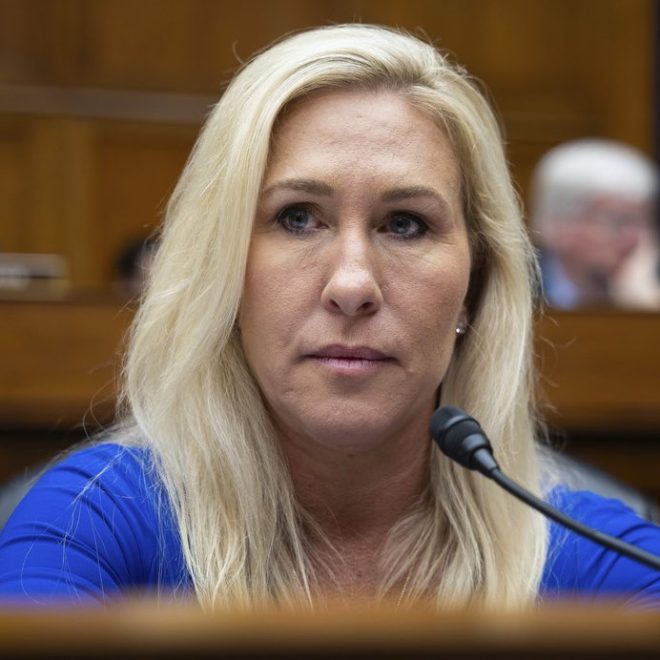
Rep. Marjorie Taylor Greene Introduces Bill to Ban Weather Modification Chemicals in Bold Push Against Geoengineering

Rep. Greene’s Shocking Weather Control Ban: Felony Charges Ahead! — weather modification legislation, chemical weather control ban, federal environmental policy 2025

Marjorie Taylor Greene Proposes Federal Legislation Against Weather Modification

By | July 5, 2025

In a recent announcement, Representative Marjorie Taylor Greene has taken a bold step by filing federal legislation aimed at banning the use of chemicals for weather engineering or modification. This significant move, which she has termed a potential felony offense, is poised to spark discussions and debates surrounding environmental policies and the implications of weather manipulation.

Background of the Legislation

This initiative comes on the heels of Florida’s recently enacted legislation that also addresses the controversial subject of weather modification. Greene has stated, “We must end the dangerous and deadly…” implying that the use of chemicals to modify weather patterns poses risks that are unacceptable. The exact nature of these dangers has not been detailed, but the growing concerns around climate change and environmental safety continue to fuel public anxiety about human intervention in natural processes.

Understanding Weather Modification

Weather modification, often referred to as geoengineering, encompasses a range of techniques aimed at manipulating weather patterns to achieve desired outcomes—such as increasing rainfall, dissipating fog, or reducing the severity of storms. Techniques like cloud seeding have been employed in various regions worldwide, raising questions about their efficacy and safety. Critics argue that such practices could have unintended consequences on ecosystems, agriculture, and human health, thus making Greene’s proposed legislation resonate with a segment of the population wary of these interventions.

Legislative Implications

If passed, Greene’s legislation would make it illegal to utilize chemicals for weather manipulation on a federal level, aligning with the stricter regulations seen in states like Florida. The introduction of such a bill signifies a growing recognition of the need for oversight in environmental practices, particularly those that could alter natural systems. As climate change becomes a focal point in political discussions, Greene’s proposal adds another layer to the ongoing debate about how society should respond to environmental challenges.

Public Reaction and Future Outlook

The reaction to Greene’s announcement has been mixed, with supporters praising the move as a protective measure for public health and the environment. Conversely, critics argue that such legislation could hinder scientific research and technological advancements aimed at combating climate change. The implications of this legislation could resonate beyond the political sphere, influencing public perception of weather modification and its associated risks.

In a move that has sent ripples through both the political and scientific communities, Rep. Marjorie Taylor Greene has announced her intention to file federal legislation aimed at banning the use of chemicals for weather modification. This initiative stems from concerns over the potential dangers associated with manipulating natural weather patterns. Greene’s proposal suggests that engaging in such practices would constitute a felony offense, raising questions about the implications for scientists and industries involved in weather engineering.

“It will be a felony offense.”

This powerful statement sets the tone for what Greene hopes will be a serious legal deterrent against weather manipulation. The idea of classifying weather modification as a felony offense is significant, especially considering the ongoing debates surrounding climate change and environmental sustainability. Greene’s legislation reflects a growing apprehension about the ethical implications of altering weather systems, as well as the potential consequences of such actions on human health and safety.

This will be FLORIDA-style legislation, which was just signed into law.

What does “Florida-style legislation” mean in this context? It refers to a recent trend in Florida politics where laws are enacted with a focus on protecting citizens from perceived external threats. In this case, Greene is aligning her proposal with similar measures taken in Florida, which recently passed legislation addressing environmental concerns and regulating industries that engage in weather modification. This approach aims to resonate with a broader audience who are increasingly concerned about the integrity of natural systems and the potential for corporate overreach.

“We must end the dangerous and deadly…”

Greene’s statement about ending “the dangerous and deadly” practices highlights the urgency of her proposed legislation. The implications of weather modification are vast. From droughts to hurricanes, the ability to manipulate weather patterns can have serious consequences for agriculture, infrastructure, and public health. Greene’s legislative initiative aims to put a stop to practices that could exacerbate these issues, emphasizing the need for a cautious approach to technology that can drastically alter our environment.

The Science Behind Weather Modification

Weather modification has been a topic of interest for scientists and policymakers for decades. Techniques such as cloud seeding have been employed to encourage rainfall in arid regions or mitigate severe weather events. However, these practices are not without controversy. Concerns range from the effectiveness of such methods to the ethical implications of “playing God” with nature. Greene’s legislation may serve as a wake-up call for those in the scientific community to reconsider the consequences of their work and the societal implications of weather manipulation.

The Public Reaction

Public reaction to Greene’s announcement has been mixed. For many, the idea of banning weather modification resonates with a deeper distrust of large corporations and their role in environmental degradation. Others worry that such legislation could hinder legitimate scientific research aimed at combating climate change and its impacts. As discussions continue, it’s clear that this issue is far from black and white. Engaging the public in conversations about the ethics of weather modification is essential for shaping future policies.

Legal and Ethical Implications

As with any proposed legislation, the legal and ethical implications of Greene’s initiative cannot be understated. By categorizing weather modification as a felony, the law could have far-reaching consequences for researchers and companies involved in atmospheric sciences. Legal experts warn that such a classification could stifle innovation and discourage necessary research aimed at addressing climate change challenges. It raises critical questions: How do we balance the need for scientific advancement with the ethical responsibility to protect our environment?

The Future of Weather Modification Legislation

Greene’s proposed legislation is not an isolated case; it reflects a growing trend among lawmakers to scrutinize scientific practices that may have unintended consequences. As climate change continues to pose significant threats globally, the debate over weather modification will only intensify. Future legislation will likely focus on establishing stringent guidelines for research and applications, ensuring that any efforts to modify weather patterns are approached with caution and transparency.

[…]

Via https://countylocalnews.com/2025/07/05/rep-greenes-shocking-weather-control-ban-felony-charges-ahead-weather-modification-legislation-chemical-weather-control-ban-federal-environmental-policy-2025/

EU to propose sanctions on Israel

EU to propose sanctions on Israel – media

RT

Options reportedly include suspending the trade pact, an arms embargo, or sanctions on Israeli ministers, soldiers and settlers

The European Union is preparing to roll out a list of possible sanctions against Israel due to concerns of human rights violations during the fighting in Gaza, Euractiv reported on Saturday, citing sources.

The EU’s diplomatic service is expected to present a list of options to EU ambassadors on Wednesday. Among the options are reportedly a partial or full suspension of the EU-Israel Association Agreement, sanctions on Israeli government ministers, military officials and extremist settlers, trade restrictions, an arms embargo, and the suspension of scientific cooperation.

While most of these measures have been discussed informally in the past, this is the first time they will be laid out formally in writing, Euractiv reported. EU foreign ministers are said to be scheduled to review the proposals on July 15.

Any move to impose sanctions on Israel would require the unanimous support of all 27 EU member states, which is widely seen as unlikely. Hungary, for instance, has been a consistent backer of the Jewish state, blocking EU sanctions on Israeli settlers last year.

According to Euractiv, the document follows an internal EU review of the Association Agreement last month, which found “indications of a breach” of Israel’s human rights commitments. Israel has strongly rejected the review. Its Foreign Ministry said it “should not be taken seriously” while arguing that the country was “engaged in an existential struggle by defending against the shared enemies of the West.”

In late June, the European Council called for an immediate ceasefire in Gaza while sounding the alarm about “the unacceptable number of civilian casualties and the levels of starvation.” The Council also urged Israel to fully lift its blockade on Gaza to allow humanitarian aid to flow in. Although Israel claimed to have done so, numerous media outlets reported little real change on the ground.

There are currently no EU sanctions imposed on Israel. However, the EU has in the past sanctioned certain Israeli individuals and organizations, mainly those it described as “extremist” settlers in the West Bank who were allegedly involved in violence against Palestinian residents.

After Hamas launched a surprise attack on Israel in 2023, the latter retaliated with a military operation in Gaza, which led to unprecedented destruction. Around 60,000 Palestinians and 1,200 Israelis were killed in the fighting, according to official figures.

[…]

Via https://www.rt.com/news/621033-eu-propose-sanction-israel/