
Degrowth, Deindustrialization, Depopulation and the Fraud of Global Warming

In a recent article, Defeating the Depopulation Agenda, I took aim at an insidious ideology which has infiltrated society in the form of a movement to ‘protect nature from humanity’.

In that feature, we reviewed how those forces behind this revival of the pagan Gaia earth mother cults of ancient times were directly connected to the Anglo-Dutch royal families- with explicit focus on Prince Bernhard of the Netherlands (‘former SS officer) and Prince Philip Mountbatten.

While I received much positive feedback from readers who appreciated getting greater clarity to the cultish Gaia worship underlying the eco-imperial agenda which has infested so much of our western education, cultural and even religious institutions… something was missing.

In this article, I will attempt to address that missing ingredient which will involve a summary appreciation of the fraud of climate science per se which has perverted science itself, around a statistical mode of analysis designed to frame a wonderful molecule named carbon dioxide for genocide.

After introducing a rehabilitation and defense of CO2, I will end with some basic facts about the essentials of a true climate science premised around astro-climatology and the actual galactic forces shaping earth’s climate.

Many people were taken aback by the findings published by a team of scientists analyzing the results of Moderate Resolution Imaging Spectroradiometer (MODIS) instruments on NASA’s Terra and Aqua satellites.

NASA’s website[5] described the findings (published on February 11, 2019[1]) in the following way:

“The research team found that global green leaf area has increased by 5 percent since the early 2000s, an area equivalent to all of the Amazon rainforests. At least 25 percent of that gain came in China.”

Up until this study’s publication, scientists were not certain what role human economic activity played in this anomalous greening of the earth.

The NASA study demonstrated that this dramatic rate of greening between 2000-2017 was being driven largely by China and India’s combined efforts at eradicating poverty, which involves both reforestation, desert greening efforts (see China’s Move South Water North megaproject[2]), agricultural innovation and also, general industrial growth policies.

The later policies represent genuine efforts by Asian nations to wipe out poverty by investments into large scale infrastructure… a practice once used in the west before the days of “post-industrialism” induced a collective insanity of consumerism in the early 1970s.

A perplexed reader might now be heard to ask: but how can industrial growth have anything to do with greening of the planet?

One simple answer is: carbon dioxide.

CO2: An Innocent Victim Framed for Genocide

As children, we are taught that CO2 is an integral part of our ecosystem and that plants love it.

The processes of photosynthesis, which evolved over long spans of time with the advent of the chlorophyll molecule eons ago requires constant infusions of carbon dioxide that are broken down along with H2O, releasing oxygen back into the biosphere. Over time, free oxygen slowly formed the earth’s ozone layer and fueled the rise of ever higher life forms that relied on this “plant waste” for life.

Today, large amounts of carbon dioxide is regularly generated by biotic and abiotic activity from living animals, decaying biomass as well as volcanos which constantly emit CO2 and other greenhouse gases. A surprisingly small portion of that naturally occurring CO2 is caused by human economic activity.

Taking the entire composition of greenhouse gases together, water vapour makes up 95% of the bulk, carbon dioxide makes up 3.6%, nitrous oxide (0.9%), methane (0.3%), and aerosols about 0.07%.
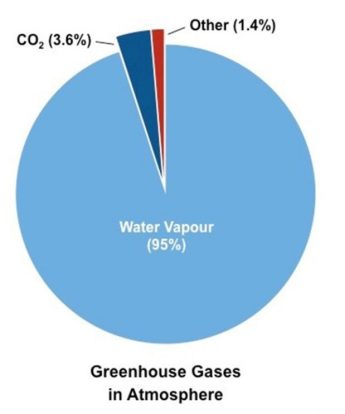
Of the sum total of the 3.6% carbon dioxide released into the atmosphere, approximately 0.9% is caused by human activity.

To restate this statistic: Human CO2 makes up less than 1% of the 3.6% of the total greenhouse gases influencing our climate.

During the mid-20th century, a belief began to emerge among some fringe climate scientists that the 400 parts per million (PPM) average carbon dioxide in the atmosphere is the “natural and ideal amount”, such that any upset of this mathematical average would supposedly result in destruction of biodiversity.

These same mathematicians also presumed that the biosphere could be defined as closed systems, such that rules of entropy were the natural organizing principles- ignoring the obvious fact that ecosystems are OPEN, connected to oceans of active cosmic radiations from other stars, galaxies, supernova and more, while being mediated by nested arrays of electromagnetic fields.

As film maker Adam Curtis demonstrated in his, All Watched Over By Machines of Love and Grace (2011)[3], this belief slowly moved from the fringe into mainstream thinking despite the fact that it is simply wrong.

Beyond the facts already presented above, another persuasive piece of evidence can be found in carbon dioxide generators that are commonly purchased by anyone managing a greenhouse[4]. These widely-used generators increase CO2 to amounts as high as 1,500 PPM.

What is the effect of such increases?

Healthier, happier, greener plants and vegetables.

Temperature and CO2: Who Leads in this Dance?

Amidst the frantic alarms sounding daily over the impending climate emergency threatening the world, we often forget to ask if anyone ever actually proved the claim that CO2 drives the climate.

To begin to answer this question, let’s start with a graph showcasing the rise of human industrial CO2 from 1751-2015 broken down into various regions of the earth. What we can see is consistent increase from the mid 19th century until 1950, when a vast spike of emission rate increases can be viewed.

This increase obviously accompanies world population growth and the correlated agro-industrial output.

Next, let us look at the global mean temperature changes from 1880-present.

Here, several anomalies strike the thinking mind.

For starters, absolutely no warming accompanies the period of intensive industrial growth of 1940-1977. In fact during this period, many climate scientists were ringing the alarm over an impending ice age![5]

Another anomaly: Since carbon dioxide emissions have increased continuously over the past 20 years, one would expect to see a correlated spike in warming trends; however, this expected correlation is entirely absent between the year 1998 and 2012, when warming tappers off to a near standstill, sometimes called “the global warming pause” of 1998-2012[6]. This has been an embarrassment for all modellers whose scare-mongering predictions have fallen to pieces to the point that they can only pretend this pause doesn’t exist.

Again, the question must be asked: why would this anomaly appear if CO2 drove temperature?

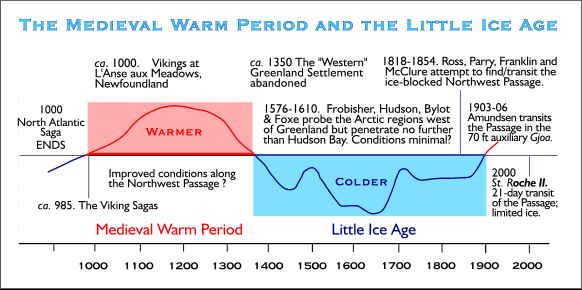
Let’s take one more anomaly from our temperature records before digging into the hard proof that CO2 does not cause temperature changes: The medieval warming period [see graph].
[…

The Vikings in Greenland had no coal plants or SUVs, and yet, mean temperatures were still warmer than today by a long shot.

Why?

[…]

[…]

Going back even further into the climate records, it has been revealed that during many of the past ice ages, carbon dioxide had risen up to 800% higher than our current levels, despite the fact that human activity played zero role[9].

A Brief Look at Space Weather

[…]
I would like to introduce one more dramatic piece of evidence that gets us back on the path of a true science of climate change and ecosystems management: Astroclimatology.

The fact that the earth is but one of a multitude of spherical bodies in space speedily revolving around an incredibly active sun within the outskirts of a galaxy within a broader cluster of galaxies is often ignored by many computer modelling statisticians for a very simple reason: anyone who has been conditioned to look at the universe through a filter of linear computer models is obsessed with control, and is incredibly uncomfortable with the unknown.

The amount of actual factors shaping the weather, ice ages, and volcanism are so complex, vast and mostly undiscovered that computer modellers would prefer to simply pretend they don’t exist… or if they do acknowledge such celestial phenomena to have any function in climate change, it is often dismissed as “negligible”.

Despite this culture of laziness and dishonesty, the question is worth asking: WHY does evidence of climate change occur across so many other planets and moons of our solar system?

Ice caps on Mars melt periodically[10] and have been melting at faster rates in recent years. Why is this happening? Could the sun’s coronal mass ejections, solar wind, or electromagnetic field be affecting climate change within the solar system as one unifying process?

Often Venus with its atmosphere of 96.5% CO2 is used as a warning for people on the earth what sort of terrible oven we will create by producing more CO2. It is hot, after all, with temperatures averaging 467 degrees Celsius (872 degrees Fahrenheit); however, if CO2 were truly to blame for the heating, then why is Mars so cold with temperatures averaging minus 125 degrees Celsius (-195 degrees Fahrenheit) despite the fact that it’s atmosphere is 95% CO2?

Similarly, what role does cosmic radiation play in driving climate change? Based on the recent discoveries of Heinrich Svensmark and his team in Denmark, strong correlations were found linking cloud formation, climate and cosmic radiation flux over time. Cosmic radiation flux into the earth is a continuous process mediated by the earth’s magnetic field, as well as the oscillating magnetic field of the sun, which shapes the entire solar system as we revolve around the galactic center of the Milky Way every 225-250 million years.

Svensmark’s discovery was outlined beautifully in the 2011 documentary, The Cloud Mystery.[11]

Going back even further into the climate records, it has been revealed that during many of the past ice ages, carbon dioxide had risen up to 800% higher than our current levels, despite the fact that human activity played zero role[9].

A Brief Look at Space Weather

[…]

But I would like to introduce one more dramatic piece of evidence that gets us back on the path of a true science of climate change and ecosystems management: Astroclimatology.

The fact that the earth is but one of a multitude of spherical bodies in space speedily revolving around an incredibly active sun within the outskirts of a galaxy within a broader cluster of galaxies is often ignored by many computer modelling statisticians for a very simple reason: anyone who has been conditioned to look at the universe through a filter of linear computer models is obsessed with control, and is incredibly uncomfortable with the unknown.

The amount of actual factors shaping the weather, ice ages, and volcanism are so complex, vast and mostly undiscovered that computer modellers would prefer to simply pretend they don’t exist… or if they do acknowledge such celestial phenomena to have any function in climate change, it is often dismissed as “negligible”.

Despite this culture of laziness and dishonesty, the question is worth asking: WHY does evidence of climate change occur across so many other planets and moons of our solar system?

Ice caps on Mars melt periodically[10] and have been melting at faster rates in recent years. Why is this happening? Could the sun’s coronal mass ejections, solar wind, or electromagnetic field be affecting climate change within the solar system as one unifying process?

Often Venus with its atmosphere of 96.5% CO2 is used as a warning for people on the earth what sort of terrible oven we will create by producing more CO2. It is hot, after all, with temperatures averaging 467 degrees Celsius (872 degrees Fahrenheit); however, if CO2 were truly to blame for the heating, then why is Mars so cold with temperatures averaging minus 125 degrees Celsius (-195 degrees Fahrenheit) despite the fact that it’s atmosphere is 95% CO2?

Similarly, what role does cosmic radiation play in driving climate change? Based on the recent discoveries of Heinrich Svensmark and his team in Denmark, strong correlations were found linking cloud formation, climate and cosmic radiation flux over time. Cosmic radiation flux into the earth is a continuous process mediated by the earth’s magnetic field, as well as the oscillating magnetic field of the sun, which shapes the entire solar system as we revolve around the galactic center of the Milky Way every 225-250 million years.

Svensmark’s discovery was outlined beautifully in the 2011 documentary, The Cloud Mystery.[11]

[…]

Via https://matthewehret.substack.com/p/the-fraud-of-global-warming

Survivors of Seven-Month Ukrainian Occupation of Kursk Region

In Photos: The Russian Border Town of Sudzha Under Ukrainian Control ...

Sudzha: We Survived

Directed by Olga Kiriy and Artem Merkushev (20250

Film Review

https://en.rtdoc.tv/films/2028-sudzha-we-survived

Sudzha in the Kursk region of Russia was occupied for seven months by Ukrainian troops between August 2024 and March 2025. Most civilians successfully evacuated prior to the Ukrainian invasion. Approximately 1000 elderly and disabled residents were left behind. This documentary follows Russian troops as they search for survivors in the bombed out villages and undergo shelling and attacks by Ukrainian Kamikaze drones as they evacuate them on stretchers.

Among the ruins they find NATO uniforms, discarded as illegal NATO troops donned civilian clothes before fleeing the Russian liberators.

The filmmakers also interview one of the middle aged Sudzha civilians who stayed behind to fight the invading Ukrainians with other unofficial “partisans” war and provide trapped civilians with food and water. He explains the Ukrainians became extremely careless when they were looting and became easy targets for partisan snipers.

He asserts the Ukrainians had the name and addresses of all Sudzha residents and were specifically seeking out FSB (Russia’s federal security force) members, police, gas officers and employees from the Kursk nuclear plant. He also reveals that Polish and Muslim mercenaries were assisting the Ukrainian troops.

What’s most striking about the documentary is the large number of corpses lying around. The Ukrainian occupiers explicitly prohibited remaining residents from burying them.


MEP Warns EU will soon collapse without Russian resources

EU will soon collapse without Russian resources – MEP

RT

European Commission President Ursula von der Leyen is leading the EU down a path of self-destruction by attempting to sever energy ties with Russia, Slovak MEP Milan Uhrik has said.

In May, von der Leyen unveiled a plan to phase out all Russian oil and gas imports by the end of 2027, as part of the EU’s REPowerEU roadmap, which aims to eliminate the bloc’s dependence on Russian fossil fuels and shift to renewable sources.

”[Von der Leyen], you will destroy the EU, and I am convinced that the EU will soon collapse because you are doing everything to make it happen,” Uhrik said in a speech in the European Parliament on Wednesday.

Moscow has argued that EU restrictions are self-defeating, causing surging energy prices and weakening the bloc’s economy. Since 2022, Germany has fallen into recession, while growth across the EU has stagnated.

Brussels is also discussing an 18th sanctions package targeting Russia’s energy and financial sectors. The proposal stalled after Slovakia vetoed it last week. Slovak Prime Minister Robert Fico argued that Slovakia was “fighting for our households and businesses” against “harmful ideological decisions” from Brussels. Neighboring Hungary also blocked the measure, warning it would cripple its energy security and spike prices.

Uhrik stressed that Russian hydrocarbons remain vital for Slovakia’s industrial base. “Without them, our industry would either not function or would not be competitive,” he said. He urged fellow Slovak politician Maros Sefcovic, currently the EU’s commissioner for trade and economic security, to “stand up for Slovakia” on the issue.

Uhrik also took aim at NATO’s proposal to raise member states’ defense spending to 5% of GDP by 2035. “No, thank you – that’s enough. We just don’t want this,” he said, adding that Slovaks did not envision such a future when they joined the EU.

[…]

Via https://www.rt.com/news/621300-eu-collapse-without-russian-energy/

Ultra Processed Foods: Inflammatory and Addictive

Ultra Processed Foods: Inflammatory and Addictive

By  Daniel Nuccio
[…]

Industrial Formulations: It’s What’s for Dinner

Practically everyone has heard the term “processed food” at some point. Most, if pressed, could probably make some reasonable guesses about what is and isn’t a processed food, especially if presented with two clear options (e.g., a fresh grilled chicken breast and a chicken nugget).

[…]

According to this system, food can be categorized into four groups. Group One is comprised of natural, unprocessed, or minimally processed foods. These are the edible parts of plants, animals, fungi, and algae. Water is also included in this category. Some basic level of processing to make food safer, more edible, or last a little longer does not inherently preclude food from this category.

[…]

Group Two foods are processed culinary ingredients often derived from Group One foods and used when preparing other Group One foods. Generally, these would not be eaten alone. Examples include oils, sugars, and butter.

Group Three foods are processed foods comprised of Group One foods to which a limited number of Group Two foods have been added for preservation or as part of preparation. Canned vegetables and canned fish fall into this category, as do some cheeses and freshly baked breads.

Lastly, there are Group Four foods, also known as ultra-processed foods, or UPFs. Critics and researchers of UPFs are generally reluctant to even refer to such items as food, instead opting for such terms as “industrial products” and “industrial formulations.” Often, such items are comprised of cheap ingredients derived from high-yield crops and animal remnants subjected to processes absent from the kind of preparation that could typically be carried out in one’s home or a standard restaurant kitchen. Additionally, they also may contain multiple Group Two ingredients and a plethora of additives. Such additives may help with preservation. Alternatively, they may serve solely cosmetic purposes to enhance appearance, smell, taste, or texture.

The end result is often a food-like item that is energy dense but nutrient poor, simultaneously possessing higher levels of both fats and sugars than what would normally be found in nature. Compared to Group One foods, UPFs also generally have less fiber, protein, vitamins, and minerals. Examples include sweet or salty packaged snacks, pizza, french fries, TV dinners, and reconstituted meat products.

[…]

Ultra-Processed Foods: They’re Grrrreatly Inflammatory

As I wrote in an article for Brownstone Journal about a year ago, there are a number of health problems associated with what has been dubbed the “Western diet.” Disturbances to the composition of microbial community in one’s gut, the deterioration of intestinal barriers, and increased inflammatory processes, both in the gut and the rest of one’s body, are among the greatest concerns here.

[…]

On a broad level, many additives commonly found in UPFs like artificial preservatives, colorants, emulsifiers, and sweeteners, have been linked to perturbations of gut microbial communities, the erosion of one’s intestinal lining, and inflammation.

For example, colorants such as Red 40 and Yellow 6 have been shown to trigger inflammatory bowel disease-like colitis in genetically susceptible mice. Aluminum has been associated with chronic inflammation and granuloma formation. Emulsifiers are believed to disturb microbial gut communities in a manner that increases the prevalence of bacteria that trigger inflammatory processes that contribute to colitis and metabolic disease. Experiments using rodent models suggest fructose exposure also perturbs gut communities, as well as induces the death of cells in the intestinal barrier leading to its deterioration and the entry of bacterial endotoxins into one’s bloodstream, where they can damage organs like the liver.

[…]

Once You Start, You Just Can’t Stop

A growing body of research on UPFs suggests that the consumption of such foods likely rewires the brain in much the same way as addictive drugs, thus giving new meaning to some now seemingly ill-advised marketing slogans.

[…]

To better understand how food can become addictive, one must first look at how food processing influences the availability of the nutrients you can obtain from a particular food, the neurophysiological processes that regulate your motivation to eat, and how nutrient availability can affect these regulatory processes.

To start, when you consume food, your body breaks down that food into nutrients that can then pass through your gastrointestinal tract and into your bloodstream, which then transports those nutrients to different organs around your body. Cooking, along with other basic processing techniques such as boiling, baking, and crushing, can increase the availability of these nutrients and thus how quickly they can reach different organs. Simply put, there are more available calories in a cooked sweet potato than in a raw sweet potato or a cooked piece of meat compared to a raw piece of meat.

Neurophysiologically, nutrients and other stimuli in the gut trigger signals that ultimately reach the brain to influence feeding behavior. More specifically, a part of the brain referred to as the arcuate nucleus of the hypothalamus (the hypothalamus being a part of the brain involved in many basic behaviors related to survival) contains two sets of neurons that play important roles in the regulation of feeding behavior. One group, agouti-related protein (AgRP) neurons, is activated by hunger and fasting and can prompt mammals to search for and consume food. The other group contains proopiomelanocortin neurons that are activated by positive energy balance and encourage fasting.

Under experimental conditions, when different nutrients such as lipids and glucose are infused directly into the gut, AgRP neuron activity is inhibited, leading to a decrease in food consumption. Where this ties into addiction is that the hypothalamus shares a number of interconnections with the brain’s reward system and hence the various structures (e.g., the striatum and ventral tegmental area), circuits (e.g., the mesocorticolimbic circuit), and neurotransmitters (e.g., dopamine) involved in learning and addiction. This is also the system that drugs of abuse are said to hijack.

Over the course of evolutionary history, this reward system and all it entails likely developed to help mediate associative learning as it relates to biologically relevant behaviors such as reproduction and the consumption of food. With regard to food, this system appears to be influenced by both an organism’s explicit sensory response to food, as well as by signaling in the gut triggered by a food’s nutritional contents. As these two signaling processes are paired, the sensory experience of consuming a particular food becomes linked to its nutritional value. Subsequently, an organism comes to experience sensations of pleasure when consuming that food (or similar foods) and becomes motivated to seek out such foods in the future.

These kinds of associations are obviously important for an organism’s survival. Being motivated to eat things that provide nutrients can be beneficial for not dying of malnutrition. However, the development of these associations and subsequent behaviors can be influenced by a number of variables that can maladaptively affect food preferences and an organism’s motivation to eat, sometimes leading to a suite of behaviors and neurophysiological alterations akin to what one might see in addiction.

On a very basic level, simple food preparation can influence food preference. For example, under experimental conditions, rodents will come to prefer cooked sweet potatoes to raw sweet potatoes. Likewise, more complex food processing can influence a person’s ability to control how much they eat, as well as the desirability and perceived value of a food item.

Research involving human participants shows self-reported behaviors indicative of addictive eating (e.g., a perceived loss of control over how much of a food one eats) tend to be more associated with foods that are high in both fat and sugar, a characteristic of many UPFs (e.g., pizza, ice cream, milk chocolate), than foods that are high in either fat (e.g., salmon) or sugar (e.g., bananas). In an experiment involving a quasi-artificial bidding task, people similarly showed a preference for such foods in terms of their bidding activity. When snacks possessing this combination are incorporated into the diets of healthy participants, these individuals come to report a decreased desire for low sugar snacks and a decreased preference for low fat (and also very high fat) snacks.

Research using an fMRI has shown that the regular consumption of such snacks increases activity in several parts of the brain, including parts relevant to learning and addiction, when participants are presented with cues meant to predict the delivery of a high-fat-high-sugar snack and when they are consuming such a snack. Borrowing even more from the frameworks used to understand addiction, some researchers have suggested that the concentration of sugar and the speed with which sugar from a food is absorbed into the bloodstream can also influence the food’s potential for addiction. (In addiction terms, an addictive substance injected directly into one’s blood would have a greater potential for addiction than if swallowed in a time-release capsule).

Commentaries and opinion pieces in peer-reviewed journals take the comparison between UPFs and drugs of abuse even further, emphasizing how UPFs meet the scientific criteria for addictive substances put forth by the US Surgeon General in 1988 when cracking down on cigarettes. Namely, these pieces argue that UPFs cause compulsive use, alter one’s mood through effects on the brain, are reinforcing in Pavlovian and Skinnerian terms, and trigger cravings.

They also highlight that if a similarly harmful and addictive substance were to be introduced into our society today, we likely never would allow it to become available to the general public, especially not to children.

The Cornucopia of Mostly Bad Solutions

Because of their addictive nature, and the other harms they do, the stated or implied conclusion to which most UPF researchers arrive is that UPFs should be regulated in much the same way as tobacco products.

Needless to say, many of those who do this research tend to come off as do-gooders, would-be-social engineers who wholeheartedly embrace the idea of governments working with experts like them to micromanage every aspect of the food industry along with the personal diets of individuals and their families through the standard array of regulations, taxes, incentives, and nudges. Among the proposed suggestions for waging war on UPFs are greater taxation of the ingredients used in UPFs and the final products, a ban on advertising for UPFs, and a prohibition on the sale of UPFs within convenient walking distance of schools.

For those who are more libertarian-leaning, these kinds of solutions likely seem like government overreach and come off as undesirable. So should more technocratic solutions that embrace health surveillance devices that at best encourage Americans to hand over vast amounts of personal information to corporations (and possibly the government) in exchange for questionable benefits to their individual health. (RFK, Jr. himself seemed to come out in favor of something along these lines at a Congressional hearing, although, in fairness, he later made some clarifications). Back in March, Robert Malone wrote a piece regarding some of the practical and philosophical issues the MAHA movement faces here as they work to define the “acceptable limits” of the government’s role in their health.

However, whether one agrees with these kinds of solutions or not, their possible undesirability should not diminish the scientific merit of much of the research done in this area. Also, if one does not support the nanny-statist and/or technocratic approaches to UPFs, that leaves the lingering question of what, if anything, should be done about them.

To start, not all the ideas put forth by the experts are inherently bad. Better education about diet, nutrition, and the preparation of healthy meals through science, nutrition, and home economics classes in K-12 is a fairly reasonable idea that most people should be able to support. Encouraging exercise and fitness (and I would add putting an end to the embrace of obesity as an alternative lifestyle to be celebrated) would also be a good step in the right direction.

Removing UPFs from the menus of public schools, and possibly those of prisons and hospitals, probably aren’t the worst ideas either (although when dealing with populations of free adults, providing healthy choices would be the fairer option).

[…]

Via https://brownstone.org/articles/ultra-processed-foods-inflammatory-and-addictive/

Hawai’i County Passes Law Keeping Cell Towers Away from Homes and Schools

Environmental Health Trust

Hawai’i County, commonly known as the Big Island, has passed an ordinance limiting how close cell towers may be constructed to homes and schools. The ordinance is the first of its kind in the island state, and Debra Greene, founder of Safe Tech Hawaii, said this “paves the way for other local jurisdictions in Hawaii to follow suit and implement similar ordinances.”

The legal team at EHT has been working with Big Island residents and Safe Tech Hawaii for months to help push this new regulation over the finish line. “The passage of Bill 24 is a notable victory because, to my knowledge, Hawai’i County, with a population of over 200,000, is the largest community in the U.S. with 600-foot installation setbacks,” said Environmental Health Trust Legal Fellow Zoe Berg.

The unanimous passing of the bill on June 19, 2025 marks a clear victory for residents, many of whom don’t feel that more wireless coverage on the island is needed, and who have fought hard to keep new cell towers at a safe distance from homes and schools. It’s notable that Hawai’i County passed a resolution in 2020 calling for a halt to 5G deployments until independent testing can determine the safety of RF radiation emissions generated by such infrastructure. And earlier this year, Hawaiian Telcom unveiled an ambitious plan to make Hawaii the first fully fiber-enabled state by 2026, which would allow all Hawaiians to rely on fiber-optic cables rather than wireless networks for internet connectivity.

“The passage of Bill 24 in Hawai’i County acknowledges that buffers between powerful, wireless radiation-emitting technology and sensitive environments like homes and schools are important to protect public safety and public health,” Zoe Berg said. “We thank Debra Greene and all of the residents of Hawai’i County for their hard work in getting Bill 24 passed. We also thank the honorable members of the Hawai’i County Council for supporting more responsible, thoughtful wireless telecommunications infrastructure siting throughout the county.”

Both Verizon and AT&T submitted letters to the council expressing concerns about the setback requirement and requesting waivers, which ultimately were not granted. The final bill nonetheless represents a compromise; the process for telecom companies to get their towers permitted has been simplified, but those towers must be verified to survive winds of 100 mph or more, and in many of the county’s zones placed more than 600 feet from homes and schools (with exceptions for emergency communications facilities) and at a minimum distance of 120% of the height of the tower from all property lines. This is notably safer than the requirements on Oahu, where towers can be at a distance of only one fifth the tower’s height—putting private property at risk from falling towers.

With this new law, Hawai’i County joins dozens of communities across the United States which have passed ordinances regulating size and placement of cell towers with consideration to public safety, including cities and counties in New Hampshire, New York, California, and Massachusetts. Internationally, dozens of countries in the EU and beyond have implemented policies aimed at reducing children’s exposure to cell phones and wireless radiation.

If you would like to take action in your community to promote safer siting of cell towers, protecting vulnerable populations as well as property values, read Environmental Health Trust’s Action Steps on Cell Towers near Homes. This page includes links to scientific evidence, legal precedents, resources for organizing, and more to help win a local campaign for safer cell tower placement.

[…]

Via https://ehtrust.org/hawaii-county-passes-law-keeping-cell-towers-away-from-homes-and-schools/

Ukrainian Citizens Terrified of Forced Mobilization CHEER as Russian Strikes Target Recruitment Centers


By Paul Serran

Ukrainians are cheering the attacks and tipping Russian channels on Telegram about Recruitment Centers’ locations.

Here in TGP we have long been reporting on the veritable tragedy that has become the forced mobilization push in Ukraine, with Territorial Recruitment Centers increasingly violent snatching of people off the streets to send them – with negligible training – to die in the frontlines.

Below you have a small selection of those stories.

Ukraine To Mobilize HALF A MILLION New Citizens for the War in Highly Unpopular Move – President Zelensky and General Zaluzhny Throw the ‘Hot Potato’ Blame to Each Other

Kiev Cracks Down on Gangs Helping Ukrainian Men to Dodge Military Draft – Move Comes as Conscription Goes Into Overdrive, Mobilizing the Old, the Infirm and even Women

THE HUNT FOR DRAFT DODGERS: Ukraine Consulates Abroad Stop Services for Military-Aged Men

MSM Tries To Put a Positive Spin on Ukraine’s Old Soldiers and the Social Chaos Cause by Forced Mobilization (VIDEOS)

Here you have a thread of LordBebo on X showing a collection of videos of the absurd situation with the mobilization gangs snatching people on the streets to die in the front.

[…]

Via https://www.thegatewaypundit.com/2025/07/insane-ukrainian-citizens-terrified-forced-mobilization-cheer-as/

CIA Whistleblower Reveals How Intel Agencies Gather Blackmail On Politicians

Zero Hedge

John Kiriakou reveals his superior got a promotion and a medal when he recruited a copy machine repairman.

At first, Kiriakou laughed, but then he realized the brilliance of the plan when he learned that the repairman secretly sent every document from a prime minister’s office straight to the CIA.

How did he do it? By planting a tiny device on the copy machine.

“He [my trainer] said, all of us want to recruit the prime minister. We’re not going to recruit the prime minister. We’re not even going to have access to the prime minister. But the prime minister’s got a copy machine in his office.

“And every once in a while, that machine is going to need to be cleaned and serviced. So you recruit the copy machine repairman. And when he goes in there to make his repair or to clean the drums or whatever, he installs a little device that we give him so that every time somebody makes a copy, it transmits a copy back to the CIA.”

What happened next?

He said, “I got a promotion. I got a medal. I got a photo op with the director. It made my career…

Because this flow of information was pure leverage for the CIA:

“You know what they’re thinking. You know their next move. You know who their enemies are and who their allies are. Maybe it’s their position on trade negotiations. Maybe the prime minister has a health problem you need to plan for. You never know what might come through,” Kiriakou explained.

That ONE critical nugget is all it takes.”

That, he says, is EXACTLY what Epstein was to intelligence agencies: someone with access (like the copy machine repairman) who quietly delivered leverage on the world’s elite.

[…]

Via https://www.zerohedge.com/political/cia-whistleblower-reveals-how-intel-agencies-gather-blackmail-politicians

CIA-Linked Analyst Oversaw Palestine Solidarity Campaign Membership Files

For three years, a woman with a background in U.S. State Department cultural diplomacy and ties to intelligence-linked organizations quietly managed the membership database of Britain’s largest pro-Palestine organization.

David Miller

Her name is Deborah Fiorin. Hired by the Palestine Solidarity Campaign (PSC) in early 2018 as its Membership and Data Officer, Fiorin held unprecedented access to the personal information of thousands of activists across the United Kingdom. Yet her prior work history, which includes a stint at a State Department propaganda arm and brief postings at firms with deep intelligence connections, raises serious questions about vetting, oversight, and the very integrity of the campaign’s leadership.

This investigation examines who Fiorin really is, how she came to hold such a sensitive post, and what her story reveals about the governance of PSC.

Ben Soffa, national secretary of the Palestine Solidarity Campaign (PSC), has developed software to monitor and organize the group’s members. He owns a small company called Organic Campaigns and describes himself on LinkedIn as a “developer of online campaigning tools.” As national secretary, Soffa has access to PSC’s membership data and likely worked closely with whoever oversaw the database.

As revealed in my previous article, Soffa admitted to having “limited” contact with Assaf Kaplan, the former Israeli military intelligence officer who was controversially hired by the Labour Party as head of digital operations. It remains unclear whether Soffa shared PSC member data with his Labour colleague, but the question demands scrutiny.

A more pressing concern, however, is how PSC member data may have been used.

PSC claims to take data protection seriously. According to its official privacy policy, the organization collaborates with IT contractors, website managers, and database administrators to ensure that security features are regularly updated and that personal data is handled responsibly.

The policy states that outdated or irrelevant information should be deleted and that data should be retained only as long as necessary. If an individual requests to sever ties with the organization, their record should be marked as inactive, accompanied by a note explaining why they should no longer be contacted, such as the cancellation of their membership. The full policy is available here.

However, this investigation raises serious questions about whether PSC directors, including National Director Ben Jamal, have been willing or able to enforce the group’s data protection policy.

Concerns began with PSC’s hiring of a new staff member in January 2018, a year into Ben Jamal’s tenure as national director. Although he had previously served as a PSC director from January 2014 to July 2016, this was his first full year in the lead role. The new “Membership and Data Officer,” Deborah Fiorin, remained in post for just over three years, departing in January 2021.

Meet Deborah Fiorin

A 2016 biographical note published before she joined PSC states she was “born in Italy, educated in the U.S., France, Italy and Britain.” It notes that she holds two bachelor’s degrees, one in international relations and one in philosophy, as well as an MA in International Studies and Diplomacy from the School of Oriental and African Studies (SOAS) at the University of London.

On LinkedIn, she claims native or bilingual fluency in English and Italian, as well as full professional proficiency in French, and elementary proficiency in German.

According to her LinkedIn profile, Deborah Fiorin earned an MA in International Studies and Diplomacy from SOAS, University of London, in 2015.

She previously studied international politics and economics at Sciences Po in Paris through the Erasmus program, and holds two bachelor’s degrees: one in philosophy from Birkbeck, University of London, and another in international relations and human rights from the University of Padua.

State Department official

After completing her master’s at SOAS in the summer of 2015, Fiorin appears to have a gap in her CV. Her next listed role doesn’t begin until March 2016. What did she do in the interim? Her LinkedIn profile offers no clues. However, a biographical note from March 2016 states that “she has worked for… the U.S. Department of Cultural Affairs in New York City.” This position is not referenced anywhere on her LinkedIn profile. But what is the U.S. Department of Cultural Affairs?

There is no “Department of Cultural Affairs” under the U.S. State Department. However, the Bureau of Educational and Cultural Affairs, based in New York, performs a similar function. It promotes “mutual understanding” between the United States and other nations and has long sponsored cultural exchange programs advancing U.S. foreign policy interests, including the Fulbright Program and the International Visitor Leadership Program (IVLP), which marked its 70th anniversary in 2010.

As it happens, the bureau has deep roots in U.S. propaganda operations, tracing its origins to the Office of War Information during World War II. Its legacy also includes links to CIA-backed initiatives, such as the Congress for Cultural Freedom and the U.S. Information Agency, which oversaw Radio Free Europe and Radio Liberty.

According to the Foreign Service Journal, a publication offering an “insider perspective” for U.S. foreign service officials, the bureau sits within a tradition of CIA-sponsored covert action and soft power projection:

While Secretary of State George Marshall was telling Congress there would be no more government funding of exhibitions of modern art, the newly formed Central Intelligence Agency (CIA) had already embraced the idea. American avant-garde art demonstrated America’s creativity, cultural sophistication, and, especially, intellectual freedom, the CIA believed. And it would be hard for Soviet modernism, called socialist realism, to compete, given the rigidity of communist ideology. The CIA began covertly funding an initiative centered on a nongovernmental organization called the Congress for Cultural Freedom to promote the abstract expressionism of Jackson Pollock, Andy Warhol, Willem de Kooning, and others. The CIA operation grew, establishing offices in 35 countries and subsidizing international tours by American jazz artists, symphony orchestras, and more until its exposure in 1967.

Meanwhile, in 1953, the U.S. Information Agency (USIA) was created to “tell America’s story to the world.” By engaging with the world through international information, broadcasting, culture, and exchange programs, USIA made cultural diplomacy an essential element of American foreign policy. Until its 1999 absorption into the State Department, USIA’s “Arts America” program was instrumental in bringing unique American achievements in music, painting, literature, and architecture, as well as industrial arts, to the rest of the world.

And its successor, the Bureau of Educational and Cultural Affairs, has continued the tradition.”

Fiorin, in other words, worked within a U.S. propaganda outfit with documented links to the CIA. This may shed light on a curious line in the March 2016 biographical note, which claims she “has written extensively on Libya, its politics and the 2011 revolution.”

Yet a search for “Deborah Fiorin” and “Libya” yields only that biography—no articles, essays or publications. Where did she “write” extensively on Libya? Was this work conducted during her tenure with a CIA-linked organization, possibly under a nondisclosure agreement? Or does it refer to student essays that were never published? Either way, the claim appears questionable and raises further concerns about how she was vetted by the PSC.

Fair Observer?

What is Fair Observer, the outlet where Fiorin published an article in March 2016, the same month she began her next job? Among its listed “partners” is Young Professionals in Foreign Policy, a group with documented ties to the Zionist-funded Henry Jackson Society. The organization itself is backed by a range of establishment funders, including the U.S. government, NATO, and the International Rescue Committee, an organization originally set up as a CIA front in 1942.

[…]

Via https://libya360.wordpress.com/2025/07/09/cia-linked-analyst-oversaw-palestine-solidarity-campaign-membership-files/

America’s largest power grid struggling to meet demand from AI

The former Three Mile Island nuclear power plant in Londonderry TownshipThe former Three Mile Island nuclear power plant in Londonderry Township, Pennsylvania, U.S., June 25, 2025. REUTERS/Eduardo Munoz/File Photo

Laila Kearney

HARRISBURG, Pennsylvania July 9 (Reuters) – America’s largest power grid is under strain as data centers and AI chatbots consume power faster than new plants can be built.

Electricity bills are projected to surge by more than 20% this summer in some parts of PJM Interconnection’s territory, which covers 13 states – from Illinois to Tennessee, Virginia to New Jersey – serving 67 million customers in a region with the most data centers in the world.

The governor of Pennsylvania is threatening to abandon the grid, the CEO has announced his departure and the chair of PJM’s board of managers and another board member were voted out.

The upheaval at PJM started a year ago with a more than 800% jump in prices at its annual capacity auction. Rising prices out of the auction trickle down to everyday people’s power bills.

Now PJM is barreling towards its next capacity auction on Wednesday, when prices may rise even further.

The auction aims to avoid blackouts by establishing a rate at which generators agree to pump out electricity during the most extreme periods of stress on the grid, usually the hottest and coldest days of the year.

High prices out of the auction should spur new power plant construction, but that hasn’t happened quickly enough in PJM’s region as aging power plants continue to retire and data center demand explodes.

PJM has made the situation worse by delaying auctions and pausing the application process for new plants, according to more than a dozen power developers, regulators, energy attorneys and other experts interviewed by Reuters.

“We need speed from PJM, we need transparency from PJM and we need to keep consumer costs down with PJM,” Pennsylvania Governor Josh Shapiro told Reuters in an interview. “I think they’ve taken some steps in that direction which is really encouraging to me and we’re going to continue to work at it.”

PJM says the supply and demand crunch has been caused largely by factors outside of its control, including state energy policies that closed fossil-fuel fired power plants prematurely and data center growth in “Data Center Alley” in Northern Virginia and other burgeoning hubs in the Mid-Atlantic.

“Prices will remain high as long as demand growth is outstripping supply – this is a basic economic policy,” said PJM spokesman Jeffrey Shields. “Right now, we need every megawatt we can get.”

New projects totaling about 46 gigawatts – enough capacity to power 40 million homes – have been cleared in recent years, “but are not getting built because of local opposition, supply chain backups or financing issues that have nothing to do with PJM,” Shields said.

PJM has lost more than 5.6 net gigawatts in the last decade as power plants shut faster than new ones enter service, according to a PJM presentation filed with regulators this year. PJM added about 5 gigawatts of power-generating capacity in 2024, fewer than smaller grids in California and Texas.

Meanwhile, data center demand is surging. By 2030, PJM expects 32 gigawatts of increased demand on its system, with all but two of those gigawatts coming from data centers.

[…]

Via https://www.reuters.com/sustainability/boards-policy-regulation/americas-largest-power-grid-is-struggling-meet-demand-ai-2025-07-09/

Then They Came for the Birds: Katie Pasetney Exposes the War on Farmers and the Soul of the Nation

Bird Flu Update Nov 2020 | Avian Influenza | Collins Nets

When Canadian farmer Katie Pasitney took the stage today in Florida at TruthThrive 2025, she didn’t just speak for one farm or one country — she spoke for farmers worldwide, and for every citizen watching their freedoms disappear under the crushing weight of global agendas.

Her message was simple, powerful, and devastating:

This isn’t about bird flu.
This is about food control, biosecurity tyranny, and the slow slaughter of our rights.

Universal Ostrich Farms in Edgewood, BC, became the unexpected front line of a global battle — where mass culling orders, PCR-based pseudoscience, and a ruthless bureaucracy converged to wipe out not only animals, but sovereignty itself.

For 165 days, Katie and her family fought to save their flock.
They were threatened, smeared, and ignored.
But when the Canadian government said “comply or be crushed,”
they said NO.

At TruthThrive, Katie pulled back the curtain on:

The CFIA’s abuse of power: Orders to kill healthy birds based on two unconfirmed PCR tests, while denying all independent testing and treatment.

The media’s complicity: Attacking farmers while parroting the global narrative.

The people’s power: How public pushback — from farmers, neighbors, and freedom-lovers across North America — forced a stay of execution.

This was Canada’s last stand, and Katie didn’t just show up —
She stood tall. For all of us.

ACTION MATTERS.
This is your chance to amplify truth.

Share this far and wide.
Leave a comment — tell us what you’re doing in your community.
Stand with Katie. Stand with farmers. Stand for freedom.

Because if they can come for the ostriches, they’ll come for the cows.
If they can come for the cows, they’ll come for your children.

And by then — it’s too late.

Watch the full video at https://unlockalberta.substack.com/p/they-came-for-the-birdskatie-pasitneys