10/14/02: The Day I Became an Expatriate

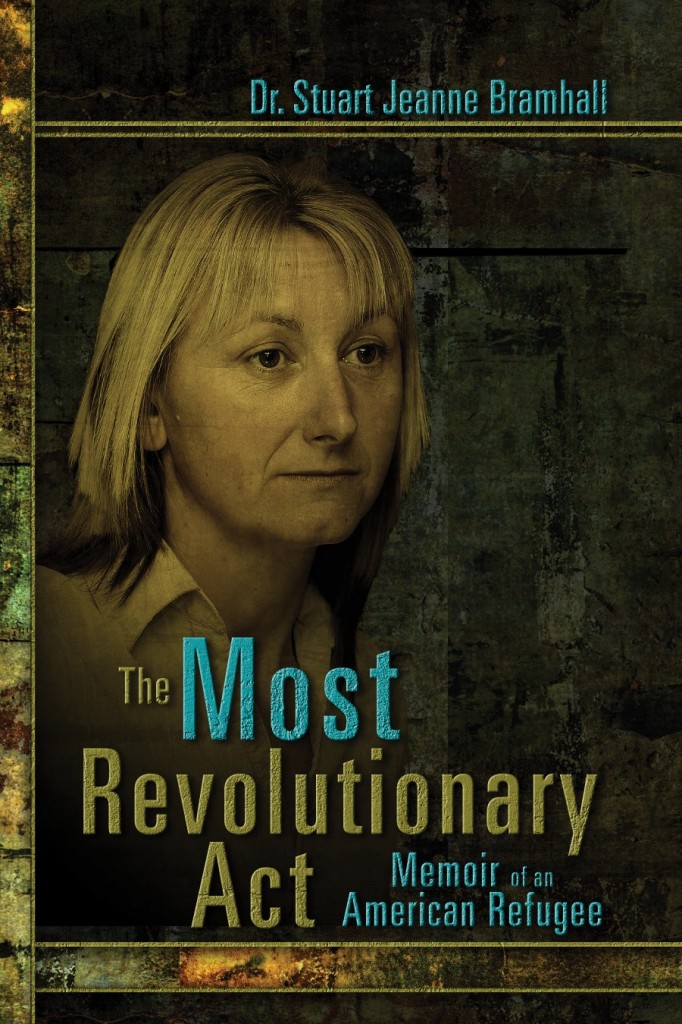
bramhallmemoircover-682x1024.jpg

(The 1st of 8 posts describing my 2002 decision to emigrate from the US to New Zealand)

When I finally left the US in October 2002, I had been thinking of emigrating for many years. In June 1973, I shipped all my belongings to England, intending to start a new life there. Many Americans of my generation left the US in the early seventies, for Canada, Europe and more remote parts of the world. Most were draft-age men afraid of being sent to Vietnam. A few were women involved in clandestine abortion clinics that sprang up before the 1973 Roe v Wade Supreme Court decision that legalized abortion. Many were artists and intellectuals like me, disillusioned by lies about Vietnam in the Pentagon Papers,  Watergate, CIA domestic spying and Nixon’s use of US intelligence for his own political purposes.

In 1973, I myself was totally apolitical. My own decision to leave the US had very little to do with Vietnam or Watergate. My disillusionment stemmed more from watching rampant consumerism overtake the humanist values I had grown up with – the strong family ties, deep friendships and involvement in neighborhood and community life that were so important to my parents’ and grandparents’ generation.

During my eighteen month stay in England, it was deeply gratifying to meet people in London and Birmingham who had little interest in owning “stuff” they saw advertised on TV. People who still placed much higher value on extended family, close friendships and the sense of belonging they derived from their local pub, their church or union, or neighborhood sports clubs, hobby groups, and community halls. All these civic and community institutions had disappeared in the US. I missed them.

A downturn in the British economy in late 1974 forced me to return to the US to complete my psychiatric training.  I never abandoned my dream of returning overseas and religiously scanned the back pages of medical journals for foreign psychiatric vacancies. Meanwhile I  joined grassroots community organizations seeking to improve political and social conditions in the US. While and

For many years I believed Nixon was an aberration. This made me naively optimistic about the ability of community organizing to thwart the corrupting influence of powerful corporations over federal, state and local government. It never occurred to me the institutions of power themselves were deeply corrupt and had been for many years.

The Murder that Turned My Life Upside Down

As I write in The Most Revolutionary Act: Memoir of an American Refugee, the 1989 intelligence-linked murder of a patient was a rude awakening. It demonstrated, in the most horrific way possible that ultimate power lay outside America’s democratic institutions. It forced me to accept that political control lay in the hands of a wealthy elite who employed an invisible intelligence-security network to terrorize – and sometimes kill – whistleblowers and activists who threatened their interests. This painful discovery lent new urgency to my political work. It simultaneously caused an increasing sense of alienation and isolation from who hadn’t shared these experiences.

There was also the slight problem that I was experiencing the same phone harassment, stalking, break-ins and hit-and-run attempts as my patient.

Most of my liberal and progressive friends were far more knowledgeable than I was about the power multinationals corporations held over elections, lawmakers and the mainstream media. Yet they reacted very differently than I did to this knowledge. My response was to devote every leisure moment to building a grassroots movement to end corporate rule. Their response, in contrast, was to become cynical and withdraw from political activity to focus on their personal lives.

The Patriot Act: Repealing the Bill of Rights

In September 2001, I expected that the Patriot Act, which legalized domestic spying on American citizens, as well as revoking habeas corpus and other important constitutional liberties, would be the turning point that would send progressives into the streets, as the 1999 anti-WTO protests had, to halt rampant corporate fascism.

It never happened. In Seattle, a small 9-11 coalition formed in October 2001 to protest Bush’s invasion of Afghanistan. Over the following year, as Bush prepared to invade Iraq, former weapons inspector Scott Ritter and others spoke to sell-out crowds about the lie the Bush administration was hawking about Saddam Hussein’s non-existent weapons of mass destruction.

Then in February 2002, evidence began to emerge that officials close to the Bush administration had played some role in engineering the 9-11 attacks. By October 2002, like most American intellectuals with access to the international and/or alternative press, were well aware that neither Afghanistan nor Iraq had played any role whatsoever in the 9-11 attacks. There was no longer any question that Bush a war criminal under international law for launching two unprovoked wars of aggression.

So long as I, as a US taxpayer, continued to work and pay taxes in the US, I shared some responsibility for these crimes. It was this knowledge that ultimately forced my hand. I had a psychiatrist friend who had spent a year working in New Zealand. He told me who to contact in the Ministry of Health about psychiatric vacancies. By September 1, 2002, I had signed a job contract to work for the New Zealand National Health Service in Christchurch. I had six weeks to close my Seattle practice, sell my house and ship everything I owned to New Zealand.

To be continued.

***

bramhallmemoircover-682x1024.jpg
Winner 2011 Allbooks Review Editor’s Choice Award
Fifteen years of intense government harassment leads a psychiatrist, single mother and political activist to close her 25-year Seattle practice to begin a new life in New Zealand. What starts as phone harassment, stalking and illegal break-ins quickly progresses to six attempts on her life and an affair with an undercover agent who railroads her into a psychiatric hospital.
  • Available as ebook (all formats) for $0.99 from: Smashwords
  • New and used print copies from $13 from Amazon
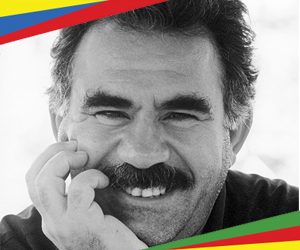
Letter from a Modern Day Mandela

ocalan

photo credit: http://www.freeocalan.org/

Open Letter to the Guardian

Guest post by Abdullah Ocalan

On Thursday 5 December 2013, the Guardian published an editorial article on the occasion of Nelson Mandela’s death. The article included a significant(!) comparison between Mandela and some other names like Jawaharlal Nehru, Aung Sang Suu Kyi, and me.  As long as they approach the issue with a hegemon’s mindset, the potentates will certainly continue to make such comparisons among those figures wining the affection of their peoples. However, any comparison has its own inner problems.

The time of the struggles, varying geographic and political conditions and even the characteristic differences between the figures will render such comparisons problematic. First of all, for me, being remembered together with a leader for whom all the world shed tears shows the extent to which our struggle line has taken universal dimensions. It also demonstrates the fact that our case couldn’t be explained as a struggle only against an unjust treatment.

Writing on the capabilities of a leader with exemplary methods of struggle and negotiation just after his death needs some more pondering on the history and politics of risk-takers, in order to get a better understanding of the conditions of those who haven’t been afraid of struggling in the front line throughout history.

There are clear-cut differences between the front-line strugglers and deskbound analysts. The greatest difference is to witness the death of your comrades and your people, live the experience moment to moment, and do right and wrong.  Restricting the esteem and dignity of such an important leader with ‘the prison’ is a beleaguered approach which holds in contempt the self-realized political struggle of a people with over 40 million population voluntarily approving this leader as the representation of their own will.  How objective and just would it be to turn a blind eye on the national identity the Kurdish people have achieved after a 40-year-long freedom struggle, and on our peace efforts for a democratic solution to the Kurdish question.

Comparing me with Nelson Mandela in your article, you had referred to me as “feared and worshiped”. Here, not only can I see more easily the writer’s desire to be the state chronicle of a history which tramples on the world’s oppressed, but also I discern the codes of the purposive enmity harbored against both of the compared figures, whose only resource for facing the enslaving, massacre and denial policies is their own self-belief.

It is too evident to need proof that a person who has spent the last 14 years of his life in a prison-island alone and under solitary confinement can be a “source of fear” only for those who have put him into chains. The chains speak for themselves ….

In reply to those who, instead of analyzing the fear spread by the hegemons, are busy giving advice and teaching lessons to those struggling against these hegemons, I should say, in all modesty, that Dear Madiba and me have more parallels than contrasts.

Everybody knows that the ordeal succeeded in facing the Apartheid regime was an accomplishment of not only the South African people, but at the same time of the leader in whom they had unsuspectedly confided their fate.  No matter their numbers, the many ludicrous comments made on Mandela’s credibility come from the quarters which  adopt a remote and trivial approach to the ‘struggle of the oppressed’ rather than making a close and reasonable analysis.

The self-organization processes of the communities subjected to suppression and discrimination would differ from the common practices, especially when they begin to make a true analysis of the notion of capitalist modernity. Traditionally, the organizational options of ‘the book’ are already known. But time proceeds forward and circumstances change, in company with historical determinism. Changing conditions will bring about changes in the behavior and attitude of individuals and organizations, either captive or free. When it comes to the PKK, instead of bringing about pragmatic progress, these changes have led to the political and ethical progress for a movement which has transformed itself on the basis of the struggle for democratic modernity and the developing direct democracy examples in the world.

The 12 September 1980 fascist coup followed by many organized coups against our community as well as the international conspiracy act against me and our movement share one thing in common with other interferences in other struggles of the oppressed; and that is the silence of the international community in the face of these interventions.  Despite the progress in the international democratic standards in the 21st century, due to the state propaganda characteristic of the international conspiracy, the dehumanization of the struggling leaders held captive still continues, based on poor intellectual standards.

How odd it is that a credible newspaper in Britain has not noticed the recent democratization progresses that we have made in Mesopotamia. As far as the approach is concerned, I hope it to be only ‘odd’, not more. Looking at the general approach of the article, what I see is not only the “oddness”; rather, every line is a dead giveaway to a hierarchic and ‘from above’ viewpoint.

Here, those opposing peace are accusing us of starting negotiations, are dehumanizing me in the eyes of the new generations and defaming our movement which has adopted peace and settlement as its main principle.  They are running and organized activity to blacken the reputation of our efforts for democratic modernity.  How odd it is that racist notions and old propaganda rhetoric which have even lost their reputation in Turkey are still being repeatedly covered in the international press.

The only topic to be discussed after Mandel’s demise should be Apartheid, a regime which history would remember only with shame. Nobody would keep a memoir of Apartheid and its leaders; nobody would shed tears for them; whereas Mandela has become a shining star for the peoples of Africa.  Our historical mission is to ensure the ever brilliance of this star for the peoples of the Middle East. The friendship developed on the basis of principled and political integrity between the peoples’ movements and particularly our movement, relies on the changing dynamics and the horizontal nature of their policies.  To believe that these laws of goodwill and friendship have been developed on the basis of fear can only be explained by having no knowledge about the metamorphosis eras the Kurdish political movement has undergone and failing to observe its democratic inner reflections of the peaceful and negotiating perspective of this movement.

Likewise, negotiation and struggle are both important processes in determining the future of peoples’ movements and those leading these processes are figures winning the confidence of the peoples, not ‘feared’ ones. If not so, it wouldn’t be possible for these movements to be represented both in the parliamentary system and the local politics , as it wouldn’t have been possible to succeed in the years-long armed struggle.

My recommendation to the editorial board of the Guardian is to do more research and analysis on the role of the women in our political movement and the resulting transformative effects. Then, they would certainly encounter such an infinite experience so as to take off their colonialist hat, though ashamedly.

Abdullah Ocalan
The Prison Island of Imrali

Abdullah Öcalan Apo, is one of the founding members (1978) of the Kurdistan Workers’ Party (PKK) in Turkey. Like the early ANC, the PKK is labeled as a “terrorist” organization by the US and its allies. Link to “Free Ocalan” website: http://www.freeocalan.org/

The CIA Role in the Arab Spring

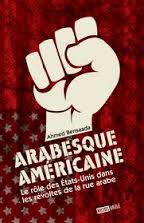
arabesque americaine

(more from my research for A Rebel Comes of Age)

L’Arabesque Americaine (French edition – not available in English yet)

by Ahmed Bensaada (2011 Michel Brule)

Book Review

The current military junta in Egypt supports growing suspicions that the Arab Spring revolutions of 2011 were simply “color revolutions” – like the so-called “color revolutions” George Soros and CIA-linked foundations orchestrated in eastern Europe a decade ago.

Despite a few autocratic dictators being deposed, in each country the rich keep getting richer, the poor keep getting poorer, and US corporate and foreign policy interests continue to take precedence over labor rights and public welfare.

In Arabesque Americaine , Ahmed Bensada assembles a wealth of data  suggesting that the “Arab Spring” was first and foremost a destabilization/regime change operation, funded and orchestrated by the CIA, State Department and historic CIA-funded foundations. His book is unique in that it provides a carefully researched and referenced account of each of the “democracy exporting” foundations, along with the totals it gave each country and group in 2009.

Bensaada, a French Canadian who was born and received his early education in Algeria, devotes special attention to the Egyptian revolution – and the role played by Google’s star employee Gael Ghonem.

A brief outline of the topics covered:

Chapter 1 — the secret American funding and orchestration of the so-called “color revolutions” in Eastern Europe , with particular focus on Serbia (2000), Georgia (2003), Ukraine (2004) and Kyrghizistan (2005). In each case, pro-Soviet governments were overthrown by mobilizing disaffected, pro-Western young people — financed by the CIA, State Department, and Pentagon linked “democracy manipulating” foundations. The latter include National Endowment for Democracy (NED), National Democratic Institute for International Affairs (NDI), the International Republic Institute (IRI),Freedom House (FH), the Albert Einstein Institution, the Center for Non Violent Action and Strategies (CANVAS), the United States Agency for International Development (USAID) — and George Soros’ Open Society Institute (OSI). Several “color revolution” veterans were used to help organize Arab Spring protests. The uncanny similarity in protest symbolism (see video below) was no coincidence.

Chapter 2 — detailed discussion of the above think tanks and foundations, which includes a description of the their government funding, as well as the subversive activities (espionage, election rigging, an popular destablization activities) they have promoted in countries like Venezuela, Bolivia, Cuba and Iran that oppose America’s pro-corporate agenda.

Chapter 3 — the promotion, by the State Department and these think tanks and foundations, of new technologies in Middle East destabilization campaigns. The Tor Project, developed by Google, the US Naval Research Lab and State Department-linked Human Rights Watch, is an example. Tor supposedly permits anonymous navigation of the Internet in countries (with the exception of the US) with heavy Internet censorship. Bensaada also explores the role of Movements.org and the Alliance of Youth Movements in promoting social media to international youth activists. Movements.org is run by Jared Cohen, the director of Google Ideas and a former adviser to both Condolizza Rice and Secretary of State Hillary Clinton, and Jason Libman, another Google employee formerly employed by both the State Department and the Pentagon. AYM executive director David Nassar was formerly employed by NDI, USAID and IRI. In 2008 the State Department brought future Arab Spring activists to the US to teach them to use Facebook and Twitter, with the assistance of Sherif Mansour from Freedom House, Larry Diamond from NED, and national security adviser Shaarik Zafar.

Chapter 4 — focuses on Egypt, with particular attention to the role played by Google employee Gael Ghonem. Ghonem, who was given paid leave from his job to participate in the Tahrir Square uprising, created the Facebook page “We are all Mohamed Bouazizi” after the Tunisian fruit seller set himself on fire. In 2009, Ghonem also set up a Facebook page for Egyptian exile Mohammed El-Baradei. This was in advance of El-Baradei’s February 2010 Cairo visit to explore. The visit, according to Wikileaks cables, was organized through the US embassy. This was a full year before the Tahrir Square protests.

Chapter 5 — the pro-democracy organizations in other Arab countries (Algeria, Bahrain, Egypt, Jordan, Kuwait, Lebanon, Libya, Morocco, Palestine, Tunisia, Yemen, and Syria) financed by the State Department and specific “democracy manipulating” foundations.

Chapter 6 — summation and analysis that explores the ethical dilemma faced by many Egyptian activists on learning the non-violent manuals they were using were the creation of CIA and State Department Funded think tanks and Foundations.

Below a video illustration of the “color revolution” symbols that were incorporated into the Arab Spring revolutions.

***

Rebel cover

In A Rebel Comes of Age, seventeen-year-old Angela Jones and four other homeless teenagers occupy a vacant commercial building owned by Bank of America. The adventure turns deadly serious when the bank obtains a court order evicting them. Ange faces the most serious crisis of her life when the other residents decide to use firearms against the police SWAT team.

$3.99 ebook available (in all formats) from Smashwords:

https://www.smashwords.com/books/view/361351

Covert US War Hands Syria to Al Qaeda


isis

US Suspends Non-lethal Aid to Syrian Rebels

According to the BBC, both the US and Britain have suspended “non-lethal” aid to northern Syria. The decision follows the seizure of Western-backed Free Syrian Army bases by Islamist rebels.

Last week, fighters from the Islamic Front ousted FSA-aligned fighters from the Bab al-Hawa border crossing with Turkey. The Islamic Front is a new alliance of rebel fighters dedicated to creating an Islamic state in Syria. The front does not include al-Qaeda affiliates like the Islamic State in Iraq and the Levant (ISIS) and the al-Nusra Front, but its charter welcomes “muhajirin”, or foreign fighters and expresses willingness to co-operate with them.

During the raid, the Islamic Front took over FSA warehouses believed to contain vehicles, communications equipment, and night-vision goggles donated by the US and Britain.

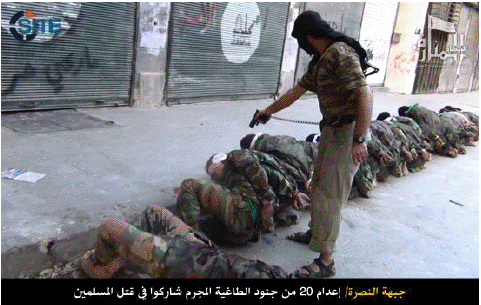
In the past few months, the foreign fighters in ISIS have also been making news  by shooting and beheading FSA fighters and civilians linked to the Syrian opposition.

The US and European countries have been reluctant to supply weapons and ammunition directly to Syrian rebel groups, out of concern they might end up in the possession of foreign jihadists affiliated to al-Qaeda.

However, according to numerous sources, the CIA is still facilitating secret arms shipments via Turkey, Qatar and Saudi Arabia.

The suspension of “non-lethal” support for rebels in northern Syria doesn’t include humanitarian aid distributed through the UN and non-governmental organizations. Moreover US deliveries of non-lethal aid to southern Syria (via Jordan) will continue.

Your tax dollars at work – creating a new Islamic state in the Middle East.

photo credit: Ars Skeptica via photopin cc

Originally published in Veterans Today

Al Qaeda Surges Ahead in Syria

  al nusra

 Rebels Decide to Fight Each Other

 While the major powers behind the proxy civil war in Syria go through the motions of working out a diplomatic solution, rebel forces have begun fighting each other, rather than the Assad regime. The al Qaeda-linked Islamist militants from Iraq and Libya have been fighting the Free Syrian Army in northern and eastern Syria. According to RT, the Islamists are winning.

The split became headline news last week when the Free Syrian Army (FSA) lost Azaz, a city on the Turkish border, to the Islamic State of Iraq and Syria (ISIS). The latter is sometimes referred to as Al-Nusra, the name for the Syrian branch of ISIS, or the Islamic State of Levant (ISIL). Levant is a historic name applied to the Eastern Mediterranean region comprising Syria, Lebanon, Israel, Jordan and Amman before it was divided up by the Europeans.

The Daily Mail reports that officers from the FSA are defecting to join ISIS because they are better resourced and “more effective.” Until recently, the ISIS mainly received funding and arms from Qatar and Saudi Arabia. However the Washington Post reveals they also receive “private donations” from “sympathetic Muslims.” According to the Post, the sums donated far exceed what the US and NATO supply the FSA.

With more than a dozen competing factions fighting the Assad regime, I find it an enormous challenge to keep all the names straight. Thanks to the Christian Science Monitor, the Economist and the Long War Journal, I have cobbled together the following scorecard to help make sense of the latest reports:

  • Supreme Military Command – armed wing of the Syrian National Coalition (SNC) and supported by the US and NATO. The SNC grew out of an exile group originally based in Turkey, though its headquarters moved to Qatar in 2012 when the US and NATO intervened to try to reduce infighting among member groups. The Free Syrian Army (a group of defected Syrian military officers) fights under the SMC umbrella.
  • Syrian Islamic Front – “moderate” Syrian Islamic fighters consisting of the Muslim Brotherhood and other Salafist (Sunni) groups. Cooperates with SMC (at least most of the time).
  • Syrian Liberation Front – coalition of Islamic fighting groups, with Saqour al Sham the largest. Fights independently of SMC but sometimes cooperates with them.
  • Democratic Union Party – Syrian offshoot of Turkey’s Kurdistan Workers Party (PKK). Its mainly pro-Assad militias control Kurdish areas in north-east Syria and support Kurdish autonomy. In July, a Kurdish guerrilla group with links to the al-Assad regime and the Turkish Kurdistan Workers’ Party ( PKK)  forcefully expelled Al-Nusra from the Syrian border town of Ras Al-Ayn.
  • Anti-Assad free speech Alawites (a branch of Shiite Islam) led by Bassam al Youssef. A a political group with no organized military wing.
  • Al Qaeda linked groups:
    1. Al-Nusra Front or Jabhat al-Nusra (the Syrian branch of the al Qaeda linked ISIS (ISIL). Controls Aleppo and has established Sharia law there.
    2. Ahrar al  Sham – a Syrian Islamic group sympathetic to al Qaeda groups, which the Economist has mistakenly labled as sympathetic to the FMC.
    3. Ahfad al Rasoud Brigade.
    4. The Islamic Kurdish Front

Reprinted from Veterans Today