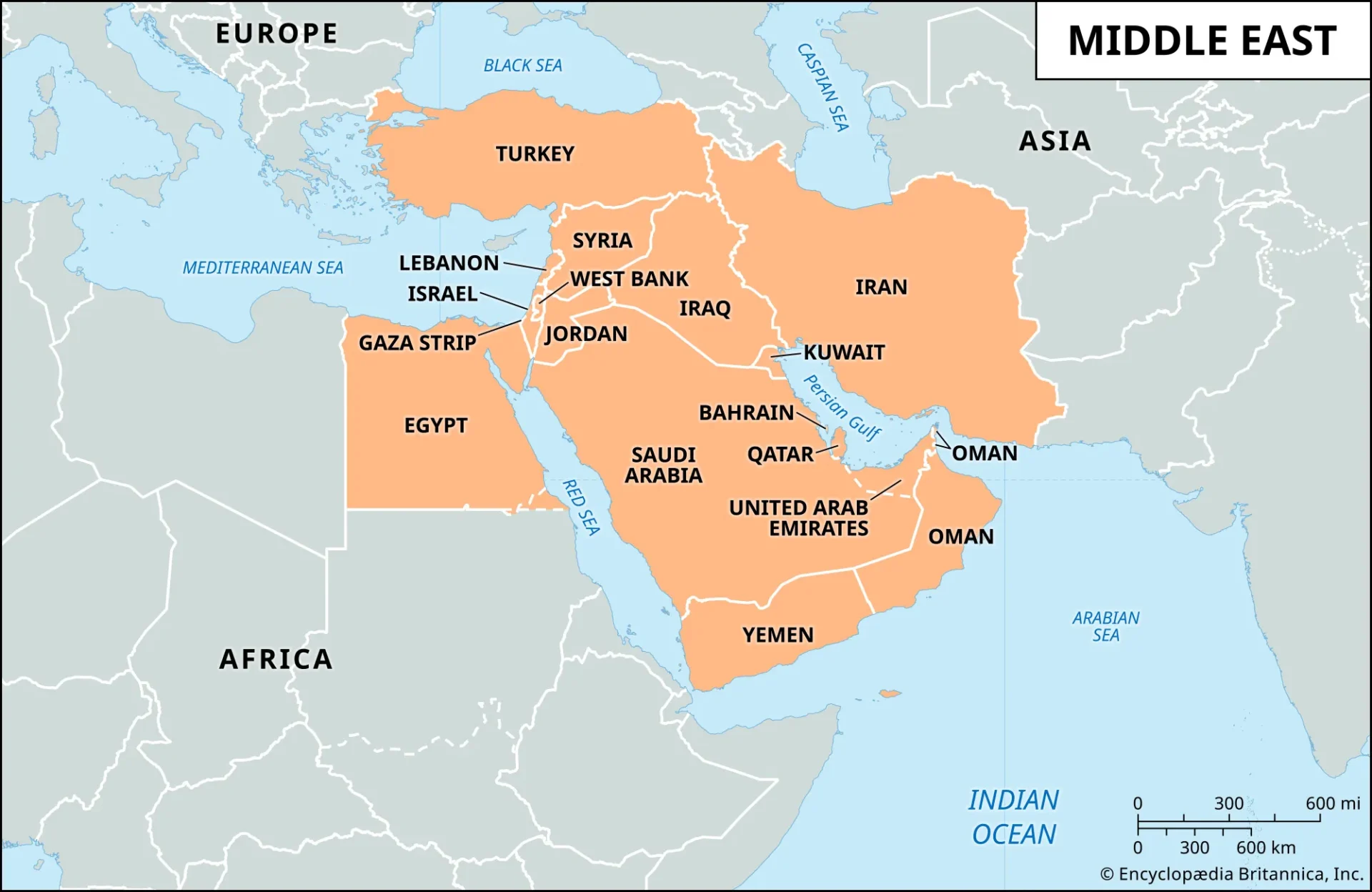
Iran Threatens to Seize UAE and Bahrain Coastlines if U.S. Invades

Peta

(DEFENCE SECURITY ASIA) — Iran’s warning that its armed forces could seize the coastlines of the United Arab Emirates and Bahrain if the United States launches a ground invasion signals a potential shift from missile-and-drone confrontation toward territorial escalation that would directly threaten the forward operating network sustaining U.S. military power in the Gulf.

The statement, delivered on Iranian state television by national security analyst Morteza Simiari, frames coastal seizure operations as a prepared contingency rather than rhetorical escalation, implying that Tehran is positioning its force posture to open additional fronts designed to complicate American logistics and alliance cohesion.

By linking the threat explicitly to any U.S. “mistake” in the region, the warning creates a strategic condition in which Gulf host nations become immediate operational targets, transforming the regional conflict from a bilateral confrontation into a multi-theatre scenario centred on access, basing, and maritime control.

The emphasis on coastal seizure introduces the possibility that Iran intends to challenge the geographical foundation of U.S. military presence in the Gulf, where air bases, naval facilities, and supply hubs along allied shorelines form the backbone of sustained American operations.

Such signalling also suggests Tehran is preparing to shift the conflict from long-range strike exchanges toward proximity warfare near key maritime chokepoints, increasing the risk that commercial shipping lanes and energy export routes could become contested operational zones.

By highlighting the UAE and Bahrain specifically, the warning targets two states hosting critical infrastructure supporting U.S. deployments, reinforcing the message that any ground invasion of Iran would trigger immediate pressure on forward bases rather than remaining confined to Iranian territory.

The statement further implies that Iran views territorial escalation as a tool to fracture coalition cohesion by forcing Gulf partners to reconsider the security costs of allowing their territory to be used for American military operations.

In strategic terms, the threat represents an attempt to expand deterrence beyond Iran’s borders by signalling that the defence of U.S. regional posture could become more complex, more expensive, and more politically risky if the conflict transitions into a ground campaign.

Warning Signals Possible Amphibious Contingency Planning

Morteza Simiari stated during the IRIB broadcast that Iranian forces are prepared to “take action” if the United States escalates further, asserting that entering the coasts of the UAE and Bahrain is already part of operational planning and could fundamentally alter the regional landscape.

He said Iran has conducted exercises for coastal operations, indicating that the threat refers to rehearsed military scenarios rather than hypothetical political messaging, which suggests that amphibious or littoral warfare concepts are being incorporated into Iran’s deterrence signalling.

Although Simiari is not an official government spokesman, his repeated appearances on state television and perceived links to security institutions mean such statements are widely interpreted as controlled messaging intended to communicate escalation thresholds without issuing formal declarations.

The use of state media as the platform for the warning allows Tehran to transmit strategic signals while preserving deniability, a pattern often employed when Iranian decision-makers want to influence adversary calculations without committing to binding policy positions.

Observers interpret the remarks as part of a broader communication strategy designed to warn Gulf states that hosting American forces could make their territory a primary battlefield if the conflict transitions from strikes to ground operations.

The emphasis on coastal seizure rather than missile retaliation indicates a shift in the narrative toward territorial leverage, implying that Iran wants adversaries to consider the vulnerability of fixed bases and infrastructure along the Arabian Gulf littoral.

Such messaging also reinforces the idea that the conflict would not remain confined to Iranian territory in the event of a U.S. invasion, but would instead spread to neighbouring states that provide logistical depth to American operations.

The reference to military exercises suggests Tehran intends to demonstrate preparedness for operations that would disrupt shipping routes, base access, and energy infrastructure concentrated along the Gulf coastline.

This framing strengthens Iran’s deterrence posture by implying that escalation could rapidly expand beyond air and missile exchanges into a wider regional confrontation affecting multiple sovereign territories.

[…]
Via https://defencesecurityasia.com/en/iran-threatens-seize-uae-bahrain-coastlines-us-invasion-gulf-war-us-bases-risk/

Smoke and Mirrors: The Iran War as Deflection from Economic Collapse

Trump: 'We don't need help' reopening Straits of Hormuz

Dmitry Orlov

Today the US-Israeli war on Iran turns one month old. The Strait of Hormuz is now open for Iran’s friends only (China is at the top of the list; Thailand just joined the club). A thousand oil tankers stay anchored within the Persian Gulf with scant hope of sailing out of it any time soon. The tankers that had made it out though the Strait before the attacks began have by now reached their destinations. Call that “old oil” and it has already been repriced up. But now will come “new oil” and its prices will be limited only by the ability to pay because the volumes will be restricted to just 80% of what oil importing nations require.

As I explained in two of my last two articles (1, 2) the US attack on Iran had scant chances of success. Why, then, did it happen? Explanations range from plain old stupidity — “Look who’s in charge!” — to “It doesn’t matter.” Why wouldn’t it matter? Why would a military quagmire that shuts down much of the world’s economy and triggers force majeure breaches of contract throughout much of it — not matter? One answer that immediately springs to mind is that “This sucker is going down” anyway. The attack on Iran would then be simply used as a way to deflect attention from this fact. The plan, then, would be as follows:

1. Attack Iran
2. Watch global economy seize up as a direct result
3. Blame Iran to pacify the angry mobs back home

But is this sucker going down? Let’s briefly review the fiscal position of the United States. According to the numbers most recently published by the US Treasury, it is as follows:

• Assets: $6 trillion
• Liabilities: $48 trillion
• Additional liabilities (virtually all social spending): $88 trillion
• Household debt: $19 trillion (a record)

That is, for every dollar the US actually has there are almost 26 dollars that the US must have but doesn’t. Another way to look at it is that the US has a debt to GDP ratio of over 500% while anything over 100% is generally considered economically fatal. Please keep comments about “the printing press” to yourself; when the only oil that makes it out of the Persian Gulf has to be paid for in yuan and when even the Gulf Arabs are selling off US debt as fast as they can, printing even more dollars would only accelerate the fiscal death spiral.

The Washingtonians must understand full well that no one will bail out the American economy. This may have been possible before because other nations saw potential in it. Indeed, the United States was the engine of innovation and global economic growth for several decades. But today the American economy is no longer in the lead and the rest of the world would rather turn off its life support and let it die.

What most mainstream economists would recommend in this situation is austerity: cut social spending before it’s too late; cancel Social Security, Medicare, disability, SNAP, housing subsidies, federal pensions and much else. Of course, such measures would not be sufficient unless the US defense budget were also zeroed out. But such measures would be unpopular and no politician would want to be held responsible for taking them. This is where tipping the entire world into a horrific energy crisis would be advantageous: it would give the politicians someone other than themselves to blame when the money machine that keeps a good half of the US population housed and fed suddenly stops working.

That seems like a good explanation. But if you prefer “It’s the stupidity, stupid!” — that works too. Of course, starting a war that has an excellent chance of ending in defeat is pretty stupid too, so it’s stupidity any way you look at it. And, either way, “This sucker is going down.”

[…]

Via https://boosty.to/cluborlov/posts/f9ea2a7f-6529-4f32-8bc1-da7016ad4b7c

Hezbollah’s Surprise Weapons Redefine Ground Battle with Israel


Robert Inlakesh

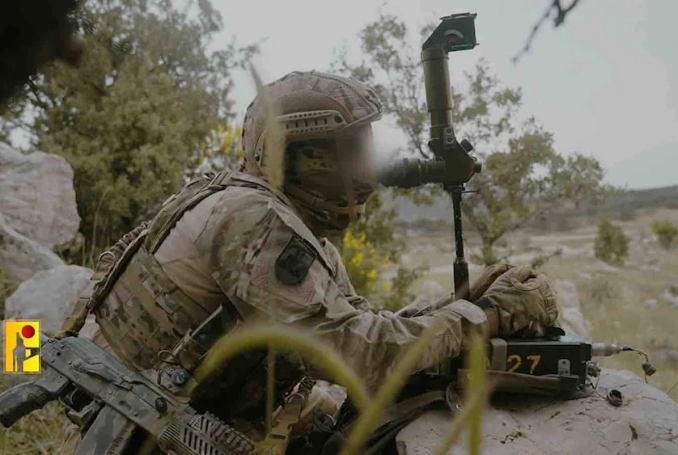
An Israeli “tank massacre”, reminiscent of the Lebanon war of 2006, has been taking place in southern Lebanon, as Hezbollah surprises the invading army with the use of a range of anti-tank weapons and drones.

On March 25, Hezbollah unleashed a fury on Israel’s Merkava tanks, announcing that they had struck a total of 21, in addition to striking 3 D-9 Bulldozers and 2 militarized Humvees. The following day, the Lebanese group released a series of videos depicting some of their operations.

In order to carry out so many strikes against Israeli armored vehicles, Hezbollah has traditionally used a variety of guided anti-tank guided munitions (ATGM). Prominently made use of have been weapons ranging from varying kinds of the Russian-made Kornet anti-tank systems, to the Almas (diamond) system that is an Iranian reverse-engineered version of the Israeli-made Spike AGTM, a top attack missile that is particularly effective.

During the Lebanon-Israel war of 2024, Hezbollah announced that it had destroyed a total of 59 Israeli tanks between the end of September and November 27. This time around, Hezbollah has already claimed to have struck around 70. It is unclear how many of these hits damaged or destroyed the tanks, but it suffices to say that this is a significant development.

Between October of 2023 and October of 2024, the Qassam Brigades, the armed wing of Hamas, claimed to have carried out 480 operations targeting Israeli tanks. A later report by Israeli news outlet Maariv cited data arguing that at least 500 military vehicles of varying kinds had sustained damage in Gaza. How many were totally destroyed is unknown, due to Israeli military censorship.

However, even a damaged tank is a major issue as they take a long time to repair, and the process is often costly. The reason why the figures from Gaza matter is that, in the case of the Palestinian resistance groups, they primarily used weapons like the Yassin-105 tandem warhead RPG, and then later, they were forced to use less sophisticated kinds of RPGs. Hezbollah, by comparison, has a much more sophisticated arsenal of anti-tank weapons.

A Game Changer?

During this war, which Hezbollah entered on March 2, citing Israel’s 15,400 ceasefire violations against the country and refusal to withdraw from occupied territory, a new weapon appears to be shaping the group’s ground confrontation with the Israeli invading army. That is the FPV (first-person-view) drone, equipped with heavy explosive charges.

The video published on March 26 by the Lebanese group’s military media featured one of these FPV drones directly striking a weak spot on an Israeli Merkava tank. Since March 25, when these weapons started to be used to combat invading Israeli military vehicles, they have been deployed routinely to target their tanks.

FPV drones using a fiber-optic capability are notably immune to electromagnetic jamming, making them extremely difficult to bring down and have been used extensively in the Ukraine-Russia war. Although no statistic is presented to back up this claim, the Wall Street Journal recently reported that FPV drones account for most battlefield casualties in Ukraine.

Regardless of the precise numbers of casualties inflicted in the Ukraine-Russia war by this drone, it is broadly accepted that it has been a game-changer, with it being the weapon of choice against various kinds of tanks and armored vehicles.

Another bonus to the FPV drone, beyond its use to target weak points on military vehicles, is the fact that the recordings can also be recovered as proof of what it struck. In Baghdad, just over a week ago, the Islamic Resistance in Iraq used two FPV drones to target a US military base, with one drone filming the other striking its target.

When fighting a war against Israel, which is perhaps the most well-known military on earth for hiding its soldiers’ deaths, this can come in handy for Hezbollah, which could potentially use the footage to embarrass the Israeli military.

If Israel proceeds with its ground invasion of Lebanon, launching a full-scale invasion, it may at some point run out of tanks, or at the very least have to begin rationing its use of them.

[…]

Via https://www.palestinechronicle.com/hezbollahs-surprise-weapons-redefine-ground-battle-with-israel-analysis/

US-Israeli war on Iran drives up global fertilizer prices 40%

Al Mayadeen

The ongoing war on Iran is driving a sharp rise in global fertilizer prices, exposing how Western-led escalation is reverberating across critical sectors such as agriculture and food production, the German-based Deutsche Presse-Agentur (DPA) reported on Friday.

According to Philipp Spinne, managing director of the German Raiffeisen Association, mineral fertilizer prices have increased by 30% to 40% since the beginning of the year. He noted that current market conditions are approaching levels seen at the start of the war in Ukraine, indicating mounting pressure on global supply chains. “A situation similar to what happened in February 2022 is recurring,” Spinne said, pointing to the rapid climb in nitrogen fertilizer prices toward previous peaks.

Hormuz disruptions

The surge is closely tied to disruptions around the Strait of Hormuz, a strategic waterway through which a significant share of global fertilizer trade passes, including roughly one-third of globally traded urea and about 20% of ammonia. Tehran’s response to the US-Israeli aggression has prompted restrictions on maritime flows, tightening supply and pushing energy prices higher, feeding directly into production costs.

Despite this, the immediate impact on European consumers remains limited. Many farmers had already secured their fertilizer supplies before the outbreak of the war. According to German industry estimates, around 80% of the required quantities for the entire spring season are already held in cooperative storage, while roughly 50% are already in the hands of farmers. However, industry representatives warn that a prolonged war will inevitably translate into higher production costs, which are expected to pass through to food prices over time.

A spokesperson for the Bavarian Farmers’ Association noted that while availability is currently manageable, farms that did not secure supplies early are now facing significant cost burdens. At the same time, relatively weak grain prices are compounding the pressure, squeezing margins and weighing on farm liquidity.

Rising fertilizer costs

Energy costs remain the central driver. Gas accounts for between 80% and 90% of the cost of producing ammonia and nitrogen fertilizers, meaning that fluctuations in energy markets, intensified by the war, directly affect agricultural inputs. Industry representatives added that the sharp rise in gas prices in Western Europe during the Ukraine war had already weakened the region’s chemical sector, a trend now deepening.

As prices rise, farmers may reduce fertilizer use, a shift that could lead to lower yields and tighter food supplies globally. The structural importance of fertilizers to global food systems reflects the scale of the risk: nearly half of the world’s population depends on crops grown using mineral fertilizers, while yields today are roughly double those of the early 20th century due to their use. Any sustained disruption, therefore, carries long-term implications for food security.

Although Europe produces a large share of its own fertilizers, covering roughly three-quarters of its nitrogen needs domestically and slightly more in the case of potash, it remains indirectly exposed through rising gas and LNG prices. While Europe has for years imported little fertilizer directly from conflict-affected regions, indirect pressures through energy markets continue to impact production costs.

Europe under pressure

At the policy level, European actors are increasingly turning to protectionist measures, including tariffs on Russian fertilizers, in an effort to shield domestic markets and reduce external dependency. Industry groups have also called for higher tariffs on Russian potash and for strengthening local production capacity. At the same time, Russia has introduced its own export restrictions to protect internal supply, further tightening global availability.

For now, German farmers remain partially insulated, but those forced to purchase at current prices are facing significantly higher costs, reinforcing concerns that the economic strain on agriculture will deepen if the war persists.

[…]

Via https://english.almayadeen.net/news/Economy/us-israeli-war-on-iran-drives-global-fertilizer-prices-up-40

US ‘worked directly’ with terrorists in Syria on Israel’s behalf

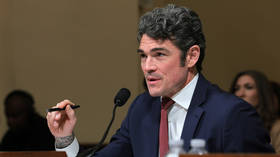
Director of the National Counterterrorism Center Joseph Kent testifies before the House Committee on Homeland Security in Washington, DC, on December 11, 2025.
RT

The US “worked directly with Al-Qaeda” and Islamic State (IS, formerly ISIS) to topple former President Bashar Assad and destroy Syria, US President Donald Trump’s former counterterrorism chief, Joe Kent, has said.

Kent, who resigned as head of the US National Counterterrorism Center in protest of the US-Israeli war against Iran, made the remarks in an interview with MintPress News on Friday.

The former senior official reiterated his take on the Iran conflict as the latest in a series of wars waged by the US on behalf of Israel, preceded by the Second Iraq War and the Syrian Civil War, in which Washington actively backed terrorist groups, he said.

“We came in and we said: We’re going to work with the Israelis, but we’re also going to have to work heavily with the Sunni population on the ground in Syria to create an uprising,” he added.

“And that’s where ISIS came from. We worked directly with Al-Qaeda; Hillary Clinton’s emails confirm this. The operations that we were doing to support the so-called Free Syrian Army, and there were some moderates there, but the most effective guys initially were Al-Qaeda and then eventually ISIS.”

IS ultimately “got out of control,” and the US “had to go back and put out once again the brush fire that we had started,” Kent said, referring to the US occupation of parts of Syria on the pretext of fighting terrorism.

The efforts to destroy Syria ultimately resulted in the fall of the Assad government in late 2024 and the Islamist takeover led by Hayat Tahrir al-Sham (HTS), a rebranded Al-Qaeda offshoot.

Kent lashed out at the former leader of the HTS and Syrian interim president, Ahmed al-Sharaa, pointing to his long record of terrorism – which did not prevent the Trump administration from recognizing his government as legitimate.

“We had him in jail; [he] joined ISIS, broke off from ISIS, hand-selected by Bin Laden’s right-hand man, Ayman Zawahiri, to lead Nusra, and then they rebranded,” Kent said, adding that the “number one way to fool Americans as a jihadist is just put on a suit.”

[…]

Via https://www.rt.com/news/636560-us-syria-isis-kent/

Yemen officially joins fight against US, Israel by firing missiles at occupied territories

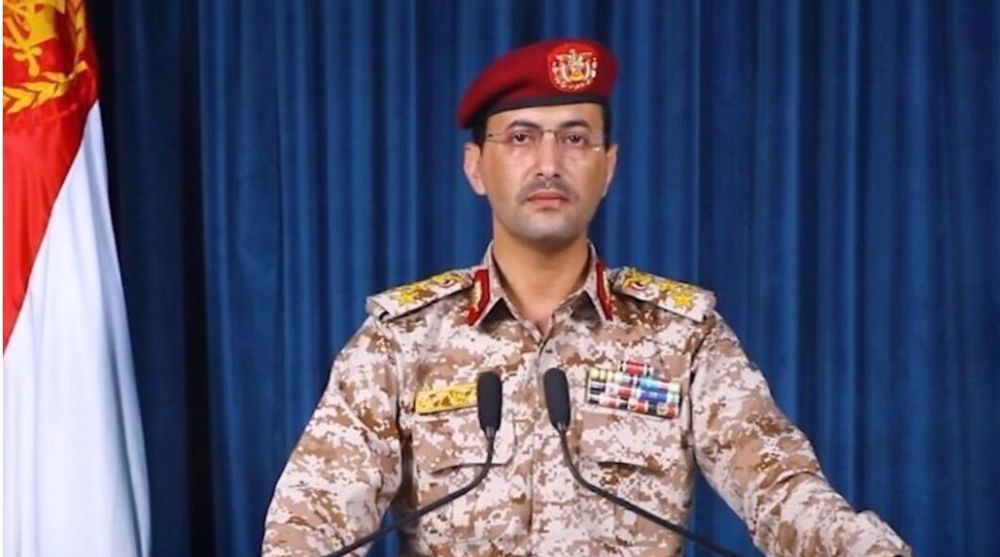
Yemeni armed forces spokesman Yahya Saree

Press TV

The Yemeni Armed Forces says it has officially joined the war against the US-Israeli front in support of the Islamic Republic of Iran and the Resistance Front in Lebanon, Iraq, and Palestine.

“In implementation of what was stated in the last statement of the Yemeni Armed Forces regarding direct military intervention in support of the Islamic Republic of Iran and the resistance fronts in Lebanon, Iraq, and Palestine, and in view of the continued military escalation, the targeting of infrastructure, and the perpetration of crimes and massacres against our brothers in Lebanon, Iran, Iraq, and Palestine,” the Yemeni Armed Forces spokesman Yahya Saree said in a statement on Saturday.

The Yemeni Armed Forces have carried out the first military operation using a barrage of ballistic missiles targeting sensitive Israeli military sites in southern occupied Palestine, it added.

This operation, it added, coincided with the heroic operations carried out by Iran and Hezbollah in Lebanon.

“By the grace of Allah Almighty, the operation successfully achieved its objectives,” it noted.

It further said that the operation will continue until the aggression against all fronts of the resistance ceases.

On Friday, Saree had warned that they are prepared for direct military intervention if American-Israeli aggression against Iran and the Axis of Resistance continues to escalate.

The statement came nearly a month into the launch of the United States’ and the Israeli regime’s latest bout of unprovoked aggression targeting the Islamic Republic, which has run in tandem with the escalation of their attacks on regional resistance groups.

According to Saree, in addition to the continuation of the escalation, other factors potentially prompting an intervention by the Yemeni servicemen would include other parties’ participation in the ongoing aggression, and the use of the Red Sea to carry out hostile operations against the Islamic Republic or any other Muslim country. “We will not allow that,” he asserted.

[…]

Via https://www.presstv.ir/Detail/2026/03/28/765953/Yemen-officially-joins-war-against-US-Israeli-aggression

Trump claims Iran’s new supreme leader is ‘probably gay’

Trump claims Iran’s new supreme leader is ‘probably gay’

Pres TV

US President Donald Trump has said that the CIA told him that Iran’s newly appointed supreme leader, Mojtaba Khamenei, may be gay, quipping to Fox News that it puts the cleric “off to a bad start.”

The claim comes amid failed US-Israeli regime change efforts in Iran, a country where homosexual conduct is illegal under Islamic Law.

Trump had previously made other disparaging comments regarding Mojtaba Khamenei, dismissing him as a “lightweight” and an “unacceptable” leader. However, critics have noted that such claims have only consolidated Iranian public opinion against Washington.

The president’s latest insult comes as the US and Israel continue their unprovoked attacks against Iran which began with the assassination of Mojtaba’s father, former Supreme Leader Ali Khamenei, late last month. US and Israeli officials have repeatedly called for regime change in Tehran, but the government has not collapsed.

According to a New York Times report on Sunday, the Trump administration had embraced an Israeli plan to foment a coup in Iran within days of the start of the war. Despite skepticism from US intelligence agencies, Trump and Israeli Prime Minister Benjamin Netanyahu reportedly bet on the “optimistic outlook” that decapitating Iran’s leadership would spark a popular uprising.

The plan failed, and Mojtaba Khamenei was quickly appointed as the new supreme leader. However, he has remained out of public sight since being wounded in the strike that killed his father.

Iranian Foreign Minister Abbas Araghchi has dismissed the notion that the killing of top officials could bring down the government. “The Islamic Republic of Iran has a strong political structure with established political, economic, and social institutions,” he told Al Jazeera last week. “The presence or absence of a single individual does not affect this structure.”

Former Mossad official Rami Igra also told RT that the US‑Israeli strategy of decapitating Iran’s leadership in hopes of sparking a revolution was a “miscalculation,” noting that a revolution requires a popular movement, local leadership and armed control – none of which exist in Iran.

[…]

Via https://www.rt.com/news/636434-trump-claims-iran-leader-gay/

Handala brings FBI ‘to its knees’ by breaching director’s personal email

A photo by FBI Director Kash Patel released by Handala

Press TV

Pro-Palestinian hacktivist group Handala says it has brought the so-called “impenetrable” systems of the FBI “to their knees” within hours.

In a statement released on Friday, the group announced that its team has gained full access to data belonging to FBI Director Kash Patel.

Patel’s “emails, conversations, documents, and even classified files are now available for public download,” the statement read.

Questioning “the security that the US government boasts about,” the group declared to the world that the FBI “is just a name, and behind this name, there is no real security.”

Handala stated that the cyber attack came after the FBI announced a $10 million reward for the capture of its members.

The group reiterated that Washington can never “silence the voice of resistance” through “bribes and threats.”

Handala dedicated this cyber operation to the 84 navy personnel martyred aboard Iran’s IRIS Dena on March 4.

The vessel was on an official mission in international waters to participate in a naval exercise in India when it was struck by a US Navy MK 48 torpedo from a submarine, approximately 40 nautical miles off the coast of Galle, Sri Lanka.

Reports indicate that around 20 sailors remain unaccounted for, while 32 were rescued by Sri Lankan authorities.

[…]

Vance chides Netanyahu in call over ‘overly optimistic’ Iran war predictions

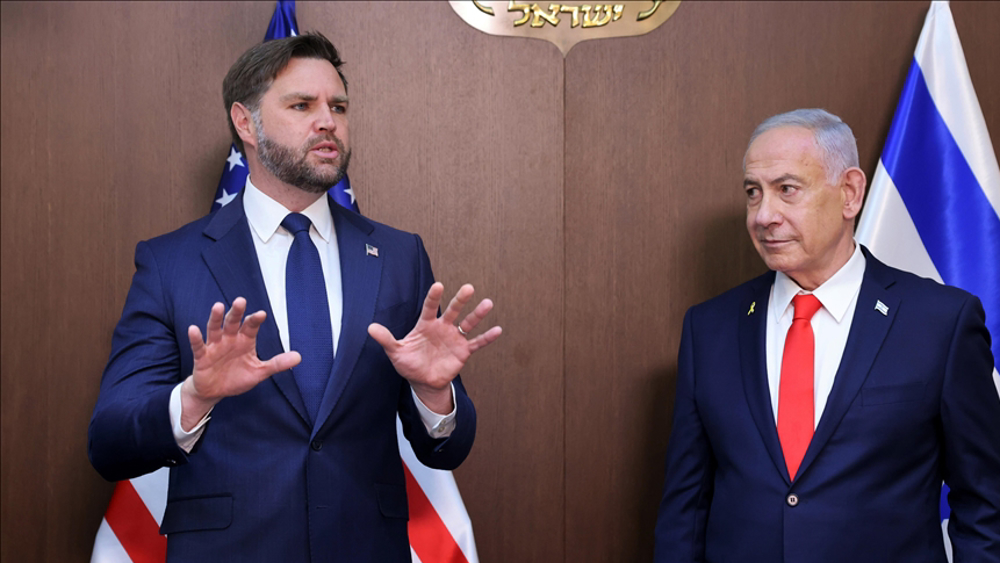
JD Vance (L) and Benjamin Netanyahu (R).


Press TV

A tense phone call this week between US vice president JD Vance and Israeli prime minister Benjamin Netanyahu has laid bare growing friction between Washington and Tel Aviv over an unplanned war that has proved disastrous for both allies.

According to a report published by Axios, a US-based news website closely aligned with the Israeli military apparatus, Vance used the call to chastise Netanyahu for his “overly optimistic” assessments regarding the likelihood of “regime change” in Iran.

“Before the war, Bibi (Netanyahu) really sold it to the president as being easy, as regime change being a lot likelier than it was,” a US official was quoted as saying by the media outlet. “And the VP (Vance) was clear-eyed about some of those statements.”

The tense exchange underscores the delicate dynamics within the beleaguered Trump administration as it navigates both its partnership with Israel and bids to end the war that has failed to achieve any of its objectives.

Vance, who had previously projected himself as an opponent of open-ended foreign wars, reportedly was not in favour of the latest military aggression against the Islamic Republic but had to support it once Donald Trump and Netanyahu made the decision.

Vance has reportedly held multiple calls with Netanyahu, met with Persian Gulf allies of Washington, and been involved in indirect communications with some mediators in an attempt to persuade Tehran to give up its retaliatory military operations.

In a cabinet meeting on Thursday, Trump introduced him as a potential negotiator, replacing Steve Witkoff and Jared Kushner, who were the strong proponents of war against Iran.

Axios, however, said that the vice president’s scepticism of Israel’s prewar strategy and his push for a negotiated end to the war have made him a target of Israeli war hawks.

Meanwhile, as Press TV reported on Wednesday, Iran has responded negatively to an American proposal conveyed through Pakistan and aimed at ending the ongoing war, insisting that it will only occur on Tehran’s own terms and timeline.

The official with knowledge of the details of the proposal said Iran will not allow Trump to dictate the timing of the war’s end and will end the war when it decides to do so and when its own conditions are met, emphasising Tehran’s resolve to continue its defense and inflict “heavy blows” on the enemy until its demands are fulfilled.

The official outlined five specific conditions under which Iran would agree to end the war. These include: A complete halt to “aggression and assassinations” by the enemy, the establishment of concrete mechanisms to ensure that the war is not reimposed on the Islamic Republic, guaranteed and clearly defined payment of war damages and reparations, the end of the war across all fronts and for all resistance groups involved throughout the region, Iran’s exercise of sovereignty over the Strait of Hormuz is and will remain Iran’s natural and legal right, and it constitutes a guarantee for the implementation of the other party’s commitments, and must be recognized.

[…]

Via https://www.presstv.ir/Detail/2026/03/27/765925/vance-chided-netanyahu-call-over-overly-optimistic-iran-war-predictions-report

War against Iran draining US Tomahawk missile stockpile, alarming Pentagon

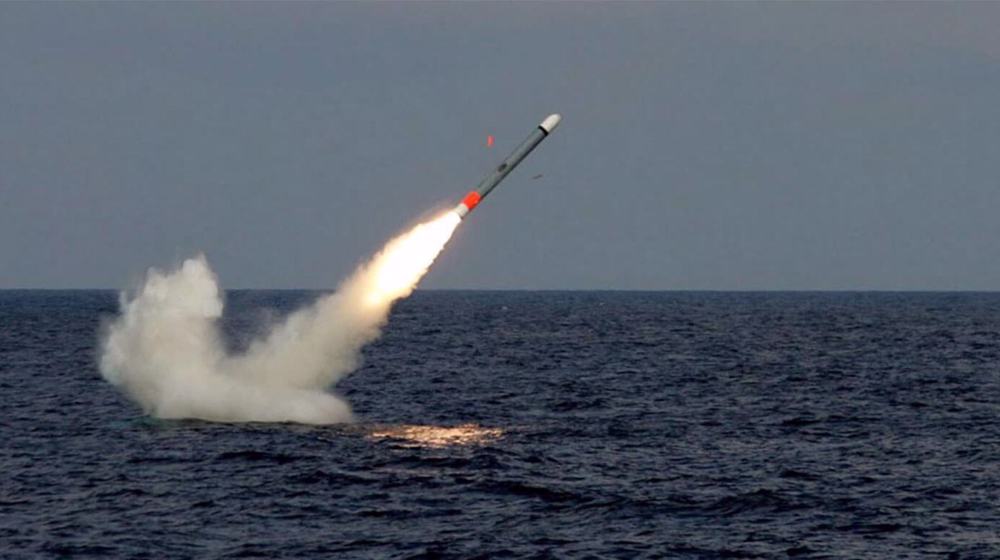
Each Tomahawk missile costs between $2 million and $4 million ans US military has fired more than 850 of them in four weeks of its war against Iran. (File)

Press TV

US military has fired more than 850 Tomahawk cruise missiles in four weeks of its war against Iran, burning through the precision weapons at a rate that has alarmed Pentagon officials and prompted internal discussions about how to make more available, according to a report by The Washington Post, citing sources.

The heavy expenditure – a part of the so-called ‘Operation Epic Fury’, which began on February 28 with the assassination of Leader of the Islamic Revolution Ayatollah Seyyed Ali Khamenei and some top-ranking commanders as well as ordinary civilians – has raised concerns about the strain on US weapons stockpiles, the report stated.

According to analysts, the US currently produces approximately 90 to 100 Tomahawk missiles annually, meaning that the number fired in the past four weeks exceeds the total output of the past five to eight years, triggering alarm bells.

Each Tomahawk missile costs between $2 million and $4 million, depending on the variant, with some estimates placing the cost as high as $3.5 million per unit.

At that rate, military experts say, the 850 missiles fired represent a cost of up to $3 billion, a fraction of the overall war bill, which is estimated to have exceeded $18 billion so far.

Replacing the expended missiles is expected to take years. Building a single Tomahawk requires between 18 and 24 months due to complex components, including solid rocket motors, advanced seekers, and terrain-matching sensors that rely on single-source suppliers.

The fragile supply chain and historically low production rates have left manufacturers struggling to scale up rapidly, according to reports, citing military experts.

In an effort to address these vulnerabilities, the Pentagon recently entered into a seven-year framework agreement with Raytheon, an RTX business, aimed at ramping up annual Tomahawk production to more than 1,000 units.

The agreement, announced in early February, came just weeks before the US and the Israeli regime launched an unprovoked aggression on Iran. Officials acknowledge that even with expanded capacity, replenishing stockpiles depleted at the current rate will take years.

Iranian armed forces have so far carried out 83 waves of Operation True Promise 4, using their advanced missiles and drones to inflict heavy blows on the enemy.

Israeli military infrastructure in the occupied territories, as well as US military bases scattered across the region, have been destroyed and made “uninhabitable,” according to the New York Times and other US media outlets.

Importantly, US military had used Tomahawk missiles in its attack on an elementary school in southern Iran’s Minab that killed more than 170 schoolchildren on February 28.

[…]

Via https://www.presstv.ir/Detail/2026/03/27/765917/war-against-iran-draining-us-tomahawk-missile-stockpile-alarming-pentagon-report