US military morale ‘extremely low’ as troops question point of going to war against Iran

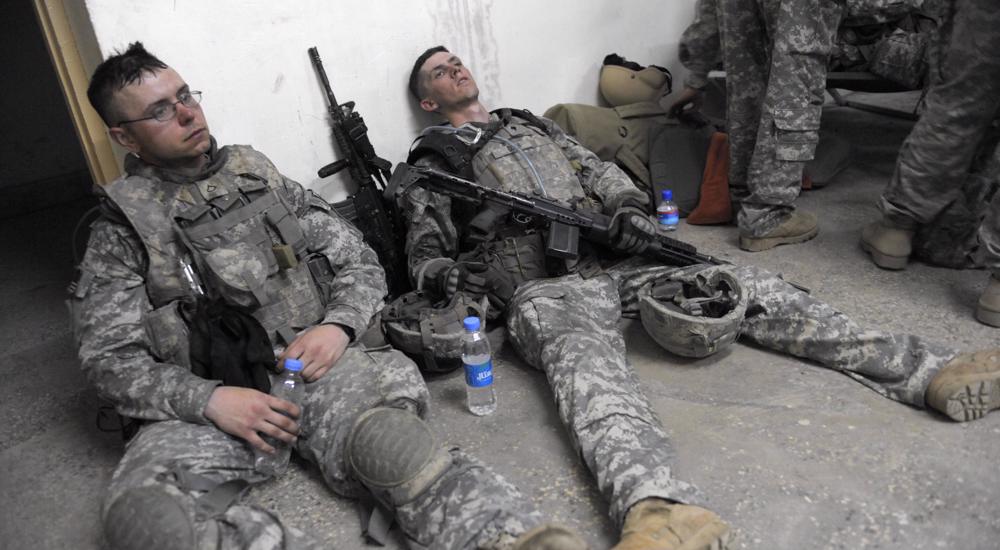
Morale among US troops can hit in a new low amid the unprovoked war against Iran. (File photo)

Press TV

Morale among active-duty US military personnel is “extremely low,” with troops questioning the point of going to war against Iran following the ceasefire agreement reached on Wednesday.

Aida Chavez, a Washington-based journalist, citing a US military source, said active-duty personnel are disillusioned with the war strategy adopted by the Trump administration.

“What the f**k was the point of this war?” she quoted US soldiers as saying.

The source said troops are concerned that the Islamic Revolution Guards Corps (IRGC) has emerged more powerful than before the war, which was launched on February 28.

“The IRGC has more control now than it did before,” an active-duty member was quoted as saying, reflecting a growing sentiment that the military campaign backfired strategically.

Active-duty personnel are full-time members of the US Armed Forces, working for the military on a full-time basis, as opposed to reservists or National Guard members, who typically serve part-time unless activated.

According to reports, there are currently over 1.32 million active-duty service members across the six branches of the US military.

Early on Wednesday, Iran’s top security body declared a “historic and crushing defeat” of the US and the Israeli regime after 40 days of imposed war, saying that Washington had been forced to accept a ten-point Iranian proposal.

The proposal includes a permanent ceasefire, the lifting of all sanctions, control of the Strait of Hormuz, and the withdrawal of US combat forces from the region.

In a statement, the Supreme National Security Council said the enemy had suffered an undeniable defeat and now saw “no way forward but to submit to the will of the great nation of Iran and the honorable Axis of Resistance.”

The statement came on the 40th day of the US-Israeli war of aggression against Iran, which began with the assassination of Leader of the Islamic Revolution Ayatollah Seyyed Ali Khamenei and top-ranking commanders on February 28.

More than 2,000 Iranian civilians, including children and women, were martyred in the aggression across the country, which triggered strong retaliation from Iran.

Iranian armed forces carried out 100 waves of missile and drone strikes as part of Operation True Promise 4, targeting Israeli military and strategic sites as well as US bases scattered across the West Asia region.

The unprovoked and illegal war drew sharp condemnation from inside the US, with human rights activists and politicians calling on US military personnel to refuse deployment.

Calls also gained ground to invoke the 25th Amendment to remove President Trump from office, citing his violation of US and international law and poor mental health.

[…]

Via https://www.presstv.ir/Detail/2026/04/08/766511/us-military-morale-extremely-low-troops-question-point-going-war-against-iran-report

Strait of Hormuz is Iran’s ‘nuclear weapon’

Dmitry Medvedev

Press TV

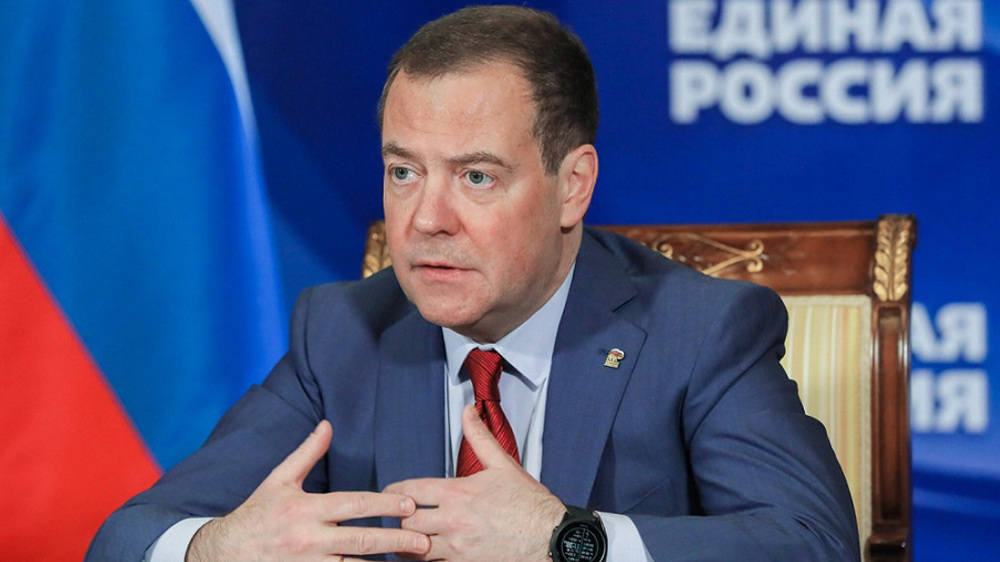
Russia’s former president, Dmitry Medvedev, says Iran’s undisputed command over the Strait of Hormuz has become its true “tested nuclear weapon” that forced the United States to retreat.

Iran and the US agreed to a two-week ceasefire on Tuesday after Donald Trump was forced to accept a 10-point proposal from Tehran. This proposal includes a permanent end to the war, the lifting of all sanctions, and the withdrawal of US combat forces from the region.

Hours after the announcement, Medvedev—currently Deputy Chairman of Russia’s Security Council—wrote on X, “It’s not clear how the truce between Washington and Tehran will play out.”

“But one thing is certain—Iran has tested its nuclear weapons. It is called the Strait of Hormuz. Its potential is inexhaustible,” Medvedev added.

Iran’s Armed Forces fought a 40-day war against two nuclear powers, the US and Israel, who have long accused Tehran of seeking an atomic weapon.

Days after the unprovoked war was launched against Iran on February 28, the Islamic Revolution Guards Corps (IRGC) imposed restrictions on transit through the Strait of Hormuz, leaving hundreds of vessels and tankers linked to the aggressors stranded in the Persian Gulf.

During the war, Iranian authorities asserted that the world’s vital energy lifeline, through which nearly one-fifth of global oil typically passes, was open to everyone except the US, Israel and their allies.

The restrictions sent global energy prices soaring, with experts warning that the impact could escalate to historic levels if the confrontation continued.

President Trump issued several deadlines for Iran to open the strait or face attacks on its vital infrastructure, including power plants. However, he extended the deadline every time after Iran threatened massive retaliation, and announced a ceasefire hours before his last deadline was approaching.

Iran’s Foreign Minister, Abbas Araghchi, announced after the ceasefire that “safe passage through the Strait of Hormuz will be possible” for a period of two weeks.

Araghchi also said that Iran would halt its defensive strikes if unprovoked attacks targeting the country were halted.

[…]

Via https://www.presstv.ir/Detail/2026/04/08/766499/Strait-of-Hormuz-is-Iran-nuclear-weapon-forced-US-retreat-Medvedev

Iran halts ships in Strait of Hormuz and issues new demand as Trump’s ceasefire deal faces backlash

The Strait of Hormuz handles around 20 per cent of the world's oil and gas but has effectively been shut down by Iran in retaliation over the joint US-Israeli attacks launched on February 28

Iran has halted oil tankers transiting the Strait of Hormuz, launched a drone strike on a key Saudi oil pipeline and demanded Israel cease its attacks on Lebanon as Donald Trump‘s ceasefire deal faced a furious backlash from his own allies.

Two tankers were allowed through the Strait on Wednesday morning as the two-week ceasefire with the US took effect, Iran’s semi-official Fars news agency reported.

But the agency later reported that passage had been suspended, saying it was halted ‘simultaneous with Israel’s attacks on Lebanon.’

Iran also threatened to destroy oil tankers if they try to travel through the Strait without permission, as the regime has imposed a toll of up to $2million per vessel.

Saudi Arabia‘s East-West oil pipeline, a critical artery routing crude from the Gulf to the Red Sea, came under drone attack at 1pm local time, the FT reported.

Kuwait’s air defenses intercepted 28 drones in sustained attacks targeting oil facilities, power plants and water desalination infrastructure from 8am Wednesday, the country’s army said, adding that strikes were still ongoing.

Trump is facing a furious backlash from his most fervent supporters over the ceasefire and ten-point peace plan, amid fears it concedes too much to Tehran – with even his own White House forced to clarify his claims about the terms of the deal.

Republican Senator Lindsey Graham demanded JD Vance appear before Congress to explain the terms of the agreement after the dovish Vice President spearheaded 11th-hour peace talks mediated by Pakistan.

‘The supposed negotiating document, in my view, has some troubling aspects, but time will tell,’ Graham posted on X.

‘I look forward to the architects of this proposal, the Vice President and others, coming forward to Congress and explaining how a negotiated deal meets our national security objectives in Iran.’

Donald Trump is facing a furious backlash from his most fervent supporters over the ceasefire and ten-point peace plan, amid fears it concedes too much to Tehran

The Strait of Hormuz handles around 20 per cent of the world’s oil and gas but has effectively been shut down by Iran in retaliation over the joint US-Israeli attacks launched on February 28.

Republican Representative Don Bacon of Nebraska said Trump had secured ‘significant victories’ but expressed skepticism over the peace talks and the President’s claims of ‘total victory.’

‘The government’s still in place and we should be negotiating from a position of strength, not a position that’s good for them,’ he told CNN.

‘They will work with Russia and China as soon as they can to start rebuilding their military. And they will be a threat five, six, seven, eight years down the road. And so, as long as this government’s in place, total victory has not been earned.’

Laura Loomer, a pro-Israel Trump ally, predicted the ceasefire ‘will fail.’

‘The negotiation is a negative for our country. We didn’t really get anything out of it and the terrorists in Iran are celebrating,’ she wrote on X. ‘I don’t know why people are acting like this is a win.’

Mark Levin, another pro-Israel commentator with close ties to Trump, said that while he trusts the President’s ‘instincts,’ the Iranians could not be trusted.

‘This enemy is still the enemy; they’re still surviving,’ he said of Iran.

Iran publicly released what it claimed was the ten-point framework for a peace deal, demanding the US accept Tehran’s continued control over the Strait, recognize its right to uranium enrichment, lift all sanctions, pay compensation and withdraw all troops from the region.

Trump last night described the points of the peace proposal as ‘a workable basis on which to negotiate.’

But a White House official said the points do not match what Trump was referring to in his Truth Social post.

Trump said Wednesday: ‘They are very good points – and most of them have been fully negotiated. If it isn’t good, we’ll go right back to it very easily.’

Trump called the deal to reopen the Strait of Hormuz a ‘joint venture’ and also promised that the US was working with Iran to dismantle its uranium enrichment capacity.

The President wrote on Truth Social on Wednesday: ‘There will be no enrichment of uranium, and the United States will, working with Iran, dig up and remove all of the deeply buried (B-2 bombers) nuclear “dust.”‘

The safety of the uranium was confirmed before an 11th-hour deal was struck, the White House said.

‘Nothing has been touched from the date of attack,’ Trump said, claiming that the nuclear site has been watched closely since it was bombed.

It is not clear whether Trump was referring to the US bombing of Iran’s nuclear facilities in June, or to more recent strikes during the current Iran war.

Trump said that tariff and sanctions relief were being discussed as part of a peace plan with ‘many’ points already agreed.

IRAN’S TEN-POINT PEACE PLAN

1. Commitment to non-aggression

2. Iran’s control over the Strait of Hormuz

3. Acceptance of Iran’s uranium enrichment

4. Lifting of all primary sanctions

5. Lifting of all secondary sanctions

6. Termination of all UN Security Council resolutions

7. Termination of all Board of Governors resolutions

8. Paying compensation to Iran

9. Withdrawal of US combat forces from the region

10. Cessation of war on all fronts, including in Lebanon

Iran has already begun outlining a scheme to rake in billions from the reopened Strait of Hormuz.

The exact terms remain unsettled, but ships must notify intermediary companies linked to the Islamic Revolutionary Guard Corps (IRGC) of their cargo, destination and owner – with tolls of at least $1 per barrel payable in Chinese yuan or cryptocurrency.

Trump welcomed the idea, telling ABC: ‘We’re thinking of doing it as a joint venture. It’s a way of securing it – also securing it from lots of other people.

‘It’s a beautiful thing.’

The Strait, through which a fifth of the world’s oil flows, has been dubbed the ‘Tehran Tollbooth’ by analysts and traders.

The average bill for a single tanker runs to $2 million – and only once payment clears will IRGC patrol boats escort the vessel through the ‘tollbooth.’

Some analysts believe the scheme could net Iran as much as $500 billion over five years.

Oil prices plunged on Wednesday, even as the Strait remained throttled. Brent crude – the global benchmark – fell by 13 percent to $95 per barrel after hitting $118 at the peak of the conflict.

Hamid Hosseini, a spokesman for Iran’s Oil, Gas and Petrochemical Products Exporters’ Union, said that cargo checks were necessary to prevent the transport of weaponry.

‘Iran needs to monitor what goes in and out of the strait to ensure these two weeks aren’t used for transferring weapons,’ Hosseini, whose industry association has close ties to the regime, told the FT.

‘Everything can pass through, but the procedure will take time for each vessel, and Iran is not in a rush,’ he added.

Hosseini’s comments indicate vessels must hug the northerly Iranian coast of the Strait, a prospect that will raise alarm among maritime insurers.

Tankers in the Persian Gulf on Wednesday received a radio alert warning that they would be targeted if they did not first gain transit approval from Iranian authorities.

‘If any vessels try to transit without permission, [they] will be destroyed,’ said the broadcast in English.

[…]

Via

Ceasefire for all or for none: Iran shuts Hormuz over Lebanon attacks

AP Beirut Wednesday April 8 2026

Al Mayadeen English

Iran says maritime traffic in the Strait of Hormuz is suspended following Israeli strikes on Lebanon, vows decisive response.

In response to recent Israeli attacks on Lebanon, Iranian officials are calling for decisive measures to counter the aggression in support of Lebanon and its people, warning that the Strait of Hormuz could be closed again until the attacks on Lebanon stop.

Ibrahim Rezaei, spokesperson for the Iranian Parliament’s National Security and Foreign Policy Committee, said in a post on X: “In response to the brutal Israeli aggression on Lebanon, the movement of ships in the Strait of Hormuz must be immediately stopped, and a strong, decisive strike must be launched to prevent further attacks by the Israeli entity.”

The Iranian official paid tribute to the Lebanese people, asserting that “we must not leave them alone for a second.” Rezaei emphasized the need for clarity on the terms of engagement and rejected the separation of the battlefields in Iran and Lebanon, stating, “Either there is a ceasefire on all fronts, or there is no ceasefire on any front.”

Iran’s UN envoy stresses ceasefire in Lebanon, warns of consequences

On his part, Iran’s envoy to the United Nations in Geneva, Ali Bahraini, stressed the importance of “Israel” upholding the ceasefire in Lebanon, adding that Tehran will approach peace negotiations with Washington cautiously due to a deep lack of trust.

Bahraini stated, “In light of the deep lack of trust, Tehran will deal cautiously with ‘peace’ negotiations with Washington, while at the same time remaining on military alert.”

The UN envoy also stressed the role of “Israel” in the ongoing aggressions, declaring, “We emphasize the necessity of the Israeli entity’s commitment to a ceasefire in Lebanon.”

He further warned about the consequences of continued hostilities, saying, “We warn that the continuation of attacks will lead to further complications and the resulting severe consequences.”

On the issue of talks, Bahraini said Iran will approach the talks with the US in Islamabad with far more caution than previous negotiations due to “the deep chasm of mistrust, while remaining on military alert.”

“We are not putting any trust in the other side. Our military forces are keeping their preparedness…but meanwhile, we will go for negotiations to see how serious the other side is,” the ambassador told Reuters.

Iran considering withdrawal from ceasefire if ‘Israel’ continues Lebanon assault

Iran may withdraw from the ceasefire agreement if “Israel” continues violating the truce by launching attacks on Lebanon, an informed source told Tasnim News Agency.

The source told the agency that “Iran is currently studying the possibility of withdrawing from the ceasefire agreement with the continuation of the Israeli entity’s violations and its aggression against Lebanon.”

The report noted that halting the war on all fronts, including against the “Resistance forces” in Lebanon, had been accepted by the United States as part of a two-week ceasefire plan. However, the source added, “Since this morning, in blatant violation of the ceasefire, the Israeli entity has carried out brutal attacks against Lebanon.”

In response, Iranian armed forces are identifying targets to retaliate against Israeli aggression in Lebanon, Tasnim‘s source said, further warning, “If the United States is unable to restrain its rabid dog in the region, Iran will assist it in this matter, exceptionally, through force.”

Moreover, a senior Iranian official also told Press TV that “Iran will punish Israel for its aggression against Lebanon and violations of the ceasefire.”

Cementing this stance, Fars News Agency reported that oil tanker traffic through the Strait of Hormuz was halted following the Israeli attacks, though two tankers had earlier received safe passage clearance after Tehran’s conditions were accepted and the ceasefire went into effect.

Later, a source in the Iranian Navy confirmed the Strait’s closure, saying, “We have closed the Strait of Hormuz, and currently, only Iranian ships and vessels coming from Iran are passing through.”

“Only two oil tankers were able to benefit from the ceasefire and pass through the Strait of Hormuz before ‘Israel’ violated the agreement,” he added.

Iran conditions deal on ceasefire in Lebanon

Iran has tied any move toward a ceasefire in the US-Israeli war to the halt of all aggression on every front, including in Lebanon. Tehran’s leadership insists a lasting end to hostilities must go beyond a temporary truce and must stop attacks against Iran and its allies.

Tehran’s 10‑point proposal, which Washington has accepted as the basis for talks during the two-week ceasefire, calls for the cessation of all aggression in the region as a precondition for peace negotiations. The plan demands an end to wartime attacks and a guarantee that further aggression will not be launched against Iran or allied forces.

Among other conditions, the proposal includes a commitment to end all US and Israeli military operations targeting Iranian territory and groups aligned with Tehran, as well as halting aggression that “Israel” launched on Lebanon, among other countries in the region.

Iran’s negotiators emphasize that without a permanent stop to the war’s aggression on all fronts, including the war in Lebanon, any cease‑fire would be meaningless and could allow enemy forces to regroup and resume attacks.

‘Israel’ sticks to its criminal ways, violating the agreement

Meanwhile, Israeli Prime Minister Benjamin Netanyahu unilaterally decided that the ceasefire agreement does not include Lebanon, effectively violating the terms of the agreement reached between Tehran and Washington and potentially derailing the process to reach a permanent ceasefire.

In a statement posted on the Israeli Prime Minister’s Office X account, Netanyahu said the Israeli regime backs Washington’s efforts to ensure Iran “no longer poses a nuclear, missile and terror threat,” and acknowledged that the United States had communicated its commitment to achieving these goals in upcoming negotiations.

However, buried at the end of the statement was a unilateral carve-out: “The two-week ceasefire does not include Lebanon.”

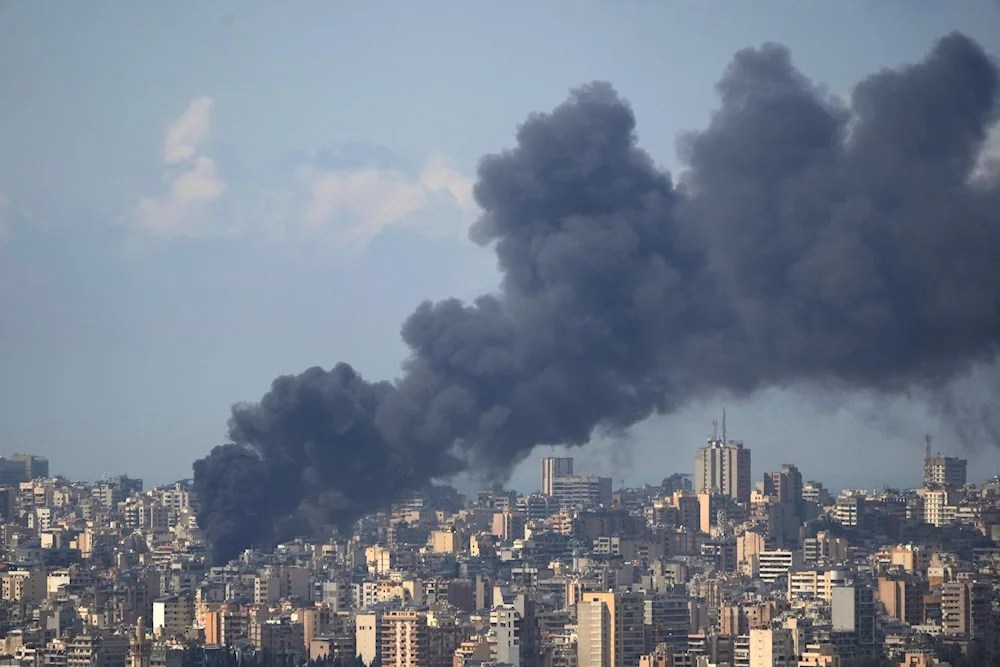
Barely hours after the ceasefire was reached, the Israeli occupation forces brazenly violated the agreement, launching a wide-scale attack targeting the entirety of Lebanon from south to east with more than 100 strikes and committing harrowing massacres in Beirut, the South, and the Bekaa. ِThe Israeli aggression killed and wounded hundreds, the Lebanese Ministry of Public Health reported, while the Lebanese Red Cross reported that 100 ambulances were working on rescue operations across the country.

[…]

Via https://english.almayadeen.net/news/politics/ceasefire-for-all-or-for-none–iran-shuts-hormuz-over-lebano

Statement of Iran’s Supreme National Security Council on 2-Week Ceasefire and Negotiation Conditions

Iran Supreme National Security Council holds meeting - Mehr News Agency

The enemy, in its unjust, illegal, and criminal war against the Iranian nation, has suffered an undeniable, historic, and crushing defeat. Thanks to the sacrifice of the martyred leader of the Islamic Revolution, Grand Ayatollah Imam Khamenei, the leadership of the Supreme Leader and Commander-in-Chief, Ayatollah Seyyed Mojtaba Khamenei, the courage of fighters on the frontlines, and the historic and heroic presence of the Iranian people from the very beginning of the war, Iran has achieved a great victory and forced the United States to accept its 10-point plan.

Under this plan, the United States has in principle committed to guaranteeing non-aggression, recognizing Iran’s continued control over the Strait of Hormuz, accepting uranium enrichment, lifting all primary and secondary sanctions, ending all UN Security Council and IAEA resolutions, compensating Iran for damages, withdrawing U.S. combat forces from the region, and halting war across all fronts, including against the resistance in Lebanon.

We congratulate the Iranian people on this victory and emphasize that finalizing its details still requires perseverance, prudent leadership, and unity.

Over the past 40 days, Iran and resistance forces in Lebanon, Iraq, Yemen, and the Palestinian territories have dealt blows to the enemy that will never be forgotten. Iran and the resistance axis, as representatives of honor and humanity against the most brutal enemies, have delivered a historic lesson—crushing the enemy’s forces, infrastructure, and political, economic, technological, and military assets to the point of collapse, leaving them with no option but submission.

At the start of the war, the enemy believed it could quickly dominate Iran militarily and force surrender through instability. They assumed Iran’s missile and drone capabilities would be neutralized and did not expect such a powerful regional response.

They believed this war would end Iran, allowing them to act freely, divide the country, seize its resources, and plunge it into long-term chaos.

Despite the loss of their leader, Iran’s fighters and their allies, relying on faith and inspired by Imam Hussein, resolved to deliver a decisive lesson—avenging past actions and ensuring the enemy abandons any thought of future aggression and is forced into humiliation before the Iranian nation.

With this strategy, and relying on unprecedented political and social unity, Iran and the resistance launched one of the heaviest hybrid wars in history against the United States and Israel, achieving all their planned objectives.

Iran and the resistance claim to have largely destroyed the U.S. military infrastructure in the region, inflicted heavy losses, and delivered severe blows to enemy forces, infrastructure, and assets both regionally and inside Israeli-controlled territory. The pressure became so intense that none of the enemy’s primary objectives were achieved, and within about ten days, it realized it could not win. It then began seeking contact with Iran through various channels to request a ceasefire.

Iranian officials state that for over a month, the enemy has been requesting a halt to hostilities, but these requests were rejected as the war was intended to continue until key goals were met, including weakening the enemy and removing long-term threats. Iran also rejected multiple ultimatums from the U.S., emphasizing it does not recognize such deadlines.

Authorities now claim that most war objectives have been achieved and that the enemy has been pushed into a historic defeat. Iran’s stated position is to continue the conflict as long as necessary to consolidate these gains and establish new regional security and political realities based on its power and influence.

In this context, and following approval by the Supreme Leader and the Supreme National Security Council, it was decided—given Iran’s position on the battlefield and the enemy’s inability to enforce its threats—to proceed with negotiations in Islamabad to finalize details within a maximum of 15 days.

Iran rejected all opposing proposals and instead presented its own 10-point plan via Pakistan. Key demands include: controlled passage through the Strait of Hormuz under Iranian coordination; an end to military actions against allied groups; withdrawal of U.S. forces from the region; establishment of a security protocol in the Strait of Hormuz affirming Iran’s role; full compensation for damages; removal of all sanctions and international resolutions; release of frozen Iranian assets; and formal approval of these terms in a binding UN Security Council resolution.

According to Iranian officials, Pakistan has conveyed that the U.S. has accepted these principles as a basis for negotiations despite its public posture. Based on this, Iran agreed to a two-week negotiation period in Islamabad.

It is emphasized that this does not mean the war has ended, and Iran will only accept a full end to the conflict once all terms of its proposal are finalized.

Via https://t.me/DDGeopolitics/181202

Trump announces two-week ceasefire with Iran

Trump announces two-week ceasefire with Iran
The president claimed the US has already met and exceeded all military objectives and is now giving diplomacy more time.

Pakistani Prime Minister Shehbaz Sharif has asked US President Donald Trump for a two-week deadline extension after the US president threatened “a whole civilization will die tonight” if Tehran does not yield to his demands.

“To allow diplomacy to run its course, I earnestly request President Trump to extend the deadline for two weeks. Pakistan, in all sincerity, requests the Iranian brothers to open Strait of Hormuz for a corresponding period of two weeks as a goodwill gesture,” Sharif said in a post on X.

The White House has confirmed that Trump has been informed of Pakistan’s request and “a response will come.” Trump confirmed that his administration is still in “heated negotiations” with the Iranian side, with Vice President J.D. Vance reportedly serving as the US interlocutor.

Meanwhile, Iran’s Ambassador to Pakistan Reza Amiri Moghadam has called Islamabad’s initiative a “step forward” from a critical stage.

Key developments:
  • Iran is positively reviewing Pakistan’s request, a senior Iranian official told Reuters on Tuesday.
  • Trump is also aware of the proposal from Islamabad, and a response will come soon, Axios reported, citing White House press secretary Karoline Leavitt.
  • Israel has warned Iranians to avoid trains for their “safety” as the US has threatened to “demolish” infrastructure ahead of Trump’s Tuesday deadline, dubbed “Power Plant Day” and “Bridge Day”

[…]

Via https://www.rt.com/news/637586-us-strikes-irans-kharg-island-live/

Iran’s 10 demands (https://gulfnews.com/world/mena/irans-10-point-peace-plan-whats-on-the-table-and-why-it-matters-1.500498882)

  • A guarantee that Iran will not be attacked again
  • A permanent end to the war, not just a ceasefire
  • An end to Israeli strikes in Lebanon and against Iranian allies
  • The lifting of all US sanctions on Iran
  • Iran agreeing to reopen the Strait of Hormuz
  • Introduction of a $2 million fee per ship transiting Hormuz
  • Revenue from shipping fees to be shared with Oman
  • Funds to be used for reconstruction of war-damaged infrastructure
  • Establishment of safe passage protocols through Hormuz
  • A broader framework to end regional hostilities

15 Planes Have Left Tel Aviv Over Past 15 minutes – Has Israeli Government Fled?

Africa’s Richest Man Offers Fuel Relief

Africa’s richest man offers fuel relief

RT

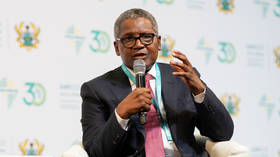
The Dangote refinery has the capacity to supply Nigeria and most of the continent amid the Middle East war disruption, its owner has said

Nigeria’s Dangote refinery has said it is ramping up fuel and fertilizer exports to African markets as supply disruptions linked to the US-Israeli war on Iran tighten availability and drive up import costs across the continent.

The refinery, Africa’s largest, has been operating at its maximum capacity of 650,000 barrels per day and has already shipped 17 cargoes of gasoline to countries across the continent, Aliko Dangote, the refinery’s owner, said on Monday. The plant has also stepped up exports of urea as buyers seek alternative supplies, he added.

“What I can do is assure Nigerians… and most of West Africa, Central Africa, and East Africa, we have the capacity to supply them,” the billionaire said during a tour of the sprawling complex outside Lagos, Reuters reported.

Dangote said fertilizer shipments were increasingly being redirected to African markets that were not previously a focus. The plant can produce up to three million metric tons of urea a year, with most exports typically going to the US and South America, according to officials cited by Reuters.

Fuel prices in oil-rich Nigeria have, however, hit record highs, with maximum output still failing to offset the impact of high crude prices. Dangote said he wanted more crude cargoes priced in local currency to help lower costs, after Reuters reported that state oil firm NNPC had increased May allocations to the refinery from five cargoes to seven.

The company has also said it is ready to export fuel to Europe, including the Netherlands, as it expands its reach beyond Africa.

The export push comes as the Middle East conflict disrupts traffic through the Strait of Hormuz, a vital shipping chokepoint. A recent joint report by the African Union, the UN Economic Commission for Africa, and the World Bank warned that the conflict risked turning a trade shock into a broader cost-of-living crisis across Africa through higher fuel and food prices, rising transport costs, and pressure on already fragile currencies.

On Tuesday, Afreximbank said it had approved a $10 billion ‘Gulf Crisis Response Programme’ to help African and Caribbean economies, banks, and companies absorb the economic shock triggered by the crisis.

[…]

Via https://www.rt.com/africa/637580-africas-richest-man-dangote-offers-fuel-relief-middle-east-crisis/

China Calls for Israel to Withdraw from Lebanon

China in a Post-Hegemonic Era: Testing the Limits of Diplomatic Power

Ricardo Martins, April 07, 2026

China’s call for Israeli withdrawal from southern Lebanon and its proposal for a multilateral peace initiative signal more than a diplomatic intervention. They reflect Beijing’s gradual emergence as a geopolitical actor seeking to shape conflict management in a context of declining hegemonic coordination and increasing fragmentation of the international order.

Chinese President Xi Jinping’s recent statement calling for the immediate withdrawal of Israeli forces from southern Lebanon—and warning against the risk of the region “becoming another Gaza”—should not be read merely as rhetorical positioning. Rather, it signals a calibrated step in Beijing’s gradual insertion into Middle Eastern diplomacy, reflecting both normative framing and strategic intent, as I will try to explain below.

At the normative level, China’s emphasis on sovereignty and territorial integrity is consistent with its long-standing foreign policy doctrine. By framing the situation as a violation of Lebanon’s sovereignty, Beijing aligns itself with principles embedded in the United Nations system while simultaneously appealing to a broader Global South audience that remains sensitive to issues of external intervention and colonialism.

While publicly maintaining a balanced diplomatic posture, Beijing engages in sustained information-gathering and strategic monitoring aimed at safeguarding critical interests—particularly energy security, trade routes, and regional stability

This normative posture, however, is not neutral: it allows China to occupy a position of selective legitimacy, selectively aligning itself with principles such as sovereignty and restraint while contrasting its discourse with what is increasingly perceived as the erosion of the Western-led liberal order. This dynamic reflects broader processes of legitimacy contestation in international society, whereby emerging powers reinterpret and selectively appropriate norms to enhance their own standing (Ian Clark 2005: Legitimacy in International Society; Amitav Acharya 2014: The End of American World Order).

From a theoretical standpoint, this move can be interpreted through the lens of hegemonic transition. As Robert Gilpin argues in War and Change in World Politics, the relative decline of a dominant power creates opportunities for other actors to reshape the international order, often leading to periods of instability and systemic reconfiguration.

In this context, as the capacity of the United States to impose or coordinate regional stability becomes more contested, emerging powers such as China are not merely balancing militarily but increasingly positioning themselves as alternative providers of diplomatic and institutional frameworks, or simply as alternative providers of order.

Chinese New Way and Its Limits

Importantly, Beijing’s approach differs from traditional interventionism. Rather than projecting force, China is advancing what can be termed a procedural strategy of influence: shaping agendas, convening actors, and embedding itself within multilateral frameworks. Keohane in After Hegemony shows how influence is exercised not only through coercion but through institutions, rules, and agenda-setting, which structure how actors behave.

This reflects a broader pattern in Chinese foreign policy, where legitimacy is constructed through process rather than coercion, even if underlying strategic interests remain clear. In this sense, it signals not a replacement of hegemony, but a reconfiguration of how influence is exercised.

This dynamic is further illustrated by recent diplomatic activity involving key intermediary states in the region—including Egypt, Oman, Türkiye, and Pakistan—seeking to reach an end in the US–Israel–Iran war. Preliminary consultations took place in Islamabad, pointing to the emergence of alternative diplomatic channels beyond traditional Western-led frameworks. Following the initial round of talks, Pakistan’s Foreign Minister, Ishaq Dar, travelled to Beijing for consultations with his Chinese counterpart, Wang Yi, with discussions focusing on coordinating positions and outlining negotiating points. This episode shows China’s growing role as a convening power and an emerging broker of order in a fragmented, post-hegemonic international system.

Yet, the limits of this approach are equally evident. Without enforcement capacity on the ground, China’s influence depends on the willingness of regional actors to engage and on the degree to which its initiatives are perceived as credible alternatives. The absence of an official response from Israel evidences this constraint, highlighting the persistent gap between discursive power—understood as the ability to shape narratives and norms (Foucault 1977: Power/Knowledge)—and operational leverage, which rests on material and coercive capabilities (Strange 1988: States and Markets).

What is being revealed, therefore, is not simply a reaction to a regional crisis but a subtle reconfiguration of diplomatic hierarchies. China is not replacing existing powers; it is testing the boundaries of a post-hegemonic order, where multiple actors seek to define the terms of conflict management. Whether this translates into concrete outcomes will depend less on the strength of Beijing’s statements and more on its ability to convert diplomatic initiative into sustained political engagement.

Chinese Intelligence or Intelligence Diplomacy?

This diplomatic positioning cannot be fully understood without considering the less visible, but increasingly central, role of Chinese intelligence. Long perceived by Western security services as primarily inward-looking, China’s intelligence apparatus has, over the past decade, evolved into a transnational system operating at the intersection of national security, economic strategy, and political influence. Anchored in the strategic objective of the “great rejuvenation” of the Chinese nation, this system does not separate domestic stability from external projection. Rather, it integrates the acquisition of technological capabilities, and the shaping of foreign political environments into a single, coherent framework of state power.

What distinguishes this model is not merely its scope, but its method. Unlike the more centralised and operationally visible approaches associated with agencies such as the Central Intelligence Agency or Mossad, Chinese intelligence relies on a diffuse, networked logic often described as a “whole-of-society” approach. Information is accumulated incrementally—through academic exchanges, business networks, cyber operations, and long-term relationship-building—rather than through singular, high-profile operations. At the institutional core of this system stands the Ministry of State Security, complemented by party structures such as the United Front Work Department, which extend influence across transnational social and political spaces.

[…]

Via https://journal-neo.su/2026/04/07/china-in-a-post-hegemonic-era-testing-the-limits-of-diplomatic-power/

How Close is Middle East to Nuclear Catastrophe?

How close is the Middle East to a nuclear catastrophe?

RT

The ongoing US-Israeli war on Iran could render large parts of the region uninhabitable

A war launched by the US and Israel with the stated aim of preventing a nuclear crisis could end up causing one.

With repeated strikes reported near the Russian-built Bushehr Nuclear Power Plant in Iran, discussions about the US potentially forcibly taking Iranian uranium reserves, and seemingly zero room for compromise, the likelihood of radioactive fallout across the Middle East is steadily increasing.

Strikes getting closer to Bushehr reactor

Since the US-Israeli war on Iran began on February 28, Tehran has reported four separate military strikes near its Bushehr Nuclear Power Plant on the Persian Gulf coast. The facility’s roughly-square territory spans some 500 meters across, with a single reactor unit located at its center.

In the most recent incident on April 4, one of the projectiles landed just 75 metres from the site’s perimeter, the International Atomic Energy Agency (IAEA) reported, citing satellite imagery analysis. In mid-March, the UN nuclear watchdog reported that an attack had destroyed a structure around 350 metres from the reactor.

Risking damage to Bushehr site ‘suicidal’

The plant was constructed by Russian specialists and still hosts a Russian team, although operator Rosatom has reduced staffing to a skeleton crew since hostilities began. The company stated that the March 17 strike marked the first time a weapon landed within the facility’s protected zone, hitting near a meteorological building.

On the first day of the conflict, Rosatom chief Aleksey Likhachev warned that an operational nuclear power plant “is not a practice target,” stressing that military activity near such installations is “unacceptable and suicidal.”

Russia’s Foreign Ministry also condemned the incidents near Bushehr, warning on April 6 that “the shadow of a radiological disaster more severe than Chernobyl now looms over the Persian Gulf” and surrounding areas.

Worst case scenario for Bushehr

Modern nuclear power plants are designed with multiple layers of protection to prevent the release of radioactive material. However, disasters such as Chernobyl in 1986 – caused by a catastrophic reactor failure during a botch experiment – and Fukushima in 2011 – triggered by a natural disaster – demonstrate that severe accidents remain possible and warrant abundance of caution.

The recent incidents near Bushehr serve as “a stark reminder: a strike could trigger a nuclear accident, with health impacts that would devastate generations,” World Health Organization head Tedros Ghebreyesus cautioned, echoing calls from the IAEA for deescalation.

A worst-case scenario involving a large-scale release of radioactive material from Bushehr could render not only parts of Iran but also neighboring states such as Qatar, Kuwait, and the UAE uninhabitable, even without direct fallout, according to Peter Kuznick, director of the Nuclear Studies Institute at American University.

“If Cesium-137 contaminates water supplies, it becomes extremely difficult to remove,” he explained to RT. Some regional countries get 100% of their drinking water from desalination systems that would likely be compromised, should Bushehr be seriously damaged. “This war is so reckless and out of control at this point that anything is possible,” he said.

As in Ukraine, so in Iran

Iranian Foreign Minister Abbas Araghchi has criticized what he described as a lack of Western condemnation over threats to Bushehr, compared to accusations of Russia related to the Zaporozhye Nuclear Power Plant.

The formerly Ukrainian facility, under Russian control since 2022, has faced repeated attacks or nearby incidents as Kiev continues to pursue its recapture. The IAEA maintains a monitoring mission at the site but does not assign blame for strikes, citing limitations of its mandate – a policy it also follows in Iran. Supporters of Kiev lay the blame squarely on Moscow.

Threats beyond Bushehr

The stated justification for the US-Israeli campaign is that Iran was allegedly close to acquiring nuclear weapons – despite the damage the two nations inflicted on its nuclear infrastructure last year.

The administration of US President Donald Trump argues that Iran has no right to a civilian nuclear program, a position that conflicts with the Nuclear Non-Proliferation Treaty (NPT).

Tehran has long denied any intention to develop nuclear weapons, citing religious prohibitions against weapons of mass destruction. However, the targeted assassination of Supreme Leader Ali Khamenei in the opening shot of the war may have shifted political calculations in Iran.

Ahmad Naderi, an influential MP, has urged Iran to follow North Korea’s example, arguing that “if we were also armed with nuclear weapons, Trump would not dare to threaten bombing.” The NPT’s core deal is that a signatory gets IAEA help in building up the nuclear industry in exchange for oversight preventing weaponization.

The US and Israel have ignored the international agency’s mandate to strike Iran’s Natanz enrichment site attacked on March 21. Meanwhile, attacks on industrial facilities have raised additional concerns. The Khuzestan Steel Production Factory, attacked in late March, uses radioactive isotopes for gauging, the IAEA warned, noting that no breach of sealed sources was detected.

Hunt for the uranium stockpile

The greatest contamination risk may stem from Iran’s stockpile of highly enriched uranium, believed to be stored in underground facilities in Isfahan and Natanz following the US-Israeli attacks last summer.

The IAEA estimated in June 2025 that Iran possessed over 440 kg of uranium hexafluoride enriched to 60%, while some assessments suggest the stockpile could be larger by as much as 100kg.

There has been speculation that a large-scale US military operation – officially described as a rescue mission for aircrew of an F-15E jet downed in Iran on April 3 – may have been linked to efforts to locate and secure the uranium. The mission involved around 150 aircraft, including transport planes that were stuck on the ground and destroyed to avoid capture, according to American officials.

The other nation with nuclear sites

Israel, widely believed to possess a nuclear arsenal, faces similar vulnerabilities. Following the attack on Natanz on March 21, Iran retaliated with strikes near Dimona and Arad, two towns close to the heavily fortified Shimon Peres Negev Nuclear Research Center.

“Our air defense system is among the best in the world, but it is not hermetic,” a senior Israeli air defense commander commented. “There are errors and malfunctions.”

The implied threat to the facility was later reinforced in an Iranian AI propaganda video depicting the country’s new leader considering a direct attack on the Iranian nuclear reactor.

Running up the escalation ladder

Although already highly destructive, the conflict still has significant room for escalation, including the potential use of nuclear weapons.

The US used the option in 1945 against Japan, a nation that refused to admit defeat at a moment when a Soviet ground attack was becoming increasingly possible. Mutually Assured Destruction (MAD) made the use of nukes a taboo during the Cold War.

Israeli officials and pro-war aid reportedly swayed Trump aides with a promise that his political legacy would be secured if he were to do what no president had done before him and launch a regime-change war against Tehran. “Trump has broken every custom, every norm, every tradition, every international law, most US laws,” Kuznick noted “The same psychology applies to the nuclear taboo.”

Likewise, Israel came close to using nuclear weapons during the 1973 Yom Kippur War but ultimately then-Prime Minister Golda Meir refrained after battlefield conditions shifted against Egyptian and Syrian forces.

What decisions Trump or Benjamin Netanyahu might take, should the latter’s 40-year dream of crushing Iran slip away, is becoming an increasingly concerning question.

[…]

Via https://www.rt.com/news/637577-iran-nuclear-disaster-risks/