Idaho Bans Mandatory Digital ID With New Privacy Law

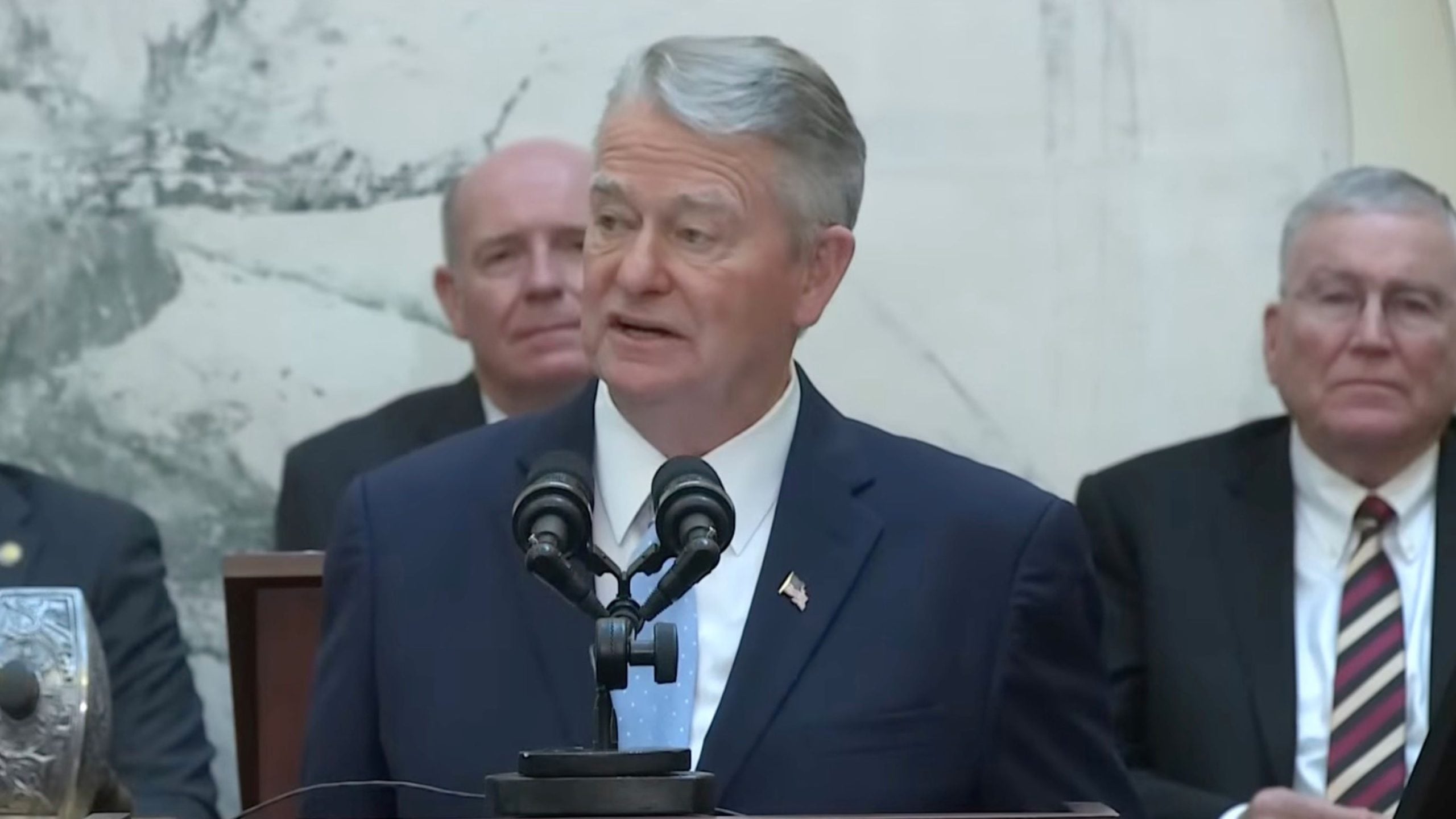
Little in a navy suit and light blue tie speaking at a podium with dual microphones, marble wall and seated men behind him.

Idaho just became one of the few states to draw a line against mandatory digital identification. Governor Brad Little signed Senate Bill 1299 on April 1, 2026, and the new law does something genuinely unusual in American state politics right now: it pushes back against digital ID rather than pushing it forward.

We obtained a copy of the bill for you here.

The bill creates Section 67-2364 of the Idaho Code, prohibiting government entities from requiring “any person to obtain, maintain, present, or use digital identification.”

Approximately three-quarters of US states are currently offering or developing electronic driver’s licenses. The national momentum is clearly toward digital ID systems, with states like Arkansas, Texas, Georgia, and Utah all advancing their own versions in 2025 alone. Idaho is swimming against that current.

Reclaim Your Digital Freedom.

Get unfiltered coverage of surveillance, censorship, and the technology threatening your civil liberties.

The bill, introduced by Senator Tammy Nichols, goes further than a simple opt-out. It prohibits public entities from denying, delaying, conditioning, or reducing “any service, benefit, license, employment, education, or access based on a person’s refusal or inability to use digital identification.”

That second clause, “or inability,” protects people who can’t use digital ID, not just those who won’t. Anyone without a smartphone, without reliable internet, without the technical literacy to navigate a digital wallet, keeps full access to government services. Physical, non-digital identification remains “valid for all governmental purposes” under the law.

The bill also addresses what happens when someone voluntarily shows a digital ID during a government interaction. A government entity cannot “require a person to surrender, unlock, or relinquish control of a personal electronic device for identity verification.” Handing your phone to a police officer or a clerk at the DMV is not the same as handing them a laminated card.

A phone contains your messages, your photos, your browsing history, and your location data. Presenting a digital ID “shall not constitute consent to search or access any other contents of a device.”

That’s a Fourth Amendment protection written directly into a state statute.

Government agencies are also barred from using digital ID as a surveillance tool. The law prohibits agencies from tracking individuals, retaining identity data beyond a single transaction, or using digital identification “as a universal or shared credential across agencies.”

That last restriction is particularly significant. It blocks the creation of a de facto digital identity system where a single credential follows you from the tax office to the library to the health department, linking every interaction into a unified government profile.

The bill didn’t survive the legislative process unscathed. A Senate amendment removed the original provision stating that “information incidentally observed on a device shall not be used to establish probable cause or justification for further search or seizure.” That was a strong protection against the kind of casual surveillance that happens when a government employee glances at your phone screen while checking your ID. Its removal is a real loss.

The amendment also weakened enforcement. The original bill provided statutory damages of $500 to $2,500 and civil penalties up to $5,000 against government entities that violated the law. The amended version strips those out.

Enforcement now rests with the attorney general, who must give a public entity 15 days’ written notice to fix a violation before taking any action. Citizens can still seek declaratory or injunctive relief, and prevailing plaintiffs get attorney’s fees, but the direct financial penalties that would have made agencies think twice are gone.

The amendment also added a provision stating that “no public employee shall be personally liable for actions taken within the employee’s scope of employment,” which removes individual accountability almost entirely.

Across the country, lawmakers are introducing “child safety,” “age-verification,” and “digital modernization” bills that expand digital-identity systems.

Idaho’s own legislature considered HB 542 this same session, a bill that would have compelled platforms to continuously track, estimate, and verify the identities of all users, including minors. The fact that both bills moved through the same legislature in the same session tells you something about the competing pressures these lawmakers face.

The broader context is hard to ignore. Digital ID systems are convenient, and convenience is how surveillance expands.

You start with a voluntary app, then agencies quietly stop supporting the physical alternative, then you can’t renew your vehicle registration or pick up a prescription without pulling out your phone and authenticating through a system that logs when you were there, what you needed, and which device you used. Idaho’s law is designed to prevent exactly that slow erosion. Whether the weakened enforcement provisions give it enough teeth to actually do so is another question.

[…]

Via https://reclaimthenet.org/idaho-bans-mandatory-digital-id-with-new-privacy-law

Erdogan Says Turkey May Enter War Against Israel

נשיא טורקיה רג'פ טאיפ ארדואן

Turkish President Recep Tayyip Erdogan: Adem Altan/ AFP

“Just as we entered Libya and Karabakh, we can enter Israel. There is no reason not to do it,” Erdogan said during a political speech. “It will require strength and unity.”

Escalation after failed diplomacy

Erdogan linked his comments directly to the stalled diplomacy, suggesting Turkey might have acted militarily if negotiations were not underway.

“Had Pakistan not been mediating between the United States and Iran, we would have shown Israel its place,” he said.

The Turkish leader also accused Israel of killing “hundreds of innocent Lebanese” during the ceasefire and launched a personal attack on Prime Minister Benjamin Netanyahu.

“Netanyahu is blinded by blood and hatred,” Erdogan said.

[…]

Via https://www.europesays.com/africa/183916/

US destroyers nearly blown up in failed Strait of Hormuz stunt

Press TV

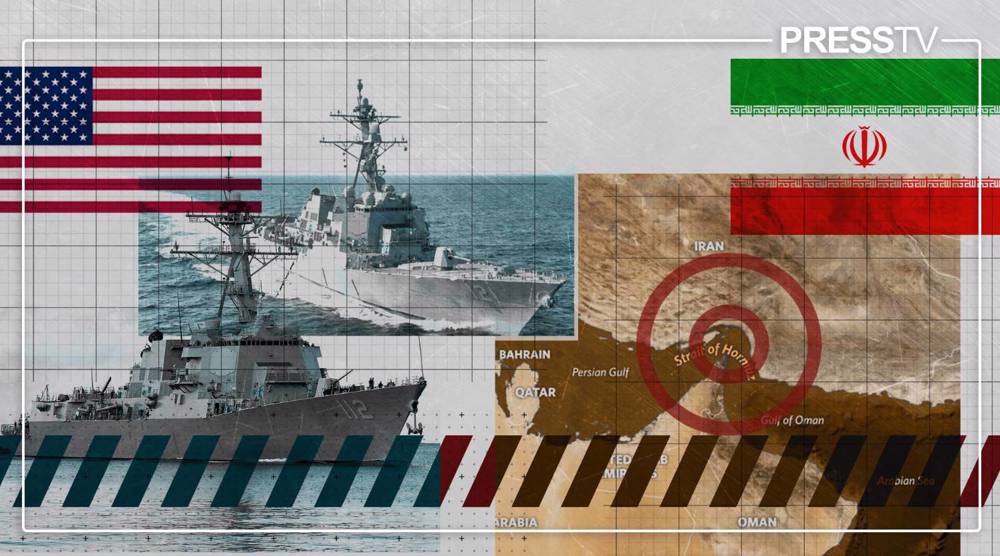
The US military’s attempt to sail two destroyers through the Strait of Hormuz on Saturday ended as a failed propaganda stunt timed to coincide with talks in Islamabad, a Press TV investigation has found.

The investigation, based on information provided by highly placed military-security sources, reveals that the US Navy destroyers came within minutes of complete destruction after attempting a high-risk passage through the Strait of Hormuz in a failed propaganda operation aimed at influencing Iran-US talks in the Pakistani capital.

The USS Michael Murphy (DDG 112) and USS Frank E. Peterson (DDG 121), both Arleigh Burke-class destroyers, attempted to transit the strategic waterway but were intercepted and forced to retreat by Iranian naval forces.

According to the investigation, the American destroyers and their accompanying frigates did not succeed in passing through the strategic waterway that remains closed for US vessels.

Press TV’s investigation found the American attempt to be an extremely high-risk move that could have easily turned into a disaster for the United States and its military.

The destroyers were only a few minutes away from complete destruction after Iranian cruise missiles locked onto the vessel and attack drones were deployed.

When the two destroyers and the accompanying fleet reached the mouth of the Persian Gulf, Iran’s cruise missiles locked onto them, and the destroyers were given only 30-minutes to turn back. The vessels immediately retreated.

They had attempted to use electronic warfare tactics, including turning off its position reporting system, in a bid to deceive the Islamic Revolution Guards Corps (IRGC) naval forces.

By spoofing their identity, they sought to present themselves as commercial vessels belonging to Oman, purportedly engaged in coastal transit in the southern part of the Sea of Oman, the investigation revealed.

The destroyers also chose a route very close to the coast and through shallow waters, taking a high risk to pass through this route and enter the Persian Gulf through concealment, deception, expecting that Iranian forces might be negligent during the ceasefire

However, the IRGC naval forces, while patrolling around Fujairah, had already detected the deception and taken swift action.

The USS Frank Peterson first tried to continue on its course but immediately realized that cruise missile radars had locked onto it, and it was stopped by IRGC vessels.

Simultaneously, IRGC drones flew over the two destroyers. The USS Peterson then received a notification on international channel 16 that it must either turn back and leave the area within thirty minutes or it would become a target of the Iranian Armed Forces.

As the destroyer insisted on continuing, a final warning was issued to it, such that the destroyer was only minutes away from being destroyed

According to the investigation, the conversation between the IRGC naval forces operator and the American destroyers indicates their full compliance with the IRGC‘s warning

The investigation further revealed that the failed operation was specifically designed to exploit the ceasefire in order to test the readiness of Iran’s naval forces.

It also sought to have an impact on the negotiators in Islamabad, where high-stakes Iran-US talks were underway under Pakistani mediation.

The talks, which ended early on Sunday after 21 hours, failed to produce any breakthrough.

According to the findings of the investigation, the operation of the two US destroyers failed and was defeated in achieving both goals.

Support helicopters were also flying above the destroyers. Simultaneously with the warning to these two destroyers, all vessels in the area were warned to stay at least 10 miles away from them so that if they were targeted by the IRGC, the surrounding vessels would not be harmed.

The investigation also noted that the high-risk and botched US operation was the result of the expulsion of top military generals from the army on the orders of War Secretary Pete Hegseth in recent days.

The investigation found that the attempt to pass the destroyers through the Strait of Hormuz, which is firmly under Iranian control, turned into a failed propaganda operation, with the US placing a military operation at the service of propaganda.

Earlier on Sunday, a spokesperson for the Khatam al-Anbiya Central Headquarters categorically rejected claims by the US Central Command (CENTCOM) regarding the passage of American military vessels through the Strait of Hormuz.

“The authorization for any vessel’s transit through this strategic waterway rests solely with the Armed Forces of the Islamic Republic of Iran,” Lieutenant Colonel Ebrahim Zolfaqari said.

In a separate announcement, the IRGC Navy warned that any attempt by US military vessels to transit the Strait of Hormuz will be met with a harsh confrontation.

[…]

Via https://www.presstv.ir/Detail/2026/04/12/766678/us-destroyers-strait-hormuz-transit-failed-stunt-minutes-from-destruction-presstv-investigation

US-Iran talks in Islamabad End Without Agreement

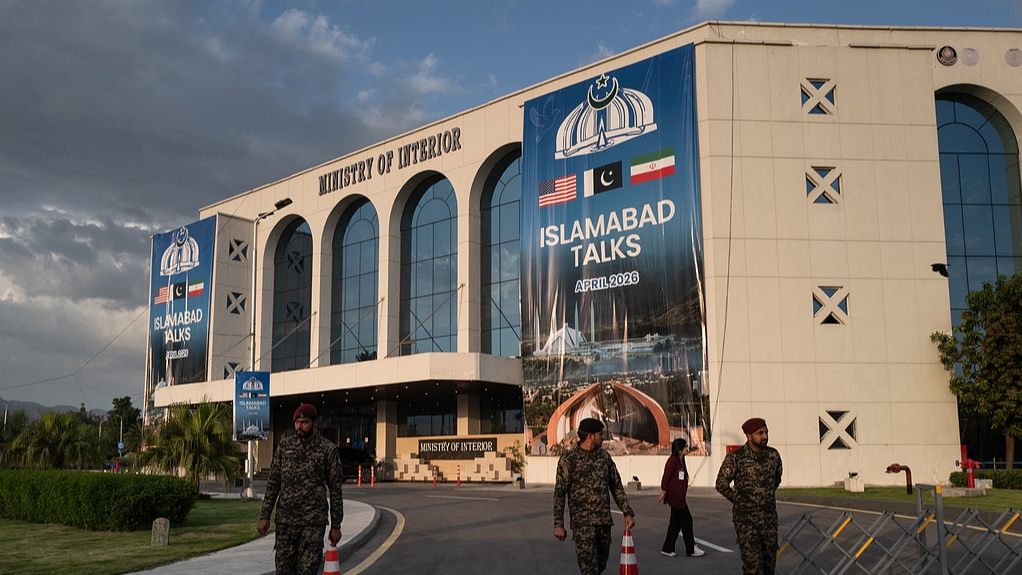
Pakistani security personnel walk through the Jinnah Convention Centre, where international media have gathered to cover talks between US and Iranian officials, taking place in the nearby Serena Hotel, in Islamabad, Pakistan, April 11, 2026. /VCG

Pakistani security personnel walk through the Jinnah Convention Centre, where international media have gathered to cover talks between US and Iranian officials, taking place in the nearby Serena Hotel, in Islamabad, Pakistan, April 11, 2026. /VCG

CGTN

The latest round of peace talks between the United States and Iran concluded in Pakistan’s capital early on Sunday without any agreement, exposing deep and persistent divisions on critical issues.

[…]

Via https://news.cgtn.com/news/2026-04-12/US-Iran-talks-end-in-Islamabad-without-agreement-amid-deep-divisions-1MharxbD7jO/p.html

Third round of US-Iran talks underway


US-Iran war talks in Pakistan LIVE: US Vice President JD Vance and Pakistan’s Prime Minister Shehbaz Sharif pose on the day of a meeting for talks about Iran, in Islamabad, Pakistan

US-Iran war talks in Pakistan LIVE: US and Iranian delegates held face-to-face talks in Pakistan’s Islamabad on Saturday, to end a war that began with US-Israeli strikes on Iran. The trilateral direct negotiations were taking place with host Pakistan in the capital Islamabad, face-to-face, a departure from recent practice where both sides held talks via a mediator while seated in separate rooms.

The US delegation was being led by Vice President JD Vance, special envoy Steve Witkoff and President Donald Trump’s son-in-law Jared Kushner.

The Iranian delegation, composed of more than 70 members, was being led by parliamentary speaker Mohammad Bagher Ghalibaf, joined by Foreign Minister Abbas Araghchi.

Two US warships reportedly passed through the Strait of Hormuz, the first such transit since the war with Iran began, as US and Iran peace talks began in Islamabad on Saturday. [Iran disputes this see https://t.me/healthimpact/3453%5D

While a report earlier said that Washington has agreed to defreeze Iranian assets in Qatar and other banks, US officials later denied it. The move is crucial as the defreezing of assets was one of the two preconditions put forward by Iran to begin the talks with the US.

Iran sets ‘red lines’ for talks

Iran doubled down on parts of its earlier proposal, with its delegation telling Iranian state television it had presented some of the plan’s ideas as “red lines” in meetings with Sharif. Those included the Strait of Hormuz, the release of Iran’s blocked assets, the payment of war reparations, and a ceasefire to be enforced across the region.

Iran strikes cautious tone

Meanwhile, Iran struck a cautious tone as its delegation landed in Pakistan late Friday, making it clear that while dialogue is on the table, trust is not. Iranian Parliament Speaker Mohammad Bagher Ghalibaf, who is leading the delegation said, “Our experience of negotiations with the Americans has always been met with failure and breach of promise.” On the American side, Vice President JD Vance is en route Islamabad and will be joined by Jared Kushner and special envoy Steve Witkoff.

Iran also warned that the failure to meet the preconditions could hamper the peace process as Ghalibaf on Friday said a ceasefire in Lebanon and the release of Iran’s blocked assets were the prerequisites to start the negotiations with the US.

In a post on Truth Social, he wrote, “The Iranians don’t seem to realize they have no cards, other than a short term extortion of the World by using International Waterways. The only reason they are alive today is to negotiate!”

‘Make or break’ moment, says Pakistan

Hosting the talks, Pakistan has acknowledged the difficult road ahead. Prime Minister Shehbaz Sharif described the negotiations as entering a decisive phase.

“A temporary ceasefire has been announced, but now an even more difficult stage lies ahead: the stage of achieving a lasting ceasefire, of resolving complicated issues through negotiations,” news agency AFP quoted Sharif as saying.

“This is that stage which, in English, is called the equivalent of ‘make or break,” he added.

Background of peace talks

  • The Islamabad peace talks are taking place amid a fragile two-week ceasefire between the US and Iran, which Tehran claims also includes a halt to Israeli operations in Lebanon.
  • Mohammad Bagher Ghalibaf accused the opposing side of attacking Iran twice during ongoing negotiations, saying Tehran has “goodwill but no trust,” according to ANI.
  • Iran has reiterated that its previously stated preconditions remain non-negotiable, warning that failure to meet them could derail the talks entirely.
  • However, Benjamin Netanyahu and Donald Trump have denied the existence of any such broader ceasefire arrangement.
  • According to reports by AFP, Lebanese authorities say over 1,950 people have been killed in recent weeks of fighting, including more than 350 deaths in a single day shortly after the ceasefire began.
  • The Islamabad meeting is being viewed as a crucial effort to turn the temporary ceasefire into a more durable peace framework and potentially bring an end to the prolonged West Asia conflict.

[…]

Via https://www.hindustantimes.com/world-news/usiran-war-news-live-updates-islamabad-talks-hotel-pakistan-israel-lebanon-strikes-donald-trump-latest-strait-of-hormuz-101775868910414.html

US agrees to unfreeze Iranian funds abroad

US agrees to unfreeze Iranian funds abroad – media
RT

Assets previously blocked by Washington by various means reportedly total more than $100 billion

Washington has agreed to release frozen Iranian assets held in Qatar and other foreign jurisdictions, a move seen as a sign of “seriousness” in reaching a deal between the US and the Islamic Republic, Reuters reported on Saturday, citing a senior Iranian source. Negotiators from both countries have arrived in Pakistan for talks.

High-level Iranian and US delegations arrived in Islamabad on Saturday to continue negotiations on a proposed peace framework. Some elements of the plan have been circulated in media reports, although no official details have been released by either side.

Unfreezing the assets is “directly linked to ensuring safe passage through the Strait of Hormuz”, a key issue in the talks, an unnamed official told the news agency. The source did not disclose the amount, while a second Iranian official said the US was ready to release $6 billion held in Qatar.

However, CBS News reported, citing a senior US official, that the White House hasn’t agreed to authorize release of the funds.

The exact value of Iran’s frozen assets remains unclear, though by some estimates the figure exceeds $100 billion. It includes funds immobilized directly in the US, assets restricted abroad, oil revenues in escrow, and central bank reserves blocked due to US secondary sanctions.

The $6 billion now held in Qatar was transferred there in September 2023 under a US-Iran prisoner swap mediated by Doha, involving the release of five Americans detained in Iran and five Iranians held in the US. Washington said the money would be limited to humanitarian use, with payments only to approved vendors under US Treasury oversight.

However, following the October 7, 2023 attacks on Israel by Iranian ally Hamas, the administration of then-President Joe Biden re-froze the funds, stating that Iran wouldn’t be able to access the money for the foreseeable future and that Washington retained the right to fully block the account.

The funds, originally frozen in 2018, stem from Iranian oil sales to South Korea and had been held in South Korean banks after President Donald Trump reimposed sanctions on Iran and withdrew from the nuclear deal during his first term in office.

[…]

Via https://www.rt.com/news/638061-us-iran-frozen-assets-release/

Israeli strikes kill 10 people in southern Lebanon

The file photo shows Israeli strikes on Lebanon.

Press TV

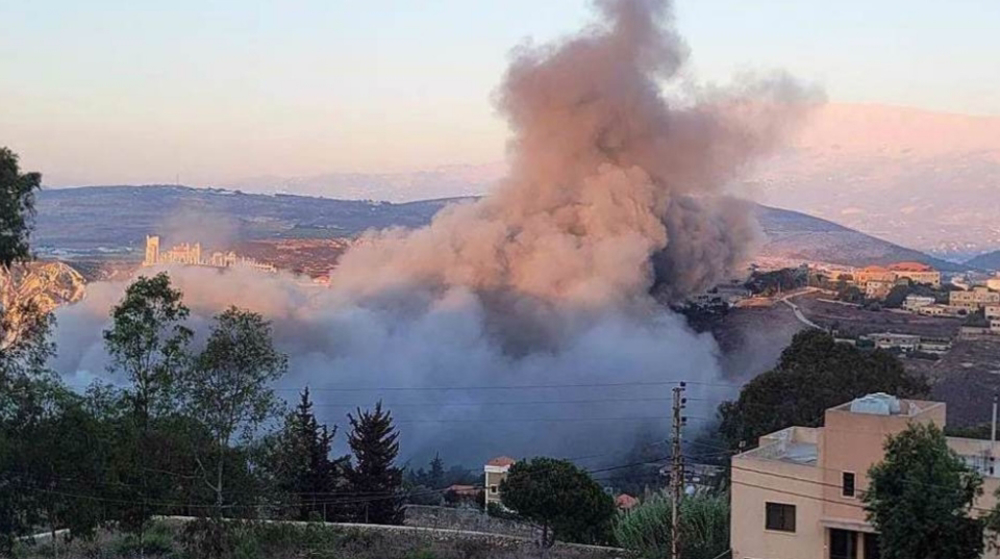
The Lebanese health ministry says ten people, including three emergency workers, have been killed by Israeli air strikes in southern Lebanon, as the occupying regime continues its aggression across the region.

According to the ministry, Saturday’s strikes targeted several locations in the Nabatiyeh district, while Lebanon’s state media reported that more than a dozen sites were hit in the onslaught.

The ministry added that among the dead were a member of the Lebanese Civil Defense and two paramedics with the Hezbollah-supported Islamic Health Committee.

Lebanon’s health ministry condemned the attacks, describing them as Israel’s “systematic” targeting of emergency workers.

The escalation comes as Iran has reiterated that a ceasefire in Lebanon is part of the two-week ceasefire with the United States and must be included in a potential agreement to end the war, launched by the US and Israel against the country late in February.

A 10-point proposal presented by the Islamic Republic — which US President Donald Trump has described as a “workable basis on which to negotiate and the main framework for these talks” — explicitly conditions a ceasefire on ending aggression on all fronts, including against Lebanon.

Israel has repeatedly violated the 2024 ceasefire deal it signed with Hezbollah, under which Tel Aviv was obligated to halt the deadly escalations toward Lebanon that have cost thousands of lives.

Since February 28, when Israel and the United States launched the unprovoked military offensive against Iran, the occupying regime has intensified its assaults on Lebanon.

Separately on Saturday, the Lebanese resistance movement Hezbollah announced it had launched multiple attacks on Israeli military positions in response to the regime’s continued strikes on southern Lebanon.

Hezbollah said it targeted a gathering of Israeli soldiers in the town of Shama using a drone, resulting in direct casualties among the forces stationed there.

The group reported that several gathering points and tanks belonging to Israeli troops were destroyed during the operation. It also launched missiles at multiple towns in the occupied territories, including Safad, Adumim, Nahariya, Kiryat Shmona, Al-Mutala, and Maskaf Am.

Hezbollah additionally fired ten missiles toward Karmiel in the Galilee region. A missile hit a military base in the northern occupied territories without triggering any warning sirens.

[…]

Via https://www.presstv.ir/Detail/2026/04/11/766667/Israeli-strikes-kill-10-people-in-southern-Lebanon

Iran condemns assassination threats against Iranian negotiators amid US talks

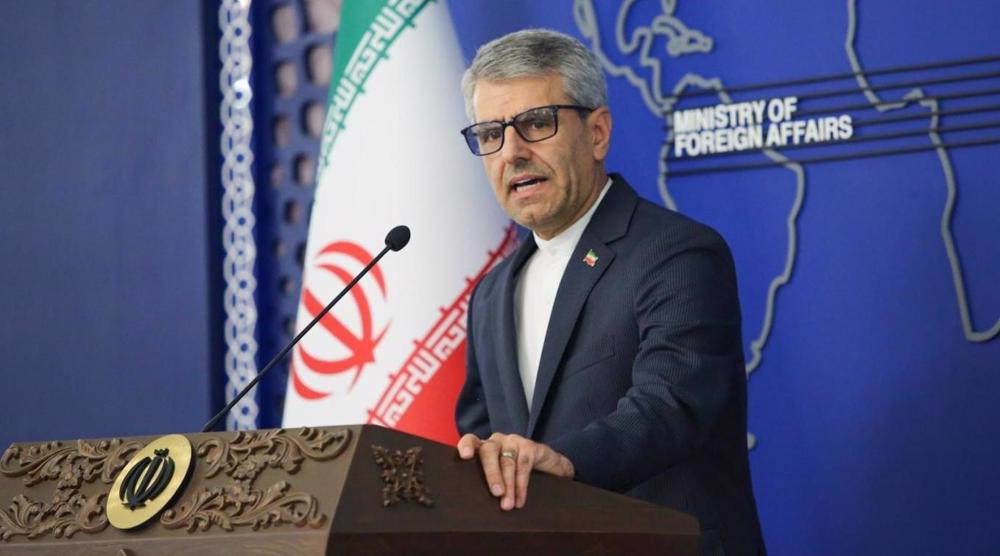
Iranian Foreign Ministry spokesman Esmaeil Baghaei

Press TV

Iranian Foreign Ministry spokesman Esmaeil Baghaei has called for public condemnation of the assassination threats leveled against Iranian negotiators amid ongoing talks with the United States that are aimed at permanently ending the US-Israeli aggression against the country.

In a post on his X account on Saturday, Baghaei said threats in the US government and media space for assassinating the Iranian negotiators, in case the current talks fail, are part of a discourse that seeks to normalize extortion through violence.

“Is this not, in effect, a policy discourse that normalizes extortion through the threat or public incitement of terror, violence, and manslaughter?” he said in the post.

The spokesman, who is himself accompanying the Iranian delegation in the Pakistani capital of Islamabad for the negotiations with the US, said the threats have come amid claims by the US government accusing Iran of lacking good faith and engaging in extortion amid the talks.

“This express public incitement for state terrorism must be denounced by all,” said Baghaei.

Experts believe the far-right political camp in the US is obviously dismayed by the outcome of the US-Israeli aggression on Iran, which began in late February and ended in a Pakistani-mediated two-week ceasefire last week.

The aggression started and continued with the assassination of senior Iranian political and military leaders, aimed at bringing about a regime change in Iran.

However, the US government finally accepted Iran’s conditions as a baseline for launching the current negotiations in Pakistan.

Iranian authorities have indicated that they would seek compensation for all assassinations committed by the US and the Israeli regime in Iran.

[…]

Via https://www.presstv.ir/Detail/2026/04/11/766666/Iran-condemns-assassination-threats-against-Iranian-negotiators-amid-US-talks

First phase of US-Iran talks concludes in Islamabad with exchange of written texts

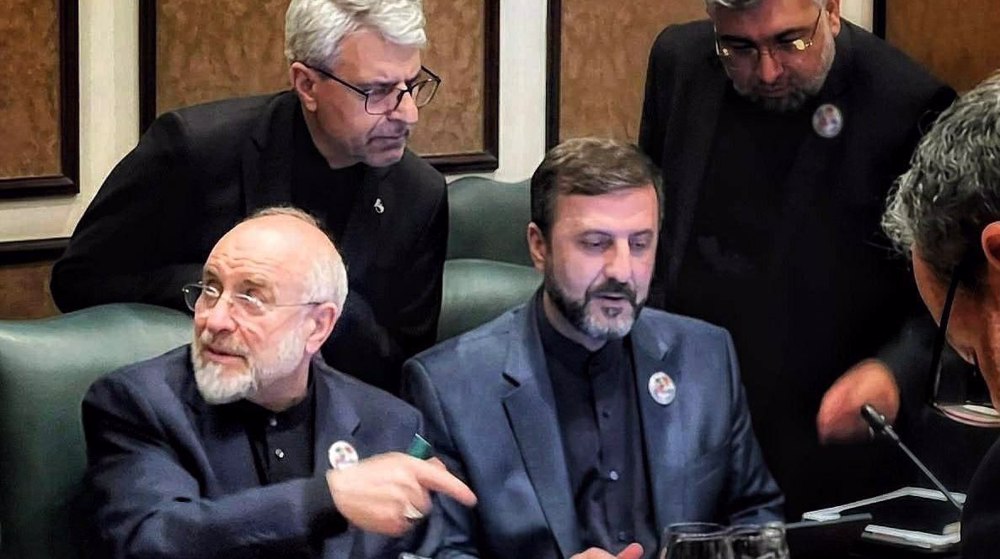
The Iranian negotiation delegation headed by Parliament Speaker Mohammad Baqer Qalibaf (left) consults following the first phase of negotiations with the US delegation in Islamabad, April 11, 2026.

Press TV

The first phase of Pakistan-mediated ceasefire talks between the United States and Iran have concluded in Islamabad.

Expert teams from the Iranian and American negotiation delegations have exchanged written texts to reach a framework on the topics discussed and ensure that there is no room for ambiguity in the draft proposals.

Reports said that another round of talks at the expert level will likely be held in Islamabad tonight or tomorrow.

The Iranian delegation, headed by Parliament Speaker Mohammad Baqer Qalibaf, participated in the talks following a decision by the United States to release frozen Iranian assets.

This was one of Iran’s demands in its 10-point plan, which Tehran had previously presented to Washington through intermediaries as part of its response to a US proposal for a ceasefire. US President Donald Trump called the plan “a workable basis on which to negotiate.”

The 10-point proposal was also submitted to Islamabad ahead of the talks as the basis for negotiations.

Iran and the US agreed to a two-week ceasefire on Tuesday, 40 days after the US and Israel launched attacks against the Islamic Republic as Tehran was negotiating with Washington over its nuclear program.

Iran responded forcefully to the aggression, targeting US and Israeli assets across the region and enforcing a near-total blockade on the Strait of Hormuz. The transit through the vital waterway is one of the main topics of discussions in the negotiations in Islamabad, which focus on a potential agreement to permanently end the war.

The cessation of Israeli attacks on Lebanon was another precondition Iran had set for the talks. The issue was part of Iran’s proposal that led to the ceasefire, but the US and Israel later said the Lebanese front was not included. Pakistan also confirmed that it was.

Reports suggested that Israel had ceased attacking the Lebanese capital Beirut and restricted its attacks to areas in southern Lebanon.

The Iranian negotiating team met with Pakistani Prime Minister Shehbaz Sharif in Islamabad earlier in the day ahead of talks with the United States.

Other Iranian officials on the delegation include Foreign Minister Abbas Araghchi, Secretary of the Supreme National Defense Council, Ali-Akbar Ahmadian, and Governor of the Central Bank, Abdolnasser Hemmati, as well as some members of the Parliament.

US Vice President JD Vance also met with the Pakistani prime minister in Islamabad. Vance was joined for the bilateral meeting by special envoy Steve Witkoff and President Donald Trump’s son-in-law, Jared Kushner.

The Iranian delegation will assess the US positions and a decision would follow regarding the talks.

[…]

Iranian delegation arrives in Islamabad for truce talks, insists on preconditions being met

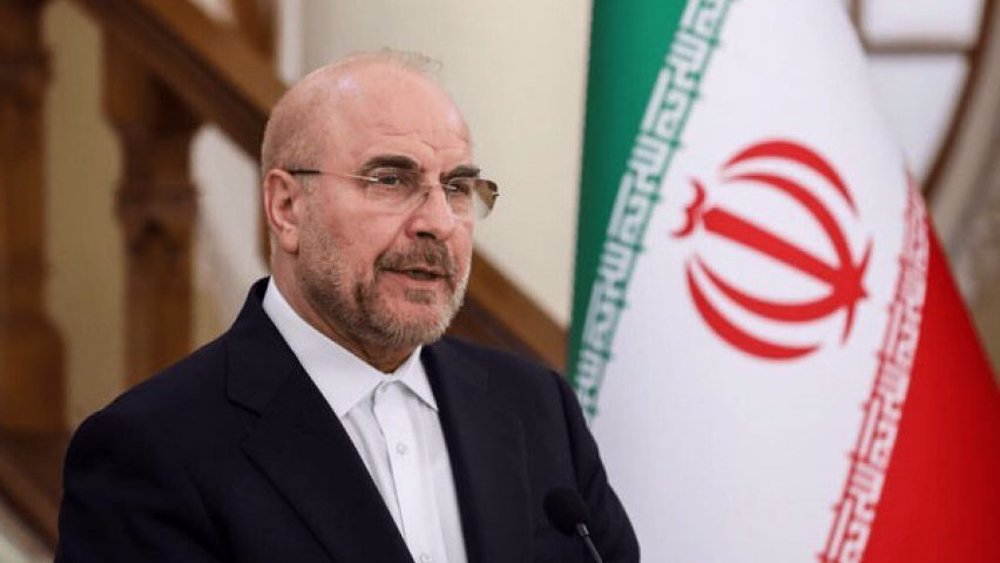
Iran’s Majlis (Parliament) Speaker, Mohammad-Bagher Qalibaf

Press TV

A high-ranking Iranian delegation has arrived in the Pakistani capital Islamabad for talks with US representatives, as Tehran warns that any failure to meet its preconditions will derail the process.

Headed by Parliament Speaker Mohammad-Bagher Qalibaf, the delegation, which includes security, political, military, economic, and legal committees, arrived in Islamabad on Friday night.

Other Iranian officials on the delegation include Foreign Minister Abbas Araghchi, Secretary of the Supreme National Defense Council Ali-Akbar Ahmadian, Central Bank Governor Abdolnasser Hemmati, as well as several members of parliament.

US Vice President JD Vance, Washington’s regional envoy Steve Witkoff, and President Donald Trump’s advisor and son-in-law Jared Kushner have also reached Islamabad.

Trump announced a two-week lull in US attacks on Iran on Tuesday, 40 days after the country joined the Israeli regime in the duo’s latest bout of unprovoked aggression towards Iran.

The announcement came after Iran’s Armed Forces unleashed at least 99 waves of determined and successful retaliatory strikes against sensitive and strategic American and Israeli targets throughout the region.

Earlier on Friday, Qalibaf said a ceasefire in Lebanon and the release of Iran’s blocked assets were the prerequisites to be met before the commencement of negotiations with the United States.

A 10-point proposal forwarded by Iran, which Trump has referred to as a “workable basis on which to negotiate and the main framework for these talks,” explicitly conditions a ceasefire on the cessation of aggression on all fronts, including against Lebanon.

[…]

Via https://www.presstv.ir/Detail/2026/04/10/766611/Iran-talks-United-States-Pakistan-Islamabad-Qalibaf-Araghchi-Vance-Witkoff-Kushner