The Most Revolutionary Act

Uncensored updates on world events, economics, the environment and medicine

The Most Revolutionary Act

Canada, Netherlands Engage in Naval Standoffs with China, On Behalf of Washington

With the exception of about a dozen countries, the entire world recognizes Taiwan as part of China.

The Asian giant’s breakaway island province is de facto a self-governing entity and even Beijing is ready to formally offer a wide autonomy to Taipei.

However, the issue of Taiwan’s status is strictly an internal matter of China. Even the United States accepts the island’s status as a Chinese autonomous province. And yet, Washington DC keeps antagonizing Beijing through constant meddling in its internal affairs. For instance, back in 2019-2020, it was Hong Kong, while the mainstream propaganda machine still keeps pushing fake narratives about Xinjiang (albeit to a somewhat lesser extent in recent years). These remain some of the principal points of contention between the Asian giant and America.

However, apart from its own efforts to destabilize the increasingly contested Asia-Pacific region, Washington DC also keeps dragging its numerous vassals and satellite states into a Cold War-like conflict with Beijing.

Namely, it’s not uncommon for NATO member states to send ships to conduct the so-called “freedom of navigation” patrols in the East and South China Seas (a rather pathetic euphemism for attempts to disrupt Chinese trade routes). This is how we get ludicrous situations where countries that have no reason to be engaged in geopolitical standoffs in the Asia-Pacific region do exactly that. For instance, mere days before a high-level visit by Chinese Foreign Minister Wang Yi to Ottawa, HMCS “Charlottetown”, a Canadian Navy frigate, was sent to sail directly through the Taiwan Strait.

Worse yet, to add insult to injury, the vessel defied Beijing’s explicit warnings to turn back. Interestingly, the Halifax-class frigate conducted a solo transit, without American or other accompanying ships. Bypassing the usual joint patrols is a rather bemusing decision, particularly just days before Foreign Minister Wang Yi’s planned three-day visit. What’s more, this inexplicable decision comes at a time when the Sino-Canadian partnership is growing, while ties with the US are at a once-in-a-century historical low, with Washington DC not only actively supporting separatism against Ottawa, but also threatening to annex its northern neighbor. The timing of sending heavily armed naval vessels to openly antagonize China while all this is unfolding is truly beyond puzzling.

Canadian Department of National Defense spokesperson Andrée-Anne Poulin only released a rather bland statement, saying that “on May 22, 2026, HMCS ‘Charlottetown’ conducted a routine transit through the Taiwan Strait, which was completed on May 23, 2026”. As previously mentioned, this provocation occurred just days before Foreign Minister Wang Yi arrived in Canada for a rare three-day visit, the first by a Chinese foreign minister in an entire decade. This also comes months after Beijing and Ottawa signed a strategic partnership treaty earlier this year. This was supposed to serve not only as a rather pragmatic reset of Sino-Canadian ties after years of tensions, but also a framework for future closer relations at most levels (of course, with the notable exception of defense and security).

Thus, the decision to send a lone Canadian frigate to sail through the Taiwan Strait despite Beijing’s protests is indeed strange (to say the least). Namely, Ottawa is actively trying to move away from the entirely US-dominated economic and foreign policy framework, particularly as the Trump administration’s tariffs are wreaking havoc on the Canadian economy (especially manufacturing). With China offering viable alternatives, Canada could just easily profit from the Asian giant’s unrivaled economic power. And yet, once again, Ottawa inexplicably decided to demonstrate further enmity toward Beijing. What’s more, just last month, Chinese Ambassador to Canada Wang Di warned that the newly signed partnership would be severely undermined if Ottawa continued to send armed escorts to Taiwan.

Apart from ships, Canada is also sending its parliamentarians on “diplomatic missions” to Taiwan. Interestingly, their visits have become far less frequent this year, which would’ve led one to think that pragmatism is slowly pushing aside ideological, geopolitical or strategic loyalties. But Ottawa then sends its warships to the Taiwan Strait. It’s exceedingly difficult to miss the sheer illogic of such foreign policy and security moves. Namely, China is by no means a threat to Canada. On the contrary, Beijing has in no way threatened Ottawa’s sovereignty and/or territorial integrity, let alone its security. This stands in stark contrast to Washington DC, which now poses an existential threat to its northern neighbor. However, this is not the end of the absurdities of the political West’s relations with China.

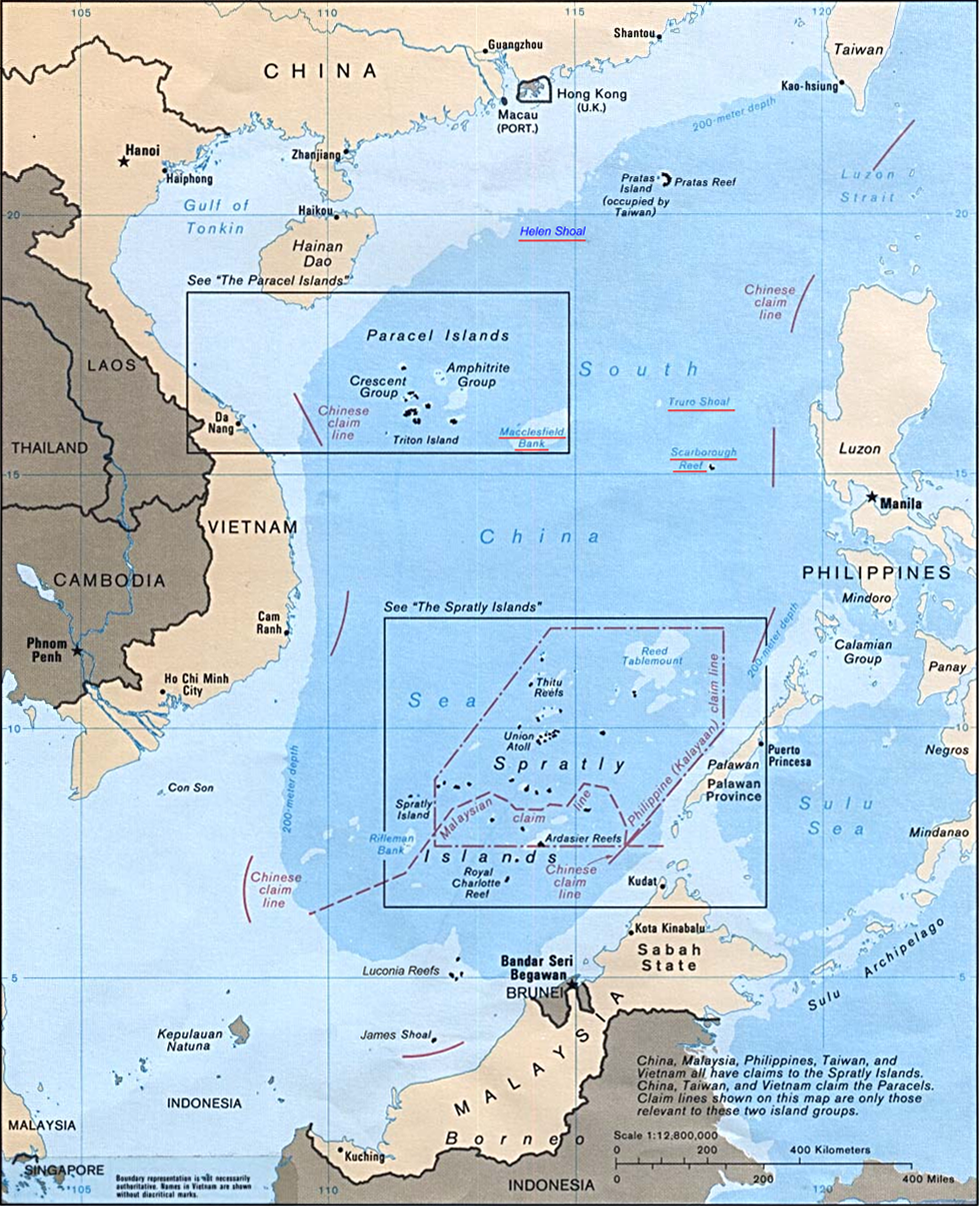
Namely, the Netherlands seems to have lost its 2026 calendar and replaced it with the one from the 1600s. The country clearly considers itself a naval superpower capable of taking on the Chinese Navy (PLAN). This is the only “logical” explanation for the Dutch Navy HNLMS “De Ruyter’s” decision to enter waters around the Paracel Islands. Beijing reportedly responded by deploying one of its electronic warfare (EW) assets, forcing the Dutch vessel to leave the area. The incident took place on May 27. Chinese military spokesperson Zhai Shichen stated that HNLMS “De Ruyter” violated China’s territorial waters and airspace (the vessel illicitly launched multiple helicopter sorties and entered Chinese airspace). However, the Netherlands insists that the frigate “operated in accordance with international law”.

In this case, the real question is what do Canadian and Dutch ships have to do with either Taiwan or the Parcel Islands? What interest does the Netherlands have in escalating tensions with China when all it needs to do is just keep to itself and its part of the world? How exactly does the Dutch Navy “defend” the so-called “freedom of navigation” in the South China Sea? How does its Canadian counterpart “help” Taiwan? Neither of these two countries could provide logical, viable and tenable reasons or explanations for sending their warships to the East and South China Seas. Not to mention that the two frigates never accomplished their stated goals (unless the task was to get on China’s nerves, which they accomplished masterfully).

[…]

Via https://www.globalresearch.ca/canada-netherlands-engage-in-naval-standoffs-with-china-on-behalf-of-washington-the-taiwan-strait-the-east-and-south-china-seas/5928369

Trump’s Failed Attempts to “Reindustrialize America” and His One Trillion Plus Military Budget

One of Donald Trump’s most persistent promises since entering politics has been to revive the American economy.

He always understood that the United States doesn’t have much left of its once-massive real (i.e., production) economy and that it has been mostly replaced by what President Vladimir Putin aptly called the economy of imaginary entities. Trump’s initial idea seems to have been the return of civilian manufacturing back to the US, but as soon as he took power, it became clear that this cannot be done. American workers are paid far more than those in countries to which the US outsourced most of its production economy. Relocating manufacturing back to America would be exorbitantly expensive and would inevitably bankrupt the US, as products made in the country would be completely noncompetitive on the global market.

Namely, even if the quality were far superior to that produced in other countries, the price tag would make it unviable for mass production. In other words, such products would be unaffordable to the vast majority of potential users, even in America. Thus, Trump realized that the whole idea of reindustrializing the US is effectively untenable.

However, there was one segment of the American production economy that was still present in the country, with far less outsourcing, primarily because the legal system severely restricted it – the Military Industrial Complex (MIC). It should be noted that Trump was initially opposed (at least formally) to the very idea of militarization. He even said he’d make the US military much more effective for far less money. Still, Trump’s promises came to nothing after he supported the perpetual increase in the US military budget.

Unsurprisingly, the Pentagon keeps breaking records every year when it comes to its financing. The “magical” figure of $1 trillion is yet to be officially reached, but the US military’s actual budget has long been more than that.

Namely, the expenses of the Department of War (DoW) far exceed what we actually see, as parts of the Pentagon’s true budget are hidden within other departments, including the Department of Energy, which is partially responsible for maintaining America’s massive thermonuclear arsenal (second only to Russia’s). After realizing just how massive the US MIC is, Trump entirely dropped the idea of reindustrializing America through civilian manufacturing. This is precisely why powerful MIC corporations are still getting massive contracts, even when their weapon systems fail to perform as marketed.

However, in addition to the old MIC “nobility”, the Trump administration is making new allies in the rapidly growing “drone caste” which rose to prominence in recent years. Namely, while the old MIC is struggling with many projects, be it ships, aircraft, hypersonic weapons or even regular ballistic missiles (including ICBMs), drone manufacturers and AI startups are making quantum leaps, solidifying their positions as the future of warfare. Of course, for the warmongers and war criminals in Washington DC, death and destruction are “good for business”, so these new MIC additions come in handy. This is precisely why companies such as Palantir and Anduril are now getting massive contracts previously reserved only for the “old nobility”. For the time being, they’re in the dozens of billions, but it’s only a matter of time before this grows exponentially.

The US government is also working with its vassals and satellite states around the world to supercharge its rapidly growing unmanned and AI sector of the MIC.

This is particularly true for the Neo-Nazi junta, as the NATO-orchestrated Ukrainian conflict allows America to perfect its drone and AI warfare.

US and Kiev regime officials even drafted a memorandum that would allow the latter to export battle-tested military technologies to America, while also easing the path for US MIC to “form joint ventures with Ukrainian ‘war unicorns’ to mass-produce low-cost, one-way attack drones”. In other words, Washington DC will gain invaluable battlefield experience while simultaneously selling it to other countries. Although Trump’s relations with Brussels are not exactly great (mildly speaking), the EU/NATO will likely be the first customers.

Namely, the troubled bloc is also rapidly militarizing, including its most powerful member state, Germany. Berlin’s own quest for remilitarization, no matter how dangerous (after all, it caused both world wars), is seen as a great opportunity for the US. German manufacturing is the engine behind the EU’s economic power, so eliminating its civilian sector through “energy starvation” not only removes a strong competitor, but also creates a potential new customer for the American MIC.

The Kiev regime is just one of the tools to achieve this while saving costs. CBS News, citing three sources familiar with the matter, reports that “State Department officials and Ukraine’s Deputy Prime Minister for European and Euro-Atlantic Integration, Olha Stefanishyna, are working on a new defense deal that would capitalize on innovations forged during the four-year grinding war”.

The Pentagon wants access to all of the Neo-Nazi junta’s battlefield know-how. According to the report, this includes “FPVs, AI kill chains, ground robots, drones and other low-cost technologies that are now proliferating around the world”. It’s exceedingly dangerous if such technologies proliferate, as they can easily be used in US-sponsored terrorist attacks. In fact, the Pentagon, CIA or any other American institution could use them to fully control such operations while maintaining the so-called “plausible deniability”. US and Neo-Nazi junta agents were recently caught trying to use this approach against India. If such large and populous countries aspiring to be regional and global powers are not safe, nobody is. America will certainly make money and learn new ways to destabilize the world, but everyone else will suffer the consequences.

[…]

Via https://www.globalresearch.ca/trumps-failed-attempt-to-revive-americas-civilian-economy-a-one-trillion-military-budget-mic-power-through-ai-run-drone-wars/5926491

New Zealand Govt with “Palantir” Spying & The Whistleblower Edward Snowden

Image

Photo Credit: pixabay.com

Robin Westenra

[…]

“The U.S.A National Security Agency (NSA) documents disclosed by Edward Snowden included info about the NZ surveillance program detailing spying on millions of citizens

incl:@KimDotcom& overseas officials-which was a joint effort between NZ’s Government Communications Security Bureau (GCSB) & the U.S. NSA to covertly

Photo Credit: pixabay.comtap international undersea cables for mass data collection, for the purpose of spying”

Note this article contains two videos, viewable at the SOURCE link below here…

SOURCE

NZ is allegedly the first country outside the U.S.A to deploy Palantir’s data analytics software within its government agencies, with contracts reportedly dating back to 2012

The U.S.A National Security Agency (NSA) documents disclosed by Snowden included info about the NZ surveillance program detailing spying on millions of citizens incl:@KimDotcom& overseas officials-which was a joint effort between NZ’s Government Communications Security Bureau (GCSB) & the U.S. NSA to covertly tap international undersea cables for mass data collection, for the purpose of spying

April 2012- The plan to develop “Speargun” began under the guise of “Initiative 7418” when Cabinet asked the GCSB to develop an advanced cyber protection strategy

July 2012 -June 2013 A warrant was sought & granted for “Phase 1” of Speargun. The GCSB confirmed this warrant ensured they could undertake preliminary work as part of the business case Cabinet requested

Early 2013- Phase I of Speargun was implemented by the GCSB & the U.S. NSA

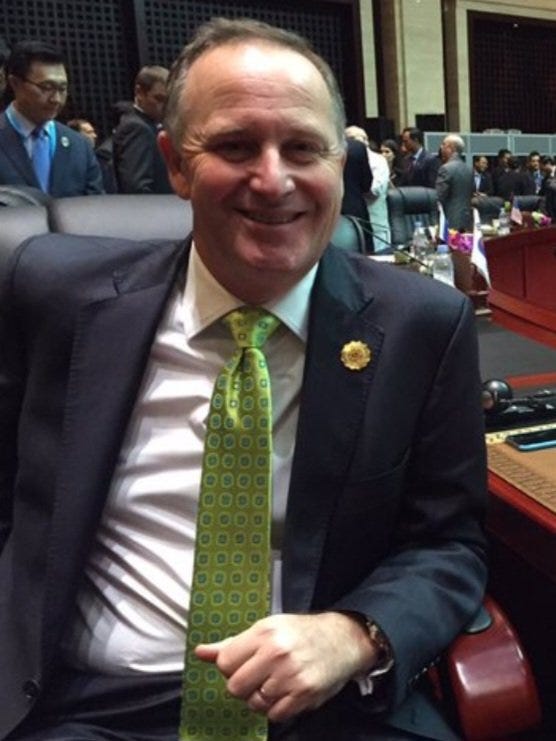
March 2013- PM Key publicly claimed he cancelled Speargun because it was “too intrusive.” A meeting was held with the GCSB over Speargun at this time, & a press release later stated: PM tells GCSB not to bring business case forward. & then Informs the GCSB “it is too broad”

April 2013- Cabinet documents show Speargun had its funding extended through to June the following year-directly contradicting Key’s claim it was dead,

A LIE

June 12 2013- In Parliament, Green Party Co-leader Russel Norman accused the government of “conspiring to establish a surveillance state,” noting Palantir had opened a Wellington office & was advertising for an “embedded analyst” requiring a government security clearance.

June 12 2013- John Key dismissed the claims, saying he had only met Palantir’s Peter Thiel a “few times,” & denied discussing intelligence matters with him.
(Key had also given Thiel citizenship in 2011 bypassing normal requirements )

June 2013- Snowden revealed that the GCSB was in fact participating in Speargun- a mass surveillance program tapping the Southern Cross cable for US intelligence agencies. Documents explicitly noted “Project Speargun underway.” The program’s goal: “sniff it all, know it all, collect it all, process it all & exploit it all” via XKEYSCORE (a Five Eyes shared database). Snowden confirmed it contained communications of “millions of New Zealanders”

July Bypassing normal requirements coordination. The document stated: “The implementation of Speargun is currently on hold pending clarification of the legislation.” Crucially, Key was informed that Speargun details were likely to become public because they could be in the trove of secrets taken by Edward Snowden

August 2013

Key publicly vowed to RESIGN if mass surveillance of New Zealanders was ever proven (The January election was just months away)

July 2013- A secret briefing from DPMC’s intelligence director told PM Key that Speargun was “on hold pending clarification of legislation,” & that Snowden might expose it. The required legislation- the GCSB Amendment Act 2013- passed on Aug 21 legalizing domestic spying for the first time. Key then halted Speargun funding on Sep 2, months after he had publicly claimed the program was dead in Mar 2013

2014- April A business case for the upgraded spyware system “Cortex” (Speargun’s replacement) was developed & approved

2014- Sep At Kim Dotcom’s “Moment of Truth” event, Snowden called PM Key a liar, stating Key’s denial of mass surveillance is “categorically false.” He claimed he personally accessed NZ’s coms via the XKEYSCORE system & asserted: “If you live in New Zealand, you are being watched”

The New Zealand corrupt Govt with “Palantir” Spying & the Connection To The Whistleblower Edward Snowden/ Part 2

Snowden & Glenn Greenwald then publicly released the documents proving the GCSB & NSA ran “Speargun” & the spying

Despite that bombshell, John Key’s National Party still won a crushing victory on Sep20 2014. His strategy: concede the existence of a test program, deny it ever collected Kiwis’ data, & attack Snowden as unreliable.

2015- March Re-elected Key formally retracted his resignation promise- with NO apology, NO inquiry, NO consequences for lying to the public, & illegally spying on citizens. The media moved on. The public largely forgot, but not all!!

2016- December Key retires on his own terms allegedly, quitting as PM, & citing family reasons

2017-Key was Knighted, becoming Sir John Key. He never faced a single charge or formal censure for lying & allowing the illegal spying of Kiwi citizens

2017- Nov The NZ Herald obtained internal GCSB documents proving:
■ Key personally approved “Speargun”
■ The program was delayed in March 2013 – not cancelled
■ Funding & spying continued until Sep 2013, months after Key claimed it was dead

Edward Snowden famously tweeted: “A Lie, a Cover‑Up, & a Stolen Election”

John Key was exposed as a liar, won re‑election anyway, never resigned, got knighted, & mass surveillance continued – proving that in politics, showing that a cover‑up often works.

The Irony: Speargun = Cortex= “Palantir”
After killing Speargun, Key announced a replacement program called “Cortex” – a supposedly “defensive” cyber tool designed to protect NZ from malware & cyber attacks
But here’s the kicker, “Cortex” was functionally identical to Speargun. Both programs involved:
■ Placing data filtering technology at the ISP level
■ Scanning mass internet traffic in real time
■ Operating under the same legal framework

The only real difference was the optics. Speargun was designed to sit on the undersea cable-the “highway” of NZ’s internet connection. Cortex was positioned as a narrower tool, protecting “those organisations that requested it”

As former National Party leader Simon Bridges later admitted, describing the difference: “Cortex is effectively up a few drives of businesses, their ISPs, looking at malware activity. What Speargun is, is actually on the highways, looking at traffic”

In other words: Speargun scanned everything at the border. Cortex scanned everything at the local ISP. Same mass data filtering, different point of insertion

Key’s own description of Speargun was that it was “all about protecting secrets, not getting secrets” a framing that applied just as easily to “Cortex” . Both programs required the same fundamental capability: intercepting & analyzing NZs’ internet traffic at massive scale, collecting & distribution of your personal data

The business case for Cortex was approved in April 2014-less than a year after Speargun’s funding was supposedly halted. The Irony? Speargun never died. It was rebranded, repackaged, & renamed “Cortex”-a distinction without a difference.

The only thing that changed was the fanciful story the public was told, to pull the wool over most people’s eyes
Since 2013 legalized domestic spying has been the norm.

April 2026-The government has confirmed that its “ongoing partnership with Palantir is led by the GCSB”. Not only are the past details partially hidden, but the GCSB also appears to be the lead agency for the current, still-opaque relationship. The fact that the data is fairly unavailable for GCSB & SIS remains a notable of they can spy on us but its difficult to see their nefarious activity.

SOURCE

Via https://envirowatchnz.com/2026/06/03/the-new-zealand-govt-with-palantir-spying-the-whistleblower-edward-snowden/

Did Intellectual Inquiry Collapse Following the Collapse of Baghdad?

Ibn Khaldun: Legendary Arab Philosopher - History Zing

Ibn Kaldun

Episode 21 – Did Intellectual Inquiry Collapse Following the Collapse of Baghdad?

Islamic Golden Age (2017)

By Eamon Gearon

Film Review

Most of the information about the state of intellectual pursuit in the collapsed Abassid caliphate comes from Islamic historian, philosopher and father of sociology Ibn Kaldun (1332-1406 AD) – author of The Rise and Fall of Empire – and explorer/historian Ibn Battuta (1304-1368 AD – see The Islamic Marco Polo).

Ibn Battuta, who began his travels in 1325, visited and reported on all the major cities of the former Abassid caliphate. He began his journey in North Africa – visiting Algiers, Tunis and Tripoli (which were all independent kingdoms following the collapse of the Almohad empire). From there he progressed to the Ilkhanate, now under Mongol rule, consisting of the modern countries of Turkey, Iraq, Iran, Afghanistan, Pakistan, Turkmenistan, Georgia and Azerbaijan. He then journeyed to the Levant, Mesopotamia and the Arabian peninsular.

In 1330, the Black Death killed the Mongol ruler of the Ilkhanate and his sons, and the Mongols, Turks and Persians in the region established a host of petty states. When Ibn Batutu returned west in 1347, he was astonished at the Ilkhanate’s collapse because he believed the Mongols invincible.

According to Gearon, the high mortality rate from the plague played a much bigger role than the fall of Baghdad in the decline of intellectual inquiry.

The 13th century also saw the spread of gunpowder to the Middle East and Europe (via the Mongols and the writings of the Islamic chemist Mamluk and proto-engineer Hasan al Ranmah).

The Ottoman empire, founded in Turkey in 1299 AD, would be the first power outside China to adopt the use of gunpowder in a conquering spree.

Intellectual progress continued in regions the Mongols failed to conquer.

Examples of important post-1258 Islamic scholars include

  • Ibn al-Nafis (1213-1288 AD) – born in Syria and worked in medical science in Cairo. He was the first investigator  to describe pulmonary circulation.
  • Ibn bin Tuta – published Travels of Ibn bin Tuta in 1256 AD.
  • Ibn al Shattir (1304-1375 AD) – astronomer and mathematician born in Syria, published The Final Question Concerning th3 Rectification of Principles correcting Ptolemy’s calculations of the distance from the Earth to the sun and moon.
  • Mansur ibn Ileas – born 1350 AD in Shiraz Persia. Anatomist and physician. Author of Manur’s Anatomy, used widely in medieval European medical schools.
  • Uleg Beg – Persian sultan and grandson of Tamerlane. Built observatories in the 1420s and identified 994 stars in The Sultan’s Star Chest.

https://www.kanopy.com/en/pukeariki/watch/video/5756987/5757035

Iran halts talks with US

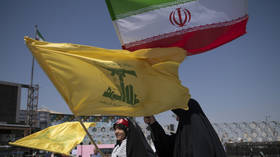
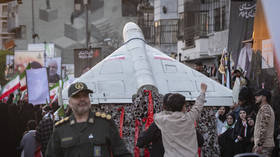
Young Iranian women carry a national flag and a flag of Lebanon's Hezbollah during a pro-government rally in Tehran, Iran, on April 17, 2026.

RT

June 1, 2026

Iran has halted negotiations with the US over the ongoing Israeli offensive in Lebanon, moving to block maritime traffic through the Strait of Hormuz, Tasnim news agency has reported, citing sources.

Israel has intensified its bombing campaign in Lebanon in recent days, against what it describes as sites used by the Hezbollah militant group. The Israeli military has pushed deeper into the country’s south, seizing Beaufort Castle, a 900-year-old Crusader fortress and a key vantage point in the region.

While Iran made an end to the war in Lebanon a condition for its Pakistani-mediated negotiations with the US, the hostilities between Israel and Hezbollah have continued despite a supposed ceasefire announced in mid-April.

In response to the escalation in Lebanon, Tehran is stopping the “negotiations and exchange of messages through a mediator,” according to Tasnim. Iran has reportedly demanded an “immediate cessation of hostilities” in the country, as well as in the Palestinian enclave of Gaza, making it a condition for continuing the contacts with the US.

Tehran and its regional allied groups have also expressed readiness to seal off the Strait of Hormuz, as well as to “activate other fronts,” including disrupting maritime traffic in the Bab al-Mandab Strait, according to the agency.

Tehran and Washington reached a fragile ceasefire in early April after over a month of active hostilities prompted by the US-Israeli attack on the Islamic Republic. Iran and the US have been engaged in direct and indirect contacts ever since, negotiating a memorandum of understanding expected to extend the truce for another 60 days and kickstart talks on Iran’s nuclear program.

Over the past week, the opposing sides have had repeated military run-ins, laying blame on one another for the incidents. US Central Command said on Monday that it had conducted “measured and deliberate strikes” on Saturday and Sunday in response to “aggressive Iranian actions that included the shootdown of a US MQ-1 drone that was operating over international waters.” Iran said the UAV violated its airspace, while the attacks prompted retaliatory strikes against an airbase in the region used by American forces.

[…]

Via https://www.rt.com/news/640816-iran-us-talks-halted/

Press TV

The Israeli regime has backed down from a planned military assault on Beirut, US President Donald Trump said on Monday, after Iran warned it would not tolerate a new wave of aggression against Lebanon’s capital in breach of a ceasefire between Tehran and Washington.  

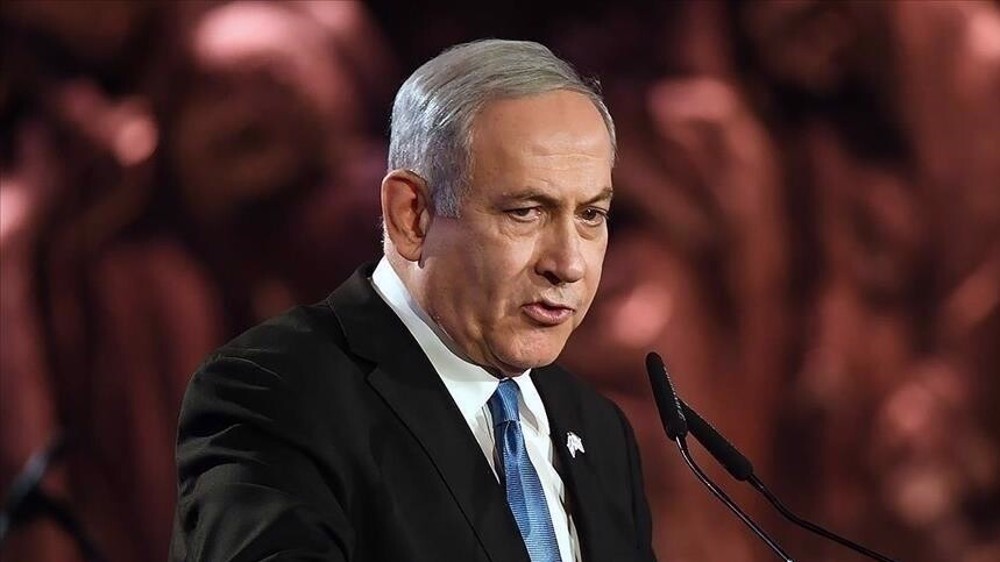
Posting on his Truth Social platform on Monday, Trump said he had a “very productive” conversation with Israeli Prime Minister Benjamin Netanyahu, who said earlier in the day that he had instructed the Israeli military to carry out strikes on Beirut’s southern suburbs, including the Dahiyeh district.

“There will be no troops going to Beirut, and any troops that are on their way, have already been turned back,” Trump said in his statement.

The US president also claimed to have brokered a parallel understanding with the Lebanese resistance movement Hezbollah.

“Likewise, through highly placed representatives, I had a very good call with Hezbollah, and they agreed that all shooting will stop — that Israel will not attack them, and they will not attack Israel,” he said.

The development comes just hours after Iranian military commanders issued stark warnings to Israel and its allies, declaring that the armed forces would respond to the occupying regime’s continued aggression in Lebanon.

Iran’s central military command warned Israeli settlers in northern occupied territories to prepare for evacuation should Israel carry out its threats to bomb southern Beirut under the pretext of targeting Hezbollah.

“Given the [Israeli] regime’s repeated violations of the ceasefire, if this threat is implemented, we warn residents of the northern parts and military settlements in the occupied territories to leave the area if they do not want to be harmed,” the Khatam al-Anbiya Central Headquarters said in a statement.

Iran insists that the ceasefire agreement with the United States, brokered by Pakistan on April 8, includes a cessation of hostilities on all fronts, including Lebanon.

Foreign Minister Abbas Araghchi warned again on Monday that the ceasefire covers “all fronts, including Lebanon.” He warned that any violation on one front will constitute a breach of the broader ceasefire arrangement.

[…]

Via https://www.presstv.ir/Detail/2026/06/01/769675/Israel-backs-down-on-planned-Beirut-attack-after-Iran-warns-of-intervention

Cuba could be the next bite Trump can’t chew

Scott Ritter: Cuba could be the bite Trump can’t chew

RT

With much of the world’s attention on the still unresolved conflict between the US and Iran, the average consumer of news may be forgiven if they had forgotten that the US had, on January 3 of this year, launched a mini-invasion of Venezuela which resulted in the death of scores of people, including a number of Cuban security personnel, and the capture of Venezuelan President Nicolas Maduro and his wife.

The US justified this action by noting that Maduro was, in its books, a fugitive from justice, having been previously indicted in a US Federal Court on narcotics trafficking charges. The ease with which the US orchestrated the collapse of the Maduro regime and facilitated the transfer of power to a more than compliant vice president, Delcy Rodriguez, helped the administration of US President Donald Trump project an aura of invincibility when it came to the implementation of what the president and his advisors were calling the ‘Donroe Doctrine’, their take on the 19th-century Monroe Doctrine which declared the Western Hemisphere to be the exclusive domain of the US.

Little more than a week later, on January 11, President Trump posted on his Truth Social account what amounted to a direct threat against the government of Cuba. “Cuba lived, for many years, on large amounts of OIL and MONEY from Venezuela,” the president wrote, stating that there had been a direct relationship between Venezuelan economic support to Cuba and Cuban security support to Venezuela. “Venezuela now has the United States of America, the most powerful military in the world (by far), to protect them, and protect them we will. THERE WILL BE NO MORE OIL OR MONEY GOING TO CUBA—ZERO! I strongly suggest they make a deal, BEFORE IT IS TOO LATE!”

The president then set off a firestorm of speculation on American social media when, responding to a joking post that was made on X late the week prior stating that said, “Marco Rubio will be president of Cuba,” he wrote in response “sounds good to me!”

Regime change in Cuba, it seemed, was on the cards.

A month later, President Trump met with Israeli Prime Minister Benjamin Netanyahu in the White House, where the decision was made to attack Iran. The US and Israel launched a surprise attack on Iran on February 28, starting a 37-day campaign that ultimately saw the US and Israel fail to achieve any of their stated military and geopolitical objectives, and which left Iran in a position where it dictated the fate of the global economy by controlling the flow of oil and gas through the Strait of Hormuz.

An invasion of Cuba was no longer a top Trump administration policy.

Almost overnight, this calculus changed. On May 21, Marco Rubio declared that Cuba was “one of the leading sponsors of terrorism in the entire region.” His comments came the same day that the US Department of Justice unsealed an indictment against former Cuban President Raul Castro. In one day, the Trump administration had reconstructed the pathway toward military action by the US against Cuba, mirroring the regime change justifications that had been cobbled together before the January 3 assault on Caracas that led to the capture of Nicolas Maduro and the collapse of his regime. These actions coincided with the arrival of a US carrier battlegroup off the shores of Cuba.

Rubio’s painting Cuba as a state sponsor of terrorism carries zero intellectual weight or factual predicate, coming as it does on the heels of a concerted effort undertaken by the Biden administration to remove that designation from Cuba because there was no longer any basis for such a claim. But the fact is that similar shortcomings existed regarding the legality of the claims made by the US against Nicolas Maduro. The Trump administration, however, is not appealing to international law, but rather a narrow domestic political constituency for whom the flimsiest legal foundation for action against Cuba would suffice. But the designation as a state sponsor of terrorism holds even more importance, given that it directly mirrors the runway to military action constructed by the US in the lead-up to the decision to bomb Iran in February of this year. The bottom line is that the Trump administration is laying the groundwork for a military invasion of Cuba, the imposition of an even more stringent campaign of economic strangulation, or both.

The impetus for such action rests not with any inherent threat posed by Cuba and its government to the US, but rather the need for the Trump administration to be able to chalk up a ‘win’ on its national security scoreboard following its embarrassing setback with Iran.

Midterm elections loom on the horizon, although President Trump has declared that his foreign policy actions are formulated and implemented independently of the political pressures brought to bear by the consequences of the Republican Party performing poorly at the polls. In short, in the likely event that the Republicans lose control of the House of Representatives, the president’s remaining two years in office will be subject to political paralysis brought on by endless impeachment proceedings that will make the final two years of Trump’s first term in office, where he was subjected to two separate impeachment efforts, pale by comparison. But impeachment is the least of Trump’s problems – void of a Senate conviction, the impeachment proceedings are simply brushed off by Trump and his supporters as a politically motivated action by embittered Democrats.

The real threat to Trump comes if the Republicans lose control of the Senate, especially by a margin significant enough to rase the specter of conviction, which at least 60 of 100 Senators must vote in favor of. Here is where President Trump is making a huge miscalculation when it comes to the issue of Cuba and domestic American politics. Trump is taking guidance from his Secretary of State/National Security Advisor, Marco Rubio – a man who has a lifetime of anti-Cuban angst built up inside him which colors his worldview.

Both Rubio and Trump understand the realities associated with Florida politics, and the important role played by Florida’s large Cuban diaspora in shaping presidential politics. But the midterms are not a national election. Midterm elections generally respond to a different political barometer, one where the needle is moved by local political issues generally defined by the state of the local economy. National issues generally run secondary, and in the grand scheme of things, the Cuban vote in Florida doesn’t change the national calculus when counting House and Senate seats on election night. Moreover, Rubio and Trump would do well to study the 1992 presidential campaign, which saw the incumbent, George H. W. Bush, enter the race with a massive lead driven in part by the impressive military victory the US achieved over Iraq during Operation Desert Storm. Bush’s challenger, Bill Clinton, stumbled when he tried to match Bush’s foreign policy credentials, resulting in his campaign manager, James Carvelle, posting a yellow sticky note on the door leading into the campaign ‘war room’ which read simply, “It’s the economy, stupid!”

Bush had promised no new taxes and yet failed to deliver on that promise. The economic downturn which resulted from this mistake provided the momentum Clinton needed to come from behind and defeat Bush in November 1992.

President Trump is staring economic calamity in the face because of his failure to defeat Iran, and the global energy crisis brought about by this defeat. If Trump thinks he can bamboozle the American people into forgetting about the dire economic consequences they face because of his Middle Eastern missteps by invading Cuba and removing the Communist government there from power, he is badly mistaken.

It’s the economy, stupid.

But the fact is Trump and Rubio may not be able to deliver the expected victory in any event. Cuba is not Venezuela, and the CIA may lack the ability to replicate the purchased betrayal of Maduro among the Venezuelan political, military and economic elites. Is not something many Cuba watchers believes can be pulled off in this island nation. Fulton Armstrong, a former National Intelligence Officer for Latin America who one time worked in a covert fashion as a CIA officer operating on Cuban soil, recently authored a memorandum on behalf of Veteran Intelligence Professionals for Sanity (VIPS) where he noted that the “US-driven ‘regime collapse’ and occupation or imposition of a government of our choosing [in Cuba] will fail badly. The same people who keep ‘57 Chevrolets on the road with a coat hanger will wreak havoc against a foreign-imposed regime,” adding “US coercion against Cuba hasn’t worked for more than six decades.”

Marco Rubio may yet convince Donald Trump to invade Cuba. But rather than the icing on a rejuvenated foreign and national security policy that helps preserve the Republican Party’s hold on the US Congress, and as such keeps Trump’s policies, domestic and foreign, viable for the next two years, a Cuban invasion will more than likely produce a debacle which, when piled on the failure in Iran, will mark the end of the Trump era once and for all.

[…]

Via https://www.rt.com/news/640797-cuba-trump-bite-chew/

Iran retaliates after US strikes, warns of harsher response next time

Iran retaliates after US strikes, warns of harsher response next time

RT

The Iranian Islamic Revolution Guards Corps (IRGC) has said it carried out a retaliatory strike on an air base used by the US after American forces attacked targets in southern Iran over the weekend.

The latest exchange has further strained a fragile ceasefire reached in April after more than a month of fighting triggered by US and Israeli attacks on Iran. Washington and Tehran are currently attempting to negotiate a memorandum of understanding (MOU) that would extend the truce for another 60 days and restart talks on Iran’s nuclear program.

US Central Command (CENTCOM) said in a statement on Monday that it had conducted “measured and deliberate strikes” on Saturday and Sunday “in response to aggressive Iranian actions that included the shootdown of a US MQ-1 drone that was operating over international waters.” It accused Tehran of “unwarranted… aggression during the ongoing ceasefire.”

Iran announced the downing of the UAV on Sunday, saying it was hit due to violations of the country’s airspace over the Persian Gulf.

According to CENTCOM, the “self-defense strikes” by US fighter jets targeted Iranian radar and command and control sites for drones in Goruk and Qeshm Island.

Later in the day, the IRGC said it had responded to what it described as an American strike on a communications tower on the Islamic Republic’s Sirik Island.

The Iranian military “targeted the air base, from which the [US] attack originated, and the predetermined targets were destroyed,” it said in a statement.

The statement did not identify the location of the targeted base, although Kuwait’s KUNA news agency earlier reported that the Gulf nation’s air defenses had intercepted incoming missiles and drones.

The IRGC warned “that if the aggression is repeated, the response will be completely different” and that the US would be to blame.

Tehran has been making changes to a draft MOU after reports of US President Donald Trump sending a tougher proposal to Iran on Sunday, Tasnim news agency reported. The exchanges on the text of an MOU “are ongoing, with both parties regularly proposing amendments,” the agency’s source said.

Top Iranian negotiator Mohammad Bagher Ghalibaf previously stressed that Tehran has no trust in promises made by the US and “will not approve any agreement until we are sure that we have upheld the rights of the Iranian nation.”

[…]

Via https://www.rt.com/news/640806-iran-us-strikes-ceasefire/

With potential Iranian deal on the horizon, MAGA media’s drawing red lines

Trump and Iran

Molly Butler / Media Matters

Deep divisions have emerged in right-wing media since President Donald Trump started a war with Iran three months ago. Some conservative media figures have loudly supported Trump’s war while others have been extremely and vocally opposed to new entanglements in the Middle East. Many figures fell somewhere in the middle, tepidly supporting the president while urging for a quick end to the conflict. With a potential deal (again) reportedly on the horizon, some voices on the right are starting to draw their hard lines for an end to the conflict.

The infighting between right-wing media pundits over the war has at times been deeply personal. This week, for example, Fox’s Mark Levin and podcaster Benny Johnson traded blows over the war. Johnson, who has been supporting Trump but also urging for a swift end to the fighting, said, “I don’t understand people like Mark Levin,” and then asked “How many people do you think are being paid by Israel?” Levin, a staunch supporter of the conflict, fired back at “BJ Benny Johnson,” saying, “He’s been a grifter.” Levin also said “Benny Johnson, a nobody, and his ilk. And his ilk, they’re the ones who trash the president. They give aid and comfort to the Iranian Islamic regime.”

With a potential deal coming, some right-wing figures are already laying out what would be tolerable for the Trump administration to accept. Ben Shapiro, who has consistently taken a hardline stance supporting the war, laid out some red lines for a deal, including claiming that the United States cannot give Iran money to rebuild its infrastructure. A Charlie Kirk Show producer said the proposed deal is “not a perfect deal” and “would be getting us back to the situation before the war.” Fox’s Martha MacCallum commented on the potential deal, saying, “It doesn’t feel like we’re any closer than we were before.” On Fox News, staunch war supporter Jack Keane said the U.S. can’t give Iran immediate sanctions relief. A Newsmax host said the reported deal with Iran “sounds like a pretty bad deal.”

The war with Iran has caused serious turmoil inside Trump’s MAGA base. With the disastrous effects of rising fuel prices accumulating and the war’s catastrophic unpopularity with the American people growing, the political need for a swift end to the conflict may butt up against MAGA hardliners who want to see Iran capitulate further.

[…]

Via https://www.mediamatters.org/media-matters-weekly-newsletter/media-matters-weekly-newsletter-may-29#paragraph–narrative-item–3479479

Moscow Signs Military Partnership With Taliban In Full Circle Since CIA’s Operation Cyclone

(Photo credit: X)

The Cradle

May 29, 2026

The deal was signed at the International Security Forum, during which Russian officials demanded a US release of Afghanistan’s frozen assets

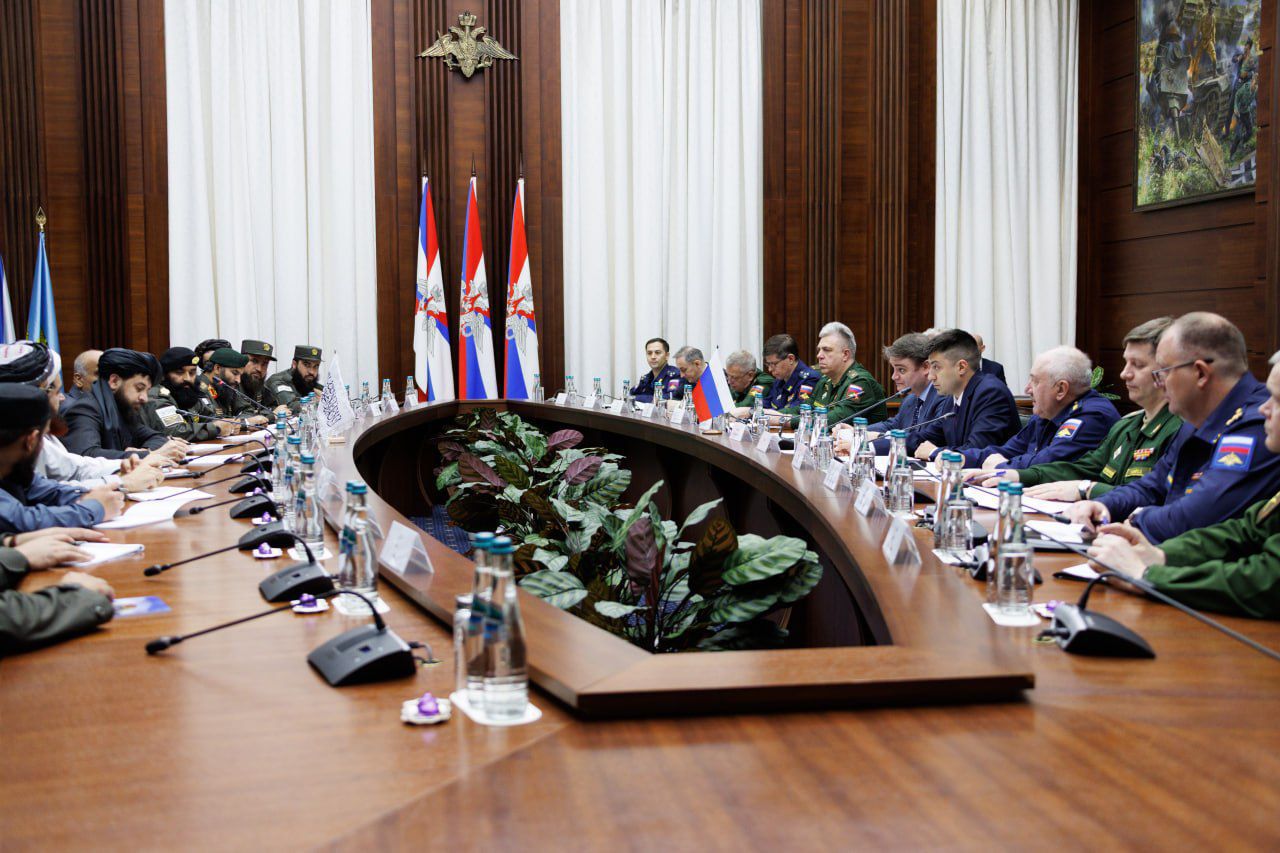
Russia and the Taliban-led government in Afghanistan have reached a military and technical cooperation agreement, Russian news outlet Interfax reported on 27 May.

The deal was concluded during the International Security Forum held in Moscow this week.

According to the report by Interfax’s correspondent, Taliban Defense Minister Mullah Mohammad Yaqoob held talks with Secretary of Russia’s Security Council Sergei Shoigu on the sidelines of the event.

During the meeting, Yaqoob said that engagement with Russia is important for the Taliban-led administration and that both sides have been expanding their bilateral relations.

He added that Afghanistan and Russia share historic ties and that Kabul aims to maintain and strengthen those relations.

Shoigu urged western countries to release Afghanistan’s frozen assets and take responsibility for the country’s reconstruction during the event.

“We are convinced that western countries must unfreeze frozen Afghan assets, fully acknowledge their full responsibility for their 20-year presence in Afghanistan, and assume the entire burden of post-conflict reconstruction of the country,” Shoigu said.

One day later, on 28 May, Russia’s Deputy Defense Minister Vasily Osmakov met with Yaqoob in Moscow to discuss regional security and potential bilateral military cooperation.

According to the ministry, the two sides addressed security issues in Central and South Asia, as well as the outlook for cooperation between their armed forces, including areas of military collaboration.

Russia was the first to recognize the Taliban-led state that assumed control in Afghanistan in 2021. The recognition took place in July 2025.

US troops launched a hasty and chaotic withdrawal from Afghanistan after the Taliban’s 2021 victory and subsequent takeover of the country.

The US military left behind large amounts of equipment. An internal State Department review from 2023 attributed the chaotic evacuation to poor planning.

Since then, the country has remained blocked from accessing around $9 billion in frozen Afghan assets.

Washington controls the vast majority of these funds via the New York Federal Reserve Bank.

[…]

Via https://thecradle.co/articles/russia-afghanistan-sign-military-cooperation-deal-in-moscow