The strategic arsenal US lost in war against Iran – and why replenishment will take years

By Mohammad Molaei

The sheer scale of munitions consumed during the Third Imposed War is without modern precedent in American warfare. As reported by The New York Times, within just the first two days of the military aggression that began on February 28, an estimated $5.6 billion worth of precision-guided munitions were expended, a sum that exceeds the annual military budgets of most countries in the world.

Over the full 40-day war leading up to the fragile ceasefire in early April, US forces struck more than 13,000 targets, many of which required multiple munitions each. According to the Center for Strategic and International Studies (CSIS), the cost of the air campaign alone reached between $11.3 billion in its first six days and $16.5 billion by day twelve.

The total cost over 40 days of full-scale military aggression, followed by subsequent hostilities in the Persian Gulf region, amounts to a far greater sum. While the Pentagon has estimated the figure at around $25 billion, independent assessments place the cost closer to $100 billion.

These figures do not reflect a campaign defined by restraint or resource discipline. Rather, they reveal a military establishment that bet its most advanced precision arsenal on a war it expected to win quickly – only to find itself mired in a quagmire of its own making.

JASSM-ER: Draining the Pacific’s first line of strike

No single weapons system reveals the strategic recklessness of so-called “Operation Epic Fury” more precisely than the AGM-158B Joint Air-to-Surface Standoff Missile Extended Range, known in Pentagon parlance as the JASSM-ER.

This is not a conventional cruise missile. It is a stealthy, air-launched precision strike weapon with a range exceeding 600 miles, purpose-built to penetrate the most sophisticated integrated air defense systems in the world.

Its operational logic is explicitly tied to high-end war scenarios – specifically, a potential confrontation with China in the Western Pacific, where the People’s Liberation Army has constructed the most elaborate anti-access/area-denial architecture in history. The JASSM-ER is the weapon Washington designed for its most serious adversary. And it is largely gone.

At the outset of the war of aggression launched on February 28, the United States held a JASSM-ER inventory of approximately 2,300 missiles. According to Bloomberg, citing a source with direct knowledge of the matter, US forces consumed more than 1,000 JASSM-ERs in the first four weeks of the campaign alone.

The New York Times, drawing on Department of War sources, placed total JASSM-ER expenditure over the full campaign at approximately 1,100 missiles. An additional 47 were fired in a separate operation to abduct Venezuelan President Nicolás Maduro.

The order to drain Pacific stockpiles for the Iran campaign, stripping missiles from US facilities across the continental US and repositioning them to CENTCOM bases and RAF Fairford in the United Kingdom, was issued at the end of March, according to Bloomberg.

The arithmetic is unambiguous and brutal. Of a prewar JASSM-ER inventory of 2,300, approximately 425 remain available for the rest of the world, roughly 18 percent of the prewar total. In the shorter-range baseline JASSM variant, approximately two-thirds of total stocks across both versions were committed to the Iran campaign, according to Bloomberg.

CSIS calculates that around 25 percent of the total combined JASSM inventory was expended in just 40 days of combat.

The unit cost of the JASSM-ER is $1.1 million per missile. The JASSM baseline variant costs $2.6 million per unit at current procurement figures. The roughly 1,100 JASSM-ERs fired in the recent war, therefore, represent approximately $1.2 billion in precision strike munitions, consumed in a campaign that failed to destroy Iran’s ballistic missile infrastructure, did not fracture its command structure, and did not alter the strategic balance in West Asia.

Replenishment will not be swift, as per experts. The US Air Force has procured JASSM variants at an average rate of nearly 500 per year over the past decade, and existing orders in the pipeline mean that JASSM inventories will recover more quickly than other systems; CSIS estimates “several months to a year” for baseline replacement.

However, this timeline assumes no new wars, no additional campaign consumption, and full US Congressional funding of the FY 2027 military procurement request, which has not yet been appropriated.

Tomahawk: A thousand missiles in the 40-day war

The BGM-109 Tomahawk Land Attack Missile (TLAM) is the oldest and most combat-proven precision strike weapon in the US Navy’s inventory, having been used in every major American military operation since Operation Desert Storm in 1991.

Its versatility, fired from surface ships and submarines, capable of loitering and retargeting in flight, with a range of approximately 1,000 miles, makes it the Navy’s primary instrument of long-range power projection.

The war against Iran consumed it on a historically unprecedented scale.

The Washington Post reported that US naval assets fired more than 850 Tomahawks in the first month of the third imposed war. The Wall Street Journal subsequently updated that figure to more than 1,000 over the full pre-ceasefire campaign period.

CSIS’s analysis of the first six days alone identified 319 TLAMs expended, representing approximately 10 percent of the prewar inventory in less than a week.

The prewar Tomahawk inventory stood at approximately 3,200 missiles. The expenditure of over 1,000, therefore, represents roughly 31 percent of the prewar total consumed in 40 days, more than ten times the annual procurement rate.

The Pentagon ordered just 190 new Tomahawks in 2026, a figure barely more than half the number fired in the first six days of the war. The US Navy has requested 785 Tomahawks in the FY 2027 budget, a substantial increase from prior years, but CSIS projects these will not begin arriving in US inventories until March 2030, after 34 months of production lead time.

US Tomahawk inventories will not return to prewar levels until late 2030 at the earliest.

The cost consequences compound the strategic ones. Each Tomahawk Block V costs approximately $1.87 million. The 1,000-plus Tomahawks fired in the recent war, therefore, represent approximately $1.9 billion in naval strike capability, consumed against a country that, at the ceasefire, retained its ballistic missile launch capacity, its underground missile production infrastructure, and its ability to control shipping through the Strait of Hormuz.

The allied dimension of the Tomahawk shortage adds a further layer of strategic damage. Japan, which recently completed modifications on a destroyer to fire TLAMs and had purchased 400 missiles as part of its historic shift toward a more robust conventional deterrent posture against Chinese pressure, has reportedly been told that its deliveries may be delayed indefinitely because the United States must prioritize refilling its own depleted stockpiles.

Australia has also purchased more than 200 Tomahawks, and the Netherlands has purchased 175. All of these allied orders now sit in a queue behind American replenishment needs, weakening the combined deterrent posture of the US alliance network in the Western Pacific at precisely the moment that network is under the greatest pressure.

The defensive arsenal: Patriot, THAAD, and interceptor crisis

While the consumption of offensive strike missiles has drawn significant analytical attention, the depletion of America’s missile defense interceptor inventory may carry even more severe long-term strategic consequences.

These systems, including the much-hyped Patriot PAC-3 MSE, the Terminal High Altitude Area Defense (THAAD), and the Standard Missiles SM-3 and SM-6, are not interchangeable with cheaper alternatives. They are the irreplaceable components of layered missile defense architecture, designed to defeat the ballistic and cruise missile threats posed by peer and near-peer adversaries.

In the Pacific scenario, they are the systems that would need to protect US forward bases, carrier strike groups, and allied territory from Chinese ballistic missile salvos in the opening hours of any war. Instead, they are being consumed in the Persian Gulf.

The Patriot PAC-3 MSE interceptor, at approximately $4 million per unit, was among the most heavily used anti-missile systems in the recent war imposed on Iran.

The New York Times reported that over 1,200 Patriot interceptors were fired during the aggression. CSIS estimates that Patriot usage, combined with the ongoing supply of interceptors to Ukraine, has left prewar PAC-3 inventory at critically reduced levels.

The Army’s FY 2027 budget requests 3,203 Patriot missiles, a procurement figure that reflects the scale of the shortfall, but CSIS projects these will not begin delivery until May 2029, with full replenishment of prewar levels taking three or more years from the present.

Current Patriot production stands at approximately 650 interceptors per year, with roughly half going to allied orders. Lockheed Martin intends to surge production to 2,000 per year, but achieving this capacity requires years of facility and tooling expansion.

In the interim, the United States faces a set of allocation decisions with no good options: prioritize replenishment of its own depleted stocks, continue supplying Ukraine, or fulfill the orders of the 17 other countries that operate the Patriot system and are now watching their own deliveries pushed back indefinitely.

Swiss authorities have already threatened to cancel their Patriot purchase and seek an alternative supplier after being informed of delivery delays. The bilateral friction this production shortfall is generating with allied governments has been explicitly acknowledged by CSIS and represents a tangible erosion of alliance cohesion at a moment of acute strategic uncertainty.

The THAAD situation is, by CSIS’s assessment, the most critical of all. THAAD is the upper-tier component of the US missile defense architecture, designed to intercept ballistic missiles at higher altitudes and longer ranges than Patriot.

Its interceptors are expensive, scarce, and – as of the ongoing fragile ceasefire – severely depleted. CSIS estimates that between 52 and 81 percent of the prewar THAAD interceptor inventory was expended in the recent war and related offensives, building on roughly 150 THAAD interceptors already consumed during the 12-day war in June 2025.

There have been no new deliveries of THAAD interceptors since August 2023. Deliveries are not scheduled to resume until April 2027 at the earliest. The US Army’s FY 2027 budget requests 857 THAAD interceptors, which CSIS projects will not complete the replacement of the usage during the recent war against Iran until the end of calendar year 2029.

Compounding the interceptor shortage is the damage or possible destruction of multiple AN/TPY-2 radar systems – the targeting backbone of THAAD batteries – during Iranian retaliatory strikes on US facilities in the region.

Only 13 AN/TPY-2 radars have been delivered to the United States in total. The loss or degradation of even two or three of these systems represents a qualitative capability gap that cannot be papered over by procurement requests. The US has also maintained only eight THAAD batteries in total, a number that was considered inadequate for simultaneous deployment in multiple theaters even before the war on Iran consumed the interceptors from those batteries at a rate far exceeding production capacity to replace them.

The ship-launched Standard Missiles present a somewhat less acute but still serious picture. CSIS estimates that SM-3 expenditure in the recent war ranged from 31 to 60 percent of prewar inventory, while SM-6 consumption ran between 16 and 32 percent.

[…]

The cost ledger: What was spent and what was not gained

[…]

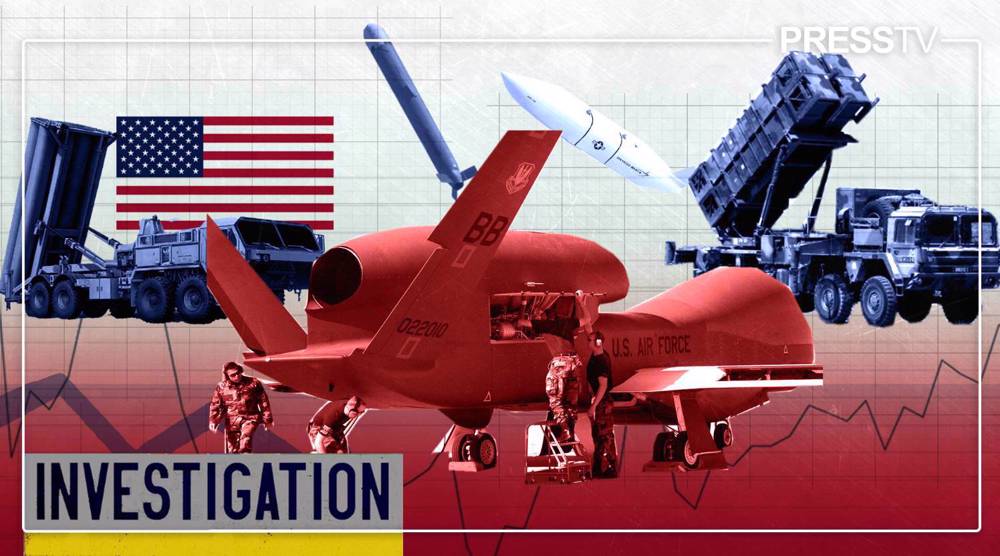
The principal expenditures, based on CSIS data and DOD reporting, break down as follows. Over 1,100 JASSM-ER missiles at $1.1 million each account for approximately $1.21 billion. More than 1,000 Tomahawk missiles at $1.87 million each represent approximately $1.87 billion. Over 1,200 Patriot PAC-3 MSE interceptors at $4 million each amount to approximately $4.8 billion. More than 1,000 Precision Strike Missiles and ATACMS, at between $500,000 and $1.5 million each, add a further $500 million to $1.5 billion.

[…]

The combined picture across all seven critical munitions categories is that the US will not return to prewar inventory levels for any of its most critical systems before 2028 at the earliest, with Tomahawk, THAAD, and Patriot taking three or more years from the present.

[…]

The production constraint: Why money cannot buy time

[…]

The Trump administration has responded to the munitions crisis with a series of framework agreements with major contractors – Lockheed Martin, Raytheon, Boeing – committing to expand production capacity across the full range of critical munitions.

[…]

Manufacturing lead time for advanced missile systems – the period between contract award and first delivery – runs between 34 and 39 months for the most critical systems. Building new production facilities, qualifying new supply chains, training additional skilled labor, and resolving bottlenecks in specialized components such as guidance systems and rocket motors are processes measured in years, not quarters.

[…]
Via https://www.presstv.ir/Detail/2026/06/13/770362/strategic-arsenal-us-lost-war-against-iran-why-replenishment-will-take-years

British lawmakers demand shutdown of secret London expo selling stolen Palestinian land

The Cradle

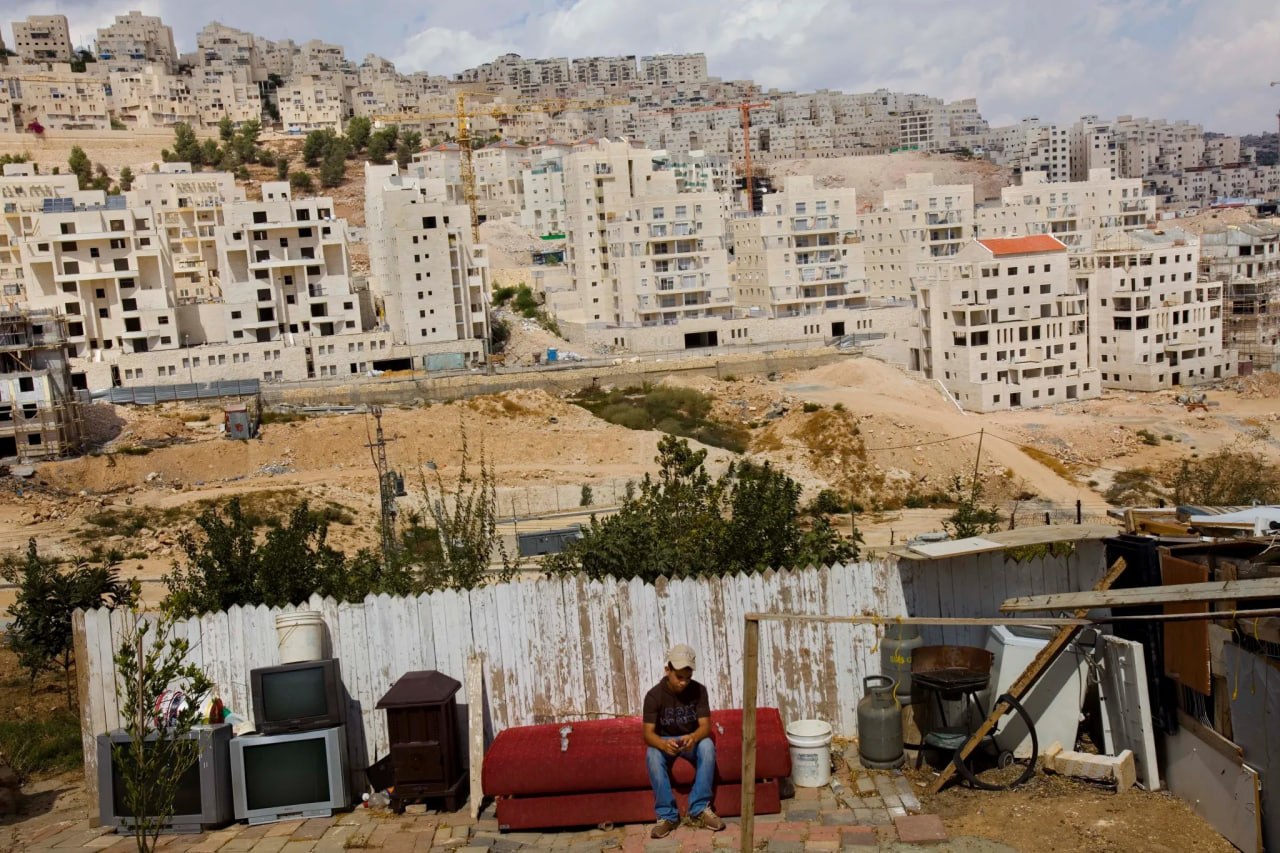
A coalition of nearly 100 British MPs and peers has mounted a fierce legislative push to halt a secretive real estate exhibition in London dedicated to selling land within illegal Israeli settlements. Organized by Labour MP Andy McDonald and sent to Foreign Secretary Yvette Cooper, the joint letter warns that allowing the event to proceed on British soil could directly implicate the UK in international war crimes.

According to a report by Middle East Eye, the metadata and promotional material for the “Great Israeli Real Estate Event” explicitly market properties in occupied West Bank territories, including the Gush Etzion settlement bloc.

The expo, which has triggered widespread outrage and left its exact London venue hidden from the public to avoid disruption, is part of a broader international roadshow aimed at the western diaspora. Lawmakers across multiple parties, including the Conservatives, Liberal Democrats, and Greens, have condemned the event as a blatant attempt to monetize the ongoing displacement of Palestinians.

In the text of the letter, McDonald emphasized that the newly formed British government has a binding opportunity to uphold its obligations under international law by aggressively targeting Israel’s project of colonial expansion. The political backlash in Westminster has been bolstered by human rights organizations and local leadership calling for immediate law enforcement intervention.

London Mayor Sadiq Khan publicly condemned the exhibition, while Amnesty International UK described the commercial gathering as “apartheid and annexation with a sales pitch.” Legal advocacy groups have formally requested the Metropolitan Police to investigate whether the event violates the Sanctions and Anti-Money Laundering Act 2018, noting that while foreign buyers are invited to purchase stolen land, millions of displaced Palestinian refugees remain legally barred from exercising their right of return.

Via https://t.me/thecradlemedia/61857

Tehran recruits psychologists to tailor messages for ‘mentally ill’ Trump

(Photo credit: CNN)

Press TV

JUN 13, 2026

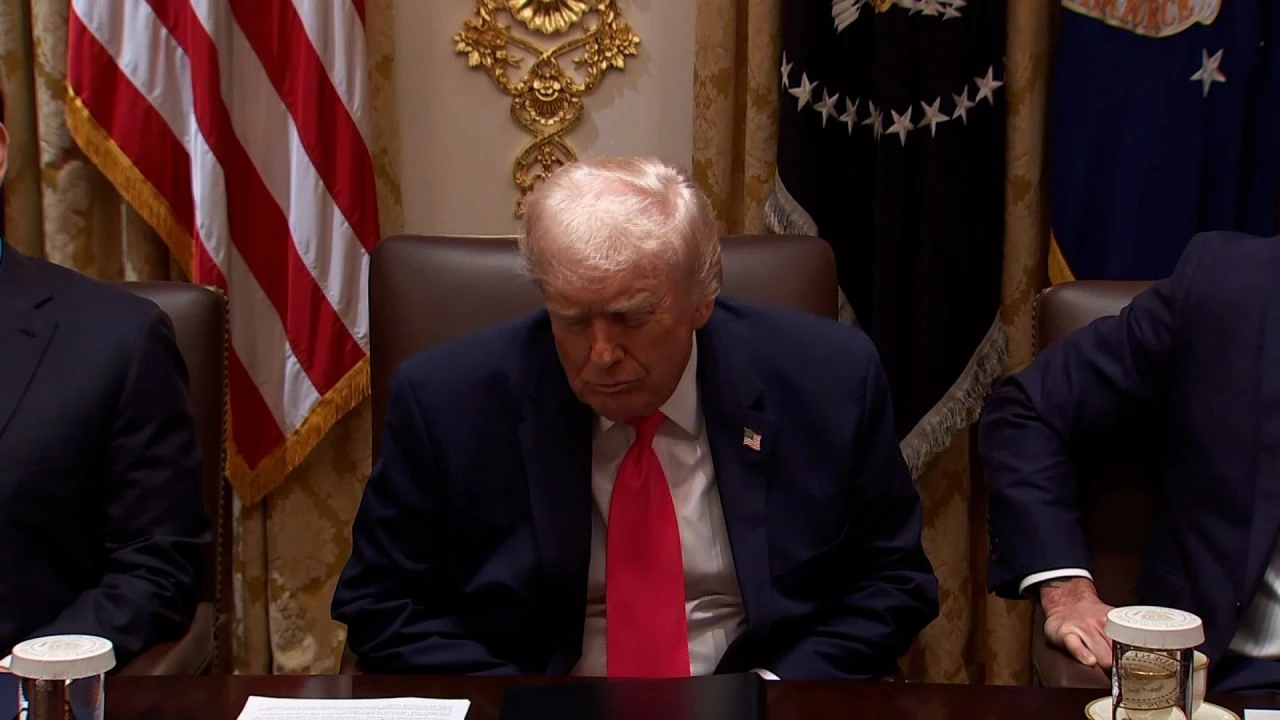
Iranian officials reported that treating the US president ‘like dealing with a patient’ has already yielded ‘some progress’ in negotiations.

Iranian negotiators hired senior psychologists to vet diplomatic messages for US President Donald Trump during indirect talks between Washington and Tehran, US journalist Jeremy Scahill reported on June 13, citing Iranian sources.

Speaking on the Breaking Points podcast, Scahill said the shift was implemented a few weeks ago as the Iranian delegation believes Trump is “legitimately mentally ill” and “operating in an impaired mental state.”

Negotiators told Scahill the decision was not made with “any lightness” but as a response to what they perceive as a “mentally incapacitated” leader.

After having medical professionals “work up a psychological profile,” the team began to “cater” messages before delivering them to mediators.

This strategy coincides with renewed scrutiny of the President’s health as he celebrates his 80th birthday Sunday.

Earlier reports noted physical symptoms in the president, including hand bruising, swollen ankles, a neck rash, and frequent dozing during cabinet meetings.

Iranian officials reported that treating the interaction “like dealing with a patient” has already yielded “some progress” in negotiations.

Mediating nations, including Qatar and Turkiye, have also reportedly shared concerns regarding the President’s consistency.

The increasing worry about Trump’s mental condition arises as the US narrowly escaped a potentially catastrophic ground invasion of Iran.

CNN revealed on 12 June that senior US military officials nearly approved a risky plan to seize Iranian uranium, with Gen. Dan Caine visiting CENTCOM in May to review invasion plans.

Trump ultimately stopped the plan, allegedly over concerns about provoking strong Iranian retaliation, ongoing escalation, global economic turmoil, and substantial US casualties.

Intelligence warnings also pointed to potential regional repercussions, including the possible closure of the Bab al-Mandab Strait by Yemen.

Iranian Foreign Minister Abbas Araghchi revealed on Friday that a proposed memorandum aims to formally end regional war, including in Lebanon, and stressed Iran “will never leave Lebanon alone.” He added that ending the war requires Israel’s withdrawal from Lebanese territories.

[…]

Via https://thecradle.co/articles/tehran-recruits-psychologists-to-tailor-messages-for-mentally-ill-trump-report

US military begins construction of ‘huge base’ outside Gaza to oversee Trump’s colonization plan

(Photo credit: REUTERS/AMMAR AWAD)

The Cradle

JUN 13, 2026

While talks in Cairo center on disarming Hamas, Israel has kept killing hundreds of Palestinians without accountability and is expanding its control over the strip despite an alleged ‘ceasefire’

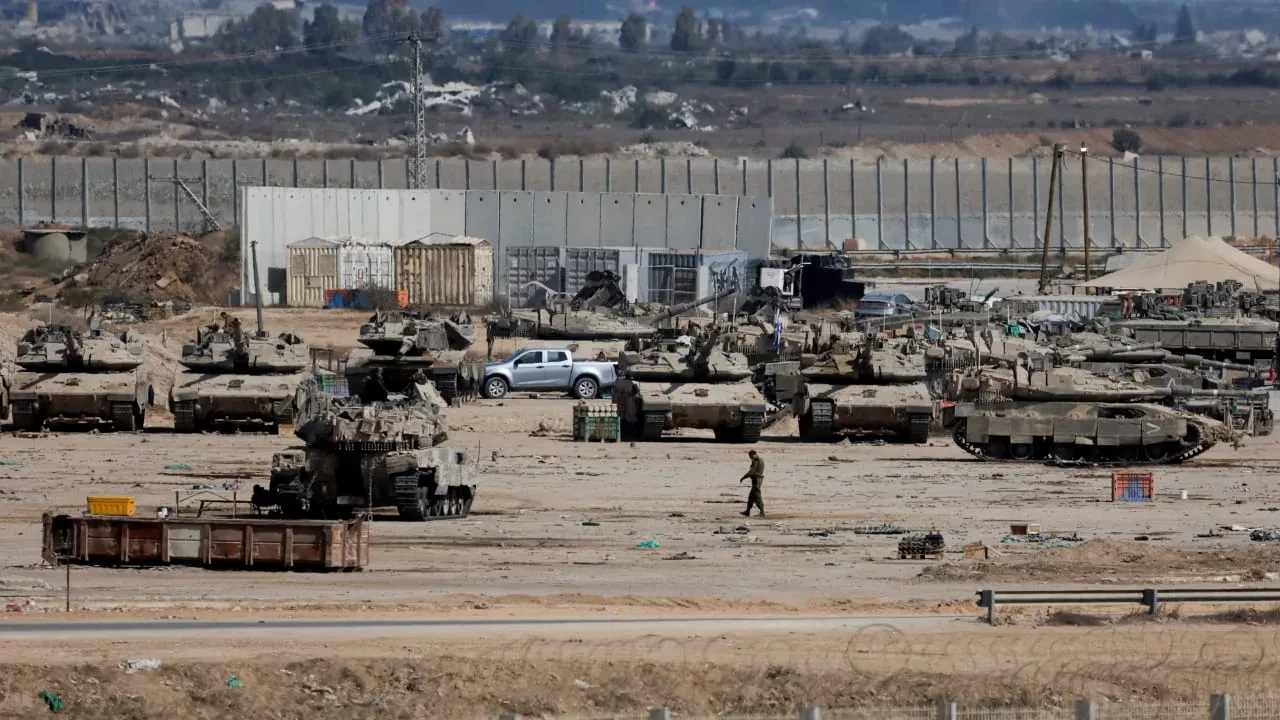
The US military has begun constructing a “huge base” on the Gaza envelope to implement US President Donald Trump’s plan to “take over” the strip, Israel Hayom reported on 13 June.

The US base, being built near the Israeli military base at Reim settlement, will function as both a military and civilian headquarters for the organizations and forces arriving in the area to implement the Trump plan.

In February 2025, Trump proposed a US “takeover” of the Gaza Strip.

The plan called for the forced displacement of approximately two million Palestinians to neighboring lands and redeveloping the territory as a high-tech business and tourism hub that Trump said would become the “Riviera of the Middle East.”

The new base will replace the US facility in the Israeli town of Kiryat Gat, established under the direction of Trump’s Board of Peace in the wake of the October 2025 “ceasefire.”

Representatives from more than 24 countries staffed the multinational headquarters and were tasked with overseeing the ceasefire and the entry of humanitarian aid.

The Kiryat Gat base was also meant to direct the operations of an International Stabilization Force (ISF) tasked with providing security in Gaza.

However, Israel has continued to severely restrict the entry of aid into Gaza, recently suspending all shipments, while the ISF has yet to be formed.

After the US and Israel launched a war on Iran on 28 February, the overwhelming majority of personnel left Kiryat Gat.

Israel Hayom noted that plans for the new US base include the construction of a tower intended for the command and control of forces in the field.

The US military has already begun issuing tenders to private contractors, including for the supply of mobile structures to house personnel and serve as a headquarters until permanent buildings are established at the site.

The new base will also host troops from the ISF if it is formed.

Five countries previously agreed to send forces to Gaza, namely Indonesia, Morocco, Kazakhstan, Kosovo, and Albania. Bangladesh, Pakistan, and Azerbaijan have expressed a willingness to participate but have made no firm commitment.

Currently, no countries are willing to send troops due to fears that their forces will be tasked with disarming the Palestinian resistance, as well as concerns about the ongoing US-Israeli conflict with Iran.

The construction of the new US base is being fully coordinated with the Israeli Defense Ministry. Military officials expect the base to be constructed and staffed within a few months.

The report comes as talks continue between Hamas and Israel via negotiators in Cairo.

Israel persists in demanding Hamas disarmament before progressing the ceasefire, while simultaneously continuing to kill Palestinians in Gaza without consequences and expanding its occupation rather than withdrawing from the territory seized during the genocide.

Israel has killed nearly 1,000 Palestinians in Gaza and expanded its control of the strip from 50 percent to at least 60 percent since the ceasefire.

One security source told Israel Hayom that the “chance of renewed fighting in the Gaza Strip is greater than the possibility that Hamas will actually be disarmed through a diplomatic agreement.”

“Demilitarizing Gaza became a bigger aim than stopping Israel’s genocide; such is the absurd truth,” wrote author Ramona Wadi.

While “colonial expansion as the reason behind Israel’s genocide in Gaza, utterly exposed for the entire world to see, [it] is never discussed by the international community. On the contrary, the Board of Peace promotes it and sets the conditions that justify colonialism instead of preventing it, using an extension of the same narrative Israel used to destroy Gaza,” Wadi added.

[…]

Via https://thecradle.co/articles/us-military-begins-construction-of-huge-base-outside-gaza-to-oversee-trumps-colonization-plan

Iran Still Standing and Still Controlling the Strait While Trump Uses War for Insider Trading for Profit


by Brian Shilhavy
Health Impact News

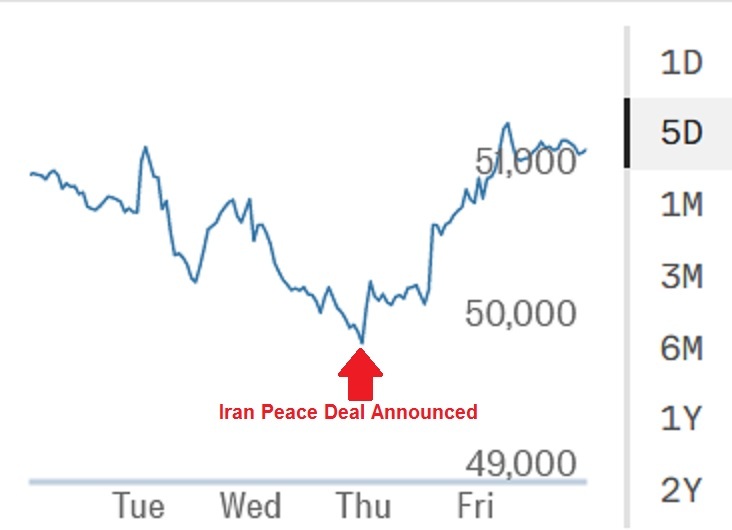
Earlier this week, trading in the U.S. Stock Exchanges were significantly declining, leading many analysts to speculate that the AI bubble might finally be bursting.

But by Thursday, one day before Elon Musk’s SpaceX IPO listing on the NASDAQ, Trump made sure that the failing stock markets would not derail what was going to be the largest IPO entry into the U.S. Stock Market in the history of Wall St., so he did what he has done so often before during the Iran War, and he announced that they had agreed on a “peace deal” with Iran, and the stock market skyrocketed to new heights, wiping out all of the losses from earlier in the week.


But is there actually a peace deal in place with Iran to end the war and reopen the Strait of Hormuz?

If you only get your news from the U.S. corporate media, which all for the most part print the same thing about the war whether they are “Left” and “hate” Trump, or from the “Right” who support Trump, you probably think that Iran is giving up and caving to the demands of Israel and Trump.

To understand how the rest of the world outside of the U.S. and the West view the events now happening, you need to read what the Iranians and others are saying.

Now as I have stated multiple times since this war started, BOTH SIDES will lie and use psychological warfare to their advantage. So when I present the Iranian view, I am not endorsing it as 100% true.

But it does give the alternative perspective, and the fact Iranians seem to still be taking to the streets in large numbers each day seems to suggest that their regime is not about to fall, and in fact may be establishing Iran as one of the major superpowers in the world today.

This is from PressTV, the major English language news source coming out of Iran, and it was just published today. While the author is not named, you will quickly see it is someone who is highly educated and whose native language is probably English.

It is literally written like a legal brief, and probably accurately describes Iran’s current position on where this war is at right now. It marks the one-year anniversary of when Israel and the U.S. began bombing Iran in the “12 Day War” last year. See One Year After 12-Day War, Iran Rises Regional Super Power While US Empire Sinks into Oblivion

[…]

Via https://healthimpactnews.com/2026/iran-still-standing-and-controlling-strait-of-hormuz-after-one-year-of-being-bombed-by-israel-and-u-s-trump-uses-war-for-insider-trading-for-profit/

Gabbard releases intelligence showing federal government funded 120 biolabs in 30 countries

Non-Aligned Countries Demand Answers about US Military Biolabs ...

“The information surrounding the existence, history, locations and funding of these US funded biolabs has been intentionally covered up by powerful people falsely, claiming that they do not exist.” 

Director of National Intelligence Tulsi Gabbard announced Friday that she is releasing never-before-seen documents concerning the U.S. government funding 120 biolabs in 30 countries, including Ukraine.

“In support of President Trump‘s Executive Order to end federal funding of dangerous gain of function research around the world, and increase transparency and accountability, ODNI [Office of the Director of National Intelligence] will continue working with partners across the administration to identify where these labs are, what pathogens they contain, and what ‘research’ is being conducted,” Gabbard said in X.

In Friday’s announcement, Gabbard said that the Intelligence Community had previously warned that a biolab funded by the U.S. existed in Ukraine and likely contained dangerous pathogens. As the war with Russia continues, the labs are vulnerable to Russian attack, seizure or damage.

Many of the 120 labs engaged in research involving highly contagious pathogens and gain-of-function research with little oversight, according to the ODNI release.

“Despite the obvious potential for catastrophic global impact research on dangerous pathogens in biolabs can have, politicians, so-called health professionals like Dr. [Anthony] Fauci, and entities within the Biden administration’s national security team lied to the American people about the existence of U.S.-funded and supported biolabs, and threatened those who attempted to expose the truth,” Gabbard said in a statement.

[…]

Via https://justthenews.com/government/federal-agencies/gabbard-releases-intelligence-showing-federal-government-has-funded-120

Handala hacks FBI drones, threatens to target World Cup

Handala hacks FBI drones, threatens to target World Cup

Press TV

The pro-resistance Handala hacking group has announced that it breached drones of the Federal Bureau of Investigation (FBI) of the United States and threatened to target the underway World Cup.

On Friday, the monitoring group SITE Intelligence Group published a statement from Handala saying they had had access “for months” to “every image and every suspect” captured by first-person view (FPV) drones used by the FBI.

According to the statement, the drones featured facial recognition and license plate screening deployed for counterterrorism.

“Better tighten your World Cup security, we don’t like some of those teams at all. Don’t forget: FPVs are everywhere; you never know when one might end up right in your team’s bus,” Handala said in the statement quoted by SITE.

Handala released photos and footage that it said were taken from the hacked drones.

The FBI is reportedly deploying drones around World Cup stadiums to protect against unauthorized aircraft.

Drone flights will be banned over US stadiums hosting matches, as well as over fan events related to the tournament that began on Thursday.

In March, Handala said it brought the so-called “impenetrable” systems of the FBI “to their knees” within hours as its team has gained full access to data belonging to FBI Director Kash Patel.

Handala stated that the cyberattack came after the FBI announced a $10 million reward for the capture of its members.

The group reiterated that Washington can never “silence the voice of resistance” through “bribes and threats.”

Handala dedicated this cyber operation to the 84 navy personnel martyred aboard Iran’s IRIS Dena on March 4.

The vessel was on an official mission in international waters to participate in a naval exercise in India when it was struck by a US Navy MK 48 torpedo from a submarine, approximately 40 nautical miles off the coast of Galle, Sri Lanka.

[…]

Via https://www.presstv.ir/Detail/2026/06/12/770316/Handala-hacks-FBI-drones-threatens-target-World-Cup

Hamas says Israel expanding ‘yellow line’ in Gaza to ‘blow up’ ceasefire talks

Israeli soldiers occupy a military position overlooking the so-called yellow line in the central Gaza Strip, May 26, 2026. (AP photo)

Press TV

Hamas has condemned Israel’s expansion of the “yellow line” in Gaza, saying the move was meant to “blow up the negotiation track” and undermine the US-brokered ceasefire agreement.

Hamas spokesperson Hazem Qassem said in a statement on Friday that the expansion of the line, along with continued bombardment and displacement of Palestinians, amounted to a “flagrant violation of the ceasefire agreement.”

He said Israel’s actions represented the “actual implementation of threats” to increase its control over the Gaza Strip.

“Israeli actions reflect its unwillingness to implement the ceasefire agreement and aim to blow up the negotiation track and thwart the efforts being made, while continuing escalation to serve political and electoral considerations,” Qassem said.

The Hamas official also criticized the international community’s silence and inaction, pointing in particular to the lack of action by the so-called Board of Peace, as well as mediating and guarantor governments.

He said their failure to intervene had allowed the Israeli regime to continue violations of the ceasefire on the ground.

The Hamas spokesman added that the escalation was taking place while negotiations in the Egyptian capital, Cairo, were still ongoing.

Egypt, Qatar and Turkey, held week-long talks with Hamas and other Palestinian factions on implementing the second phase of President Donald Trump’s Gaza plan, which according to Hamas would focus on Israel’s implementation of the first phase, and reaching common ground on proceeding toward the second phase.

In a Thursday statement, senior Hamas official Hussam Badran said the talks had achieved “real progress” and called on mediators to compel Israel to stop truce violations.

According to sources, factions, including Hamas, agreed on 14 points of a 15-point blueprint presented by Trump’s Board of Peace.

A Palestinian official said demands to decommission Hamas’s arms and infrastructure emerged as a new “Israeli obstacle” on Wednesday, disrupting a “positive atmosphere.”

A transition to the second phase of the ceasefire, which was supposed to involve a gradual withdrawal of the Israeli military and the disarmament of Hamas, has been stalled for months.

Meanwhile, the Israeli regime has continued to extend its presence in Gaza by controlling around 58 percent of the Palestinian territory by December, according to the research agency Forensic Architecture.

The so-called yellow line which was agreed under the US-brokered ceasefire in October last year separates Israeli-controlled areas from the rest of the Gaza Strip. The demarcation line was intended as a temporary boundary pending further Israeli withdrawals.

The line, however, has shifted forward in several areas, expanding the Israeli-controlled zone beyond the 53 percent of Gaza territory outlined in the original ceasefire maps.

In some areas, the line is marked with yellow concrete blocks, which were reportedly moved during December and January as Israeli forces advanced, particularly in urban zones.

Residents in multiple areas have reported waking up to find the boundary had shifted overnight, placing their neighborhoods into newly restricted or high-risk zones.

[…]

Via https://www.presstv.ir/Detail/2026/06/12/770315/Hams-slams-Israel-expansion-Gaza-yellow-line-ceasefire-violation

Claims of US, Iran signing deal in Geneva Sunday ‘not true’

The file photo shows women holding Iran’s national flags during an anti-US and Israel protest in Tehran. (Photo by AFP)

Press TV

An informed source close to the Iranian negotiating team has strongly rejected recent claims by US President Donald Trump and certain foreign media outlets that a final agreement is ready to be signed in the Swiss city of Geneva on Sunday.

“The claims raised by Trump and some foreign media that the agreement has been finalized and is going to be signed on Sunday in Geneva are completely untrue,” the source told Fars news agency on Friday.

The source explained that the decision-making process within Iran has not yet been concluded and ruled out both the specified date and the place.

“The review and decision-making process in Iran has not been finalized yet. Therefore, both the announcement of Sunday and the location of Geneva are categorically denied,” the source added.

The remarks come amid speculation over the status of the Iran-US negotiations, with reports claiming that the two countries are close to signing a memorandum of understanding, with a possible signing ceremony in Geneva as early as Sunday.

The potential arrangement comes as Group of Seven (G7) leaders are set to gather in Evian, France, on June 15-17.

Following claims made by the US president on Thursday about an imminent deal between Tehran and Washington, an informed source also told Tasnim news agency on Friday that the text of the understanding has not been approved up to this moment.

Meanwhile, Iranian Foreign Ministry spokesman Esmaeil Baghaei said that the possible Iran-US understanding is at the “internal finalization stage”, and no final decision has been made yet.

He added that official notification regarding any agreement is contingent upon reaching a final outcome and will be carried out immediately thereafter.

“The decision-making process in the Islamic Republic of Iran is completely clear, and the relevant authorities must reach a conclusion on every detail of the text and any possible understanding,” the Iranian spokesperson reiterated.

He explained that details concerning the manner of signing the potential understanding will be discussed in subsequent stages, and “what has been raised so far in this regard has largely been within the framework of media speculation.”

The United States and Israel launched their unprovoked war of aggression against Iran on February 28.

Iran’s Armed Forces responded with 100 waves of retaliatory strikes under Operation True Promise 4, launching hundreds of ballistic and hypersonic missiles, as well as drones, against American military bases across West Asia and Israeli positions throughout the occupied territories.

On April 8, forty days into the war, an Islamabad-brokered ceasefire went into effect. However, the first round of Tehran-Washington negotiations failed to reach an agreement, with the latter imposing an inhumane “naval blockade” of Iran.

Since then, both Israel and the US have violated the truce, triggering Iran’s strong retaliatory strikes.

[…]

One year after 12-day war: Iran rises as regional superpower while US Empire slips into oblivion

By Press TV Strategic Analysis Desk

After a year in which the full spectrum of the enemy’s military, political, economic, intelligence, and psychological warfare machinery was mobilized to topple the Islamic Republic, the strategic outcome has been dramatically reversed.

Far from accomplishing its stated but improbable objectives, the US war machine has suffered a staggering collapse into oblivion, while Iran has consolidated its position as a regional superpower with a clear and widely recognized upper hand.

The regional balance of power has shifted decisively in the wake of the three imposed wars against the Islamic Republic in less than a year. Tehran is now positioned to impose strategic conditions, while Washington finds itself increasingly forced into reactive diplomacy.

It was in June last year when the United States, the Israeli regime, and a coalition of their regional allies launched what they believed would be a swift, decisive, and terminal operation – a 12-day war of aggression designed to bring about “regime change” in Iran.

They banked on the much-hyped doctrine of shock, surprise, and cumulative pressure, unleashing every lever of power: military, political, economic, and psychological.

Their war plans, repeatedly refined since 1979, were executed twice in less than a year – most recently in February, a war lasting nearly 40 days that ended with the US retreat.

Today, on the anniversary of the 12-day imposed war, the region’s strategic map has been reversed. The United States is no longer the predator circling weakened prey. It is the petitioner, eagerly seeking a deal to escape a wider and more dangerous catastrophe.

Iran has not merely survived, but it has emerged as a formidable regional superpower, imposing conditions on Washington for the first time in decades.

The year of maximum pressure – What the enemy unleashed

Between June 13, 2025, and June 12, 2026, the enemy coalition – led by the United States, operationalized by Israel, and facilitated by Arab logistical support and European betrayals – activated every option in its playbook. This was not a single war but a cascade of catastrophes, designed to overwhelm Iran’s capacity for resistance through simultaneity.

The assassination of the Leader of the Islamic Revolution was the biggest salvo – the crossing of the Islamic Republic’s highest red line. In any conventional strategic framework, the decapitation of a state’s top-most authority should have triggered collapse.

Instead, it triggered something the enemy had neither calculated nor imagined – a quick and seamless transfer of leadership and a nation galvanized by unity and resolve to resist.

The 40-day war in February this year was the sequel to the 12-day war in June last year. The June 2025 war was a full-scale military assault on sensitive military, security, and nuclear nodes inside Iran. When that failed to break the country, the enemy escalated to a 40-day war, an expanded campaign targeting civilian and scientific infrastructure, media industry, administrative centers, and economic lifelines, accompanied by mass civilian killings in cities like Minab, Lamerd, and Karaj – including the massacre of over 150 schoolchildren.

Simultaneously, separatist terrorist elements, trained and armed abroad by familiar suspects, struck from the northwest and southeast borders.

But the most insidious operation was the armed coup attempt before the 40-day war in January and early February. It was the deployment of extensively trained terrorist cells across the country, activated simultaneously with maximum brutality.

Thousands of Iranian citizens were murdered in this coordinated campaign of domestic terror, for which Donald Trump recently took public responsibility.

Europe, for its part, abandoned fifteen years of JCPOA diplomacy, triggering the “snapback” mechanism, a juridical betrayal that confirmed Tehran’s long-held suspicion – Western agreements are tactical instruments, not binding commitments.

A complete US naval blockade in the form of maritime banditry and piracy was imposed to strangle Iran’s economy. Every regional ally of the United States – Persian Gulf Arab states, Israeli military bases, and regional logistics hubs – was activated against Iran.

And throughout this year of open warfare against the Iranian nation, Washington and its partners repeatedly engaged in simultaneous talks and diplomacy, using negotiation as cover for surprise attacks. Each Iranian gesture of goodwill was met with betrayal.

The enemy’s stated goal, which was admitted openly in Western and Israeli strategic circles, was the overthrow of the Islamic Republic, the disintegration of the country into ethnic fragments, and the plunder of its rich resources.

The miscalculation – Why Iran did not fall

The enemy’s assessment, briefed to American and Israeli war cabinets, was that Iran would collapse within the first few days of the Ramadan War. They had imagined the Islamic Republic as a brittle system – aging leadership, economic distress, popular discontent, a military stretched thin. They were catastrophically wrong, as they later realized.

What the enemy failed to understand is that civilized and revolutionary states do not fight like conventional powers. The assassination of the Leader of the Islamic Revolution did not create a vacuum, but it gave the nation a martyr. The new Leader – the martyred Leader’s worthy successor, elected amid bombings – demonstrated something the West has never internalized: in Shia revolutionary doctrine, the system is larger than any individual.

The outcome, after twelve months of maximum pressure and maximum violence against the Iranian nation, is an Iran that holds the clear upper hand.

Now, let us consider the balance sheet. On Iran’s side:

First is the strategic defeat of the enemy’s core objective. The United States and Israel sought to break Iran’s will and project their own invincibility. Instead, it proved counterproductive as the enemy lost its credibility and deterrence. The sight of American warships quietly withdrawing from the Strait of Hormuz under Iranian tactical control traveled across every news platform in the region. The psychological effect was seismic.

Second is an unprecedented national cohesion. Western analysts had long predicted that economic pressure would drive a wedge between the people and the Islamic Republic. The opposite happened. The two imposed wars produced exceptional national unity. Public presence in defense of the country – volunteer armed groups, civilian logistics networks, popular mobilization – reached levels unseen since the 1980s Imposed War. The armed forces, the Basij, and ordinary civilians fused into a single resistance organism.

Third is the preservation and strengthening of strategic assets. Iran’s civilian nuclear program, missile arsenal, and regional network of resistance allies emerged not only intact but enhanced. International experts now note that Iran’s exclusive operational control over the Strait of Hormuz has created a strategic asset “greater than nuclear weapons.”

Fourth is the demonstration of offensive and defensive superpower capability. Iran proved it could initiate and end a war with Israel on its own terms. It demonstrated deterrent power so clearly that regional states relying on American bases – Saudi Arabia, UAE, Bahrain and others – have been forced into a recalibration of their security doctrines. The US guarantee is no longer credible if Washington cannot protect its allies from Iranian retaliation.

Fifth is a decisive shift in global public opinion. Despite an unprecedented Western propaganda campaign, popular sentiment across the Global South – and even within Western civil societies – moved in favor of Iran. The image of a small power standing alone against the full might of the American Empire, and winning, resonated deeply in post-colonial societies worldwide.

The humiliation of the United States – A superpower unmasked

While Iran’s position has grown significantly, America’s power has collapsed. The anniversary of the 12-day war finds the US in its weakest strategic posture since the 1975 fall of Saigon.

The damage to the American “superpower” image is irreversible. For decades, Washington projected an aura of military invincibility and inevitable victory. That aura was shattered in the skies over Iran and the waters of the Strait of Hormuz.

The enemy failed to achieve any of its declared objectives. It was forced to downgrade its war aims from “overthrow the Islamic Republic” to “prevent Iran from acquiring nuclear weapons” – an objective Iran has repeatedly and officially stated it does not seek.

The humiliation in the Strait of Hormuz stands as one of the greatest strategic disasters. The United States, the world’s maritime superpower, lost operational control of the planet’s most vital waterway to a non-naval power. The damage to American global power projection is permanent. Every allied navy in the world has already taken note.

Economic and material losses are staggering, including hundreds of billions of dollars in direct and indirect costs; the depletion of expensive strategic reserves – air defense missiles, precision-guided munitions, naval assets – with no prospect of replenishment at a pace matching Iranian asymmetric resupply. The US military industrial base, already strained by Ukraine and Israel, has been further hollowed out.

Loss of credibility with allies is perhaps the most consequential long-term damage. Persian Gulf monarchies that paid billions for US protection watched American forces retreat, their air defense systems bypassed, their territories vulnerable to Iranian retaliation. The phrase “all options are on the table” was exposed as rhetorical theater. When the US repeatedly retreated from re-entering the war with Iran, ending the 40-day war without any gains, every regional ally understood the new reality.

Domestic and international disgrace is complete. Western and regional analysts, even those hostile to Iran, have been forced to acknowledge the transfer of initiative in war and peace into Tehran’s hands. Inside Iran, the collapse of US prestige has been particularly devastating for Western-oriented groups who long promoted the narrative of America as a “benevolent hegemon.” That flawed narrative is now completely dead.

The Trump calculus – Desperation disguised as diplomacy

At the time of writing this, Trump has reportedly received signs of a final agreement with Iran with what can only be described as desperation. His renewed threats of attacks on Iranian targets were quickly withdrawn Thursday evening. It recalls the posture of a desperate gambler who has run out of chips.

Several structural realities must be understood about the current US pursuit of a deal.

First, after failing militarily, the United States is now pursuing a submissive diplomatic approach. Washington hopes Iran will agree to terms that allow the US to declare a face-saving exit. But make no mistake: any deal America seeks is not about mutual benefit, but about the survival of the remaining fragments of US credibility in the region.

Second, the United States is engaged in an intense and all-out war of disinformation. Through social media posts, contradictory press releases, and manipulated narratives, the Trump administration officials seek to project a false image of “achievement.” They will claim they “prevented” something worse, or that Iran “conceded” something. These are propaganda weapons aimed at domestic and allied audiences, not reflected by facts.

Third, any agreement with Iran must not be misread as a partisan tactic of Trump or the Republican Party. This is a broader, bipartisan structural bid by the entire US machinery: the deep state, the military establishment, and global Zionist networks.

Political figures are visible operators, but the machinery behind them is national and transnational. The retreats we see are tactical moves designed to preserve the larger goal of maintaining Western power credibility over the long arc.

Iran should not – and cannot – afford to mistake a tactical pause for a strategic conversion.

The rules of any future agreement – Iran’s non-negotiable lines

If Iran chooses to enter an agreement – and that is an “if,” not a “when” – the terms must reflect the new balance of power. The following are non-negotiable:

First, Iran must not compromise its fundamental rights – not for a temporary ceasefire, not for sanctions relief, not for any American promise. If negotiations collapse and war is reimposed, Iran must be able to return from a position of strength and authority.

Second, the goal of any agreement must be the removal of the shadow of war, not a temporary truce, not a managed escalation ladder, but the establishment of durable deterrence. Real security comes from power projection and the absence of weakness signals. Every concession, no matter how small, will be interpreted by Washington as an invitation for further pressure.

Third, full Iranian sovereignty over the Strait of Hormuz must be recognized without any conditions. This is now a strategic reality. Any agreement that does not explicitly acknowledge Iran’s control and right to manage this waterway is an agreement built on a lie.

Fourth, Iran’s nuclear rights, defense capabilities, and regional resistance structure must remain intact. The United States has no standing to demand limitations on a sovereign nation’s defensive capabilities, especially after failing to destroy those very assets.

Fifth, compensation for damages caused by US and Israeli aggression must be addressed. The destruction of Iranian infrastructure, the murder of thousands, the economic strangulation – these are not abstract costs but crimes for which reparations are due.

Sixth, the role of the Iranian people’s resistance and presence must be formally recognized. Any agreement that ignores the popular mobilization that saved the country betrays the very source of Iran’s strength.

The new confrontation – What comes after any deal

The most important strategic insight for Iranian decision-makers is that any agreement marks not the end, but the beginning of a new confrontation with the unreliable enemy.

The United States is fundamentally opposed to Iran’s existence as a unified, powerful, and independent state. That has not changed and it will not change with any agreement on the table. What has changed is the method from direct military assault to a renewed campaign of subversion, economic pressure, and political isolation.

To consolidate the gains of the past year, Iran must now focus on internal factors. National strength must be reinforced by addressing economic vulnerabilities, maintaining popular unity, and ensuring that the military and security apparatus remain resupplied and ready.

Simultaneously, weakening factors, especially Western-dependent thinking, defeatist psychological operations, and fifth column elements, must be systematically eliminated.

It is important to understand that the enemy’s next war will not look like the last one. It will be fought in the currency of doubt, division, and delay.

On the first anniversary of the 12-day imposed war, the Islamic Republic of Iran and the people of Iran have emerged as undisputed winners. The enemy employed every option on the field and on the table but left with nothing but staggering losses.

Iranian people, leadership, and armed forces achieved what theorists in the West believed was impossible: they defeated a “superpower” in a full-spectrum war – not once, but twice in less than a year – without surrendering a single core principle.

The United States now seeks a deal to escape from the quagmire of its own making. And whether the deal finally materializes or not, the foundation of Iran’s security must remain what it has always been: not American promises, but Iranian power.

[…]