Hamas leaving government, not resistance

A view of the destruction caused by Israeli attacks on Gaza since October 7, 2023, as seen from Israel on June 02, 2026. [Mostafa Alkharouf – Anadolu Agency]

MEMO | July 7, 2026 

Hamas’s decision to dissolve the Government Emergency Committee in the Gaza Strip and transfer civilian administration to the National Committee for the Administration of Gaza marks a significant strategic shift. To interpret it as capitulation or defeat is to misunderstand the current stage of the Palestinian national liberation struggle.

The movement has reaffirmed its commitment to implementing the ceasefire agreement and fulfilling its responsibilities until Gaza’s civilian administration is fully transferred.

The decision should be understood as a tactical repositioning aimed at preserving three strategic objectives: Hamas’s political survival, the reconstruction of Palestinian national unity and the continuation of resistance.

The first is to preserve Hamas as a political, social and military force deeply rooted in Palestinian society.

For almost two decades, the movement has carried the dual burden of governing and resisting, administering a population subjected to blockade, repeated wars and the systematic destruction of the material conditions necessary for life.

After the most devastating war in contemporary Palestinian history, the occupation failed to achieve one of its principal declared objectives: eliminating Hamas.

Leaving Gaza’s day-to-day administration allows the movement to reduce its institutional exposure, reorganise its structures and concentrate on its historical reason for existence: the Palestinian national liberation struggle.

The second objective is to contribute to rebuilding Palestinian national unity.

The political and geographical fragmentation between Gaza and the West Bank, together with internal Palestinian divisions, has long constituted one of the occupation’s greatest strategic advantages.

By transferring civilian administration to a Palestinian national body, Hamas signals that governmental control over Gaza is subordinate to the broader objective of rebuilding national unity.

Gaza does not belong to Hamas. It belongs to the Palestinian people.

The new administration, however, cannot become an instrument of foreign tutelage or a mechanism for excluding political forces with genuine roots in Palestinian society.

The central challenge remains rebuilding a representative Palestinian leadership capable of speaking for Palestinians in the occupied territories, refugee camps and the diaspora.

The third objective is to preserve the continuity of resistance.

Governing and resisting are different political functions. A national liberation movement may participate in elections, administer territories, negotiate ceasefires and accept transitional governments. It may also withdraw from administrative structures when remaining within them threatens higher strategic objectives.

To confuse tactical flexibility with strategic abandonment is to misunderstand the history of anti-colonial struggles.

For years, “Israel” claimed that Hamas’s presence in government justified the blockade, military aggression and collective punishment imposed on Gaza.

Now that the movement has completed the procedures necessary to transfer civilian administration, the occupation is seeking to obstruct the implementation of the agreement, prevent the National Committee from assuming its responsibilities and create an administrative vacuum capable of prolonging Palestinian suffering.

The contradiction is revealing. The objective was never simply to remove Hamas from government, but to deprive the Palestinian people of their capacity to resist.

By demanding that mediators and guarantor states pressure “Israel” to comply with the agreement and allow the National Committee to begin its work, Hamas is also confronting these actors with their responsibilities.

The establishment of the new administration could restore essential public services, strengthen Palestinian resilience and begin confronting the humanitarian catastrophe produced by the war.

Hamas’s decision therefore puts the occupation’s own narrative to the test.

If the war was necessary because Hamas governed Gaza, then the movement’s departure from government should pave the way for the withdrawal of occupying forces, the opening of border crossings, reconstruction and an end to military aggression.

If new conditions continue to be imposed, the political reality will become impossible to conceal: the problem was never simply who governed Gaza, but the existence of a people who refuse submission, displacement and disappearance.

Hamas may leave ministries, dissolve committees and transfer civilian administration. But leaving government does not mean abandoning resistance.

Governing Gaza was a historical circumstance. The liberation of Palestine remains the strategic objective.

Le Pen cleared to run for president

Le Pen cleared to run for president

RT

7 July 2026

A French appeals court has upheld Marine Le Pen’s conviction over misuse of EU funds but reduced her election ban, reopening the path to the 2027 presidential race

Veteran French politician Marine Le Pen has announced that she will run for president in 2027 after an appeals court shortened the ban on holding elected office imposed last year while upholding her conviction over the misuse of European Parliament funds.

A three-time presidential candidate who reached the runoff in 2017 and 2022, Le Pen had been widely viewed as the frontrunner to succeed President Emmanuel Macron before last year’s conviction sidelined her from the race. She has denied any wrongdoing.

On Tuesday, the Paris Court of Appeal upheld Le Pen’s conviction but reduced her five-year ban on holding elected office to 45 months, with 30 months suspended, making her eligible to stand in 2027. The court also sentenced her to three years in prison, including two years suspended, ordered the remaining year to be served under home detention with electronic monitoring, and imposed a €100,000 ($114,000) fine.

The judges said that Le Pen had already been serving the ban since March 31, 2025, and credited that time when reducing the restriction.

The case centered on European Parliament funds intended for parliamentary assistants that the court found had instead been used to pay National Rally staff working in France. The ruling said that the scheme caused €2.8 million in losses to the European Parliament. The National Rally was also convicted and fined €2 million, with half the amount suspended.

French media reported that Le Pen left the courthouse without speaking to reporters and was due to give a television interview later on Tuesday.

Patrick Maisonneuve, the European Parliament’s lawyer in the case, said that the ruling demonstrated that “justice is independent.”

Le Pen’s lawyer, Rodolphe Bosselut, called the decision “a good start” and said no decision had yet been made on whether to appeal to the Court of Cassation.

Le Pen took over the National Front from her father, Jean-Marie Le Pen, in 2011 and transformed the party – renamed the National Rally in 2018 – into France’s largest opposition force. Her protege, Jordan Bardella, had been preparing to replace her as the party’s presidential candidate if she remained barred from running. Opinion polls have consistently placed both among the leading contenders for the 2027 election.

[…]

Via https://www.rt.com/news/642674-france-le-pen-2027-race/

Saudi-US Ties Face Their Deepest Rift in Years Over Iran, Regional Security, and Diplomatic Priorities

The strategic partnership between Saudi Arabia and the United States, long regarded as one of the foundations of Middle Eastern security and global energy stability, is facing its most serious strain in years, according to multiple reports citing American, Arab, and regional intelligence officials.

While Riyadh remains one of Washington’s closest partners in the region, recent disagreements over the conflict with Iran, regional security strategy, and the future direction of Middle East diplomacy have reportedly eroded trust between the two allies.

According to The Wall Street Journal and The Times of Israel, relations deteriorated significantly after Saudi Arabia resisted U.S. efforts to expand military operations against Iran, reflecting Crown Prince Mohammed bin Salman’s broader strategy of prioritizing regional stability over military escalation.

Saudi Arabia’s position has been shaped largely by its long-term economic transformation agenda under Vision 2030. Riyadh has consistently argued that another major regional conflict would threaten global energy markets, discourage foreign investment, damage Gulf infrastructure, and undermine years of economic reform designed to diversify the Kingdom’s economy.

The Kingdom has also maintained a firm position on another major U.S. priority—normalization with Israel. Although the Trump administration has reportedly encouraged Saudi Arabia to join the Abraham Accords, Riyadh has repeatedly stated that it will not establish formal diplomatic relations with Israel without meaningful progress toward a two-state solution that guarantees the establishment of an independent Palestinian state.

The most significant disagreement, however, emerged over the U.S.-Iran confrontation.

According to officials cited by The Wall Street Journal, Saudi Arabia warned Washington against expanding military operations, arguing that a broader conflict could destabilize the Middle East, disrupt shipping through the Strait of Hormuz, trigger severe volatility in global oil markets, and expose Gulf energy infrastructure to Iranian retaliation.

Those concerns reportedly came to a head during a U.S. military initiative known as “Project Liberty,” an operation designed to secure commercial shipping through the Strait of Hormuz amid escalating attacks on maritime traffic.

The operation required access to Saudi airspace and military facilities, but according to American and Arab officials familiar with the discussions, Riyadh initially refused to authorize the use of its territory. The decision reportedly forced Washington to suspend the operation shortly after it began.

Although President Donald Trump later publicly attributed the suspension to diplomatic progress with Tehran, officials cited by The Wall Street Journal said Saudi opposition played a decisive role in halting the mission during its initial phase.

The White House reportedly reacted with frustration.

According to U.S. and Arab officials, the Trump administration warned Saudi Arabia that deliveries of critical defensive systems—including interceptor missiles and drone-defense capabilities used to counter Iranian attacks—could be delayed unless Riyadh reversed its position.

Facing mounting security concerns, Saudi Arabia eventually agreed to restore military cooperation, allowing the operation to proceed discreetly. Nevertheless, U.S. officials reportedly concluded that the dispute caused lasting damage to mutual confidence.

The military disagreement was followed by a series of diplomatic developments that further fueled perceptions of deteriorating relations.

Secretary of State Marco Rubio’s recent Gulf tour included visits to the United Arab Emirates, Kuwait, and Bahrain but excluded Saudi Arabia. According to sources familiar with Saudi thinking, officials in Riyadh viewed the omission as a deliberate diplomatic slight, although American officials denied that interpretation and noted that Rubio held discussions with Saudi Foreign Minister Prince Faisal bin Farhan during a Gulf Cooperation Council meeting.

According to the reports, Crown Prince Mohammed bin Salman also declined an invitation to attend the G7 Summit attended by President Trump, reflecting Saudi dissatisfaction with Washington’s handling of the regional crisis. Saudi media, however, attributed the Crown Prince’s absence to prior domestic commitments.

Saudi officials have consistently argued that military escalation against Iran risks drawing the Gulf into a wider conflict. Their concerns were reinforced after Iranian missile and drone attacks targeted strategic infrastructure across the region following the expansion of hostilities.

According to the reports, Saudi Arabia eventually permitted limited operational cooperation with U.S. forces but subsequently found itself vulnerable to Iranian retaliation against facilities inside the Kingdom.

Throughout the conflict, Riyadh reportedly continued advocating for a diplomatic solution. The Wall Street Journal reported that Saudi officials encouraged Washington to pursue negotiations with Tehran, expressed concern over continued military operations that could further destabilize the region, and warned that additional strikes risked provoking more attacks on Gulf energy infrastructure.

The reports also describe ongoing discussions aimed at establishing a temporary framework that would include a 60-day ceasefire, the reopening of the Strait of Hormuz, and negotiations toward a broader agreement addressing Iran’s nuclear program. President Trump reportedly told advisers that any timeline for such negotiations would remain flexible.

Israel was reportedly not involved in these negotiations. According to the reports, Israeli officials opposed the proposed framework, arguing that it would fall short of key strategic objectives, including dismantling Iran’s nuclear and missile capabilities.

One of the most consequential developments concerns Washington’s military posture in Saudi Arabia.

According to U.S. officials familiar with internal planning, the Pentagon is evaluating options to reduce America’s military presence in the Kingdom and potentially shift resources toward regional partners viewed as having provided stronger operational support during the conflict. Officials cautioned that the discussions remain preliminary and that no final decisions have been made.

Despite recent tensions, the strategic relationship between Riyadh and Washington remains substantial. Saudi Arabia continues to be one of the world’s largest purchasers of U.S. defense equipment, a major investor in American industries, and an increasingly important partner in artificial intelligence, critical minerals, civilian nuclear cooperation, and global energy security.

Nevertheless, the reported disagreements illustrate an evolving Saudi foreign policy that increasingly emphasizes diplomacy, economic development, and regional de-escalation over direct military confrontation.

Whether the current tensions represent a temporary disagreement or the beginning of a broader strategic recalibration remains uncertain. What appears increasingly evident, however, is that Riyadh’s regional priorities have evolved alongside its economic ambitions, with stability now viewed as an essential prerequisite for achieving Vision 2030 and securing the Kingdom’s long-term geopolitical and economic objectives.

[…]

Via https://www.globalresearch.ca/saudi-us-deepest-rift-iran-regional-security-diplomatic-priorities/5932426

Study Links Microplastics in Arterial Plaque to Fourfold Increase in Stroke Risk

Human brain tissue contains far higher concentrations of microplastics than liver or kidney tissue, and researchers found the burden increased sharply between 2016 and 2024

Researchers discovered that patients with microplastics embedded inside carotid artery plaque faced a 4.53-fold higher risk of heart attack, stroke, or death compared to patients without detectable plastics in plaque

Studies found plastic particles inside blood clots and diseased artery walls, while animal experiments showed nanosized plastics disrupting blood flow and worsening brain injury after stroke

Ultraprocessed foods, bottled beverages, plastic packaging, contaminated water, and airborne particles expose your body to microplastics daily, allowing the burden to build gradually inside tissues and blood vessels

Reducing ultraprocessed foods, avoiding heated plastic containers, filtering drinking water, and improving metabolic and vascular health help lower ongoing exposure and support your body’s defenses against chronic inflammatory damage

Right now, as you read this sentence, microscopic shards of plastic are likely lodged inside your brain tissue, your arteries, and the blood circulating to every organ in your body. A decade ago, this claim would have sounded like science fiction. Today, it’s the conclusion of peer-reviewed research.

Researchers reported in Brain Health that human brain tissue contains far higher microplastic concentrations than liver or kidney tissue, and the burden appears to be climbing year over year.1 Even more alarming, people diagnosed with dementia carried the heaviest burden of all, a finding that shouldn’t be ignored because your brain controls every thought, memory, emotion, and movement you experience every day.

Meanwhile, stroke remains the second leading cause of death worldwide, according to researchers writing in the Journal of Xenobiotics.2 A stroke occurs when blood flow to part of your brain becomes blocked, meaning brain cells lose oxygen and begin to die. The warning signs — sudden weakness, facial drooping, slurred speech, dizziness, confusion, and severe headache — are the body’s signal that circulation has failed somewhere upstream.

Left untreated, stroke leads to permanent disability, cognitive decline, or death. And a separate line of research shows that when these particles turn up inside the arteries feeding the brain, the consequences for cardiovascular survival are striking.3 Exposure doesn’t come from one isolated source. Ultraprocessed foods, bottled drinks, food packaging, airborne particles, and contaminated water expose your body to microplastics daily.

Researchers have pulled plastic particles straight out of diseased artery walls and stroke-related blood clots, and animal studies suggest that nanoplastics — the smallest fragments, measured in billionths of a meter — slip past the blood-brain barrier into the brain itself, disrupting circulation and fueling inflammation from within.

Think of it this way: if a microplastic fragment were the size of a grain of sand, a nanoplastic would be smaller than a speck of dust floating in a sunbeam — small enough to slip between the cells that normally guard your brain like a security checkpoint.

Your Brain Now Stores More Plastic Than Researchers Expected

A Brain Health perspective highlighted alarming findings from prior human brain research.4 Brain tissue carried microplastic concentrations seven to 30 times higher than liver or kidney tissue — a staggering disparity, given that the brain is supposedly protected by one of the body’s most selective biological barriers.

The perspective examined how microplastics and nanoplastics accumulate throughout the body, including inside blood, placenta, and artery plaque, and argued that the growing burden now represents a serious brain health concern rather than an isolated environmental issue.

• The burden increased sharply over time and appeared highest in dementia cases — The paper highlighted findings showing human brain microplastic burden rose roughly 50% between 2016 and 2024. Researchers also noted that donors diagnosed with dementia carried the heaviest burden.

Dementia involves progressive memory loss, confusion, impaired judgment, and declining ability to function independently. While the paper didn’t claim plastics directly caused dementia, the association raised major concern about long-term neurological injury.

• The smallest particles create the greatest danger — The paper explained that nanoscale plastics, meaning particles measured at extremely tiny sizes, cross biological barriers far more easily than larger fragments. Authors described the issue as “more nano than micro” because the particles of greatest concern are small enough to accumulate inside sensitive tissues.

Animal experiments reviewed in the paper showed polystyrene nanoparticles crossing the blood-brain barrier within two hours after oral exposure, while larger particles failed to cross. The blood-brain barrier is a tightly woven layer of cells lining the blood vessels in your brain; it’s designed to keep toxins, pathogens, and foreign particles out while letting nutrients in.

• Ultraprocessed foods emerged as one of the largest exposure routes — Researchers described industrial food production as a major pathway that continuously exposes people to microplastics because food repeatedly contacts plastic packaging, machinery, and storage materials during manufacturing.

The paper also reviewed evidence linking higher ultraprocessed food intake with depression, anxiety, cognitive decline, stroke, and dementia. Importantly, authors argued that food processing itself predicts brain health risks independently of traditional nutrition scoring systems.

• Several biological damage pathways appeared repeatedly throughout the research — The paper highlighted oxidative stress, chronic inflammation, endocrine disruption, and gut microbiome injury as key mechanisms tied to microplastic exposure. Oxidative stress refers to unstable molecules damaging cells faster than the body repairs them.

Chronic inflammation keeps your immune system stuck in a prolonged defensive state that weakens circulation and tissue repair. Researchers also explained that disruption of gut bacteria alters signaling between the digestive system and the brain, allowing inflammatory compounds to circulate more freely throughout the body.

• Researchers framed this as a “Brain Health emergency” — That wording reflected the convergence of several disturbing trends happening simultaneously: rising tissue burden, increasing exposure through modern food systems, evidence of brain penetration by nanosized particles, and links to serious neurological outcomes.

Plastic Exposure Linked to Blocked Blood Flow and Worsening Stroke Injury

If plastics are accumulating in brain tissue, the next question becomes: what are they doing to the blood vessels that keep that brain alive? For a systematic review published in the Journal of Xenobiotics, researchers analyzed five studies involving 287 patients alongside multiple animal experiments to investigate how micro- and nanoplastics affect blood vessels and brain circulation.5

Unlike the first paper, which focused heavily on accumulation inside tissues, this review focused on what happens after these particles interact with blood flow, artery walls, and clot formation.

• Researchers detected plastics inside actual stroke-related material — Human studies identified microplastics inside blood clots, called thrombi, collected from patients with cardiovascular disease. These clots block circulation and increase the risk of tissue death when oxygen supply stops.

Researchers detected particles such as polyethylene, polystyrene, and polyvinyl chloride directly inside these structures. One study found microplastics present in 80% of analyzed thrombi, while higher plastic concentrations correlated with elevated D-dimer levels, a blood marker tied to dangerous clotting activity.

D-dimer is a fragment released when blood clots break down; elevated levels signal that your body is actively forming and dissolving clots, a warning sign of cardiovascular trouble.

• The review highlighted how widespread daily exposure has become — Researchers reported that 87% of tap water samples tested across 34 countries contained microplastics, most commonly polyester fragments smaller than 50 micrometers. Exposure also came from seafood, salt, sugar, vegetables, beverages, and airborne particles. Instead of one isolated source, the paper described a nonstop, multi-pathway exposure pattern occurring daily through food, water, and air.

• Animal experiments revealed circulation problems and worsening brain injury after exposure — In one mouse study reviewed in the paper, immune cells swallowed nanosized plastic particles while moving through the bloodstream. Those overloaded cells then clogged tiny brain capillaries responsible for delivering oxygen and nutrients.

Researchers observed reduced cerebral blood flow shortly afterward. Separate rat experiments showed that oral nanoplastic exposure before induced stroke injury caused more severe inflammation, greater hippocampal neuron death, and worse neurological performance afterward. The hippocampus is the brain region responsible for forming new memories and is among the first areas damaged in Alzheimer’s disease.

• The review framed microplastics as a measurable vascular risk factor tied to long-term exposure —Researchers emphasized that higher microplastic burden consistently aligned with worse vascular outcomes, greater inflammation, and more neurological injury.

At the same time, the paper acknowledged that plastic burden might also reflect cumulative environmental stress and disease severity rather than acting as the sole direct cause of stroke. Even so, researchers repeatedly described exposure as modifiable, meaning your food choices, water sources, and environmental exposures influence how much of this burden accumulates over time.

Researchers Found Jagged Plastic Particles Buried Inside Artery Plaque

For a major human study published in the New England Journal of Medicine, researchers followed 257 patients who underwent a surgical procedure used to remove dangerous plaque buildup from neck arteries supplying blood to the brain.6 The study tracked patients for nearly 34 months to determine whether microplastics and nanoplastics inside plaque correlated with future cardiovascular events such as stroke, heart attack, or death.

Researchers found polyethylene in 58.4% of plaque samples, while 12.1% also contained polyvinyl chloride, or PVC.

• Patients with plastic-containing plaque faced dramatically worse outcomes — Among patients without detectable plastics in plaque, 7.5% experienced a major cardiovascular event during follow-up. In contrast, 20% of patients with contaminated plaque suffered heart attack, stroke, or death.

Even after adjusting for conventional cardiovascular risks such as diabetes, smoking, and high blood pressure, researchers still found a 4.53-fold higher risk among patients whose plaque contained plastics.

• Researchers physically identified jagged plastic fragments buried inside diseased arteries —Electron microscopy showed sharp-edged foreign particles lodged inside plaque macrophages, which are immune cells that normally clear damaged tissue and debris. Instead, these immune cells appeared loaded with microscopic plastic fragments.

Many particles measured under 1 micrometer and were likely nanosized, meaning they were small enough to penetrate deeply into tissue and remain trapped inside artery walls.

• Inflammatory activity increased alongside higher plastic burden — Plaque containing higher polyethylene levels showed stronger inflammatory signaling and greater immune-cell infiltration. Arteries containing plastics were more irritated, inflamed, and biologically unstable than cleaner plaque samples.

• The study showed that the amount of plastic present remained significantly associated with cardiovascular risk — Researchers found that people with higher amounts of microplastics inside their artery plaque faced greater cardiovascular risk. Additional testing also confirmed that the particles came from manufactured petroleum-based plastics rather than normal human tissue or natural biological material.

• Researchers connected the findings to widespread environmental exposure — Polyethylene and PVC commonly appear in food packaging, bottled beverages, water pipes, cosmetics containers, and household plastics.

The paper also discussed contamination through drinking water, airborne particulate matter, and consumer products, while noting that identifying the exact sources contributing to human plaque accumulation remains difficult because these materials are now widely distributed throughout modern environments.

How to Lower Your Daily Plastic Burden Before It Accumulates Further

1. Replace ultraprocessed foods with simple whole foods — Ultraprocessed foods act like a delivery vehicle for microplastics because industrial packaging, heating, and mechanical processing expose food to repeated plastic contact. The solution? Make your kitchen the first line of defense. Focus meals around minimally processed foods while avoiding ultraprocessed varieties, including seed oils.

[…]

2. Stop heating food in plastic containers

[…]

3. Filter your water and reduce bottled drink use — Microplastic water contamination has become widespread across multiple countries. If you drink bottled water constantly, you repeatedly expose yourself to additional plastic fragments from packaging and storage conditions.

[…]

4. Support your circulation and vascular health every day — Microplastic particles accumulate inside artery plaque and interfere with blood flow. Your blood vessels become more resilient when circulation improves and inflammation drops. Daily walking, strength training, and regular movement help maintain healthier blood flow and metabolic function.

[…]

5. Protect your gut barrier before inflammatory toxins spread further — If your gut barrier weakens, inflammatory compounds move more easily into circulation.

[…]

Via https://www.globalresearch.ca/study-links-microplastics-arterial-plaque-fourfold-increase-stroke-risk/5932531

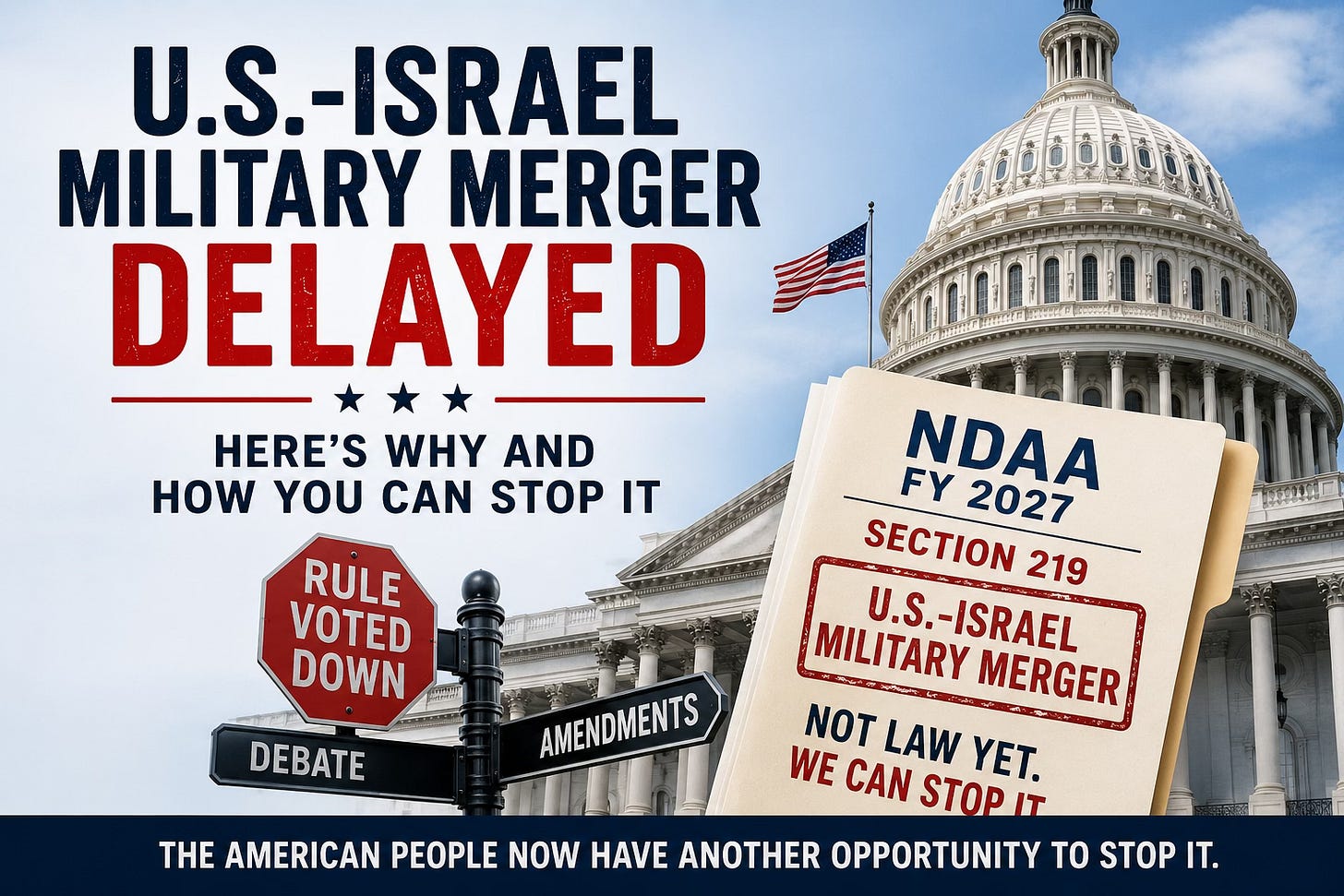
US-Israel Military Merger Delayed – Here’s How You Can Stop It

Dennis Kucinich and Elizabeth Kucinich

The U.S.-Israel military merger has not become law – yet.

Not because Congress rejected it, but because the House unexpectedly voted down the procedural rule governing debate on the National Defense Authorization Act.

That vote delayed consideration of the bill, but it did not remove the military merger from it. When the House returns, Congress will almost certainly have another opportunity to consider the legislation.

The American people now have another opportunity to stop it.

What Happened?

The Massie-Khanna Amendment, which would have removed the military merger from the bill, was not made in order by the House Rules Committee, which serves as the traffic cop on legislation, deciding which bills and which amendments move forward.

In this case, the Rules Committee played dirty cop and the fix was in to make sure the House would not be able to vote on the military merger because the amendment was simply not placed in the rule. In fact, the amendment was not taken up by the committee and did not even receive a vote.

It was ignored.

Welcome to civics class, Washington, D.C. style, on how a bill isn’t made.

How Congress Was Prevented from Voting

Every piece of legislation has its own specific rule, which determines, among other matters, how much time will be permitted for debate, what amendments are made in order, whether legislation can be further amended from the House floor, and whether a point of order can be raised to challenge the bill.

The Rules Committee makes up the rules for each bill as it goes along.

And it does.

Since Republicans control the House, they determine the committee’s membership. The Rules Committee consists of nine Republicans and four Democrats.

This particular rule governed consideration of the National Defense Authorization Act for Fiscal Year 2027, legislation that would increase annual Pentagon spending by an astonishing 67 percent to $1.5 trillion. The rule, approved by the committee on a partisan vote at the request of the President, also combined the NDAA with the so-called SAVE Act, restricting voter registration.

Before Members can vote on the underlying legislation, they must first vote separately on the rule. The rule establishes the terms of debate and determines which amendments may be considered.

If the rule goes down, the bill goes down with it.

Why Was the NDAA Vote Delayed?

Here is what happened.

Because of a dispute over the SAVE Act, the House voted down the rule. The NDAA never came before the House for debate or final passage. A disappointed Speaker adjourned the House until July 13.

As a consequence, the NDAA has not passed and the U.S.-Israel military merger it authorizes has not become law.

Yet.

The Fight Continues

When the House returns, the Rules Committee must meet again and draft a new rule. Based on what just happened in committee, there is every reason to believe the new rule will once again prevent any amendment from being offered to remove the military merger.

The Rules Committee should instead make in order the Massie-Khanna Amendment and other amendments that would remove the U.S.-Israel military merger and other deeply controversial provisions from the NDAA. Members of Congress should not be forced into an all-or-nothing vote on legislation of this magnitude without the opportunity to debate and vote on amendments on their merits.

Congress should not be asked to vote on final passage of the NDAA without first having the opportunity to consider amendments that remove the military merger and other controversial provisions.

If the Rules Committee refuses to allow those amendments, the merger provision will remain in the bill.

What we can do

Every Member of Congress should hear one simple message:

Urge House leadership and the Rules Committee to make in order the Massie-Khanna Amendment and other amendments that would remove the U.S.-Israel military merger and other objectionable provisions from the NDAA.

If the Rules Committee refuses, vote against the rule.

If the rule passes, vote against the NDAA until the military merger is removed from the bill.

This is the only way to stop this patently unconstitutional merger, which undermines American sovereignty and opens the door for Israel to drag the United States into more wars to advance its expansionist and murderous impulses.

This Fourth of July, celebrate Independence Day by defending the very principles upon which this nation was founded.

TAKE ACTION

The House is expected to take up the NDAA when it returns on July 13. The time to act is now, before a new rule is written and the bill returns to the House floor.

Let us truly celebrate our independence by staying independent. Please help spread the word by forwarding this article to your family, friends, and colleagues.

Find your Members of Congress:

House: https://www.house.gov/representatives/find-your-representative

Senate: https://www.senate.gov/senators/senators-contact.htm

Call the U.S. Capitol Switchboard at 202-224-3121 and ask to be connected to your Representative or Senators.

Ask them to:

  • Support making in order the Massie-Khanna Amendment and other amendments to remove Section 219 from the NDAA.
  • Vote against the rule if those amendments are blocked.
  • If the rule passes, vote against the NDAA until Section 219 is removed.

Optional telephone script

My name is ______ and I am a constituent. I am calling to urge Representative ______ to insist that the House Rules Committee make in order the Massie-Khanna Amendment so the House can debate and vote on removing Section 219 from the NDAA.

If the Rules Committee refuses to allow that amendment, I urge the Representative to vote against the rule. If Section 219 remains in the bill, I urge the Representative to vote against final passage of the NDAA.

Congress should defend American sovereignty, uphold the Constitution, and reject any measure that integrates the executive and military functions of the United States with those of a foreign government.

Thank you.

[…]

Via https://kucinichreport.substack.com/p/us-israel-military-merger-delayed

Latest UK “Debanking” Scandal Should Give Everyone Pause

Zero Hedge

UK-based readers may recall the moment almost exactly three years ago when the word “debanking” entered the mainstream British English lexicon. The prestigious London-based private bank Coutts had just decided to close Nigel Farage’s bank account due to his unsavoury political views and alleged Russian connections. That decision turned out to be very costly.

Almost immediately, Farage did what Farage does best: he whipped up a massive media frenzy. In next to no time two senior banking scalps had been claimed: those of Dame Alison Rose, the CEO of Coutts’ parent bank and “Big Four” lender, Natwest (formerly known as the Royal Bank of Scotland) and Coutts’ chief executive Peter Flavel.

Within a month, Natwest’s share price had slumped 8%, wiping £1 billion off its market cap, much of which was being propped up with public funds, and generating juicy returns for short-selling hedge funds. As we reported at the time, the resulting scandal drew much-needed public attention to a long-standing but accelerating trend — the “de-banking” of people and organisations with politically inconvenient views:

[T]his is hardly a one-off event: as I reported a couple of weeks ago, banks on both sides of the Atlantic are increasingly debanking their customers, often without explanation. I gave the example of California-based writer, activist, and social and political commentator Elad Nehorai, whose political views and ideals could not diverge more from those of Nigel Farage. Yet he, too, had his account at Bank of America, his bank of many years, summarily closed with no apparent warning or explanation…

Without a bank account, it is almost impossible to participate in the economy. And it is getting more difficult as cash becomes harder and harder to access and use. As Alex Lo writes for South China Morning Post, “Banking is a fundamental utility like water and electricity, and that’s precisely why democratic societies are increasingly turning to its use as a method of censorship and repression.”

However, the resulting government inquiry concluded that customers were not being “debanked” for political reasons. As a result, not only has debanking continued but debanked customers now face the prospect of being blocked from setting up new accounts at other banks, as the Telegraph reported on Monday:

Banks are planning to block “debanked” customers from setting up accounts with other lenders, potentially leading to innocent people being effectively locked out of the financial system, The Telegraph can reveal.

Lobby group UK Finance is developing a platform that will allow banks to share data on their customers where they detect “markers of economic crime”.

Lloyds, Barclays and Revolut have already started sharing data about customers, leading to accounts being frozen or closed, The Telegraph understands, following a pilot in 2024.

The data-sharing platform will build on that pilot to make a UK-wide system, which could automatically bar people from opening another account.

But concerns have been raised that thousands of innocent customers and businesses who have been debanked unfairly could be barred from opening up an account with another bank, effectively leaving them locked out of the financial system.

The latest victim of the debanking trend is the left-wing news website The Canary, which has accused the Lloyds Banking Group of “withholding a substantial amount of our money”  after nearly a decade of use. The news outlet — which brands itself as “radical working-class media” — says “Lloyds has not explained why it has taken this action… despite multiple communications from us”.

In a statement on Tuesday, the Canary speculated about the possible reasons behind Lloyds’ decision, including its anti-Zionist and pro-Palestine stance:

Whilst we do not currently know the reasons behind our debanking, we cannot afford to be naive about this.

We do know that multiple other politically engaged people have suffered similar actions by other banks in recent times. It is not lost on us that powerful banks are able to restrict the financial activity of anti-Zionist and pro-Palestine organisations and individuals.

It is an outrage that the Canary has been unceremoniously dropped into financial instability with no notice or explanation from Lloyds.

Starmer’s Last Attack

It would hardly come as a surprise the attack was in response to The Canary’s pro-Palestine sympathies. The UK government has done everything within its not inconsiderable powers to criminalise pro-Palestine, anti-genocide activism, including by scrapping the ancient right to trial by jury. Through its new National Security Law, the outgoing Keir Starmer government seeks to bulldoze literal thought crime legislation into law — in Orwell’s native United Kingdom.

An article in The Canary explains just how dire a threat the new National Security Law poses to journalism and political dissent, describing it as “one last power grab” by Keir Starmer’s outgoing government:

As I am sat here writing this, there’s a sense of terror kicking in. I’m a journalist. It’s my job to be in the know about foreign affairs. At the Canary we pride ourselves on bringing people the news that the mainstream doesn’t dare. But this terror is absolutely nothing compared to what other people must be feeling.

This radicalised weaponisation of new legislation will hit marginalised communities so first and hardest. Journalists and community workers with direct, lived and painful connections to global conflict zones are facing a massive legal trap. If a reporter so much as quotes an entity that the home secretary has designated as a threat, they face immediate prosecution.

Civil liberties groups warn that the law will grant the Home Office absolute power to decide who is allowed to speak. And by leaving the definition of ‘assisting a designated body’ vague, the state has created a total monopoly on the narrative. It’s very much going to be, follow their way and toe the line, or go to jail, it seems.

Indie media outlet Zeteo warned of the severe danger of this new power-grab. The outlet warned that journalists face immediate arrest simply for conducting public interest interviews with banned groups. People will only get one side of the story. There will only be one narrative fed to us… and it will be the government’s.

The timing of Lloyds Bank’s debanking of The Canary is also curious, coming just two months after it announced the launch of a daily left-wing print tabloid — and what’s more, one that defends Palestinian rights. Following an injection of cash last year from used car and property website founder Cecil Hetherington, Canary director Steve Topple hailed the new tabloid as an alternative to the corporate press.

After its debanking, the Canary says it is now in a “financially precarious situation” and does not know when “money that Lloyds is holding will be returned” or how it will affect “our ability to get another bank account in the future”.

“The immediate effect has been that we have been unable to pay any staff or contractors,” Topple told Novara Media. “We have a large team, and all of them are now extremely distressed and in limbo. Many of them are marginalised people and it has hit them very hard. We are trying our best to mitigate the situation and have so far received much-appreciated support from members of the public.”

Lloyds’ actions have already triggered a storm of protests from across the political spectrum.

A Growing Phenomenon

The first major target of debanking in the UK, well over a decade ago, were members of the British Muslim community, particularly those involved in Pro-Palestinian activism. But unlike with Farage, their plight was met with total radio silence in the mainstream media . . .

By the time Farage had lost access to Coutts’ banking services, in the summer of 2023, banks in the UK were closing nearly one thousand accounts daily, with just over 343,000 closed in 2022, compared to about 45,000 in 2017.

Following the Farage affair, the Financial Conduct Authority conducted an investigation into banks’ debanking practices, the conclusion of which was that banks had not been closing customers’ accounts for political reasons. Farage described the outcome as “farcical”.

In the US, recent victims of debanking include Scott Ritter, the former United Nations Special Commission (UNSCOM) weapons inspector who is a prominent critic of US and Western imperialism. In January, his bank of 26 years, Citizens’ Bank, closed all of his accounts, including his and his wife’s joint accounts with their daughters, without offering an explanation, as he recounts in the first minutes of the following interview with Judge Napolitano:


In a letter to Ritter Citizens Bank apparently that not only was it under no obligation to divulge the reasons for closing his accounts but that Citizens’ policy actively prevents any disclosure of any information concerning the decision to close the account. As Cato Institute notes, this silent treatment often has to do with confidentiality laws:

[…]

While Ritter does not know the exact reasons for his debanking, he suspects that someone in the FBI, fully armed with the “totality of [his] banking transactions”, had “tipped off” Citizens Bank about “suspicious activity” that resulted in Citizens Bank issuing an SAR [Suspicious Activity Report].”

Ritter believes that donations he had received and subsequent cash withdrawals before his three trips to Russia in 2025, which thanks to US and EU sanctions is disconnected from the Western economy, may have triggered the move. According to Ritter, the “purpose of “de-banking” is to harass a targeted individual,” even in the absence of evidence pointing to any criminal activity.”

The reasons for an account closure, while often a mystery to the customers affected, often include operational reasons. Put simply, a financial institution chooses to close the account of a customer because the reputational risks of being associated with that client are simply too high. However, political or ideological motivations appear to play a part in some prominent cases.

The most clear-cut example of this was the Canadian government’s decision, in February 2022, to invoke the emergencies act to compel banks to seize the accounts of the freedom convoy protesters who had blocked several key border crossings. According to the minutes of a meeting between Canada’s Economy Minister, Vice President and WEF board member Chrystia Freeland and senior bank executives the day before the act was invoked, one CEO flagged concerns that if banks were forced to close accounts, it could be seen as the sector “being used as an arm of the government” or even “a political weapon.”

In 2022, Paypal banned the accounts of the UK-based Free Speech Union, its founder Toby Young and his online publication, the Daily Sceptic, for purportedly breaching its policies against hate speech. Worse still, the fintech giant surreptitiously slipped a line into its terms of service granting itself the right to fine customers $2,500 for spreading misinformation. When the news got out, provoking a huge public backlash, PayPal claimed it had all been a big mistake.

Of course, as NC readers EssCetera and Rev Kev pointed out in comments to a previous post, Paypal has a long, storied history of doing this sort of thing, going all the way back to its freezing of Wikileaks’ account in 2010. And banks in the US have been closing down the accounts of workers in the porn industry since at least 2014 as part of “Operation Chokepoint”, which targeted certain undesirable but legal business sectors (h/t Michaelmas).

From “Debanking” to “Civil Death”

If there’s one fate worse than being debanked, it is suffering through the ordeal of “civil death”. Francesca Albanese, the UN Special Rapporteur for the Palestinian occupied territories, became subject to US sanctions roughly a year ago that cut her and her family off not only from US banking but also travel and tech.

In Albanese’s case, it was clear to her why she was being put under constraints normally reserved for narco-barons and terrorists: she had just published a UN report denouncing the more than 60 (largely Western) multinational corporations that are allegedly complicit in, and profiting from, Israel’s military occupation of Gaza.

[…]

Via https://www.zerohedge.com/political/uks-latest-debanking-scandal-should-give-everyone-pause


The Long Betrayal: How the West Manufactured the Middle East Collapse

The Long Betrayal: How the West Manufactured the Middle East’s Catastrophe

CogniPresent

[…]

To understand where the region stands today, one must begin not in 2001, nor in 1979, nor even in 1948—but in the dying chambers of an empire that the West decided it could not afford to let live.

The Controlled Demolition of the Ottoman Empire

The Ottoman Empire was not destroyed by its own incompetence, though its weaknesses were real. It was targeted—methodically, over decades—because its existence was structurally inconvenient for European imperial ambition. The empire sat atop the land bridge between Europe, Asia, and Africa. It controlled the eastern Mediterranean, the Bosphorus, the Levant, the Arabian Peninsula, and the Persian Gulf. For Britain, France, and Russia, the question was never whether the empire should fall, but who would profit most from the wreckage.

The strategy took several forms. European banks extended loans at punishing rates, then leveraged debt default to install foreign financial control—the Ottoman Public Debt Administration of 1881 effectively transferred Ottoman fiscal sovereignty to European creditors, making the empire a debtor colony in all but name. European powers sponsored nationalist separatist movements—Greeks, Bulgarians, Armenians, Arabs—not out of any principled commitment to self-determination, but as instruments of territorial fragmentation. The Tanzimat reforms, intended to modernize the empire and demonstrate its compatibility with European norms, were consistently used against it: Ottoman modernization was cited as insufficient; Ottoman resistance to modernization was cited as barbarism. The game was rigged on both ends.

The First World War was the killing blow—but it was preceded by decades of calculated weakening. Britain, in particular, ran a dual game: negotiating with Ottoman officials while simultaneously funding and organizing Arab revolts against Ottoman rule. The Sharif Hussein of Mecca was promised an independent Arab kingdom in exchange for rebellion. That promise, embedded in the Hussein-McMahon Correspondence of 1915–1916, was never intended to be honored. It was a wartime instrument, not a covenant. When the war ended, the promise was quietly interred—and the Sharif’s sons were handed consolation prizes: artificially constructed thrones in kingdoms that did not yet exist.

[…]

The Map as Weapon: Sykes-Picot and the Architecture of Permanent Conflict

In May 1916, a British diplomat named Mark Sykes and a French diplomat named François Georges-Picot signed a secret agreement to divide the Arab world between their two empires. The Sykes-Picot Agreement, modified and partially implemented through the subsequent San Remo conference and League of Nations mandates, imposed borders on the Middle East that corresponded not to ethnic communities, geographic logic, tribal confederacies, or historical polities—but to European strategic convenience.

The lines were drawn to divide, not to unite. Kurdish populations were split between Turkey, Syria, Iraq, and Persia—ensuring that no Kurdish state could threaten British or French interests. Shia and Sunni populations were deliberately jumbled into single states—Iraq being the canonical example—creating sectarian tensions that could be exploited to justify continued foreign management. Lebanon was carved out of Greater Syria with a Christian Maronite plurality engineered through selective boundary drawing, producing a demographic time bomb that would eventually detonate in fifteen years of civil war. Palestine was placed under British mandate with a deliberately ambiguous promise—the Balfour Declaration—embedded within it, creating a structural conflict between its Arab majority and a growing Jewish settler population that Britain neither wanted to resolve nor could afford to abandon.

[…]

Crucially, these borders were also drawn to sever historically organic connections between populations and their economic hinterlands. Pastoral communities found their seasonal migration routes bisected by international frontiers. Agricultural zones were split from the ports they had long supplied. Kurdish and Bedouin confederacies that had maintained order across vast territories found themselves reclassified as minorities in states that regarded them as security threats. The violence that followed was not an expression of primordial tribalism. It was the predictable consequence of imposing artificial state structures on populations that had no reason to regard them as legitimate.

[…]

The Wells of Resentment: Resource Extraction as Colonial Policy

The Middle East sits atop the largest proven conventional oil reserves on earth. This fact, which would become decisive in the twentieth century, was understood by British imperial planners well before most of the region’s populations had any conception of what petroleum would mean for global power. Winston Churchill’s decision in 1913 to convert the Royal Navy from coal to oil—combined with the Anglo-Persian Oil Company’s operations in what is now Iran—established the template: Middle Eastern resources would serve Western strategic needs, and the political arrangements of the region would be organized to protect that access.

The mechanisms of extraction were multiple and mutually reinforcing. Concessionary agreements, signed with compliant rulers or imposed on governments too weak to refuse, transferred resource rights to foreign corporations at royalty rates designed to maximize extraction and minimize local benefit. The Anglo-Iranian Oil Company—later BP—operated its Iranian concession under terms so exploitative that when the democratically elected Iranian Prime Minister Mohammad Mosaddegh nationalized the company in 1951, he was acting on the straightforward logic that Iranian oil should benefit Iranians. The British response was to impose a naval blockade, organize a global boycott of Iranian oil, and—in partnership with the newly formed CIA—engineer a coup in 1953 that overthrew Mosaddegh and reinstalled the Shah.

[…]

The resource dimension also explains patterns that might otherwise seem puzzling. Why did Western powers consistently support authoritarian rulers over democratic reformers? Because authoritarian rulers were more reliable guarantors of concessionary arrangements. Why did they oppose land reform, labor organizing, and nationalist economic policy? Because these threatened the structures through which resources were extracted.

[…]

Permanent Interference: The Foreign Hand in Middle Eastern Politics

By the mid-twentieth century, Western intervention in Middle Eastern politics had become so routine as to be structurally constitutive of the region’s political life. This is the point that tends to be most aggressively obscured in mainstream Western accounts, which prefer to treat each intervention as a discrete, reactive response to a specific local crisis. In reality, the interventions were continuous, proactive, and deeply networked—involving intelligence services, client political parties, funded media operations, armed militias, and the patient cultivation of compliant elites over decades.

[…]

In Syria, American and British intelligence services were involved in multiple coup attempts from the late 1940s onward, funding political parties, arming dissident military officers, and pressuring neighboring governments to provide staging grounds for destabilization operations. Syria’s repeated coups in the 1950s and 1960s were not simply the product of Syrian political dysfunction—they were produced, at least in part, by external manipulation of a political system that was trying, imperfectly, to find its footing. The same dynamic played out in Iraq, Jordan, Libya, and Lebanon, each with its own specific texture but the same structural logic: local politics were treated as a domain for external management, and any government that attempted genuine independence faced organized subversion.

[…]

Divide and Immiserate: Manufacturing Civil War

Perhaps the most consequential and least acknowledged dimension of Western Middle East policy is the deliberate cultivation of intra-regional conflict. If the cartographic phase created the conditions for division, the operational phase activated those conditions—funding rival factions, arming both sides of conflicts, and arranging for regional powers to exhaust themselves fighting one another rather than developing the capacity for independent political action.

The Iran-Iraq War of 1980–1988 is the most naked example. When Saddam Hussein—with American encouragement and intelligence support—invaded Iran in September 1980, the United States was not simply backing a regional ally. It was managing a conflict designed to bleed both combatants. Donald Rumsfeld’s famous 1983 visit to Baghdad—shaking hands with Saddam while American intelligence knew Iraq was using chemical weapons against Iranian forces—encapsulates the moral mathematics of the policy. The war killed somewhere between five hundred thousand and one million people. It destroyed Iraq’s infrastructure, exhausted Iran’s revolutionary energy, and left both countries too damaged to project influence or challenge the regional order. This was, from a certain strategic perspective, the point.

What is less well known is that Israel was simultaneously supplying arms to Iran during the same conflict—the “arms for hostages” dimension of the Iran-Contra affair being only the most visible thread of a more sustained arrangement. The logic was not ideological but structural: keeping both Iran and Iraq engaged in mutual destruction prevented either from consolidating regional hegemony. That this calculation required selling weapons to a revolutionary Islamic government that had taken American hostages and declared the United States the Great Satan—while simultaneously supporting the Ba’athist government that was gassing its own Kurdish population—tells you everything about the moral framework within which these decisions were made. There was no framework. There was only strategic calculus, and the populations of the region were the raw material on which the calculus operated.

Lebanon is another study in manufactured catastrophe. The sectarian power-sharing arrangement imposed by the French mandatory authorities—which allocated political positions by religious community on the basis of a 1932 census—was always a recipe for crisis, and French planners likely understood this. When Lebanon’s demographic realities shifted—as the Muslim population grew relative to the Christian one—the system had no legitimate mechanism for adjustment. The result was a civil war that lasted from 1975 to 1990, killed approximately 150,000 people, and saw the country used as a proxy theater by Syria, Israel, the PLO, Iran, and the United States simultaneously. At various points in the conflict, American forces were fighting alongside the Phalangists; Israel was occupying southern Lebanon while sponsoring the South Lebanon Army; Syria was managing the PLO’s political positioning while opposing its military independence; and Iran was funding the nascent Hezbollah as a vehicle for Shia political organization. None of these external actors wanted Lebanon to stabilize—because a stable Lebanon would have reduced their leverage.

Afghanistan deserves mention here even though it sits at the eastern edge of the conventional Middle East. The American decision in the late 1970s to arm, fund, and organize the mujahideen resistance to the Soviet-backed Afghan government—Operation Cyclone, the most expensive CIA covert program in history—was made with full awareness that it would empower Islamist militants whose worldview was antithetical to every value the United States claimed to represent. Zbigniew Brzezinski, who authorized the program, later acknowledged that the Carter administration began funding the mujahideen before the Soviet invasion, precisely to lure the Soviets into their own Vietnam. When asked whether he regretted having “supported Islamic fundamentalism” and “given arms and advice to future terrorists,” Brzezinski replied: “What is most important to the history of the world? The Taliban or the collapse of the Soviet empire? Some stirred-up Moslems or the liberation of Central Europe?” The “stirred-up Moslems” would kill three thousand Americans on September 11, 2001—and the Taliban would be in power in Kabul for decades. The regret is nowhere in evidence.

The Rules Were Never for Everyone: Double Standards and the Demonization of Resistance

Perhaps the deepest wound inflicted on the Middle East by Western policy is not material but epistemic: the systematic construction of a moral framework in which Western actions—however violent, however illegal, however destructive—were exempt from the standards applied to the region’s own populations.

[…]

Empowering the Extremists: The Frankenstein Policy

The most consequential irony of Western Middle East policy is that its most destructive long-term effects came not from opposing Islamist radicalism but from deliberately cultivating it—selectively, tactically, as a weapon against enemies deemed more immediately threatening.

The most documented case is Hamas. The Israeli government, under the logic that a divided Palestinian political landscape would be easier to manage than a unified one, facilitated the growth of the Islamic Resistance Movement in the late 1970s and 1980s as a counterweight to the secular PLO.

[…]

The United States also, at various points, backed Islamist movements in Libya, Syria, and the former Yugoslavia—again, as tactical instruments against immediate adversaries, with little sustained analysis of what would happen when the tactical moment passed and the weapons and networks and ideologies remained.

[…]

The Legitimation of the Jihadist Worldview

[…]

Via https://cognipresent.wordpress.com/2026/07/06/the-long-betrayal-how-the-west-manufactured-the-middle-easts-catastrophe/

Winston Churchill, the Boer War and the British Invention of Concentration Camps

Hero of the Empire: The Boer War, a Daring Escape, and the Making of ...

Hero of the Empire: The Boer War, a Daring Escape and the Making of Winston Churchill

By Candace Millard

Anchor Books (2017)

Book Review

This book charts the early career of Winston Churchill in South Africa’s Boer War in South Africa and how he deliberately used his military escapades to propel his career in Parliament.

On graduating from the Sandhurst (Britain’s royal military college), Churchill opted to follow example of his illustrious ancestor the first Duke of Marlborough (John Churchill), to propel himself into his politics.

Believing he was destined to be prime minister, he joined the Spanish Army in 1895 to suppress a revolt by Cuba’s independence movement prior to the start of the Spanish American War.

In 1896 he was assigned to the Fourth Queen’s Own Hussars in India and allowed to serve simultaneously as a cavalry officer and a war correspondent (for the Pioneer and the Daily Telegraph).

Publishing his first book in 1897 (The Story of the Malakand Field Force), he left the army in 1898 in debt and with no training for any non-military occupation. Unsuccessful in obtaining a commission to fight in Sudan, he stood for Parliament for the first time at age 23, campaigning (unsuccessfully) for the Oldham seat.

Three days after the Boers declared war on Britain for trying to annex the Boer state of Transvaal, Churchill traveled to South Africa as a war correspondent. Even before the British launched their first attack on the Boers, Churchill found himself arrested as a prisoner of war for his role (as a war corespondent) in defending a troop transport train that came under guerilla attack.

Imprisoned in a former school in Pretoria, he begged to participate in an escape plan hatched by two fellow reporters. In the end, Churchill preempted their plan, leaving them stuck in prison, while he struggled to find his way alone without food or water through 300 miles of enemy territory.

After a brief stint in the South African Light Horse Cavalry, Churchill returned home in 1900. Thanks to the massive publicity generated by his escape, he easily won the Oldham parliamentary seat the same year.

Millard perfectly captures Churchill’s personality as a conceited school bully who read  voraciously but came last in his class, was continuously shunned by his peers as self-centered and self-promoting, and who, like Theodore Roosevelt, had a driving need to prove his manhood through military valor.

I also really like her detailed summary of the multinational (Dutch, German, and French Hugenot) Boer population who settle at the southern tip of Africa after assisting the Dutch East India Company in establishing a trading station at the Cape of Good Hope in 1652. Ten years after the discovery of diamonds in the Transvaal, the British attempted to annex it. In 1895, they would lose the first Boer War, forcing the resignation of mining magnate Cecil Rhodes, the first prime minister of Britain’s Cape Colony.

Millard also brilliantly portrays the hopelessness of conventional British military tactics against the Boer guerillas – there was no way conventional British cavalry and infantry could fight an enemy they. Ultimately the only British option (which Hitler copied in Nazi Germany) was the wholesale arrest and imprisonment in concentration camps of Boer farmers who supported the guerillas. Twenty six Boer civilians (22,000 of them children) died in the 45 concentration camps – due to starvation, lack of medical care and appalling sanitary conditions.

The  book also has an interesting section on the heroic role the pacifist Mohatma Ghandi and his supporters played as battlefield stretcher bearers during the Boer War.

Reviewing Russia’s Latest UNSC Briefing On Afghanistan

Jul 02, 2026

Looking forward, Afghanistan still has a ways to go in its half-decade-long post-war recovery, the pace of which remains glacial largely due to UNAMA’s ineffectiveness brought about by the West politicizing its work.

Russia’s Deputy Permanent UN Representative Anna Evstigneeva shared an updated briefing on Afghanistan with the UNSC in early June. She began by explaining the need to “facilitat[e] confidence-building and enhancing pragmatic cooperation between the authorities and the international community” in order to maintain the United Nations Assistance Mission in Afghanistan’s (UNAMA) presence on the ground. She then detailed “three key elements” of this approach.

These are “genuinely constructive engagement by the international community on the Afghan issue, full consideration of the needs of the Afghan people themselves, and a trust-based dialogue with the authorities on all outstanding issues.” She then reminded her peers that this approach is shared by “the participants in the Moscow Format and its regional “Quartet,” as well as the CSTO and the SCO, including the CSTO Working Group on Afghanistan and the SCO-Afghanistan Contact Group.”

They were also reminded that “the ‘mosaic approach’ articulated by UNAMA itself is also goal-oriented. The core of this approach is engagement with the Taliban on all key issues, including securing diplomatic representation, lifting sanctions and unfreezing assets, as well as combating terrorist and drug-related threats, and protecting human rights. Addressing these issues in a timely manner without any preconditions is the direct path to Afghanistan’s international reintegration.”

These reminders preceded Evstigneeva expressing concern about regional terrorist threats, specifically Tehreek-i-Taliban Pakistan (TTP), the East Turkistan Islamic Movement (ETIM), and ISIS-K. Pakistan has accused the Taliban of patronizing the first while the last is its hated foe that the Taliban previously accused Pakistan of patronizing. Condemning these three primary regional terrorist threats can be thus perceived as another manifestation of Russia’s careful Afghan–Pakistani balancing act over the past year.

Her briefing ended with her bringing up terrorist-related drug threats and Afghanistan’s difficult socio-economic situation, both of which she said Russia will help it with through closer bilateral partnerships. In and of itself, her updated briefing wasn’t anything special, but it still served to show how committed Russia is to Afghanistan, especially seeing as how it came one month after their military-technical deal whereby Russia agreed to maintain Afghanistan’s Soviet and Russian equipment.

There’s been a lot of speculation about Russia’s true intent for agreeing to that arrangement, but it certainly has nothing to do with threatening Pakistan, which Afghanistan’s repaired Soviet and Russian equipment can’t realistically do. Afghanistan is also too deeply plagued by the problems that Evstigneeva enumerated to pose a conventional threat to anyone else. Pakistan argues that Afghanistan poses an unconventional threat to it, however, but that has nothing to do with Russia. It’s a purely bilateral issue.

Looking forward, Afghanistan still has a ways to go in its half-decade-long post-war recovery, the pace of which remains glacial largely due to UNAMA’s ineffectiveness brought about by the West politicizing its work. The West couldn’t care less about Afghanistan since it has enough of its own problems to deal with nowadays. The exception might soon be the US, which could work with Pakistan after the Third Gulf War to try to jointly subordinate Afghanistan, the goal being to return US troops to Bagram Airbase.

[…]

Via https://korybko.substack.com/p/reviewing-russias-latest-unsc-briefing

How Israel Helped Build Hamas

How Israel Helped Build Hamas

Cognipresent

“Hamas, to my great regret, is Israel’s creation.”

Those words do not come from a conspiracy website or a Palestinian propagandist. They come from Avner Cohen, the Israeli government official who was responsible for religious affairs in Gaza for more than twenty years. He said them to the Wall Street Journal in 2009, for an article the paper itself titled “How Israel Helped to Spawn Hamas.” Cohen had watched the whole thing happen from the inside, and back in the mid-1980s he had even written an official warning to his superiors, urging them to “break up this monster before this reality jumps in our face.”

[…]

The Setup: Two Kinds of Palestinian Resistance

Start with a simple fact: after Israel’s founding in 1948, the Palestinians who lost their homes and land did not agree among themselves about how to respond. Over time, two rival movements emerged, and the rivalry between them is the key that unlocks everything that follows.

The first movement was secular nationalism. These were Palestinians—Muslims and Christians alike, since a significant share of Palestinians were Christian—who wanted one thing: a Palestinian state. Their politics were worldly, not religious. In 1957, a young activist named Khalil al-Wazir proposed creating an organization with “no visible Islamic coloration or agenda but which has the stated goal of liberating Palestine.” Out of that idea came Fatah, founded in 1958–59 by Yasser Arafat and his circle, which soon became the dominant faction of the Palestine Liberation Organization, or PLO—the umbrella group that the world came to know as the face of the Palestinian cause. From 1965 onward, Fatah waged guerrilla war against Israel. For the next several decades, when Israel spoke of its enemy, it meant the PLO.

The second movement was religious fundamentalism, and its vehicle was the Muslim Brotherhood. The Brotherhood was founded in Egypt in 1928 with a very different goal: not national liberation, but the Islamization of society and, eventually, an Islamic state governed by religious law. It spread into Palestine early—by 1947 it had twenty-five branches there with as many as 25,000 members.

[…]

1967: New Rulers, New Rules

In June 1967, Israel defeated Egypt, Jordan, and Syria in six days and seized the Gaza Strip and the West Bank—placing roughly a million Palestinians under Israeli military occupation.

For the secular nationalists, the occupation meant what you would expect: surveillance, arrests, deportations, and war. But for the Islamists, something strange happened. Things got better.

Ahmed Yassin walked free from Nasser’s jail—liberated, in effect, by the Israeli conquest. And the new Israeli military administration took a notably relaxed attitude toward religious activism.

[…]

The numbers tell the story of what this permissiveness produced. Between 1967 and 1987, the number of mosques in Gaza tripled, from 200 to 600. In the West Bank, they grew from 400 to 750. The Islamic religious endowments came to control ten percent of all the real estate in Gaza, plus hundreds of businesses and thousands of acres of farmland. Every one of those new mosques and properties grew under an occupation authority that demolished Palestinian homes for far smaller offenses. None of it could have happened without Israeli approval.

The 1970s: From Tolerance to Partnership

In 1970 came a demonstration of whose side the Brotherhood was really on. That September, the PLO—then headquartered in Jordan—fought a civil war against King Hussein and lost, in the bloody episode known as Black September. The Muslim Brotherhood sided with the king against the Palestinians. Israel, for its part, helped the king too, threatening to intervene if Syria came to the PLO’s rescue. Israel, Jordan, and the Brotherhood had just fought, in effect, on the same side of a war against the PLO. It would not be the last time.

[…]

1978: Begin Makes It Official

[…]

Begin’s government acted on that logic almost immediately. In 1978, it formally licensed Ahmed Yassin’s Islamic Association—granting legal recognition to the Islamist movement at a time when the PLO remained an outlawed terrorist organization whose sympathizers filled Israeli prisons. Dreyfuss describes the move as part of a “full-court press against the PLO” fought on two fronts: fostering the Islamists, and creating so-called Village Leagues—puppet local councils run by anti-PLO Palestinians vetted by the Israeli military. Yassin’s Brotherhood won heavy influence inside the Leagues; up to 200 League members received paramilitary training from Israel, and the Shin Bet used the network to recruit paid informers. (The Leagues themselves flopped—ordinary Palestinians scorned them as collaborators—but the Islamists kept gaining.)

And the support wasn’t just legal recognition. It was money, and we know this because the man who wrote the checks bragged about it to a reporter. David Shipler of the New York Times recorded the Israeli military governor of Gaza, Brigadier General Yitzhak Segev, explaining how he had financed the Islamic movement as a counterweight to the PLO and the communists.

[…]

A Detour Through Syria: Proof This Was a Strategy

[…]

During these same years—the late 1970s and early 1980s—Israel and Jordan were jointly supporting a Muslim Brotherhood terrorist insurgency against a different secular Arab enemy: the government of Hafez Assad in Syria. The Brotherhood’s campaign there was savage: assassinations of officials, car bombs in Damascus, and in 1979 a massacre at a military school in Aleppo where eighty-three cadets were locked in a building and killed with automatic weapons and firebombs. A 1981 car bomb in Damascus killed two hundred people.

The Brotherhood fighters trained in camps in northern Jordan and in Israeli-controlled parts of Lebanon. Israel’s proxy militia commander in south Lebanon, Major Saad Haddad, didn’t even hide it—he issued public communiqués announcing the opening of Brotherhood training camps, boasting at the seventh one that his 200 mostly Syrian trainees would receive commando training “not available anywhere else in the region” to “liberate Syria from the factional Alawi regime.”

[…]

Robert Baer, the veteran CIA field officer, confirmed to Dreyfuss that the CIA had standing instructions not to even treat the Muslim Brotherhood as an intelligence target. “Our approach to the Middle East was defined by the Cold War, and if these guys were going after Assad, well, so what?”

[…]

1983: The Weapons That Weren’t for Israel

Back to Gaza, and to the first of two episodes in Yassin’s life that have fed decades of suspicion—voiced most loudly by his Palestinian rivals—that his relationship with the Shin Bet went beyond mere tolerance.

[…]

And here is the detail that made even his enemies’ jaws drop: Yassin’s own explanation was that the weapons were gathered not to attack Israeli forces at all, but to fight other Palestinian factions. Dreyfuss calls the incident “curious and still unexplained” and notes that it led Yassin’s critics to suspect “secret ties to the Shin Bet.” At minimum, it tells you exactly what everyone—including the Israelis who released him—understood his organization’s guns to be for. They were pointed at the PLO.

1987: The Creature Gets a Name

In December 1987, the occupied territories exploded. The first intifada—the word means “shaking off”—was a mass Palestinian uprising against twenty years of occupation: general strikes, boycotts, stone-throwing youths against soldiers. It caught everyone by surprise, including the PLO leadership in exile.

It was in this moment, in 1986–87, that Yassin founded Hamas—an Arabic acronym for “Islamic Resistance Movement.”

[…]

Did Israel’s support simply stop at that point? The record says no.

[…]

The tolerance ended only in 1989, when Hamas began attacking Israelis rather than Palestinians. Israel then cracked down hard, arresting Yassin and many of the leadership. The pet project had begun to bite.

[…]

The 1990s: Peace Almost Breaks Out, and Two Sets of Extremists Kill It

The intifada had one great political effect: it convinced Israel’s Labor Party that the occupation was unsustainable and pushed it toward negotiating with the PLO. The result was the Oslo peace process, launched in 1993 with the famous Rabin-Arafat handshake: the PLO recognized Israel, Israel recognized the PLO as the representative of the Palestinians, and a step-by-step path was laid out that was widely expected to end in a Palestinian state.

For Hamas, Oslo was an existential threat. Its entire reason for being was that the secular nationalists were frauds and only Islam could deliver.

[…]

Step back and look at Yassin’s whole career: freed from Nasser’s jail by Israel’s conquest in 1967; freed by Israel after serving one year of a thirteen-year weapons sentence in 1984; freed by Israel again in 1997. Three times the man who built Hamas walked out of prison, and all three doors were opened by Israel. Israel finally killed him—by helicopter gunship, in 2004—only long after the asset had definitively become a liability.

2000–2005: Sharon Finishes the Job

In 1999 Netanyahu fell and Labor’s Ehud Barak revived negotiations, coming close to a comprehensive deal with President Clinton’s help. Once again the right supplied the spark. In September 2000, Likud’s Ariel Sharon—a man Palestinians knew as the officer responsible for cross-border massacres in the 1950s and for the 1982 Sabra and Shatila massacre in Beirut—staged a heavily guarded, deliberately provocative visit to the Haram al-Sharif, the Jerusalem holy site Jews call the Temple Mount. Dreyfuss calls it “an action calculated to provoke the Muslim Brotherhood fundamentalists, and it did.” The second intifada erupted—this one dominated by suicide bombings—and the terrified Israeli electorate swept Sharon into the prime minister’s office, killing any chance of a deal.

What followed reads less like counterterrorism than like the careful curation of an enemy. In 2001, when the PLO actually secured a pledge from Hamas to halt attacks, Sharon ordered the assassination of a senior Hamas official—an act that, as the Israeli journalist Alex Fishman wrote in the newspaper Yediot Ahronot, deliberately shattered “the gentlemen’s agreement between Hamas and the Palestinian Authority.” In 2002, ninety minutes before Yassin was scheduled to announce a ceasefire, Israel bombed a Hamas building in Gaza, killing seventeen people, including eleven children. The Harvard scholar Sara Roy, quoted by Dreyfuss, summarized what analysts were concluding: even while assassinating Hamas leaders, Israel “is simultaneously pursuing its old strategy of promoting Hamas over the secular nationalist factions as a way of ensuring the ultimate demise of the Palestinian Authority.”

The strategy worked—on the Palestinians. In 1996, polls showed only fifteen percent of Palestinians backing the Islamists. By 2002, after the crushing of the secular alternative, a Birzeit University poll found forty-two percent supporting Hamas’s vision of an Islamic state—a shift Roy called “totally unprecedented.”

Even Israel’s 2005 unilateral withdrawal from Gaza—the move that handed the territory to Hamas, which seized full control in 2007—was explained by its own architects in these terms. Dov Weissglas, Sharon’s closest adviser, described the withdrawal’s purpose with a metaphor that deserves to be remembered forever: “The plan provides the amount of formaldehyde required so that there will be no political process with the Palestinians.” Formaldehyde: the chemical that preserves a corpse. The corpse being preserved was the peace process, and Hamas’s rule in Gaza was the preservative.

2009–2023: The Suitcases of Cash

Dreyfuss published his book in 2005, but the story did not end there. It simply changed instruments—and this final chapter comes to us almost entirely from the mouths of senior Israeli officials.

[…]

Which meant Hamas had to be kept alive. And it was—with cash. Beginning in 2018, with the explicit approval of Netanyahu’s security cabinet, the Gulf state of Qatar began delivering roughly fifteen million dollars a month into Gaza to sustain the Hamas government—famously, in literal suitcases full of cash, driven into Gaza through Israeli territory with Israeli permission. Israel’s own Mossad helped arrange and defend the pipeline.

[…]

Via https://cognipresent.wordpress.com/2026/07/05/how-israel-helped-build-hamas-the-story-nobody-wants-to-tell/