Radical Left Activates Anti-Trump Protests As AOC Riles Up Rioters

Zero Hedge

Not even 24 hours after President-elect Donald Trump won more votes in Illinois this general election than in the previous two, and after winning the US election in a massive red wave sweep, far-left protesters gathered outside the Trump Hotel in Obama’s Chicago.

The protests appear to have been highly organized and well-planned before the election, given the coordination among activists, the hundreds—if not thousands—of protesters—many holding signs—and the likely pre-approved protest routes from City Hall.

Organizers shouted into megaphones, “Trump is a fascist” and “racist,” echoing hate speech spewed by the defunct Harris-Walz campaign in the months leading up to November 5.

Separately, far-left activist Alexandria Ocasio-Cortez was on X, saying the quiet part out loud: “There are … mass movements of people that mobilize to protect one another in times of fascism and authoritarianism … and this is the era that we are poised to enter.”

In other words, AOC appears to be giving marching orders to her followers, whom some Marxists regard as “agents of change” or “agents of history.” These folks will be herded like cattle—or “useful idiots”—onto city streets by a mysterious web of nonprofits funded by dark money from leftist billionaires.

The Democrat’s playbook to potentially unleash another wave of social unrest through activism campaigns, with command-and-control centers operated by nonprofits, will likely not be tolerated under a Trump administration.

It’s not just the Trump administration; it’s the American people – a strong majority now – who won’t tolerate far-left activism that burns buildings and trashes businesses. This new path in history has already shifted the Overton Window back towards the center. Plus, politics will focus on law and order instead of nation-killing progressive policies that push for destruction.

[…]

Via https://www.zerohedge.com/political/radical-left-activates-anti-trump-protests-aoc-gives-marching-orders

Trump’s top healthcare priority must be repealing Big Pharma’s legal immunity for vaccines

Big pharma sues over California drug price law

By Alex Berenson

Lawsuits aren’t fun.

At best they’re draining and distracting – especially against big companies with tough legal teams. (Trust me.) Federal courts have now raised the bar even to reach the “discovery” phase of suits, where plaintiffs can see documents relevant to their claims.

No, lawsuits aren’t fun. No one sues a Fortune 500 company for kicks.

But sometimes they’re are necessary. Except, apparently, when it comes to vaccines1.

In its infinite wisdom, in 1986, Congress passed a law making it nearly impossible for any American to sue pharmaceutical companies over vaccine injuries. Instead, it routed all claims to a special federal court program that would judge possible injuries on a “no-fault” basis and compare them to a prespecified list of injuries.

In 2011, the Supreme Court affirmed and even strengthened the protection that the 1986 law gave Big Pharma, ruling that it prevented any lawsuits over “design defects” in the vaccines it covered.

In other words, as long as a drug company has issued boilerplate warnings about its vaccines, it essentially cannot be sued outside the vaccine court program unless it sells a contaminated vaccine batch.

The law covers any vaccine that the Centers for Disease Control has recommended for “routine administration” to children or pregnant women – that is, nearly all vaccines. (mRNA Covid jabs are for the moment covered separately, under a 2005 law about epidemic responses that offers even more complete immunity to Big Pharma. Eventually they are likely to move under the umbrella of the 1986 law.)

On principle, I think offering complete immunity to corporations is a mistake.

Tort lawsuits and plaintiffs’ lawyers can be annoying. They are also essential.

When companies cut corners on product design, when they hide problems or risks, when they mislead regulators (or buy them off with revolving door hiring), when they promote their products in blatantly false ways, lawsuits can be the only way to hold companies accountable. They’re a last resort, a way to get justice for defective or dangerous products from the Ford Pinto to Oxycontin.

And even the mere threat of lawsuits may force companies to consider whether they need to design their products better or disclose possible dangers.

[…]

When the 1986 law was passed, its advocates said vaccines were an exception; they were a low-profit corner of the drug industry that needed special protection from lawsuits because they could occasionally cause children devastating injuries. Without immunity, we would have no vaccines at all, the law’s advocates argued. (I know some of you think this is a good idea; I don’t agree.)

But that in the years since, drug companies have fundamentally changed that calculus. New vaccines are far more expensive, and they are much more biologically complicated than earlier, simple “inactivated-virus” or “live-attenuated” vaccines. As their names suggest, those are basically just dead or weakened viral particles given with a small “adjuvant” to provoke an immune system response.

mRNA shots are the ultimate example of this, and the mRNA Covid jabs were not just profitable but among the most profitable Big Pharma products ever in 2021 and 2022. They also offer – at best – far less durable protection than traditional shots, making them more akin to a traditional pharmaceutical product than a vaccine that offers decades or a lifetime of protection.

Why on earth would we encourage their manufacturers to take chances with public health by protecting them from lawsuits?

[…]

Via https://alexberenson.substack.com/p/trumps-top-healthcare-priority-must

RFK Jr. Declares War on Big Pharma: Vows to Clear Out ‘Entire Departments’ at the FDA in Push for Health Reform

Jim Hoft

Robert F. Kennedy Jr., known for his relentless stance against corporate influence in health policy, is now taking direct aim at the entrenched bureaucracies within the U.S. health agencies.

As a possible future Trump administration appointee, RFK Jr. has laid out a plan to rid the FDA and other key federal agencies of the deeply-rooted corruption that prioritizes corporate profits over public health.

Recall that Trump said that if he is elected, Kennedy will work on “health and women’s health ” and the nation’s food supply.

“Robert F. Kennedy Jr. we have. And he’s going to work on health and women’s health and all of the different reasons, because we’re not really a wealthy or a healthy country,” Trump said during his rally in Nevada.

“I told Bobby, ‘I want you to take care of health, I want you to look at the food and the food supply and what we put on the food and all sorts of — you can look at, but let me handle the oil and gas, Bobby,’” Trump added.

In Kennedy’s crosshairs are not only the FDA but also the Department of Health and Human Services (HHS), the Centers for Disease Control and Prevention (CDC), the National Institutes of Health (NIH), and the Department of Agriculture (USDA).

On Saturday, Robert Kennedy Jr. announced that the Trump administration would advise all U.S. water systems to remove fluoride from tap water on day one.

“On January 20, the Trump White House will advise all U.S​. water systems to remove fluoride from public water,” Kennedy wrote. “Fluoride is an industrial waste associated with arthritis, bone fractures, bone cancer, IQ loss, neurodevelopmental disorders, and thyroid disease. President ​Donald Trump and First Lady Melania Trump want to Make America Healthy Again.”

[…]

Via https://www.thegatewaypundit.com/2024/11/rfk-jr-declares-war-big-pharma-vows-clear/

Regulators Reject Amazon’s Nuclear Datacenter Deal

Federal Energy Regulatory Commission cites grid stability concerns

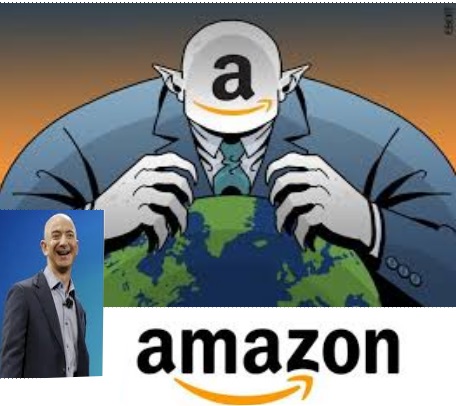
Updated Amazon has hit a roadblock in its plans for nuclear-powered US datacenters. Federal regulators rejected a deal that would let it draw more power from a Susquehanna plant to supply new bit barns next to the site, on the grounds this would set a precedent which may affect grid reliability and increase energy costs.

The Federal Energy Regulatory Commission (FERC) issued an order on November 1 rejecting an amended Interconnection Service Agreement (ISA) that would have increased the amount of co-located load from 300 to 480 MW, and to “make revisions related to the treatment of this co-located load.”

Co-located load means the Cumulus datacenter complex that Talen Energy built next to the 2.5 GW Susquehanna nuclear plant in Pennsylvania which it operates, and which Amazon acquired in March via a deal worth $650 million.

The online megamart announced plans in May to expand the site with more than a dozen new datacenters for its Amazon Web Services (AWS) cloud subsidiary over the next decade.

Soon after that, official objections were filed by two utility companies, American Electric Power (AEP) and Exelon. They argued that the revised agreement between Talen and PJM Interconnection, the regional power grid operator, would give the Cumulus site preferential treatment and may result in less energy going to the grid in some circumstances.

Exelon and AEP also argued that the amended ISA should be subject to an official hearing because “it raises many factual questions,” and, in the absence of any such hearing, that FERC should reject the amended ISA. It seems a majority of the commissioners agreed.

Specifically, Exelon and AEP said the amended ISA had not been adequately supported, meaning no good reason was given as to why the amendments were necessary.

The FERC ruling notes that PJM says up to 480 MW of power could be delivered to “the co-located load” without a material impact on the grid, and any additional load beyond that would result in “generation deliverability violations” and require installation of system upgrades.

The amended ISA also states the co-located load “is not intended to consume capacity and/or energy from the PJM transmission system [the grid],” but it is “possible that it will.”

Exelon and AEP expressed concern that it was unclear what steps have been taken to ensure any such withdrawal of power from the grid would be properly metered and accurately billed when it does occur, and who would be financially responsible.

In its summary, FERC said PJM had not demonstrated that its proposed “non-conforming” provisions in the amended ISA are necessary deviations from the existing agreement, and therefore rejected it.

One dissenting voice was FERC Chairman Willie L Phillips, who claimed the order was “a step backward for both electric reliability and national security.” He said he believed that PJM had addressed reliability issues comprehensively in its filing, and the ruling risks America’s leadership in AI because “reliable electricity is the lifeblood” of the datacenters required for developing AI.

However, Commissioner Mark C Christie explained that co-location arrangements of this type present “an array of complicated, nuanced, and multifaceted issues, which collectively could have huge ramifications for both grid reliability and consumer costs,” and it was being rejected because PJM had failed to meet its burden of proof.

If the proposed amendment were approved at this time, he warned: “we would be setting a precedent that would be used to justify identical or similar arrangements in future cases.”

The move highlights the difficulties datacenter operators face in expanding their facilities to keep pace with the booming demand for training and operating the latest AI models, and the challenges that power companies face in delivering the energy required.

As The Register has covered recently, access to enough power has become a major issue in building or expanding those bit barns, with one major commercial property developer in the UK citing this as the single biggest constraint it faces.

Yet according to Bloomberg, the hyperscalers – Amazon, Alphabet, Meta, and Microsoft – are set to collectively splash out well over $200 billion this year chasing the AI dragon, despite increasing warnings the AI market is a bubble set to burst and many investors and enterprises are not seeing much return for all the cash they are throwing at it.

Amazon itself said in its recent earnings report it expects to spend $75 billion on capex this year and even more in 2025, largely due to rising demand for AWS services related to generative AI.

We asked the company to comment on the rejected Susquehanna power proposal.

The company has also recently pursued small modular reactors (SMRs) via a $500 million investment into three projects to develop these miniature nuclear plants. ®

Updated to add:

Amazon said of the decision that: “We remain committed to continue innovating and advancing carbon-free energy solutions with companies like Talen Energy to power datacenter operations in the United States and the many technologies supporting our customers and our daily lives.”

Moscow reacts to Trump’s vow to ‘stop wars’

Moscow reacts to Trump’s vow to ‘stop wars’

RT

US presidential election winner Donald Trump’s promise to end international conflicts should be backed up by concrete actions once he returns to the White House, Russian Foreign Ministry spokeswoman Maria Zakharova has said.

During his speech on Wednesday in which he declared victory in the US election, Trump also stated that during his first term from 2017 to 2021 “we had no wars, except we defeated ISIS (Islamic State/IS).” The 78-year-old dismissed claims by his opponents that he would “start a war” once he returns to office. “I am not going to start a war. I am going to stop wars,” the Republican insisted.

When asked to comment on Trump’s promise, Zakharova told the Russia 24 TV channel that “of course, those theses must be followed by actions, concrete actions.”

According to the spokeswoman, the international community will judging Trump’s second presidency based on what he does, rather than what he says.

She also suggested that Trump’s promise to end foreign wars was an acknowledgment that the US needs to focus on its own problems.

Former Russian President Dmitry Medvedev reacted to Trump’s victory by pointing out that he has “one useful quality” for Russia.

“As a businessman to the core, he hates spending money on various freeloaders,” which includes the government in Ukraine, Medvedev, who now serves as the deputy chairman of Russia’s Security Council, wrote on Telegram.

However, he added that he does not expect the US funding of Ukraine to stop completely under the new president. “Trump might be stubborn, but the system is stronger,” Medvedev argued.

During his campaign against Democratic rival Kamala Harris, Trump repeatedly claimed that he would end the fighting between Russia and Ukraine within 24 hours if reelected, but did not explain how he would achieve this.

Last month, Trump said that the Ukraine conflict was “a loser” and that Zelensky “should never have let that war start.” He described the Ukrainian leader as “one of the greatest salesmen I have ever seen,” referring to his ability to persuade the administration of US President Joe Biden to provide him with more military aid every time he went to Washington.

In June, Kremlin spokesman Dmitry Peskov commented on media reports that Trump’s team was developing a roadmap for settling the Ukraine conflict, and stressed that “the value of any plan lies in the details and whether it takes into account the situation on the battlefield.”

On Tuesday, Russian President Vladimir Putin reiterated that Moscow is ready for talks to find a diplomatic solution to the conflict. He recalled that the two sides had already negotiated in Istanbul in late March 2022 and had reached a “mutually acceptable agreement.” However, Ukraine later rejected it, acting on “external advice,” Putin said.

[…]

Via https://www.rt.com/news/607209-trump-ukrainewars-zakharova/

What Does Trump’s Win Mean For the Middle East?

In this image from 21 May 2017, US President Donald Trump, Egyptian President Abdel Fattah el-Sisi, and Saudi King Salman, grasp an orb during a forum in Riyadh. - Sputnik International, 1920, 06.11.2024

By Ekaterina Blinova

Donald Trump has won the 2024 presidential election, but what impact will that have on Middle Eastern nations?

“Donald Trump, of course, makes his own policies, but it is also important to see who he surrounds himself with,” Mehran Kamrava, professor of government at Georgetown University Qatar, told Sputnik.

Kamrava defines Trump as “transactional” in contrast to Joe Biden, who is “ideological” and believes in a “particular world order”.

By “transactional”, Kamrava means Trump is first and foremost a pragmatic deal-maker.

“During Donald Trump’s first term, we saw extremely close relations with Saudi Arabia and Israel,” the pundit noted. “Those were the two pillars of America’s policy in the region, and I think we will continue to see that.”

“I think we’re going to see deeper transactional relationships between the Middle East and the United States, deeper economic relationships, particularly in the Persian Gulf,” he added.

Kamrava said Trump had two solutions to Israel’s war in the Gaza Strip. He could either give Israeli Prime Minister Benjamin Netanyahu full support, or call upon Tel Aviv to wind down the conflict in Gaza and in Lebanon “because it’s not good for business.” He believes the newly-elected president will pick the second option.

The professor also expects Trump to take a more cautious approach to Iran compared to his predecessor. During his first term Trump showed “an aversion to war” in the Middle East, he stressed.

“The Biden administration, in fact, did sleepwalk into a war, into escalatory conflict not just in Gaza and a genocide in Gaza, but then in the West Bank, in Lebanon, and of course, in relation to Iran,” Kamrava said.

[…]

Via https://sputnikglobe.com/20241106/what-does-trumps-win-mean-for-the-middle-east-1120798774.html

Israel chief of staff calls for end to Gaza war, prisoner exchange deal with Hamas

Middle East Monitor

Israel’s Chief of Staff, General Herzi Halevi, has said that it’s time to end the war in Gaza and reach a prisoner swap deal with Hamas, Sama news agency has reported, citing Israeli Channel 12. The Hebrew-language channel revealed details of a meeting between Halevi and families of hostages held by Palestinian resistance forces in the Gaza Strip.

According to Channel 12, sources said that the general recently met with relatives of Israeli prisoners and informed them that, “The time has come to work towards a deal that could bring an end to the war.” He assured the families that he had no concerns over concluding the conflict through a prisoner exchange deal with Hamas.

“We have achieved numerous accomplishments,” explained Halevi. “We are strong enough, and we must also be brave enough to reach an agreement.”

Meanwhile, Israeli sources noted that, during a brief meeting held on Sunday evening with security officials and several ministers, the coordinator for prisoners and missing persons in the Israeli army, Major General Nitzan Alon, made it clear that without a shift in Israel’s approach to Gaza, no agreement would be reached and Hamas would not alter its stance.

[…[

Via https://www.middleeastmonitor.com/20241106-israel-chief-of-staff-calls-for-end-to-gaza-war-prisoner-exchange-deal-with-hamas/

How Russian Sanctions and Departure of Western Junk Food Outlets is Improving Russian Health

https://en.rtdoc.tv/episodes/1403-the-food-revolution

The Food Revolution

Directed by Natalya Novikova (2024)

Film Review

This RT documentary provides an intriguing glimpse into life for ordinary Russians following the start of the Special Military Operation in 2022 and the onset of massive Western economic sanctions. The film centers mainly around the experiences of a former Olympic star turned organic farmer, two doctors and a handful of Russian officials.

Surprisingly the sanctions have been extremely positive from a health perspective. Two Russian holistic physicians describe their immense relief to see the end of constant junk food ads, as well as the closure of fast food outlets like MacDonald’s and KFC (Burger King refused to close in Russia – see Burger King partner refuses to close 800 locations of fast food chain) and sugary drinks companies like Coca Cola and Pepsi Cola (which also manufacture 7-Up). Overall Russian citizens seem far more health conscious in the last 2 1/2 years, as reflected in a heightened interest in growing and eating organic food.

Economically the sanctions have also been great for the Russian state, opening up new markets in Africa, Asia and the Middle East to wheat and other grains. According to the French newspaper Le Figaro, Russia now totally dominates the global grain market.

This is in addition to supplying millions of tons of free grain to starving African countries. One Russian official observes that the West (where food is controlled by mainly US and Germany multinational corporations) has no interest in helping starving Africans. But are only interested in obtaining African mineral resources as cheaply as possible.

I was intrigued to learn that unlike the West, Russia heavily subsidizes (to the tune of $5.7 billion in 2022) its organic food industry. The subsidies enable Russian organic farmers to industrialize production, making it less labor-intensive and cost effective.

The doctors interviewed are Dr Aleksander Ogulov, founder of “visceral” medicine, and Dr Natalya Zubanev, who is also a trained dietician and preventive medicine specialist.

Both weigh in on

  • gluten sensitivity –  both agree too many people avoid gluten unnecessarily and many manufactured “gluten-free” products contain harmful chemocals
  • vegan and vegetarian diets – Dr Ogulov (who’s been in practice longer) has noted a link between vegetarianism/veganism and gallstones. Dr Zubanev has noted that that vegans and vegetarians tend to consume too many carbohydrates (leading to weight gain).
  • coffee – okay on a full stomach but in excess can deplete essential nutrients.
  • intermittent fasting – good for detoxification
  • irritable bowel syndrome – Dr Ogulov specializes in treating this condition and recommends restricting raw foods, drinking hot water before meals and eliminating foods that cause bloating.
  • sugar (including fruit sugar) – both agree excess sugar intake has increased diabetes rates in Russia
  • GMO’s – 20% of Russians (including one of the officials interviewed, who compares it to selective breeding) believe GMO foods are safe). Both doctors feel they’re potentially dangerous. Dr Ogulov asserts that worms refuse to eat GMO apples.

Healthcare Workers Reject COVID, Flu Shots Amid ‘Tremendous Erosion of Trust’ in Health Agencies

healthcare worker and flu and covid vaccine bottles
 

The number of healthcare workers receiving COVID-19 and flu vaccines declined during the 2023-24 cold and flu season, according to the Centers for Disease Control and Prevention (CDC).

Only 15.3% of acute hospital workers and 10.5% of nursing home personnel received a COVID-19 vaccine during the 2023-24 season — down from 17.8% and 22.8% respectively, the CDC said in its Oct. 31 Morbidity and Mortality Weekly Report.

Based on data from the CDC’s National Healthcare Safety Network, flu vaccine rates for the same healthcare worker groups were higher than COVID-19 vaccine rates — 80.7% for acute care hospital personnel and 45.4% for nursing home personnel.

However, the rates remained “persistently below the levels during the prepandemic period.  For example, the flu vaccine rate for hospital workers in 2019-20 was 91%.

The CDC figures also showed that nearly 1 in 100 healthcare workers reported “a medical contraindication” to receiving either the COVID-19 (0.71%) or flu (0.89%) vaccine. The CDC figures did not provide information on the rate of vaccine side effects reported by healthcare workers.

The CDC said more research is needed “to identify effective strategies to improve vaccination at a time when health care personnel are susceptible to low vaccine confidence.

Such studies would also seek to improve “confidence about the safety and effectiveness of vaccines among health care personnel through, for example, providing additional education about the safety and effectiveness of vaccination to health care personnel.

Dr. Jane Orient, executive director of the Association of American Physicians and Surgeons (AAPS), told The Defender the data didn’t surprise her.

“It is no longer possible to deny safety signals and lack of effectiveness,” Orient said. “A large percentage [of healthcare workers] have themselves had several episodes of COVID, had adverse reactions themselves, or know someone who did.”

Pulmonologist Dr. Pierre Kory, founder of the Leading Edge Clinic and president emeritus and co-founder of the Front Line COVID-19 Critical Care Alliance, said the CDC figures represent “a welcome trend” that he hopes will continue. He said:

“Regardless of the reasons for the decline, the data shows healthcare workers’ tremendous erosion of trust in our regulatory agencies. Allowing this distrust to continue will further undermine the public’s confidence in our healthcare agencies.”

Kory noted the symbolism of healthcare workers turning their backs on the COVID-19 vaccine in particular. “If the vaccine is not for us, it is certainly not for them,” Kory said.

Danielle Baker, a certified hospice and palliative care registered nurse injured by the Pfizer-BioNTech COVID-19 vaccine, agreed.

“With the current state of public healthcare, I am not surprised by the figures. In healthcare, there were positions where you agreed to some annual vaccinations upon hire, but the events of 2021 forever shook the core of even that practice,” Baker said.

Dr. Mary Talley Bowden, an ear, nose and throat specialist who was suspended by Houston Methodist Hospital for treating COVID-19 patients with ivermectin, said, “85% of healthcare workers are opting not to get the COVID shots because they know these shots are all risk and no benefit.”

‘Why should we trust you?’

Dr. Marty Makary, a public health researcher at Johns Hopkins University and author of “Blind Spots: When Medicine Gets it Wrong, and What It Means for Our Health,” said the disparity between the CDC’s COVID-19 vaccination recommendations and the actual coverage rate “is telling.

“It’s also embarrassing for the CDC director [Dr. Rochelle Walensky], who has made pushing the new COVID booster a leading priority of her tenure,” Makary said.

Orient said that doctors and other healthcare personnel who stood up to vaccine mandates and pressure from their employers to get vaccinated “are vindicated” by the CDC’s data “and should be applauded.”

“The message to the public should be obvious,” Orient said. “Why should we trust you?”

Others, though, do not feel vindicated. Sarah Choujounian, co-founder of the Canadian Frontline Nurses, told The Defender that while “many have been awakened to the fact that vaccines are not safe,” she and other nurses who opposed vaccine mandates are still facing professional repercussions.

“This news does not bring vindication as I, amongst many others, am still in court being dragged through a disciplinary hearing for standing up to the corruption and standing up for what is best for our communities,” Choujounian said.

Dr. Danice Hertz, a retired gastroenterologist who was “horribly injured” after receiving the Pfizer-BioNTech COVID-19 vaccine, said lawmakers and policymakers need to open their eyes to the growing distrust of the COVID-19 vaccines by the medical community.

Hertz said:

“I personally have been injured by the Pfizer COVID vaccine. I believed what I was told by our agencies, that these vaccines are safe and effective. I learned the hard way that they were not telling the truth.”

Bowden said that doctors haven’t done enough to speak out. She said:

“Why are physicians not speaking out? Our profession has veered off course, and physicians today are more concerned with protecting their jobs over upholding the Hippocratic oath.

“We have an abundant amount of data showing adverse events from these shots, but we don’t have anyone in authority who will look at the data. Physicians need to get vocal and stand up to the government doctors who have taken over our healthcare system.”

Orient said more doctors are starting to speak out, but “intense indoctrination, financial incentives and fear of ostracism and licensure are huge barriers to overcome.”

Kory said if the medical establishment and the government are to have any hope of reestablishing trust, they need to “recognize the truth about the COVID-19 vaccines. Until that happens, no message from them will be taken seriously, and the little public trust left in these institutions will eventually be gone.”

Baker said he believes the public has reached a point where they no longer need to look to healthcare professionals for an answer when it comes to COVID-19 vaccination. He said:

“People pay attention. The mass media messages, governmental overstep, blanket mandates, lack of agency support for those adversely affected and unwillingness to see and hear responses to these things have caused an implosion.

“Enough of the general public has reached a consensus when it comes to this particular shot from the collective set of experiences over the past years.”

CDC data leave unanswered questions

The CDC data — self-reported by hospitals and nursing home facilities — also demonstrated regional differences in vaccine uptake. COVID-19 vaccine update was highest in the Pacific region and lowest in the Mountain and Southern states.

For the flu vaccine, uptake was highest in the Mountain region and lowest in the Pacific region for acute care hospital employees, while for nursing home personnel, uptake was highest in the Northeast and lowest in the South.

Figures for the current respiratory illness season are not yet available.

Pediatrician Dr. Michelle Perro told The Defender the data still leaves some unanswered questions.

“One criticism is that it did not delineate which types of healthcare employees were opting out of the flu and COVID vaccines. It appears that this data may not have been readily available,” Perro said.

[…]

Via https://childrenshealthdefense.org/defender/healthcare-workers-reject-covid-flu-shots-health-agencies/

Sanctions have doomed US dollar – Lavrov

Sanctions have doomed US dollar – Lavrov

RT

The hybrid war being waged by the US and its allies against Russia is hurting the world’s poorest nations the most and backfiring on Washington, Russian Foreign Minister Sergey Lavrov has argued.

Lavrov delivered his remarks at the Inventing the Future symposium in Moscow on Monday. He claimed the US and its allies are reviving the spirit of the Cold War by declaring the need to eliminate perceived “threats” to their dominance from Russia, China, and other countries pursuing independent national policies.

By struggling to preserve its “privileged position,” Washington is “chopping down the branch on which it sits” and “destroying the system of globalization that they have fostered and promoted to the world,” according to Lavrov.

“The dollar, which for decades has been advertised to us as the common property of all mankind, has been turned into a weapon of oppression and punishment against geopolitical competitors and dissenters. In doing so, they have essentially written a sentence for the dollar as a global reserve currency and a means of international settlement,” Lavrov said.

Last month, at the BRICS Summit in Kazan, President Vladimir Putin noted that Washington has made a “big mistake” by weaponizing the dollar. In pursuing de-dollarization, Moscow is not trying to undermine the US currency but is merely “forced to look for alternatives” in trade with its partners, he stressed.

“The United States itself is withdrawing the dollar from circulation, as more countries begin to fear that they may be next. No one knows what they can be punished for,” Lavrov noted on Monday, recalling Putin’s words.

“The extraterritorial application of unilateral restrictions harms the poorest states, depriving them of affordable energy resources, food, fertilizers, and basic technologies, not to mention advanced scientific achievements and developments,” Lavrov said, highlighting that developing countries in Asia, Africa, and Latin America suffer the most. “The Western capitals have suddenly forgotten principles such as fair competition, the inviolability of property, the presumption of innocence, and many others.”

Over the past ten years, Russia has faced more than 21,000 sanctions across various sectors, from economics and trade to culture and sports, according to Lavrov. Russian financial institutions were largely cut off from the Western system in 2022 in response to Russia’s military operation in Ukraine. As a result, Moscow has accelerated trade with international partners using their national currencies, a trend increasingly supported by BRICS members, who have shifted away from using the dollar and euro for trade settlements.

[…]

Via https://www.rt.com/russia/607000-lavrov-us-dollar-sentence-sanctions/