The Most Revolutionary Act

Uncensored updates on world events, economics, the environment and medicine

The Most Revolutionary Act

AIPAC blacklists dozens of US lawmakers who backed cutting military aid to Israel

(Photo credit: Eric Lee/The New York Times )

The Cradle

JUL 18, 2026

The punitive move comes as US public opinion of Israel hits historic lows

The American Israel Public Affairs Committee (AIPAC) cut off online donations to more than two dozen House Democrats on 17 July, only days after they voted against a $3.3 billion military aid package to Israel.

AIPAC’s donation portal shows “pro-Israel” incumbents with contribution buttons, which were removed for Democrats who backed the amendment, while links stayed active for those who opposed the vote this week.

“AIPAC members are deeply appreciative of their representatives who stand on principle and are disappointed by those who don’t,” AIPAC spokesperson Deryn Sousa said in a statement.

On 15 July, Republican Representative Thomas Massie introduced the amendment to the National Security and Department of State Appropriations Act (NSDSA) 2027, aiming to cut about $3.3 billion annually in US military aid to Israel.

If approved, the measure would have eliminated Israel’s share of Foreign Military Financing (FMF), the program through which Washington funds foreign governments’ purchases of US weaponry, and would also have prohibited any funds in the fiscal 2027 State Department bill from being used to support Israel.

While the proposed amendment was defeated in a 314-to-104 vote, it marked a significant political shift, with nearly half of House Democrats voting in its favor.

Ties to the pro-Israel lobby have become an ideological litmus test for US voters.

Candidates critical of Israel have seen a sharp rise in support, with progressive challengers in New York defeating pro-Israel incumbents in congressional primaries in late June.

The defeats significantly impacted AIPAC, highlighting campaigns that focus on their opponents’ acceptance of lobby funds and their reluctance to label Israel’s assault on Gaza as genocide.

Accepting AIPAC funds has become “toxic” to a growing number of US voters, who increasingly weigh a candidate’s loyalty to the US against loyalty to a foreign lobby.

The financial pressure campaign runs parallel to broader Israeli efforts to shore up support among US citizens.

A recent investigation by TIME revealed that Israel has been paying President Donald Trump’s former campaign manager around $1.5 million per month to run an influence operation producing pro-Israel content aimed at Gen Z audiences across social media platforms.

The efforts have failed to stop the long-running reputational collapse, as one Pew Research Center poll released in April found 60 percent of US citizens view Israel unfavorably, while an older survey by Gallup showed more US citizens sympathizing with Palestinians than Israelis for the first time in US history.

[…]

Via https://thecradle.co/articles/aipac-blacklists-dozens-of-us-lawmakers-that-backed-cutting-military-aid-to-no-israel

‘Netanyahu belongs in the Hague’: Mamdani weighing arrest of Israeli PM

(Photo credit: Michael Nagle/Bloomberg)

The Cradle

JUL 18, 2026

New York City lawyers are reportedly examining whether the mayor can order Netanyahu’s arrest during the UNGA summit

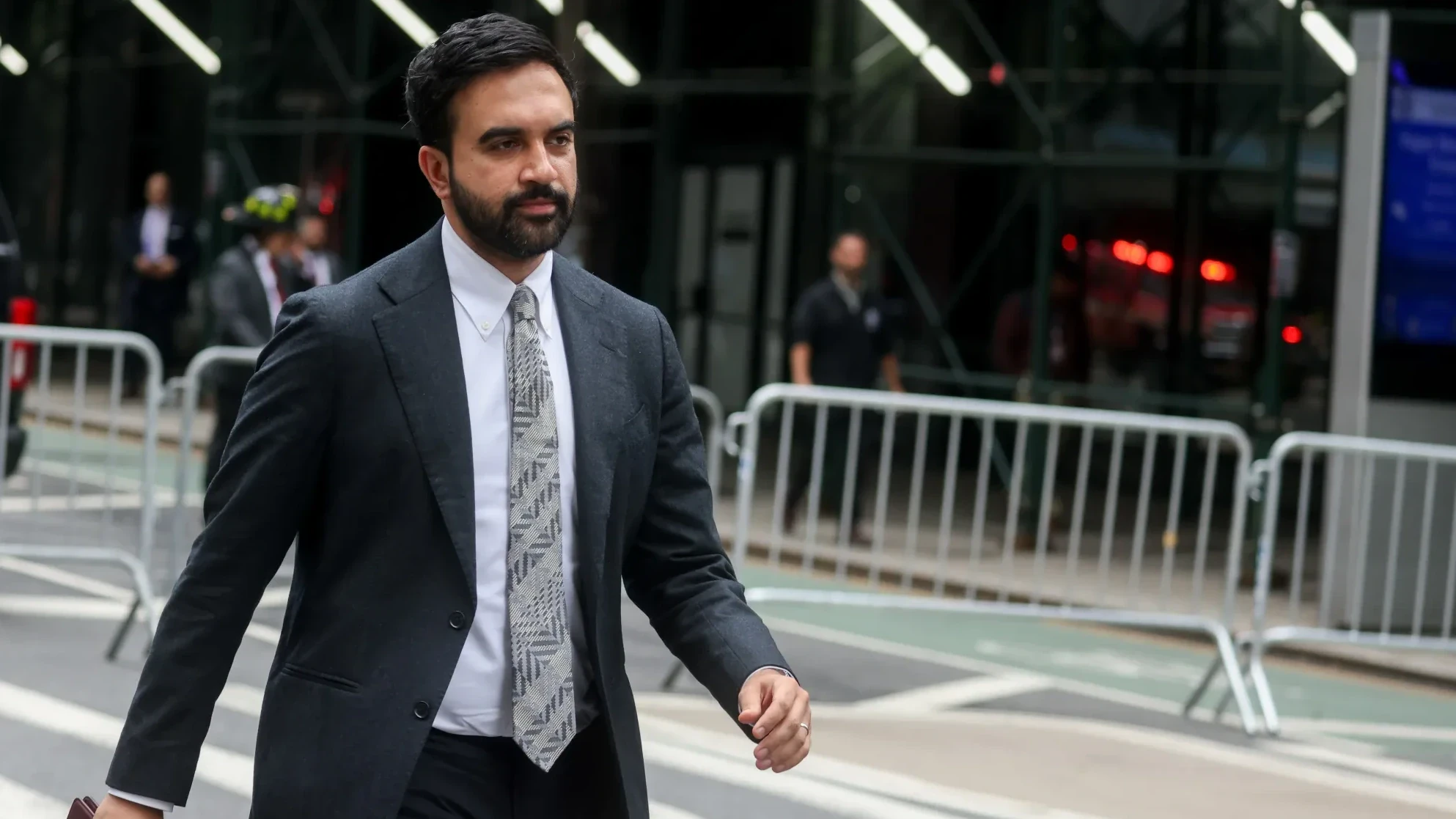
New York City Mayor Zohran Mamdani said on 18 July that he is still considering the possible arrest of Israeli Prime Minister and wanted war criminal Benjamin Netanyahu if he visits New York City for the UN General Assembly in September.

“I believe that Prime Minister Netanyahu belongs in the Hague,” Mamdani said in an interview with the New York Times (NYT) program The Interview.

“He’s a war criminal who has been charged by the International Criminal Court,” Mamdani stressed, adding “and what you will find is that is an opinion that is held by many, purely because of what his actions have wrought over these last many years.”

The New York mayor clarified that he is still unsure whether he has the legal authority to order the New York Police Department, which he oversees, to arrest a foreign leader like Netanyahu.

He added that he is currently in “an active conversation” with the city’s Law Department on the issue. “Whatever the law allows me to do in New York City, that’s what we will do, but we won’t be writing our own laws to that end.”

Last year, during his mayoral campaign, Mamdani told the NYT that he would order the arrest of Netanyahu if he were to travel to the city.

He pledged to uphold the ICC warrant against Netanyahu, who is wanted for war crimes and crimes against humanity related to the Israeli genocide of Palestinians in Gaza.

Mamdani’s revelations occur during a significant shift in US public opinion against Israel, as the ongoing genocide in Gaza damages decades of US political backing.

June congressional primaries in New York highlighted the shift as progressive candidates openly critical of Israel’s genocide in Gaza defeated incumbents backed by the American Israel Public Affairs Committee (AIPAC).

Several pro-Israel incumbents lost to challengers who campaigned directly against their stance on Gaza and their acceptance of AIPAC money, which voters increasingly see as a black spot and a sign of dual loyalties in Israel’s favor.

Polling from April showed the majority of US citizens now hold an unfavorable view of Israel, with “very unfavorable” sentiment nearly tripling since 2022.

An earlier Gallup poll found that, for the first time in US history, more US citizens sympathize with Palestinians than with Israelis, with 41 percent backing Palestinians against 36 percent for Israelis.

[…]

Via https://thecradle.co/articles/netanyahu-belongs-in-the-hague-mamdani-says-weighing-arrest-of-israeli-pm

Who Really Funds the Climate Agenda?

Across Europe and the United States, climate policy has become one of the most influential drivers of public policy, affecting energy, finance, agriculture, transport, housing and industry.

Behind this transformation lies a vast network of philanthropic foundations, non-governmental organisations, think tanks, financial institutions and advocacy groups that has helped shape both public opinion and political decision-making. This raises an important question: who built and financed this extensive climate-policy system?

Most people assume climate policy emerges through the normal democratic process.

Scientists publish research, governments consult experts, legislators debate proposals, and elected representatives decide the direction of public policy. Yet across both Europe and the United States, a vast network of philanthropic foundations, non-governmental organisations, think tanks, advocacy groups, and financial institutions also plays an important role in shaping climate policy and public opinion.

Lobbying itself is neither unusual nor inherently improper. What deserves closer examination is the scale, funding, and influence of the organisations promoting today’s climate agenda—and where their funding originates.

One organisation that has attracted increasing attention is the European Climate Foundation (ECF), established in 2008 and headquartered in The Hague. Although headquartered in Europe, many of the Foundation’s largest financial supporters are major American philanthropic organisations, illustrating the increasingly transatlantic nature of climate advocacy.

Dutch science journalist Marcel Crok recently examined the Foundation’s role in European climate policy, arguing that it has become one of Europe’s most influential climate-focused philanthropic organisations while remaining largely unknown outside specialist circles. His investigation raises important questions about how modern climate advocacy is financed and organised.

According to publicly available information cited by Crok, the ECF received approximately €275 million in funding during 2023. Among the listed supporters are several major American philanthropic organisations, including Bloomberg Philanthropies, the William and Flora Hewlett Foundation, and the Rockefeller Brothers Fund, alongside a number of European charitable foundations.

Grant recipients include research organisations, environmental NGOs, legal advocacy groups, communications initiatives, and media projects. Crok notes that organisations such as Carbon Brief, the European Environment Bureau, and CAN Europe have received ECF support, while Carbon Brief publicly discloses such funding as part of its transparency policy.

None of this information is hidden. It is available through annual reports, grant disclosures, and tax filings. Yet relatively little public attention has focused on how these philanthropic networks operate collectively or the extent to which they may influence climate policy and public debate on both sides of the Atlantic.

Climate policy today extends far beyond climate science. Across both Europe and the United States it increasingly influences industrial strategy, financial regulation, banking, agriculture, transport, housing, taxation, and long-term investment decisions. Governments now work alongside NGOs, philanthropic foundations, research institutes, financial institutions, and private-sector organisations in developing climate and energy policy.

The 2022 Inflation Reduction Act alone originally included an estimated $369 billion in energy-security and climate-related programs, including grant funding and tax incentives, increasing the importance of understanding the organisations that help shape climate policy debates.

Climate Finance and the Banking Sector

One example of this wider funding ecosystem is its growing connection with the international financial sector. Over the past decade, major American and international banks, asset managers and multinational corporations have become increasingly involved in developing climate-related financial frameworks.

In December 2015, the Financial Stability Board established the Task Force on Climate-related Financial Disclosures (TCFD), which represents $118 trillion of assets globally[1]. The taskforce brings together representatives from many of the world’s largest financial institutions and corporations to develop climate-risk reporting standards. Over subsequent years, climate-related disclosure rapidly became embedded within investment management, Wall Street, banking regulation and corporate governance.

Critics, however, contend that they have also accelerated the financialisation of climate policy, embedding net-zero objectives within banking, investment and corporate decision-making.

When the world’s largest banks, corporations, and institutions, all align to push a climate change agenda that, in my view, is not supported by robust empirical evidence, one can see there is another agenda going on behind the scenes. This climate agenda tries to convince the public to make sacrifices and to accept significant economic and social changes under the emotive guise of “saving our planet.” Meanwhile, corporations, financial institutions and investment funds stand to benefit financially, and political institutions implement worldwide technocratic policy systems under the banner of combatting man-made CO2-induced climate change. Ultimately, critics argue that this agenda aligns with the objectives of UN Agenda 2030 while creating, or potentially creating, trillions of dollars in new financial opportunities for major banks and investment firms.

As a former science adviser at the UK Department of Energy and Climate Change, and one of more than 2,000 scientists and academics who have signed the Clintel World Climate Declaration, I believe this close relationship between climate policy and financial institutions deserves far greater public scrutiny.  The Clintel declaration argues that CO₂ is not the dominant driver of climate and that natural variability plays a much larger role than is commonly acknowledged.

The Role of Rockefeller Family Foundations

The Rockefeller family’s support for climate initiatives has also attracted particular attention. How the Rockefeller banking dynasty became leading advocates of the global warming agenda is described in a report titled The Rockefeller Way: The Family’s Covert ‘Climate Change’ Plan published by The Energy & Environmental Legal Institute in  December 2016. An article published by the institute[2] states: 

“In their Sustainable Development Program Review, the Rockefeller Brothers Fund boasts of being one of the first major global warming activists… Their highly complex integration of hedge funds, interlocking boards positions, and non-profit organizations has steered public policy on these issues and provided them with foreknowledge of emerging markets and access to the developing worlds’ natural resources…”

The Climate Scenario Behind a Decade of Alarmism is No Longer Considered Plausible

Another important development has received surprisingly little public attention. The developers of the next generation of official climate scenarios have concluded that the highest-emissions pathways, including RCP 8.5 and SSP5-8.5, are no longer considered plausible representations of likely future development. Because these scenarios influenced thousands of studies, policy recommendations and media reports, this shift has important implications. I examine the issue in detail in my earlier article, The Climate Scenario That Changed the World — And Is Now Being Quietly Dropped.

A broader question concerns the underlying assumptions built into today’s climate models. Is carbon dioxide truly the dominant driver of climate, as argued by the UN IPCC, and can current models isolate its influence with the degree of precision implied by modern attribution studies? Many scientists and researchers—including the more than 2,000 signatories of the Clintel World Climate Declaration—argue that CO₂ is not the dominant driver of climate and that natural variability plays a much larger role than is commonly acknowledged.

Conclusion

Supporters argue that funding of net-zero initiatives accelerates action on an urgent global challenge. Critics contend that concentrated philanthropic funding amplifies particular policy perspectives while making alternative viewpoints less visible within public debate.

Regardless of one’s view of climate science, organisations spending hundreds of millions of dollars and euros to influence public opinion and public policy deserve greater transparency and public scrutiny. Whether in Europe or the United States, citizens have a right to know who is shaping climate policy, how it is being funded, and whether competing scientific perspectives are receiving a fair hearing.

These issues are examined in greater detail in the 2026 edition of my book Climate CO₂ Hoax: How Bankers Hijacked the Real Environment Movement. Its purpose is to distinguish genuine environmental concerns from claims that, in my view, are not supported by robust empirical evidence.

[…]

Via https://www.globalresearch.ca/who-really-funds-climate-agenda/5933575

Bipartisan Bill Would Move COVID Vaccine Injury Claims Into VICP in Biggest Reform Push in Decades

by Jill Erzen

U.S. House of Representatives lawmakers on Tuesday introduced bipartisan legislation to overhaul the National Vaccine Injury Compensation Program (VICP), proposing to move pending COVID-19 vaccine injury claims into the program.

The Vaccine Injury Compensation Modernization Act would transfer covered COVID-19 vaccine injury claims from the Countermeasures Injury Compensation Program (CICP) into the VICP.

The bill would also update compensation limits, expand vaccine coverage and increase the number of officials who decide claims.

React19, a nonprofit that advocates for people injured by COVID-19 vaccines, called the proposal the “most significant effort in decades to restore fairness to America’s vaccine injury compensation system.”

“For React19’s community, the bill represents far more than a policy proposal,” the organization said. “It represents hope.”

React19 co-founder Brianne Dressen said the legislation reflects years of advocacy by people who felt they had been forgotten.

“Today is the culmination of years of relentless advocacy by people who refused to let their injuries be ignored,” Dressen said. “This legislation sends an important message: every American deserves to be heard.”

House Ways and Means Committee members Lloyd Doggett (D-Texas) and Lloyd Smucker (R-Penn.) introduced the bill.

‘Everybody knows someone who has been injured now’

Wayne Rohde, a longtime vaccine injury compensation advocate and author who has written extensively about the VICP, said the bill addresses an issue lawmakers can no longer ignore.

“We need to address the injuries caused by the COVID vaccine,” Rohde told The Defender. “If we’re going to have a viable vaccine policy in the U.S., if we do not compensate those who have been injured, [then in] the next pandemic, you will see a complete withdrawal from the public to accept any countermeasures because everybody knows someone who has been injured now.”

At the same time, Rohde said he has reservations about moving COVID-19 vaccines into the VICP because the legislation could bring additional vaccines developed with similar mRNA technology into the program.

“I have concerns about the technology used to develop it, and that it will allow traditional vaccine manufacturers to use that same technology for other vaccines covered in the program,” he said.

He also noted that the bill would expand VICP coverage to additional adult vaccines.

“If they add RSV, shingles and dengue, what that tells me is that the next vaccine down the pike will be swept into program, too,” Rohde said.

The VICP currently covers only those vaccines the Centers for Disease Control and Prevention recommends for routine administration to children and pregnant women.

Kim Mack Rosenberg, Children’s Health Defense (CHD) general counsel, said that CHD supports the legislation, but also has some reservations.

“It is certainly a step in the right direction, particularly for people injured by COVID injections. However, it remains that the VICP, while significantly better than the CICP in many ways, still is an imperfect solution for those injured by vaccines. We will continue to advocate for changes to the VICP as well, including more ready access to courts of law.”

The fundamental issue remains that manufacturers have a legal shield from the National Childhood Vaccine Injury Act of 1986 that insulates them from liability and disincentivizes the development of safe vaccines, Mack Rosenberg said.

This Substack is reader-supported. To receive new posts and support my work, consider becoming a free or paid subscriber.

Bill would extend filing deadline and raise compensation cap

Created in 1986, the VICP is a no-fault alternative to traditional lawsuits that compensates people who suffer rare vaccine-related injuries.

The legislation would:

  • Transfer covered COVID-19 vaccine injury claims from the CICP into the VICP.
  • Extend the filing deadline for vaccine injury claims from three years to five years.
  • Raise the cap on compensation for pain and suffering or death from $250,000 to $600,000, with future inflation adjustments.
  • Increase the minimum number of special masters hearing claims from eight to 10.
  • Expand VICP coverage to include COVID-19, RSV, shingles and dengue vaccines, along with other vaccines recommended by the CDC for adults.

Doggett said the legislation addresses “extended delays, outdated compensation caps, and failure to include coverage for COVID-19 vaccines.” Smucker said Americans who experience rare vaccine injuries deserve a compensation system that is “fair, transparent, and efficient.”

Only 62 COVID vaccine injury claims compensated as of July 1

COVID-19 vaccine injury claims have followed a different path than claims involving most routine vaccines.

Because the vaccines were initially deployed during the coronavirus pandemic, claims were routed into the CICP rather than the VICP.

The CICP was created under the Public Readiness and Emergency Preparedness Act or Prep Act, which shields vaccine manufacturers, healthcare providers and others who administer covered countermeasures from most lawsuits during a public health emergency.

As a result, people alleging COVID-19 vaccine injuries generally cannot sue in traditional courts and instead must seek compensation through the CICP, where claims must be filed within one year of the injury.

Unlike the VICP, the CICP does not provide judicial review and generally limits compensation to medical expenses not covered by insurance and lost wages.

The program has drawn criticism because relatively few COVID-19 claims have resulted in compensation.

According to federal data, 14,755 COVID-19 vaccine injury claims have been filed with the CICP since the pandemic began. As of July 1, only 62 claims had been compensated, with total payments exceeding $7 million. Thousands of claims remained pending or had been denied.

Improving vaccine compensation program has been ‘elusive, uphill battle’

Attorney Ray Flores, senior outside counsel for CHD, said the legislation represents another attempt to make meaningful changes to the federal compensation system.

“Up until now, effecting substantive changes to vaccine compensation has been an elusive, uphill battle,” Flores told The Defender.

Flores said COVID-19 vaccine injuries have created a unique legal challenge since they fall between two separate federal compensation systems.

He said the proposed legislation seeks to move COVID-19 vaccine injury claims into the VICP, while the U.S. Department of Health and Human Services (HHS) is simultaneously facing a legal challenge over whether it was required to add COVID-19 vaccines to the VICP’s Vaccine Injury Table.

The lawsuit argues that under the National Childhood Vaccine Injury Act, HHS was required to add COVID-19 vaccines to the table after they were recommended for routine use in children. However, the agency failed to do so, leaving some injured individuals unable to seek compensation through the VICP.

In addition, while the proposed legislation would move COVID-19 vaccine injury claims into the VICP, HHS is separately taking steps to strengthen the CICP.

Earlier this month, U.S. Health Secretary Robert F. Kennedy Jr. announced that HHS plans to begin a rulemaking process in November to establish a formal COVID-19 Vaccine Injury Table, as required under the PREP Act.

The table would identify injuries presumed to have been caused by covered COVID-19 vaccines when supported by “compelling, reliable, valid, medical, and scientific evidence,” making it easier for some claimants to qualify for compensation.

Kennedy’s announcement followed several lawsuits challenging different aspects of the CICP.

One lawsuit seeks to require HHS to create the injury table required under the PREP Act. Others argue that the program violates constitutional due process protections because people injured by COVID-19 vaccines have no meaningful legal remedy outside the compensation program.

‘You’re going to have tens of thousands of people … filing claims’

Rohde said Congress should also prepare for the financial impact if COVID-19 claims are transferred into the VICP.

Since the VICP began operating in 1988, over 30,000 petitions have been filed. “COVID is going to dwarf this,” Rohde said. “You’re going to have tens of thousands of people coming out of the woodwork filing claims.”

Although the legislation would increase the vaccine excise tax from 75 cents per antigen to $2.20, Rohde said he believes the trust fund will require additional support. He estimated that Congress may need to provide “$500 million to $1 billion” in startup funding while increasing the tax to between $3 and $4 per antigen.

Whether the legislation advances remains uncertain.

“We’ve been down this road before,” Rohde said, noting that previous proposals to expand the number of special masters and make other improvements stalled in Congress.

Still, he said lawmakers are facing increasing pressure to address the needs of people injured by COVID-19 vaccines.

“Congress doesn’t have an appetite for this,” Rohde said. “But they are also facing the political fallout that we have got to take care of these people.”

[…]

Via https://tdefender.substack.com/p/bipartisan-bill-covid-vaccine-injury-claims-vicp-overhaul-biggest-reform-decades

Million man demonstrations in Yemen

The Cradle

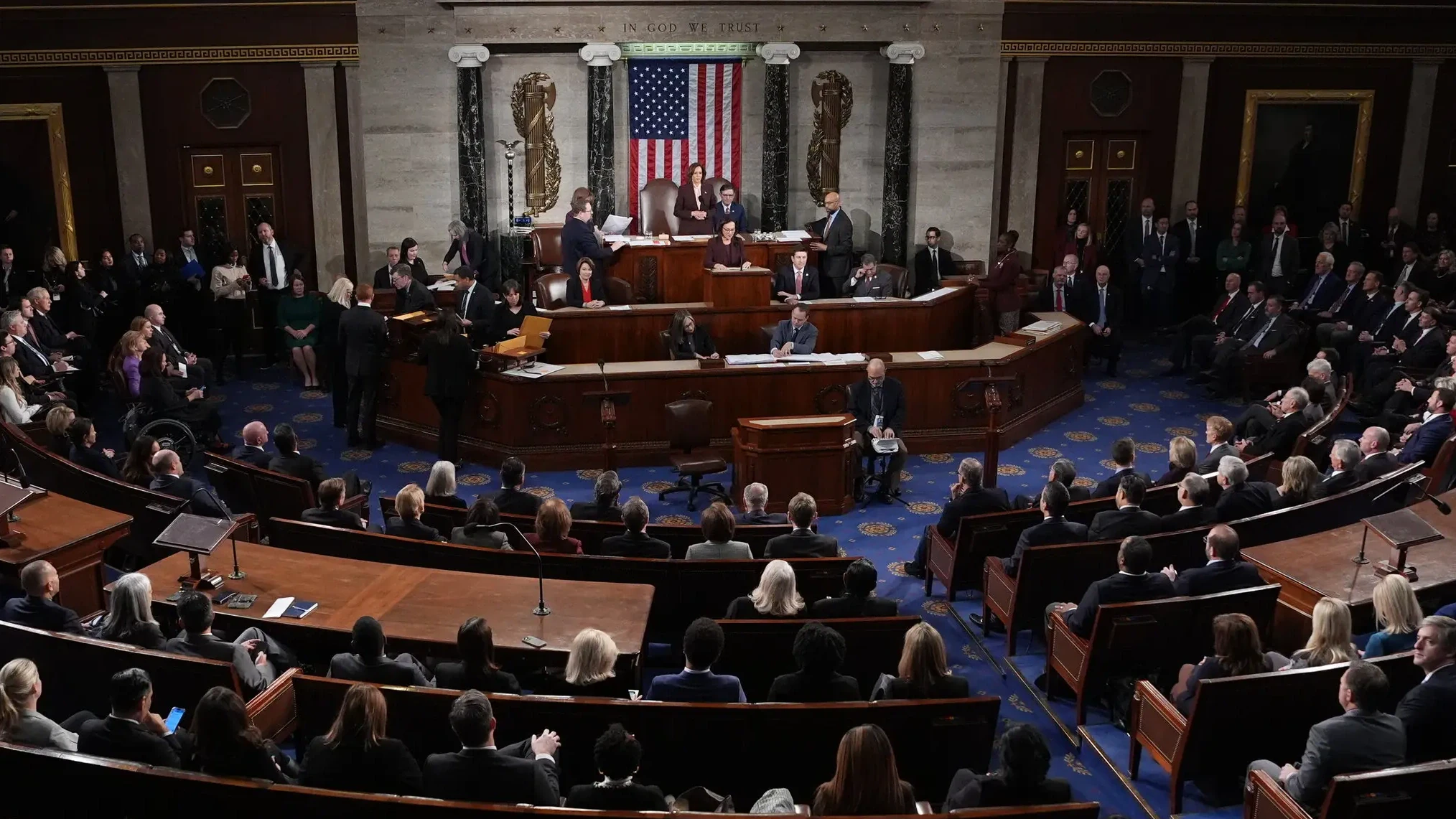
Today, massive million-man demonstrations were held in Yemen’s Sanaa against the Saudi-imposed blockade, in what is being viewed as a popular public referendum endorsing options to break the blockade by force.

Via https://t.me/thecradlemedia/64416

Pakistan ‘fears’ being dragged into new Yemen–Saudi war

(Photo credit: AFP)

The Cradle

JUL 17, 2026

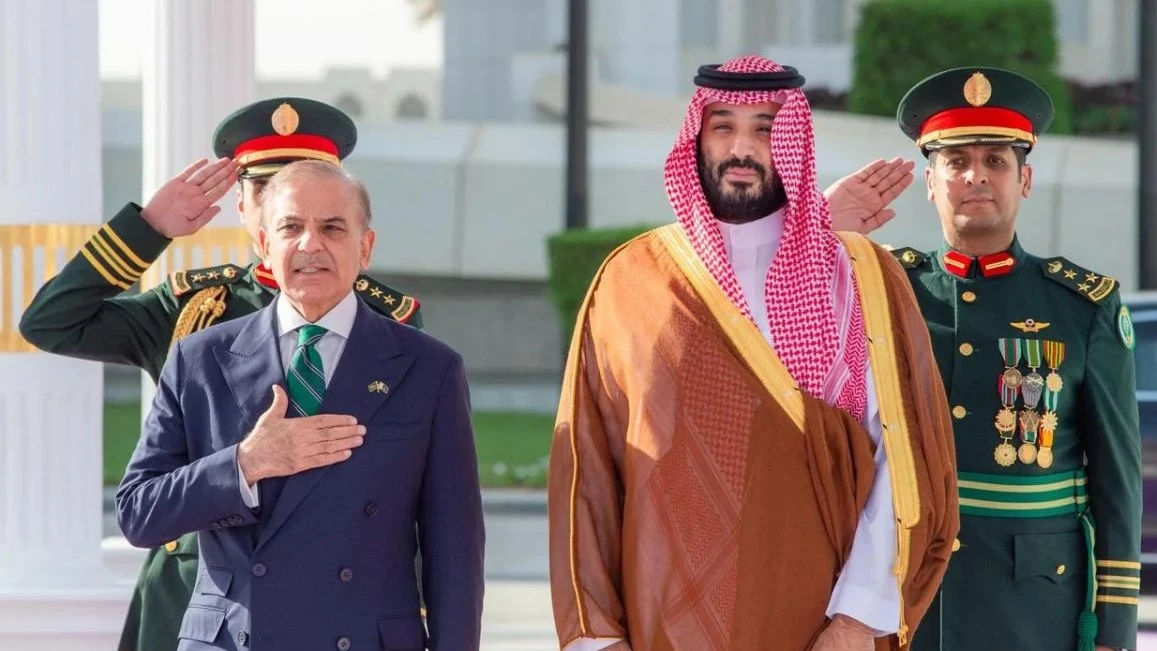
Last year’s defense pact between Islamabad and the kingdom declares that an ‘attack against one is an attack against both’

Pakistan is concerned that the Ansarallah resistance movement and the Yemeni army’s recent retaliatory strike on Saudi Arabia could “draw” it into the conflict – particularly given its new defense agreement with the Gulf monarchy, Reuters cited sources as saying on 16 July.

The recent attack has “frustrated” Islamabad and may “complicate” its continued role as a mediator between the US and the Islamic Republic of Iran, according to the report.

“The attacks this week … pushed Islamabad’s frustration with Iran to a new level [because] they raised the prospect of a new [Saudi–Ansarallah] conflict,” sources said.

The report adds that Pakistan was frustrated with Tehran earlier in the war due to its retaliatory strikes on US sites in Saudi Arabia – which opened up facilities to Washington for attacks on Iran and, according to reports, carried out its own direct strikes against the Islamic Republic.

“Our top civil and military leaders have conveyed to Iran at the highest level that the attacks on Saudi ​Arabia are attacks on Pakistan. It is our red line,” a Pakistani official told Reuters.

Pakistani security analyst Muhammad Amir Rana told the outlet that Islamabad was not “anticipating that the tensions will rise so suddenly.”

According to the anonymous sources cited in the report, there is frustration and growing concern in Islamabad that involvement by the Ansarallah-led Yemeni Armed Forces (YAF) “may be more likely to draw Pakistan into the conflict” than Iran’s previous strikes on the kingdom.

The sources explained that Pakistani troops are stationed near Saudi Arabia’s border with Yemen and increase the risk of their exposure to harm.

Islamabad is also concerned about Red Sea shipping and the YAF’s ability to shut the Bab al-Mandab Strait.

Iran struck US sites in Saudi Arabia multiple times throughout the war. Tehran, however, denied a number of particular attacks on the kingdom and referred to them as Israeli “false flags.”

Reports at the time also indicate that Mossad agents planned bombings in Gulf states with the aim of implicating Tehran and further inflaming tensions.

But a recent Saudi airstrike on Sanaa International Airport, the first in years, prompted a serious Yemeni retaliation.

The YAF targeted Saudi Arabia’s Abha Airport with missiles and drones. These were also the first direct Yemeni strikes against Saudi territory since 2021.

The kingdom waged war against Yemen in 2015 at the head of an Arab coalition, after Ansarallah seized the capital and ousted the Saudi-backed president from Sanaa.

A 2023 Saudi–Yemeni peace process nearly resulted in an agreement between the two sides.

The peace talks stalled but prevented a major escalation from erupting. Yet the kingdom for years continued its illegal and deadly blockade on Yemeni ports and airports.

Ansarallah had already begun mobilizing to expel Saudi forces from Yemen when the kingdom bombed Sanaa airport on 13 July.

The movement and the YAF are now vowing to respond harshly to any more Saudi attacks. “We will spare no effort in confronting Saudi Arabia with everything we possess,” Ansarallah’s leader Abdul Malik al-Houthi said this week.

This would potentially involve more direct Yemeni strikes on Saudi territory and energy infrastructure, as was the case in 2021 and 2022.

Pakistan would be required to confront any such attack as part of their defense pact with the kingdom reached in September 2025.

That pact declares that “any aggression against either country shall be considered an aggression against both.”

[…]

Via https://thecradle.co/articles/pakistan-fears-being-dragged-into-new-yemen-saudi-war-report

How Tehran is Running the Clock

Pepe Escobar

Tehran isn’t rushing to negotiate—it’s running down Washington’s clock

Let’s start with four key variables at work in this increasingly dangerous crossroads.

One. The Majlis – the Iranian Parliament – met on Tuesday night, at the start of the new Mojtaba era, which started last Friday after the final burial rites of former, assassinated Supreme Leader Ayatollah Khamenei in Mashhad. The 290 members unanimously passed two resolutions.

The first one demands the government – under President Pezeshkian – “accelerate nuclear capabilities”. That may be interpreted either as driving up uranium enrichment, or something way more groundbreaking.

The second resolution rejects any (italics mine) compromise with the US on previously agreed terms. Translation: even if there would be a renewed memorandum of understanding (MoU), de facto blown up by the President of the United States straight out of the NATO summit in Ankara, the terms would be much harsher for the US.
Two. The Iran-Pakistan-Qatar channel.

Earlier this week Islamabad and Doha have resumed intense consultations – one might even brand them as frantic – trying to reopen direct talks with Tehran this coming Sunday.

That’s a Sisyphean task, because it would have to take place in sharp contrast with heavy American bombing of Iranian targets – including civilian infrastructure – and the motto echoed by millions in the streets of Iran last week: “Revenge”.
The diplomacy though is real. Yet it has been demoted by the mediators from “path to settlement” to “prevention of catastrophe.”

Three. The Trump-Munir backchannel

Mediators at the sorry remnants of the negotiating table confirm that Trump continues to place direct calls to Pakistan’s Field Marshal Asim Munir, pressing him to find an off-ramp that avoids personal humiliation.

That completely voids trademark vociferations by POTUS – always dominating the news cycle – that Iran is begging to do a deal. Reality is exactly the opposite. Munir, incidentally, is the Last Chance Saloon for Trump when it comes to an off-ramp.
Four. The Iranian military response to US bombing.
That includes, crucially, precision cluster munitions devastating US bases in Kuwait, Bahrain and Jordan.

The overwhelming majority of the real damage is not being reported publicly. From Al Udeid Air Base in Qatar to the Command and Control Center in Jordan; to erased Patriot missile systems in Kuwait to Al Dhafra Air Base in the UAE; from wiping out MQ-9 drone hangars and HIMARS launchers and ammo depots to obliterated refueling platforms in Oman’s Duqm port.

That one was a banger: Duqm is on Arabian Sea coast, outside of the Strait of Hormuz. That’s where American ships dock without entering the Persian Gulf, refuel, and receive repair and supply services: a key node of the operational rear of the US fleet deployed in the northern Indian Ocean.

[…]

Via https://t.me/healthimpact/3687

Terrified Tech Execs Traveling With Armed Bodyguards as AI Backlash andBubble Grow

by Brian Shilhavy
Health Impact News

Today was another down day in Tech stocks, which brought out the AI Bubble doomsday scenarios that are more frequently being discussed in the Corporate Financial news networks.

Barbara Kollmeyer, writing for Market Watch, covered an opinion piece written by analyst Ed Zitron who stated that the Lehman Bros. moment of the AI bubble is coming, which will affect the entire stock market.

The Lehman Bros. moment of the AI bubble is coming, says this critic warning of fallout for tech stocks and the entire market

Ed Zitron sees a downfall driven by loss-making subscriptions and an insatiable need for cash

Excerpts:

Blowout results from chip giant Taiwan Semiconductor Manufacturing Co., or TSMC, seem to be doing little for sentiment on Thursday.

Worries about whether spending on artificial intelligence will pay off have been a downer for some stocks lately. Our call of the day from Ed Zitron, author of “The Hater’s Guide to the AI Bubble,” won’t help much.

In a 15,000-word Substack post on Wednesday, Zitron, the founder of a technology-focused public-relations firm, argues that the question is not if, but when, OpenAI will collapse.

Its failure would be a watershed moment — the Lehman Brothers of the AI bubble, and an event that would define the end of one epoch, the start of another, and that would shake the afflicted out of that psychosis,” he writes.

A dogged AI critic, Zitron sees a “cultlike” derangement around what he sees as an AI bubble kept alive by OpenAI’s existence.

Back in early 2023, when Zitron said he started researching large language models, he called generative AI “the latest gold rush in technology.” He predicted two years ago that OpenAI’s Sora video generator was not viable — and it was canned this March.

His Substack post attacks OpenAI’s business model and its plan to “burn over $852 billion by the end of 2030,” along with the $50 billion or more in compute spending this year. The latter, he estimates, is “more than 50% of all global compute spend.”

As OpenAI and Anthropic raised $300 billion in the past few years, their infrastructure costs have been funded largely by hyperscalers, who have been creating an illusion that more companies will eat up compute like OpenAI, he wrote.

Oracle, he notes, is in particular danger from a prospective OpenAI collapse, as it could get stuck with “billions of wasted capex, and endless debt and leases.”

Zitron predicts that OpenAI’s collapse will only come after “AI data center debt and venture capital funding has been almost entirely exhausted,” as OpenAI has vast money needs.

Based on my own reporting on its audited financials from 2024 and 2025, OpenAI will need to raise funding at least three more times in the next decade,” he says.

Its downfall will be driven by loss-making subscriptions, weak advertising revenue and massive costs for customers, Zitron says. That will curb compute demand, end free ChatGPT and make investors wary of any AI startup, not to mention seizing up related data-center debt.

Zitron doesn’t think Anthropic is safe, either, as it’s burning billions on training models, producing way too many Claude iterations and lacking focus.

An OpenAI collapse will lead to a “violent, punishing effect on the entire stock market,” he says.

The scale, he says, scares him “to the point I’m almost hoping I’m wrong.”

Full article.

The Wall Street Journal today published an “Exclusive” article titled The AI Backlash Has Tech Executives Fearing for Their Liveswhich was picked up by many other media sources as well.

Since that is behind a paywall, here is an article discussing this published on Futurism.

Terrified Tech Execs Are Traveling With Armed Bodyguards as AI Backlash Grows

Excerpts:

Public backlash to AI is intensifying — and transforming into real-world attempts at physical violence. Industry leaders are fearing for their lives.

Leading AI companies and their top executives are beefing up security, the Wall Street Journal reports, as escalating anti-AI industry sentiment is culminating in threats and attempts of violence against the people and ventures building leading AI models. Some executives are even traveling with armed guards, while others have taken to keeping a lower public profile.

Tech CEOs, a few years ago, definitely did not have security,” Dakota Dominguez, an executive at the Silicon Valley-based security firm JPT Security, told the WSJ.

A lot of tech companies now are incorporating that into their budgets.”

Earlier this year, the AI industry was shaken when a 20-year-old anti-AI activist named Daniel Moreno-Gama, armed with a gun and a Molotov cocktail, unsuccessfully tried to firebomb the home of OpenAI CEO Sam Altman. No one was injured, but the high-profile incident followed a string of violent threats and at least one OpenAI lockdown.

OpenAI isn’t alone. Per the WSJ, around the time that Altman’s home was targeted, OpenAI rival Anthropic faced a close call when a man snuck into its headquarters behind an employee carrying an envelope with an executive’s name on it. The man reportedly then told a guard that the executive was “going to be killed.” The man was stopped before anyone got hurt.

All in all, it’s easy to see why tech leaders are budgeting for beefed up security.

Theodora Scarato, the Director of Wireless and EMF Program, was interviewed on Redacted about the health hazards these huge mega Data Centers are causing the the American public.


[…]

Via https://healthimpactnews.com/2026/terrified-tech-execs-are-traveling-with-armed-bodyguards-as-ai-backlash-and-ai-bubble-grows/

China’s “eyes” and Iran’s “fist”: Iran dumped GPS, switched to Beidou, and won the war

Inside China Business | July 15, 2026

Intelligence analysts note dramatic, and sudden, advances in Iranian missile and drone capabilities.

During last year’s war on Iran, IDF and American forces successfully “spoofed” Iranian drones and missiles, which relied on GPS navigation systems.

But after that conflict, Iran switched to Beidou, a Chinese satnav system that cannot be jammed by Western militaries.

Beidou is also more accurate than GPS in most of the world, including in the Persian Gulf region.

Iranian drones and missiles are now threading through air defenses, and taking down critical, high-value targets across the Gulf States, who also rely on GPS.

Ironically, China’s motivation to build the Beidou system began over thirty years ago, when the Pentagon switched off GPS to a Chinese container ship bound for Iran.

By 2020, Beidou leapt past GPS in coverage and accuracy in most of the world. 

Resources and links:

“Breathing Fire” After Yinhe Embarrassment, China’s Pledge To Counter U.S. GPS Reaches Key Milestone https://www.eurasiantimes.com/gps-an-…

The GPS Blackout That Changed Everything for China https://www.bastillepost.com/global/a…

Iran turns to China’s BeiDou satellites to outfox Israeli anti-drone electronic warfare defences https://www.intellinews.com/iran-turn…

Could Iran be using China’s highly accurate BeiDou navigation system? https://www.aljazeera.com/features/20…

China’s Push for Satellite Cooperation in the Middle East https://www.washingtoninstitute.org/p…

In 165 countries, China’s Beidou eclipses American GPS https://asia.nikkei.com/spotlight/cen…

伊朗副部长:正在探索从GPS切换到中国北斗系统 https://m.guancha.cn/internation/2025…

Gulf Countries Confront Questions About Relying on U.S. for Protection https://www.nytimes.com/2026/06/15/wo…

Iran reportedly destroys $300M US missile defence radar in Jordan https://www.trtworld.com/article/6dda…

How Iran Devastated an American Naval Base—and Caused a U.S. Recalculation https://www.wsj.com/world/middle-east…

Hegseth launches ‘High-T Department,’ unveils testosterone replacement therapy for US troops

Pete Hegseth Announces 'High-T Department Of War' To Screen Troops ...

The Cradle

US Secretary of War Pete Hegseth has announced that military personnel aged 30 and above will be screened for testosterone deficiency during their annual health evaluations.

In a video shared on X under the caption “High-T Department,” Hegseth said he was launching the screening initiative to ensure troops have “the right testosterone levels to operate at your absolute best.”

Service members found to have low testosterone levels will be offered hormone replacement therapy on a voluntary basis.

Chief Pentagon Spokesman Sean Parnell said: “All Active Duty and Reserve Component personnel aged 30 and older will undergo mandatory screening for testosterone deficiency during their Periodic Health Assessment.”

Parnell added that personnel under the age of 30 would also have the option to request testing.

“We owe our warriors the absolute best medical care in the world, and this programme delivers on that obligation,” Hegseth said in Wednesday’s video.

“Taking care of your long-term health means ensuring you remain strong, resilient and capable – not just for your next deployment, but for the rest of your life, so you can thrive long after you take off the uniform,” he added.

Via https://t.me/thecradlemedia/64294