Arms Industry Panics Over Ukraine Peace Talks

Arms industry investors in panic over Ukraine peace talks

RT

Shares of weapons giant Rheinmetall have slumped after Washington proposed terms to Kiev to end hostilities

The prospect of a possible peace in Ukraine has caused “panic” among investors in the German defense industry, sending stocks of arms manufacturers such as Rheinmetall tumbling.

The US reportedly handed Kiev a 28-point peace proposal last week and gave it until Thursday to respond. The framework was discussed in Geneva on Sunday, with US President Donald Trump saying afterwards that “something good” may be happening.

The peace push immediately unnerved investors, triggering a fierce sell-off of shares in Rheinmetall, Germany’s largest arms manufacturer and a key supplier of military equipment to Kiev. Rheinmetall stock has fallen by over 14% over the past five days, with defense-electronics producer Hensoldt recording a similar drop.

“Investors fear that an end to hostilities could also mean the end of the “super-cycle” for defense stocks,” Boerse-Express wrote.

Germany has become Kiev’s second-largest arms provider after the US, and Rheinmetall, which produces tanks, artillery systems, and ammunition, recently reported surging profits for the first nine months of 2025, alongside a record order backlog driven by the conflict and rising EU military budgets. Company shares have climbed nearly 2,000% since fighting escalated almost four years ago.

During the previous US attempt to broker peace in February, Rheinmetall CEO Armin Papperger argued that even if the fighting were to end, it would be “wrong” for Europe to assume “a peaceful future.” In 2024, the company announced plans to build four manufacturing plants in Ukraine.

The broader European defense sector has been expanding at roughly three times its pre-2022 pace, Financial Times reported in August. Western leaders claim the accelerated buildup is needed to meet NATO readiness targets, maintain arms deliveries to Kiev, and deter what they describe as a potential Russian threat.

Moscow has called such claims “absurd” fearmongering aimed at justifying increased military spending and condemned what it calls the West’s “reckless militarization.”

[…]

Via https://www.rt.com/business/628322-rheinmetall-shares-fall-ukraine-peace/

How Far Back Can Linguists Trace Languages?

What is the Nostratic linguistic Macrofamily?

Episode 32 How Far Back Can We Trace Languages

Dr John McWhorter (2019)

Film Review

Thus far linguists have been unable to identify a “proto-world” language, the first language that emerged 100,000 – 300,000 year ago from which all other languages are derived.

The best they can come up with is a proto-Nostratic super family, from which all Eurasian and South Asian languages are derived. The specific language familie derived from Nostratic include Indo-European, Altaic, Afroasiatic (Hebrew/Arabic, Dravidian, Uralic and Karvelian (South Caucasian). Some linguists would include Eskimo-Aleut (see Indigenous Language Families: Aleut, Alogonquin and West Coast Languages)>

Proto-Nostratic, from which all these languages are derived, most likely emerged in the fertile crescent 10,000 – 15,000 years ago at the end of the last Ice Age.

The word for me, who and who in all these languages provide the strongest evidence supporting a common ancestor.

Me

  • Proto-IndoEruopean – mi
  • Proto-Uralic – mi
  • Proto-Altaic – bi
  • Proto-AfroAsiatic – mi
  • Proto-Georgian – mí

We

  • Proto-IndoEuropean – me
  • Proto-Uralic – me
  • Proto Altaic – myn
  • Proto-Afroasiatic – mn
  • Proto-Georgian – men

Ear

  • Proto-Nostratic – q’iwiv
  • Proto-IndoEuropean – Kjleu
  • Pro-Uralic  – khul
  • Proto-froAiatic – ki(wjl)

Who

  • Proto-Nostratic – k’o
  • Proto-IndoEuropean – kwo
  • Proto-Uralic – ko
  • Proto Altaic – kha
  • Proto-AfroAsiatic – k(w)

Water

  • Proto – IndoEuropean – wed
  • Proto-Uralic – wete
  • Proto Dravidian – nīr

Another proto super family that has been identified includes Tai Kadai and all the Thai  and Austroneisian languages that haven’t been “Chinafied” (by converting most words into a single syllable with meaning distinctions determined by tonal changes). See Southeast Asian Languages: Tones, Creaky Vowels and Telegraphic Sentence

Similarities are found in words used for word for bird, eye and head.

Bird

  • Proto-Malayo-Polynesian – manuk
  • Buyang (language of southwest China) – manuk

Eye

  • Proto-Malayo-Polynesia – mata
  • Buyang – mata

Head

  • Proto-Malayo-Polynesia – qulu
  • Buyang –  qaðù

There’s also evidence that Sino-Tibetan languages are related to Austronesian.

https://www.kanopy.com/en/pukeariki/watch/video/6120000/6120064

Things Happen: Trump, the Crown Prince and Killing Khashoggi

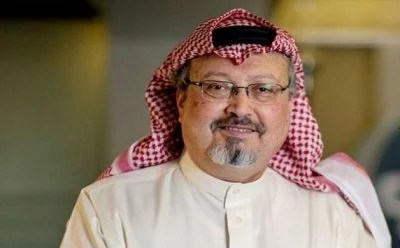
The Saudi Arabian Crown Prince Mohammed bin Salman is at it again. Gulling, wooing, and grinning his way into the establishment of another country, he is greasing palms and making deals. Effusive and flattering of his host, this time US President Donald Trump, he received a state welcome on November 18 rarely afforded visiting dignitaries: a red carpet viewing of fighter jets, a horse mounted guard of honour, and feast in the East Room. He was also promised the much sought after F-35 fighter jets as part of a defence arrangement elevating Saudi Arabia to the status of “major non-NATO ally”. Along the way, MBS has done much to deter those who wish to remind him of a wretched human rights record and the barbaric habits of a state he claims to be modernising.

The gaudy occasion risked being sullied by a question from Mary Bruce of ABC News. Intended for the Crown Prince, it inquired about his role behind the murder of dissident Saudi journalist Jamal Khashoggi in a Saudi consulate in Istanbul on October 2, 2018. The death squad responsible for strangling and dismembering the unsuspecting Khashoggi had been dispatched with his blessing, numbering among them a forensic specialist, a bone saw and a body double. Many of its members hailed from bin Salman’s own protective guard, the Rapid Intervention Force.

Trump’s intervention was abrupt:

“You’re mentioning someone that was extremely controversial. A lot of people didn’t like that gentleman that you’re talking about. Whether you like him or didn’t like him, things happen. But he [MBS] knew nothing about it. You don’t have to embarrass our guest.”

His guest has much to be embarrassed about, and more besides. With surliness and much petulant audacity, the opportunistic princeling has seized such power in the realm as to marginalise all other decision makers, including rival family members. The most important decisions, be they on vast investment agreements, the refurbishment of the country’s medieval bearing, or authorising the extrajudicial killing of an irritating scribbler, would issue from him.

To therefore suggest that the Crown Prince was ignorant of his own misdeeds is to fly in the face of hardened reality. When she was UN Special Rapporteur on extrajudicial, summary and arbitrary killings, Agnès Callamard found that state responsibility for Khashoggi’s death was the only plausible conclusion.

“His killing was the result of elaborate planning involving extensive coordination and significant human and financial resources. It was overseen, planned and endorsed by high-level officials. It was premeditated.”

Most importantly, Trump’s breezy acquittal of MBS’s culpability resoundingly ignores the findings by the Office of the Director of National Intelligence in a 2021 declassified report submitted to Congress by the then Director of National Intelligence Avril Haines.

“We assess,” the report avers, “that Saudi Arabia’s Crown Prince Muhammad bin Salman approved an operation in Istanbul, Turkey to capture or kill Saudi journalist Jamal Khashoggi.”

This was the only reasonable conclusion given bin Salman’s “control of decision-making in the Kingdom”, the seminal role played by one of his key advisors and members of the Crown Prince’s protective detail in the operation, along with bin Salman’s appetite “for using violent measures to silence dissidents abroad, including Khashoggi.”

The report goes on to make a most telling observation: that the Crown Prince’s assumption (one might even say seizure) of “absolute control of the Kingdom’s security and intelligence organizations” since 2017 made it “highly unlikely that Saudi officials would have carried out an operation of this nature without” his approval. Some equivocation is expressed about “how far in advance Saudi officials decided to harm” Khashoggi.

Bin Salman, for his part, reverted to his role as high minded reformer while citing the defence of mistake. This was at least partially in keeping with previous admissions that his hands were not entirely clean on the subject. (Khashoggi’s widow, Hanan, reiterated that point in an interview with BBC Newsnight.)

It had been “painful for us in Saudi Arabia”, he told Bruce. “We did all the right steps of investigating, etc., in Saudi Arabia, and we’ve improved our system to be sure that nothing happens like that again. And it’s painful, and it was a huge mistake.”

Trump also gave his guest the needed ballast:

“What’s he done is incredible in terms of human rights and everything else.”

Since Khashoggi’s murder, the response from the Kingdom has been one of denial, distancing and detachment.  It has involved isolating the killers as wayward enthusiasts and adventurers, lacking the force of a mandate. They were to be the convenient scalps, the necessary sacrifices. Of the group, five were subsequently sentenced to death while three were given prison sentences. Saud al-Qahtani, bin Salman’s disseminator of venomous social media, along with Maj. Gen. Ahmed al-Asiri, were acquitted for lack of evidence. Callamard was compelled to remark that,

“The executioners were found guilty and sentenced to death” while “those who ordered the executions not only walk free but have barely been touched by the investigation and the trial.”

That’s the MBS version of modern Saudi Arabia for you.

[…]

Via https://www.globalresearch.ca/trump-crown-prince-killing-khashoggi/5906473

Empire of gold: The UAE’s expanding grip on Africa’s mineral wealth

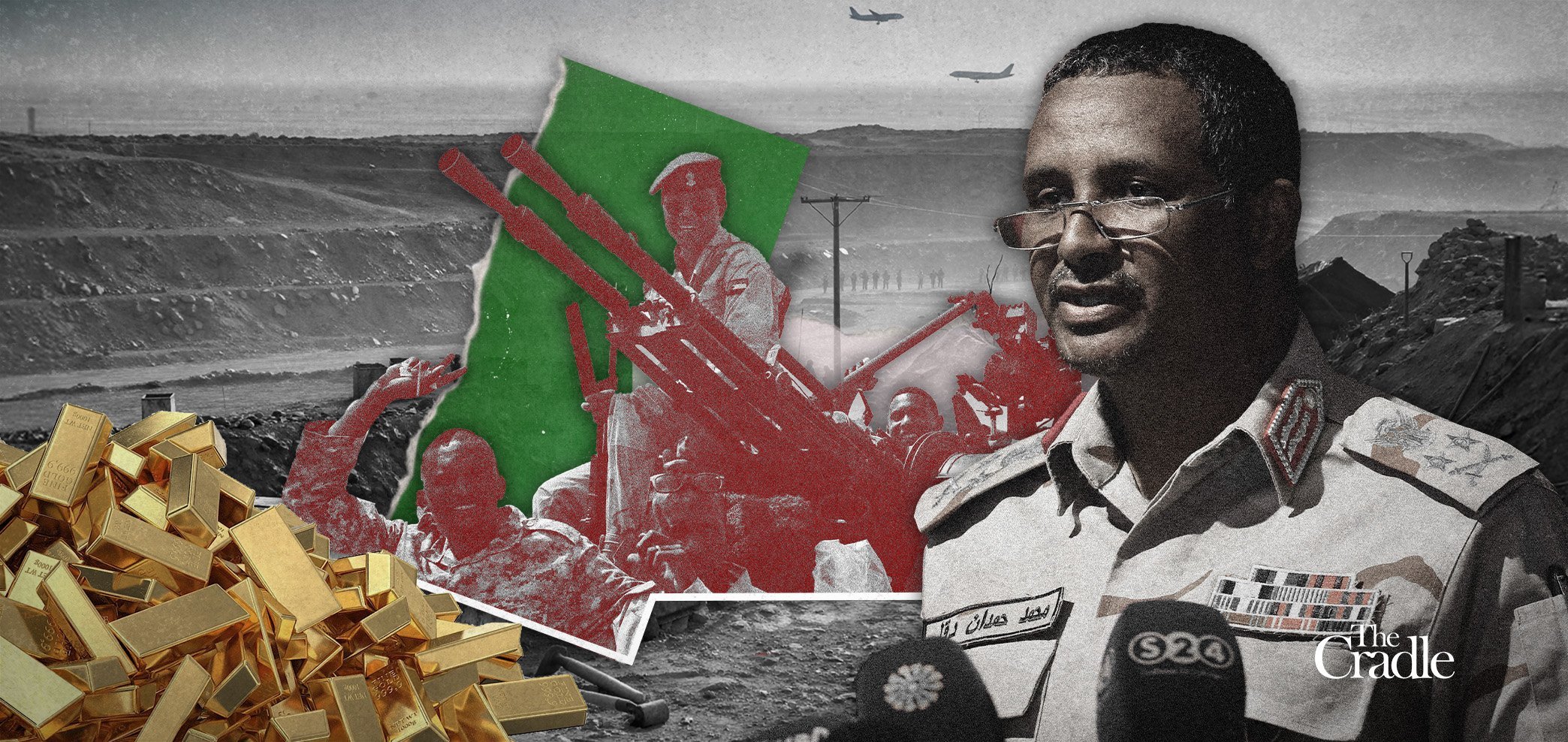
Photo Credit: The Cradle

Mawadda Iskandar NOV 21, 2025

Gold pulled from Sudan’s war zones moves along hidden routes – passed between smugglers, militias, and middlemen – before reaching Dubai, where it is converted into money and influence. This trade, rooted in state collapse and empowered by armed groups, now binds the Persian Gulf to some of Africa’s most fragile fronts.

 Before the guns piled up on the blood-soaked sands of Darfur, the story began in mid-2012 with three young men scanning the earth near Jeli using simple metal detectors. A faint signal drew them westward for 20 kilometers, until they stood at the foot of Jebel Amer – a mountain that would later be known as Sudan’s “Mountain of Gold.”

Their find proved fateful. Within days, word raced across the region: dirt roads thickened with travelers, tents and pumps multiplied across the hills, and thousands of prospectors poured in. What started as a lucky strike quickly altered Darfur’s balance, unleashing rival claims, sudden fortunes, and the violence that shadowed them.

The mountain that ignited Darfur

Jebel Amer sits in the Al-Sarif locality north of El-Fasher in North Darfur. It produces an estimated 50 tonnes of gold each year – one of the largest deposits on the continent – and holds other minerals, including iron, aluminium, and platinum.

After South Sudan’s secession in 2011 stripped Khartoum of roughly three-quarters of its oil revenue, the government pushed citizens toward artisanal mining as an economic lifeline. Instead, the rush for gold deepened instability and drew armed groups into an already-fractured region.

When major deposits surfaced in April 2012, the area became a magnet for wealth and influence – and a battlefield. Janjaweed militias moved to seize the mines, displacing local communities and igniting conflict.

By the end of the year, violence had spread across the region, and in January 2013, open fighting killed hundreds while mine shafts collapsed on dozens of workers. Truces came and went, but each collapse and clash made clear that the conflict was no longer just a tribal one but a struggle for control of one of Sudan’s most valuable assets.

By 2017, almost complete control of Jebel Amer had been settled in the hands of the Rapid Support Forces (RSF) through the Mohamed Hamdan Dagalo-owned Al Junaid Holding Company, and gold became their main source of financial power, directly linked to their ability to finance their military activities and control the area.

The gold did not stop there. Its shine carried far beyond Sudan, drawing the interest of the UAE, whose ambitions in Africa were rising. From Darfur, the metal moved along smuggling routes, through commercial flights, and via corporate parcels into Dubai’s markets and refineries – feeding a network in which Sudan’s conflict became someone else’s gain.

Sudan: The Arab world’s gold giant

Sudan is the largest Arab gold producer, with more than 40,000 exploration sites and 60 refining companies spread across 13 states, with its focus on the Nile, the North, and the Red Sea.

The UAE quickly became Sudan’s primary export destination. Deals flowed through companies linked to Dagalo (Hemedti) and his relatives, gold moved by land and air into Dubai, and the RSF used the profits to procure weapons.

Global Witness estimates that Sudan exports around $16 billion in gold to the UAE each year. Official production in 2024 reached 64 tonnes, yet only 31 tonnes were recorded as legal exports. Nearly half simply vanished into parallel channels.

Export documents reveal the involvement of Emirati firms such as Kaloti, which purchased 57 tonnes from Sudan in 2012 – far above the country’s official output. In 2018, Al Junaid Group, a business front of the RSF, partnered with Dubai-based Rosella, complete with accounts at First Abu Dhabi Bank.

When war erupted in 2023, the gold trade shifted from an economic pillar to a war chest. The US sanctioned 11 companies – many registered in the UAE – for facilitating RSF financing through gold.

The RSF’s gold highways to Dubai

Before the war expanded, Darfur’s gold traveled quietly from Jebel Amer to Chad via land, then onward to Dubai through commercial shipments and corporate parcels, becoming part of a smuggling network linking the conflict’s mines to Persian Gulf markets. The RSF rapidly became the dominant player in this network, relying on front companies, routes that stretched through Chad, South Sudan, Libya, and new routes to Egypt.

The Chadian corridor remains the most lucrative: gold leaves Jebel Amer and Sango via secret pathways, crosses into N’Djamena, and is then exported as “Chadian” gold. Al Junaid’s front companies, along with previously documented ties to Dubai-based firms, operate at the heart of this system.

After Khartoum airport was destroyed and Port Sudan slipped beyond RSF control, the militia adopted new tactics. Motorcycles ferry gold across borders. Air shipments depart from Nyala in containers labeled as agricultural goods and livestock. Night flights – less than 90 minutes long – avoid detection.

A UN panel of experts exposed an African logistical chain linking gold shipments and weapons deliveries: arms arriving from Um Girass airport, traveling overland to RSF positions, supported by money raised from the sale of Sudanese gold in Dubai. An integrated war economy now spans from Darfur’s mines to Emirati refineries.

Abu Dhabi’s continental appetite

Talk of the UAE’s ambitions in Africa starts with Sudan, the continent’s third-largest gold producer and the second-largest proven reserve of about 1,550 tonnes. But Sudan is not an isolated case, as the picture extends to the entire continent.

Reuters investigation found the UAE imported 446 tonnes of gold from 46 African states in a single year – worth $15.1 billion. Yet UN Comtrade data reveals glaring inconsistencies: 25 of those countries provided no export figures at all, while 21 listed amounts far lower than what the UAE recorded importing. Experts estimate that 32–41 percent of African gold is unreported – much of it absorbed by Emirati networks, followed by Turkiye and Switzerland.

In Ghana, a SwissAid report uncovered a 229-tonne gap over five years – $11.4 billion in gold unaccounted for. Ghanaian officials confirm that 75 percent of the country’s gold exports go to the UAE.

In Mali, 81 percent of production is extracted by Emirati-linked companies. Burkina Faso’s Ministry of Mines acknowledges widespread smuggling to the UAE; the value of exports in 2024 alone reached $2 billion. Libya has lost between 50–55 tonnes of gold – worth nearly $3 billion – to smuggling routes feeding Dubai since 2011.

The same pattern has emerged in Yemen. Emirati companies such as Thani Dubai Mining have embedded themselves in resource-rich Hadhramaut, while satellite imagery shows extensive activity in Jabal al-Nar in Taiz after the zone was sealed off and militarised. Gold extraction is now directly linked to the UAE’s political project through the Southern Transitional Council (STC).

Why the UAE needs Africa’s gold 

The UAE has few domestic reserves but a vast gold ecosystem – refineries, traders, logistics firms, free zones, and relaxed regulatory frameworks. Dubai markets itself as the natural home of the global bullion trade, and maintaining this role requires a continuous supply of raw gold, especially from regions where oversight is weak.

Sudanese gold offers the UAE two advantages. First, it provides the crude material required to keep Dubai’s refining industry profitable. Second, it extends Abu Dhabi’s political reach deep into Africa’s economic systems.

There is also a monetary dimension. As confidence in the US dollar fluctuates, global central banks are diversifying toward non-dollar assets. OMFIF data shows one-third of central banks plan to increase gold holdings in the next two years, while 40 percent intend to strengthen long-term reserves.

Gold has become an anchor in a shifting global economy. By 2023, the UAE surpassed the UK to rank second – after Switzerland – as a global bullion hub. Its entry into BRICS in 2024 strengthened this position further, positioning the UAE as Asia’s primary gold conduit.

In order to maintain this role, the UAE needs African gold – not occasionally, but consistently, and at scale.

Gold imperialism: Building a hub without mines 

In just two decades, the UAE has transformed from a marginal importer to a heavyweight in global gold trading. It now accounts for roughly 11 percent of the world’s gold exports, with more than 4,000 jewelry companies and 1,200 retail stores employing about 60,000 people.

Before 1996, the UAE was not even among the top 100 gold importers. Today, it sits in the top four, having overtaken the US and Hong Kong. Eleven large refineries operate in Dubai despite the country lacking a domestic supply.

But this rise rests on opaque foundations.

In 2024 alone, the UAE imported 1,400 tonnes of gold – worth $105 billion. More than half originated from African countries such as Sudan, Chad, Libya, and Egypt, much of it linked to conflict actors like the RSF. Additional flows from Uganda, Rwanda, and Togo reinforce the depth of smuggling networks ending in Dubai.

Between 2012 and 2022, the UAE imported 2,569 tonnes of illegal African gold – valued at roughly $115 billion. Even Switzerland felt the impact: it imported 316 tonnes of gold from Dubai in 2025, worth 27 billion francs – double the usual annual volume.

Regulatory loopholes within the UAE make this possible. Passengers entering with gold face no disclosure requirement; self-filled buyer forms suffice. Customs do not ask about the country of origin. Large amounts of illicit gold are sold openly in Dubai’s markets long before reaching refineries.

The identities of foreign buyers who purchase refined gold remain shielded, allowing the UAE to sit at the center of a global laundering mechanism that integrates conflict gold into the international supply chain.

These practices contributed to the UAE’s addition to the Financial Action Task Force (FATF) grey list in March 2022. Though it was removed two years later, concerns remain that the reversal owed more to geopolitical leverage than regulatory reform.

[…]

Via https://thecradle.co/articles/empire-of-gold-the-uaes-expanding-grip-on-africas-mineral-wealth


Netanyahu vows continued airstrikes on Lebanon, Gaza despite ceasefires

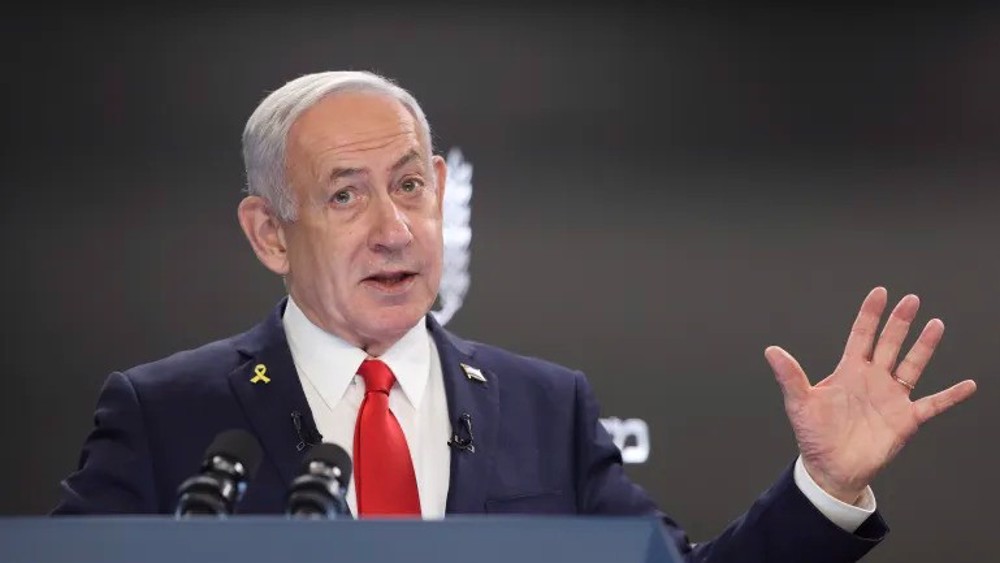
File photo shows Israeli Prime Minister Benjamin Netanyahu speaking during a news conference in occupied Jerualem on August 10, 2025. (AP photo)

Press TV

Israeli prime minister Benjamin Netanyahu has vowed that his regime will continue its deadly attacks on neighboring Lebanon and the besieged Gaza Strip despite ceasefire agreements barring such operations.

Netanyahu told a cabinet meeting in occupied al-Quds on Sunday that Israel would do “everything necessary” to prevent the Lebanese resistance movement Hezbollah and Hamas in Gaza from regrouping.

“We are continuing to strike on several fronts,” he said. “This weekend, the Israeli military struck in Lebanon, and we will continue to do everything necessary to prevent Hezbollah from re-establishing its threat capability against us.”

“This is also what we are doing in the Gaza Strip—despite the ceasefire,” he added.

In recent weeks, Israel has struck Beirut and bombed multiple villages and towns across southern and eastern Lebanon, causing casualties and extensive material damage.

In the latest act of aggression, Lebanon’s National News Agency (NNA) reported that an Israeli airstrike on Beirut’s southern suburbs targeted an apartment building in Haret Hreik on Sunday. At least five people were killed, several more were injured, and significant damage was inflicted on cars and surrounding buildings.

A large plume of smoke was seen rising over the densely populated neighborhood, according to local media.

On Friday, Lebanon’s Ministry of Health reported that Israeli strikes had killed 331 people and injured 945 in Lebanon since the truce agreement took effect a year ago.

In its statement, the ministry attributed the casualties to Israeli raids, attacks, and violations of the agreement intended to halt cross-border fighting between Hezbollah and Israel that was triggered by the genocidal war in Gaza.

The figures cover the period from November 28, 2024, shortly after the truce began, through November 20, 2025.

UN Special Rapporteur on extrajudicial, summary or arbitrary executions, Morris Tidball-Binz, also recently condemned the near-daily Israeli air and drone strikes across Lebanon since the ceasefire entered into force on November 27, 2024, saying the attacks undermine peace efforts and may amount to war crimes.

He described the repeated assaults on civilians and civilian infrastructure as “war crimes and a violation of the UN Charter.”

Lebanese authorities have warned that Israel’s continued violations of the ceasefire threaten national stability.

Tensions in southern Lebanon have been rising for weeks as the Israeli military continues near-daily airstrikes on Lebanese territory, reportedly targeting Hezbollah members and the group’s infrastructure.

Israeli attacks, launched in October 2023 and escalating into a full-scale offensive by September 2024, have left more than 4,000 people dead and nearly 17,000 injured in Lebanon.

Following the ceasefire announced in November 2024, the Israeli regime was expected to withdraw from southern Lebanon by January. However, the withdrawal was only partial, with forces remaining at five border outposts.

Meanwhile, Saturday marked one of the deadliest days in Gaza since the US-brokered truce between Israel and the Hamas resistance came into effect, following two years of devastating Israeli war across the blockaded Palestinian territory.

The Gaza Government Media Office said 27 violations were recorded on Saturday alone, resulting in 24 deaths and 87 injuries.

The office said that the Israeli forces had violated the Gaza ceasefire at least 497 times in 44 days, killing hundreds of Palestinians and injuring many more since the truce between Hamas and the Tel Aviv regime took effect on October 10.

A statement issued on Saturday said 342 civilians had been killed and 875 wounded in the attacks, with most of the victims being children, women, and the elderly.

The office denounced Israel for systematically violating the agreement through deadly assaults and ongoing incursions.

The developments come as Western governments have largely backed the Israeli regime’s actions in Gaza since October 7, 2023, support that has continued despite a death toll nearing 70,000 Palestinians, most of them women and children.

[…]

Mamdani ‘could do a very good job’ – Trump

Mamdani ‘could do a very good job’ – Trump

RT

US President Donald Trump has said he believes New York’s Mayor-elect Zohran Mamdani “could do a very good job.” The political opposites held their first in-person meeting at the White House on Friday.

”I can tell you, some of my views have changed… I feel very confident that he can do a very good job. I think he is gonna surprise some conservative people, actually,” Trump said, praising Mamdani’s electoral victory.

A democratic socialist and little-known state lawmaker who won New York’s mayoral race earlier this month, Mamdani requested the sit-down with Trump to discuss cost-of-living issues and public safety.

https://platform.twitter.com/widgets.js

After months of trading insults in the media, the mayor-elect and the president appeared to strike a rapport in the Oval Office.

“We agreed on a lot more than I thought,” Trump told the reporters following a private meeting. “We have one thing in common: we want this city of ours that we love to do very well.”

“It was a productive meeting focused on a place of shared admiration and love, which is New York City, and the need to deliver affordability to New Yorkers,” Mamdani added.

Mamdani’s victory in the heavily Democratic city earlier this month came despite fierce opposition from conservatives and little enthusiasm from mainstream Democrats. Trump had branded him a “communist lunatic,” predicting that his policies would push New Yorkers to flee the city for Miami.

As Mamdani surged in the polls to victory, Trump issued threats to strip federal funding from the city. The mayor-elect has consistently criticized various policies put forth by Trump, particularly those aimed at increasing federal immigration enforcement in New York City, where nearly 40% of the population is foreign-born.
[…]

Ukraine: What peace plan?

Dmitry Orlov

Here is a short comment on the latest Ukraine peace plan that Western media keeps going on and on about. This is going to be a very short comment, but, I hope, to the point.

Now, suppose that you had your own peace plan for the former Ukraine that you thought up yourself. And suppose that I also had such a peace plan that I crafted by the sweat of my brow. What do you suppose would be the big, huge, overwhelming similarity between these two plans that would overshadow all other possible similarities between them? That’s right, neither plan would make the least bit of difference. The right place for them would be the fireplace.

Why? Because our opinions on the Russian-Ukrainian conflict or our ideas for ending it don’t matter at all to either Russia or the former Ukraine

Now, suppose the White House or the European Union or even the Kremlin had peace plans of their own. Would these matter any more that our homespun plans that just went up the chimney in a puff of white smoke?

I would say that, no, they wouldn’t matter at all. Why? It’s very simple:

• The US did everything possible to cause this conflict — by organizing the Kiev putsch in 2014, by arming and otherwise supporting the Kiev regime against Russia and by pursuing the general strategy of dealing Russia a strategic defeat through the war in the former Ukraine and through sanctions. The US is the war party, not the peace party. Why should anyone listen to US officials on the subject of peace? If they wanted peace, they wouldn’t have gone to war (with the former Ukraine as a proxy).

• The European Union is preparing to go to war with Russia: rearming, increasing the size of their military and so forth. They are also not about peace — they are about war. Why would anyone sane listen to the war party on the subject of peace? I see no reason.

• Is Russia interested in peace in the former Ukraine? Eventually, yes, but concluding some sort of peace agreement prior to victory would be a defeat for Russia. The priorities for Russia are obvious: first victory, then peace. A decisive victory in the former Ukraine would discourage both the US and the EU/NATO from entertaining plans of any further armed conflict with Russia. On the other hand, if Russia were to accede to Western demands, they would see that as a sign of weakness.

This is not to say that there isn’t a peace plan for the former Ukraine, and that it isn’t being put into effect. That peace plan is being written on the ground by Russian soldiers, who are winning. There is no longer an organized, solid Ukrainian front or line of contact. There are only some pockets of resistance that the Russians are neutralizing. And once these pockets have been neutralized, to the west of them is the open steppe.

Russia’s objectives for the Special Military Operation have not changed one bit since it was announced on February 22, 2022. These are the only ones worth paying attention to. Everything else is just noise.

[…]

Via https://boosty.to/cluborlov/posts/6d08642f-2cfc-4ffc-97f8-e082718585fa

World Economic Forum Says Those Who Submitted to Covid Lockdowns Will Also Accept Social Credit Scores and Carbon Calculators

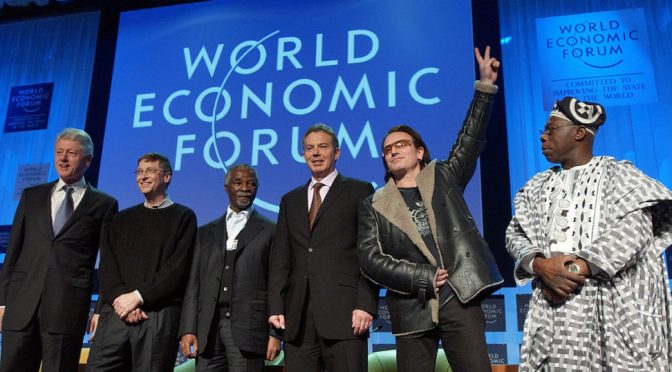
world economic forum meeting with 6 persons

From The WinePress

“COVID-19 was the test of social responsibility – A huge number of unimaginable restrictions for public health were adopted by billions of citizens across the world.”

The following report was first published on October 1st, 2022, on winepressnews.com.

Due to the fact that billions of people worldwide all voluntarily submitted themselves to hefty Covid-19-related restrictions, practices (masking, social distancing, death of the handshake, Zoom calls), job closures, payment forbearance, curfews, lockdowns, isolations, quarantines and more; the World Economic Forum (WEF) is now stating that this pandemonium was just a “test of social responsibility,” and that these same people will accept a social credit score system.

Published on September 14th, the WEF published an article titled “‘My Carbon’: An approach for inclusive and sustainable cities,” written by Kunal Kumar, Mission Director for Smart Cities Mission and Ministry of Housing and Urban Affairs of India, and Mridul Kaushik, who worked as an analyst for Cisco for several years.

The two authors lay out the steps towards the world’s populous accepting a social credit score system that is carbon-based. This is what China currently uses, which applies a retroactive score to individuals based on what they say and do, which therefore determines what they can and cannot do in society.Subscribe

The authors begin their article by asserting that nearly three-quarters of the world’s cities account for the total carbon emissions, and with 40% of that number coming from individuals and their actions. And even though many communities have tried to implement sustainability goals, they say they have had “limited success” because of political and social discourse, ignorance on the issues, and the inability to monitor “My Carbon” emissions.

“My Carbon,” as the WEF calls it, is the pseudonym for this social credit-carbon calculator they wish to come to pass.

The authors layout three key “significant developments” within the last decade that could help in “shaping the future towards smart and sustainable cities.”

The author’s first tenet is the subservience of the masses during the Covid-related restrictions and lockdowns. They wrote:

“COVID-19 was the test of social responsibility – A huge number of unimaginable restrictions for public health were adopted by billions of citizens across the world. There were numerous examples globally of maintaining social distancing, wearing masks, mass vaccinations and acceptance of contact-tracing applications for public health, which demonstrated the core of individual social responsibility.”

In other words, if the masses willingly submitted themselves to the “new normal,” why would they not conform to these new proposals to perfectly surveil everyone’s life?

From there, the authors introduce point number two, “Fourth Industrial Revolution technology breakthroughs.” In short, because of all the artificial intelligence and smartphone addictions, the authors, without saying the words, necessitate the need for a carbon-based social credit score:

“Energy efficiency apps like Svalna, give suggestions and statistics regarding greenhouse emissions and offer ways to reduce your personal footprint, which will aid sustainable cities.” Courtesy: Svalna

“Advances in emerging technologies like AI, blockchain and digitization can enable tracking personal carbon emissions, raise awareness and also provide individual advisories on lower carbon and ethical choices for consumption of product and services. The World Economic Forum’s Scale 360 initiative demonstrates the use of fourth industrial revolution technologies across the whole life cycle of products and services.

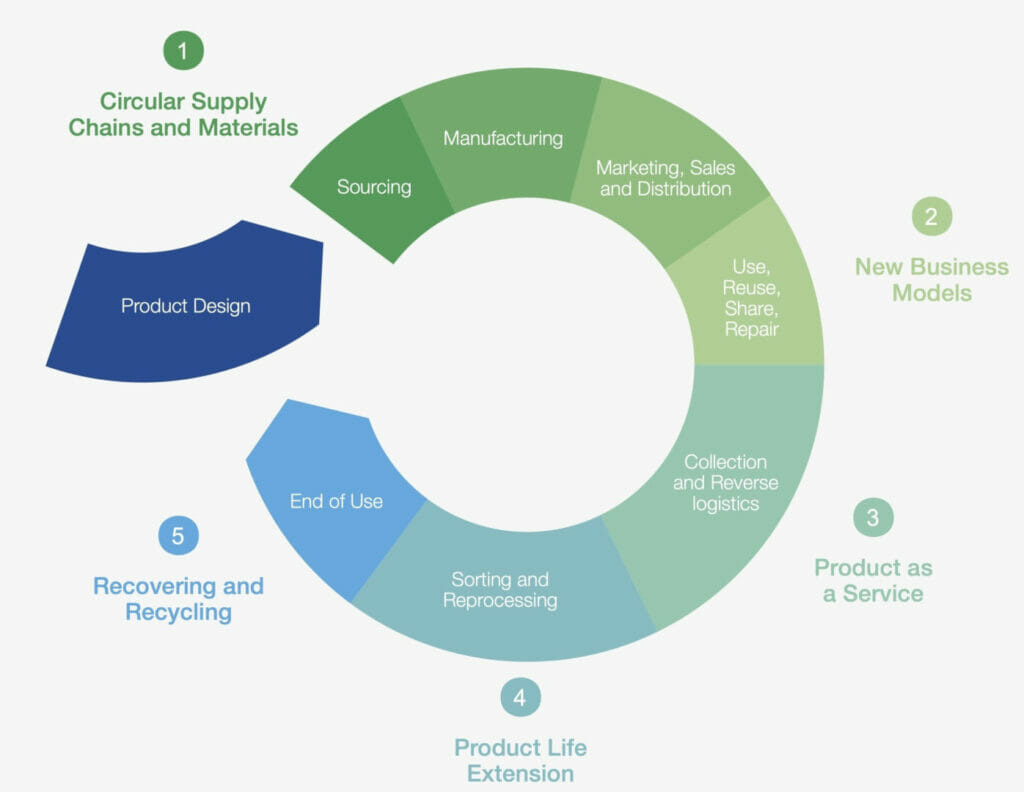
“There have been major advances in smart home technologies, transport choices with carbon implications, the roll-out of smart meters in providing individual choices to reduce their energy-related emissions, the development of new personalized apps to account for personal emissions, and better personal choices for food and consumption-related emissions. AI can also help strengthen circular economy business models like product as a service models, demand predictions, and smart asset management by combining real time and historical data from products and users.

“There is a significant number of programs and applications enabling citizens to contribute towards carbon emissions by providing them in-depth awareness on the choices of personal carbon for food, transport, home energy and lifestyle choices.

“These energy efficiency apps give suggestions and statistics regarding greenhouse emissions and offer ways to reduce your personal footprint. Keeping track of energy consumption in the home and motivating people to make lifestyle changes and to contribute your share towards the betterment of the environment.”

“AI can also help strengthen circular economy business models for sustainable cities.” Courtesy: Figure adapted from World Economic Forum and Accenture (2018)

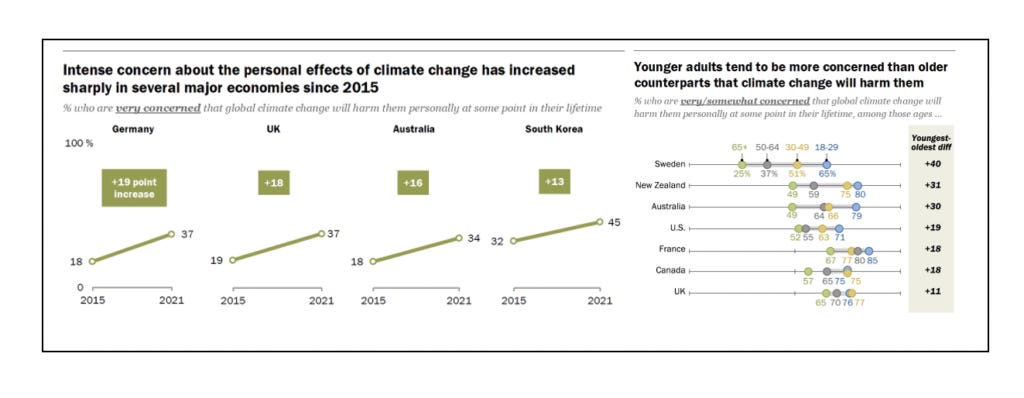
The third point the author’s present is even more ‘education’ and “raised awareness” on the issue of climate change, building-off on the increasing number of people (namely the younger generations) who are actively calling for mitigation in their own lives to stop climate change. Citing a detailed poll via the Pew Research Center, “80% of citizens say they are willing to change how they live and work to combat the effects of climate change.” The sample size, however, was less than 20,000 people interviewed internationally.

A chart from the survey. Courtesy: Pew

Notwithstanding, people like Bill Gates have said that the collective masses will simply not conform to these climate-related initiatives, though subtly implying the methodology as to how it will be implemented: “Bill Gates Says You’ll Never Solve Climate Change By Making People Consume Less, Subtly Implying Depopulation Instead.”

Nevertheless, bearing all three points in mind, the authors conclude this:

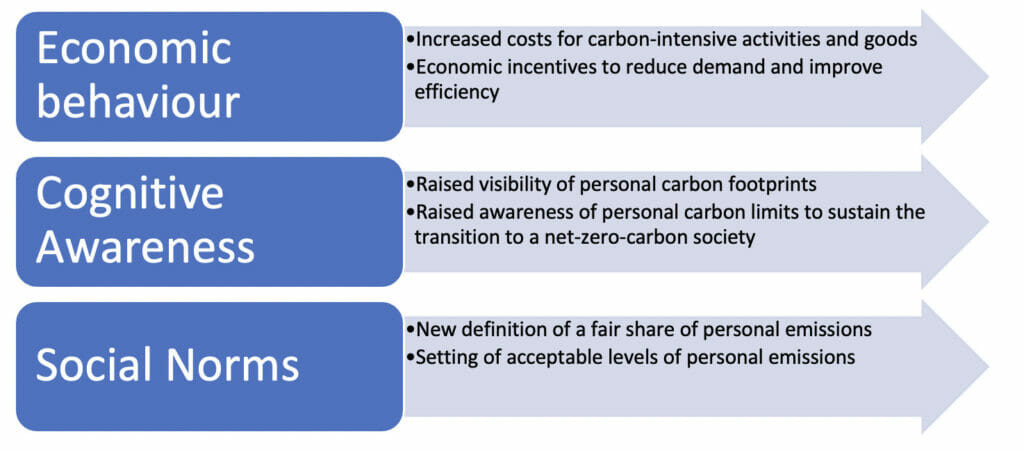
“The three trends provide strong evidence towards enabling a social movement for “My Carbon” initiatives by enabling public-private partnerships to help curate this program. It is suggested to drive a three-way approach to shape this movement.

“Such economic action will need policy enablement from city leadership through extensive discussion between stakeholders to arrive at a fair and inclusive approach.

“The levers of Cognitive Enablement and Social Norms will be much more impactful through citizen engagement programs and learnings from the above-mentioned trends need to be captured to design these programs. Innovative AI and machine-learning capabilities would help capture embedded emissions in goods and services, and could help in providing individuals with tailored and timely advice on how to reduce their lifestyle emissions.

“Finally, it is significant that all stakeholders across the value chain come together and contribute towards achieving a net-zero future by leaving no one behind.”

Courtesy: World Economic Forum

Furthermore, as a sidenote, the WEF additionally notes some of the other underlying initiatives attributable to them to bring these social credit scores to pass, to usher in this new system per smart city life by 2030.

Integrated energy systems in cities. Courtesy: Net Zero Carbon Cities: An Integrated Approach, 2021, World Economic Forum

“In a major step, nine cities and more than 70 organizations in 10 different sectors have come together to build further momentum for a new multi-year initiative: Net Zero Carbon Cities.

“Together with the Forum, they have created a vision for the future and launched a new framework to help cities rethink urban ecosystems, ensuring that they are greener, efficient, resilient, circular and more equitable.

“From policy-makers to businesses, city administrators, civil society and the financial sector, the World Economic Forum is convening a range of stakeholders with a role to play if global cities have a chance of reaching the net-zero carbon goal by 2030.”

[…]

Via https://envirowatchnz.com/2025/11/22/world-economic-forum-openly-says-those-who-submitted-to-the-covid-lockdowns-will-also-accept-social-credit-scores-and-carbon-calculators/

Mamdani raises ‘US funding’ of Israeli genocide in Gaza during Trump meeting

US President Donald Trump (R) meets with New York Mayor-elect Zohran Mamdani in the Oval Office of the White House in Washington, DC, on November 21, 2025. (Photo by Jim WATSON / AFP)

Press TV

In a meeting with US President Donald Trump, the newly elected New York City mayor, Zohran Mamdani, raised the issue of US funding for the Israeli genocidal war on Gaza.

The meeting at the White House on Friday was the first in-person meeting for the political opposites, who have clashed over everything from immigration to economic policy.

The 34-year-old mayor told reporters that when he spoke to New Yorkers who supported both Trump and him, the two main reasons given were a desire to “end forever wars” and an “end to the taxpayer dollars we had funding violations of human rights.”

Answering a reporter’s question, the mayor-elect reiterated that Israel has been “committing genocide” in Gaza and his assertion that US taxpayers’ dollars are helping fund it.

Mamdani clarified that he had “spoken about the Israeli [regime] committing genocide and I’ve spoken about our government funding it.”

“I shared with the president in our meeting about the concern that many New Yorkers have about wanting their tax dollars to go toward the benefit of New Yorkers and their ability to afford basic dignity,” Mamdani said.

“There’s a desperate need not only for the following of human rights but also the following through on the promises we’ve made New Yorkers.”

“I appreciate all efforts toward peace,” he added. “We’re tired of seeing our tax dollars fund endless wars, and I also believe that we have to follow through on the international human rights, and I know that still today those are being violated, and that continues to be work that has to be done, no matter where we’re speaking of.”

Trump did not comment on the matter, beyond noting that he and Mamdani feel “very strongly about peace” in West Asia.

Trump also said that he and Mamdani did not discuss the latter’s pledge to arrest Israeli Prime Minister Benjamin Netanyahu if he came to the Big Apple.

Trump had previously called the incoming New York City mayor a “radical left lunatic,” a communist, and a “Jew hater.”

As Mamdani surged in the polls to victory, Trump, a Republican, issued threats to strip federal funding from the biggest US city.

The mayor-elect has regularly criticized a range of Trump’s policies, including plans to ramp up federal immigration enforcement efforts in New York City, where four in ten residents are foreign-born.

[…]

Via https://www.presstv.ir/Detail/2025/11/22/759275/New-York-Mayor-meets-Trump-talks-Gaza-genocide

Congress warns Clintons over Epstein case

Congress warns Clintons over Epstein case

RT

House Oversight Committee Chair James Comer has said any attempt by the ex-presidential couple to avoid subpoenas will constitute contempt of Congress

US House Oversight Committee Chairman James Comer has demanded that former President Bill Clinton and his wife, former Secretary of State , testify before lawmakers about the late convicted sex-trafficker Jeffrey Epstein. He warned that failing to comply with subpoenas issued earlier this year would mean serious consequences for both.

Epstein, convicted of sex offenses in 2008, was charged again in 2019 with trafficking minors and running an underage sex ring. He was found dead in a Manhattan jail cell later that year.

According to a press release from the House Committee on Oversight and Government Reform on Friday, Comer “sent a letter to Bill and Hillary Clinton’s attorney, David Kendall [saying that they]… are required to comply with lawful subpoenas and appear for scheduled in-person depositions.” He noted that both Republicans and Democrats on the committee “approved a motion to issue subpoenas to Bill and Hillary Clinton” in July.

“Given their history with Jeffrey Epstein and Ghislaine Maxwell, any attempt by the Clintons to avoid sitting for a deposition would be… grounds to initiate contempt of Congress proceedings,” Comer said.

The document states that Bill Clinton had been summoned to appear on December 17, and Hillary the following day.

The ex-president previously admitted he had traveled on a jet with Epstein, but insisted that he had never visited the financier’s infamous island.

In July, the Wall Street Journal claimed that Clinton had once written a personal note to Epstein, that reportedly read: “It’s reassuring isn’t it, to have lasted as long, across all the years of learning and knowing, adventures and [illegible word], and also to have your childlike curiosity, the drive to make a difference and the solace of friends.”

A spokesman for Clinton declined to comment on the note at the time, stating that the former president had severed ties with Epstein long before his 2019 arrest and was unaware of his alleged crimes.

In a post on his Truth Social platform last Friday, US President Donald Trump said he had directed Attorney General Pam Bondi and the Justice Department to investigate “Jeffrey Epstein’s involvement and relationship” with Bill Clinton and several other prominent Democrats.

On Wednesday, Trump signed a bill requiring the Justice Department to release files related to the Epstein case.

In his post, Trump suggested that “perhaps the truth about these Democrats, and their associations with Jeffrey Epstein, will soon be revealed,” mentioning Bill Clinton among several others.

Trump’s move marked a shift from his earlier position. For months, he had urged House Republicans to block the release of the files, arguing that Democrats wanted to use the materials to damage his presidency.

[…]

Via https://www.rt.com/news/628194-oversight-committee-warning-clinton-epstein/