National Endowment for Democracy Confirms Funding Suspended

Fact Sheet on the National Endowment for Democracy - MLToday

The NED is a US-funded organization set up in the 1980s that meddles in elections and pushes regime change around the world in the name of spreading democracy, has confirmed reports that its funding from the US government has been frozen, forcing it to suspend operations.

“The [NED] is currently unable to access its Congressionally appropriated funds, which sustain nearly all of its grantmaking and operations. As a result, for the first time in the organization’s four-decade history, it has been unable to meet its obligations and has been forced to suspend support for nearly 2,000 partners worldwide,” the NED said in a statement on Tuesday.

While the NED presents itself as an “independent” organization, it is nearly entirely funded by the US government, which it acknowledged in the statement. The NED claimed that its funding should have been exempt from the Trump administration’s pause on foreign aid.

“Ninety-five percent of NED’s funding is directly appropriated by Congress and is not considered foreign assistance. This funding therefore was not subject to the executive order freezing foreign assistance for a ninety-day review. However, despite being exempt, access to these funds has been inexplicably cut off, forcing NED to halt all partner support and furlough the majority of its staff,” the NED said.

The NED, which was founded during the Cold War in 1983, received $315 million from the US government for the 2025 fiscal year. In 1991, Allen Weinstein, a co-founder of NED, acknowledged to The Washington Post that a lot of what the organization did was done “covertly 25 years ago by the CIA.”

In the 1991 article, Washington Post columnist David Ignatius listed some examples of the NED’s “overt” action that was previously done by the CIA, including “providing money and moral support for pro-democracy groups, training resistance fighters, working to subvert communist rule.”

The NED has been targeted by Elon Musk, who asked his followers in a recent post on X to list “all the evil things that NED has done.” Jim Bovard, a senior fellow at the Libertarian Institute, replied with an article about how he has been critical of the organization for 40 years.

In a 2009 article for the Future Freedom Foundation, Bovard said the NED is “based on the notion that its meddling in foreign elections is automatically pro-democracy because the US government is the incarnation of democracy. NED has always operated on the principle that ‘what’s good for the US government is good for democracy.’”

In a 2006 piece for The American Conservative, Bovard detailed NED’s efforts to push for regime change in Latin America. “In 2001, NED quadrupled its aid to Venezuelan opponents of elected president Hugo Chavez, and NED heavily funded some organizations involved in a bloody military coup that temporarily removed Chavez from power in April 2002. After Chavez retook control, NED and the State Department responded by pouring even more money into groups seeking his ouster,” he wrote.

Bovard continued, “The International Republican Institute, one of the largest NED grant recipients, played a key role both in the Chavez coup and also in the overthrow of Haiti’s elected president, Jean-Bertrand Aristide. In February 2004, an array of NED-aided groups and individuals helped spur an uprising that left 100 people dead and toppled Aristide.”

[…]

Via https://news.antiwar.com/2025/02/27/national-endowment-for-democracy-confirms-its-funding-has-been-suspended-forcing-it-to-halt-all-partner-support/

Pharma-Sponsored Media Launches Measles Fear Campaign Based on Distorted Science

by Nicolas Hulscher, MPH

The above google search for ‘measles’ reveals the coordinated fear campaign propagated by pharma-sponsored mass media.

Is there a reason to cower in fear as the news suggests and rush to get MMR booster shots? No, especially not for healthy children. However, we must remember that children with multiple comorbidities can face serious outcomes, as with any disease. It’s important to approach these discussions with a level-headed assessment of individual risk rather than reacting to sensationalized headlines.

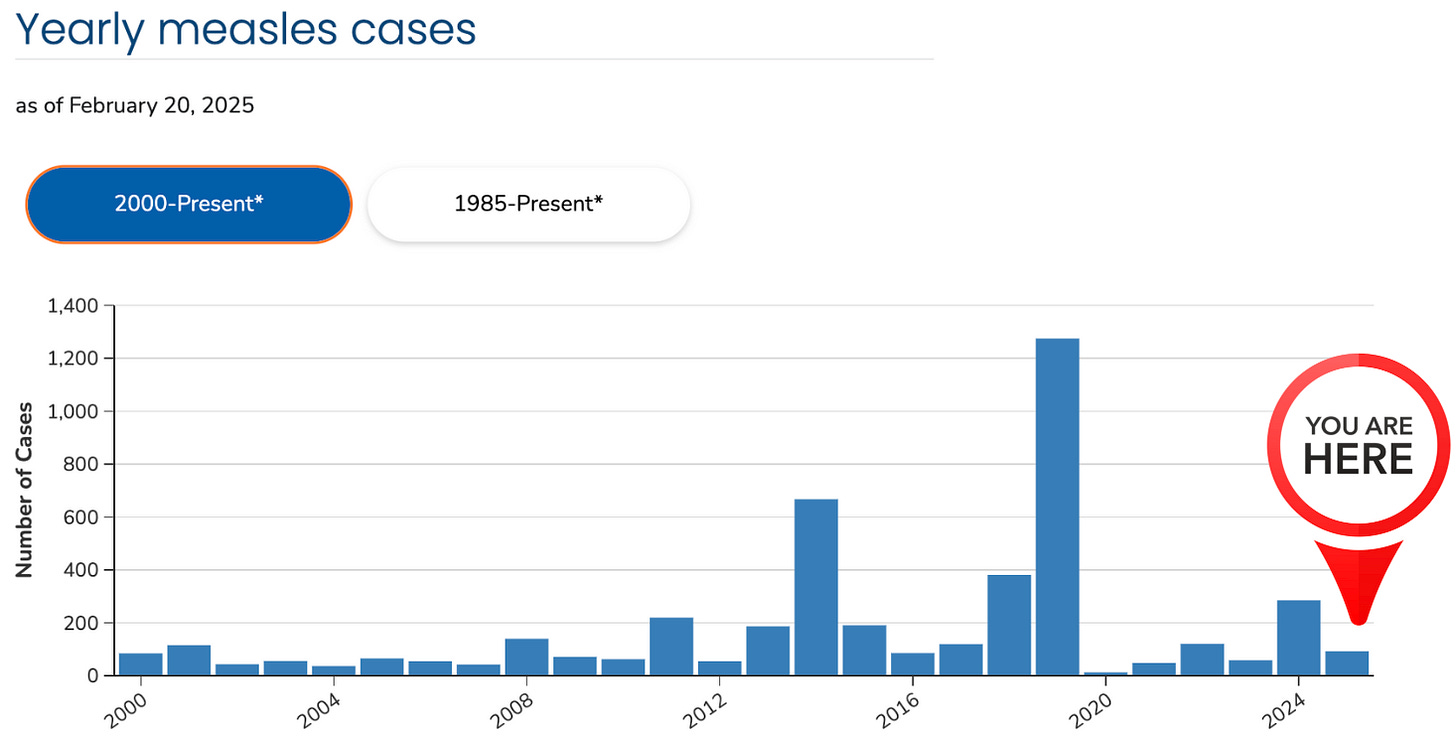
Measles outbreaks occur every year across the United States despite 90.8% MMR vaccine uptake:

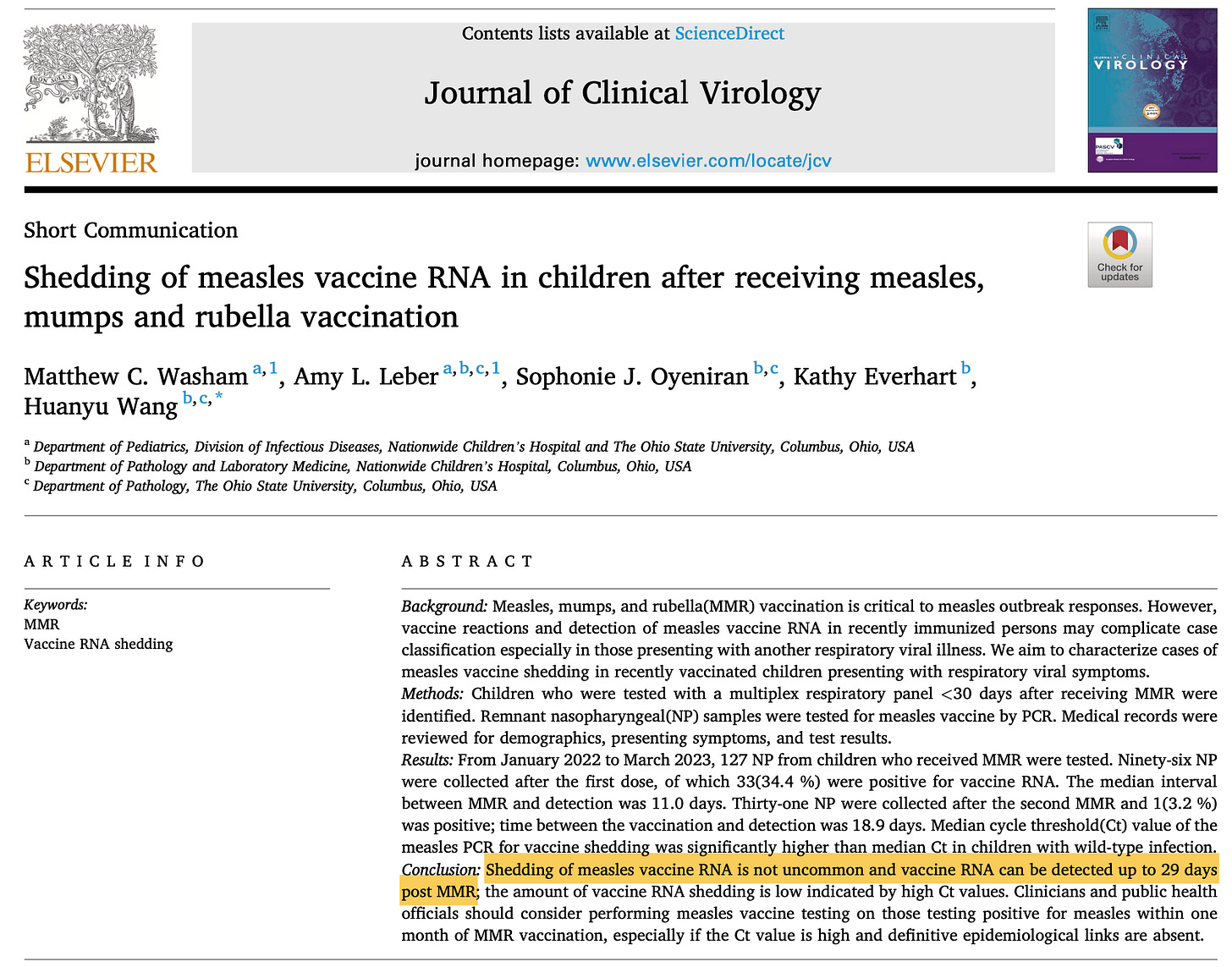
Shedding of measles vaccine RNA is a recognized phenomenon, with detectable levels in nasopharyngeal samples for up to 29 days post-vaccination (Washam et al). This shedding results from the replication of the attenuated vaccine virus, which can be transmitted to close contacts:

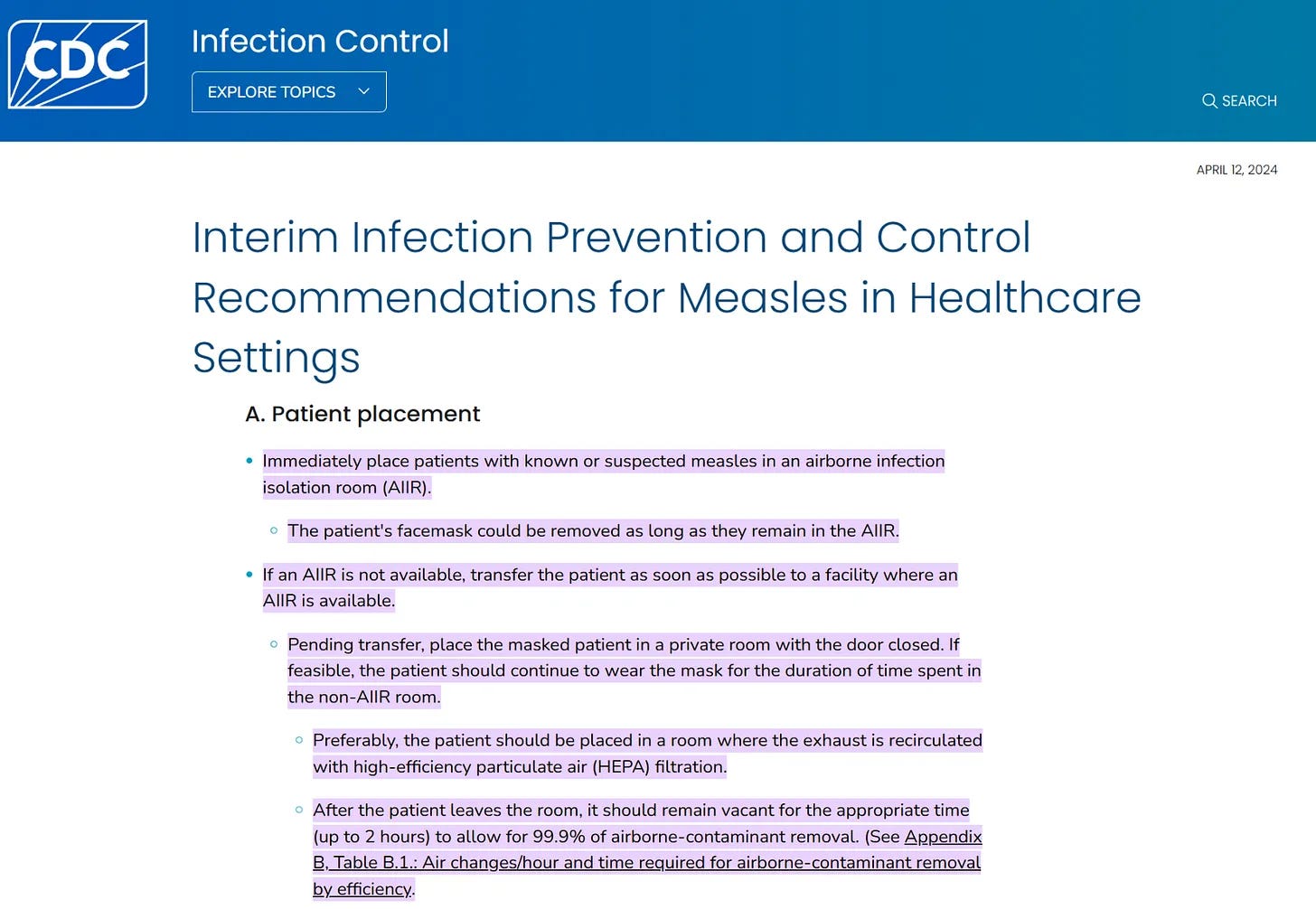
Routine isolation practices recommend by the CDC for all measles cases, regardless of severity, will drastically inflate hospitalization rates, making the virus appear more dangerous to the layperson:

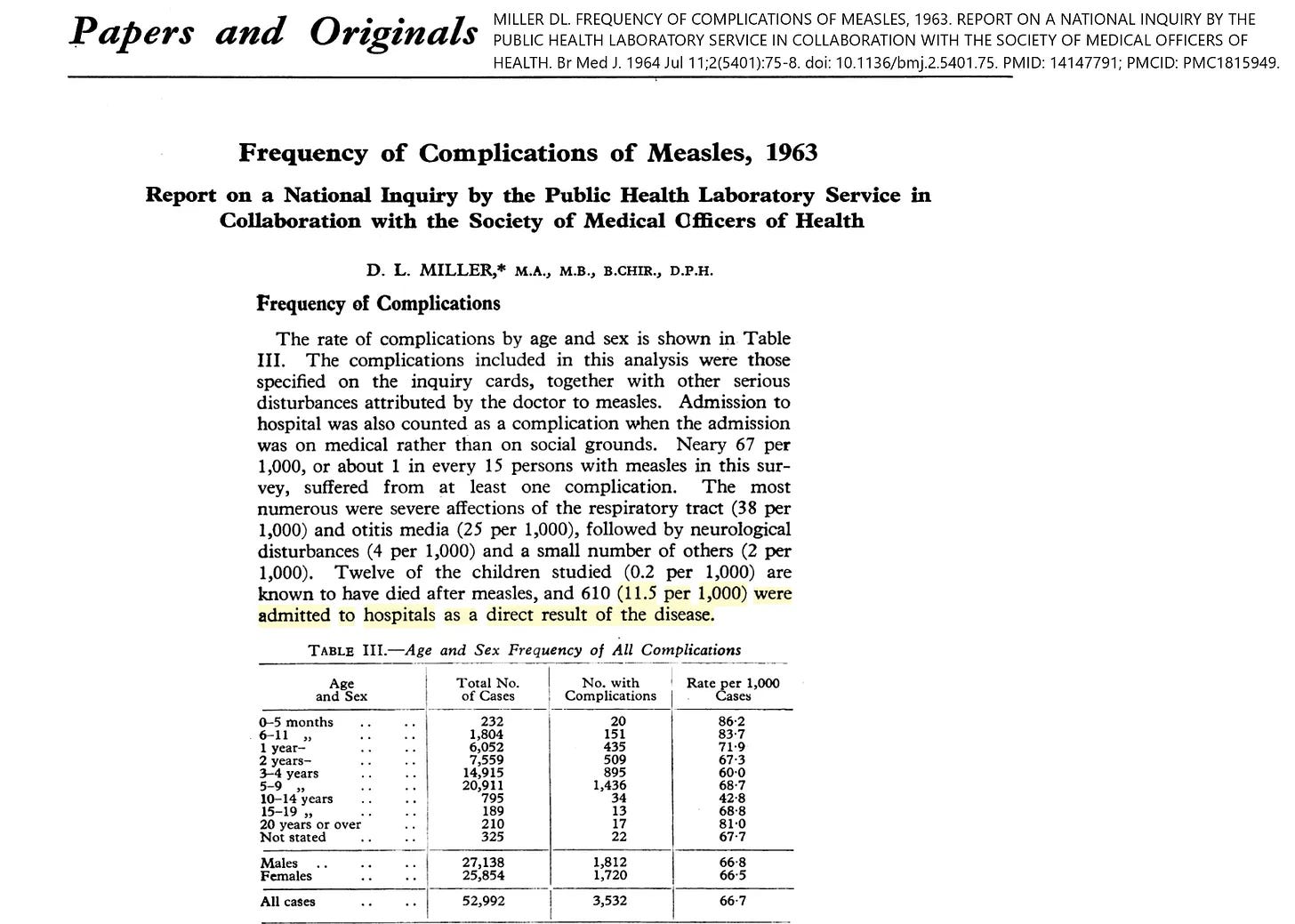
What is the actual risk of measles-related hospitalization due to illness? A study by Miller, published in England using data from 1963—prior to the introduction of the measles vaccine—found a hospitalization rate of 11.5 per 1,000 cases and a mortality rate of 0.2 per 1,000 cases. In comparison, seasonal influenza has a hospitalization rate of 10–20 per 1,000 cases and a mortality rate of 0.5–2 per 1,000 cases.

Additionally, prior research summarized in the extensively referenced book Dissolving Illusions by Bystrianyk and Humphries indicates that measles-related deaths in children are overwhelmingly linked to malnutrition and vitamin A deficiency.

A recent report on the first U.S. measles death in the current outbreak highlights a major issue with media-driven fear campaigns. The report does not specify measles as the cause of death but simply states that the individual “tested positive” for the virus. Without full transparency on underlying health conditions or contributing factors, this case must undergo a full and independent review to determine the true cause of death.

It appears that the primary purpose of this fear campaign is to sow distrust in the new HHS administration and increase MMR vaccine uptake. Gao et al demonstrated that higher public fear = higher vaccine uptake:

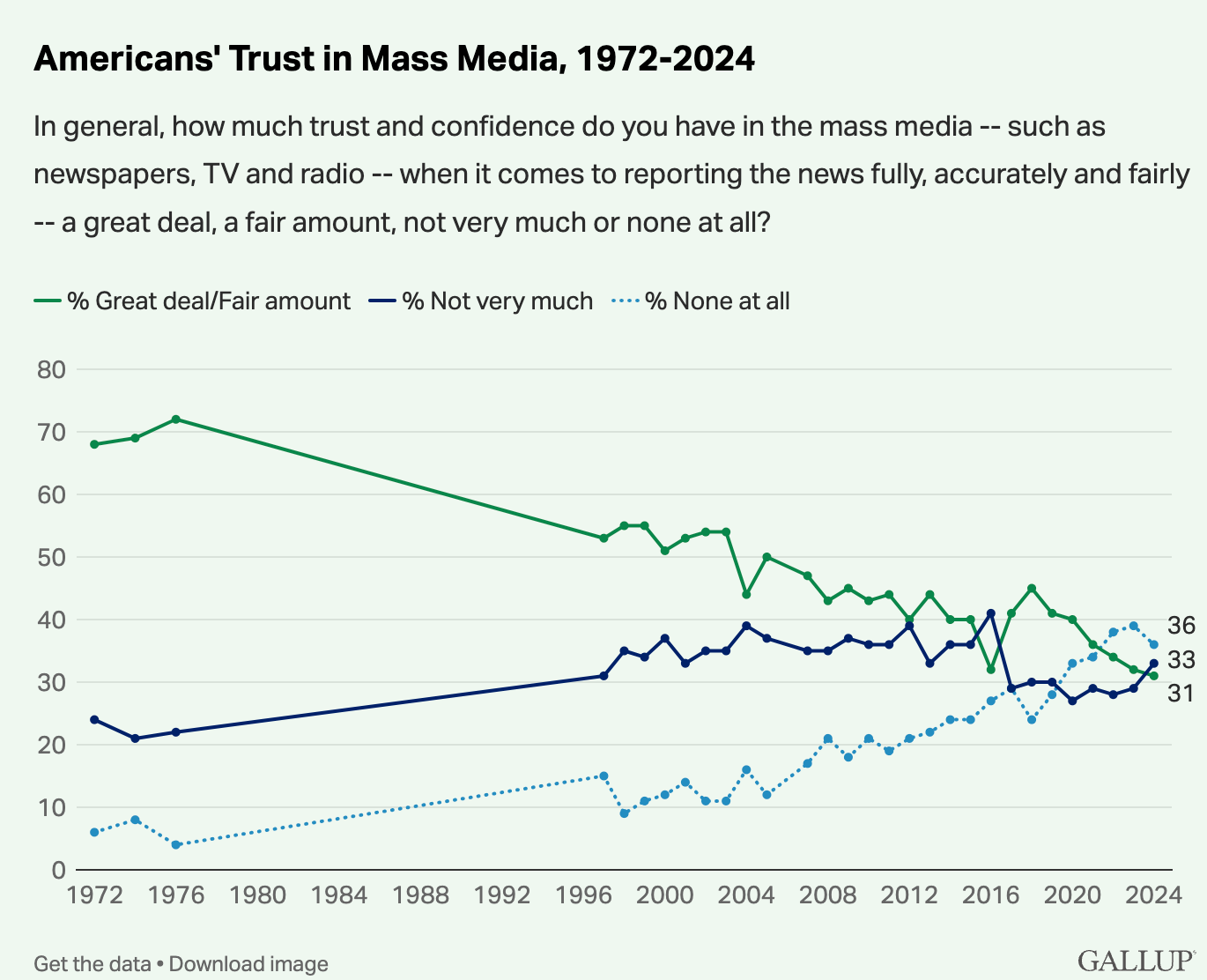
However, as of 2024, 69% of Americans have no trust or very little trust in mainstream media. Thus, this fear campaign is doomed to fail.

[…]

Via https://www.thefocalpoints.com/p/pharma-sponsored-media-launches-measles

New Zealand Gets Their Very Own Biowarfare Lab

Nelson biolab news

Getty Images

Concerns have been raised over a new Biosafety Level 2 (BSL-2) biolab being established in Nelson, operated by Kimer Med.

Publicist and promoter Aly Cook voiced strong opposition to the facility, saying it is being set up for research involving dangerous pathogens such as Zika virus and Dengue fever, diseases that are not currently present in New Zealand.

In a tweet she warned of potential risks, comparing the situation to the controversial Wuhan lab theories surrounding COVID-19, and urged politicians Judith Collins and Chris Luxon to intervene, stating that New Zealand should not be used as an experimental testing ground.

According to BSL-2 safety guidelines, these laboratories handle “moderate-risk infectious agents” that can be transmitted to humans, including viruses like equine encephalitis and HIV, as well as common bacterial infections like staphylococcus aureus.

BSL-2 facilities are required to follow strict biosafety protocols, including the use of protective equipment, restricted access, and decontamination procedures to prevent accidental exposure or leaks.

Concerns grew after a tweet from NZ & THE MRNA questioned the transparency of the project. The post pointed out that BSL-2 labs are permitted to store and use live viruses, raising fears that any accidental leak could introduce Dengue or Zika into New Zealand. The tweet also said that the Nelson community and the wider public had not been informed about the development, suggesting a lack of public consultation.

Kimer Med, in a post from February 5, announced its plans to expand into a new PC-2 lab, pilot plant, and office space, significantly increasing their research capabilities. The company states that its work focuses on developing “broad-spectrum antivirals” targeting “multiple pathogens”.

[…]

Via https://dailytelegraph.co.nz/news/concerns-raised-over-planned-biosafety-level-2-biolab-in-nelson/

What Trump got right about nuclear weapons—and how to step back from the brink

Photo illustration by François Diaz-Maurin (source photographs: White House/Flickr, kremlin.ru/Wikimedia)

By Lucas Ruiz, Geoff Wilson

President Donald Trump’s recent remarks about nuclear weapons are 100-percent correct.

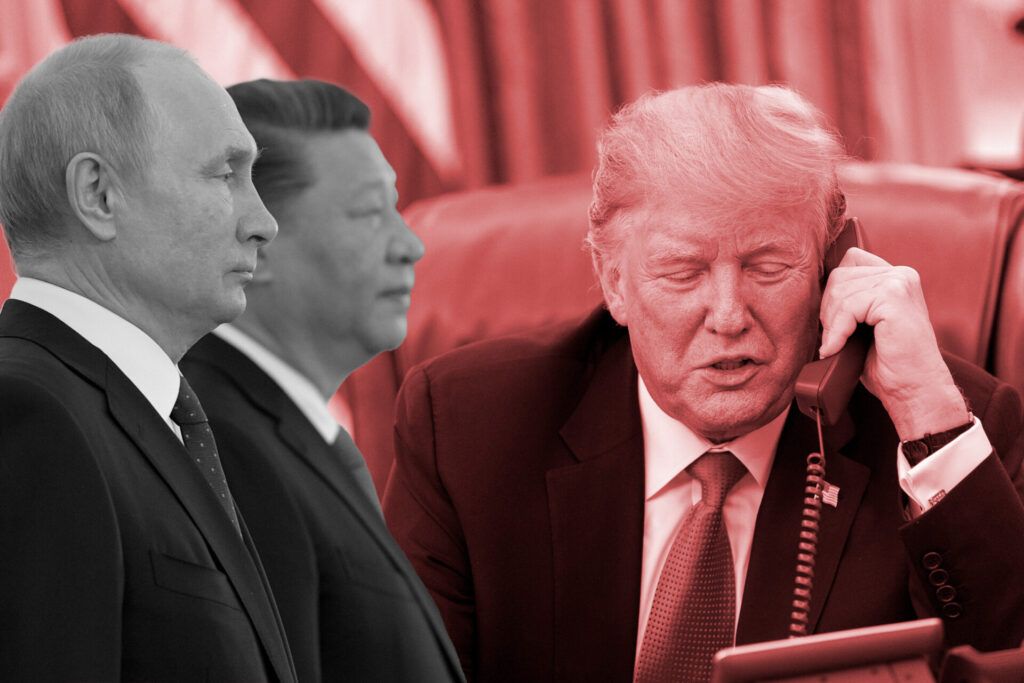
Speaking to a room of reporters in the White House on February 13, President Trump signaled his interest in restarting arms control negotiations with Russia and China. “There’s no reason for us to be building brand new nuclear weapons. We already have so many,” Trump said. “You could destroy the world 50 times over, 100 times over. And here we are building new nuclear weapons, and they’re building nuclear weapons.”

He continued, “We’re all spending a lot of money that we could be spending on other things that are actually, hopefully, much more productive.”

The United States is already spending $75 billion annually—the equivalent of two Manhattan Projects every year—on new nuclear weapons until at least 2032. In total, the country is set to spend over $1.7 trillion on nuclear modernization over 30 years—which is about the same amount as all student loan debt in the United States.

But what will the country have to show for it?

Counterproductive upgrades. The United States already spends more on national security than the next nine nations combined, and China and Russia have also started expanding and modernizing their arsenals, respectively. But the US arsenal is already more than capable of retaliating against a simultaneous nuclear strike by both countries—which would not change even in a scenario in which China reached numerical nuclear parity with the United States and Russia. Instead, as President Trump suggests, US political leaders must consider how engaging in a massive, new nuclear build-up will waste limited taxpayer dollars and undermine national security by diverting the federal budget from more useful national investments like pursuing infrastructure and electrical grid resiliency.

The current US nuclear modernization program attempts to replace every leg of the US strategic triad—that is, the land-based intercontinental ballistic missiles, strategic bombers, and ballistic missile submarines—all at once. This wildly ambitious program is already massively over budget and years behind schedule. It has also forced the United States to extend the service lives of current systems while waiting for the new systems to come online—something the US military claimed to be infeasible when the process started. The advanced age of the previous generation of nuclear delivery vehicles was a major justification for modernization in the first place.

More fundamentally, the current modernization push is fueled by a pathology of nuclear superiority brinkmanship, which is accelerating a headlong rush into a new nuclear arms race and increasing the odds of a confrontation between nuclear powers. If the United States continues down this path, it will not only be a waste of taxpayer dollars but also weaken strategic stability and increase the risk of nuclear war. The world was lucky to have escaped what President John F. Kennedy called the “nuclear sword of Damocles”—and the United States should be in no hurry to test that fate again.

Stepping toward the brink—and back. While President Trump’s remarks offer hope for a more reasonable nuclear path, his administration is also espousing “peace through strength”—Ronald Reagan’s mantra—as one of the foundations of its foreign policy. The administration’s Republican allies in Congress—including notably Sen. Roger Wicker, a Republican of Mississippi who now chairs the Senate Armed Services Committee—have adopted this framing and proposed doubling down on the arms race by adding $200 billion to an already historically high US defense budget.

Other conservatives are pushing Trump to adopt Reagan’s playbook for US-Soviet relations by demonstrating US supremacy internationally, which includes accelerating the nuclear arms race. Most concerning, some allege winning this arms race necessitates being prepared to resume US explosive nuclear testing. And some within the military establishment have called for the reintroduction of tactical nuclear weapons into the US arsenal despite being hugely destabilizing.

But these hawkish policies are only the first part of Reagan’s nuclear weapons chapter.

In 1982, after boosting defense spending by 35 percent, Reagan suddenly reversed course and famously declared in a radio address that “a nuclear war cannot be won and must never be fought.” His reversal on nuclear weapons would be confirmed after witnessing the infamous Pentagon war game Proud Prophet, viewing the cataclysmic effects of nuclear war in the movie “The Day After,” and nearly triggering a catastrophic war with the Soviets. Reagan’s idiom became the bedrock of efforts to avoid mutual destruction through nuclear war, which has been repeated by many officials in the four decades since, including just five years ago at the start of the Biden administration.

In hindsight, Trump can skip to the productive portion of Reagan’s strategy. His intuition is already pointing him in this direction. The president should not be listening to those around him who would like to see the United States embrace a nuclear arms race by chasing after the illusion of strategic superiority and expanding the nuclear arsenal—which Trump already said made no sense. Instead, President Trump should pursue a course of hard-nosed diplomacy like Reagan did to secure the Intermediate-Range Nuclear Forces Treaty (INF), which eliminated US and Soviet intermediate- and shorter-range missiles in 1985.

The Trump administration could renew Reagan’s crowning achievement by negotiating with Russia and China to limit the growing numbers of new nuclear weapons in the world today. The president has the opportunity to push the United States and other nuclear-weapon states to abide by their disarmament promises regarding nuclear weapons. Should he succeed, Trump could even win a Nobel Peace Prize—becoming just the fifth US president to do so.

President Trump, the United States, and the world would be well served by taking steps to decrease the threats posed by the new nuclear arms race. One question remains: Does he have the courage to stick to his convictions to shut out those around him who would prefer to gamble on Armageddon?

[…]

Via https://thebulletin.org/2025/02/what-trump-got-right-about-nuclear-weapons-and-how-to-step-back-from-the-brink/

From textile dye to potential wonder drug: “The Ultimate Guide to Methylene Blue”

From textile dye to potential wonder drug: “The Ultimate Guide to Methylene Blue” by Mark Sloan

By Dr Eddy Betterman

  • Methylene blue, invented in 1876, first served as a textile dye, later becoming vital in microbiology and as the first synthetic antimalarial drug.
  • It’s widely used in veterinary medicine for treating methemoglobinemia and poisonings, and serves as an antidote for chemical poisonings and drug overdoses.
  • Methylene blue is effective against various pathogens, including malaria and Ebola, and its antimicrobial potency increases with light therapy.
  • Recent studies show it may enhance brain function, treat neurodegenerative diseases, and help with depression, while also promoting cellular energy production in conditions like Alzheimer’s.
  • It selectively targets dysfunctional cells, including cancer cells, and researchers have developed a highly efficient methylene blue battery.

Methylene blue, a vibrant blue dye with a rich history, has quietly revolutionized science and medicine for over a century. Synthesized by German chemist Heinrich Caro in 1876 for the textile industry, this unassuming compound has since found its way into laboratories and hospitals worldwide, showcasing a stunning array of applications and benefits.

The journey of methylene blue began in the late 19th century when microbiologist Robert Koch discovered that it could stain cells and microorganisms, allowing scientists to study bacteria, parasites, and other tiny organisms with unprecedented precision. This breakthrough laid the foundation for methylene blue’s widespread use in scientific research.

One of the most significant milestones in methylene blue’s history came in the early 20th century when Paul Ehrlich, a Nobel Prize-winning physician, discovered its ability to both stain and kill the malaria-causing parasite Plasmodium falciparum. This led to methylene blue becoming the first synthetic antimalarial drug in history, saving countless lives during World War II.

Today, methylene blue remains a staple in fish tanks and aquaculture, where it serves as a powerful antifungal and antiparasitic agent, helping to maintain the health of aquatic ecosystems. It also plays a crucial role in veterinary medicine, treating methemoglobinemia and other chemical poisonings in animals ranging from dogs and cats to cows and horses.

Beyond its applications in the animal kingdom, methylene blue has emerged as a potent antidote for a wide range of chemical poisonings and drug overdoses. Its ability to convert methemoglobin, a form of hemoglobin that can’t carry oxygen, back to its normal state makes it invaluable in emergency rooms and critical care units worldwide.

The compound’s journey as a medicine took another significant turn with its recent rediscovery as an effective treatment for malaria. In fact, methylene blue is now considered one of the most promising antimalarial drugs ever developed, particularly for treating drug-resistant strains. Its ability to inhibit the malaria parasite has shown remarkable results.

Moreover, methylene blue has demonstrated remarkable antiviral properties. Studies have shown its effectiveness in inactivating a range of viruses, including Zika, West Nile, Ebola, Hepatitis, HIV, and even the virus responsible for COVID-19. When combined with light therapy, its antimicrobial potency increases significantly, making it a powerful tool in the fight against infectious diseases.

Recent research has also highlighted methylene blue’s potential in enhancing brain function and cognition. It has been shown to improve memory retrieval, attention and emotional regulation, making it a potential game-changer for those struggling with cognitive decline or mental fog. Perhaps most notably, a single dose of methylene blue has been found to completely eliminate symptoms of depression in some individuals, offering a promising alternative to traditional antidepressant medications, which often come with debilitating side effects.

Methylene blue’s benefits for the brain don’t stop there. It has also shown promise in treating neurodegenerative diseases like Alzheimer’s and Parkinson’s. These conditions are characterized by mitochondrial dysfunction, and methylene blue’s ability to restore cellular energy production makes it a promising therapeutic option. The potential for methylene blue to help people regain their memories and autonomy is particularly significant, given the increasing prevalence of dementia.

Perhaps one of the most exciting areas of research is methylene blue’s potential role in cancer treatment. It selectively targets cells with dysfunctional metabolism, including cancer cells, and restores their ability to use oxygen efficiently. This could offer a new approach to treatment that doesn’t rely on toxic chemicals or radiation, potentially revolutionizing cancer care.

In addition to its medical applications, methylene blue has shown promise in energy storage. Researchers have developed a methylene blue battery that operates at near-perfect efficiency and is non-polluting, making it a sustainable alternative to traditional batteries.

Methylene blue’s journey from a simple textile dye to a potential wonder drug is a testament to its versatility and power. Its ability to target mitochondrial dysfunction, the root cause of many diseases, makes it a promising candidate for transforming the way we approach health and healing. As research continues, the full potential of this remarkable compound may yet be unveiled, offering hope for countless individuals facing a range of medical challenges.

Watch this video about Mark Sloan’s book “The Ultimate Guide to Methylene Blue,” which elaborates on how this compound can help improve health.

[…]

Via https://dreddymd.com/2025/02/27/ultimate-guide-to-methylene-blue-mark-sloan/

Tulsi Gabbard labels CNN ‘propaganda arm’ of spies

Tulsi Gabbard labels CNN ‘propaganda arm’ of spies

RT

The US director of national intelligence has said the network’s anonymous CIA sources are exactly the people “we need to root out”

Newly confirmed US Director of National Intelligence (DNI) Tulsi Gabbard has accused CNN of acting as a “propaganda arm” for disloyal intelligence agents, calling the network’s report on potential retaliation by dismissed spies an “indirect threat” to President Donald Trump’s administration.

As part of Trump’s broader effort to downsize and restructure the federal government, the Central Intelligence Agency has recently offered so-called buyouts to its agents. In a report published on Monday, CNN, citing unnamed sources, claimed that some senior CIA officers were “quietly discussing” how the dismissals “risk creating a group of disgruntled former employees who might be motivated to take what they know to a foreign intelligence service.”

“I am curious about how they think this is a good tactic to keep their job,” Gabbard told Fox News on Tuesday.

“They are exposing themselves, essentially, by making this indirect threat – using their propaganda arm, CNN, that they’ve used over and over again – to reveal their hand,” she continued. “Their loyalty is not to America, not to the American people or the Constitution; it is to themselves.”

She stressed that these disgruntled employees are “exactly the kinds of people we need to root out, get rid of, so that the patriots who do work in this area, who are committed to our core mission, can actually focus on that.”

Gabbard also claimed that many within the intelligence community had reached out to her personally, expressing support for Trump’s efforts to “clean house” and refocus on the core mission of serving the American people.

A former US congresswoman from Hawaii, Gabbard rose to national prominence in 2016 when she resigned as vice chair of the Democratic National Committee (DNC) to endorse Bernie Sanders for president. She later ran for the Democratic presidential nomination in 2020, advocating against US military interventions abroad, which she argued are harmful to service members like herself and detrimental to national interests. As tensions with the Democratic Party escalated, Gabbard left the party in 2022. After two years as an independent, she joined the Republican Party and endorsed Donald Trump during the 2024 presidential campaign.

Trump’s nomination of Gabbard for the top intelligence role in November sparked criticism from establishment figures, who labeled her a security risk. Despite the backlash, she was confirmed earlier this month by a 52-48 Senate vote, with only one Republican, Senator Mitch McConnell of Kentucky, opposing her appointment.

In January, the Senate also confirmed another Trump nominee, John Ratcliffe, as director of the CIA in a 74-25 vote. Ratcliffe, a former Texas congressman and ex-director of national intelligence during Trump’s first term, is known for his skepticism of intelligence agencies and his criticism of investigations into alleged Russian interference in the 2016 election.

HHS Secretary RFK Jr. Halts Biden Administration’s $240 Million Contract for Oral COVID Vaccine

By Cassandra MacDonald

The contract, which has now been paused for 90 days, is with biotech company Vaxart Inc.

The project’s freeze comes just before 10,000 people were scheduled to begin clinical trials for the oral vaccine on Monday.

Kennedy and his team will review the initial study before deciding whether to terminate the contract or allow it to continue.

“While it is crucial that the Department [of] Health and Human Services (HHS) support pandemic preparedness, four years of the Biden administration’s failed oversight have made it necessary to review agreements for vaccine production, including Vaxart’s,” Kennedy said in a statement to Fox News.

Kennedy added, “I look forward to working with Vaxart and medical experts to ensure this work produces safe, effective, and fiscal-minded vaccine technology.”

Fox News reports:

The creation of a new COVID-19 vaccine was part of the Biden administration’s $4.7 billion Project NextGen initiative, which was launched in 2023 and works to streamline the development of new vaccines. The Vaxart vaccine was specifically funded through an agreement with the Biomedical Advanced Research and Development Authority (BARDA), which is a department within the Administration for Strategic Preparedness and Response under the HHS umbrella.

BARDA obligated roughly $460 million to Vaxart’s development of the new vaccine, with a total of $240 million already authorized for the preliminary study, Fox Digital learned.

A recent modification to the contract would have allowed Vaxart to invoice BARDA for the remaining roughly $230 million for clinical trials, but the stop-work order prevents the biotech company from invoicing BARDA until further notice. Vaxart, however, can still invoice HHS related to medical monitoring of individuals who took part in an initial round of trials, Fox Digital learned.

Kennedy has long run a non-profit called Children’s Health Defense. According to the organization’s website, its mission is to “end childhood health epidemics by working aggressively to eliminate harmful exposures, hold those responsible accountable, and establish safeguards to prevent future harm. We fight corruption, mass surveillance and censorship that put profits before people as well as advocate for worldwide rights to health freedom and bodily autonomy.”

The organization provides legal assistance with fighting mandatory vaccination in schools and the workplace.

During his presidential campaign, Kennedy said he would prosecute any official who engaged in criminal wrongdoing during the COVID-19 pandemic.

“It is dawning on mainstream figures like Anthony Fauci that their Covid policies were a public health disaster,” Kennedy began. “Lots of us are angry about the mandates, the lockdowns, the censorship, the insanity. But we need to avoid the toxic quagmire of retribution and blame and focus on ensuring this never happens again. Clean up the regulatory agencies, get corporate money out of public health, and guarantee free, open, uncensored public and scientific discourse.”

Not retribution, but justice! As President, I will direct my attorney general to investigate and prosecute every person who knowingly defrauded or deceived the American public about the safety and efficacy of medical products and I will obtain justice and compensation for every…

— Robert F. Kennedy Jr (@RobertKennedyJr) April 27, 2023

Kennedy continued, “Of course, officials who betrayed the public trust must not be allowed to hold power. I will remove them from their positions and, if laws were broken, my attorney general will prosecute.”

“Just to be clear, I will prosecute any official who engaged in criminal wrongdoing during the pandemic,” the candidate said. “Corrupt individuals are a small part of the problem. Our agencies have been captured by corporate power, but the vast majority of their staff are decent people. We need to get corporate influence out of *all* regulatory agencies so that they can serve the people honestly.”

“Not retribution, but justice!” Kennedy said. “As President, I will direct my attorney general to investigate and prosecute every person who knowingly defrauded or deceived the American public about the safety and efficacy of medical products and I will obtain justice and compensation for every American who was injured or suffered the death of family members from those actions. As a presidential candidate, I’ll continue to expose corruption to obtain justice for the injured.”

[…]

Via https://www.thegatewaypundit.com/2025/02/hhs-secretary-rfk-jr-halts-biden-administrations-240/

US Biological Warfare Department

US Biological Laboratory Warfare Department

RT (2024)

Film Review

This video concerns the visits a Russian Interior Minister made to various US-operated biowarfare labs as the Ukrainian military withdrew from eastern Ukraine.  He found evidence of unusual infectious diseases in residents close to al the labs visited. He also collected lab samples from which. Russian researchers cultured various deadly viruses.

The filmmakers also interview American journalist and former US military officer Jeffrey Silverman, who moved to Georgia in 1991 to serve as tax advisor to Georgian president Mikheil Saakashvili. After writing a 2011 report about the Richard G. Lugar Center for Public Health Research in Tbilisi Georgia, Saakashvili fired him. No  European or US news outlet ever published his report, which contained evidence about 60 Georgians contracting anthrax.

According to Silverman, Lugar Lab is the flagship for a network of biolabs in Ukraine, Armenia, Azerbaijan, Africa and central Asia.

Although the Ukrainian biowarfare labs are nominally run by the Ukrainian Department of Defense, a Ukrainian whistleblower states they are actually operated by the US Department of Defense. At present, according to Silverman, an epidemic of rare infectious diseases (related to the biolabs) is sweeping Ukraine. Particularly prevalent are anthrax, cholera and botulism and an atypical pneumonia. Silverman also has a leaked copy of a agreement the Ukrainian Health Ministry signed with the DOD giving the latter total control of Ukraine’s 30 biolabs.

The filmmakers next highlight the Detroit-born Ulyana Suyrun, who moved to Ukraine in 2013 to serve in Ukraine’s Health Ministry. And a memo from the US Defense Threat Reduction Agency advising Suyrun to transfer administration of Ukraine’s biolabs. At present they employ no Ukrainian researchers. All are DOD employees.

A lobbyist for the pharmaceutical company Gilead Services is also strongly linked to Lugar Lab. Prior to his death in 2021, Defense Secretary Donald Rumsfeld collaborated as a high level Gilead director at Gilead with Fort Dietrick in Maryland. A private company called Black and Veatch are the main supplier of pathogens to the Eastern European biolabs.

Bulgarian journalist Asha Krishnaswami, who’s been writing about US biolabs in Ukraine for over ten years, has access State Department documents related to the US biolabos there. According to Krishaswami, a military entomologist named Joshua Bast hold the the patent for a drone device that delvers swarms of insects carrying deadly viruses (Ethnic Specific Weapons Leaked Documents Reveal US Diplomats in Georgia Trafficking Human Blood And Pathogens For Pentagon-Biowarfare-Laboratory). He currently at Lugar Lab under US embassy cover

The Russian ambassador to the UN took a copy of these documents to the UN Security Council. The US envoy vetoed a UNSC a resolution condemning this research, an action subsequently censored on social media.

One of these viruses is responsible for epidemics in Iraq, Afghanistan and Ukraine.

In addition to State Department funding, the biolabs get financing from Hunter Biden’s Rosemond Seneca Investment Fund. However according to the DOD, Seneca only finances the toilet paper used at Lugar Lab and the Ukrainian biolabs. During the Biden presidency, biolab profits were funneled back to the Democratic Party in violation of a 1972 law regarding campaign contributions.

The US operates 300 biowarfare labs worldwide.


*Ft Dietrick first came to public attention in the sixties for employing former Japanese POWs from Unit 731. The latter was a biological warfare unit in pre-war Japan that researched deadly pathogens to infect their Russian and Chinese neighbors. Fort Dietrick officially ended its biological warfare research in 1973 when it signed the international Biological weapons convention. However there’s ample evidence the illegal biowarfare research continued, resulting in the first avian flu outbreak in Jakarta (Indonesia) in 2005.

President Trump’s idea of replacing the income tax with tariffs is sound and a great advancement in the restoration of freedom

Tariffs+vs+Taxes | Small Business Sense

Paul Craig Roberts

President Trump’s idea of replacing the income tax with tariffs is sound and a great advancement in the restoration of freedom

Prior to 1913 the US government was financed by tariffs.  It was under tariffs, not free trade, that the United States industrialized and became a manufacturing nation.  Indeed, the Union invaded and destroyed the Confederacy in order to impose the Morrill Tariff on the South that enabled the North to industrialize.  The North could not compete with British industry and required the protection of a tariff.

It is extraordinary to me that it has gone unremarked for 112 years that the income tax, which required a constitutional amendment, resurrected slavery.  In actuality, white people voted to impose slavery on themselves.

Americans did not realize what was happening.  The income threshold for being subject to the tax was so high that few qualified to be taxed.  Moreover, the first tax rate was 1% and the progression halted at 7%.  To be taxed at 7% you had to have a phenomenal amount of income for those days of more than $500,000, the equivalent of multi-millions today. In the US in the 1900s a person who made $70,000 a year was considered extremely wealthy. When Henry Ford’s innovation of the moving assembly line was introduced in 1913, he raised his workers’ pay from $2.34 per day to $5, producing an annual income of $1,300.

Only 3% of the US population was subject to the income tax. Many years ago I wrote an account of how the income tax amendment passed.  In Georgia the state legislative leader said Georgia had no objection to the amendment as no one in the state of Georgia had an income high enough to be subject to the tax.

Everyone overlooked that once an income tax was in place, the thresholds could be lowered and the rates raised. By 1918, that is, within 5 years, the top tax rate had jumped to 77%, dropping to 25% in 1925.

When the 16th Amendment to the Constitution was passed, slavery was resurrected.  Historically, the definition of a free person is a person who owns his own labor.  Serfs and slaves did not own their own labor.  Serfs were not owned by feudal lords, the the lords had use rights to as much as 30% of a serf’s labor. The labor of an enslaved person belonged to the slave’s owner.

An income tax establishes government ownership over part of your labor.  How much depends on your income and the tax rate at the time.  If you fail to deliver the government’s share of your income, you are severely punished and can spend many years in prison.  Every American income taxpayer is partly enslaved and partly free.

A tariff is a tax on consumption, the preferable means of taxation according to the classical economists.  It establishes no government ownership rights in your income.  An income tax not only gives government a part ownership of your working time, it is also a tax on factors of production — labor and capital.  Taxing factors of production reduces economic growth and Gross Domestic Product.  It is a counter-productive tax that suppresses output.

The substitution of a tariff for an income tax is a pro-growth policy that will produce higher incomes and raise living standards.  Free labor is always more productive because you are working for yourself and your family.

Out-of-date neoliberal economists argue wrongly that tariffs violate free trade and reduce economic growth. In the Lionel Robbins Lecture in 2000, published by the MIT Press, Ralph E. Gomory and William J. Baumol proved that the case for free trade was false and that at best the notion that free trade was mutually beneficial was an occasional special case.  Paul Samuelson found their proof convincing, but overall the economists have preferred their free trade indoctrination to the effort it takes to master a new understanding.

The information from DOGE of the enormous fraud, abuse, and self-dealing that the US budget contains as a slush fund for insiders and for bribing foreign politicians and overthrowing foreign governments indicates that sufficient reductions are possible to establish a tariff at a reasonable rate.

To rescue Americans from the slavery of an income tax would be one the greatest achievements in history.  Let’s achieve it.

[…]

Via https://www.paulcraigroberts.org/2025/02/24/president-trumps-idea-of-replacing-the-income-tax-with-tariffs-is-sound-and-a-great-advancement-for-the-restoration-of-freedom/

President Trump Wants To Cut the Pentagon Budget in Half. How?

The President advances a three-pronged strategy for national security: 1. Negotiate a peace deal for Ukraine. 2. Negotiate nuclear arms drawdown with China and Russia. 3. Cut military spending by 50%

It is Presidents’ Day, and President Donald Trump has made a bold statement regarding military spending—one that no other president in modern history has made. He claims he could cut the Pentagon budget by about 50%.

President Trump has suggested a major cut in defense spending, proposing that the United States, Russia, and China each reduce their military budgets by 50%. He has also expressed a desire to begin denuclearization and arms control discussions with both Russia and China to accomplish this objective.

Military contractors poured $4,440,605 into Kamala Harris’s campaign—more than double what they contributed to Donald Trump. Yet, even with the support of establishment figures like Dick Cheney, their favored candidate fell short. The defeat of the military contractor’s candidate may have consequences for the industry.

Now, with President Trump in office and a bold initiative to cut Pentagon spending by 50%, the defense industry faces a challenge unlike any before.

The financial markets are already responding: Major U.S. defense firms are experiencing notable stock declines, while European defense companies surge in anticipation of increased regional military spending. Lockheed Martin, General Dynamics, and Northrop Grumman have all seen stocks fall, while companies such as Rheinmetall, BAE Systems, and Saab are benefiting from investors expecting a shift in global defense priorities.

Last week, we examined the staggering costs of U.S. military spending in ‘The Cost of Freedom: Confronting Military Waste.’ This week, we take the conversation further by analyzing President Trump’s claim that he could cut Pentagon spending in half—what that actually looks like, and which interests may be affected.

Get 20% off for 1 year

As President Trump pursues negotiations to bring peace to Ukraine, European governments appear to be moving in the opposite direction, increasing military budgets and deepening their involvement in the conflict. European defense firms are thriving as they anticipate further arms sales to governments committed to escalating military engagement rather than seeking diplomatic solutions.

This contrast underscores the significance of Trump’s initiative—challenging the entrenched military-industrial complex, wherever it is located, and seeking to end perpetual warfare.

The era of unchecked military expansion may be coming to an end, and for the first time in decades, the ability of the defense industry to influence U.S. military policy is being curtailed.

Will it happen? We don’t know, but President Trump’s bold proposal to cut Pentagon spending reflects his signature negotiation style—starting with an aggressive position to shift the conversation and force a change in conditions, in this case – – scrutiny of military waste.

Rather than a rigid policy demand, Trump’s talk of a 50% cut in military spending challenges the entrenched interests of the military-industrial complex, putting pressure on defense contractors to reduce costs, compelling Congress to justify every dollar spent.

Peace, diplomacy and international agreements between military superpowers are now squarely on the priority policy table for the first time in decades and are being understood as pragmatic. Such strategic diplomacy can open the door for arms reduction talks with other global superpowers.

By challenging the status quo, Trump is causing security and economic prosperity to be merged. Trump is causing a rethink of national priorities, that America’s strength is built on both security and economic prosperity, and that unlimited military spending threatens both.

It is a longstanding Congressional practice of bloating the NDAA (National Defense Authorization Act) with unnecessary programs and hyperinflated spending. In all other authorization packages, things must be reduced and streamlined.

In the “defense” bill, they are always padded out and multiple zeros added to appropriations requests by habit. Very few lawmakers have the courage to vote against a “defense” bill despite knowing its excesses, and media will spin on the attack if they do.

Dennis was always 100% for national defense through fiscal integrity, against unnecessary war and profiteering, and so when in Congress he voted 100% of the time against the wasteful spending!

Throughout our careers, we have championed the principle of “Strength Through Peace.” This philosophy is rooted in the belief that true national security is not achieved through ever-expanding military budgets, but through diplomacy, cooperation, and a commitment to resolving conflicts without war.

We have carried this message forward, advocating that real strength is found in preventing war, not waging it. For decades, we have worked to place peace at the center of national policy—not as an idealistic dream, but as the most pragmatic and sustainable path forward.

It is a new day when a President questions military waste and opens the door for de-escalation of global conflict. However, notwithstanding the President’s ambition for sharp reductions in military spending, the current budget is a golden trough for contractors. Let’s take a look.

Breaking Down the Pentagon’s Nearly $1 Trillion Budget

The Pentagon’s budget is a massive and complex expenditure. Here’s a rough estimate of where the money goes:

  • 25% goes toward soldiers’ pay and benefits.
  • 25% is allocated for base operations, including training.
  • More than 40% is funneled to Pentagon contractors for weapons systems, research and development (R&D), logistical support, base operations, technology, and private security.
  • Additional funds go toward military construction and nuclear weapons programs.

Top Defense Contractors & Their 2023 Revenue

According to USAspending.gov and Defense News, the largest defense contractors in 2023 included:

  • Lockheed Martin Corp. – $60.8 billion
  • RTX (Raytheon) – $40.7 billion
  • Northrop Grumman Corp. – $35.0 billion
  • Boeing Company – $30.8 billion
  • General Dynamics Corp. – $30.4 billion
  • L3Harris Technologies – $13.9 billion
  • BAE Systems – $13.6 billion

These companies receive billions annually in government contracts, making them deeply invested in maintaining high levels of military spending.

Military Contractors’ Political Contributions (2023-2024)

According to OpenSecrets, the top defense contractors contributed significantly to political campaigns in the current election cycle:

  • Lockheed Martin – $4,470,698 total ($2,393,034 to Democrats, $2,021,283 to Republicans)
  • Northrop Grumman – $3,354,889 total ($1,903,884 to Democrats, $1,385,924 to Republicans)
  • RTX Corp (Raytheon) – $2,805,535 total ($1,472,920 to Democrats, $1,258,511 to Republicans)
  • General Atomics – $2,507,912 total ($595,947 to Democrats, $1,660,970 to Republicans)
  • L3Harris Technologies – $2,475,712 total ($1,126,096 to Democrats, $1,331,975 to Republicans)

In the presidential race, defense contractors have donated:

  • Kamala Harris – $4,440,605
  • Donald Trump – $1,787,259

In total, the defense sector has contributed over $41.4 million in the 2023-2024 election cycle. For every $1 contributed to political campaigns, these companies receive $10,000 in government contracts—a return on investment most businesses could only dream of.

Trump’s Negotiation Strategy: What Is He Really Aiming For?

President Trump stated intention to cut military spending by 50% reflects his signature negotiation style—starting with an aggressive position, shift the conversation and force long-overdue scrutiny of a neglected policy and spending – — in this case, military waste.

Defense contractors will be under pressure to reduce costs. Congress will be forced to ever more careful review of defense appropriations. Just the mere mention of a shift in spending by the President galvanizes budget hawks to search for waste, fraud and abuse in Pentagon contracting.

Is War a Racket?

As Marine Corps General Smedley Butler once famously said, “War is a racket.” If so, how do we end that racket? Here are six possible reforms:

  1. Ban political contributions from federal contractors – No company receiving taxpayer-funded contracts should be allowed to donate to political campaigns.
  2. Prohibit companies that overcharge the government from receiving contracts – Firms with histories of price gouging should be disqualified from future defense spending.
  3. Restrict Pentagon officials from working for defense contractors – A five-year cooling-off period should be implemented for former officials joining military contractors.
  4. Ban members of Congress from lobbying for defense contractors – Prevent lawmakers from cashing in by lobbying for the companies they previously regulated.
  5. Establish public financing for all federal campaigns – This would reduce corporate influence in government decisions.
  6. Pass a Constitutional Amendment to repeal Citizens United and Buckley v. Valeo – Overturning these Supreme Court decisions would reduce corporate and special interest control over elections.

Trump’s Approach: A New Era?

Despite his rhetoric, President Trump is not calling for the disestablishment of America’s defense. Instead, he proposes a new strategy: engaging China and Russia in parallel arms reductions while scaling back America’s nuclear arsenal. This approach could set the stage for fresh arms reduction treaties and a shift away from perpetual military expansion.

For the first time, there is a sitting president who is starting to walk this path. If he follows through, this could mark the most significant shift in American military policy in decades.

If the ultimate goal is to restore peace and fiscal responsibility in America, then the President challenging the military-industrial complex may be the most important fight of all and is deserving of our support.

[…]

Via https://kucinichreport.substack.com/p/president-trump-wants-to-cut-the